Get 50% OFF All Premium 3D & STL Models!

The automotive industry is in a perpetual state of innovation, not just in vehicle design and engineering, but also in how these marvels are presented to the world. Gone are the days when static renders and lengthy pre-rendered animations were the sole means of visualization. Today, the demand for immersive, interactive, and photorealistic automotive experiences is at an all-time high, driven by the need for faster design iterations, engaging marketing campaigns, and cutting-edge virtual showrooms. This is where Unreal Engine steps in, transforming the landscape of automotive visualization.
Unreal Engine, with its unparalleled real-time rendering capabilities, advanced lighting systems like Lumen, and virtualized geometry with Nanite, has become the industry-standard platform for automotive designers, marketers, and game developers alike. It empowers artists and engineers to bring their visions to life with stunning fidelity, incredible speed, and unprecedented interactivity. From exploring a car’s interior in an AR/VR environment to configuring custom models on the fly, Unreal Engine offers a robust toolkit for every stage of the automotive pipeline.
In this comprehensive guide, we will delve deep into the technical workflows and best practices for leveraging Unreal Engine for advanced automotive visualization. We’ll cover everything from initial project setup and efficient asset import to crafting intricate PBR materials, mastering real-time lighting, creating interactive configurators with Blueprint, and optimizing for diverse platforms like virtual production stages and AR/VR devices. Whether you’re a seasoned Unreal Engine developer or new to real-time rendering, prepare to unlock the full potential of your automotive projects.
A successful automotive visualization project in Unreal Engine begins with a well-structured and thoughtfully configured project. The choices made at this initial stage profoundly impact performance, scalability, and workflow efficiency. Understanding the specific needs of automotive projects allows us to tailor Unreal Engine’s powerful features right from the outset.
When creating a new project, Unreal Engine offers various templates. While a ‘Blank’ project provides maximum flexibility, consider ‘Games > Vehicle Advanced’ if you anticipate needing complex vehicle physics from the start, or ‘Film/Television/Live Events’ for virtual production-focused setups that often pre-enable relevant plugins. For most automotive visualization, a blank project with carefully selected plugins is often the most suitable. Essential plugins for automotive work typically include Datasmith (for CAD and DCC import), Chaos Vehicles (for realistic physics), USD (for collaborative workflows), and optionally Virtual Production Utilities for advanced LED wall integration. Enabling these early saves time and ensures features like Lumen and Nanite are ready to be utilized effectively. Remember to set your default RHI (Rendering Hardware Interface) to DirectX 12 for the best performance and compatibility with cutting-edge features. Navigating to Edit > Project Settings > Platforms > Windows > Default RHI and selecting DirectX 12 is a crucial step.
Beyond template selection, critical project settings need attention. For photorealistic rendering, ensure Lumen Global Illumination and Reflections are enabled under Edit > Project Settings > Engine > Rendering > Global Illumination and Reflections. Similarly, Nanite Virtualized Geometry should be enabled to handle the incredibly detailed models common in automotive design, found under Edit > Project Settings > Engine > Rendering > Nanite. Enabling Virtual Shadow Maps (VSM) under Shadows is also highly recommended for precise, high-resolution shadows essential for automotive fidelity. These settings are fundamental for leveraging Unreal Engine’s modern rendering pipeline to its fullest for automotive content. For advanced rendering details, consulting the official Unreal Engine documentation at https://dev.epicgames.com/community/unreal-engine/learning is always recommended.
A clean and logical content directory structure is paramount for managing hundreds, if not thousands, of assets in an automotive project. A common approach involves creating top-level folders such as ‘Cars’ (for vehicle models, textures, and materials), ‘Environments’ (for scene props, terrain, and background elements), ‘Materials’ (for generic master materials and functions), ‘Blueprints’ (for interactive logic), ‘Sequences’ (for cinematics), and ‘UI’ (for user interfaces). Within the ‘Cars’ folder, each vehicle can have its own sub-folder, containing Mesh, Material, Texture, and Blueprint sub-folders. This systematic organization simplifies asset location, prevents naming conflicts, and streamlines collaborative efforts. Establishing clear naming conventions (e.g., prefixing assets with their type like ‘SM_’ for Static Mesh, ‘M_’ for Material, ‘T_’ for Texture) further enhances organization and readability, making future iterations and debugging much more manageable.
The visual fidelity of any automotive visualization hinges on the quality of its 3D models. Sourcing and importing these models efficiently, followed by rigorous optimization, are critical steps. Platforms like 88cars3d.com offer high-quality, pre-optimized 3D car models that often come with clean topology, realistic UV mapping, and PBR-ready textures, significantly streamlining this process for Unreal Engine users.
Unreal Engine provides several robust methods for bringing 3D car models into your project, each suited for different source data. For CAD data or complex scene files from applications like 3ds Max, Maya, or VRED, Datasmith is the preferred workflow. Datasmith intelligently processes the scene, preserving hierarchies, materials, and metadata, making the transition from DCC software to Unreal Engine remarkably smooth. After enabling the Datasmith plugin, you can simply use the Datasmith import option in the Content Browser. For more standard mesh imports, the FBX format remains a reliable choice. It supports meshes, materials, and animations, making it versatile for many scenarios. The emerging USD (Universal Scene Description) format is gaining traction for its collaborative capabilities, allowing multiple artists to work on different aspects of a scene and combine them seamlessly in Unreal Engine.
When importing, pay close attention to scale and rotation settings. Often, models from different software may have varying unit scales or Z-up/Y-up orientations. Adjusting the import settings to match Unreal Engine’s Z-up, centimeter-based system prevents scale discrepancies and inverted normals. Common issues like flipped normals can be corrected within the modeling software before import or directly in Unreal Engine by recomputing normals or using the Two-Sided checkbox in materials if necessary. For intricate automotive models, especially those sourced from marketplaces such as 88cars3d.com, they often come with pre-assigned material slots and optimized UVs, which greatly simplifies the subsequent material setup within Unreal Engine.
High-fidelity car models can easily feature millions of polygons, a challenge traditionally for real-time engines. Unreal Engine’s Nanite virtualized geometry system revolutionizes this by allowing artists to import and render film-quality assets with incredibly high polygon counts without incurring significant performance penalties. Nanite automatically handles the complexity, streaming only the necessary detail for each pixel on screen. To enable Nanite for an imported mesh, simply right-click the static mesh asset in the Content Browser, select Nanite > Enable Nanite. For Nanite to work effectively, ensure your project settings have Nanite enabled, as mentioned earlier.
While Nanite handles the most complex static meshes, traditional Levels of Detail (LODs) still play a crucial role for skeletal meshes (like car doors with complex animations), non-Nanite compatible meshes, or for maximizing performance on lower-end devices or in AR/VR applications. LODs allow you to create simplified versions of your mesh that automatically swap in as the camera moves further away. Unreal Engine can generate LODs automatically, but manual creation often yields better, more controlled results, especially for critical visual elements like car bodies. Aim for significant polygon count reductions at each LOD level (e.g., LOD1 at 50% poly count, LOD2 at 25%), carefully balancing visual fidelity with performance gains. For a highly detailed car, the base model (LOD0) might be several hundred thousand polygons (or Nanite-enabled), while LOD3 or LOD4 for distant views might be under 10,000 polygons, ensuring smooth performance even in large scenes.
The true magic of photorealistic automotive visualization in Unreal Engine lies in its PBR (Physically Based Rendering) material system. PBR materials accurately simulate how light interacts with surfaces in the real world, resulting in incredibly convincing visuals. Understanding the core principles and advanced techniques for automotive materials is essential.
At the heart of PBR are a set of standardized maps: Base Color (albedo), Roughness, Metallic, Normal, and Ambient Occlusion. The Base Color dictates the intrinsic color of the surface, while Roughness controls how spread out specular reflections are (0 for perfectly smooth, 1 for completely rough). Metallic determines if a surface is a metal (1) or a dielectric (0), influencing specular reflection color. Normal maps add fine surface detail without increasing polygon count, and Ambient Occlusion simulates contact shadows, adding depth. Creating these maps accurately, either through texture painting, photogrammetry, or procedural generation, is paramount. In the Unreal Engine Material Editor, these maps are connected to their respective input pins on the main material node. Building master materials with various parameters exposed allows artists to create instances, enabling rapid iteration on paint colors, roughness variations, and other properties without modifying the base material graph, promoting reusability and efficiency.
A robust PBR material workflow begins by creating a ‘master material’ that incorporates all common properties and functions for a type of surface (e.g., automotive paint, plastic, rubber). This master material can then be instanced repeatedly, allowing artists to create hundreds of variations (different paint colors, tire wear levels, interior fabrics) by simply adjusting parameters in the Material Instance Editor. This approach significantly speeds up material creation and ensures consistency across assets. For instance, a car paint master material would include parameters for metallic flakes, clear coat intensity, base color, and roughness, all controllable via instances. This modularity is a cornerstone of efficient PBR workflows, especially in large-scale projects.
Automotive materials demand specialized attention due to their unique properties. Car paint is notoriously complex, requiring a layered clear coat effect, often with metallic flakes or pearlescent finishes. In Unreal Engine, this can be achieved using various blending techniques, custom shaders, and the Clear Coat shading model. The Clear Coat model, accessible by setting the Material’s Shading Model to ‘Clear Coat,’ accurately simulates a top reflective layer over a base material, perfect for car paint. You’ll often combine this with a Metallic input and a custom ‘Flake Normal Map’ to simulate metallic flecks. Tire materials require highly detailed normal maps for tread patterns, roughness variations for worn areas, and sometimes displacement maps for extra realism at close range. Interior materials like leather, plastics, and carbon fiber also benefit from high-resolution detail maps and specific PBR values to convey their unique tactile qualities. For headlights and taillights, transparent materials combined with emissive properties (for illuminated elements) and subsurface scattering (for frosted plastic diffusers) create a convincing look. Utilizing Material Functions to encapsulate common shader logic (like a universal car paint flake generator) further enhances reusability and maintainability.
Lighting is arguably the most crucial element in achieving photorealism in any visualization, and automotive projects are no exception. Unreal Engine offers a powerful and flexible lighting system, with Lumen leading the charge for dynamic, real-time global illumination and reflections. Crafting an immersive environment around your vehicle further elevates the visual experience.
Lumen, Unreal Engine’s real-time Global Illumination and Reflection system, is a game-changer for automotive visualization. It calculates indirect lighting bounces and reflections on the fly, providing immediate feedback and allowing for dynamic time-of-day changes, interactive light sources (like vehicle headlights), and realistic environmental interaction without pre-baking. To utilize Lumen, ensure it’s enabled in Project Settings. In your scene, a Directional Light simulates the sun, providing direct light and shadows. A Sky Light captures the overall ambient lighting from the sky and injects it into the scene, which Lumen then enhances with global illumination. For maximum realism, using a physically accurate Sky Atmosphere actor alongside the Directional Light allows for dynamic sun positions, atmospheric scattering, and volumetric clouds, creating breathtaking natural environments that react realistically to the car’s surfaces. Lumen’s real-time nature also means changes to materials or geometry instantly update the global illumination, making iteration incredibly fast.
Configuring Lumen effectively involves balancing quality and performance. Key settings in the Post Process Volume (PPV) under ‘Global Illumination’ and ‘Reflections’ allow fine-tuning. Increasing the ‘Lumen Scene Lighting Quality’ and ‘Lumen Final Gather Quality’ can enhance realism, while monitoring performance. Emissive materials on a car’s lights or interior displays automatically contribute to Lumen’s global illumination, subtly lighting nearby surfaces – a key aspect for visual authenticity. Beyond Lumen, traditional light sources like Spot Lights and Point Lights are invaluable for targeted illumination, adding rim lights, accentuating design lines, or simulating studio lighting setups. For example, a series of rectangular Spot Lights can mimic softbox studio lighting, creating beautiful reflections along the car body. Post-Process Volumes are also essential tools, offering cinematic effects like bloom, depth of field, color grading, and lens flares, all critical for a polished, final look.
Achieving a cinematic look involves more than just realistic lighting; it’s about mood, composition, and artistic intent. A powerful Directional Light for the sun, paired with a Sky Light for ambient contribution, forms the foundation. The Sky Atmosphere component is crucial for dynamic time-of-day scenarios, creating realistic sunrises, sunsets, and volumetric effects. Add Exponential Height Fog for atmospheric depth and volumetric clouds for environmental variation. For interior renders, utilizing a combination of Point Lights and custom light shapes (using emissive planes or rectangular lights with appropriate IES profiles) can replicate real-world studio lighting or subtle cabin illumination. Beyond the core lighting, a Post Process Volume is your final artistic control center. Here, you can adjust exposure, apply color grading (LUTs), add subtle bloom for bright surfaces, control depth of field for focal emphasis, and introduce screen space reflections and ambient occlusion to further enhance realism. These tools collectively transform a well-lit scene into a truly immersive and cinematic experience.
Unreal Engine’s versatility extends far beyond static renders, enabling the creation of fully interactive automotive configurators, immersive AR/VR experiences, and cutting-edge virtual production workflows. These applications provide unprecedented engagement and flexibility for both design and marketing.
One of the most powerful applications of Unreal Engine in the automotive sector is the creation of interactive configurators. These tools allow potential customers or designers to customize a vehicle in real-time, changing paint colors, wheel designs, interior trims, and more. This is primarily achieved through Unreal Engine’s visual scripting system, Blueprint. Blueprint allows non-programmers to create complex interactive logic without writing a single line of code. For a car configurator, you would typically use User Widget Blueprints (UMG) to build the user interface (buttons, sliders, dropdowns). When a user interacts with a UI element (e.g., clicks a “Red Paint” button), a Blueprint script would trigger an event. This event could then change a Material Parameter Collection value, which in turn updates the color of the car’s paint material instance. For more complex changes, such as swapping out entire wheel models, Blueprint can dynamically switch Static Mesh Components on the vehicle actor. This allows for rapid iteration and a highly customizable user experience, bringing automotive sales and design reviews to life. For detailed information on UMG and Blueprint scripting, refer to the Unreal Engine learning documentation at https://dev.epicgames.com/community/unreal-engine/learning.
A typical Blueprint-driven configurator involves a central ‘Car_Blueprint’ that holds all customizable components (body, wheels, interior). This Blueprint would have arrays of different wheel meshes, material instances for paint colors, and various interior options. UI widgets (UMG) would then communicate with this ‘Car_Blueprint’ to apply changes. For example, a ‘Paint_Button’ widget would call a function in ‘Car_Blueprint’ to update a Material Instance Parameter for the car body material. This parameter might be a Vector3 for the Base Color or a Scalar for the metallic flake intensity. For part swaps, such as different rim designs, the Blueprint would simply swap the Static Mesh Component assigned to the wheel. This modular approach makes it easy to add new customization options without overhauling the entire system, offering immense flexibility for automotive designers and marketers.
Unreal Engine is at the forefront of virtual production, allowing real-time rendering of environments on LED walls for in-camera visual effects. Automotive visualization heavily benefits from this, enabling vehicles to be shot in virtual environments that would be impossible or too costly to build physically. Using nDisplay, multiple Unreal Engine instances render synchronized views across an LED volume, creating seamless virtual backgrounds. For cinematic automotive sequences, Sequencer is Unreal Engine’s powerful non-linear editor. It allows you to orchestrate camera movements, vehicle animations (such as opening doors or rotating wheels), and character performances, all synchronized to create high-quality, pre-visualized or final-pixel cinematics. When developing for AR/VR, optimization is paramount. Frame rates must be consistently high (90 FPS or higher) to prevent motion sickness. Strategies include aggressive LODs, foveated rendering, instanced stereo rendering, and reduced texture resolutions where appropriate. Nanite helps significantly with complex geometry, but overall scene complexity, draw calls, and lighting fidelity must be carefully managed to maintain performance on mobile AR/VR devices, ensuring a smooth and comfortable user experience for exploring a virtual car.
While Unreal Engine offers incredible visual fidelity, maintaining optimal performance in real-time automotive visualization is crucial, especially for interactive experiences and AR/VR applications. This section explores strategic optimization techniques and delves into advanced features like vehicle physics.
Effective optimization begins with profiling. Unreal Engine provides powerful diagnostic tools like the GPU Visualizer (accessible via console command `stat gpubenchmark`), Stat Unit (`stat unit`), and Stat GPU (`stat gpu`). These tools help identify performance bottlenecks, whether they’re CPU-bound (game logic, physics, animation) or GPU-bound (rendering complex materials, too many draw calls, excessive overdraw). Once bottlenecks are identified, targeted optimization strategies can be applied. Reducing draw calls is a common goal, achieved through techniques like instancing multiple identical static meshes (e.g., bolts on a wheel) or merging actors that share materials into a single mesh. Efficient texture streaming, using appropriate texture resolutions (e.g., 4K for critical close-ups, 1K/2K for less prominent surfaces), and managing VRAM usage are also vital. Implementing culling techniques such as frustum culling (objects outside the camera’s view are not rendered) and occlusion culling (objects hidden behind others are not rendered) further improves performance by minimizing unnecessary rendering. For specific platforms, disabling unnecessary engine features (e.g., certain post-process effects for mobile VR) can yield significant gains.
Beyond the core rendering settings, consider the complexity of your scene. Large open worlds demand aggressive LODs on distant objects, effective landscape culling, and optimized foliage. For static meshes, ensure proper lightmap UVs are generated (even if using Lumen, for certain lighting scenarios or if fallback baked lighting is needed). Bake complex ambient occlusion into texture maps for static objects to reduce real-time calculations. Material complexity should also be monitored; overly complex material graphs with many instructions can be a performance hit. Using Material Functions and Material Instances effectively, along with careful shader instruction counting, can help. The console command `stat RHI` offers valuable insights into draw calls, triangles, and render thread time, providing a granular view of rendering performance. Regularly profiling your scene throughout development ensures you catch and address performance issues early.
For simulations, games, or interactive driving experiences, realistic vehicle physics are essential. Unreal Engine’s Chaos Vehicles system provides a robust framework for simulating wheeled vehicles. This involves setting up the vehicle’s physics asset, defining wheel properties (suspension, tire friction, steering angles), and configuring engine and transmission characteristics (torque curves, gear ratios). While the initial setup can be complex, Chaos Vehicles offers a high degree of control to tune the vehicle’s handling, making it suitable for both realistic driving simulations and more arcade-style experiences. Integrating the Chaos Vehicle component into a Blueprint allows for custom controls, engine sound effects (using Niagara for exhaust particles, for instance), and interactive elements like opening doors or operating wipers based on player input or cinematic sequences. The ability to fine-tune every aspect of the vehicle’s physical behavior, from engine power to tire grip, allows developers to create highly authentic and engaging driving dynamics within their Unreal Engine automotive projects.
The journey through advanced automotive visualization in Unreal Engine reveals a powerful ecosystem designed to meet the rigorous demands of the modern automotive industry. From meticulous project setup and the efficient import of high-fidelity 3D car models to the artistic mastery of PBR materials and dynamic real-time lighting with Lumen, every step is a testament to Unreal Engine’s capabilities. We’ve explored how Nanite virtualized geometry allows for unparalleled detail, how Blueprint scripting enables rich interactive experiences like automotive configurators, and how Unreal Engine underpins cutting-edge virtual production and AR/VR applications.
The key takeaways for anyone venturing into this domain are clear: embrace quality assets, prioritize optimized workflows, and leverage Unreal Engine’s advanced features. The continuous innovation in real-time rendering provides endless possibilities for designers, engineers, and marketers to showcase automotive excellence with unparalleled realism and interactivity. The blend of technical precision and artistic freedom that Unreal Engine offers makes it an indispensable tool in the automotive visualization toolkit.
Now is the perfect time to dive in and create your own groundbreaking automotive experiences. To kickstart your projects with professional-grade assets, explore the vast collection of high-quality 3D car models available on 88cars3d.com. These models are designed to integrate seamlessly with Unreal Engine, providing the perfect foundation for your next interactive demo, cinematic, or virtual production masterpiece. The future of automotive visualization is real-time, and it’s built with Unreal Engine.

Texture: Yes | Material: Yes | 3D Printable: Yes. Download the Italian Thoroughbreds Bundle featuring 5 iconic 3D models: Lamborghini Huracán Performante, Ferrari 458 Italia, Lamborghini Urus, Diablo SV, and Maserati GT. Optimized for 4K rendering and 3D printing (STL included). Save 50% with this ultimate Italian vehicle collection.
Price: $199.99

Download the Elite Future Mobility Bundle featuring 4 highly optimized 3D models: Tesla Model S, Avatr 11, Li L9, and Zoox Robotaxi. Perfect for ArchViz, Smart City renders, and game dev. Optimized for Unreal Engine and Blender. Includes .fbx, .obj, and .max formats.
Price: $99

🚗 5 Iconic German Cars (BMW M4 G82, M5 CS, X3, 1 Series & Mercedes E-Class). ✅ Optimized for ArchViz: Ready for Corona & V-Ray. 💰 Save €71 with this limited-time collection! 🚀 Instant Download after purchase.
Price: $119

Download the Extreme Off-Road & Survival 3D Models Bundle! Includes the Brabus 800 Adventure, Dodge Ram Bigfoot, Spec Truck, and a Caravan. Save over €210 on this premium 4-in-1 off-grid vehicle pack for ArchViz and game development.
Price: $149.99

Download the Heavy Duty & Commercial Logistics 3D Models Bundle! Includes the Ford Sterling, Caterpillar CT680, Mercedes Citaro Bus, and Vito Van. Save over €130 on this massive, game-ready 4-in-1 industrial vehicle pack.
Price: $109.99

Download the Ultimate Custom Motorcycles 3D Models Bundle. Includes a Custom Chopper, Ducati 916 Café Fighter, Harley XR1200X, and BMW K100. Perfect premium props for luxury ArchViz garages. Save over €250 today!
Price: $159.99

Download the ultimate JDM Street Racing 3D Models Bundle! Includes the Nissan GT-R, Toyota Supra, Mazda RX-7, Lancer Evo IX, and Honda NSX. Save big on this highly optimized, game-ready 5-in-1 Japanese legend car pack.
Price: $129.99

Download the ultimate American Muscle & Cinematic Classics 3D Models Bundle! Includes the Dodge Charger ’68, Mustang Eleanor GT500, Camaro Z28 ’79, and a custom ’69 Mustang. Save over €240 on this game-ready, premium 4-in-1 pack.
Price: $149.99
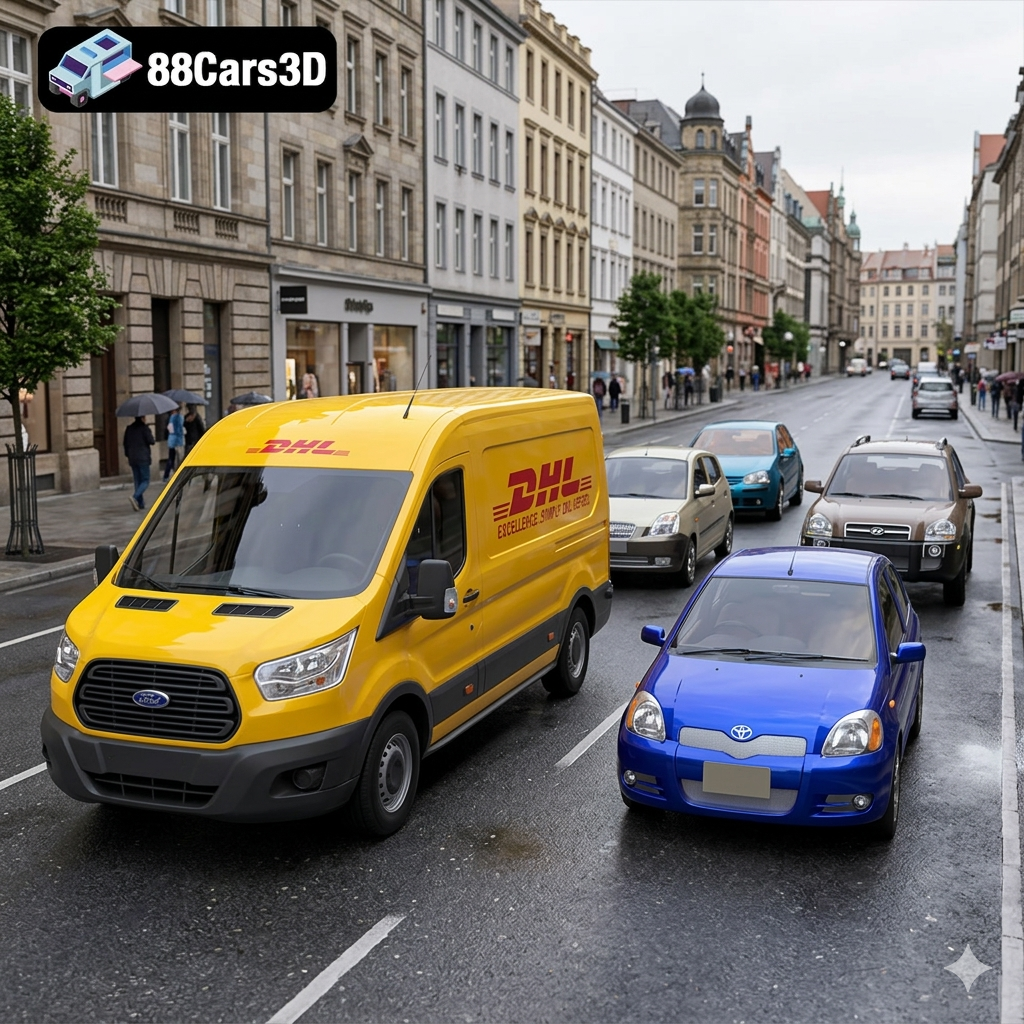
Download the Everyday City Traffic 3D Models Bundle. Includes the VW Golf, Kia Picanto, Hyundai Tucson, Toyota Yaris, and a DHL Ford Transit Van. Save big on this 5-in-1 pack, perfectly optimized for realistic ArchViz streets and game traffic.
Price: $99.99
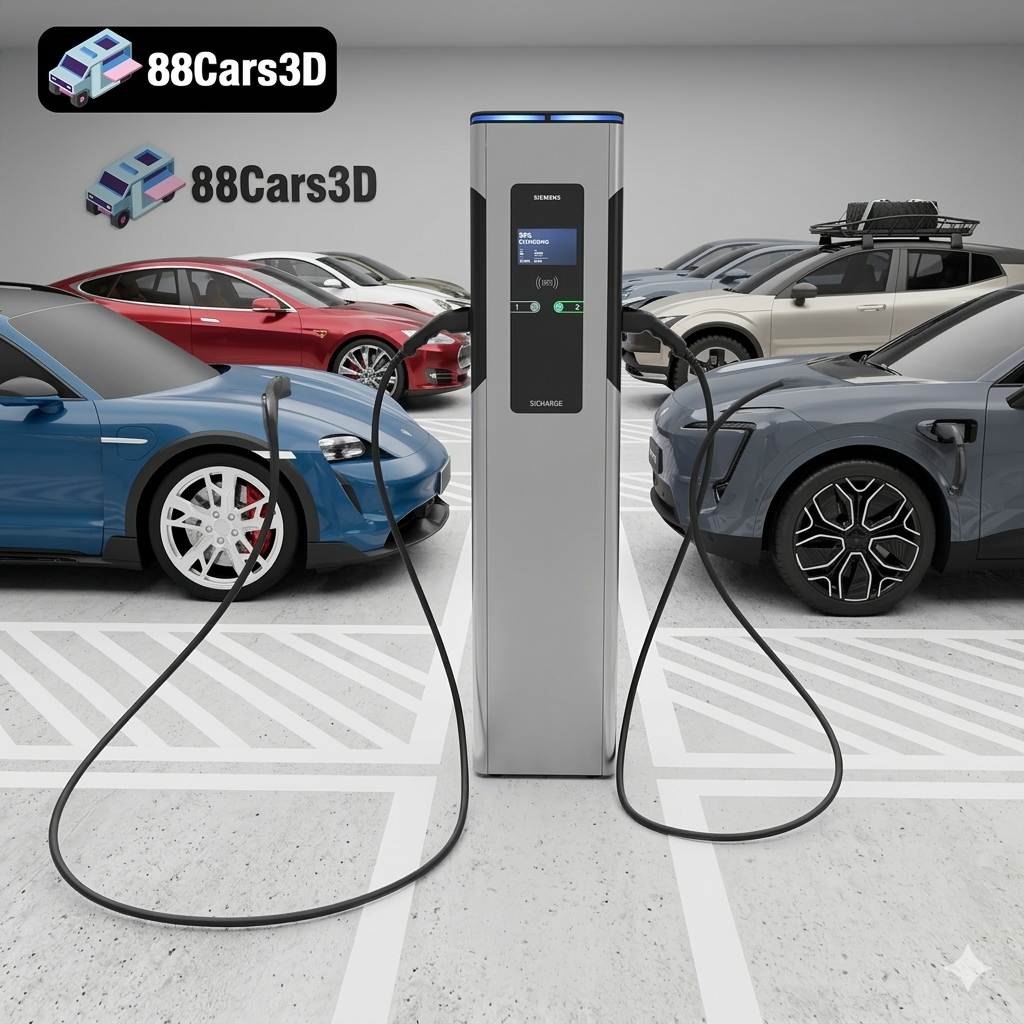
Download the Future of Mobility EV 3D Models Bundle. Includes the Volvo EX30, Tesla Model S, AVATR 11, Porsche Taycan, and a Siemens EV Charger. Save big on this highly optimized 5-in-1 pack for ArchViz and game development!
Price: $89.99

