Get 50% OFF All Premium 3D & STL Models!

In the vibrant and ever-evolving landscape of digital content creation, the demand for high-fidelity 3D car models is ceaseless. From blockbuster video games and cinematic visualizations to cutting-edge architectural renderings and immersive augmented reality experiences, meticulously crafted vehicle assets are the engines that drive realism and engagement. Professionals in these fields understand that the difference between a good project and an exceptional one often lies in the quality and optimization of its foundational assets.
Creating these complex models from scratch is a time-consuming and highly specialized endeavor, demanding expertise in modeling, texturing, rigging, and optimization. This is precisely why platforms offering pre-made, production-ready 3D car models have become invaluable resources for studios and independent artists alike. Among the myriad of vehicles that populate our world, some possess a unique character and ubiquitous presence that makes them particularly useful. Enter the Daewoo Damas Microvan 3D Model, a digital twin of the legendary compact commercial workhorse. This model isn’t just a generic vehicle; it’s a specific, highly optimized asset that embodies the utilitarian charm and global recognition of its real-world counterpart, making it an ideal choice for a diverse range of projects seeking authenticity and performance.
The successful integration of any 3D model into a project hinges on selecting the correct file format. Each format serves a specific purpose, offering unique advantages in terms of compatibility, data preservation, and workflow efficiency. A deep understanding of these formats is crucial for any professional working with 3D car models, ensuring seamless transitions between different software environments and optimal performance in various applications.
The .blend format is the native file type for Blender, one of the most popular and powerful open-source 3D creation suites. When you acquire a .blend file, you’re not just getting a mesh; you’re receiving a complete Blender scene. This means all materials, textures (linked or packed), lighting setups, cameras, animation data, and even modifiers are preserved exactly as the artist intended. For those working within Blender, this format offers unparalleled editability and flexibility. It’s the ideal choice for animators, modelers, and generalists who need to delve deep into the asset’s construction, make significant modifications, or leverage Blender’s extensive toolset for rendering or real-time preparation. The Daewoo Damas Microvan 3D Model in .blend format allows full access to its clean topology and material definitions, empowering artists to customize every aspect.
.fbx (Filmbox) stands as a ubiquitous format developed by Autodesk, serving as a robust exchange format across a multitude of 3D software applications and game engines. Its strength lies in its ability to store a comprehensive range of data, including geometry, materials, textures, animations (skeletal and blend shapes), cameras, and lights. This makes it particularly vital for complex animated assets like 3D car models, where wheel rotations, steering, and door movements need to be accurately transferred. For pipelines involving Unreal Engine, Unity, 3ds Max, Maya, or Cinema 4D, .fbx is often the go-to choice due to its reliable data preservation and broad support. The Daewoo Damas, provided as an .fbx, ensures that its separate wheels, steering components, and doors can be rigged and animated with ease in your chosen environment.
The .obj (Wavefront Object) format is one of the oldest and most universally supported 3D file formats. Primarily, it excels at storing geometry data (vertices, normals, texture coordinates, and faces). While it can reference external material files (.mtl), its strength isn’t in handling complex material setups or animation. Its power lies in its simplicity and unparalleled compatibility across virtually every 3D modeling, rendering, and CAD software. When you need a clean mesh that can be imported anywhere without fuss, .obj is often the safest bet. It’s excellent for cross-software transfers where geometry is the primary concern, or as a fallback when more complex formats encounter issues. The Daewoo Damas is available in .obj, making it accessible to even niche or older 3D applications.
.glb (GLB format for glTF) is a relatively newer format designed specifically for the efficient transmission and loading of 3D scenes and models in web and real-time applications. It packages geometry, materials, textures, and animation into a single, compact file, making it ideal for augmented reality (AR), virtual reality (VR), and browser-based 3D viewers. Its optimization for real-time rendering, small file size, and PBR (Physically Based Rendering) material support make it a rapidly growing standard for interactive 3D content. If you’re developing an AR configurator for commercial vehicles or integrating 3D models into a web application, the .glb version of the Daewoo Damas is perfectly suited for quick loading and responsive interaction.
.stl (STereoLithography) is the de facto standard format for 3D printing. It represents a 3D model as a collection of unconnected triangles (a tessellation of the surface). While it doesn’t store color, texture, or material information, its simplicity makes it universally understood by 3D slicing software. For projects aiming to bring digital models into the physical realm, like creating miniature car collectibles or prototypes, .stl is essential. The Daewoo Damas, with its clean geometry, is explicitly designed to be convertible to .stl, opening up avenues for display-scale commercial diecast modelers and urban diorama enthusiasts.
The .ply (Polygon File Format, or Stanford Triangle Format) is a versatile format often used for storing 3D data from 3D scanners, CAD applications, or for scientific analysis. It can store not only geometry but also color, transparency, surface normals, and other properties per vertex or per face. While less common for general 3D asset exchange than .fbx or .obj, it offers a more flexible data structure for specific applications requiring precise mesh data or attributes. For engineers or researchers needing detailed geometric data, the .ply format can be beneficial.
The .unreal designation typically implies an asset that is pre-packaged and optimized specifically for Unreal Engine. This often means it has already undergone a rigorous pipeline for importing, material setup, collision generation, and sometimes even LOD (Level of Detail) creation within the Unreal Editor. While Unreal Engine primarily imports .fbx, an “.unreal” file might refer to an exported Unreal asset package, a collection of assets ready to be dragged and dropped into a project, or simply an .fbx file that has been thoroughly tested and verified for direct import into the engine with minimal additional work. This format streamlinines the workflow significantly for game developers, offering a truly game-ready solution.
Finally, the .max format is the native file type for Autodesk 3ds Max, a leading software for 3D modeling, animation, rendering, and visualization, especially prominent in architectural visualization (ArchViz) and product design. Like .blend, a .max file preserves the entire scene, including all modifiers, material hierarchies, lighting, cameras, and animation curves. For users of 3ds Max, this provides maximum editability and allows them to leverage all the advanced features of the software for rendering with V-Ray or Corona, detailed animation, or complex scene assembly. The Daewoo Damas Microvan 3D Model in .max format gives 3ds Max artists complete control over the asset for their high-end rendering and animation projects.
Creating photorealistic 3D car models is a blend of artistic vision and meticulous technical execution. It requires a deep understanding of automotive design, precise measurements, and advanced 3D software skills. Each curve, panel gap, and material finish must be painstakingly recreated to achieve the desired level of realism and utility for rendering, game development, or simulation.
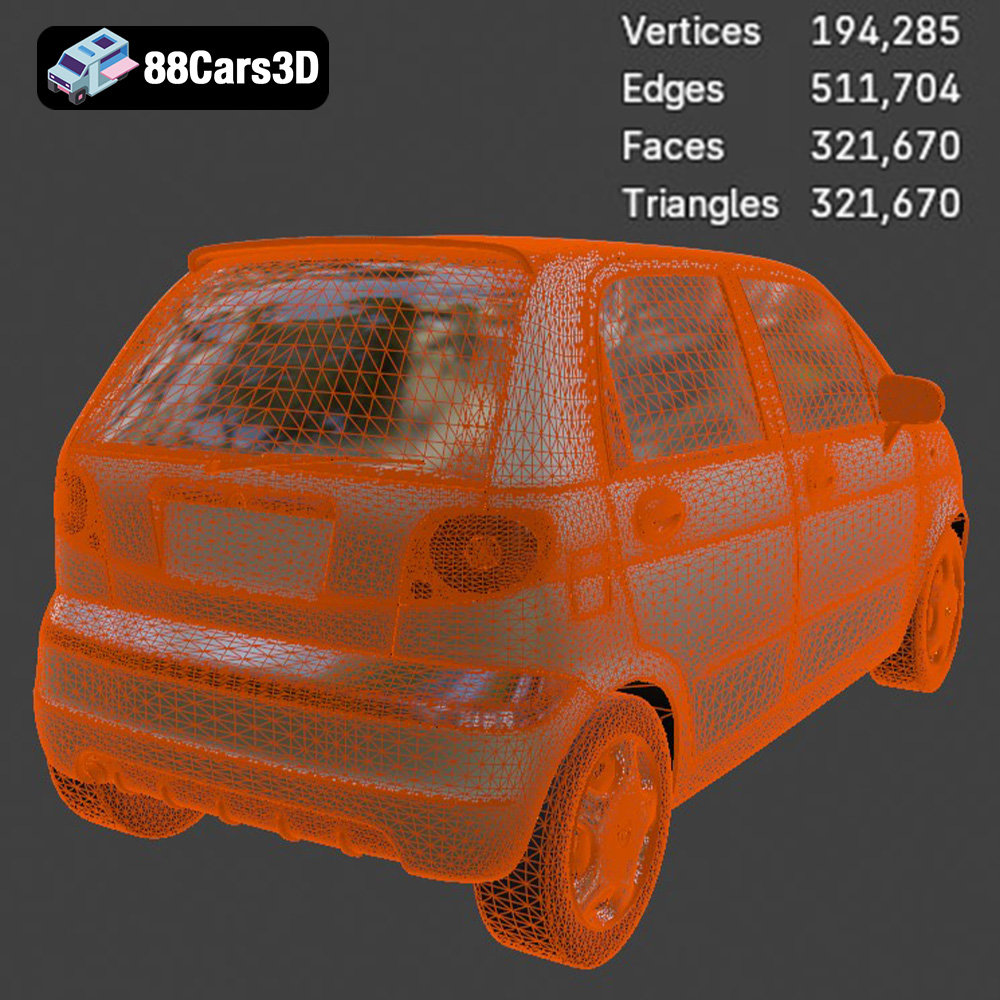
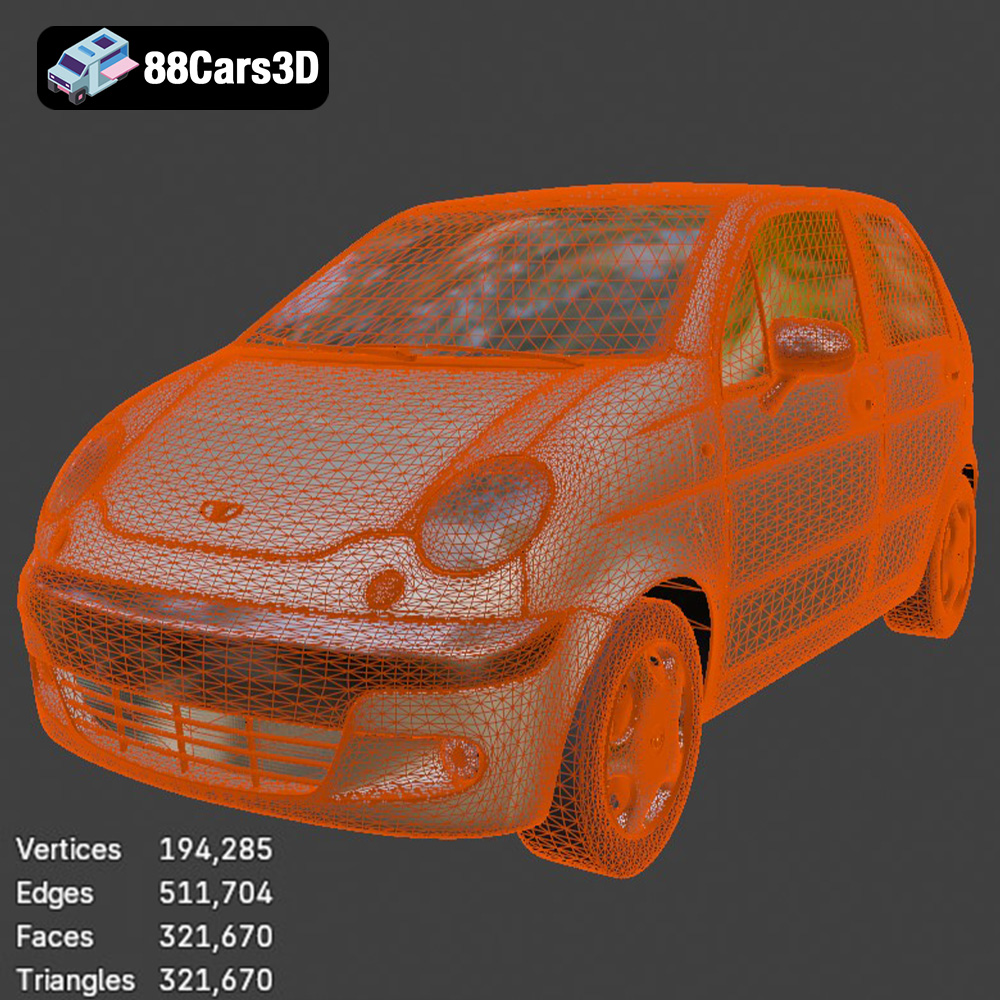
At the heart of any high-quality 3D model is its topology – the arrangement of its polygons. For 3D car models, especially those intended for real-time applications like games, efficient and clean topology is paramount. A “mid-polygon” count, such as the Daewoo Damas’s 321,670 triangles, represents a sweet spot. It’s detailed enough to look crisp in close-up renders, yet light enough to be duplicated countless times in a bustling game scene without crippling performance. The model’s “quad-heavy structure” is a key indicator of quality, facilitating smooth deformation during animation and clean subdivision for higher detail if needed. This level of optimization is critical for game assets, where every polygon impacts frame rates and memory usage, particularly in open-world environments or mobile titles where traffic vehicles are abundant. The Daewoo Damas Microvan 3D Model exemplifies this balance, providing visual fidelity without compromising runtime efficiency.
Beyond geometry, the realism of a 3D car model largely depends on its texturing and material work. This involves creating intricate maps for color (albedo), surface roughness, metallic properties, normal details, and ambient occlusion. Physically Based Rendering (PBR) workflows are the industry standard, ensuring that materials react accurately to light in any rendering environment, from V-Ray in 3ds Max to Unreal Engine’s real-time renderer. The quality of these textures, combined with accurate material definitions for painted metal, glass, rubber, and plastic, is what gives the Daewoo Damas its authentic appearance, allowing artists to customize its paint schemes or apply weathering effects to suit diverse project needs.
The practical application of 3D car models spans various industries, each with its unique requirements and challenges. High-quality assets like the Daewoo Damas Microvan 3D Model streamline these workflows, offering immediate value and accelerating production timelines.
In game development, especially for open-world titles, simulation games, and mobile driving experiences, populating environments with realistic traffic is crucial for immersion. Generic vehicles often break immersion, but a model like the Daewoo Damas, with its recognizable shape and ubiquitous presence in certain regions, adds a layer of authenticity rarely achieved with default assets. Its “game-ready” optimization means it can be readily integrated into engines like Unreal Engine and Unity. The separate wheels, steering components, and doors are prepped for rigging and animation, allowing developers to implement dynamic traffic systems, simulate commercial fleets, or even feature the Damas as a drivable vehicle. Its mid-polygon count makes it ideal for background traffic where efficiency is key, allowing dozens, if not hundreds, to populate a scene without significant performance impact.
For architectural visualization, adding vehicles to exterior scenes isn’t merely decorative; it provides scale, context, and a sense of lived-in reality. When visualizing an urban development in Seoul, Tashkent, or Dubai, including a culturally relevant vehicle like the Daewoo Damas instantly grounds the rendering in its specific geographical context. This eliminates the “placeless” feel that generic vehicles often create. The model’s “crisp visual fidelity” ensures it holds up in high-resolution stills and animations, serving as perfect regional background traffic. Similarly, in commercial rendering for logistics or urban planning simulations, accurately representing a vehicle like the Damas provides a critical element of realism, helping clients envision proposed infrastructure or fleet deployments with greater accuracy.
The Daewoo Damas Microvan 3D Model from 88cars3d.com is more than just a digital replica; it’s a testament to thoughtful design and meticulous execution, crafted to meet the stringent demands of professional 3D production pipelines. Its particular characteristics make it an exceptionally versatile asset.
The model accurately captures the distinctive utilitarian cabover aesthetic of the classic Daewoo Damas. From its flat front fascia and large rectangular headlight assemblies to the functional dual sliding rear doors and tall roofline, every detail contributes to its unmistakable identity. Beyond static representation, the model is engineered for animation. Its separate wheels, steering components, and doors are properly pivoted, enabling realistic rotation, steering, and opening/closing mechanisms. This level of preparation significantly reduces setup time for animators, allowing them to focus on choreography rather than foundational rigging.
While often used as an exterior background prop, the Daewoo Damas model also features an optimized, practical interior. The “Spartan driver-centric cabin layout” and “detailed minimalist dashboard with a classic two-spoke steering wheel and analog gauges” are faithful to the vehicle’s real-world counterpart. Importantly, the rear space is configurable, suitable for representing an empty cargo bay for delivery simulations or adding passenger benches for taxi scenarios. The “optimized interior geometry tailored to look authentic from the exterior or in VR” ensures that even subtle glimpses into the cabin enhance realism without adding unnecessary polygon overhead.
With 321,670 triangles and a “beautifully clean, quad-heavy structure,” the Daewoo Damas Microvan 3D Model exemplifies optimized topology. This mid-poly count strikes a crucial balance: it provides sufficient detail for close-up renders while remaining incredibly efficient for real-time applications where performance is paramount. Furthermore, its “real-world scale accuracy based on factory commercial dimensions” guarantees correct spatial relationships within any digital scene, preventing scaling inconsistencies and preserving the integrity of architectural or environmental contexts. This precision is invaluable for projects requiring true-to-life proportions.
The utility of high-quality 3D car models extends beyond traditional rendering and game development, venturing into the exciting realms of physical manufacturing and immersive digital experiences.
The journey from a digital 3D model to a tangible object is made possible through 3D printing. The Daewoo Damas Microvan 3D Model is not only designed for screen-based applications but is also “convertible to .stl format for display-scale commercial diecast modelers.” The provided 3D printing settings, such as recommended scales (1:24, 1:32, 1:43), layer height suggestions for resin printing, and specific support requirements, empower enthusiasts and professionals to create accurate physical miniatures. Imagine a fleet of custom-branded Damas models for an urban diorama or a tangible prototype for a logistics company. This dual-purpose design highlights the model’s versatility and value proposition for creators working across different mediums.
As augmented and virtual reality technologies become more prevalent, the need for optimized 3D assets for these interactive environments grows. The Daewoo Damas model’s clean topology, real-world scale, and availability in formats like .glb make it an excellent candidate for AR/VR applications. Whether it’s an interactive digital delivery fleet configurator where users can customize the Damas in augmented reality, or a city-planning VR experience where the microvan populates virtual streets, its efficient design ensures smooth performance and a believable presence. These immersive applications leverage the 3D model to create engaging, interactive experiences that were once confined to static renders.
In the dynamic world of digital content creation, the availability of high-quality, optimized 3D car models is a cornerstone for efficiency, realism, and creative freedom. From populating sprawling open-world games and grounding architectural visualizations in reality to facilitating physical prototyping through 3D printing, the applications are vast and ever-expanding.
The Daewoo Damas Microvan 3D Model stands out as a prime example of an asset meticulously crafted for professional pipelines. Its balanced polycount, accurate detailing, robust material setup, and comprehensive file format support (.blend, .fbx, .obj, .glb, .stl, .ply, .unreal, .max) make it an indispensable tool for designers and developers. By investing in such a versatile asset, creators can save countless hours of development time, ensure technical reliability, and elevate the overall quality of their projects.
For studios and individual artists seeking to enhance their projects with authentic, performance-optimized 3D car models, exploring the curated selection at 88cars3d.com is a strategic move. Assets like the Daewoo Damas Microvan provide not just a model, but a foundation for innovation and exceptional visual storytelling. Take the driver’s seat and accelerate your next project with professional-grade 3D assets.
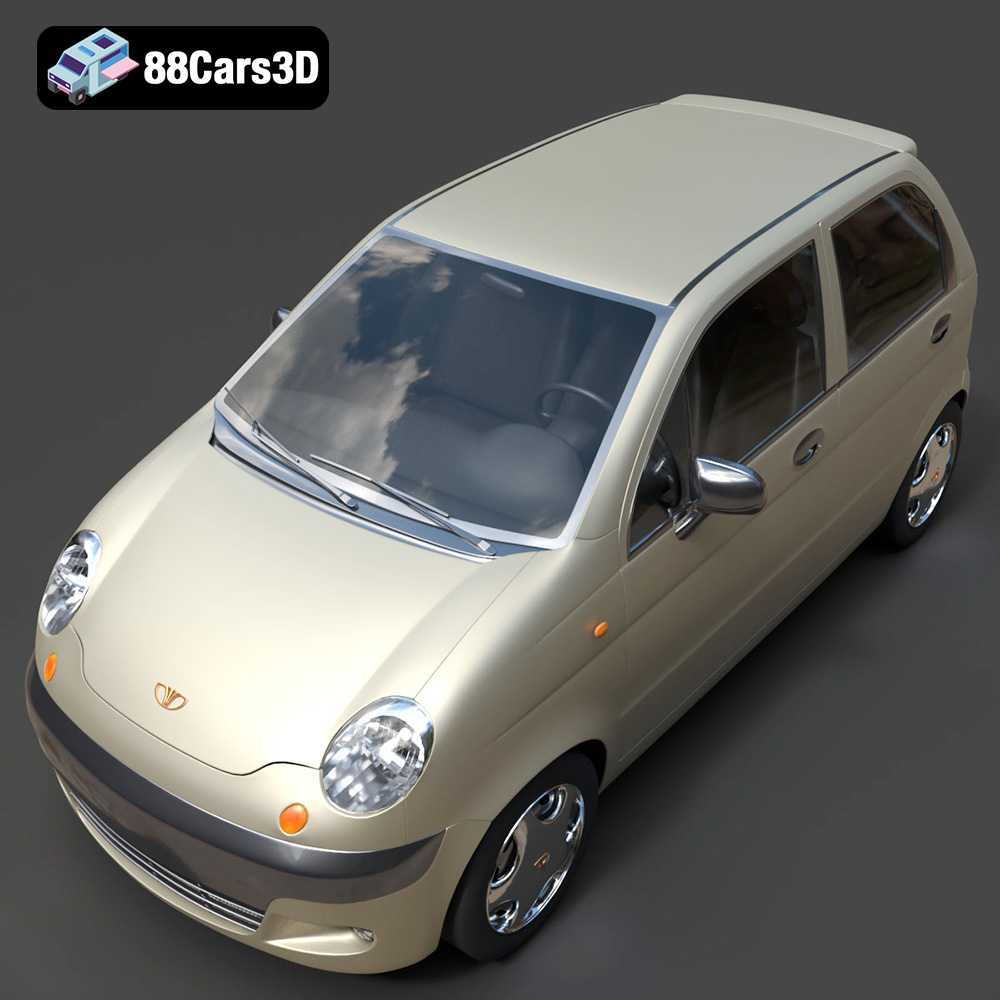
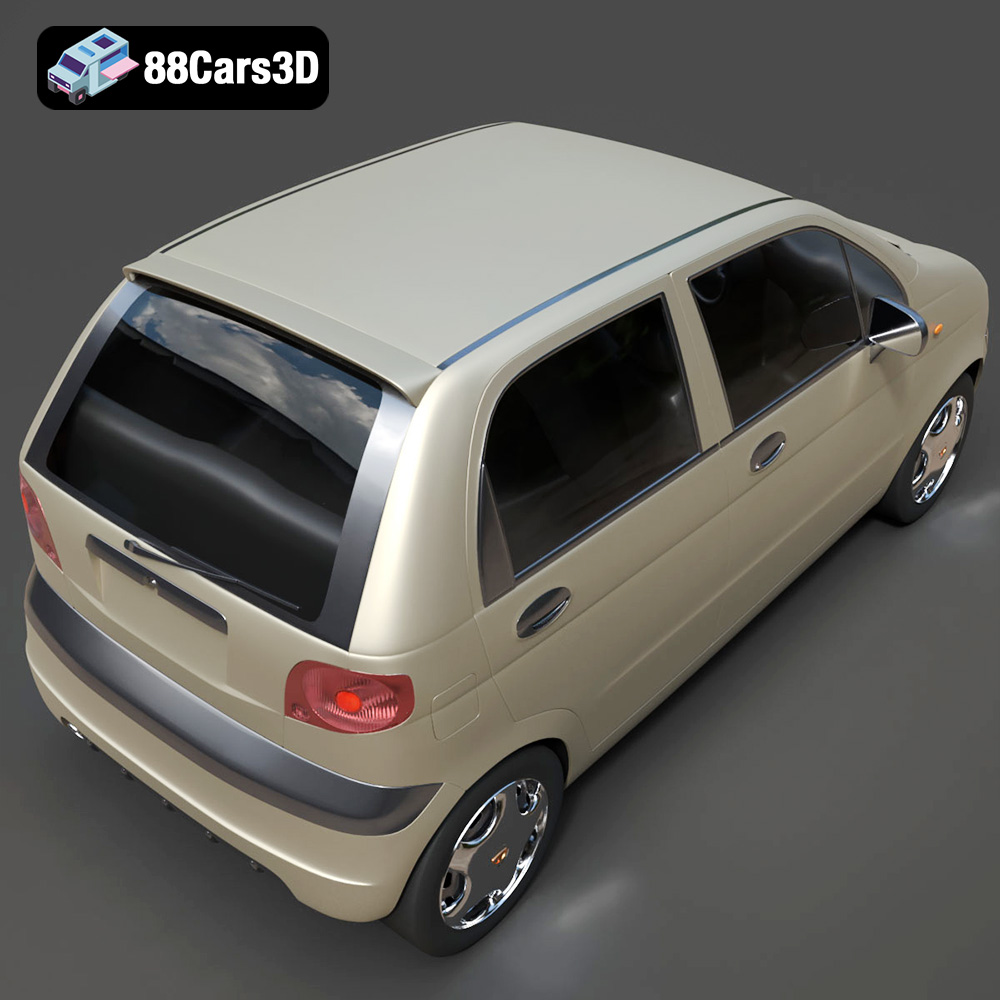
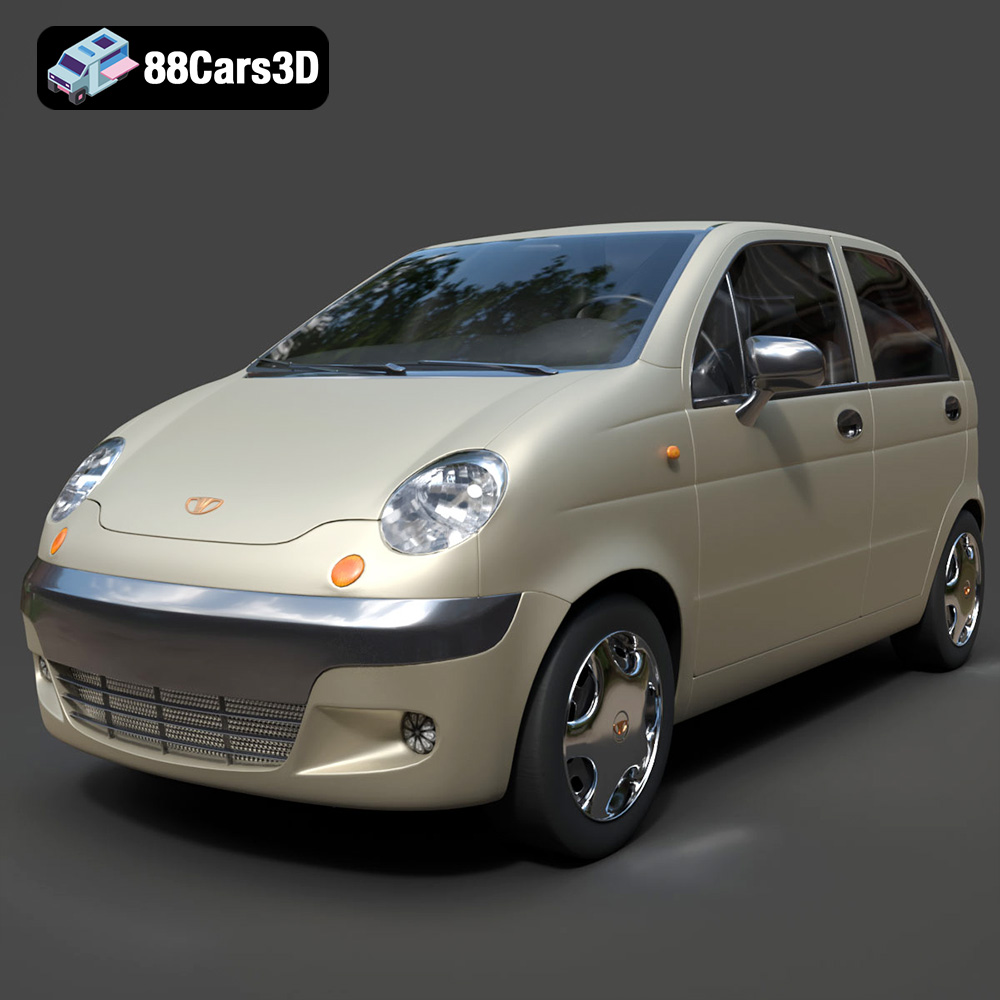
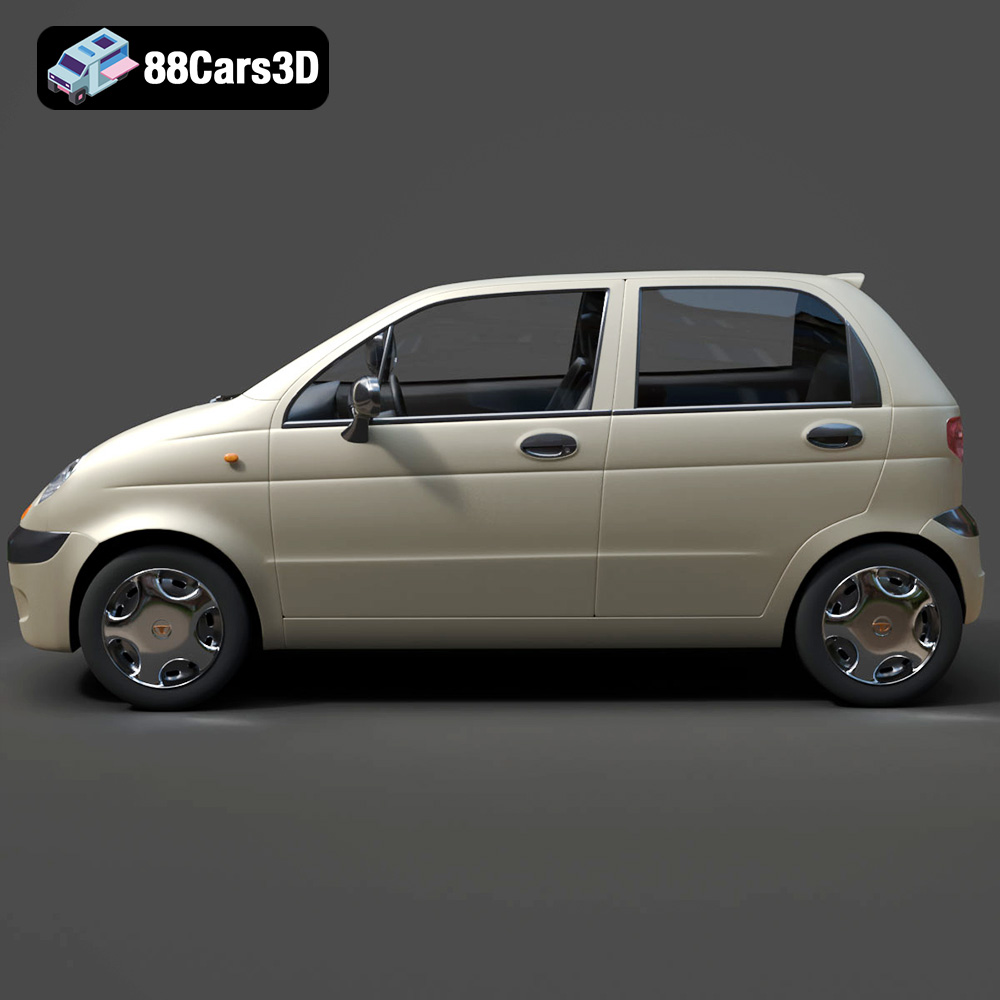
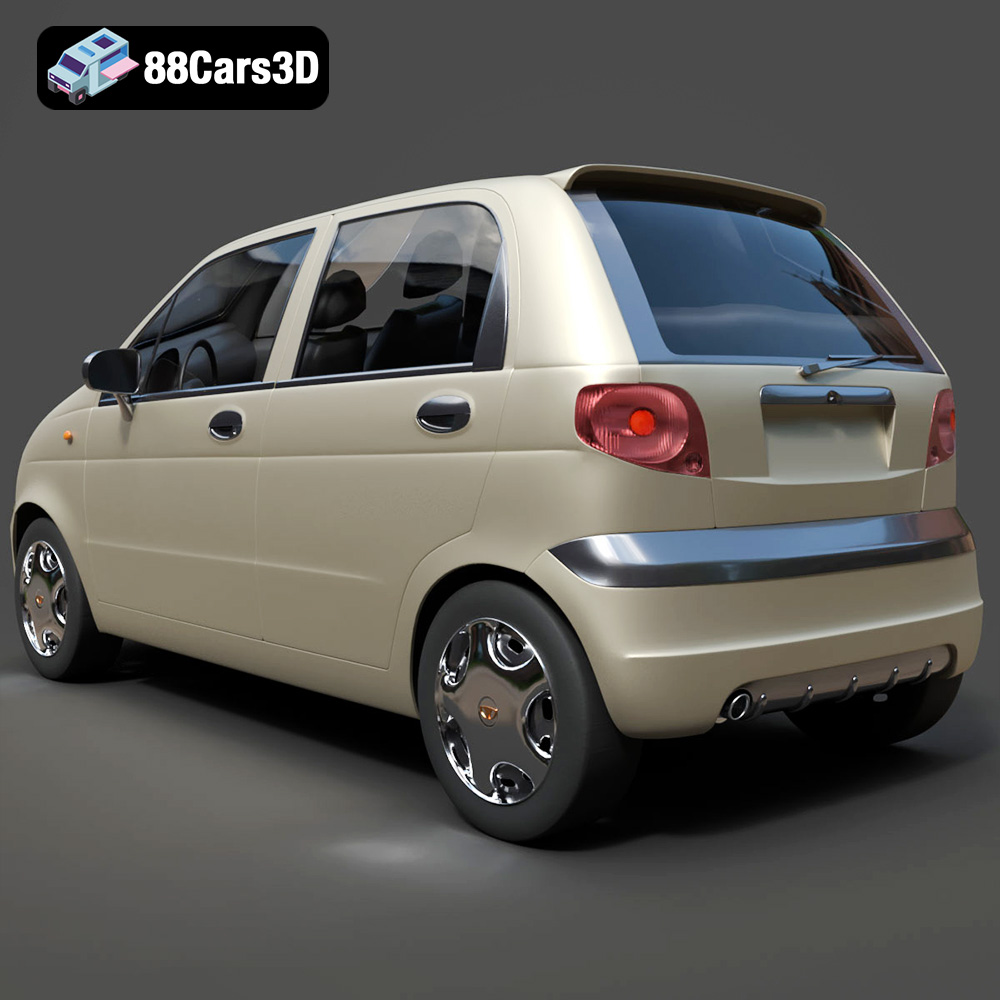
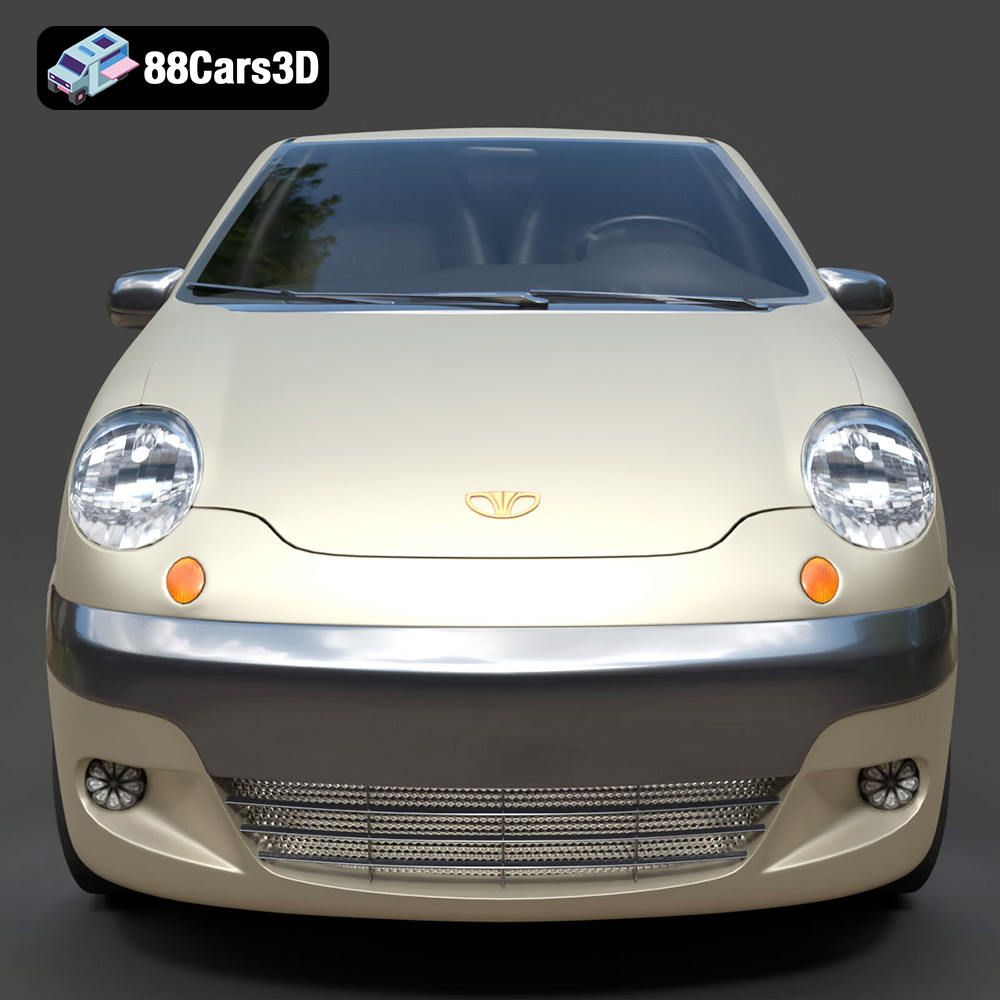
The Daewoo Damas 3D Model is an incredibly accurate, highly optimized digital recreation of the legendary compact commercial microvan. Based on the classic kei-van architecture, the Damas is a ubiquitous and unstoppable workhorse recognized globally—serving as the ultimate urban delivery vehicle, taxi, and daily commuter, particularly across South Korea, Central Asia (such as Uzbekistan), and the Middle East. This 3D model beautifully captures the timeless, utilitarian cabover aesthetic of the classic Damas. It features the distinctive flat front fascia, large rectangular headlight assemblies, dual sliding passenger/cargo doors, and a tall, space-maximizing roofline. Built with a highly efficient, impeccably clean mid-polygon topology (just over 321k triangles), it strikes the absolute perfect balance. It provides crisp visual fidelity for close-up automotive rendering while remaining lightweight enough to be duplicated endlessly as background traffic in modern game engines. Perfect for populating realistic global street scenes, commercial fleet simulations, architectural visualizations, and mobile game development.
$29