Get 50% OFF All Premium 3D & STL Models!

In the expansive realm of 3D visualization, where sleek supercars and futuristic vehicles often dominate, there exists a profound appreciation for the utilitarian beauty of classic machinery. These digital artifacts don’t just represent objects; they encapsulate history, craftsmanship, and a bygone era. For artists, game developers, architects, and collectors, a meticulously crafted vintage vehicle model offers unparalleled opportunities for storytelling, immersive experiences, and authentic scene creation.
Imagine a sprawling digital farm scene, bathed in the warm glow of a virtual sunset, or a historical simulation requiring precise period accuracy. Such scenarios demand more than just a generic model; they call for a piece of digital art that speaks volumes about its origins. This is precisely where models like the Old Tractor 3D Model shine. Available on 88cars3d.com, this model isn’t just a collection of polygons; it’s a gateway to recreating agricultural heritage, bringing a robust and iconic piece of farming history into your modern projects, whether for high-fidelity rendering, immersive game development, or even 3D printing a tangible piece of history.
This comprehensive guide will delve deep into the technical intricacies and artistic potential of working with high-quality 3D models, using the Old Tractor as a prime example. We’ll explore essential file formats, professional workflows, optimization techniques, and the boundless creative applications that such a detailed asset can unlock for your next project.
The versatility of a 3D model often hinges on the file formats it supports. Different formats are optimized for different stages of the 3D pipeline, from initial creation and editing to real-time rendering, web deployment, and physical fabrication. Understanding these formats is crucial for seamless integration into various software and engines, ensuring your assets perform as intended.
The .blend file is Blender’s native format, containing an entire scene, including meshes, materials, textures, animations, cameras, lighting, and even modifiers. It’s the ideal choice for users working within the Blender environment, offering full editability and access to all of Blender’s powerful features. When you download a .blend file, you’re getting the raw, unadulterated project, allowing for deep customization and fine-tuning of every aspect of the Old Tractor 3D Model, from material node setups to mesh adjustments and rigging. This format is perfect for artists who want to dissect the model, learn from its construction, or expand upon its design using Blender’s comprehensive toolset.
As one of the most widely supported 3D file formats, .fbx (Filmbox) is critical for transferring 3D data between different software applications and game engines. It can store a vast array of data, including geometry, materials, textures, animations, skeletons, and blend shapes. For assets like our Old Tractor, .fbx is indispensable for exporting to Unreal Engine, Unity, 3ds Max, Maya, and more. Its robust support for animations makes it the go-to format for game development, ensuring that components like the tractor’s wheels or steering can be easily animated and integrated into real-time environments. It maintains hierarchy and pivots, which is essential for proper asset setup in game engines.
The .obj (Wavefront Object) format is one of the oldest and most universally compatible 3D formats, primarily used for storing geometry data (vertices, normals, texture coordinates, and faces). While it doesn’t typically store animation or rigging data directly, it’s excellent for clean mesh exchange between almost any 3D software. The Old Tractor 3D Model in .obj format provides a highly reliable base mesh, often accompanied by an .mtl (material template library) file for basic material definitions and separate image files for textures. This makes it a dependable choice for users who need a fundamental, robust mesh that can be imported and re-textured in their preferred renderer or modeling package.
.glb (GL Transmission Format Binary) is the binary version of glTF, a format specifically designed for efficient transmission and loading of 3D scenes and models in web and real-time applications. It packages all necessary data—geometry, materials, textures, and animation—into a single, compact file. This makes it ideal for AR/VR experiences, browser-based 3D viewers, and social media integrations where performance and quick loading times are paramount. The Old Tractor 3D Model in .glb format would be perfect for an interactive historical museum exhibit in VR or an augmented reality app showcasing vintage farm equipment.
For physical fabrication, the .stl (Stereolithography) format is the undisputed king. It represents a 3D model as a series of connected triangles, describing only the surface geometry of an object without color, texture, or other CAD attributes. For the Old Tractor 3D Model, an .stl file is what you’d feed into a 3D printer slicing software to create a tangible miniature. The model’s manifold geometry ensures it’s print-ready, offering a path to bring the digital design into the physical world as a collectible or a detailed scale model.
.ply (Polygon File Format) is another format for storing 3D data, often used in scientific and CAD applications. It can store not just geometry, but also properties like color, transparency, normals, texture coordinates, and even reliability information for each vertex and face. While less common for general 3D art exchange than .fbx or .obj, .ply provides a high level of detail and precision, making it suitable for engineering analysis, 3D scanning output, or highly detailed industrial design contexts where the Old Tractor 3D Model might be studied for its mechanical structure.
The .unreal format, or more accurately, assets packaged for Unreal Engine, typically refers to .uasset files which are native to the engine. When a model is provided in this “engine-ready” state, it usually means it has been imported, processed, and potentially set up with basic materials, collisions, and LODs within Unreal Engine. This saves developers significant time, as the Old Tractor 3D Model would be ready for direct drag-and-drop into a project, skipping the initial import and setup phase, making it highly valuable for rapid game development and real-time visualization.
Similar to .blend for Blender, .max is the native file format for Autodesk 3ds Max. It encompasses an entire 3ds Max scene, including geometry, materials, textures, lights, cameras, animations, and modifiers. For artists working in 3ds Max, this format offers the highest level of editability and ensures all specific Max features and plugins are preserved. The Old Tractor 3D Model in .max format provides a complete project file, allowing professional artists to fully integrate it into their 3ds Max rendering and animation pipelines with minimal effort.
The availability of the Old Tractor 3D Model across such a diverse range of formats on 88cars3d.com underscores its adaptability, ensuring it can be a cornerstone asset for virtually any 3D project.
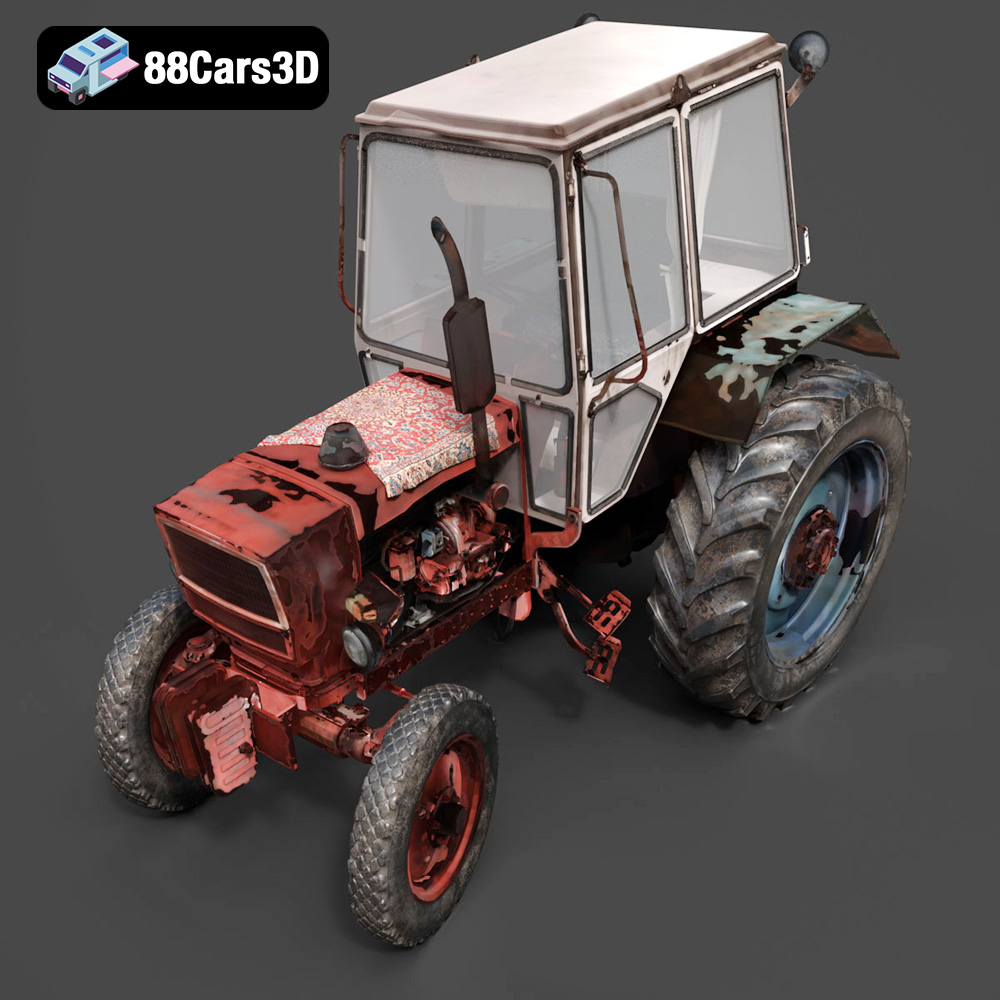
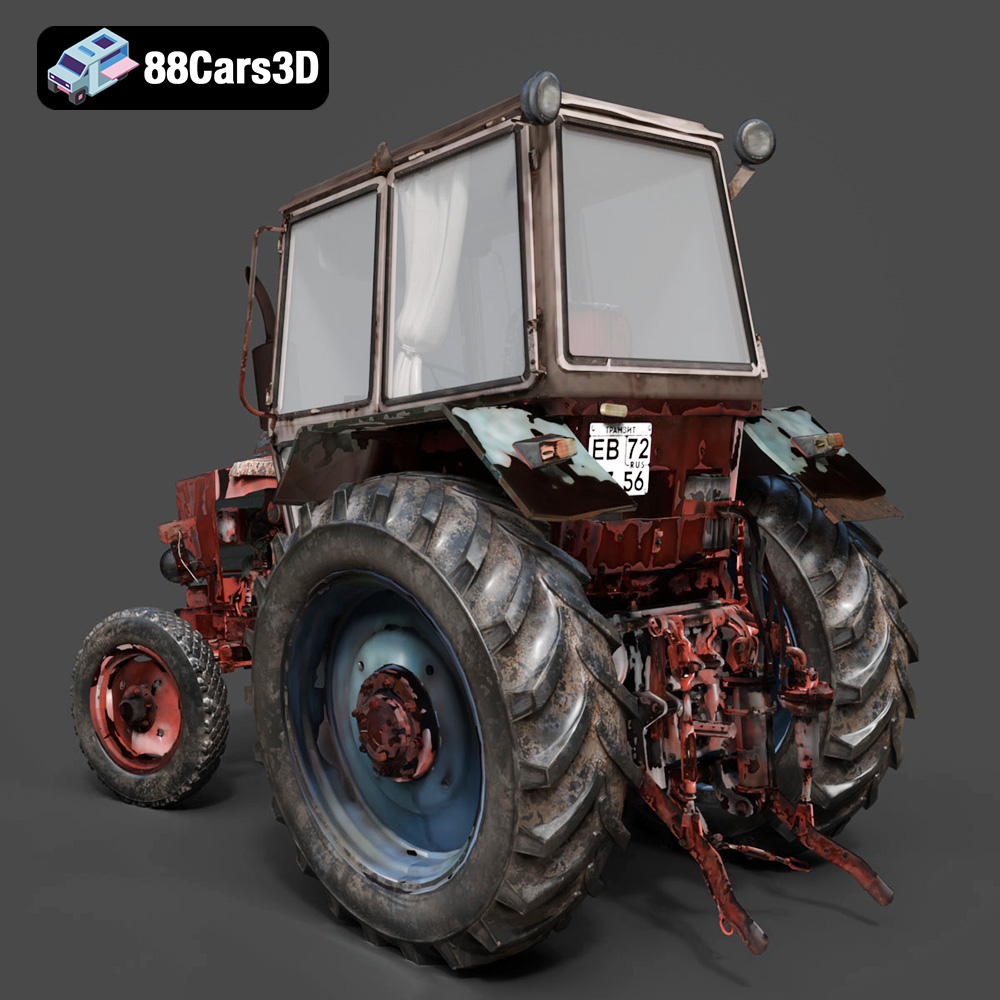
The charm of the Old Tractor 3D Model lies in its meticulous recreation of a classic agricultural workhorse. This isn’t just a generic tractor; it’s a high-detail digital recreation designed to evoke the sturdy, no-nonsense aesthetic of mid-20th-century farming machinery. Every curve, every bolt, every weathered surface contributes to an authentic representation that resonates with historical accuracy and rustic appeal.
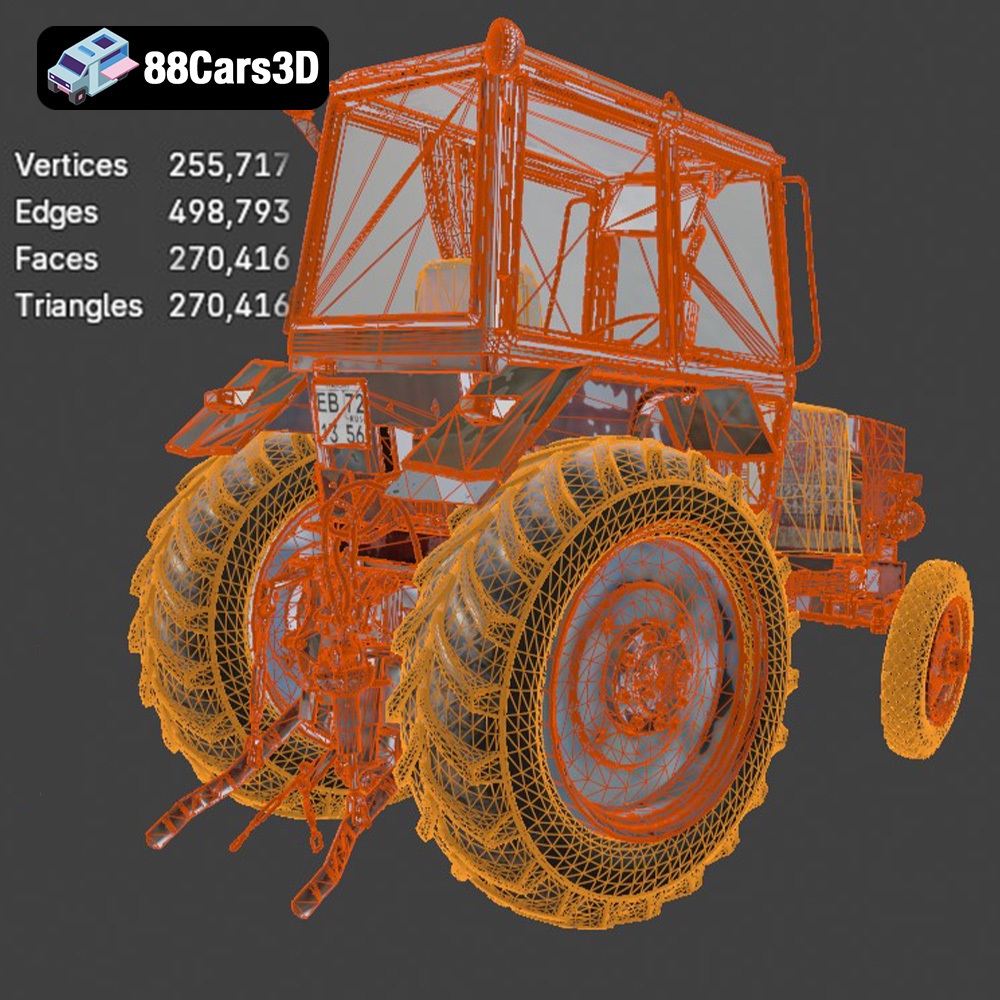
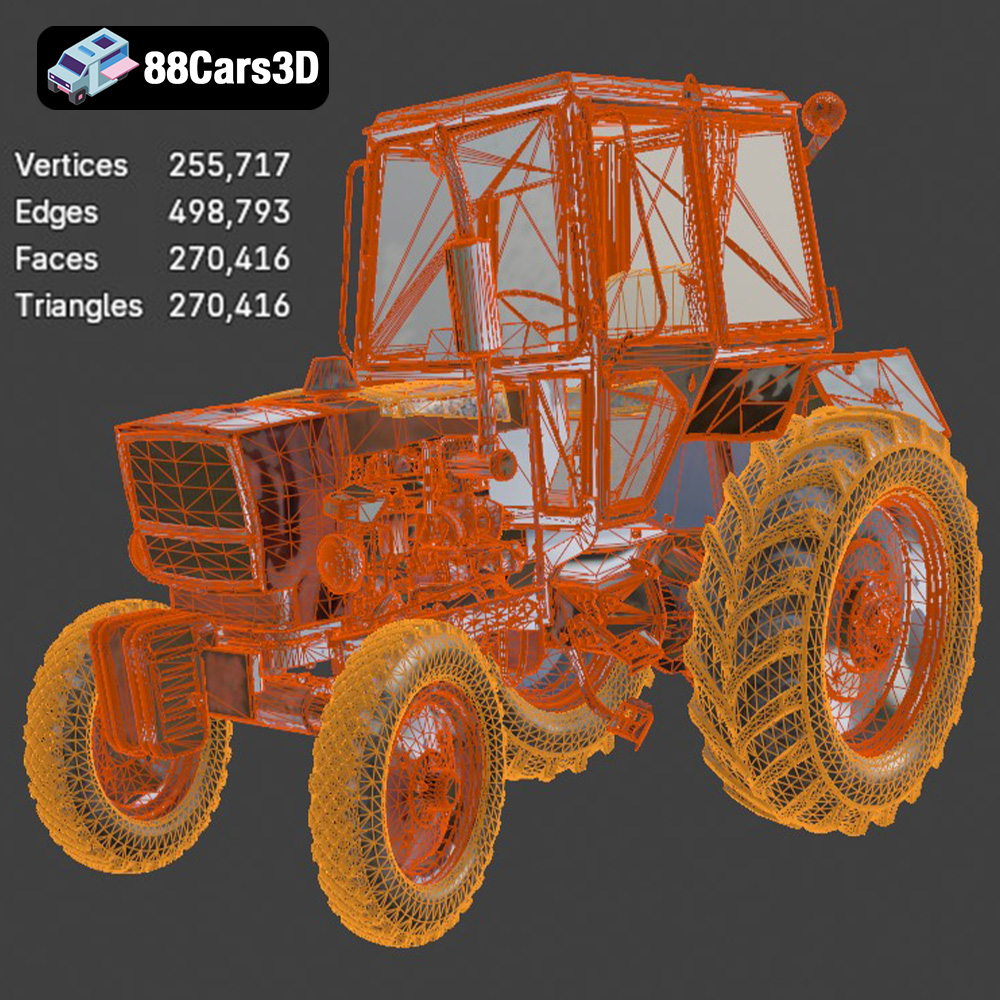
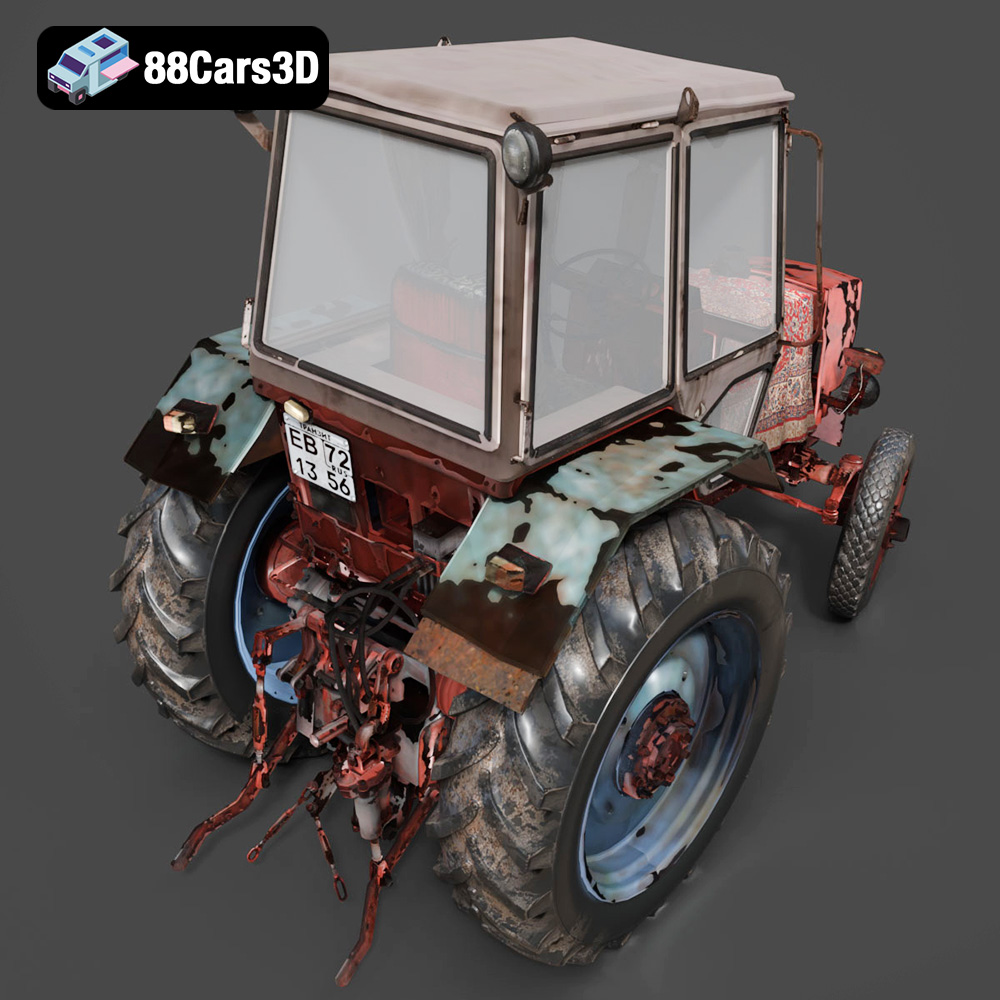
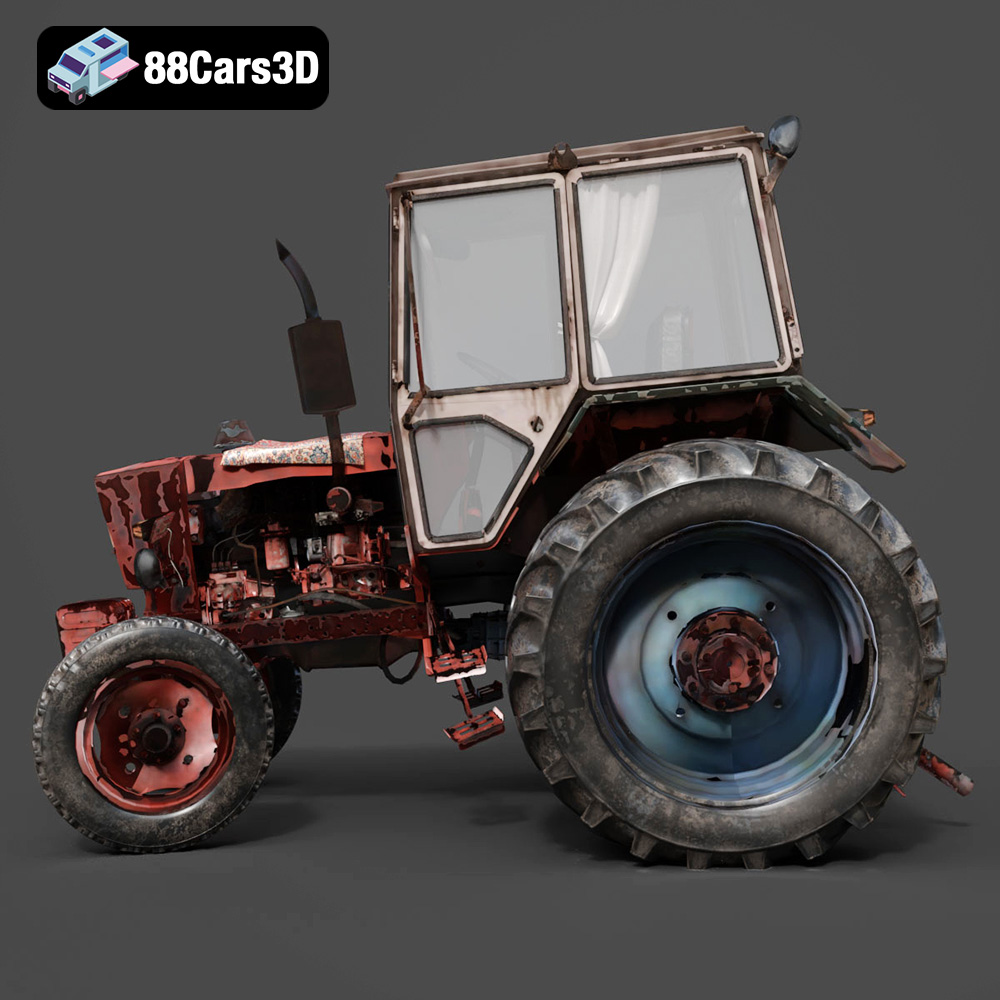
From the first glance, the Old Tractor 3D Model showcases its vintage lineage. The body proportions accurately reflect classic designs, characterized by a robust silhouette. Key visual elements include the distinctive engine housing with its side vents, hinting at the mechanical power beneath, and the prominent vertical exhaust stack – an iconic feature of these early machines. The model proudly displays large rear traction wheels with deep, realistic treads, designed to conquer uneven terrain. Depending on the configuration, it features either a narrow or dual front-wheel axle, adding to its period authenticity. The open operator seat and steering system speak to the simplicity and directness of these machines, while the rear hitch assembly is perfectly modeled for attaching various farm implements, expanding its potential for dynamic scene creation.
A crucial technical advantage is the provision of separate wheels. This seemingly small detail is paramount for animators and game developers, allowing for independent rotation and accurate movement simulations, vital for bringing the tractor to life in any digital environment.
Beyond the surface, the Old Tractor 3D Model delves into the underlying mechanical and structural details. The modeled chassis frame provides a solid foundation, accurately representing the tractor’s sturdy construction. Key components like the rear axle and suspension structure are faithfully recreated, along with a basic transmission housing, giving the model a believable internal structure. The steering linkage components are also carefully detailed, contributing to the overall mechanical realism. This level of detail isn’t just for show; it informs the model’s robustness and ensures that it can withstand close-up renders or dynamic camera movements without losing fidelity. The mesh is optimized for both real-time engines and high-quality renders, ensuring excellent performance without sacrificing visual integrity, a testament to its professional-grade design.
A high-quality 3D model like the Old Tractor offers immense flexibility for various professional applications. Its clean topology, real-world scale, and optimized mesh make it a valuable asset for multiple pipelines, whether you’re aiming for photorealistic renders or interactive real-time experiences.
For artists focused on stunning visuals, the Old Tractor 3D Model is a dream come true. In software like 3ds Max or Blender, the model’s clean mesh structure and proper UV mapping (essential for texture application) allow for seamless material creation. Professional workflows often involve setting up Physically Based Rendering (PBR) materials, where textures for albedo, roughness, metallic, normal, and ambient occlusion maps are meticulously applied. This process allows surfaces to react realistically to light, making the rugged steel, worn paint, and deep tire treads come alive. Lighting is another critical aspect; artists can craft atmospheric sunrise farm scenes using HDRI environments or complex three-point lighting setups to highlight the tractor’s vintage charm. The separate wheels and correct pivot setup enable easy animation for still renders, allowing for subtle motion blur effects that enhance realism, portraying a working machine rather than a static object. For example, a project might involve rendering a series of promotional images for an agricultural equipment manufacturer, showcasing the historical progression of their machinery, where this model would be central.
Game developers and real-time visualization specialists will find the Old Tractor 3D Model particularly well-suited for their needs. The optimized polygon flow ensures efficient performance in demanding real-time environments like Unreal Engine and Unity. When importing the .fbx or .unreal formats, developers can quickly set up materials using engine-specific PBR shaders, often leveraging instances for better performance. Collision meshes are crucial for interactive experiences, allowing players or virtual cameras to interact realistically with the tractor. Its proper pivot setup for wheel rotation and steering means it’s ready for immediate integration into vehicle systems, whether for a farming simulator or an open-world countryside game. Developing a functional agricultural simulation, for instance, requires assets that are not only visually appealing but also technically robust enough to handle complex interactions and physics calculations, a role this tractor model is designed to fill. 88cars3d.com ensures that these models are prepped for such demanding environments.
The demand for immersive experiences is growing, and the Old Tractor 3D Model is an excellent candidate for AR/VR applications and browser-based 3D displays. Utilizing the .glb format, developers can integrate the model into interactive agricultural demonstrations or immersive farm experiences with optimal loading times and performance. Imagine an educational AR app where students can explore the mechanical components of a vintage tractor projected into their classroom, or a VR tour of a historical farm where the tractor stands as a centerpiece. Its optimized geometry and comprehensive file formats make it an accessible asset for these cutting-edge platforms, pushing the boundaries of how we interact with digital history.
One of the most exciting applications of digital 3D models is their conversion into physical objects through 3D printing. The Old Tractor 3D Model is not just for screens; it’s meticulously designed to be 3D printable, allowing enthusiasts and professionals alike to hold a piece of digital heritage in their hands. The .stl format is the bridge that connects the digital design to the physical world, representing the model’s surface geometry as a series of triangles, ready for slicing software.
Achieving a high-quality physical print requires careful attention to print settings. For the Old Tractor, several scales are recommended: 1:32, 1:24, 1:18, or 1:12. These scales allow for varying levels of detail and size, catering to different display preferences or integration with other scale models. For FDM printers, a layer height between 0.12–0.20 mm provides a good balance between detail and print time, ensuring fine features like engine components and wheel treads are distinguishable. Wall thickness is recommended at 2–3 mm for structural integrity, while an infill of 20–35% offers a sturdy model without excessive material consumption. Supports are crucial for intricate overhangs such as the steering wheel, exhaust pipe, and rear hitch components, ensuring they print cleanly without sagging.
Print orientation significantly impacts surface quality and support requirements. For the Old Tractor, the body is best printed upright to preserve its overall shape, while the wheels are printed separately. This modular approach allows for better detail on each component and simplifies assembly. Post-processing is where the model truly comes to life. Initial sanding helps smooth layer lines, followed by a primer coat to unify the surface. Artists can then apply a matte or weathered paint finish to enhance the vintage look, adding optional rust detailing, chipping, and dirt effects to mimic years of farm work. The robust geometry of the Old Tractor 3D Model from 88cars3d.com ensures that it can withstand the rigors of printing and post-processing, resulting in a durable and visually stunning scale model or collectible miniature, perfect for tabletop displays or dioramas.
The true power of a versatile 3D asset like the Old Tractor 3D Model lies in its potential for customization and integration into a myriad of creative scenarios. Its clean topology and realistic design serve as an excellent foundation for artistic expression and narrative development.
The product description highlights several compelling customization options. Imagine changing the body color from a classic weathered red to a vibrant green or a deep blue, or perhaps a bare, rusted metal finish to depict abandonment. Adding realistic rust and dirt textures can instantly transform the tractor’s story, suggesting years of hard labor or neglect. Modifying the wheel type or tire tread design could adapt it for different historical periods or specific terrains. These changes, easily implemented in Blender, 3ds Max, or any compatible 3D software, allow artists to precisely match the tractor to their vision.
Beyond aesthetics, the model is designed to accept compatible farming implements such as a plow, trailer, or cultivator. This capability is invaluable for creating dynamic scenes – a tractor actively tilling a field, hauling hay, or sitting idle with an attachment. This extensibility makes the Old Tractor a central element in complex agricultural simulations or historical recreations, providing a robust base for building out an entire farm ecosystem.
The Old Tractor 3D Model excels at helping artists build immersive digital narratives. Adjusting the lighting, for instance, can drastically alter the mood of a scene. Picture a serene sunrise farm scene, with golden light catching the metallic details of the tractor, evoking a sense of peaceful morning work. Conversely, placing the tractor in a dimly lit barn interior, perhaps with volumetric dust motes dancing in shafts of light, can create a sense of nostalgia or disuse. For game developers, this means the tractor can populate different zones – an active farm, a derelict barn, or even a post-apocalyptic landscape, with simple material and lighting changes.
Case studies abound where such models become focal points. Architectural visualization studios might use it to add realism to rural property renders. Game studios integrate it into open-world RPGs for environmental storytelling. Even historical documentary projects can leverage the model for accurate reconstructions. The Old Tractor, with its detailed features and thoughtful design, provides a rich canvas for artists to paint their digital stories, ensuring authenticity and visual appeal across all applications.
From the precise geometry that enables high-fidelity renders to the optimized mesh that powers real-time game engines, and the manifold structure that allows for physical 3D printing, the Old Tractor 3D Model stands as a testament to the versatility and quality available in today’s digital asset marketplaces. Its detailed vintage design, covering everything from the engine housing to the rear hitch system, makes it an invaluable asset for anyone looking to infuse their projects with authentic agricultural charm and historical accuracy.
Whether you are a seasoned 3D professional seeking to populate a countryside scene with a genuine piece of history, a game developer crafting an immersive farming simulator, an architectural visualizer adding realism to rural environments, or a hobbyist eager to 3D print a stunning scale model, this Old Tractor 3D Model offers robust technical advantages and immense creative potential. Its support for a wide array of file formats, including .blend, .fbx, .obj, .glb, .stl, .ply, .unreal, and .max, ensures seamless integration into virtually any professional workflow.
Investing in high-quality 3D car models and vehicle assets from reputable sources like 88cars3d.com not only saves precious development time but also elevates the realism and narrative depth of your projects. The Old Tractor 3D Model is more than just an object; it’s a meticulously crafted piece of digital heritage, ready to drive your creative visions forward.
The Old Tractor 3D Model is a high-detail digital recreation of a classic agricultural tractor designed to reflect vintage farming machinery from the mid-20th century. Built with a rugged steel frame, exposed engine components, and large rear drive wheels, this model captures the mechanical simplicity and durability of early farm equipment. This 3D model accurately represents the narrow front axle (or dual front-wheel configuration), large rear traction tires, rounded engine hood, vertical exhaust pipe, open driver seat, steering column, and rear hitch system. Designed with clean topology and real-world scale accuracy, it is ideal for rendering, animation, historical visualization, simulation, and game development. Perfect for rural farm scenes, countryside environments, historical reconstructions, agricultural simulations, and vintage equipment showcases.
$14.9
.agriculturalvehicle
.arvr
.blend
.farmingequipment
.farmtractor
.fbx
.gameasset
.glb
.max
.obj
.oldtractor
.ply
.rendering
.ruralvehicle
.simulation
.stl
.tractor3dmodel
.unreal
.vintagetractor