Get 50% OFF All Premium 3D & STL Models!

In the vast landscape of digital creation, the details often make the difference between a good project and a truly exceptional one. For professionals in automotive rendering, game development, architectural visualization (ArchViz), and even 3D printing, access to high-quality, authentic 3D car models is not just a convenience—it’s a fundamental necessity. While flashy sports cars often steal the spotlight, the true workhorses of our digital streets are the everyday vehicles that lend realism and character to any scene. These models serve as the perfect backdrop, the reliable urban transport, or even the hero car in a simulator, providing an invaluable layer of authenticity that generic assets simply cannot match.
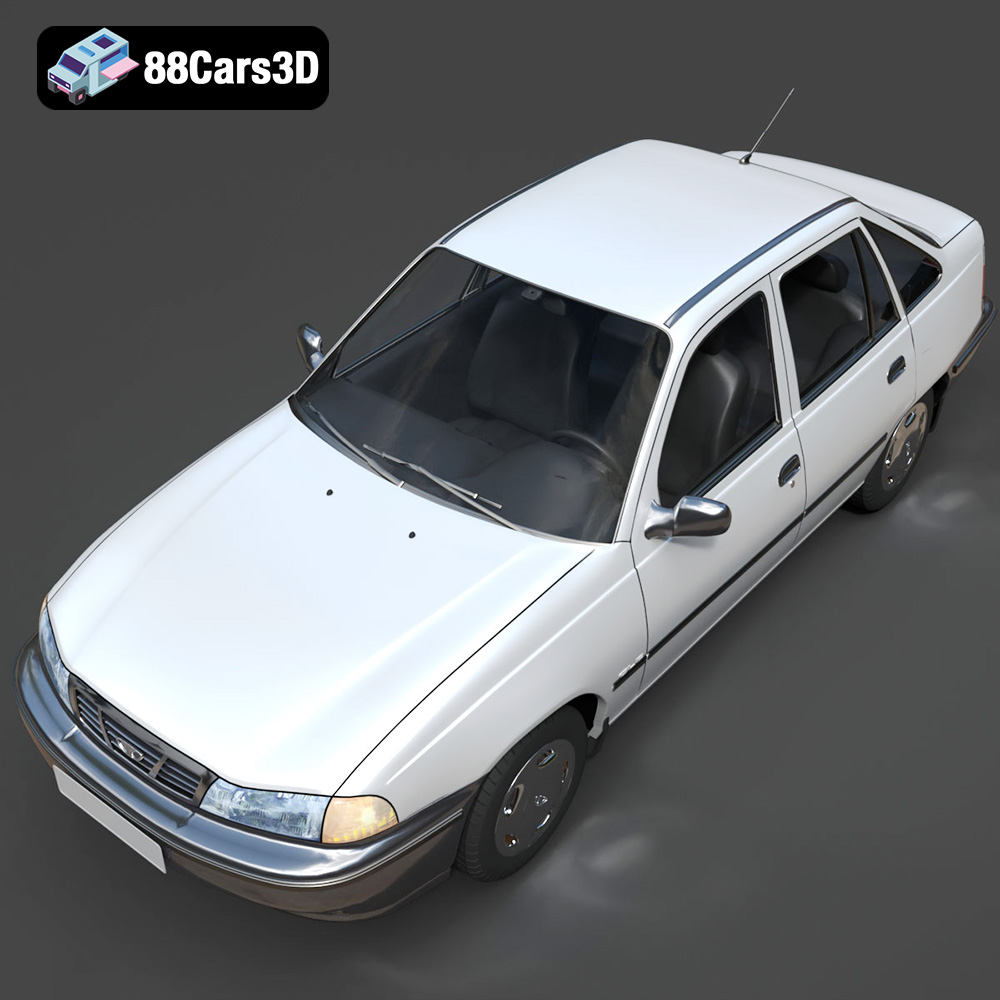
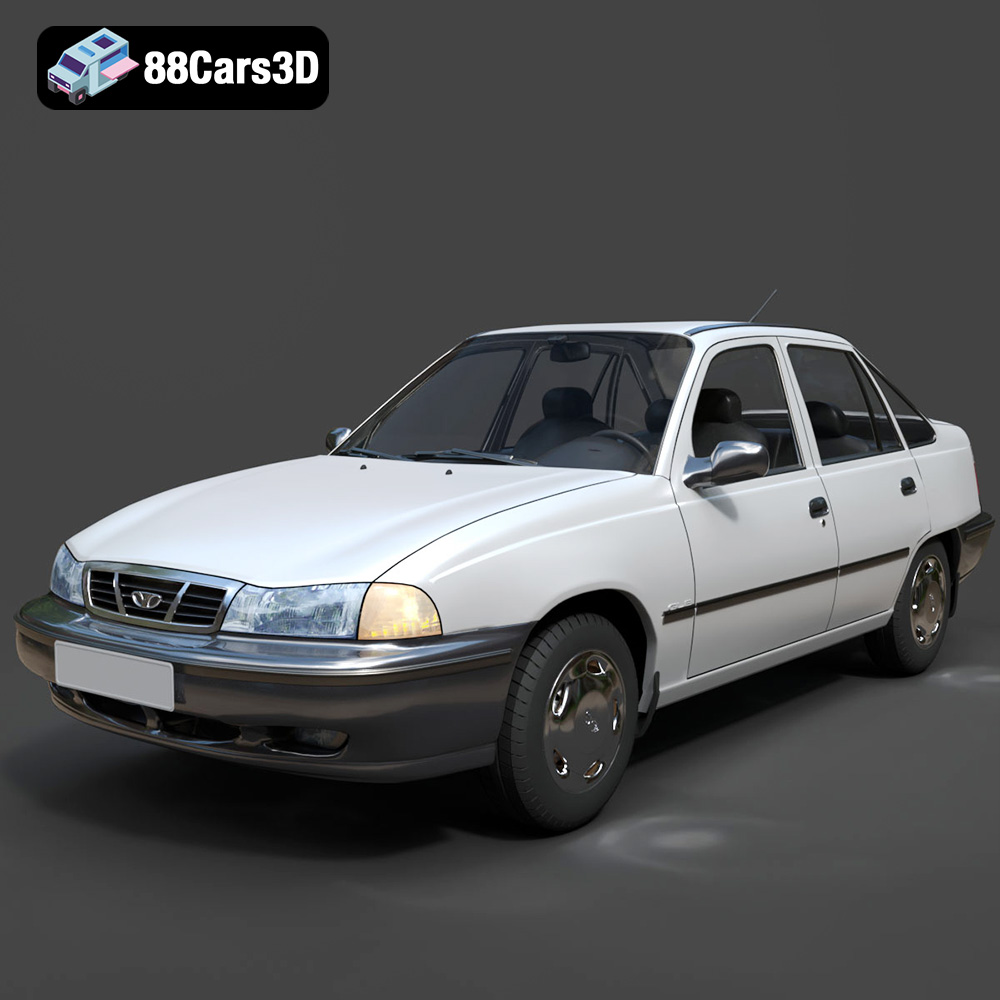
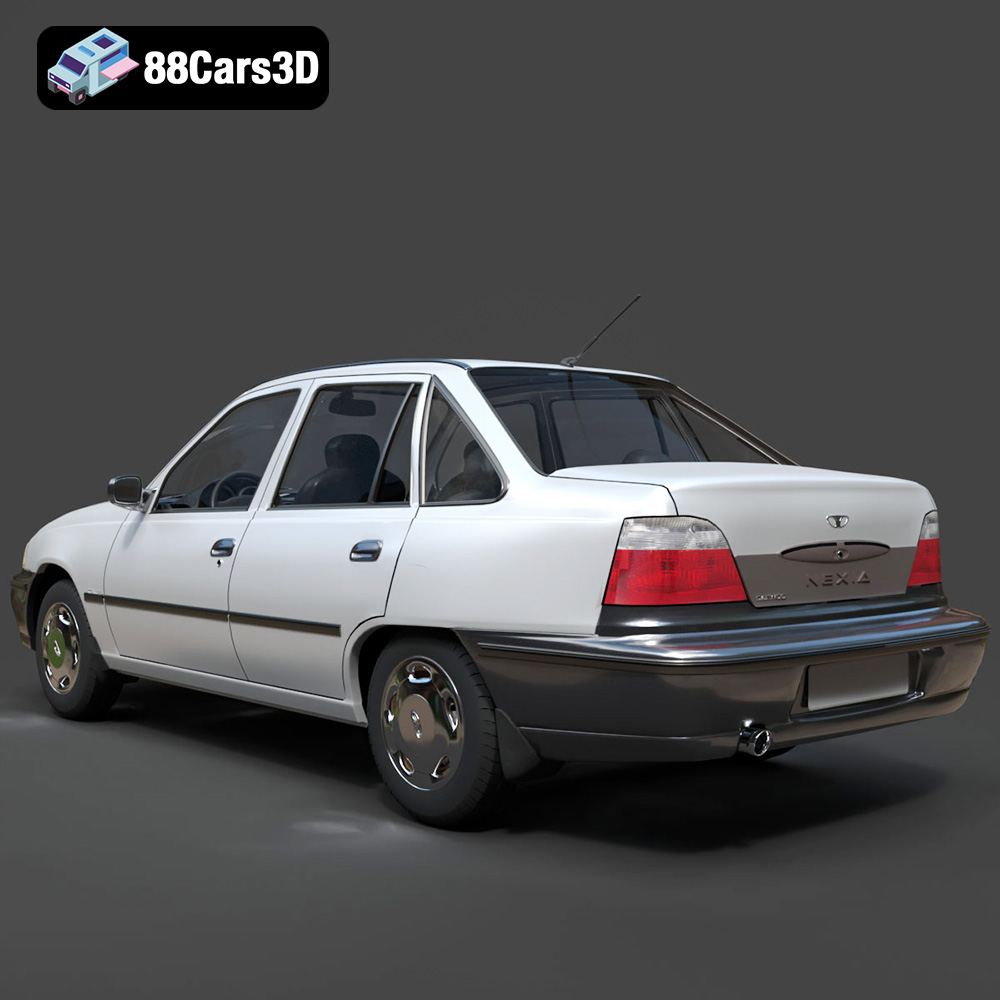
This is precisely where specialized assets like the Daewoo Nexia (N150) 3D Model shine. Representing a ubiquitous vehicle across Eastern Europe, Russia, and Central Asia, this model isn’t just a car; it’s a cultural staple. Its accurate recreation, from its N150 facelift aesthetics to its practical interior, allows creators to populate scenes with a level of regional accuracy that resonates deeply with audiences. Whether you’re aiming for a gritty urban taxi simulator, a realistic architectural walkthrough, or a vast open-world game, understanding the technical nuances and versatile applications of such a model is key to unlocking its full potential and elevating your projects to new heights.
Crafting a professional 3D car model is a meticulous process that blends artistic vision with technical precision. It goes far beyond simply “modeling a car”; it involves understanding real-world physics, manufacturing techniques, and the demands of various digital pipelines. A truly high-quality model is a finely tuned instrument, ready for diverse applications, from static renders to interactive simulations.
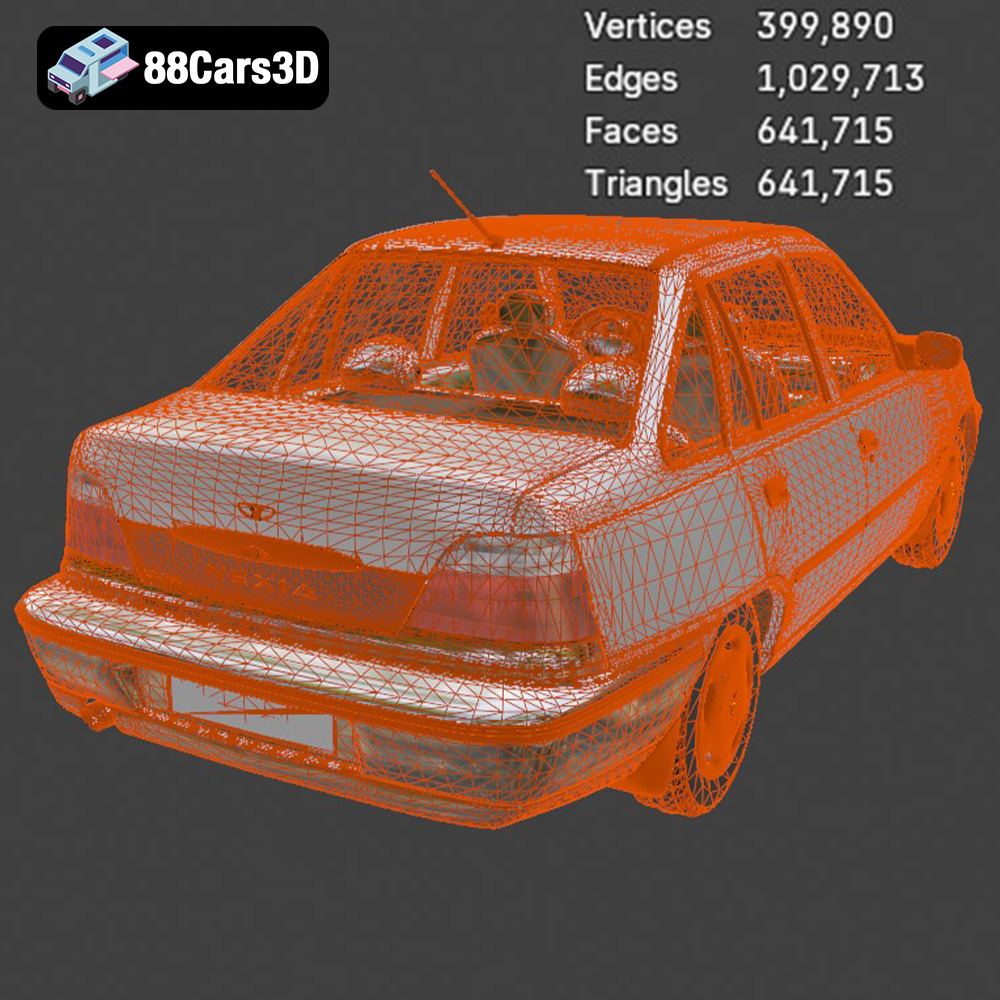
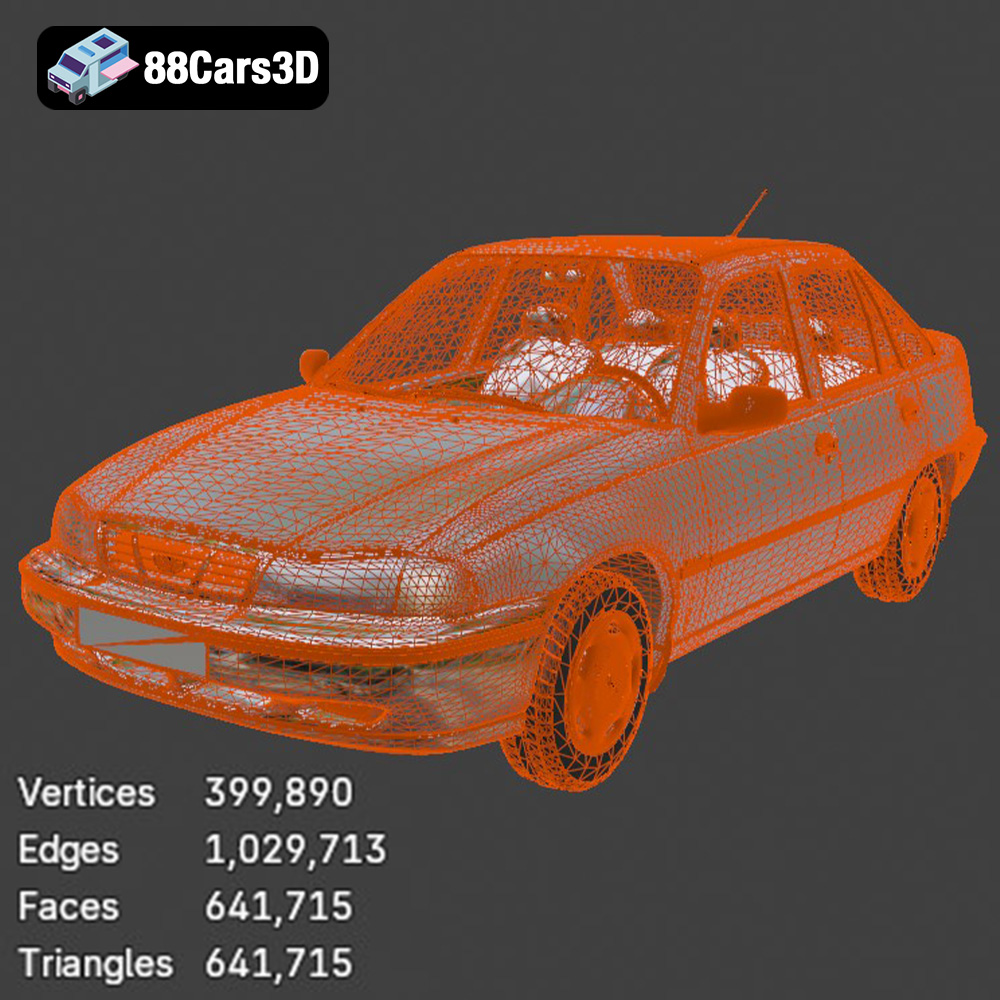
One of the perpetual challenges in 3D modeling, especially for vehicles, is finding the sweet spot between visual fidelity and performance efficiency. Too few polygons, and the model looks blocky and unrealistic; too many, and it bogs down real-time engines and inflates render times. The Daewoo Nexia (N150) 3D Model exemplifies this balance, boasting a perfectly tuned mid-to-high polygon topology with just over 641,000 triangles. This count is often referred to as the “Goldilocks zone” because it’s detailed enough for stunning close-up automotive rendering in ArchViz projects, where every curve and panel gap must be precise. Yet, it remains highly optimized for use as dense background traffic or even a drivable hero car in modern game engines like Unreal Engine and Unity, where frame rates are paramount.
This careful balance means developers don’t have to choose between visual appeal and functional performance. They get an asset that can serve multiple roles within a project without requiring extensive re-optimization, saving significant time and resources in development.
Beyond the raw polygon count, the quality of a 3D model’s topology—the arrangement of its vertices, edges, and faces—is critical. Clean, quad-based topology ensures smooth subdivision, artifact-free deformation during animation, and optimal performance for game engines. For the Daewoo Nexia, this translates to accurate body geometry, realistic panel gaps, and distinct features like the updated projector-style headlight assemblies and classic taillight clusters.
Equally vital is proper UV mapping. UVs are 2D coordinates that tell the 3D software how to apply textures to the model’s surface. A well-laid-out UV map maximizes texture resolution, prevents stretching or distortion, and makes it easy for artists to create and apply custom liveries, weathering effects, or material variations. For a model like the Nexia, clean UVs are essential for applying realistic paint finishes, glass reflections, and detailed interior textures, ensuring that its practical, driver-centric cabin layout appears authentic from every angle, whether viewed from the exterior or in a VR environment.
Accuracy in scale is non-negotiable for professional 3D assets. Models should always be built to real-world dimensions to integrate seamlessly into scenes without requiring manual scaling, which can introduce errors or inconsistencies. The Daewoo Nexia model is based on factory dimensions, ensuring that it looks correct alongside other vehicles, architectural elements, or human characters. This adherence to real-world scale is particularly important for ArchViz, where precise environmental context is key, and for game development, where consistent player interaction and world perception depend on accurate object sizing. Furthermore, the proper pivot setup for steering and wheel rotation implies that the model is ready for immediate integration into vehicle physics systems, a crucial detail for any drivable asset.
The digital world of 3D modeling relies on a variety of file formats, each with its own strengths, weaknesses, and intended applications. Choosing the right format is crucial for workflow efficiency, software compatibility, and achieving optimal results. The Daewoo Nexia (N150) 3D Model from 88cars3d.com is provided in a comprehensive suite of formats, ensuring maximum flexibility for any project pipeline.
The .blend file is Blender’s native format, containing an entire scene, including meshes, materials, textures, lighting, cameras, and animation data. When a model is provided in .blend, it offers the highest degree of editability and ensures that all aspects of the original artist’s setup are preserved. This is ideal for Blender users who want to dive deep into the model’s construction, modify materials, adjust geometry, or integrate it directly into their Blender-centric projects without loss of fidelity or requiring re-setup of complex material nodes. It’s the most artist-friendly format for those working within the Blender environment.
FBX (Filmbox) is a proprietary file format developed by Autodesk, widely regarded as the industry standard for exchanging 3D data between different software applications, particularly for game development. It can store models, animation, cameras, and lights, making it ideal for Unreal Engine, Unity, and other real-time pipelines. Its robust support for animations and hierarchical structures means a rigged model like the Daewoo Nexia, with its separate wheels and doors, can be imported with all its kinematic properties intact, ready for integration into a vehicle system or for cinematic sequences. The .fbx format is designed for efficiency and broad compatibility, making it a go-to for many professional studios.
OBJ (or Wavefront OBJ) is one of the oldest and most universally supported 3D file formats. It’s a simple, text-based format that primarily stores geometry (vertices, normals, UVs) and references to external material files (.mtl). While it doesn’t support animation, its widespread compatibility makes it excellent for cross-software transfers when only mesh data is needed. If you’re importing the Daewoo Nexia model into a less common 3D application or simply need the raw mesh data, .obj is a reliable choice for ensuring the model’s fundamental shape and UVs are preserved across almost any platform.
GLB (GL Transmission Format Binary) is a binary version of the glTF format, designed for efficient transmission and loading of 3D scenes and models on the web, AR, and VR applications. It encapsulates all necessary data—geometry, materials, textures, and animation—into a single file, making it incredibly easy to integrate into browser-based viewers or mobile AR experiences. For showcasing the Daewoo Nexia in an online configurator or deploying it into a lightweight mobile VR application, .glb offers optimal performance and a streamlined workflow.
STL (Stereolithography) is the standard file format for 3D printing. It represents a 3D model as a series of connected triangles (a triangular mesh), defining only the surface geometry of an object without color, texture, or other attributes. The Daewoo Nexia model, being convertible to .stl, opens up avenues for physical creation, allowing hobbyists or designers to print display-scale classic diecast models for urban dioramas or automotive collectibles. The specific recommendations for layer height, infill, and supports provided with the model are critical for successful physical output.
PLY (Polygon File Format) is another common format for storing 3D data, particularly useful for scanned data, CAD applications, and scientific visualization. It can store a wider range of properties than .obj, including color, transparency, and sometimes even normal vectors per vertex or face. While not as universally used as .fbx or .obj for general 3D art, its precision makes it valuable for applications requiring accurate mesh representation or analysis, such as reverse engineering or detailed CAD integration.
While not a standalone file format in the traditional sense, “.unreal” typically refers to an asset package specifically prepared for direct import and optimal performance within Unreal Engine. This might involve a well-structured .fbx export with collision meshes, LODs (Levels of Detail), and a pre-configured material setup within the engine itself, or a direct Unreal project asset. Having the Daewoo Nexia available in an Unreal-ready format means developers can bypass much of the tedious setup process, quickly integrating it into their scenes with pre-assigned materials, textures, and collision properties, significantly accelerating game development workflows.
The .max file is Autodesk 3ds Max’s native scene format, similar to how .blend functions for Blender. It stores the complete 3ds Max scene, including all models, lights, cameras, animations, and materials, making it fully editable within 3ds Max. For artists and studios whose pipeline is centered around 3ds Max for animation, rendering, or architectural visualization, the .max file provides the most comprehensive and flexible starting point for utilizing the Daewoo Nexia model, allowing for deep customization and seamless integration into existing 3ds Max projects.
High-quality 3D car models are the backbone of photorealistic visualization. Whether for still images, animations, or interactive experiences, the ability to render vehicles with stunning realism is paramount. The Daewoo Nexia (N150) 3D Model is particularly well-suited for a variety of rendering applications, breathing life into digital scenes.
In ArchViz, the goal is to create compelling visual representations of unbuilt architecture. Cars are often essential for grounding a building in a realistic context, providing scale, and indicating the purpose or style of the environment. Generic cars can sometimes break immersion. However, a model like the Daewoo Nexia, an everyday sight in Eastern European or Central Asian cities, offers unparalleled regional accuracy. Imagine an ArchViz project depicting a new residential complex in Kyiv or a bustling street scene in Tashkent. Populating these scenes with recognizable Daewoo Nexias instantly adds a layer of cultural authenticity and realism that resonates deeply with local audiences. Its balanced topology ensures it looks fantastic in foreground renders while remaining efficient for background elements, making it the perfect vehicle for depicting realistic, region-accurate traffic.
Beyond static ArchViz, the Nexia model’s detail also lends itself to cinematic rendering. For animated sequences, commercials, or even short films set in its native regions, having a production-ready model saves countless hours of development. Its separated components—wheels, steering, and doors—mean it’s primed for rigging and animation, allowing for dynamic camera shots and realistic movement. While perhaps not a luxury car, its ubiquity makes it an ideal subject for showcasing urban life, logistics, or even historical contexts. The ability to customize its paint colors, add taxi signs, or apply weathering effects further enhances its utility for diverse narrative needs.
A 3D model is only as good as its materials and textures. High-quality PBR (Physically Based Rendering) materials accurately simulate how light interacts with surfaces, creating convincing reflections, refractions, and diffuse properties. For a car model, this means realistic metallic paint flakes, subtle wear and tear on plastic trims, accurate glass transparency, and convincing rubber on tires. The Daewoo Nexia’s provided textures and materials are designed to enhance its real-world look, from its classic factory colors to the cloth/vinyl texture mapping for its five-passenger interior. These details are crucial for achieving photorealism in any rendering engine, be it V-Ray, Corona, Arnold, or cycles within Blender. For artists, having these elements pre-configured within the provided file formats significantly streamlines the rendering pipeline.
The interactive nature of game development places unique and demanding requirements on 3D assets. Performance, interactivity, and visual consistency are paramount. High-quality 3D car models are central to creating immersive game worlds, from open-world adventures to specialized driving simulators. The Daewoo Nexia (N150) 3D Model is an excellent example of an asset engineered for this dynamic environment.
In game development, assets often fall into two categories: “hero assets” that are central to gameplay and highly detailed, and “background assets” that are less detailed for performance reasons. The Daewoo Nexia model’s perfectly balanced topology (641k triangles) allows it to bridge this gap. It’s detailed enough to function as a drivable hero car in a focused taxi simulator or a delivery game, where players spend significant time interacting with it. Simultaneously, its optimization ensures it can be efficiently instanced as dense background traffic in large open-world environments set in CIS or Eastern European cities without causing severe lag. This versatility is incredibly valuable for game studios looking to populate their worlds authentically without needing to source or create separate low-poly and high-poly versions of the same vehicle.
For any vehicle in a game, realistic movement and interaction are crucial. The Daewoo Nexia model comes with separate wheels, steering components, and doors, which are essential prerequisites for rigging. Rigging involves creating a skeletal structure that allows animators and physics engines to control parts of the model independently. With these components separated and proper pivot points set up, game developers can easily implement:
The inclusion of an .unreal file format option further emphasizes its readiness for direct integration into game engines, implying pre-configured collision meshes and LODs that are vital for performance and accurate physics simulation in real-time environments.
Achieving smooth frame rates in a complex game world requires constant optimization. While the Daewoo Nexia is detailed, its topology is considered “game-ready” due to its balanced nature. This means it avoids excessively dense meshes where they’re not needed and is efficiently structured. Developers can further optimize it by generating Levels of Detail (LODs) – lower-polygon versions of the model that automatically swap in when the car is far from the camera. This drastically reduces the computational load without noticeably impacting visual quality from a distance. For mobile game development or AR/VR experiences, where hardware resources are more constrained, this kind of inherent optimization is a huge advantage, enabling rich, detailed scenes without compromising user experience.
The utility of 3D car models extends far beyond traditional rendering and game development, venturing into the tangible world of 3D printing and the immersive realms of augmented and virtual reality.
The availability of the Daewoo Nexia (N150) 3D Model in .stl format immediately unlocks its potential for physical creation. This is particularly exciting for automotive enthusiasts, hobbyists, and model makers. Imagine a highly detailed, display-scale Daewoo Nexia miniature, perfect for urban dioramas or a collector’s shelf. The product description provides specific, crucial 3D print settings:
Post-processing instructions (sanding, primer, classic factory colors) further guide users in achieving a professional, factory-finish look for their physical model. This capability transforms a digital asset into a tangible collectible or a valuable prototyping tool.
AR (Augmented Reality) and VR (Virtual Reality) are rapidly expanding fields that demand highly optimized and realistic 3D assets. The Daewoo Nexia model, particularly in the .glb format, is perfectly suited for these applications. In VR, it can populate interactive digital city-planning experiences, allowing users to explore urban environments with realistic traffic flow. For AR, imagine overlaying a digital Nexia onto a real-world street through a smartphone, allowing for interactive vehicle showcases or urban planning simulations. Its optimized interior geometry, tailored to look great from the exterior or in VR, ensures a consistent and immersive experience whether a user is viewing it from afar or virtually sitting inside the cabin. The balanced poly count is critical here, as AR/VR often run on mobile devices or standalone headsets with limited processing power.
The ability to customize 3D models is key for both physical prototyping and digital iteration. For the Daewoo Nexia, customization options include changing exterior paint colors to match striking city-car palettes, adding classic yellow “Taxi” roof signs and checker decals for urban renders, or applying weathering materials like dust, mud, or snow to create gritty, realistic winter scenes. These options allow designers to quickly test different aesthetics, scenarios, or branding ideas. In a prototyping context, a 3D printable version of the model allows for quick physical mock-ups, while digital iterations can explore various design changes or environmental integrations without costly physical production.
In a world saturated with generic 3D models, the true value of a specialized automotive asset like the Daewoo Nexia (N150) 3D Model from 88cars3d.com lies in its ability to deliver unparalleled authenticity and versatility. It addresses niche demands while offering robust technical specifications that appeal to a broad range of professional workflows.
Many projects require more than just “a car”; they demand a specific car that resonates with a particular region or demographic. The Daewoo Nexia N150 is an iconic budget-friendly sedan, an absolute staple of everyday life across Eastern Europe, Russia, and Central Asia. By including such a vehicle, creators can instantly establish a sense of place and time that generic, globally recognized cars simply cannot achieve. This regional authenticity is crucial for projects targeting specific cultural contexts, whether it’s a documentary animation, an educational VR experience, or a game designed for a particular market. It transforms a digital scene from a generic backdrop into a believable, living environment.
Time is a critical resource in professional creative pipelines. Creating a high-quality 3D car model from scratch is an incredibly time-consuming and skill-intensive process. By leveraging a pre-made, production-ready asset like the Daewoo Nexia, artists and developers can significantly reduce development cycles and allocate their efforts to other crucial aspects of a project. The model’s comprehensive file format support (.blend, .fbx, .obj, .glb, .stl, .ply, .unreal, .max) ensures seamless integration into virtually any professional software suite, minimizing conversion issues and maximizing efficiency. This ready-to-use nature, coupled with its balanced topology and real-world scale, makes it an intelligent investment for any studio or freelancer.
Investing in high-quality 3D car models is about future-proofing your digital asset library. An asset with clean topology, proper UVs, and multiple format options will remain usable and adaptable across evolving software versions and project requirements. The Daewoo Nexia (N150) 3D Model exemplifies the kind of meticulous detail and technical excellence that 88cars3d.com is known for. It’s not just a model; it’s a reliable, versatile tool designed to meet the rigorous demands of professional rendering, game development, AR/VR, and 3D printing. For anyone seeking to elevate their automotive rendering or populate their digital worlds with authentic, high-fidelity 3D car models, exploring the offerings at 88cars3d.com is a definitive step toward achieving outstanding results.
The world of 3D modeling thrives on precision, authenticity, and technical excellence. As we’ve explored, a high-quality 3D car model is far more than just a digital representation; it’s a versatile asset capable of transforming architectural visualizations, breathing life into game environments, driving innovation in AR/VR, and even enabling the creation of tangible objects through 3D printing. The journey from concept to a polished, professional 3D model involves a delicate balance of artistic detail and rigorous technical specifications, ensuring adaptability across diverse professional pipelines.
The Daewoo Nexia (N150) 3D Model stands out as a prime example of such an asset. Its meticulous recreation of an everyday icon, combined with its perfectly balanced topology of 641,715 triangles and comprehensive file format support, makes it an invaluable tool for creators seeking regional authenticity and robust performance. Whether you’re an ArchViz artist needing to populate a bustling Eastern European street, a game developer crafting a realistic urban simulator, or a hobbyist looking to 3D print a classic car miniature, the Nexia model offers the technical foundation and visual fidelity required for truly impactful projects. Investing in such specialized, high-quality 3D car models from trusted marketplaces ensures that your digital creations are not just visually appealing, but also technically sound and future-proof.
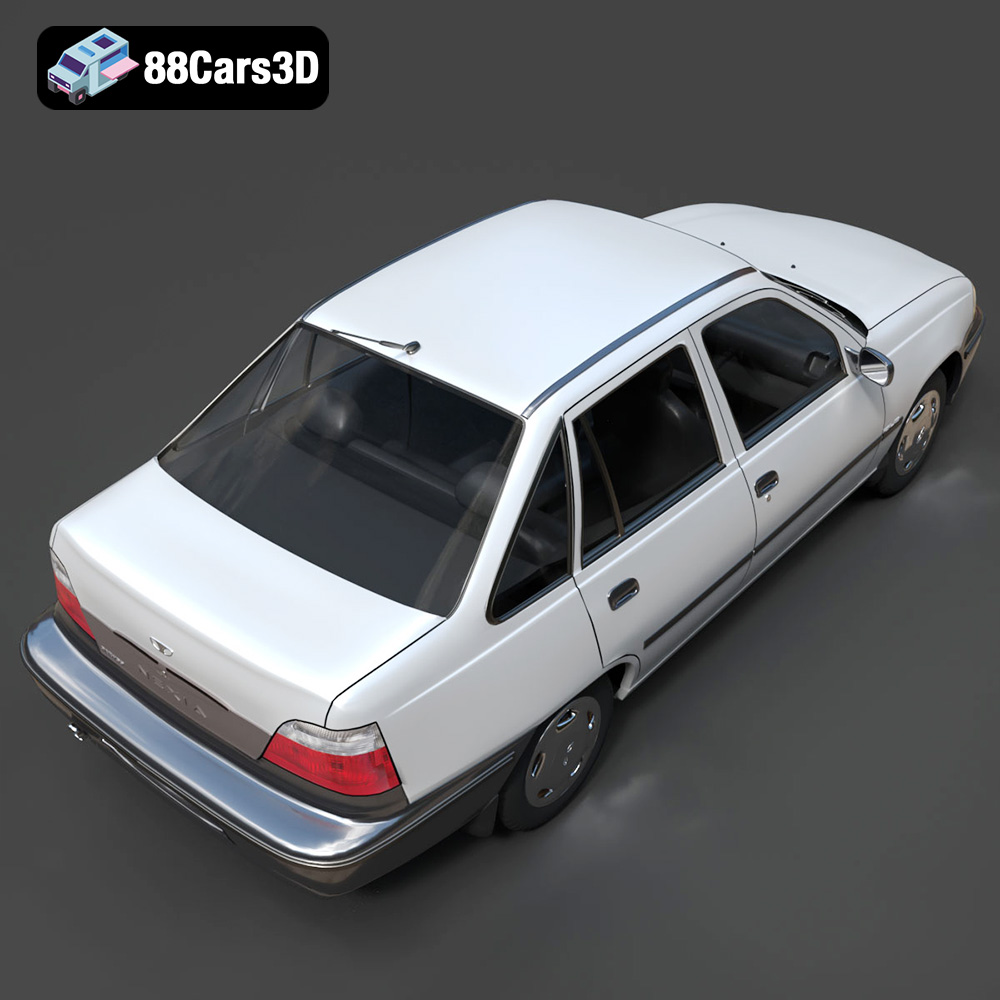
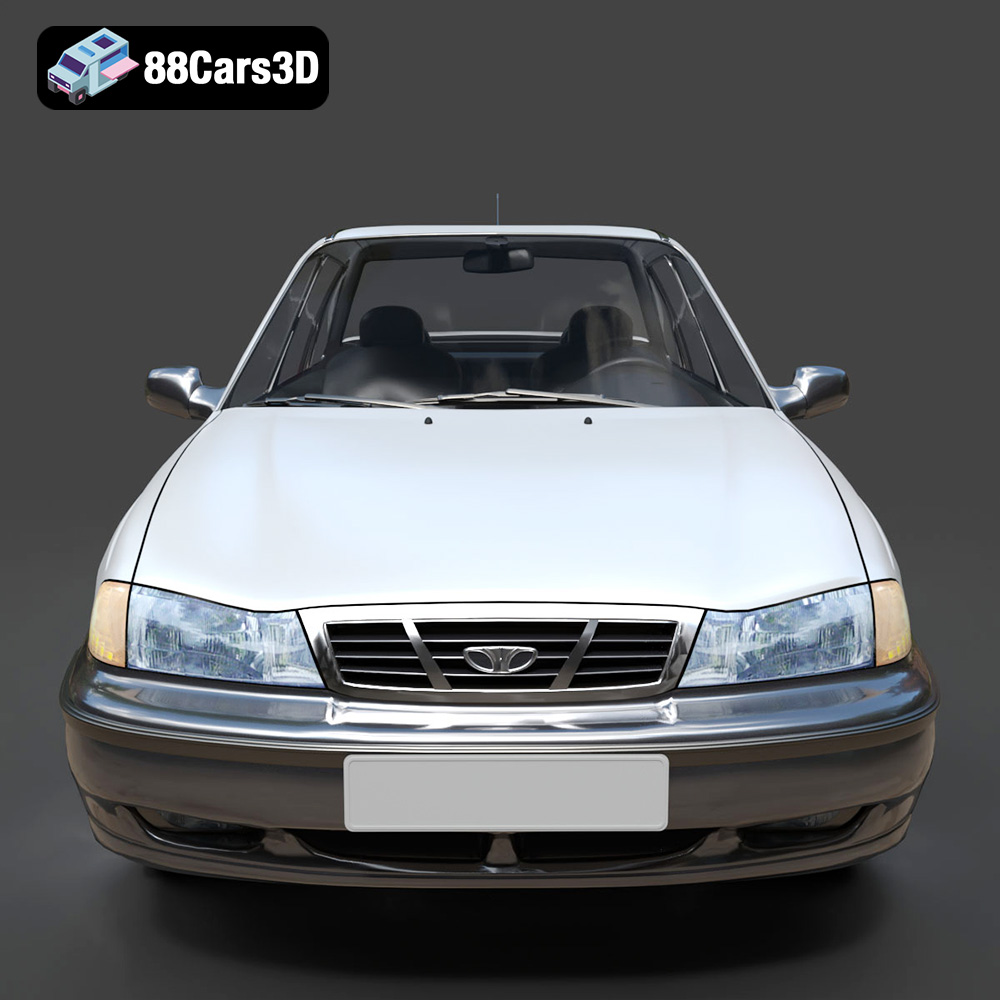
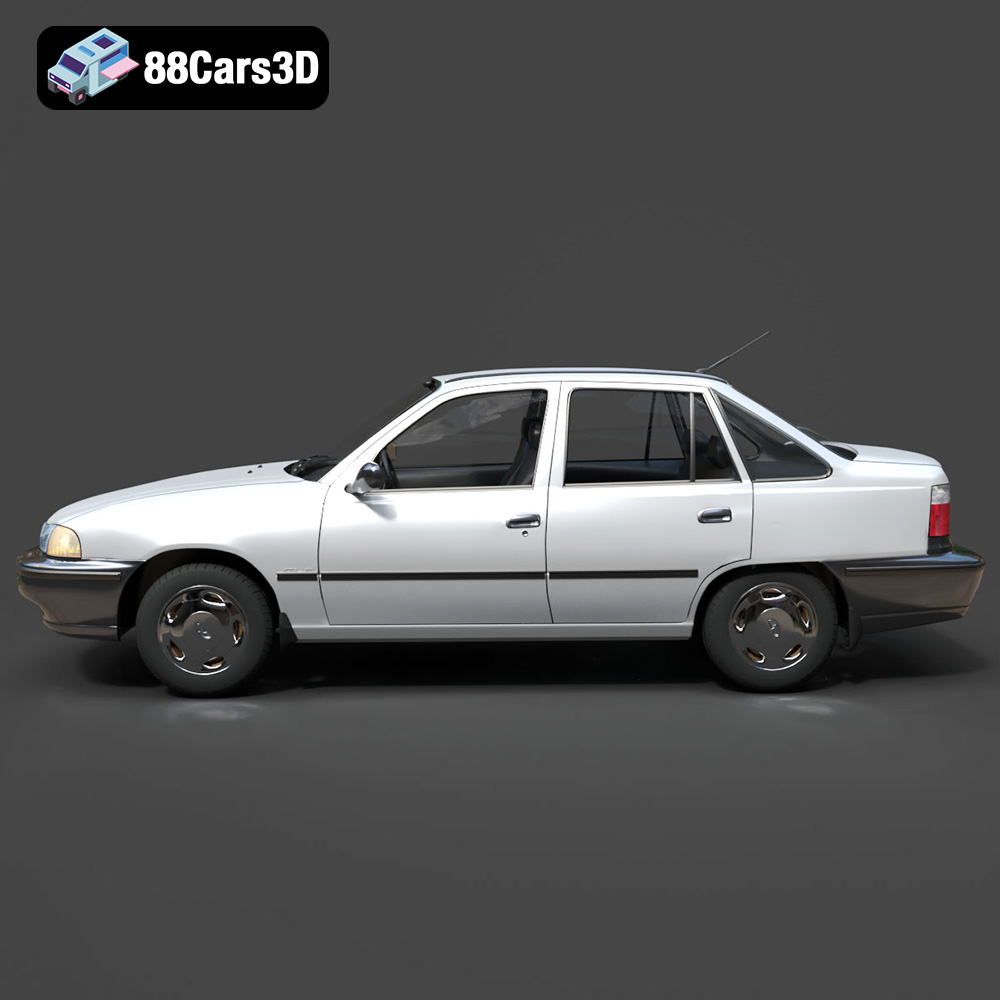
The Daewoo Nexia 3D Model is a highly accurate digital recreation of the legendary budget-friendly sedan. Specifically representing the N150 facelift generation (widely produced by UzDaewoo), this vehicle is an absolute staple of everyday life, serving as a reliable family car, urban taxi, and daily commuter across Eastern Europe, Russia, and Central Asia. This 3D model beautifully captures the modernized aesthetic of the N150 facelift, featuring the updated projector-style headlight housings, the smoothed-out front bumper and grille, and the classic, practical sedan proportions originally derived from the Opel Kadett E platform. Built with a perfectly balanced mid-to-high polygon topology (just over 641k triangles), it provides excellent visual fidelity for close-up automotive rendering while remaining highly optimized for background traffic in modern game engines. Perfect for populating realistic CIS or Eastern European street scenes, architectural visualizations, urban taxi simulators, and mobile game development.
$34.99