Get 50% OFF All Premium 3D & STL Models!

The allure of automotive design transcends the physical realm, captivating enthusiasts and professionals alike with its blend of engineering prowess and aesthetic beauty. In the digital age, this fascination finds a powerful outlet in 3D modeling, where vehicles are brought to life with astonishing detail and realism. From breathtaking cinematic renders to immersive game environments and interactive AR/VR experiences, high-quality 3D car models are the bedrock of countless innovative projects.
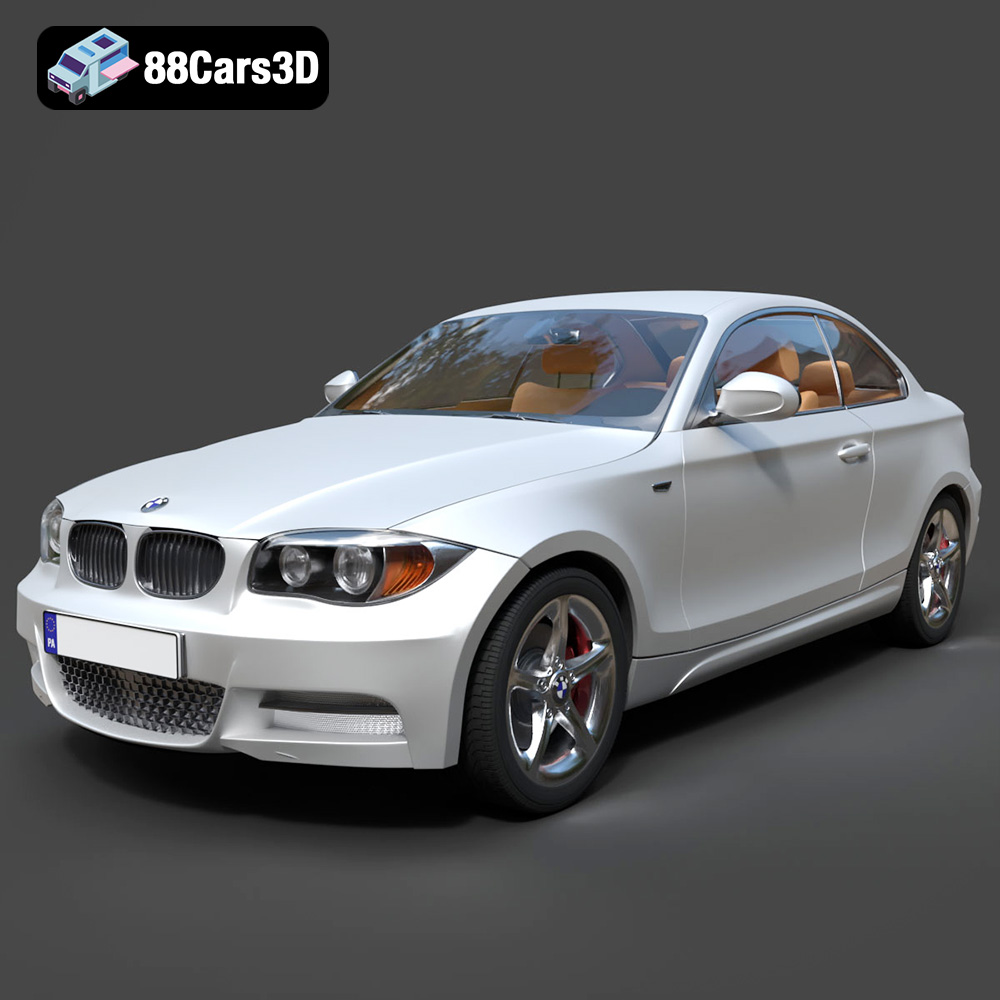
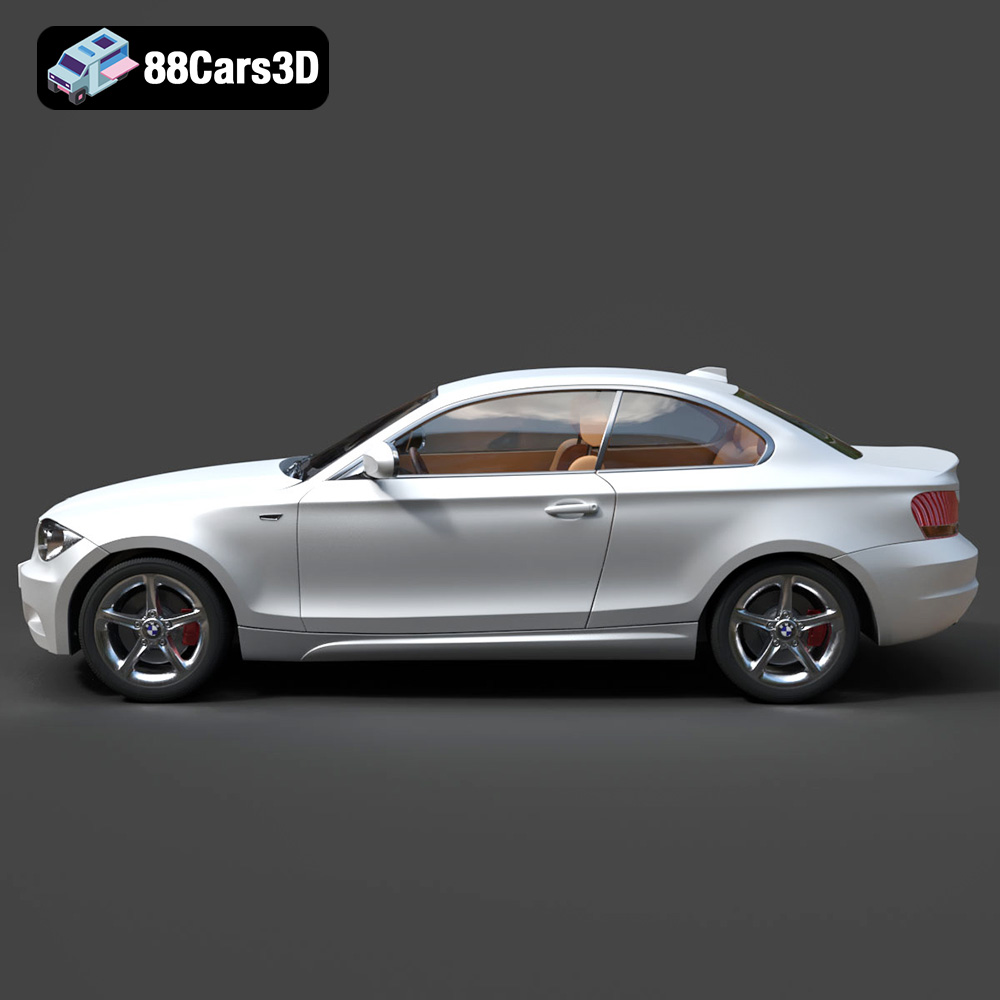
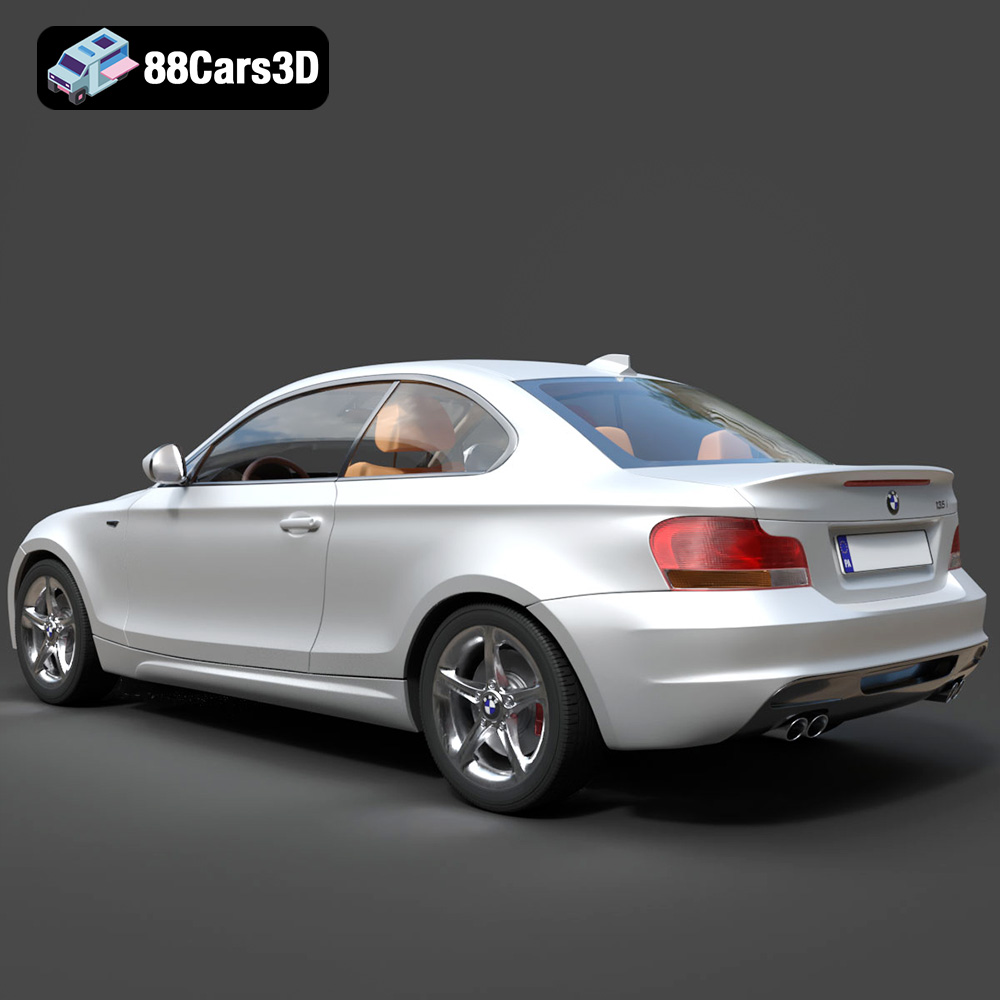
Today, we’re diving deep into an exceptional example of digital craftsmanship: the BMW 1 Series Coupe 2009 3D Model. This meticulously crafted asset, available on 88cars3d.com, encapsulates the spirit of the compact premium sports coupe, known for its balanced chassis, rear-wheel-drive dynamics, and distinctive BMW styling. It’s more than just a model; it’s a versatile tool engineered to elevate your professional automotive rendering, game development, and visualization workflows, offering a foundation of precision and detail for any creative endeavor.
Creating a truly accurate and usable 3D car model is a sophisticated process, demanding both artistic vision and technical precision. It’s about faithfully capturing every curve, panel gap, and component, while simultaneously ensuring the digital asset is optimized for diverse applications.
The journey begins with meticulous research and reference gathering, ensuring that every design cue, from the iconic kidney grille to the sculpted hood lines and specific alloy wheel detailing, is replicated with exacting accuracy. For the BMW 1 Series Coupe 2009 3D Model, this means a faithful representation of its unique character, providing artists and developers with a true-to-life foundation. This attention to detail is paramount, as even subtle inaccuracies can compromise the realism of a final render or the believability of a game asset.
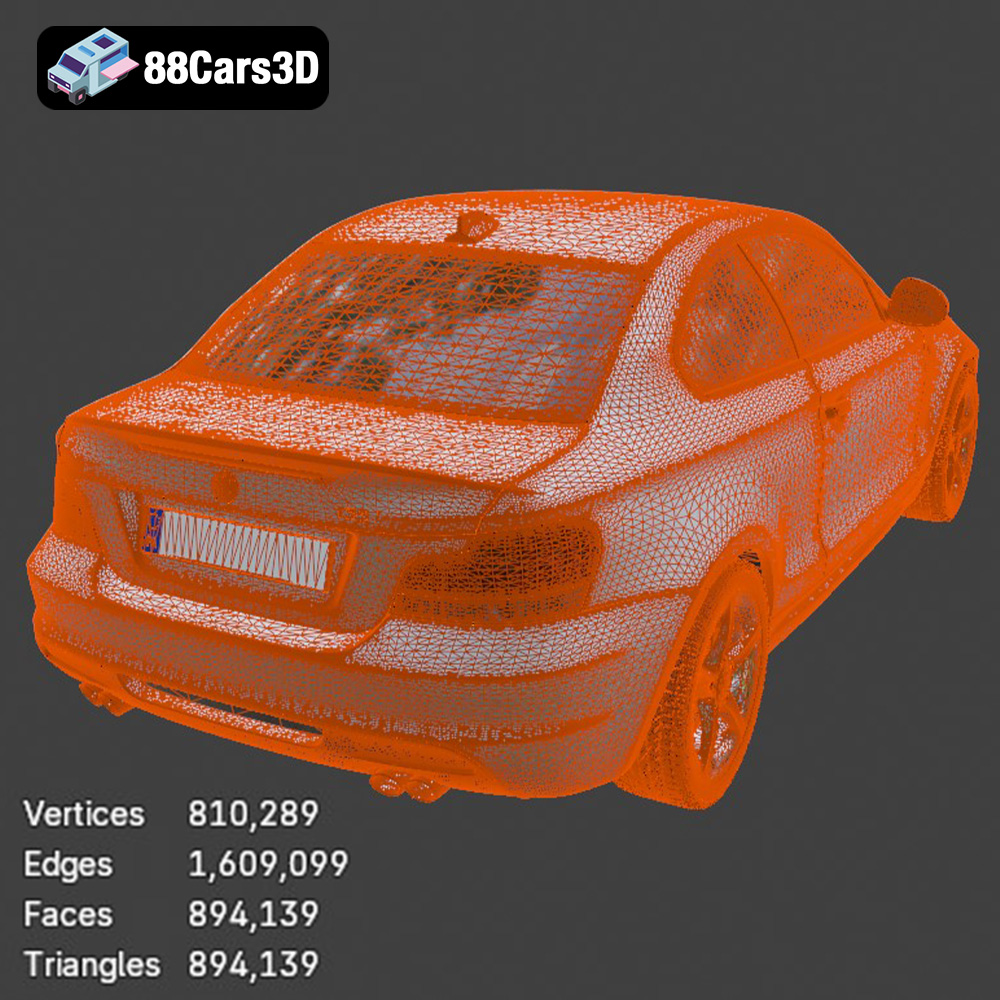
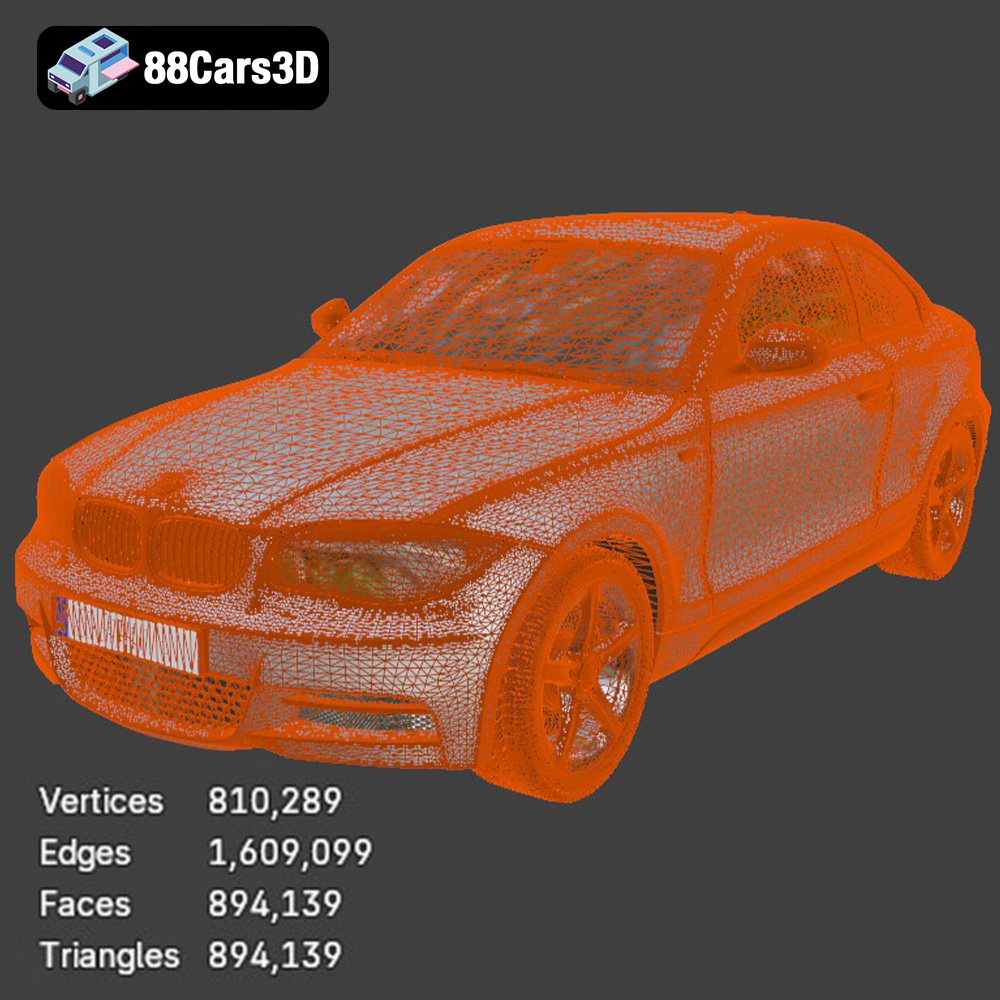
Beyond visual fidelity, a professional 3D car model must translate physical characteristics into a digital format that is both robust and flexible. This includes maintaining real-world scale accuracy, employing clean, well-organized mesh structures, and setting up proper pivots for crucial elements like wheels and steering. Such technical advantages ensure the model performs flawlessly across different software environments and engines, making it a true workhorse for any professional pipeline. Whether you are aiming for photorealistic automotive rendering or developing responsive game assets, the underlying technical integrity is non-negotiable.
One of the most critical aspects of working with 3D car models, especially a versatile asset like the BMW 1 Series Coupe 2009 3D Model, is understanding the various file formats it comes in. Each format serves a specific purpose, offering unique advantages for different stages of a professional workflow. Choosing the correct format can significantly impact compatibility, performance, and the level of detail retained. Let’s delve into the formats included with this exceptional model.
The .blend format is Blender’s native file type, offering a fully editable scene complete with materials, textures, lighting setups, and even animation data. For users working within the Blender ecosystem, this format provides maximum flexibility. You can easily modify the mesh, adjust shaders, re-rig components, or expand upon existing animations without any data loss. It’s the go-to for artists who want to deeply customize the model, whether for high-end rendering with Cycles or real-time visualization with Eevee. The BMW 1 Series Coupe 2009 .blend file ensures that all aspects of the model are readily accessible and tweakable for Blender artists.
.fbx (Filmbox) is a proprietary file format owned by Autodesk and is one of the most widely supported 3D exchange formats. It’s ideal for transferring 3D data, including geometry, materials, textures, animation, and rigs, between various digital content creation (DCC) tools like 3ds Max, Maya, Blender, and primarily, game engines like Unreal Engine and Unity. Its strength lies in its ability to encapsulate complex scene data while maintaining relatively good compatibility. When importing the BMW 1 Series Coupe 2009 3D Model as an .fbx, developers can expect a smooth transition into their real-time pipelines, with pivot points and basic material assignments largely intact, ready for engine-specific material setup.
The .obj (Wavefront Object) format is a simple, universal geometry definition file. It stores 3D geometry data—vertices, normals, texture coordinates, and faces—and can reference external material definition files (.mtl). While it doesn’t support animation or rigging, its widespread adoption makes it an excellent choice for basic mesh exchange between virtually any 3D software. For the BMW 1 Series Coupe 2009 model, the .obj format serves as a reliable fallback, ensuring that the core geometry is accessible even in niche applications or older software versions, making it universally compatible for cross-software integration and basic rendering.
.glb (GLB format, an evolution of glTF) is a compact, single-file format optimized for web-based 3D applications, augmented reality (AR), and virtual reality (VR). It efficiently packs mesh data, textures, and animations into a single binary file, making it incredibly easy to load and display in browsers and mobile AR/VR viewers. The BMW 1 Series Coupe 2009 .glb file is perfect for creating interactive web experiences, virtual showrooms, or integrating into AR apps, providing a lightweight yet visually rich representation of the vehicle without the need for complex plugins or high computational overhead.
The .stl (Stereolithography) format is the industry standard for 3D printing. It describes only the surface geometry of a 3D object using a collection of triangles, without color, texture, or other CAD attributes. For manufacturing and rapid prototyping, .stl is king. The inclusion of the .stl format for the BMW 1 Series Coupe 2009 3D Model means it is ready for physical fabrication, allowing designers and hobbyists to bring the digital car into the physical world as a collectible scale model or display miniature. Crucially, an .stl file for 3D printing needs to have “manifold” geometry, meaning it’s a closed, watertight mesh, which this model ensures.
.ply (Polygon File Format) is another format for storing 3D data, often used in scientific and scanning applications. It can store a wider range of properties than .obj, including color, transparency, and sometimes even a normal per vertex. It’s particularly useful for high-precision mesh data derived from 3D scanning or for applications requiring detailed geometric analysis, such as reverse engineering or CAD workflows. While less common for general rendering, its presence for the BMW 1 Series Coupe 2009 offers an avenue for specialized engineering or analysis tasks.
The .unreal format, or more broadly, assets configured and saved specifically for Unreal Engine, signifies a model that has undergone optimization and setup tailored for this powerful real-time platform. This often implies proper material assignments using Unreal’s PBR workflow, correct scale, and potentially even LOD (Level of Detail) setups or basic collision meshes. For game developers and cinematic artists working with Unreal Engine, having a pre-configured .unreal asset like the BMW 1 Series Coupe 2009 can dramatically reduce import and setup time, allowing for immediate integration into projects.
Finally, the .max format is Autodesk 3ds Max’s native file format. Like .blend for Blender, it stores an entire 3ds Max scene, including geometry, lights, cameras, materials, modifiers, and animation data. Professionals relying on 3ds Max for architectural visualization, product design, or high-end automotive rendering will find the .max file invaluable. It allows for complete control over the model, enabling extensive modifications, rigging for complex animations, and leveraging 3ds Max’s powerful rendering capabilities with V-Ray, Corona, or Arnold. The BMW 1 Series Coupe 2009 in .max ensures full compatibility for 3ds Max users seeking to integrate it into their most demanding projects.
The comprehensive range of included file formats for the BMW 1 Series Coupe 2009 3D Model underscores its versatility, making it a truly adaptable asset for any professional pipeline, from high-fidelity automotive rendering to interactive game assets and physical prototypes.
The true potential of a high-quality 3D model like the BMW 1 Series Coupe 2009 shines brightest in the realm of high-end rendering. Achieving photorealism requires a masterful blend of material definition, lighting, and scene composition, all built upon a solid model foundation.
For many professionals in automotive rendering and visualization, 3ds Max paired with renderers like V-Ray or Corona remains the industry standard. Importing the .max file of the BMW 1 Series Coupe 2009 provides immediate access to an optimized project. The workflow involves setting up physically-based rendering (PBR) materials for the car’s body paint (e.g., metallic flakes, clear coat), glass, tires, and chrome accents. Utilizing HDRI (High Dynamic Range Image) lighting combined with targeted area lights can simulate realistic studio or environmental reflections. Camera angles, depth of field, and post-production in software like Photoshop further enhance the cinematic quality. The model’s clean topology ensures smooth subdivision for close-up renders, capturing every subtle curve and reflection with pristine clarity, essential for car commercials or dealership visuals.
Blender, with its powerful Cycles and real-time Eevee renderers, offers an equally compelling platform for automotive visualization. Starting with the .blend file, artists can leverage Blender’s intuitive node-based material system to create stunning PBR shaders. Cycles excels at unbiased photorealistic rendering, perfect for hero shots and detailed animations, while Eevee allows for rapid iterations and real-time previewing, ideal for client feedback. The BMW 1 Series Coupe 2009 model’s separate wheels and steering components are invaluable here, simplifying the process of rigging for animation – from a simple wheel spin to a full driving sequence. HDRI environments, combined with carefully placed light probes and reflection planes, ensure accurate reflections and believable ambient lighting, crucial for any open-world simulations or cinematic projects.
Beyond static renders, the BMW 1 Series Coupe 2009 3D Model is engineered for dynamic, interactive environments, making it an ideal game asset or component for immersive AR/VR experiences.
For game development, the .fbx and .unreal formats are paramount. Importing the BMW 1 Series Coupe 2009 into Unreal Engine or Unity involves setting up optimized PBR materials tailored for real-time performance. This typically includes albedo, normal, roughness, metallic, and ambient occlusion maps. Developers will leverage the model’s ‘optimized polygon flow’ to create appropriate Levels of Detail (LODs), ensuring smooth performance across various platforms. Collision meshes are essential for realistic physics and interaction, allowing the car to drive, crash, and react credibly within the game world. The ‘proper pivot setup’ for steering and wheel rotation simplifies the integration into vehicle physics systems, enabling realistic driving mechanics for racing simulations or open-world games.
The compact and efficient .glb format makes the BMW 1 Series Coupe 2009 3D Model exceptionally suited for Augmented Reality (AR) and Virtual Reality (VR) applications. Imagine a virtual showroom where potential buyers can walk around the 2009 1 Series Coupe, change its color, open its doors, and even sit inside—all rendered in real-time on a mobile device or VR headset. The ‘real-world scale accuracy’ of the model is critical for creating a convincing sense of presence and immersion in these environments. Developers can create interactive driving experiences or product configurators, leveraging the model’s optimized geometry for smooth frame rates, crucial for preventing motion sickness in VR and ensuring a fluid AR experience.
The versatility of the BMW 1 Series Coupe 2009 3D Model extends beyond digital displays, offering the exciting possibility of physical manifestation through 3D printing. This capability opens doors for collectors, prototypers, and automotive enthusiasts to own a tangible piece of automotive history.
The inclusion of the .stl format is crucial for bringing this digital asset into the physical world. STL files are the universal language of 3D printers, defining the geometry of an object through a series of connected triangles. For more specialized or high-precision industrial applications, the .ply format can also be utilized, often retaining more information about the mesh. Ensuring the model has “manifold geometry” – a perfectly watertight mesh without holes or self-intersecting faces – is paramount for successful 3D printing. The BMW 1 Series Coupe 2009 3D Model is designed with this integrity in mind, ensuring a seamless transition from screen to nozzle.
Transforming the BMW 1 Series Coupe 2009 from a digital file to a physical collectible requires careful consideration of 3D print settings. The product’s description provides excellent guidance: recommended scales (1:32, 1:24, 1:18, 1:12) allow for various display options. A layer height of 0.08–0.16 mm ensures a balance between detail and print time, while a wall thickness of 1.2–2.0 mm provides structural integrity. Supports are often necessary for overhangs like mirrors, bumper details, and underbody sections to prevent deformation during printing. Post-processing, including sanding, priming, and applying a gloss automotive paint finish, can elevate the miniature to a museum-quality display piece. This feature makes the BMW 1 Series Coupe 2009 3D Printable STL a truly unique offering for physical asset creation.
A truly professional 3D car model offers more than just fidelity; it provides flexibility. The BMW 1 Series Coupe 2009 3D Model is built with customization in mind, empowering users to tailor it to their specific project needs.
The ability to customize body color and trim accents is fundamental for any automotive visualization. Whether you need a classic black coupe for an urban scene or a vibrant red one for a sporty commercial, the model provides the foundation. Adding sport package elements or performance wheels can instantly transform its character, while modifying ride height or stance allows for dynamic visual adjustments. Even subtle details like custom license plates can significantly enhance realism and storytelling. The flexibility to configure lighting for city, track, or showroom scenes further amplifies its adaptability, ensuring the BMW 1 Series Coupe 2009 can fit seamlessly into diverse contexts without requiring extensive re-modeling. This level of customization dramatically accelerates workflow, saving invaluable time for artists and developers.
The inherent versatility of this 3D model means it’s not confined to a single purpose. It’s a powerful asset for high-end automotive rendering, creating visually stunning marketing materials or product showcases. As a game asset, its optimized geometry and clear technical advantages make it ideal for open-world driving games and racing simulations. For AR/VR, it becomes the centerpiece of interactive showrooms and immersive driving experiences. Even in simulation and training, its real-world scale and accurate representation provide invaluable visual aids. This comprehensive utility makes the BMW 1 Series Coupe 2009 3D Model an investment that pays dividends across a broad spectrum of professional applications, consistently delivering quality and performance. Find this versatile asset and many other high-quality 3D car models at 88cars3d.com, your trusted source for premium digital automotive assets.
The digital automotive landscape demands assets that combine impeccable detail with unparalleled versatility. The BMW 1 Series Coupe 2009 3D Model stands as a testament to this principle, offering a meticulously crafted digital recreation that empowers professionals across various industries. From its clean topology and real-world scale accuracy to its comprehensive suite of file formats, including .blend, .fbx, .obj, .glb, .stl, .ply, .unreal, and .max, this model is built for professional workflows.
Whether you’re an automotive visualization artist striving for photorealistic renders, a game developer integrating realistic vehicles into open worlds, an AR/VR creator building immersive experiences, or a designer looking to 3D print a tangible scale model, the BMW 1 Series Coupe 2009 3D Model provides the robust foundation you need. Its detailed exterior and interior features, coupled with extensive customization options, ensure it can be tailored to fit any project’s unique requirements. Investing in such a high-quality 3D car model from a reputable source like 88cars3d.com is a strategic move, enabling you to accelerate your creative process and achieve results that truly stand out in a competitive digital world.
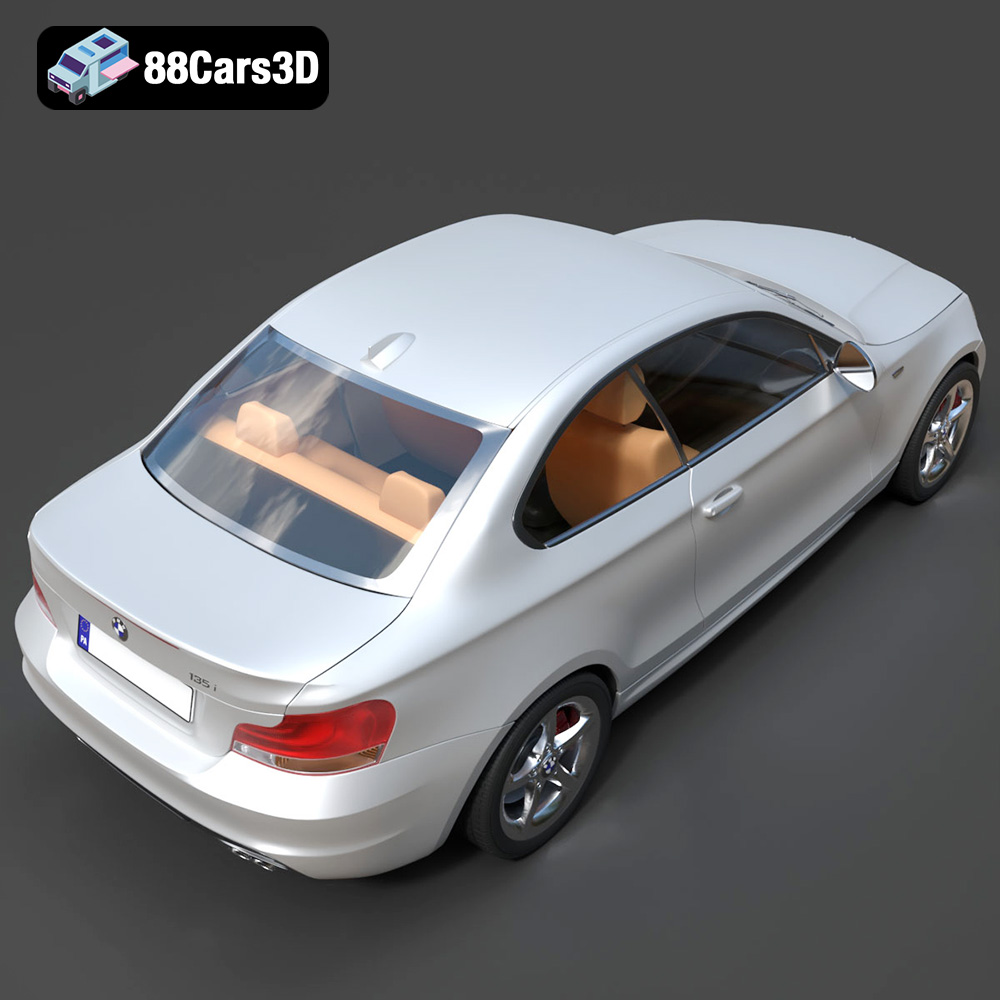
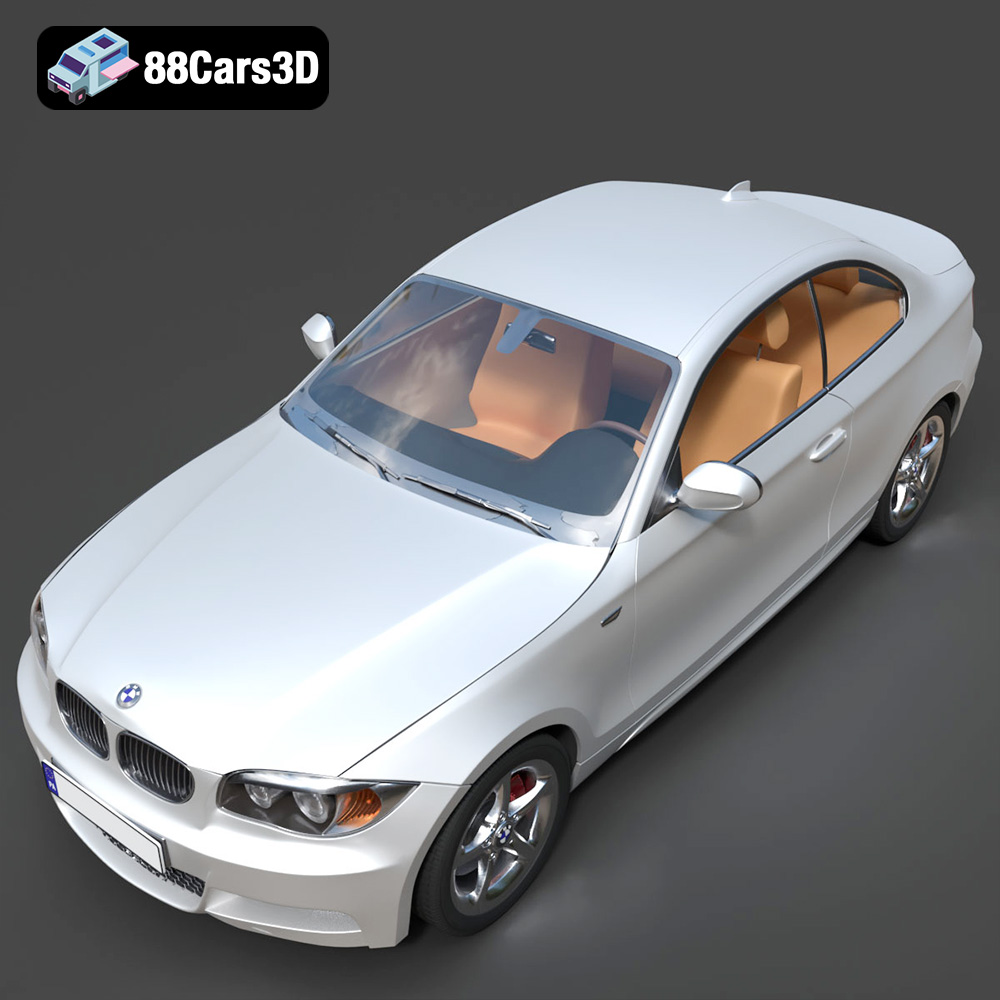
The BMW 1 Series Coupe 2009 3D Model is a high-detail digital recreation of the compact premium sports coupe known for its balanced chassis, rear-wheel-drive dynamics, and distinctive BMW styling. The 2009 1 Series Coupe blends everyday practicality with sporty performance, making it a popular choice among driving enthusiasts. This 3D model accurately represents the signature kidney grille, dual headlight design, sculpted hood lines, compact coupe proportions, sporty side profile, rear trunk layout, and alloy wheel detailing. Built with clean topology and real-world scale accuracy, it is ideal for rendering, animation, automotive visualization, game development, and AR/VR experiences. Perfect for urban driving scenes, car commercials, open-world simulations, cinematic projects, and automotive showcases.
$39.99
.1series
.arvr
.automotive
.blend
.bmw
.bmw2009
.car3dmodel
.compactcoupe
.fbx
.gameasset
.glb
.max
.obj
.ply
.rendering
.simulation
.sportcoupe
.stl
.unreal