Get 50% OFF All Premium 3D & STL Models!

In the dynamic world of 3D visualization, automotive design, and game development, the demand for high-quality, meticulously crafted 3D car models is consistently on the rise. Whether you’re an architect visualizing a scene, a game developer populating a virtual city, a marketing professional creating compelling advertisements, or an enthusiast bringing a classic vehicle to life through 3D printing, the foundational element remains the same: a precisely engineered 3D model. These assets are not just static representations; they are intricate digital constructs designed to perform across diverse platforms and applications, requiring a deep understanding of geometry, materials, and file formats.
Today, we’re taking an in-depth look at what makes a truly exceptional 3D automotive asset, examining the technical intricacies, workflow considerations, and the versatility required for modern production pipelines. We’ll explore various industry-standard formats, discuss their specific applications, and illustrate how a single, well-developed model can serve multiple purposes. Our journey will center around a prime example of such versatility and craftsmanship: the Vespa VNB 125-B 3D Model. This iconic Italian scooter, a symbol of post-war European mobility and timeless design, offers an excellent case study for dissecting the blend of artistic detail and technical robustness that defines premium 3D assets available on platforms like 88cars3d.com.
The choice of a 3D model file format is critical and often dictates a project’s flexibility, compatibility, and ultimate output quality. Each format is engineered with specific strengths, catering to different stages of the 3D pipeline—from initial design and editing to real-time rendering and physical manufacturing. Understanding these distinctions is paramount for any professional utilizing 3D assets, and the Vespa VNB 125-B 3D Model exemplifies how a comprehensive offering of formats can streamline workflows across the board.
The .blend format represents a complete Blender scene, containing not just the mesh data but also materials, textures, lighting, cameras, animation, and even scripting. For artists working within Blender, this is the most flexible and fully editable format. It allows for direct manipulation of all aspects of the model, from adjusting polygon density and UV layouts to tweaking shader networks and setting up complex animations. For the Vespa VNB 125-B, a .blend file provides a solid foundation for deep customization, allowing users to modify its classic pastel colors, add period-specific accessories, or integrate it seamlessly into a larger Blender-based animation or architectural visualization project.
.fbx (Filmbox) is arguably the most widely adopted interchange format, particularly for game development and real-time visualization. Developed by Autodesk, it efficiently stores 3D model data, including geometry, materials, textures, animations, and skeletal information, in a format that’s highly compatible with game engines like Unreal Engine and Unity. When working with 3D car models or other vehicle assets, .fbx is chosen for its robust support for animation curves and hierarchical scene structures, which is essential for components like the Vespa’s separate wheels and steerable handlebar assembly. This format ensures that the Vespa VNB 125-B’s optimized polygon flow and proper pivot setups translate flawlessly into a real-time environment, making it a stellar game asset.
The .obj (Wavefront OBJ) format is a venerable and universally supported standard primarily for storing geometric data, including vertices, normals, UV coordinates, and faces. While it doesn’t typically store animation or advanced material properties within the file itself (textures and materials are often referenced via accompanying .mtl files), its simplicity and widespread compatibility make it an excellent choice for cross-software transfers. For projects where the core geometry of the Vespa VNB 125-B needs to be imported into various 3D applications for retopology, sculpting, or custom rendering setups, the .obj format serves as a reliable intermediary.
.glb (GLB format, often referred to as “glTF Binary”) is a relatively newer, yet rapidly adopted format optimized for efficient transmission and loading of 3D scenes and models in web-based applications, augmented reality (AR), and virtual reality (VR) experiences. It packages geometry, materials, textures, and animation into a single, self-contained binary file, making it incredibly streamlined. For immersive retro vehicle showrooms or interactive classic scooter experiences, as envisioned for the Vespa VNB 125-B, the .glb format offers superior performance and integration into browser-based viewers and AR/VR platforms.
.stl (STereoLithography) is the de facto standard for 3D printing. It represents 3D surfaces as a collection of unconnected triangular facets, making it ideal for defining the outer geometry of an object for physical fabrication. Crucially, .stl files do not contain color, texture, or material information—they are purely about shape. The inclusion of an .stl option for the Vespa VNB 125-B is a significant advantage, allowing designers to convert the high-detail digital model into a tangible collectible scooter miniature or a scale display model, adhering to specific print settings like those recommended for layer height and support structures.
The .ply (Polygon File Format, or Stanford Triangle Format) is a versatile format capable of storing a wider range of properties than .obj or .stl, including color, transparency, normals, texture coordinates, and even metadata. It can represent both triangular meshes and point clouds, making it particularly useful in scientific, CAD, and 3D scanning applications where precise geometric data and additional per-vertex or per-face information is crucial. For detailed analysis or further engineering modifications of the Vespa VNB 125-B, the .ply format offers a robust data foundation.
The inclusion of a dedicated .unreal format signifies an asset optimized specifically for Unreal Engine. While .fbx is often used for import, a native .unreal file implies a pre-configured asset that might include specific material setups, collision meshes, LODs (Levels of Detail), and blueprint configurations, all tailored for immediate use within Unreal Engine. This greatly accelerates workflow for developers looking to integrate the Vespa VNB 125-B into urban open-world games or 1960s-themed environments without extensive setup time.
Similar to .blend for Blender, the .max format is the native project file for Autodesk 3ds Max. It stores all scene data, including geometry, modifiers, materials, lights, cameras, animations, and rendering settings. For professionals operating within the 3ds Max ecosystem, this file provides the maximum level of editability and control over the Vespa VNB 125-B. It’s perfect for integrating the scooter into complex architectural visualizations, high-end automotive rendering, or cinematic productions where 3ds Max’s powerful rendering capabilities and extensive plugin support are utilized.
The fact that the Vespa VNB 125-B 3D Model includes such a comprehensive array of formats underscores its readiness for virtually any professional pipeline, emphasizing the value of such robust offerings from marketplaces like 88cars3d.com.
The enduring appeal of classic vehicles lies not just in their history, but in their distinctive aesthetics and the stories they tell. Recreating such heritage in 3D demands an extraordinary level of attention to detail and a profound understanding of the original design. The Vespa VNB 125-B 3D Model is a testament to this philosophy, meticulously bringing to life a scooter variant that truly defined an era of European urban mobility.
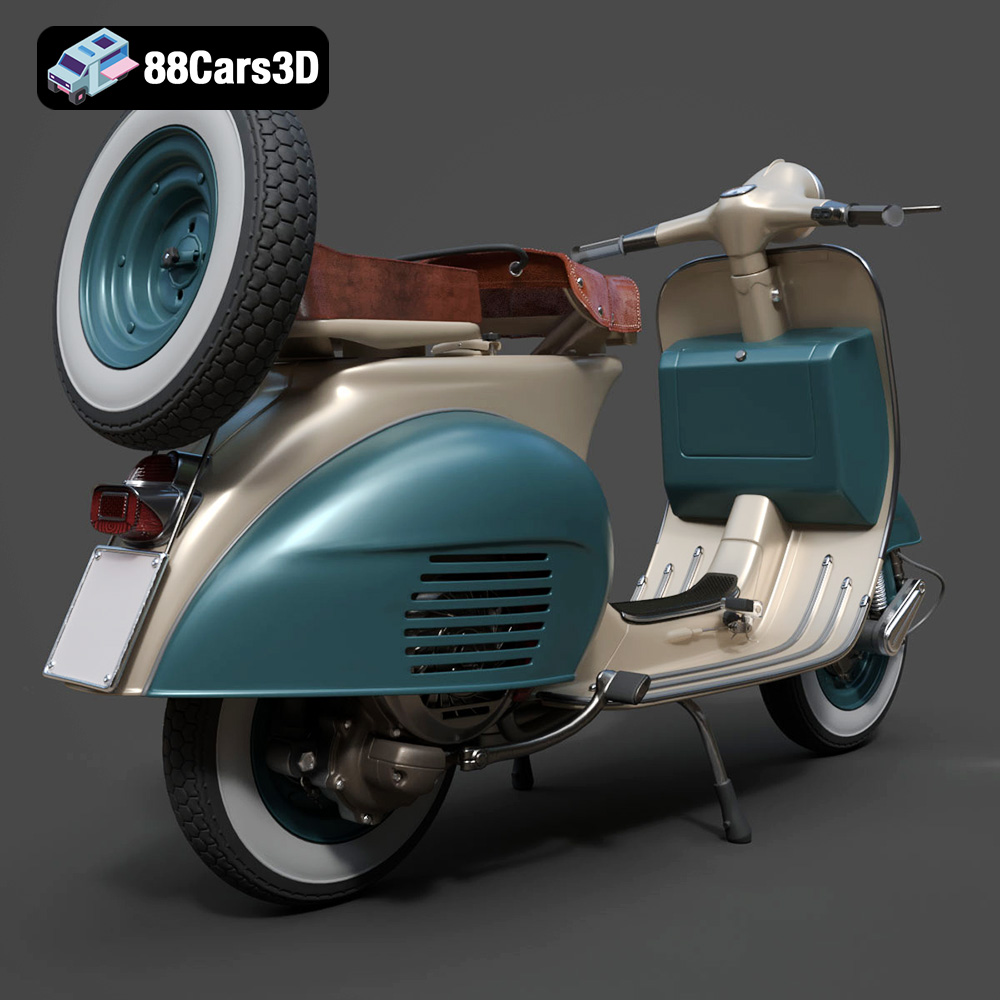
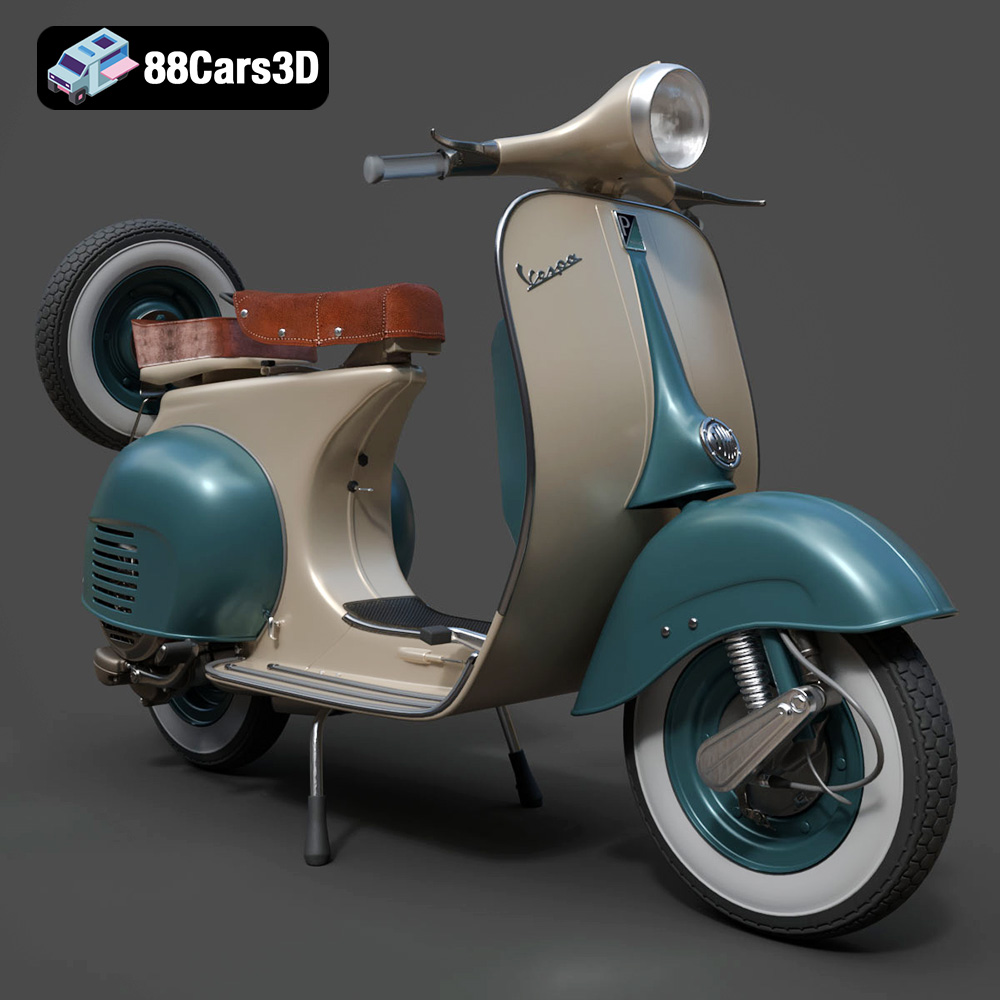
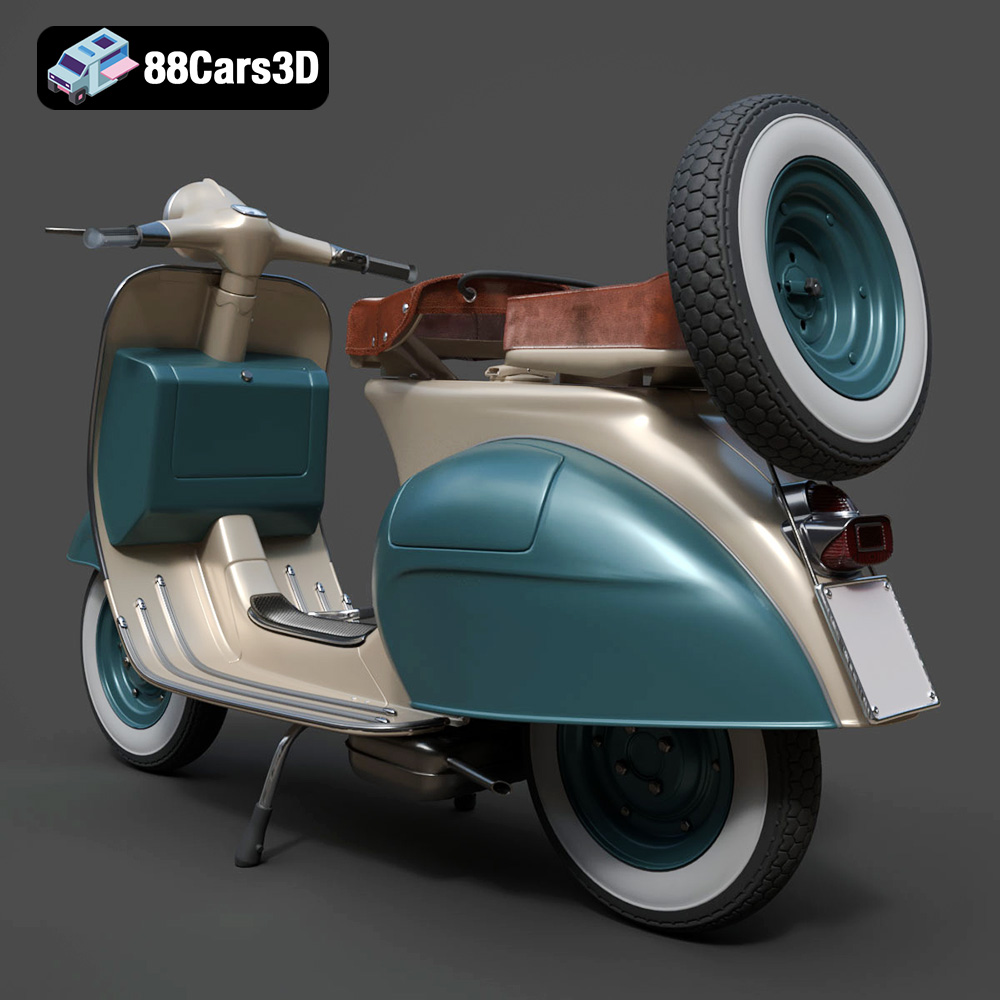
From the moment you first observe the Vespa VNB 125-B 3D Model, its authentic proportions and iconic silhouette immediately stand out. The model accurately captures the distinctive monocoque steel body construction, a hallmark of Vespa design, which provided both structural integrity and its celebrated flowing lines. Key features like the rounded front leg shield, which gracefully sweeps back, and the curved front fender are rendered with precise curvature, reflecting the original’s elegant simplicity. The chrome-trimmed circular headlamp, a focal point of its ’60s charm, is recreated with a keen eye for its specific dimensions and material properties, ensuring that reflections and highlights behave realistically under various lighting conditions. Even the smaller, yet crucial, elements like the detailed side panel vents and the classic rear engine cover are faithfully represented, revealing the subtle production refinements and improved mechanical components of the VNB 125-B variant. The vintage exhaust and suspension detailing, along with period-correct wheels and tire proportions, further enhance the model’s historical accuracy, making it an invaluable asset for any project demanding true vintage character. This attention to detail allows the model to shine in high-fidelity automotive rendering.
The true essence of any vehicle extends beyond its exterior. The rider area, though often less exposed in general renders, plays a vital role in creating a believable and immersive experience, particularly for animation, AR/VR, and close-up visualizations. The Vespa VNB 125-B 3D Model excels in this regard, offering a well-appointed and accurately detailed rider’s cockpit.
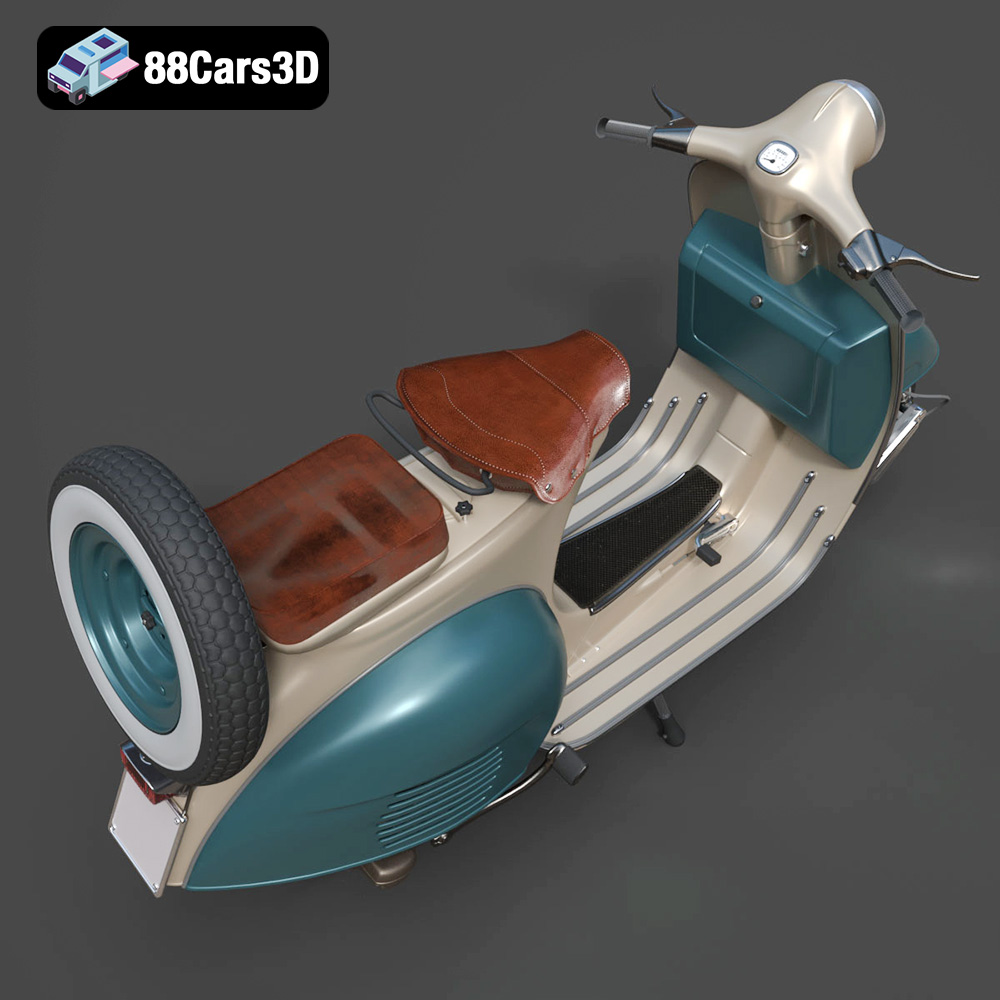
The handlebar assembly is a focal point, featuring an integrated speedometer and precise recreations of the throttle and brake levers. These elements are not merely decorative; their clean geometry and proper pivot setup mean they are ready for animation, allowing for realistic steering and control movements. The seat configuration is thoughtfully designed to accommodate either a single or dual setup, providing flexibility for different scene compositions. Furthermore, the ribbed footboard design, a classic ergonomic feature of the Vespa, is meticulously modeled, adding another layer of authenticity. This level of detail in the rider’s area ensures that the model is suitable not only for distant environmental shots but also for close-up hero renders and interactive experiences where the user might ‘sit’ on the scooter.
Beyond aesthetic accuracy, the true measure of a high-quality 3D model lies in its technical foundation. A model can look stunning, but if its underlying geometry is flawed, it becomes cumbersome to work with, inefficient to render, and unsuitable for professional pipelines. The Vespa VNB 125-B 3D Model is built with robust technical advantages that guarantee its performance across a wide spectrum of applications, from high-fidelity automotive rendering to demanding real-time game assets.
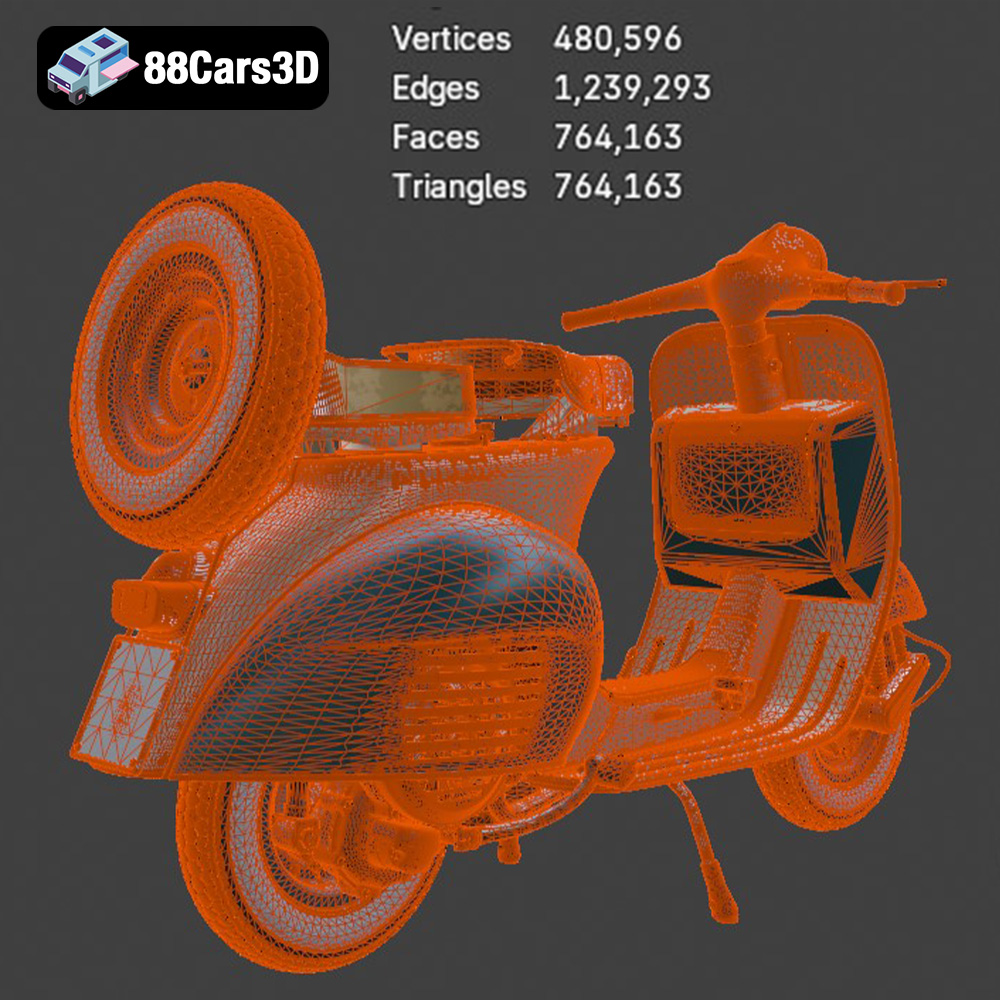
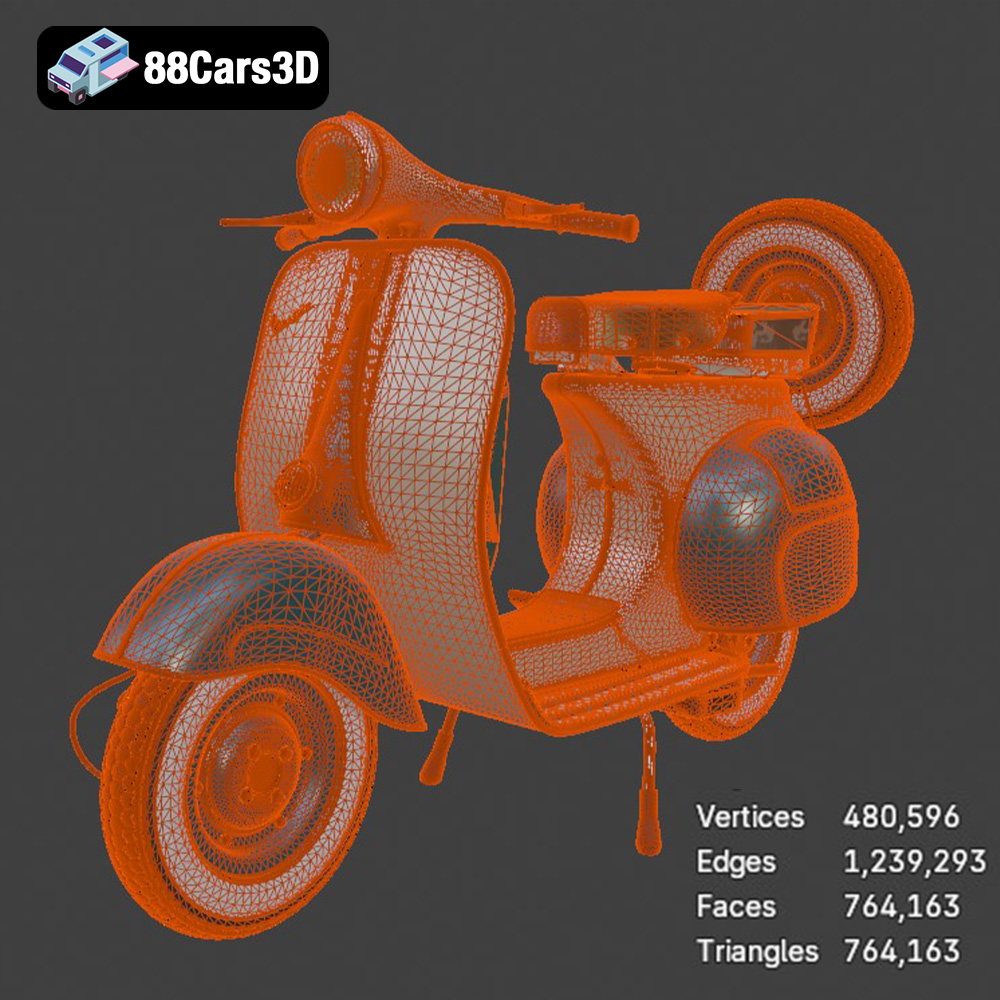
One of the core strengths of this model is its clean and well-organized mesh structure. This means the polygon flow is optimized, leading to efficient rendering and smooth subdivision when higher detail is required. For real-time applications, such as game development and AR/VR, optimized polygon count and efficient UV mapping are critical for maintaining high frame rates and ensuring textures are displayed correctly without artifacts. The model’s clean geometry is a testament to its readiness for such environments, minimizing the need for extensive optimization work by the end-user.
In the context of rendering and visualization, a clean mesh facilitates accurate light interaction and shadow casting, leading to more photorealistic outputs. Artists can easily apply advanced materials, utilize physically based rendering (PBR) workflows, and experiment with different lighting setups without encountering common issues like shading errors or unpredictable surface behavior. The real-world scale accuracy further contributes to realism, ensuring that the Vespa integrates seamlessly into any scene, from retro European streets to lifestyle branding visuals, without needing scale adjustments that could introduce rendering inconsistencies.
The flexibility of a 3D model is significantly enhanced by its readiness for animation. The Vespa VNB 125-B 3D Model features a proper pivot setup for its steering assembly and wheel rotation. This seemingly small detail is crucial for animators, as it means the wheels will rotate around their correct axes and the handlebars will turn naturally, mirroring real-world mechanics. This pre-rigged functionality saves countless hours of setup time and ensures that the animations are believable and precise, whether for a cinematic period production or an interactive simulation.
Furthermore, the model’s compatibility with major 3D software platforms and engines, including its provision in multiple file formats, signifies its ability to be integrated into diverse workflows without friction. A clean mesh means fewer issues when importing into different software, and well-organized object hierarchies (e.g., separate parts for the body, wheels, handlebars) make it easier to select, manipulate, and animate individual components. This level of preparation distinguishes a professional-grade asset and allows creative teams to focus on their artistic vision rather than wrestling with technical impediments.
The journey of a 3D model often culminates not just on a screen, but in a tangible form. The rise of 3D printing has opened new avenues for designers, allowing digital creations to cross into the physical realm. The Vespa VNB 125-B 3D Model is specifically designed with 3D printing in mind, providing an exceptional opportunity to transform this classic scooter into collectible miniatures and detailed scale display models.
To achieve optimal results when 3D printing the Vespa VNB 125-B, adherence to specific settings is crucial. For FDM (Fused Deposition Modeling) printers, a recommended scale of 1:18, 1:12, or 1:10 offers a good balance between detail retention and manageable print time. A layer height of 0.08–0.16 mm ensures a smooth surface finish, particularly important for the Vespa’s iconic curved body panels. Wall thickness between 1.2–2.0 mm provides structural integrity without excessive material usage, while an infill of 15–25% is generally sufficient for most display models. Supports are unequivocally required for intricate details such as the handlebars, the vintage exhaust pipe, and the center stand, preventing sagging and ensuring geometric accuracy during the printing process. For best aesthetic results, printing the body upright minimizes layer lines on the main body, while wheels should be printed separately to capture their distinct forms.
For even finer details, especially at smaller scales, resin (SLA/DLP) printing is highly recommended. Resin printers can achieve significantly finer layer heights (e.g., 0.02-0.05mm), capturing the delicate chrome trim, speedometer details, and ribbed footboard with unparalleled precision. While the product description leans into FDM settings, understanding the benefits of resin for miniature models is essential for those seeking the highest fidelity physical output for their 3D car models.
The journey from a raw 3D print to a museum-quality miniature involves a thoughtful post-processing regimen. After printing the Vespa VNB 125-B, initial steps include support removal and light sanding to smooth out any imperfections or layer lines, especially crucial for the bodywork. Applying a high-quality primer creates a uniform base for painting and helps reveal any remaining surface flaws. For the classic Vespa aesthetic, a gloss pastel or cream paint finish is highly recommended, evoking the original’s timeless charm. Crucially, meticulous chrome detailing on the headlamp trim, handlebar accents, and engine components will elevate the model’s realism. The wheels can be painted with a matte black or silver finish, and careful hand-painting of tire details can further enhance the miniature. This combination of careful printing and dedicated post-processing ensures that the physical Vespa VNB 125-B model is a faithful and beautiful representation of its digital counterpart, a true testament to the versatility of 3D printing with high-quality STL assets.
The true value of a versatile 3D asset like the Vespa VNB 125-B 3D Model is its seamless integration into diverse professional workflows. From initial concept visualization to final product delivery, a well-structured model can significantly accelerate production timelines and elevate the quality of the final output across various industries.
For design studios and visualization artists, 3ds Max and Blender are cornerstone tools. The inclusion of native .max and .blend files for the Vespa VNB 125-B ensures maximum flexibility within these environments. In 3ds Max, designers can leverage its robust modeling tools to further refine or customize the scooter, apply complex V-Ray or Corona materials for hyper-realistic automotive rendering, and integrate it into expansive architectural scenes. Its clean mesh structure means artists can easily add subdivision surfaces for even smoother contours or utilize advanced UV unwrapping techniques for intricate decal placement. The proper pivot setup for animation allows for quick rigging and movement tests, essential for creating dynamic visual narratives.
Similarly, Blender users benefit from the fully editable .blend scene. They can easily adapt the Vespa for Cycles or Eevee rendering, utilizing Blender’s powerful procedural shading capabilities. The model serves as an excellent base for creating captivating scenes for lifestyle branding visuals, short animations, or integrating into environmental designs. Its real-world scale makes it perfect for matching existing scene metrics, reducing setup time and ensuring proportional accuracy in any composition.
Game developers and real-time visualization specialists often rely on powerful engines like Unreal Engine for immersive experiences. The Vespa VNB 125-B 3D Model, with its optimized polygon flow and the availability of .fbx and .unreal formats, is an ideal game asset. Importing the .fbx file into Unreal Engine allows developers to take advantage of its PBR material system, applying realistic textures for paint, chrome, and rubber. The clean geometry ensures optimal performance, crucial for maintaining high frame rates in open-world environments. With separate wheels and steering components, the scooter can be easily integrated into a physics-based vehicle system, allowing players or users to interact with it dynamically. For AR/VR applications, the optimized mesh and efficient texture usage of the .glb format can provide seamless integration into interactive classic scooter experiences or virtual showrooms, minimizing load times and maximizing immersion.
Consider a marketing campaign for a vintage clothing brand. The Vespa VNB 125-B 3D Model can be dropped into a stylized render of a retro European street scene, instantly adding authenticity and a touch of timeless cool. Its accurate detailing and rich visual appeal make it perfect for lifestyle advertising, creating compelling visuals that resonate with a target audience. In the gaming sector, imagine an urban open-world game set in 1960s Rome or Paris. This model can serve as a highly detailed background asset or even a drivable vehicle, enriching the player’s experience and contributing to the game’s overall historical accuracy. For architectural visualization, the Vespa can animate a café scene or a coastal promenade, adding character and a sense of scale to renders of new developments or historical restorations. The versatility offered by such a high-quality 3D car model from 88cars3d.com significantly reduces the need for bespoke modeling, allowing professionals to focus on artistic direction and final polish.
While the Vespa VNB 125-B 3D Model is a meticulously crafted representation of a classic, its true strength also lies in the creative freedom it offers to artists and designers. High-quality 3D assets are not meant to be static, but rather flexible starting points for endless creative exploration.
The provided clean topology and well-structured materials mean that customizing the Vespa’s appearance is a straightforward process. Users can easily change the body color, experimenting with a wide palette of classic pastel schemes that were popular in the 1960s, or even venturing into more contemporary interpretations. The model allows for the addition of vintage registration plates, a small but impactful detail that further roots the scooter in a specific time and place. Furthermore, the seat configuration is designed to be adaptable, enabling users to switch between a single rider setup or a dual passenger seat, depending on the narrative of their scene. For those aiming for even greater authenticity or a personalized touch, the model supports the addition of period-correct accessories like a rear luggage rack or a spare wheel accessory, enhancing both visual appeal and storytelling potential.
Beyond physical modifications, the power to manipulate lighting and environmental factors offers immense creative control. The Vespa VNB 125-B 3D Model, with its realistic materials and clean geometry, responds beautifully to dynamic lighting setups. Artists can adjust the lighting to simulate the warm glow of a sunset on a Mediterranean coast, the crisp, clear light of a bustling daylight city street, or the dramatic shadows of a cinematic night scene. This control allows the scooter to seamlessly integrate into various moods and atmospheres, becoming a truly versatile element in any visual composition. Whether it’s for striking still renders, captivating animations, or immersive AR/VR experiences, the model’s robust design ensures it will look compelling under any creative direction, further solidifying its value as a premium asset for automotive rendering and visualization projects.
In the intricate landscape of 3D modeling and visualization, the demand for excellence is unwavering. Professionals across automotive design, game development, rendering, and 3D printing seek assets that combine historical accuracy, technical precision, and unparalleled versatility. The journey through the capabilities of the Vespa VNB 125-B 3D Model vividly illustrates what truly sets a premium 3D asset apart. From its faithful recreation of an automotive icon to its optimized geometry and extensive file format support, this model is built for the rigors of modern production pipelines.
We’ve explored how a meticulous understanding of file formats like .blend, .fbx, .obj, .glb, .stl, .ply, .unreal, and .max is essential for seamless workflow integration, catering to everything from deep editing and real-time engine deployment to physical fabrication. The Vespa VNB 125-B stands as a prime example of an asset engineered for diverse applications, ready to enhance cinematic productions, populate game worlds, bring historical scenes to life, or even grace a physical display shelf as a finely detailed miniature.
For designers, developers, and enthusiasts, investing in such high-quality 3D car models is not merely acquiring a digital file; it’s acquiring a foundation for creativity, a shortcut to efficiency, and a guarantee of professional-grade results. Whether your project involves high-end automotive rendering, creating engaging game assets, or producing intricate 3D prints, the Vespa VNB 125-B 3D Model, available at 88cars3d.com, offers an exceptional blend of artistry and technical robustness. It’s an asset that not only meets the demands of today but also inspires the possibilities of tomorrow.
The Vespa VNB 125-B 3D Model is a high-detail digital recreation of the classic Italian scooter variant from the early 1960s. The VNB 125-B maintained the timeless Vespa silhouette while incorporating subtle production refinements, improved mechanical components, and refined detailing that defined the era of practical European urban mobility. This 3D model accurately captures the monocoque steel body construction, rounded front leg shield, chrome-trimmed circular headlamp, vented side panels, exposed handlebar assembly, and vintage wheel configuration. Built with clean topology and real-world scale accuracy, it is ideal for rendering, animation, simulation, game development, and AR/VR classic vehicle environments. Includes .blend, .fbx, .obj, .glb, .stl, .ply, .unreal, and .max formats for rendering, simulation, AR/VR, game development, and 3D printing.
$19.9
.arvr
.blend
.classicscooter
.fbx
.gameasset
.glb
.italianscooter
.max
.motorcycle3dmodel
.obj
.ply
.rendering
.retro
.simulation
.stl
.twowheeler
.unreal
.urbanvehicle
.vespa
.vintagevehicle
.vnb125b