Get 50% OFF All Premium 3D & STL Models!

The roar of a V8, the gleam of chrome, and the unmistakable silhouette of a classic American car – these elements capture the essence of an era. For automotive enthusiasts and digital artists alike, recreating this nostalgia in a virtual space presents both a challenge and an opportunity. Whether for high-fidelity marketing visuals, immersive game environments, or even tangible 3D printed collectibles, the demand for accurate, high-quality 3D car models is constant.
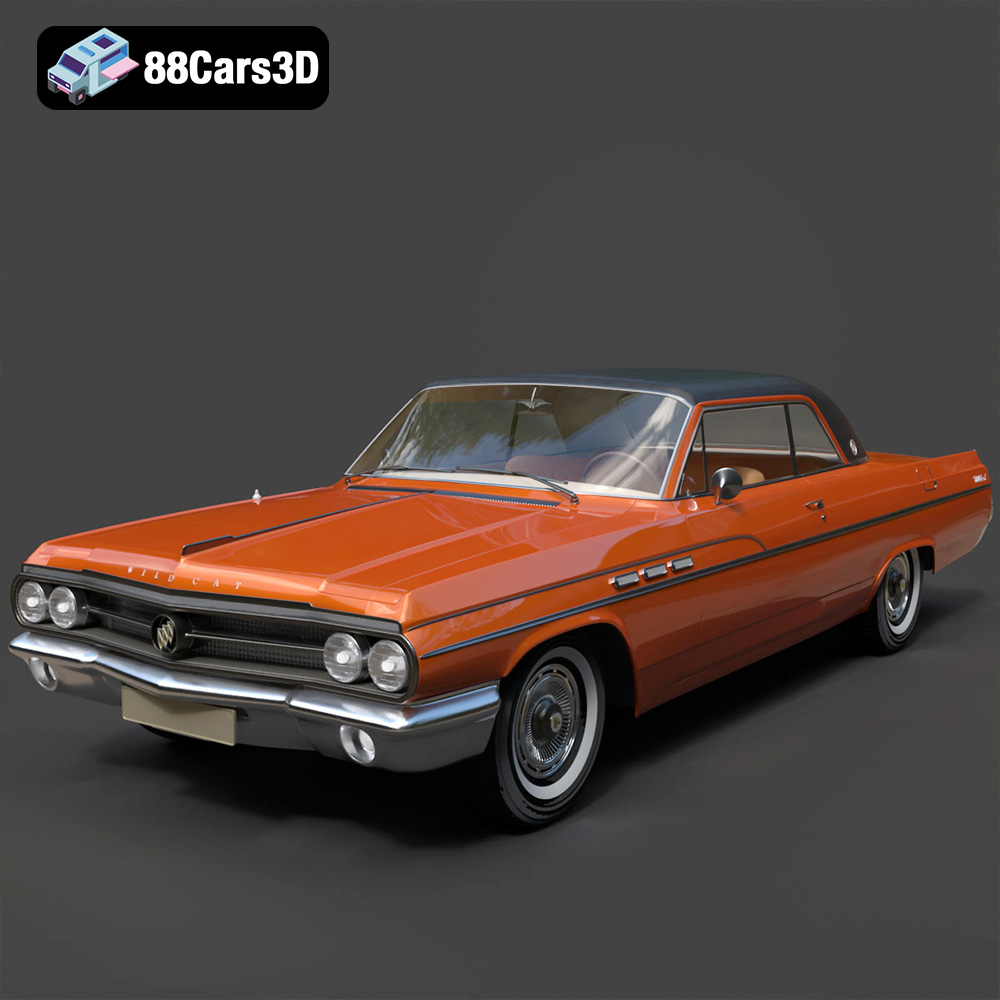
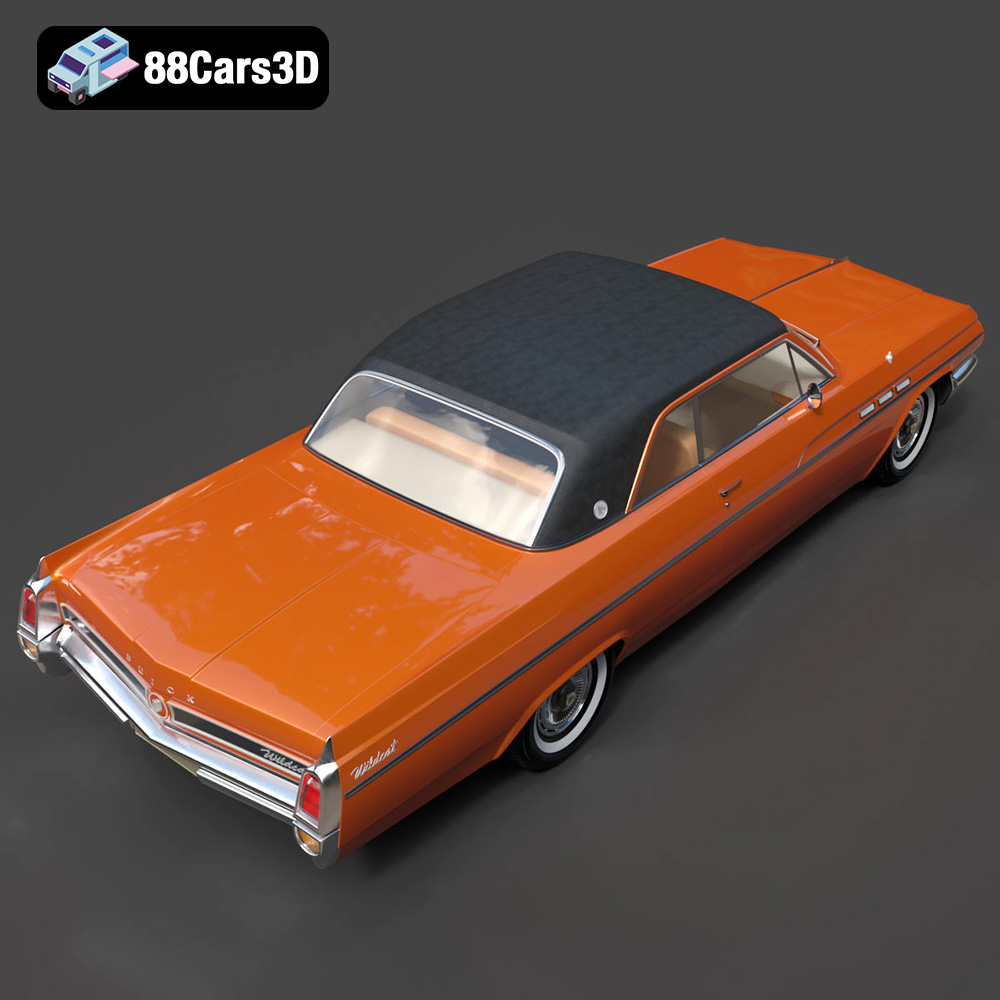
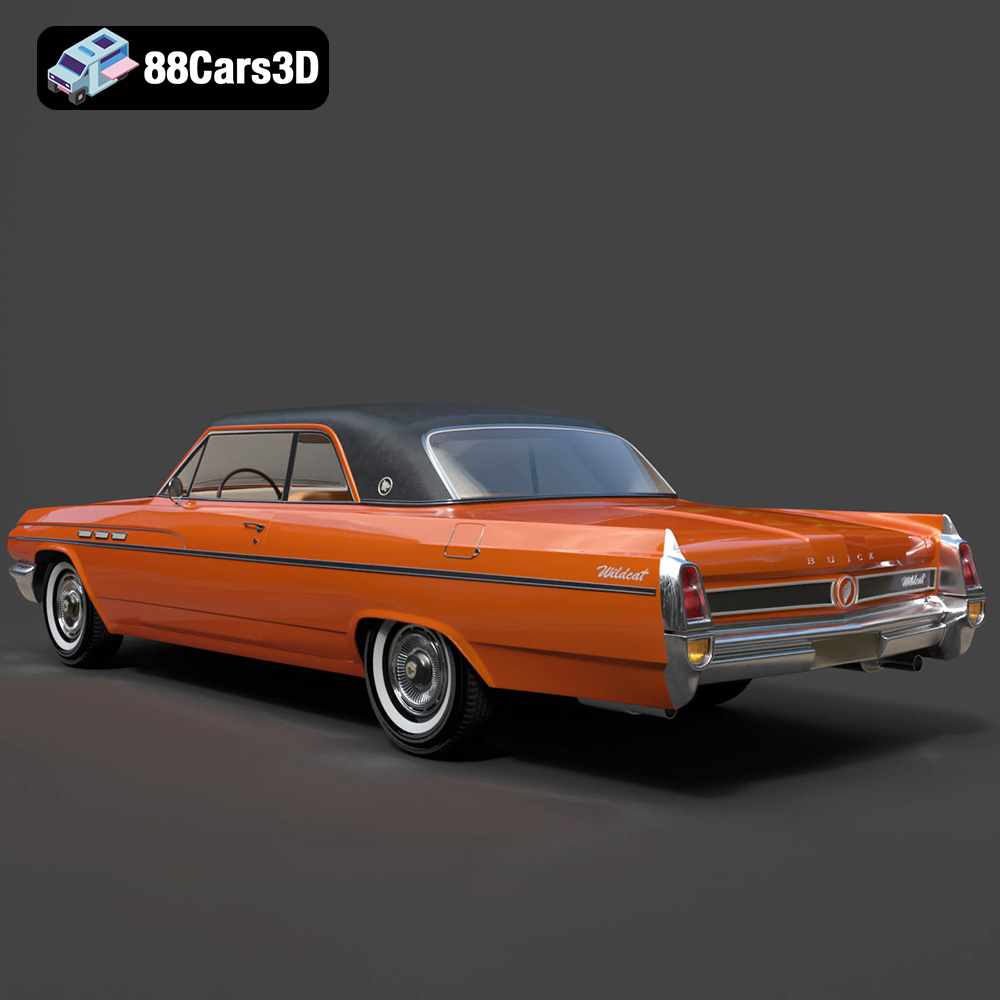
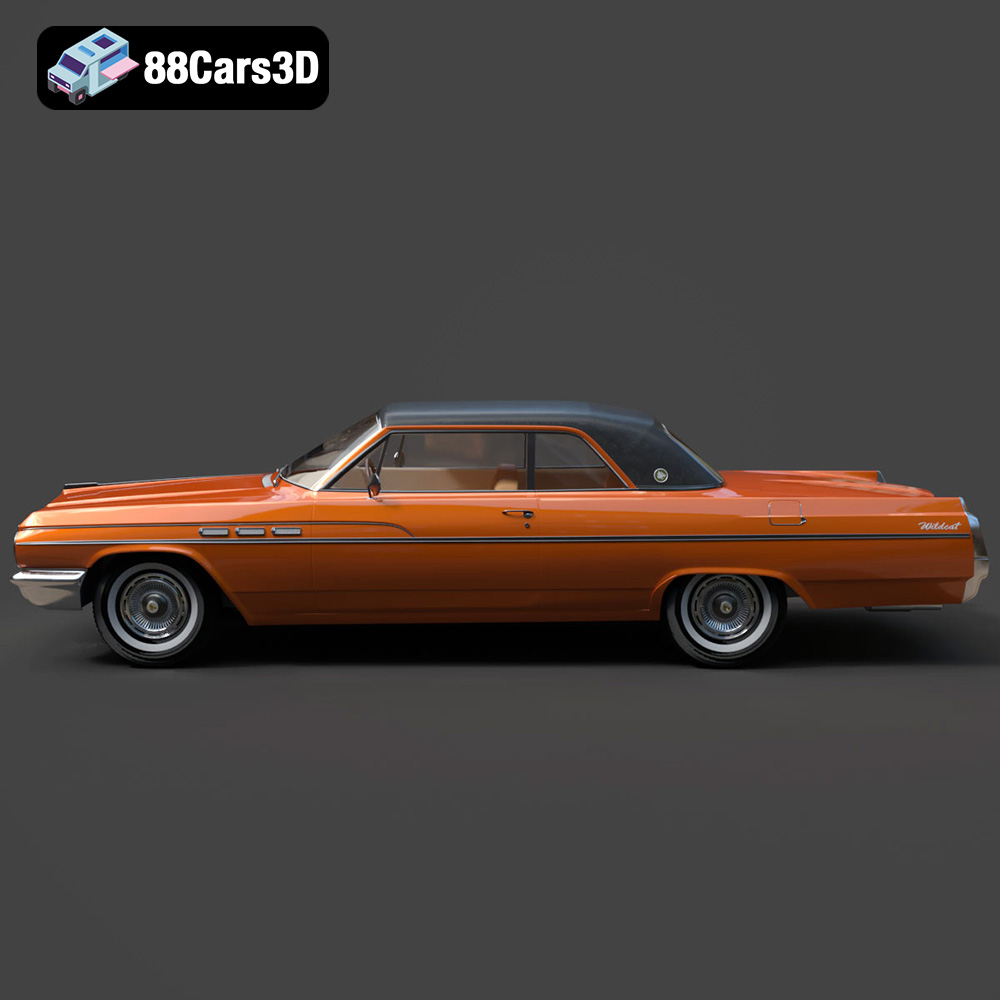
Today, we delve into the intricate world of digital automotive preservation, focusing on a true icon: the Buick Wildcat Convertible 1963 3D Model. This particular model, available on 88cars3d.com, encapsulates the bold styling and powerful presence of early 1960s American design. It’s more than just a collection of polygons; it’s a meticulously crafted digital asset, ready to breathe life into your next project. From its distinctive dual headlight fascia to its sculpted side lines and period-correct wheel design, every detail has been considered, ensuring it stands out in any digital landscape, whether for stunning automotive rendering or seamless integration into game assets.
Navigating the world of 3D car models requires a fundamental understanding of the various file formats available. Each format serves specific purposes, offering unique advantages depending on your project’s destination – be it a cinematic render, a real-time game, an augmented reality experience, or a physical 3D print. The Buick Wildcat Convertible 1963 3D Model exemplifies versatility by offering a comprehensive suite of these essential formats.
The .blend format is native to Blender, a powerful open-source 3D creation suite. When you download a .blend file, you’re not just getting the mesh; you’re receiving a complete Blender scene. This includes the model’s geometry, materials, textures, lighting setups, cameras, animations, and even modifiers, all fully editable. For artists deeply integrated into the Blender ecosystem, this format offers unparalleled flexibility for customization, material adjustments, or further development. It’s the ideal starting point for anyone looking to dissect, learn from, or heavily modify the Buick Wildcat model within Blender.
.fbx (Filmbox) is a proprietary file format developed by Autodesk, widely recognized as an industry standard for exchanging 3D data between different software applications. Its strength lies in its ability to store a vast array of 3D data, including geometry, UVs, materials (though material definitions can sometimes vary between software), animations, skeletal data, and inverse kinematics. For game development, especially when working with engines like Unreal Engine or Unity, .fbx is often the go-to format. The Buick Wildcat’s .fbx file ensures that its separate wheels and steering components, crucial for animation, are preserved, making it perfectly suited for real-time pipelines and cinematic sequences.
The .obj (Wavefront OBJ) format is one of the oldest and most universally supported 3D file formats. It’s a simple, text-based format primarily used for exchanging raw geometry data, including vertex positions, UV coordinates, normals, and material group information. While it doesn’t typically store advanced features like animation or complex material definitions (it usually references external .mtl files for basic material properties), its widespread compatibility makes it a safe bet for cross-software integration. If you need a clean mesh of the Buick Wildcat for basic modeling tasks or importing into less common 3D applications, .obj is a reliable choice.
.glb is the binary version of the glTF (Graphics Language Transmission Format) standard, designed for efficient transmission and loading of 3D scenes and models by applications. It’s rapidly becoming the “JPEG of 3D” due to its optimization for real-time rendering, especially in web-based applications, AR (Augmented Reality), and VR (Virtual Reality). A single .glb file contains the model, textures, and animations, making it highly portable. For presenting the Buick Wildcat in a browser-based configurator or an interactive AR experience, the .glb format offers excellent performance and visual fidelity.
.stl (STereoLithography) is the most common file format for 3D printing. It represents a 3D model as a series of connected triangles, describing only the surface geometry of an object without any color, texture, or material information. While simplistic, its ubiquity in the 3D printing world is undeniable. The Buick Wildcat 3D model, specifically optimized for 3D printing, includes an .stl version, making it ready for enthusiasts to fabricate physical miniatures. Details like recommended scale, layer height, and support structures are critical when preparing an .stl for a successful print.
The .ply (Polygon File Format or Stanford Triangle Format) is another format primarily used for storing 3D data, often originating from 3D scanners. It’s capable of storing information such as color, transparency, surface normals, and texture coordinates, in addition to geometry. It’s frequently employed in scientific applications, CAD, and situations requiring precision mesh data for analysis or reverse engineering. For highly accurate reproductions or detailed studies of the Buick Wildcat’s geometry, the .ply format offers a robust dataset.
The .unreal file format denotes an asset specifically prepared and optimized for direct import and use within Unreal Engine. This often implies that the asset has undergone a conversion process to leverage Unreal’s native features, such as optimized material setups, LOD (Level of Detail) configurations, collision meshes, and potentially even basic blueprint implementations. For professional game developers aiming for the highest performance and easiest integration of the Buick Wildcat into their Unreal projects, this engine-ready format significantly streamlines the workflow, reducing post-import setup time.
Similar to .blend for Blender, the .max format is the native file type for Autodesk 3ds Max, a leading software for 3D modeling, animation, rendering, and visual effects. A .max file contains the entire scene, including the model’s geometry, rigging, animations, lights, cameras, and material definitions (often for renderers like V-Ray or Corona). For artists who prefer to work within the 3ds Max environment, the .max file for the Buick Wildcat provides complete access to the model’s creation process, allowing for advanced rendering setups, complex animations, or integration into existing 3ds Max pipelines.
Understanding these formats empowers artists and developers to choose the right tool for the job, ensuring seamless integration and optimal results for their 3D car models. The comprehensive offering for the Buick Wildcat on 88cars3d.com ensures that whatever your intended use, you have the right starting point.
Creating a high-quality 3D car model of a classic vehicle like the 1963 Buick Wildcat Convertible requires a blend of artistic skill and technical precision. This model goes beyond mere surface representation, capturing the spirit and intricate details that define this automotive legend. The attention to detail makes it an exemplary asset for high-end automotive rendering and visualization.
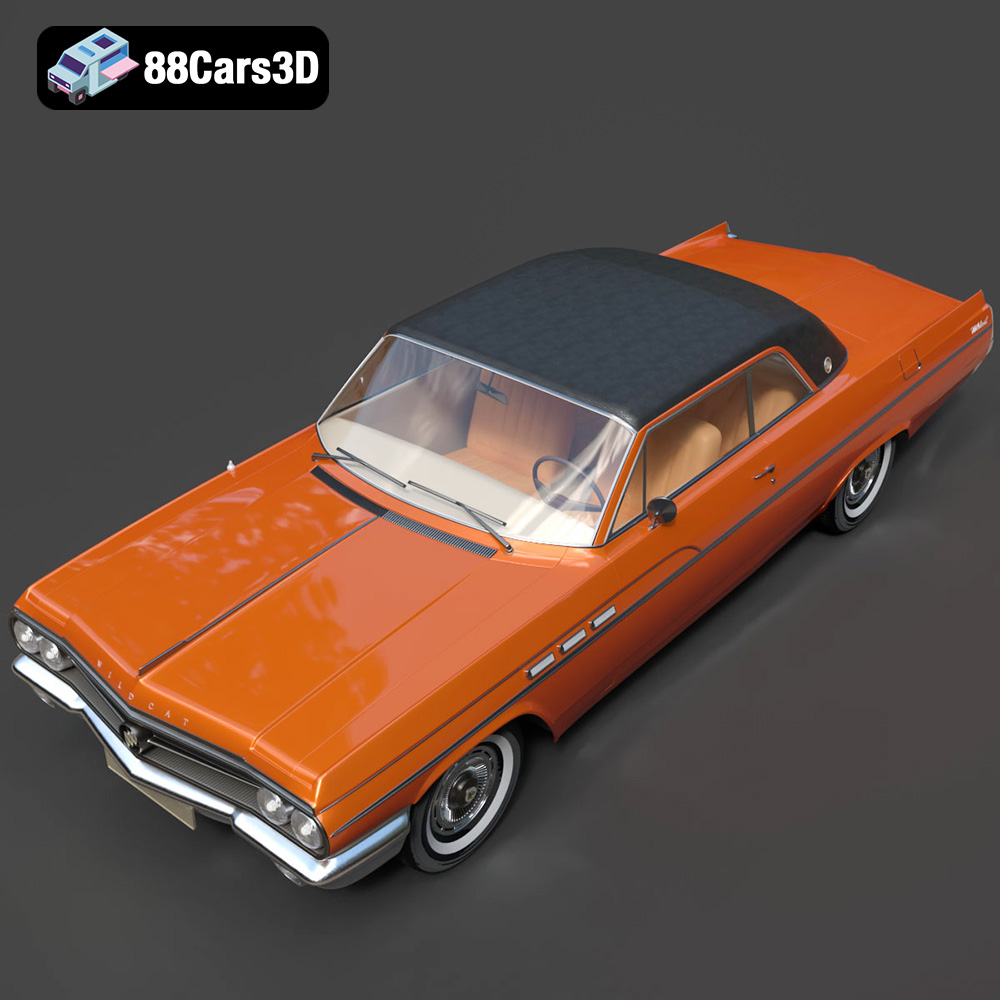
The Buick Wildcat Convertible 1963 is a study in classic American automotive design, characterized by its “swept-back” look and wide stance. The 3D model accurately recreates these proportions, from the distinctive long hood to the wide-body silhouette. The dual headlight front fascia, complete with chrome grille, instantly identifies the vehicle. Every chrome element – from the bumpers to the side trim and emblem detailing – is meticulously modeled, reflecting light realistically in renders. The classic chrome wheels with whitewall tire styling complete the period look, ensuring historical accuracy. Furthermore, the model comes with separate wheels and steering components, a critical feature for animation, allowing for realistic driving simulations or turntable presentations.
While the exterior captures immediate attention, the interior is where much of the character and luxury of a classic car reside. The Wildcat model doesn’t disappoint, featuring a vintage dashboard with an analog gauge cluster, a classic steering wheel design, and period-appropriate seating. Whether it’s a front bench or bucket seat configuration, the detailing is present. The center console, gear selector, and door panels with chrome trim accents further enhance the sense of authenticity. This level of interior detail is crucial for projects requiring close-up shots, interactive AR/VR experiences, or virtual cockpit views, providing an immersive experience for the user.
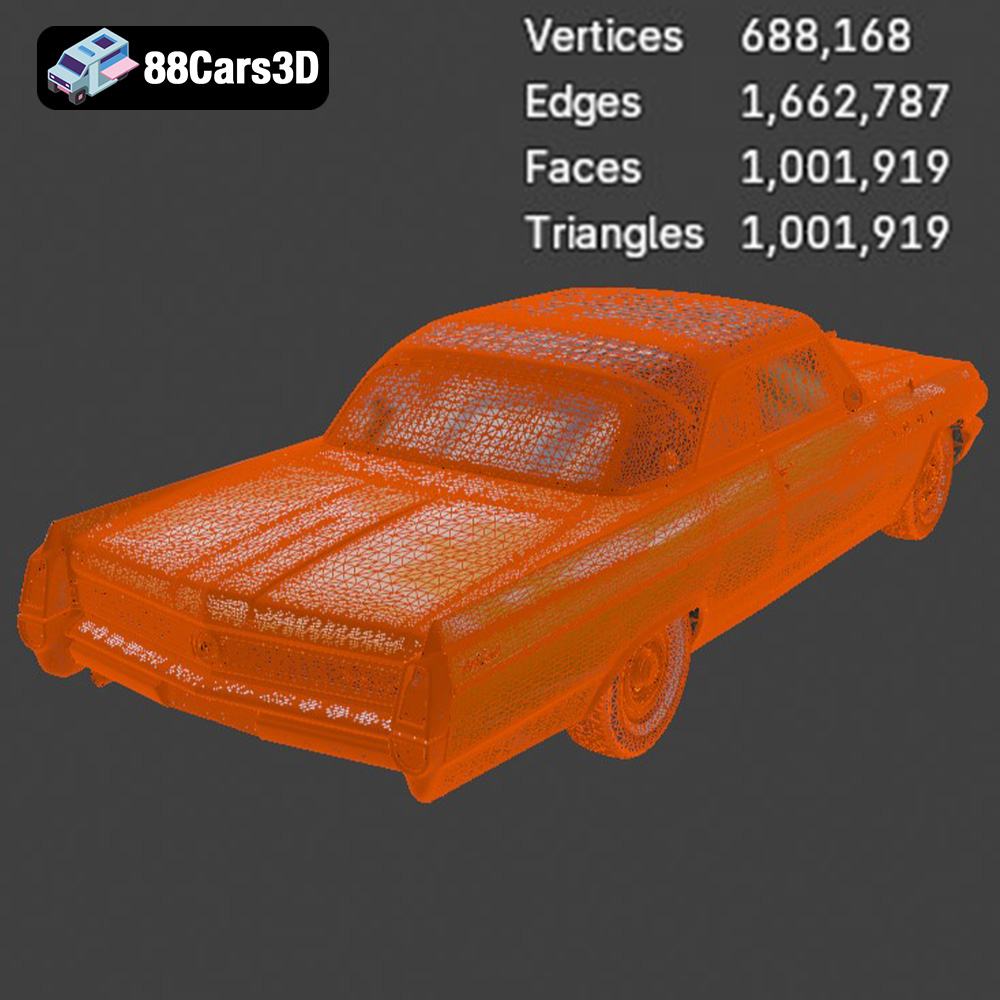
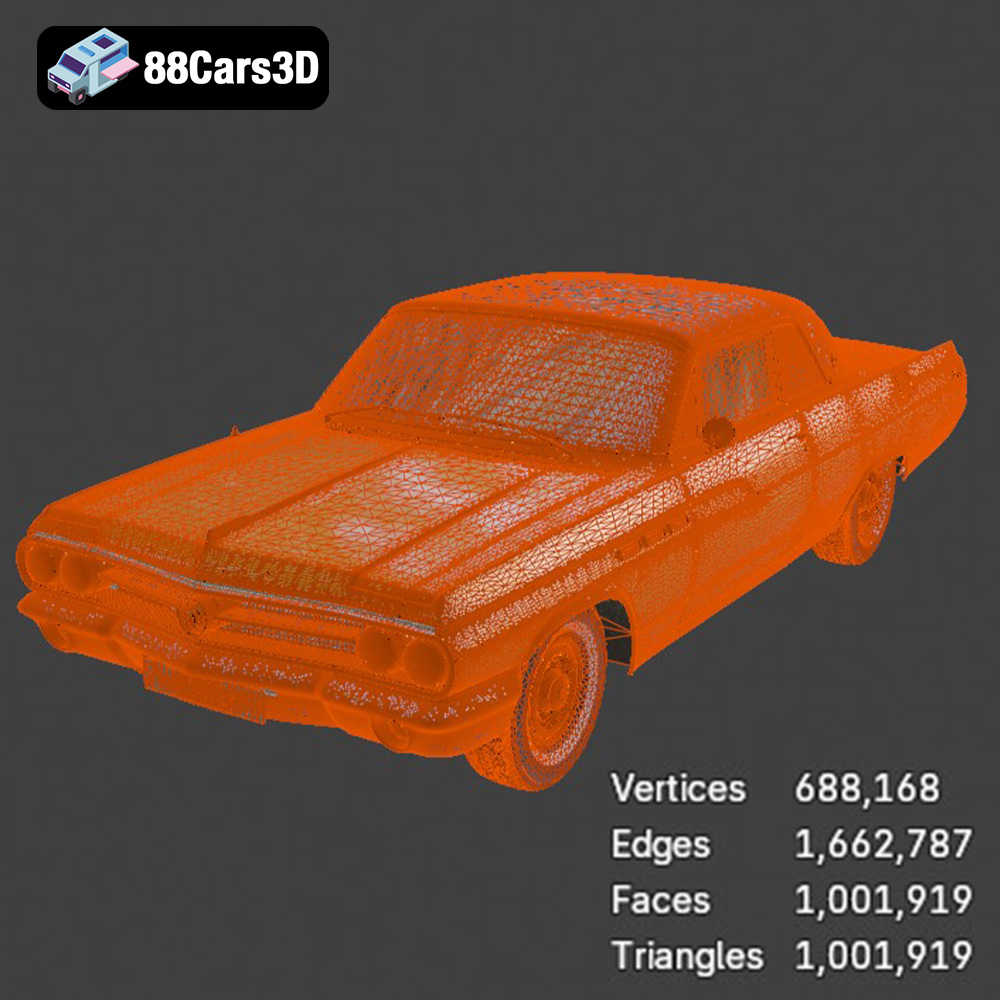
Underpinning the visual fidelity is the model’s technical foundation. A clean and well-organized mesh structure is paramount for smooth deformations, efficient texturing, and predictable subdivision in rendering software. The optimized polygon flow ensures a balance between performance and realism, making it suitable for both static renders and real-time engines without excessive poly counts that could hinder performance. Crucially, the model adheres to real-world scale accuracy, which is vital for seamless integration into existing scenes or environments. Furthermore, proper pivot setups for steering and wheel rotation are implemented, streamlining the animation process for artists working on driving sequences or interactive vehicle demonstrations. This technical rigor elevates the Wildcat from a simple visual asset to a robust, production-ready 3D car model.
The versatility of the Buick Wildcat Convertible 1963 3D Model makes it an invaluable asset across various professional domains. Its comprehensive file format support and optimized geometry ensure a smooth integration into diverse pipelines, from cinematic production to interactive gaming.
For artists specializing in automotive rendering, this model is a dream to work with. In software like 3ds Max (leveraging the .max file) or Blender (using the .blend file), the clean topology and accurate detailing facilitate stunning visual output. Imagine the Wildcat cruising down a sun-drenched retro boulevard, or gleaming under studio lights for a classic car promotion. Artists can utilize advanced rendering engines like V-Ray, Corona, or Cycles to achieve photorealistic results, adjusting paint finishes to classic 1960s pastel or metallic hues, adding realistic reflections to the chrome, and configuring the soft-top up or down to match the desired scene. The detailed exterior and interior mean close-up shots remain crisp and convincing, perfect for high-resolution marketing visuals, print advertisements, or elaborate cinematic productions.
Game developers constantly seek optimized yet detailed game assets, and the Wildcat fits this need perfectly. With its .fbx and .unreal formats, integrating this classic car into engines like Unreal Engine or Unity is remarkably efficient. The optimized geometry ensures excellent real-time performance, crucial for open-world driving games or 1960s-themed environments. Developers can quickly set up vehicle physics, add custom sound designs, and even create interactive elements, such as working headlights and animated convertible tops. The pre-set pivots for steering and wheels simplify the animation rigging process, saving valuable development time. This model can serve as a hero vehicle, a background prop to enrich a scene, or a playable car in a vintage cruising simulation, adding significant character to any virtual world.
The rise of Augmented Reality and Virtual Reality presents exciting new avenues for engaging with 3D car models. The Buick Wildcat, especially in its optimized .glb format, is ideal for creating immersive classic car showrooms or interactive historical automotive experiences. Users could virtually walk around the Wildcat, open its doors, examine the vintage dashboard, or even “drive” it in a simulated environment. For AR applications, the model can be accurately scaled and placed in real-world settings, allowing potential buyers or enthusiasts to preview the car in their driveway or garage. This interactivity fosters a deeper connection with the vehicle, transforming passive viewing into an engaging exploration.
Beyond digital screens, the Buick Wildcat Convertible 1963 3D Model offers a unique opportunity to transcend the virtual and create a tangible piece of automotive history. The inclusion of an .stl format specifically caters to the growing community of 3D printing enthusiasts and professionals.
3D printing a complex object like a car model requires careful preparation. The Wildcat’s description provides excellent guidelines for successful printing. Recommended scales (1:32 / 1:24 / 1:18 / 1:12) ensure that details are preserved while maintaining manageable print times and material usage. For optimal detail retention, particularly at smaller scales, a resin printer (SLA/DLP) is often preferred over FDM, allowing for finer layer heights (e.g., 0.08–0.16 mm). Critical considerations include wall thickness (1.2–2.0 mm for structural integrity) and infill (15–25% for a good balance of strength and material efficiency). Supports are almost always necessary for overhangs like mirrors, bumper edges, and the windshield frame, ensuring gravity doesn’t distort delicate features during printing.
Print orientation significantly impacts the final surface quality. Printing the car body at an angle can minimize visible layer lines and improve the smoothness of curved surfaces. Separating components like wheels allows for easier printing and assembly, often resulting in better detail for each part. Once printed, the journey isn’t over. Post-processing is key to achieving a professional-grade collectible. This typically involves sanding to smooth out layer lines, applying primer to create a uniform surface for paint, and then meticulously painting the model. The Wildcat would look stunning with a gloss pastel or metallic paint finish characteristic of the 1960s, complemented by hand-painted chrome detailing. This process transforms a raw 3D print into a display-worthy miniature, a testament to both digital craftsmanship and physical fabrication.
A truly professional 3D car model isn’t just about looking good; it’s about being technically sound and efficient across various applications. The Buick Wildcat Convertible 1963 3D Model demonstrates a commitment to these underlying principles, ensuring flexibility and ease of use.
The concept of “optimized polygon flow” is crucial for both performance and visual quality. It refers to how the mesh’s polygons are arranged, ideally following the natural contours of the vehicle. This ensures smooth deformations during animation and allows for efficient subdivision without introducing artifacts. For automotive rendering, good polygon flow is essential for catching highlights and reflections realistically. Equally important is proper UV mapping, which, while not explicitly detailed in the product description beyond “clean topology,” is implied. Well-laid-out UVs are critical for applying textures cleanly and efficiently, minimizing stretching or distortion. This allows artists to easily apply PBR (Physically Based Rendering) materials for paint, chrome, glass, and interior fabrics, ensuring a realistic appearance under any lighting conditions.
For any 3D car model intended for animation or interactive use, the setup of pivots and hierarchies is paramount. The Wildcat model boasts “proper pivot setup for steering and wheel rotation,” which is a significant advantage. This means the pivot points for these components are correctly positioned, allowing animators to rotate wheels accurately around their central axis and steer the front wheels from a single control point. This pre-configured rigging saves countless hours of setup time for artists working on driving sequences, cinematic camera moves, or interactive vehicle controls in game engines. The ability to configure the convertible soft-top up or down further enhances animation possibilities, adding dynamism to any scene.
The statement “Compatible with major 3D software platforms and engines” is a cornerstone of a truly useful asset. This ensures that whether you’re working in 3ds Max, Blender, Maya, Cinema 4D, or integrating into Unreal Engine or Unity, the Wildcat model will function as expected. This broad compatibility is achieved through the provision of multiple file formats discussed earlier, each tailored for optimal performance within specific ecosystems. This cross-platform readiness makes the Wildcat a versatile investment for any studio or individual, minimizing conversion issues and maximizing creative freedom.
The foundation of a strong 3D car model is its adaptability. The Buick Wildcat Convertible 1963 3D Model provides an excellent base for extensive customization, allowing artists to tailor it to unique project requirements and envision its role in future technological advancements.
The beauty of a high-quality 3D asset lies in its potential for personalization. Artists can effortlessly “change body color with classic 1960s finishes,” experimenting with iconic shades that define the era. The ability to “add whitewall or custom wheel variations” allows for further stylistic choices, from period-correct tires to more modern interpretations, if desired. Configuring the soft-top up or down fundamentally alters the car’s silhouette and mood, enabling versatile scene compositions. Even minor details like “adding vintage license plates” can greatly enhance realism and immersion. Beyond physical attributes, adjusting lighting for a “sunset cruise or retro city scenes” can dramatically transform the car’s visual impact, evoking specific emotions and narratives within a render or animation. This level of customization ensures that the Wildcat is not just a static model but a dynamic canvas for artistic expression.
As technology progresses, the applications for 3D car models will only expand. We are already seeing them in virtual production pipelines for film and television, where digital assets blend seamlessly with live-action footage. The Wildcat could be the centerpiece of a historical drama, a chase scene in a retro thriller, or a tranquil backdrop in a period piece. In the realm of education, such detailed models can be used for virtual automotive restoration projects, allowing students and enthusiasts to explore the mechanics and design of classic cars in an interactive, risk-free environment. As the metaverse continues to develop, high-fidelity game assets like the Wildcat will become crucial for populating rich, believable virtual worlds, offering users opportunities to own, customize, and display their favorite vehicles in digital spaces. The long-term value of a meticulously crafted asset like this lies in its ability to adapt and thrive across these emerging platforms.
The Buick Wildcat Convertible 1963 3D Model is more than just a digital replica; it’s a testament to the enduring appeal of classic American automotive design, meticulously translated into the virtual realm. From its faithful exterior proportions and detailed interior features to its clean topology and multiple file format compatibility, this model stands as a premium asset for a wide range of creative and technical applications. Whether your goal is to produce breathtaking automotive rendering, develop engaging game assets, create immersive AR/VR experiences, or even embark on a detailed 3D printing project, the Wildcat delivers on all fronts.
Its readiness for professional workflows in software like 3ds Max, Blender, and integration into engines like Unreal Engine underscores its value to designers, artists, and developers. The comprehensive technical advantages, including proper pivot setups and real-world scale, ensure that integrating this classic car into your projects is a smooth and efficient process. For those seeking high-quality, versatile 3D car models that truly capture the essence of an era, this Buick Wildcat Convertible 1963 3D Model from 88cars3d.com is an exceptional choice, offering both historical accuracy and modern technical excellence for your digital endeavors.
The Buick Wildcat Convertible 1963 3D Model is a high-detail digital recreation of the classic American full-size performance convertible known for its bold styling, powerful V8 engine heritage, and open-top cruising appeal. The 1963 Wildcat combined luxury comfort with muscle-era presence, making it a standout of early 1960s American automotive design. This 3D model accurately represents the long and wide body proportions, dual headlight front fascia, chrome grille and bumpers, sculpted side lines, convertible soft-top configuration, rear deck detailing, and period-correct wheel design. Built with clean topology and real-world scale accuracy, it is ideal for rendering, animation, automotive visualization, game development, and AR/VR experiences.
$29.9
.1960scar
.americanclassic
.arvr
.automotive
.blend
.buick
.car3dmodel
.classiccar
.convertible
.fbx
.gameasset
.glb
.max
.obj
.ply
.rendering
.simulation
.stl
.unreal
.vintagecar
.wildcat1963