Get 50% OFF All Premium 3D & STL Models!

In the vibrant world of digital content creation, the demand for high-fidelity 3D assets is ever-growing. From cinematic productions to immersive game environments, realistic vehicles play a pivotal role in grounding virtual experiences in authenticity. Whether you’re an architect visualizing a city street, a game developer populating an open world, or a product designer showcasing a lifestyle, the quality of your 3D models can make or break your project. It’s not just about aesthetics; it’s about technical precision, compatibility, and the ability to integrate seamlessly into diverse workflows.
Today, we’re taking a closer look at an exemplary asset that embodies these qualities: the Vespa Standard 3D Model. This isn’t just a digital replica; it’s a meticulously crafted interpretation of the iconic Italian scooter, designed to meet the rigorous demands of professional production. With its timeless design, curved body panels, and urban mobility heritage, the Vespa became a cultural symbol of freedom and style. Having a high-quality 3D model of such an recognizable vehicle can elevate any project, lending it a touch of classic European charm and narrative depth. The Vespa Standard 3D Model offers an unparalleled foundation for anyone seeking to infuse their digital landscapes with character and historical flair.
The versatility of a 3D model often hinges on its availability across various file formats, each serving specific purposes and compatible with different software ecosystems. For professionals working with 3D car models or any complex asset, understanding these formats is crucial for efficient workflow and project success. The Vespa Standard 3D Model from 88cars3d.com is a prime example of an asset offered with comprehensive format support, ensuring maximum utility.
The comprehensive range of formats offered with the Vespa Standard 3D Model ensures that whether you’re building an immersive AR experience, crafting a photorealistic render, developing a game, or preparing for 3D printing, you have the right tools at your disposal from the outset. This foresight in asset packaging is what distinguishes truly professional 3D car models.
The enduring appeal of the Vespa lies in its distinctive aesthetic and functional design. Replicating this in 3D requires not just modeling skill but an appreciation for its heritage. The Vespa Standard 3D Model achieves this with remarkable fidelity, making it a stellar example of a premium automotive rendering asset.
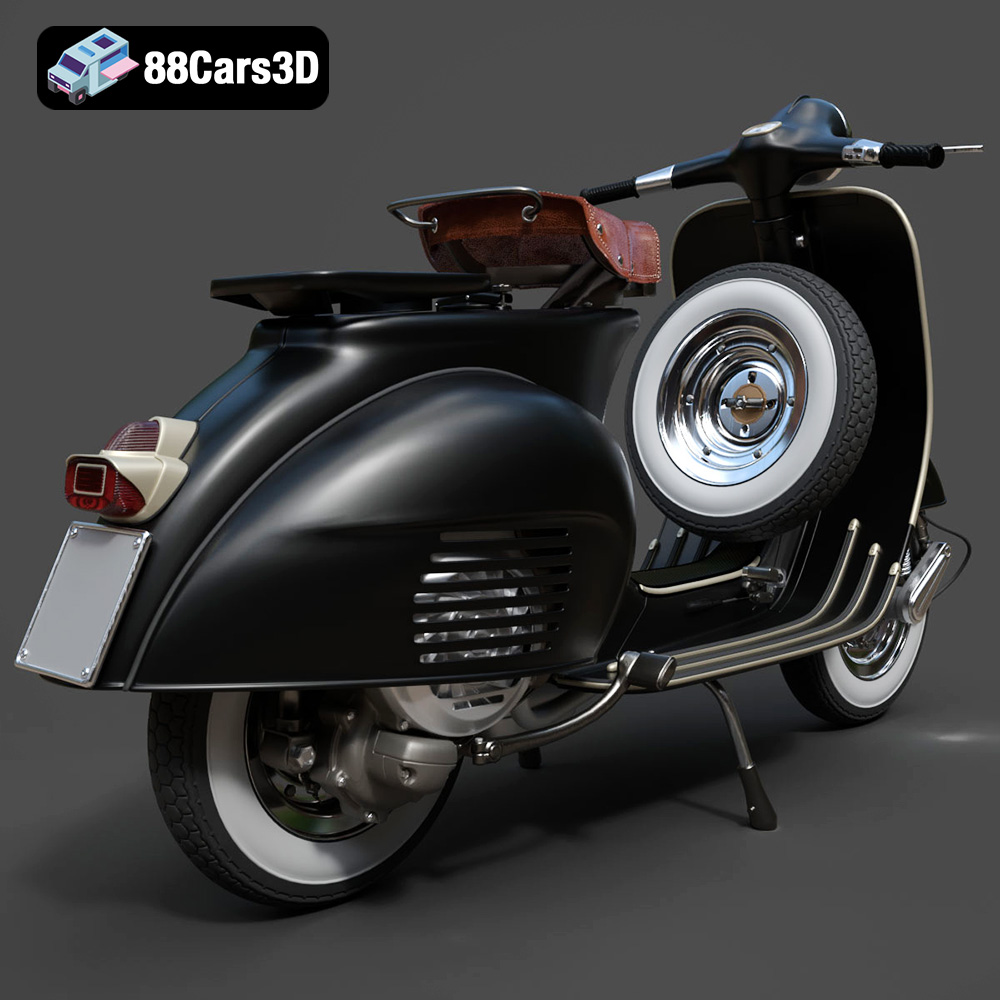
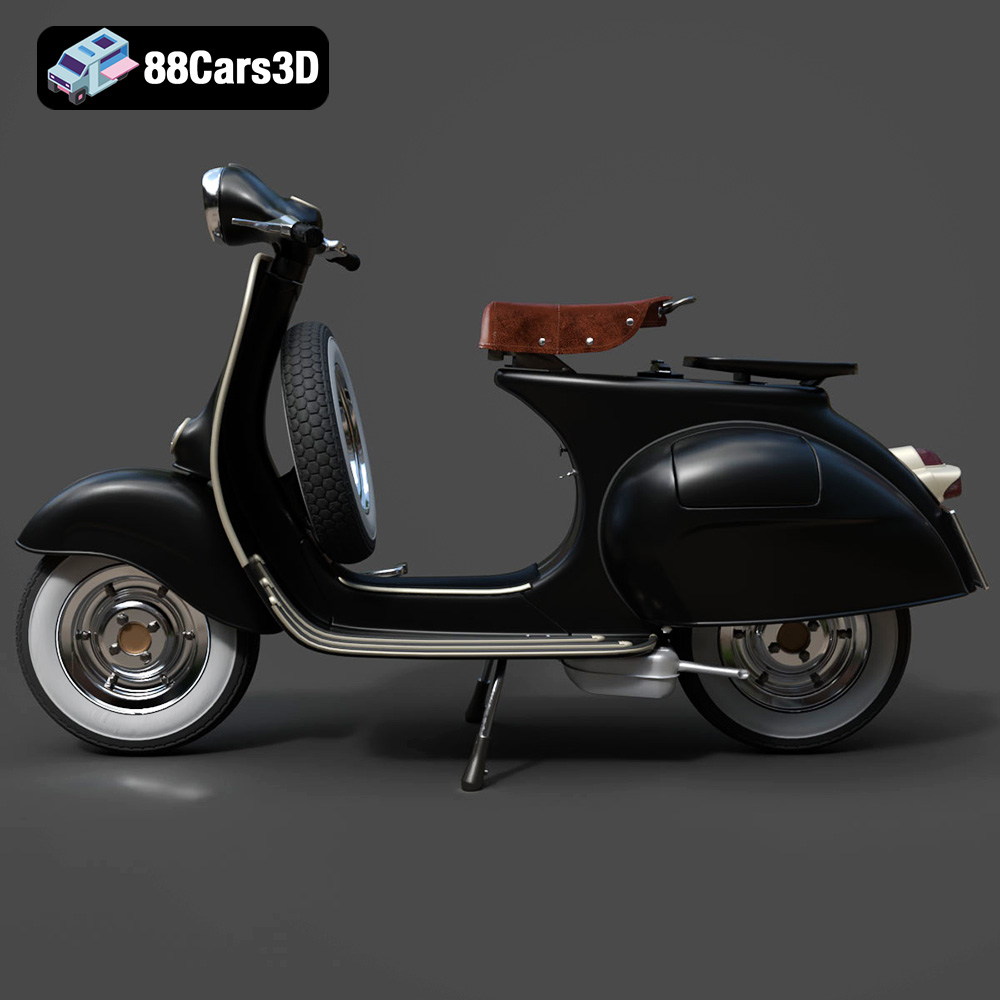
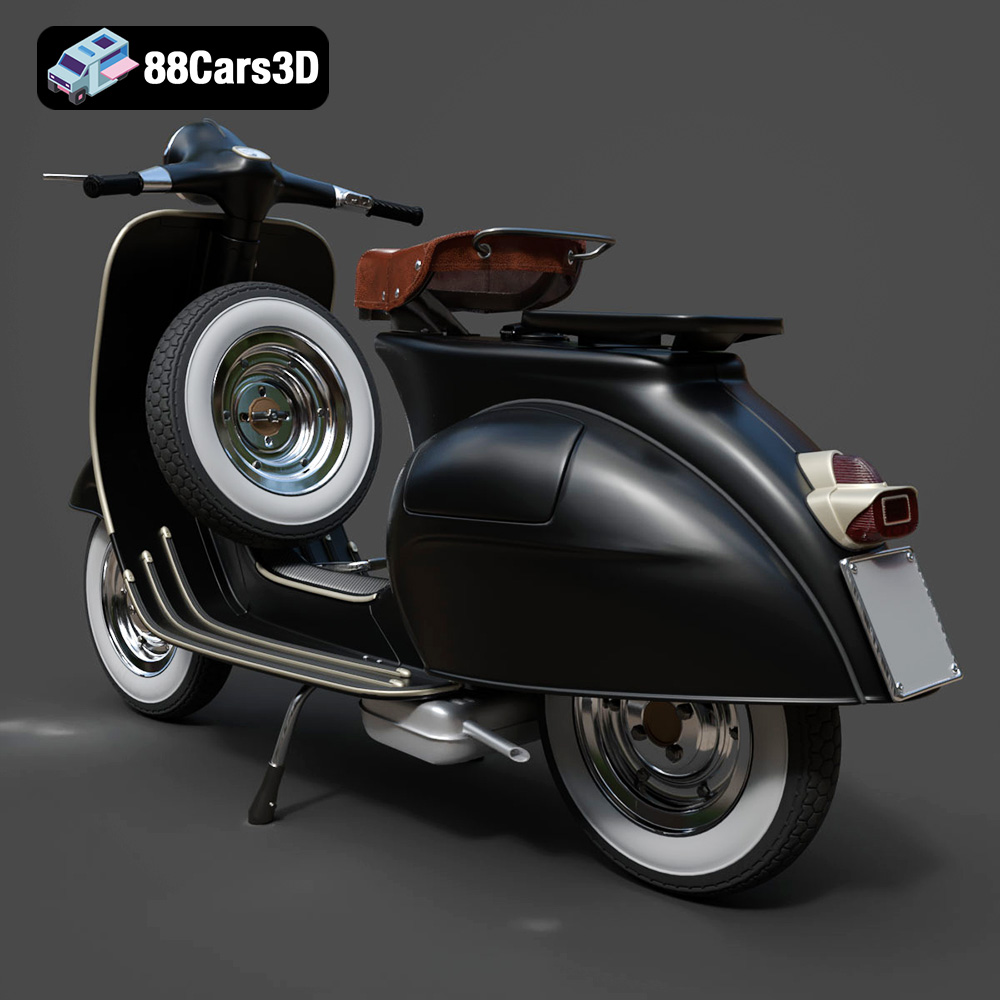
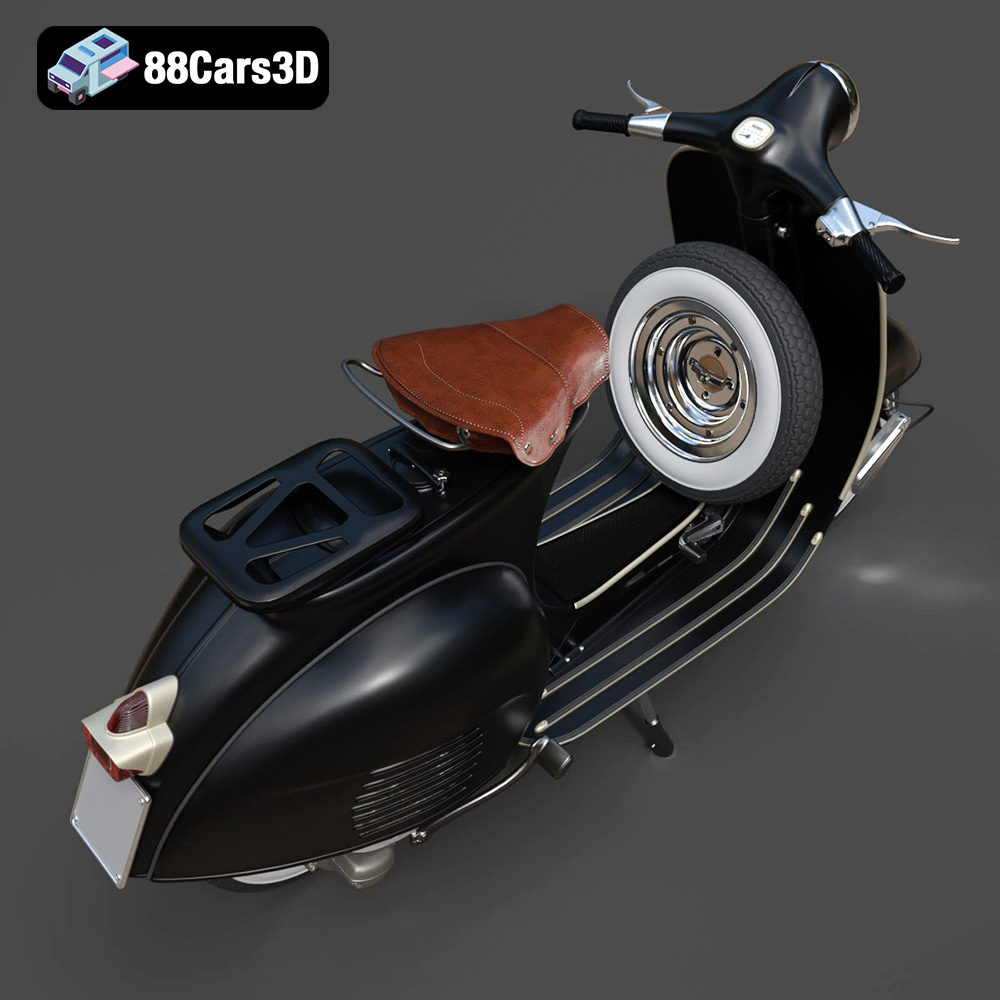
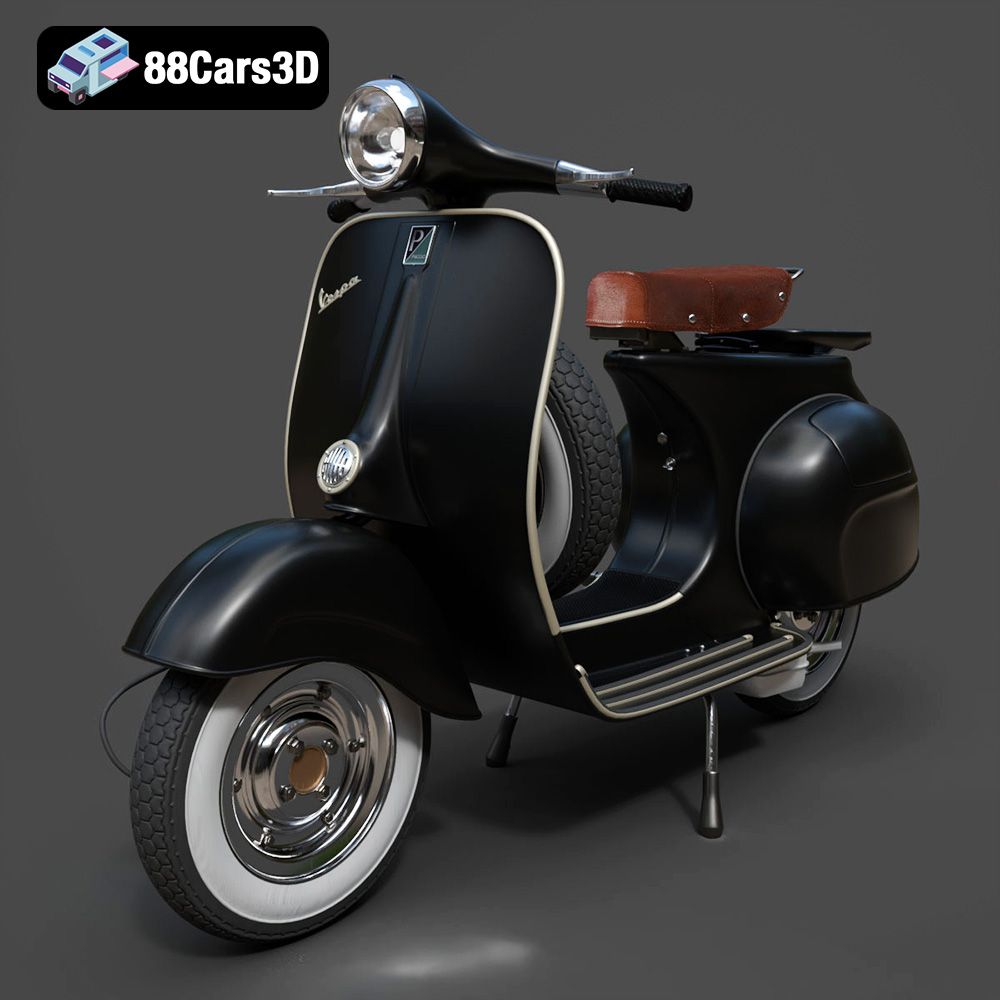
Every curve and contour of the Vespa Standard 3D Model has been meticulously crafted to reflect the iconic Italian scooter. The model accurately portrays the rounded front shield, which seamlessly integrates with the leg guard design, a hallmark of the Vespa’s protection and aerodynamic form. The classic circular headlight housing, complete with subtle detailing, evokes a sense of nostalgia. The curved side engine cover panels, characteristic of the Vespa’s monocoque chassis, are faithfully represented. Furthermore, the single-sided front suspension representation, a unique engineering marvel that contributes to the scooter’s distinctive profile, is precisely modeled. The wheels feature vintage tire styling, completing the retro look, while rear-view mirrors and chrome accents add a touch of refined realism. The model boasts accurate classic Vespa body proportions, built to real-world scale accuracy, ensuring it fits perfectly into any scene without needing scale adjustments.
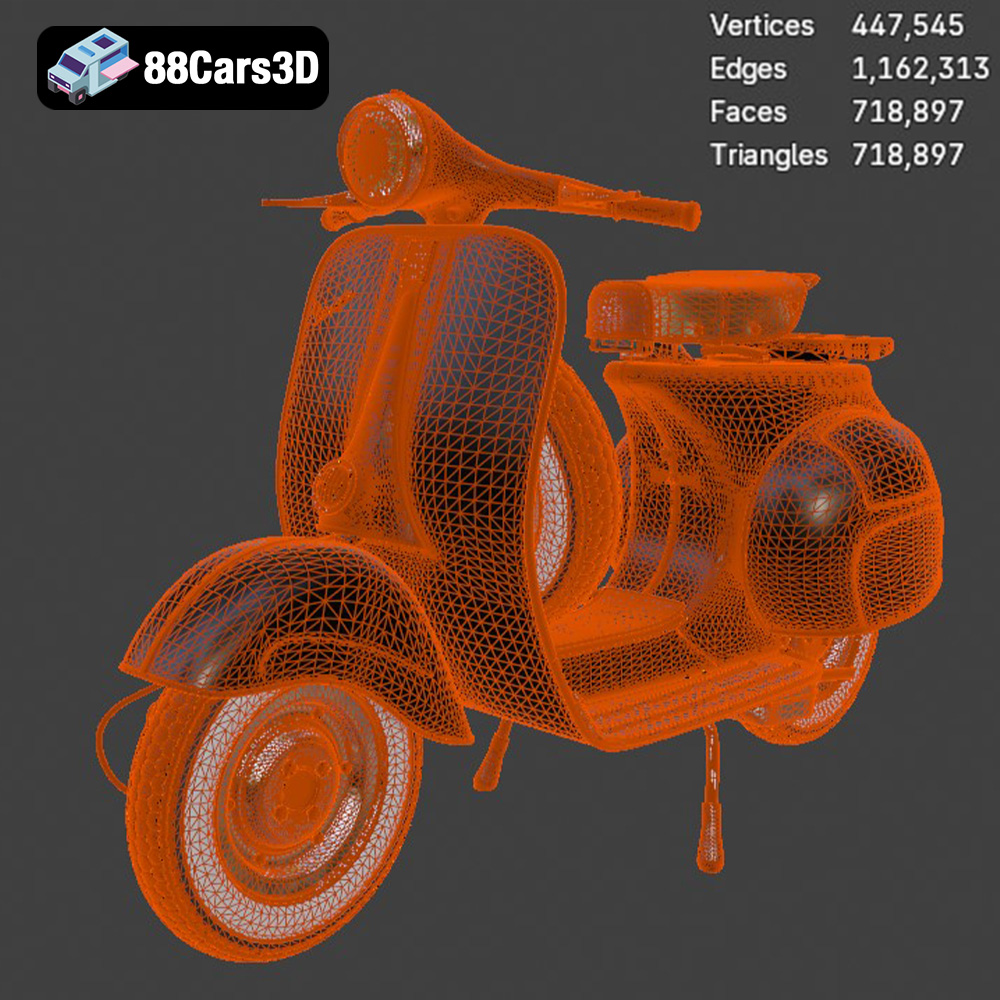
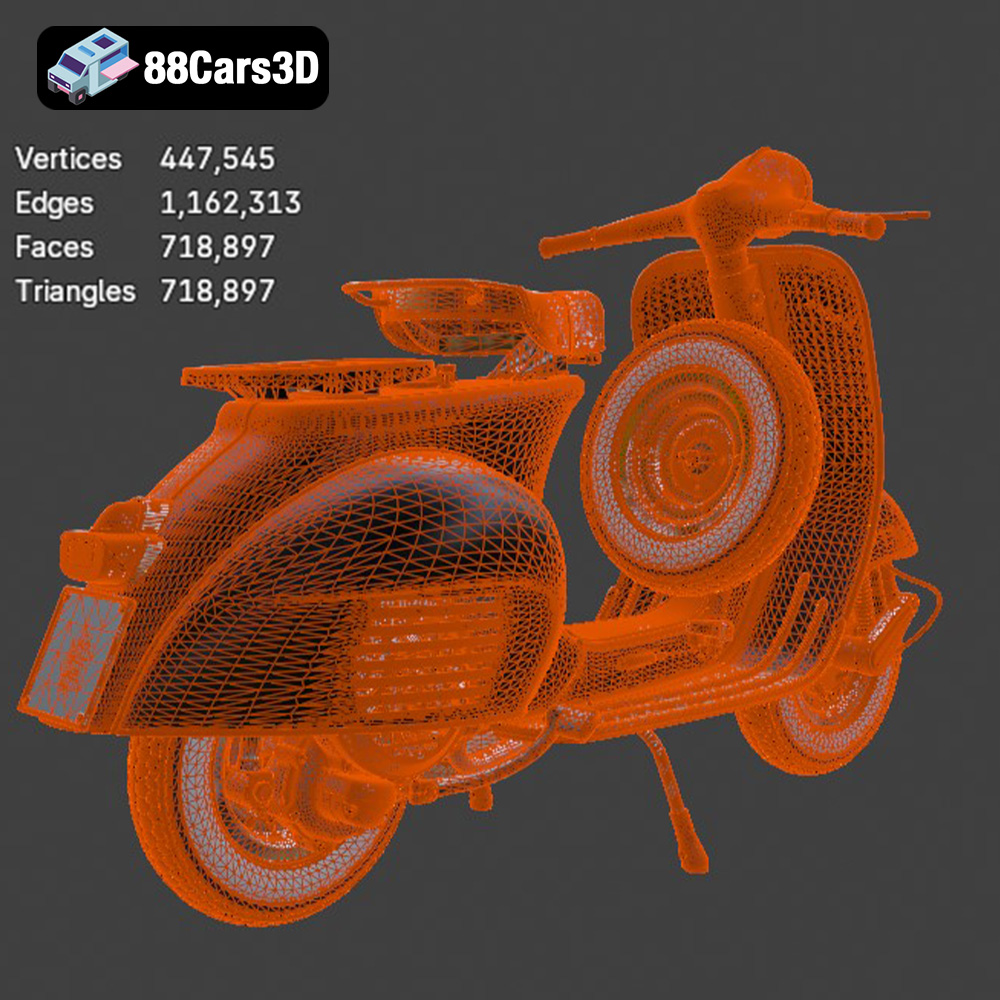
Beyond the exterior, the interactive elements are equally important. The Vespa Standard 3D Model includes a classic single or dual seat configuration, with geometry optimized for both real-time engines and high-quality renders. The handlebar assembly, complete with control grips and the speedometer housing detail, provides a focal point for rider interaction in animations or interactive experiences. The foot platform and center stand geometry are also present, adding to the model’s completeness. From a technical standpoint, the model features a clean and well-organized mesh structure, which is crucial for easy manipulation and optimization. It possesses proper pivot setup for steering and wheel rotation, allowing for straightforward animation implementation. The optimized polygon flow ensures a balance between performance and realism, making it suitable for demanding applications in game assets and high-fidelity visualizations.
A truly valuable 3D asset is one that seamlessly integrates into various professional pipelines. The Vespa Standard 3D Model, with its robust construction and extensive format support, excels in this regard, proving its worth across multiple industries.
For artists and studios focused on automotive rendering and product visualization, the Vespa Standard 3D Model is a ready-to-use solution. In workflows utilizing software like 3ds Max with V-Ray or Corona Renderer, or Blender with Cycles, the model’s clean topology and real-world scale are invaluable. Artists can quickly set up studio lighting, apply high-quality PBR materials (if not already included in native formats like .max or .blend), and compose stunning shots for marketing campaigns or lifestyle projects. Imagine the Vespa parked on a cobbled European street at sunset, or as the centerpiece of a chic urban photoshoot; the model’s fidelity allows for such photorealistic scenarios. The availability in .max and .blend formats means artists can dive straight into advanced rendering techniques, material tweaking, and scene building without wasting time on foundational modeling.
The demands of game development are unique, requiring not only visual fidelity but also strict optimization for performance. The Vespa Standard 3D Model is perfectly suited as a game asset. Its optimized geometry and proper pivot setup make it ideal for integration into real-time engines like Unreal Engine and Unity. Game developers can leverage the .fbx or .unreal formats to quickly import the scooter, set up collision meshes, create LODs (Levels of Detail) for performance scaling, and define intricate material instances. The model can populate open-world city games, serve as a interactive vehicle in European street environments, or even be the star of scooter simulation games. Its clean mesh ensures smooth rigging for dynamic vehicle physics and animations, contributing to an immersive gameplay experience.
As augmented and virtual reality continue to mature, the need for high-quality, performance-optimized assets becomes paramount. The Vespa Standard 3D Model is an excellent candidate for creating immersive vintage showroom experiences or interactive mobility demos. The .glb format, with its embedded textures and compact nature, is perfect for web-based AR applications or mobile VR, allowing for quick loading and smooth interaction. For more elaborate simulations, the .fbx format provides the necessary data for engines that power higher-fidelity AR/VR platforms. Engineers and designers can utilize this model for vehicle visualization studies or to demonstrate concept mobility within a simulated environment, offering a deeper understanding of scale and interaction than 2D images ever could.
Beyond the screen, the Vespa Standard 3D Model also offers a tangible experience through 3D printing. The inclusion of the .stl format, specifically tailored for additive manufacturing, opens up new avenues for collectors, hobbyists, and product designers alike.
Transforming a digital model into a physical object requires careful preparation, particularly for detailed 3D car models like the Vespa. The .stl file provided ensures manifold geometry, a critical factor for successful 3D printing. For optimal results, certain settings are recommended. A scale of 1:18, 1:12, 1:10, or 1:8 is ideal, striking a balance between detail preservation and manageable print time/material usage. Layer heights between 0.08–0.16 mm are suggested for a smooth finish, while a wall thickness of 1.2–2.0 mm ensures structural integrity. An infill of 15–25% is usually sufficient for strength without excessive material use. Due to the Vespa’s intricate design, supports will be required for elements like the mirrors, handlebars, and the center stand to prevent sagging during printing. The best print orientation involves printing the body angled to achieve smooth curved surfaces, while wheels should be printed separately for better detail and easier post-processing.
Once printed, the physical Vespa model enters the post-processing phase, where it truly comes to life. Initial steps often involve careful sanding to remove layer lines and minor imperfections, followed by the application of a primer. This creates a uniform surface ready for painting. The customization options are extensive: apply a gloss pastel, classic, or even metallic paint finish to match various vintage styles. Optional chrome detailing can be added to mirrors and accents to enhance realism. Beyond paint, enthusiasts can add custom decals or vintage stickers to personalize their miniature scooter. The seat can be painted or textured to modify its color and material style. For an even more unique piece, consider adding a miniature rear luggage rack or other custom accessories. These steps allow for the creation of truly unique collectible scale scooter models and display miniatures, transforming a digital asset into a cherished physical artifact.
The true power of a professionally developed 3D asset lies not just in its initial quality, but in its adaptability. The Vespa Standard 3D Model provides a solid foundation that can be infinitely customized to fit any project’s unique vision.
The flexibility offered by the Vespa Standard 3D Model allows artists and designers to truly make it their own. Want a vibrant red Vespa zipping through a sun-drenched Italian piazza? Or perhaps a muted cream model leaning against a rustic wall in a vintage scene? The ability to easily change body color, apply custom decals or vintage stickers, and modify the seat color and material style means the scooter can be visually transformed to match any narrative or brand aesthetic. Beyond color, the model is structured to allow for the addition of rear luggage racks, custom accessories, or even a sidecar, further enhancing its character and utility. Configuring lighting for urban sunset or classic European street scenes around the Vespa can dramatically alter its mood and visual impact, highlighting its timeless design. This level of customizable detail, particularly within editable formats like .blend and .max, ensures the model remains relevant across a multitude of creative endeavors.
When it comes to sourcing high-quality 3D car models and other automotive assets, 88cars3d.com stands out as a reliable marketplace. The Vespa Standard 3D Model is a testament to the commitment to detail and professional standards found on the platform. Professionals understand that time is money, and starting with a production-ready asset like this Vespa saves countless hours of modeling, texturing, and optimization. The extensive file format support, real-world scale accuracy, and optimized geometry mean that these models are designed to integrate effortlessly into any pipeline, from high-end cinematic rendering to performance-critical game development. By providing clean, well-organized meshes and proper pivot setups, 88cars3d.com ensures that creators can focus on their vision rather than wrestling with subpar assets, enabling faster iteration and higher quality output for any project.
The digital realm thrives on detail and authenticity, especially when it comes to replicating the real world. The Vespa Standard 3D Model exemplifies how a meticulously crafted 3D asset can serve a multitude of creative and technical demands. From its precise replication of an automotive icon to its comprehensive file format support, this model is a testament to professional-grade digital asset creation. Whether your project demands photorealistic automotive rendering for marketing, optimized game assets for an immersive virtual world, compelling visuals for AR/VR experiences, or even a tangible, custom 3D printed collectible, the Vespa Standard 3D Model is built to deliver. It provides artists, developers, and designers with the flexibility and quality needed to elevate their work and inject character into their digital creations. Explore this exceptional model and many other high-quality 3D car models at 88cars3d.com, your trusted source for premium automotive digital assets.
The Vespa Standard 3D Model is a high-detail digital recreation of the iconic Italian scooter known for its timeless design, curved body panels, and urban mobility heritage. Recognized worldwide for its elegant silhouette and practical engineering, the Vespa became a cultural symbol of freedom, style, and post-war European transportation. This 3D model accurately represents the rounded front shield, integrated leg guard, single-sided front suspension, curved side panels, classic headlight housing, compact seat, and rear-mounted engine structure. Designed with clean topology and real-world scale accuracy, it is ideal for rendering, animation, product visualization, game development, and AR/VR experiences. Perfect for European city scenes, retro environments, lifestyle projects, cinematic productions, and scooter simulations. Convertible to .stl format for collectible scale scooter models and display miniatures.
$29.99