Get 50% OFF All Premium 3D & STL Models!

In the dynamic world of real-time rendering and interactive experiences, an intuitive and aesthetically pleasing User Interface (UI) is just as critical as the visual fidelity of the 3D assets themselves. For professionals working with high-quality 3D car models—be it for automotive configurators, immersive training simulations, or cinematic virtual productions—the UI/UX design dictates user engagement and accessibility. Unreal Engine’s powerful Unreal Motion Graphics (UMG) UI Designer offers a robust, flexible, and visually-driven system for crafting compelling user experiences that perfectly complement stunning visuals.
This comprehensive guide delves deep into leveraging UMG for UI/UX design within Unreal Engine projects, with a particular focus on applications for automotive visualization and interactive demonstrations. We’ll explore everything from the foundational concepts of widget creation and data binding to advanced performance optimization techniques and practical applications like building a dynamic car configurator. Whether you’re a game developer aiming for immersive gameplay menus or an automotive designer showcasing your latest concept, mastering UMG will unlock new levels of interactivity and polish for your projects. Prepare to transform your stunning 3D car models into engaging, user-friendly experiences.
Unreal Motion Graphics (UMG) is Unreal Engine’s declarative UI system that allows developers to create UI elements such as menus, HUDs, and interactive overlays using a visual designer. Unlike traditional code-based UI frameworks, UMG provides a drag-and-drop interface within the Unreal Editor, making the design process incredibly intuitive and accessible. This visual approach accelerates development, allowing artists and designers to iterate quickly on UI layouts and aesthetics. For automotive visualization, UMG is indispensable for crafting everything from paint selection menus to real-time performance data displays, seamlessly integrating with your world-class 3D car models.
At its heart, UMG revolves around **Widgets**. A widget is any visual element you can add to your UI, such as buttons, text blocks, images, sliders, or even complex custom components. Each widget is an instance of a **Widget Blueprint**, which defines its visual layout, properties, and interactive logic. The design surface within a Widget Blueprint is often anchored by a **Canvas Panel**, providing absolute positioning and layering capabilities. Other powerful layout widgets like Horizontal Boxes, Vertical Boxes, and Grid Panels help structure complex UIs, ensuring responsiveness and consistency. This modular approach allows for reusable UI components, speeding up development and maintaining a cohesive design language across your project.
To begin, you typically create a new Widget Blueprint (right-click in Content Browser > User Interface > Widget Blueprint). Inside, you’ll find the Designer tab for visual layout and the Graph tab for Blueprint scripting. This duality is key: the Designer handles how your UI looks, while the Graph handles how it behaves and interacts with your game. For detailed steps on getting started, the official Unreal Engine documentation at https://dev.epicgames.com/community/unreal-engine/learning is an excellent resource for UMG fundamentals.
Let’s walk through creating a simple UI element that could be part of an automotive configurator: a button to change a car’s paint color.
1. **Create a New Widget Blueprint:** In your Content Browser, right-click and select `User Interface > Widget Blueprint`. Name it `WBP_PaintSelector`.
2. **Add a Canvas Panel:** Drag a `Canvas Panel` from the Palette onto the Designer surface. This will be your root container.
3. **Add a Button:** Drag a `Button` widget from the Palette onto the Canvas Panel. Position and size it as desired.
4. **Add Text to the Button:** Drag a `Text Block` widget onto the Button. In the Details panel for the Text Block, change its text property to “Red Paint”.
5. **Rename Widgets:** For clarity, select the Button and in the Details panel, under `Is Variable`, check the box and rename it to `Btn_RedPaint`. Do the same for the Text Block, perhaps `Txt_RedPaint`.
6. **Add Event Logic:** With `Btn_RedPaint` selected, scroll down in the Details panel to the Events section. Click the `+` next to `On Clicked`. This will take you to the Graph tab.
7. **Implement Logic:** In the Graph tab, you now have an `OnClicked (Btn_RedPaint)` event node. From here, you can drag a wire and add nodes to perform actions, such as calling a function on your 3D car model Blueprint to change its material to red. This simple setup demonstrates the power of UMG: visual design combined with powerful Blueprint scripting.
This foundational understanding provides the bedrock for building more complex and interactive UIs for your Unreal Engine projects, crucial for showcasing the fidelity of assets you might acquire from marketplaces like 88cars3d.com.
Once the basic structure of a widget is understood, the next step is to make it both functional and visually appealing. This involves judicious selection and customization of widgets, establishing a consistent visual language through styling, and creating dynamic connections between your UI and the underlying game data. For automotive visualization, these elements are paramount to creating a seamless and informative user experience that empowers interaction with high-fidelity vehicle models.
Unreal Engine provides a rich library of standard widgets, each serving a specific purpose. For an automotive configurator, common choices include:
* **Buttons:** For selecting options (e.g., “Exterior Color,” “Wheel Type,” “Interior Trim”).
* **Sliders:** Ideal for fine-tuning parameters like brightness of ambient lighting, saturation of a paint finish, or even real-time adjustments to suspension height.
* **Text Blocks:** To display vehicle specifications, option descriptions, or pricing information.
* **Image Widgets:** For showcasing thumbnails of different wheel designs, material swatches, or brand logos.
* **Scroll Boxes & Wrap Boxes:** Essential for presenting a large number of options (e.g., dozens of paint colors or fabric patterns) in an organized, scrollable format.
* **Progress Bars:** Potentially for showing loading progress when new assets are streamed, though more common in games.
Each of these widgets can be extensively customized in the Details panel, from fonts and colors to padding and alignment, ensuring that the UI perfectly matches your brand guidelines or project aesthetic.
Maintaining a consistent visual style is crucial for a professional UI. UMG facilitates this through **Style Assets**. Instead of setting font sizes, colors, and button textures individually for every widget, you can define a `Slate Brush`, `Font`, or `Style` asset once and apply it across multiple widgets. This not only saves time but ensures global changes can be made from a single point of reference.
For automotive configurators, this is invaluable. You might define a “Primary Button Style” with specific colors, fonts, and hover effects that is used for all main navigation buttons. Similarly, a “Specification Text Style” ensures all textual data about the car (horsepower, torque, MPG) looks uniform. You can create these styles in the Content Browser (`User Interface > Widget Style`) and then reference them in your widget blueprints. This approach is fundamental for upholding strong brand identity and professional presentation when showcasing intricate models from sources like 88cars3d.com.
One of UMG’s most powerful features is **Data Binding**. This allows you to directly link properties of your UI widgets (e.g., the text of a `Text Block`, the progress of a `Progress Bar`, or the visibility of an `Image`) to variables or functions in your Widget Blueprint or even external Actors. This creates dynamic, real-time feedback for the user.
Consider an automotive scenario:
* **Displaying Current Car Color:** A `Text Block`’s `Text` property can be bound to a function that returns the current paint color of your 3D car model. Whenever the car’s color changes (via a UI button click), the text automatically updates.
* **Toggling Features:** An `Image` widget showing an icon for a specific car feature (e.g., heated seats) could have its `Visibility` bound to a boolean variable that indicates if that feature is currently enabled.
* **Price Updates:** A `Text Block` displaying the total price of the car could be bound to a function that calculates the sum of all selected options.
To bind a property, select the widget in the Designer, go to the Details panel, find the property you want to bind (e.g., `Text` for a `Text Block`), click the `Bind` dropdown, and choose `Create Binding`. This will generate a new function in your Graph tab where you can define the logic to return the desired value. This dynamic linkage ensures your UI always reflects the current state of your interactive experience.
While UMG handles the visual layout, Blueprint visual scripting is where the real interactivity comes to life. It’s the engine that responds to user input, orchestrates changes in the 3D world, and manages the flow of information between your UI and your game logic. For an automotive visualization project, this means enabling users to intuitively navigate options, customize vehicles, and trigger specific actions with precision.
The core of UI interactivity in UMG is **event-driven design**. Widgets expose events that fire when a user interacts with them. The most common event is `On Clicked` for `Button` widgets, but others include `On Changed` for `Slider` or `Editable Text` widgets, `On Hovered` for visual feedback, and `On Pressed`/`On Released` for more granular control.
When you connect to an event in the Widget Blueprint’s Graph tab, you’re essentially saying, “When this happens, do that.” For instance, an `On Clicked` event for a “Blue Paint” button would trigger a Blueprint sequence that:
1. Gets a reference to the main car actor in the scene.
2. Calls a function on that car actor, such as `SetPaintMaterial(Blue_Material_Instance)`.
3. Potentially plays a sound effect or updates other UI elements to confirm the change.
This straightforward event-driven approach makes it simple to map user interactions to game logic, allowing for highly responsive and intuitive control over your 3D car models.
A common challenge in UI development is enabling effective communication between your UI widgets (which are often self-contained) and the various actors in your 3D scene. Unreal Engine offers several robust methods for this:
* **Direct References:** If your UI widget needs to interact with a single, known actor (e.g., your main `BP_CarConfigurator` actor), you can create a variable in your Widget Blueprint of that actor’s type, make it `Expose on Spawn`, and populate it when you create the widget (e.g., in your Player Controller). This allows you to call functions directly on that actor.
* **Event Dispatchers:** For one-to-many communication, `Event Dispatchers` are ideal. Your UI widget can `Call` an event dispatcher, and any interested actor or another widget can `Bind` to that dispatcher to receive the notification. For example, a “Save Config” button could `Call` an event dispatcher, and both your car actor and a “screenshot manager” actor could `Bind` to it to perform their respective save actions.
* **Blueprint Interfaces:** For more generalized, flexible communication, `Blueprint Interfaces` define a set of functions that any Blueprint can implement. Your UI widget can then send messages to any actor that implements a specific interface, without needing to know the actor’s exact type. This is excellent for modularity.
* **`Get Owning Player Controller` and `Get Game Instance`:** These global access points are useful for reaching central game logic or player-specific data that might contain references to other key actors.
Choosing the right communication method depends on the complexity and scope of your project, but mastering these techniques is essential for building interconnected and responsive interactive experiences, especially when dealing with advanced models like those available on 88cars3d.com.
Effective UI/UX isn’t just about what’s on screen; it’s also about how users interact with it. Modern applications need to handle input from various sources: mouse, keyboard, gamepad, and touch.
* **Mouse and Keyboard:** UMG widgets inherently respond to mouse clicks and hover events. For keyboard navigation, you’ll need to manage **Focus**. Widgets can be set to be `Focusable`, and you can programmatically `Set User Focus` to a specific widget. For instance, in a menu, pressing “Down” on the keyboard might shift focus from one button to the next.
* **Gamepad:** Integrating gamepad navigation often involves mapping controller inputs (e.g., D-Pad, left stick) to UI navigation logic (up, down, left, right) and then simulating clicks on the currently focused widget. Unreal Engine’s Input System and the `Common UI` plugin (discussed later) offer excellent support for this.
* **Touch Input:** For mobile or tablet applications (e.g., an automotive configurator on a showroom tablet), UMG widgets are designed to respond to touch events similar to mouse clicks. Considerations for touch include larger hit targets for buttons and gestures like swiping for navigation.
Managing input comprehensively ensures your automotive visualization or interactive demo is accessible and intuitive across all intended platforms, providing a consistent user experience regardless of the input method.
With the UMG fundamentals in place, we can now explore more advanced techniques and directly apply them to complex automotive visualization scenarios. This section focuses on building sophisticated interactive systems, integrating UI choices with high-fidelity 3D assets, and considering the unique demands of virtual production and immersive AR/VR environments.
An automotive configurator is perhaps the quintessential application for UMG in this domain. It allows users to customize a 3D car model in real-time, changing paint colors, wheel designs, interior materials, and optional features.
The typical components of such a configurator include:
* **Main Car Display:** A `Viewport Widget` or a dedicated camera viewing a `Pawn` that holds your 3D car model.
* **Option Categories Menu:** A `Vertical Box` or `Scroll Box` containing buttons for categories like “Exterior,” “Interior,” “Wheels,” “Performance.”
* **Option Selection Panels:** When a category is selected, a new panel (or a dynamically loaded `User Widget`) appears, listing specific choices (e.g., a `Grid Panel` of color swatches, or a `Scroll Box` of wheel thumbnails).
* **Information Display:** `Text Blocks` for showing current selections, price updates, or detailed specifications.
* **Camera Controls:** Buttons or sliders to rotate, zoom, or pan the camera around the vehicle.
The workflow involves:
1. **Modular Widget Design:** Create separate Widget Blueprints for each panel (e.g., `WBP_ColorSelector`, `WBP_WheelSelector`).
2. **Dynamic Widget Creation:** When a user clicks “Exterior,” your main configurator widget creates and adds `WBP_ColorSelector` to a designated area on the screen.
3. **Material Instance Dynamic (MID) for Customization:** When a color swatch is clicked, the UI sends a message to the car’s Blueprint. The car Blueprint then creates or updates a `Material Instance Dynamic` for the relevant mesh (e.g., the car body) and sets its color parameter. This allows for vast customization without needing to pre-make countless unique materials.
The beauty of a configurator lies in its ability to translate UI choices directly onto a stunning 3D model. When sourcing automotive assets from marketplaces such as 88cars3d.com, you often receive models with clean topology, realistic PBR materials, and proper UV mapping. This quality is crucial for a smooth integration with UMG-driven customization.
For instance, changing a car’s paint color:
1. Your `BP_Car` (the main car Blueprint) should have a `Static Mesh Component` or `Skeletal Mesh Component` for the car body.
2. It should also contain a `SetMaterialParameterValue` function that takes a `Color` (or a `Texture` reference) and applies it to a specific `Material Instance Dynamic` used by the car body.
3. In your `WBP_ColorSelector` (the UI widget), when a user clicks a color swatch button, the `On Clicked` event retrieves the desired color value.
4. This color value is then passed to the `BP_Car`’s `SetPaintMaterialParameterValue` function, and the car’s appearance updates instantly.
Similarly, changing wheels involves swapping out `Static Mesh` components or adjusting visibility of different wheel models based on user selection. The ability to seamlessly connect UI inputs to sophisticated material and mesh manipulation on highly detailed models elevates the entire visualization experience.
UI/UX in immersive environments presents unique challenges and opportunities.
* **Virtual Production (VP) with LED Walls:** In a virtual production setup, UMG can be used to control aspects of the virtual environment from a tablet or monitor, allowing directors or operators to make real-time adjustments without interrupting the shot. This could include changing lighting scenarios around a virtual car, spawning new props, or adjusting camera settings. The UI here needs to be clear, responsive, and robust, often running on a separate device communicating with the main Unreal Engine instance.
* **Augmented Reality (AR) / Virtual Reality (VR):** For AR/VR automotive experiences, traditional 2D screen-space UI can be disorienting or break immersion.
* **World-Space UI:** Often, UI elements are placed directly *within* the 3D world, attached to the car or floating in front of the user. These `Widget Components` are 3D meshes that render a UMG widget onto their surface, allowing for interaction via gaze, ray casting, or direct touch (in AR).
* **Gaze-Based Interaction:** In VR, users might “look at” a button for a few seconds to activate it, or use a laser pointer from a VR controller. Your UMG elements need to be large enough to be easily targeted and provide clear visual feedback when hovered over.
* **Performance:** AR/VR UI must be highly optimized. Every pixel rendered counts. Using fewer, simpler widgets, efficient texture atlases, and carefully managing draw calls becomes even more critical. Transparent widgets can be particularly expensive.
Designing UI for these advanced use cases requires a deep understanding of UMG’s capabilities and thoughtful consideration of the user’s interaction model within a three-dimensional, immersive space.
Even with stunning 3D car models and intricate UI logic, a slow or laggy user interface can quickly detract from the user experience. Optimizing UMG performance is crucial, especially in real-time applications where every millisecond counts. This section outlines key strategies and tools to ensure your UI runs smoothly and efficiently.
Before optimizing, you need to identify bottlenecks. Unreal Engine provides powerful profiling tools:
* **Session Frontend:** This tool (accessible via `Window > Developer Tools > Session Frontend`) is your primary gateway to profiling. Specifically, the `Slate Insights` tab within Session Frontend allows you to analyze UMG/Slate rendering performance. You can see widget draw times, layout passes, and identify which widgets are consuming the most CPU time.
* **Stat Commands:** In-game, use console commands like `stat Slate` to get an overview of Slate/UMG CPU usage, including draw calls and update times. `stat GPU` can help identify if your UI textures are causing GPU bottlenecks due to overdraw or excessive memory usage.
* **Widget Reflector:** (Found in `Window > Developer Tools > Widget Reflector`) This tool allows you to inspect the widget hierarchy of your running UI, identify which widgets are active, and even highlight their screen space, invaluable for debugging layout and visibility issues.
By using these tools, you can pinpoint specific widgets or update logic that might be causing performance hitches, guiding your optimization efforts.
Optimizing UMG involves a combination of careful design and clever Blueprint scripting:
* **Minimize Widget Complexity:** Every widget, especially complex ones with many children or advanced animations, adds overhead. Use the simplest possible widget for the job. Instead of complex borders with many layers, consider a single image.
* **Reduce Overdraw:** Transparent widgets, especially those overlapping, can be expensive as they require multiple rendering passes. Use opaque backgrounds where possible and consolidate overlapping elements.
* **`Is Volatile` Property:** For widgets whose content frequently changes (e.g., a timer or a constantly updated text block), enabling `Is Volatile` in the Details panel can sometimes improve performance by telling the engine to redraw it more frequently without caching. However, use sparingly as it can also increase CPU usage if overused.
* **Optimize Texture Usage:** UI textures should be appropriately sized (powers of two, e.g., 256×256, 512×512) and ideally packed into atlases to reduce draw calls. Use compression settings suitable for UI elements (e.g., UI for smaller file sizes if transparency is not needed, or `UserInterface2D` for general UI textures).
* **Conditional Updates:** Don’t update UI elements every frame if they don’t need to. For example, a car’s mileage display only needs to update when the mileage actually changes, not 60 times a second. Use `Gate` nodes or `DoOnce` logic in Blueprint to control update frequency.
* **Virtualizing Panels:** For lists with many items (e.g., a scrollable list of 100 optional features), using `ListView` or `TileView` (or custom virtualizing panels) is crucial. These widgets only create and update UI elements for items currently visible on screen, dramatically saving performance.
* **Avoid Tick in Widgets:** Unless absolutely necessary, avoid using the `Event Tick` in your Widget Blueprints. Instead, use event-driven updates (e.g., `On Changed` events, `Event Dispatchers`) to trigger updates only when needed.
For larger projects, especially those targeting multiple platforms or requiring robust gamepad navigation, Unreal Engine’s **Common UI** plugin is a game-changer. Available from the Unreal Engine Marketplace or as a built-in plugin, Common UI provides a framework for:
* **Platform Agnostic Input:** Simplifies handling input from various devices (mouse, keyboard, gamepad, touch) and ensures consistent navigation logic.
* **Modular Navigation:** Makes it easier to manage focus, navigate between widgets, and create complex menu hierarchies with predictable behavior.
* **Data Driven Menus:** Allows you to define menu structures and widget properties using data assets, making it easier for designers to create and modify UI without diving into Blueprints.
* **State Management:** Helps manage the active state of UI elements, preventing common bugs related to widget visibility and interaction.
While it has a learning curve, adopting Common UI from the outset for significant projects can save immense development time and lead to a more maintainable and scalable UI system, perfectly suited for sophisticated automotive applications that might involve complex configurations or multi-platform deployment.
The journey through Unreal Engine’s UMG Widget System reveals its immense power and flexibility in crafting immersive and intuitive user experiences. From establishing foundational widget hierarchies and dynamically binding data to building advanced automotive configurators and optimizing performance, UMG is an indispensable tool for anyone working with real-time visualization. We’ve seen how meticulously designed UI/UX can elevate the presentation of high-fidelity 3D car models, transforming static visuals into engaging, interactive demonstrations.
Mastering UMG not only enhances the user’s interaction with your beautiful 3D car models, but also empowers you to create rich, responsive applications that stand out. The ability to seamlessly integrate UI choices with complex material and mesh changes, as demonstrated in our automotive configurator example, showcases the true potential of Unreal Engine as a complete development platform. Platforms like 88cars3d.com provide the exceptional quality 3D assets that deserve an equally impressive user interface to truly shine.
As you embark on your next Unreal Engine project, remember to prioritize UI/UX design from the outset. Experiment with different widget types, leverage custom styles for brand consistency, and always keep performance optimization in mind. Dive into the official Unreal Engine documentation for deeper insights, and continue to explore advanced features like the Common UI plugin. By applying the principles and techniques discussed here, you’ll be well-equipped to design and implement UIs that are not only functional but truly enhance the interactive experience of your automotive visualizations and beyond. The power to create truly captivating experiences is now at your fingertips.
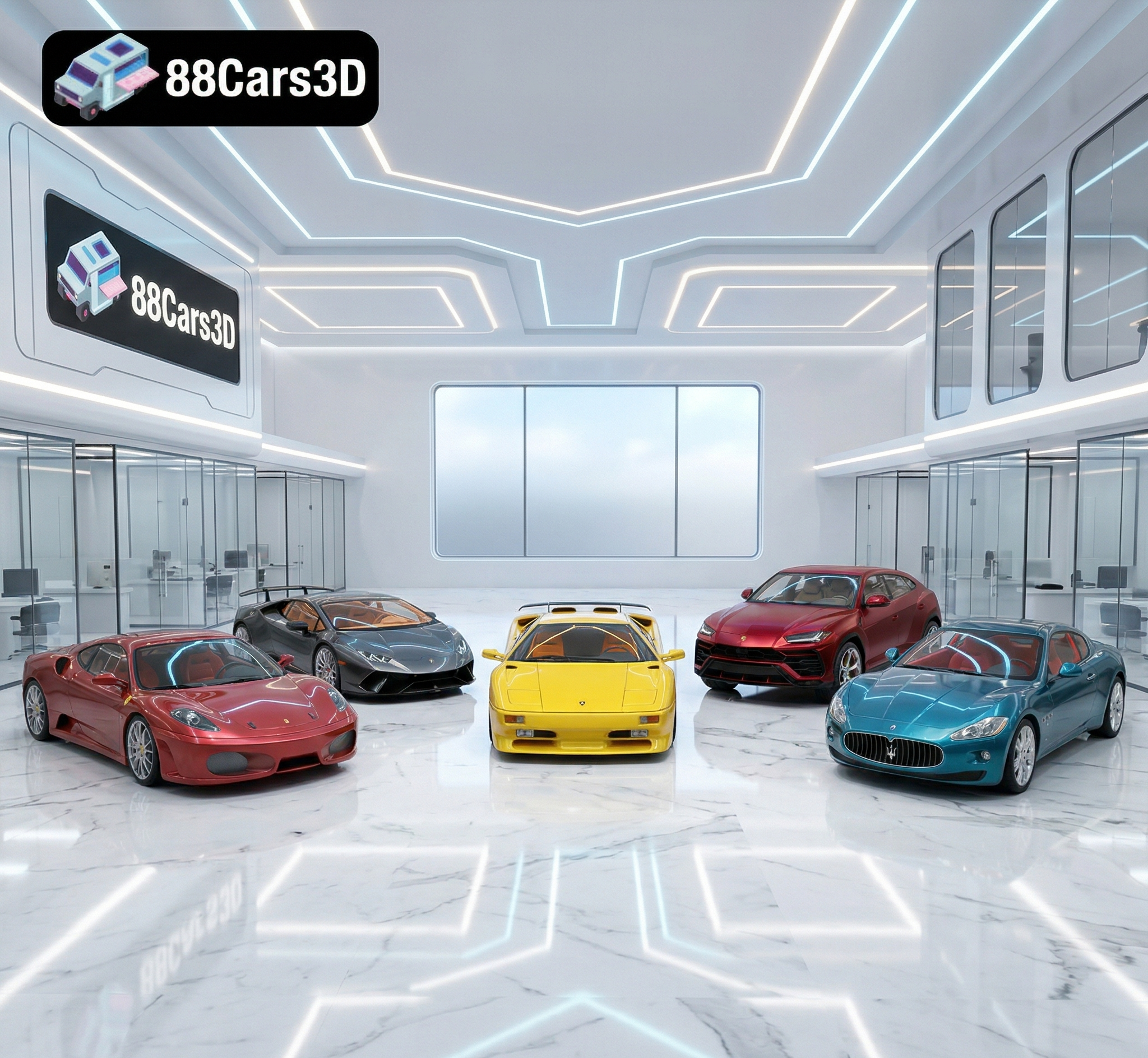
Texture: Yes | Material: Yes | 3D Printable: Yes. Download the Italian Thoroughbreds Bundle featuring 5 iconic 3D models: Lamborghini Huracán Performante, Ferrari 458 Italia, Lamborghini Urus, Diablo SV, and Maserati GT. Optimized for 4K rendering and 3D printing (STL included). Save 50% with this ultimate Italian vehicle collection.
Price: $199.99

Download the Elite Future Mobility Bundle featuring 4 highly optimized 3D models: Tesla Model S, Avatr 11, Li L9, and Zoox Robotaxi. Perfect for ArchViz, Smart City renders, and game dev. Optimized for Unreal Engine and Blender. Includes .fbx, .obj, and .max formats.
Price: $99
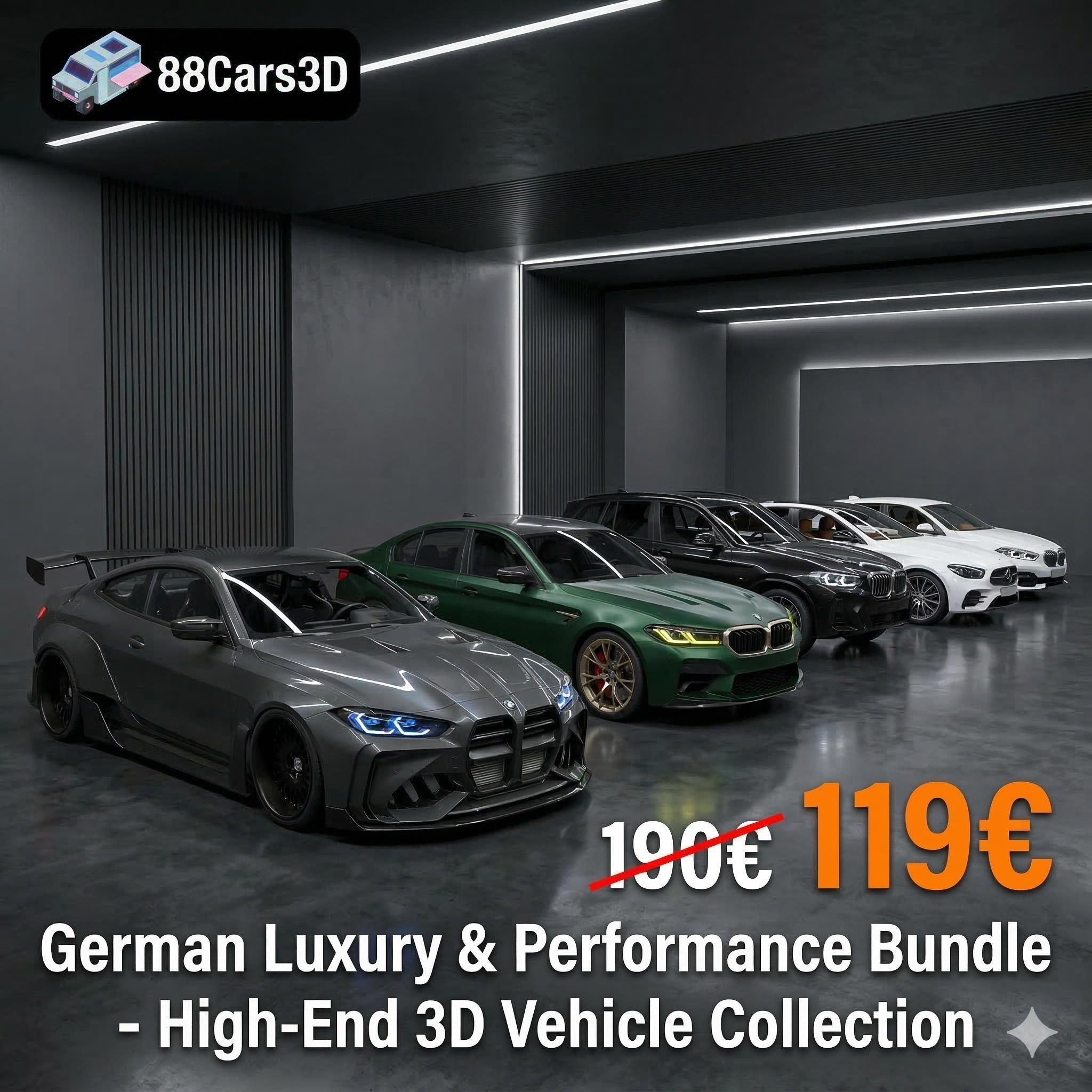
🚗 5 Iconic German Cars (BMW M4 G82, M5 CS, X3, 1 Series & Mercedes E-Class). ✅ Optimized for ArchViz: Ready for Corona & V-Ray. 💰 Save €71 with this limited-time collection! 🚀 Instant Download after purchase.
Price: $119
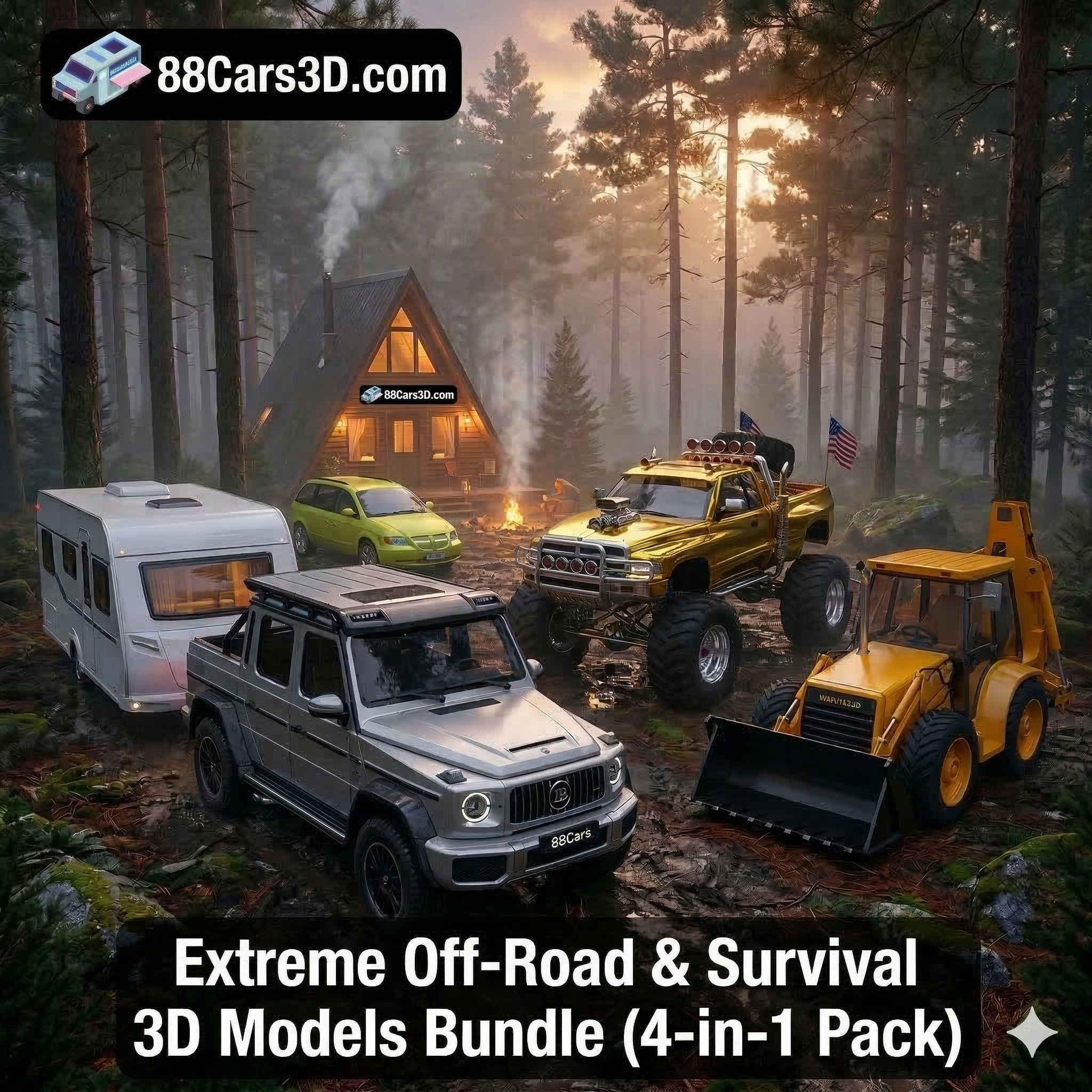
Download the Extreme Off-Road & Survival 3D Models Bundle! Includes the Brabus 800 Adventure, Dodge Ram Bigfoot, Spec Truck, and a Caravan. Save over €210 on this premium 4-in-1 off-grid vehicle pack for ArchViz and game development.
Price: $149.99
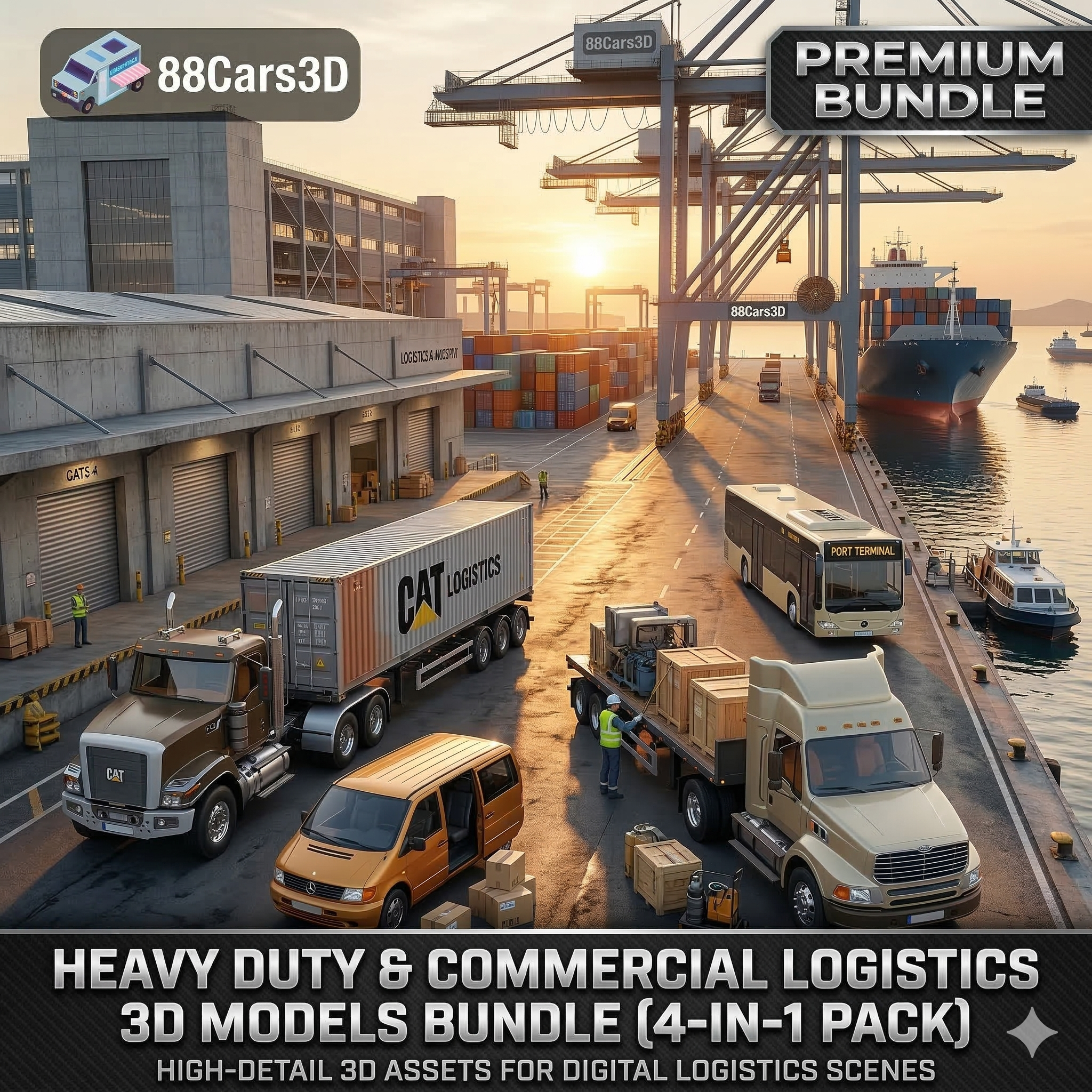
Download the Heavy Duty & Commercial Logistics 3D Models Bundle! Includes the Ford Sterling, Caterpillar CT680, Mercedes Citaro Bus, and Vito Van. Save over €130 on this massive, game-ready 4-in-1 industrial vehicle pack.
Price: $109.99

Download the Ultimate Custom Motorcycles 3D Models Bundle. Includes a Custom Chopper, Ducati 916 Café Fighter, Harley XR1200X, and BMW K100. Perfect premium props for luxury ArchViz garages. Save over €250 today!
Price: $159.99

Download the ultimate JDM Street Racing 3D Models Bundle! Includes the Nissan GT-R, Toyota Supra, Mazda RX-7, Lancer Evo IX, and Honda NSX. Save big on this highly optimized, game-ready 5-in-1 Japanese legend car pack.
Price: $129.99

Download the ultimate American Muscle & Cinematic Classics 3D Models Bundle! Includes the Dodge Charger ’68, Mustang Eleanor GT500, Camaro Z28 ’79, and a custom ’69 Mustang. Save over €240 on this game-ready, premium 4-in-1 pack.
Price: $149.99
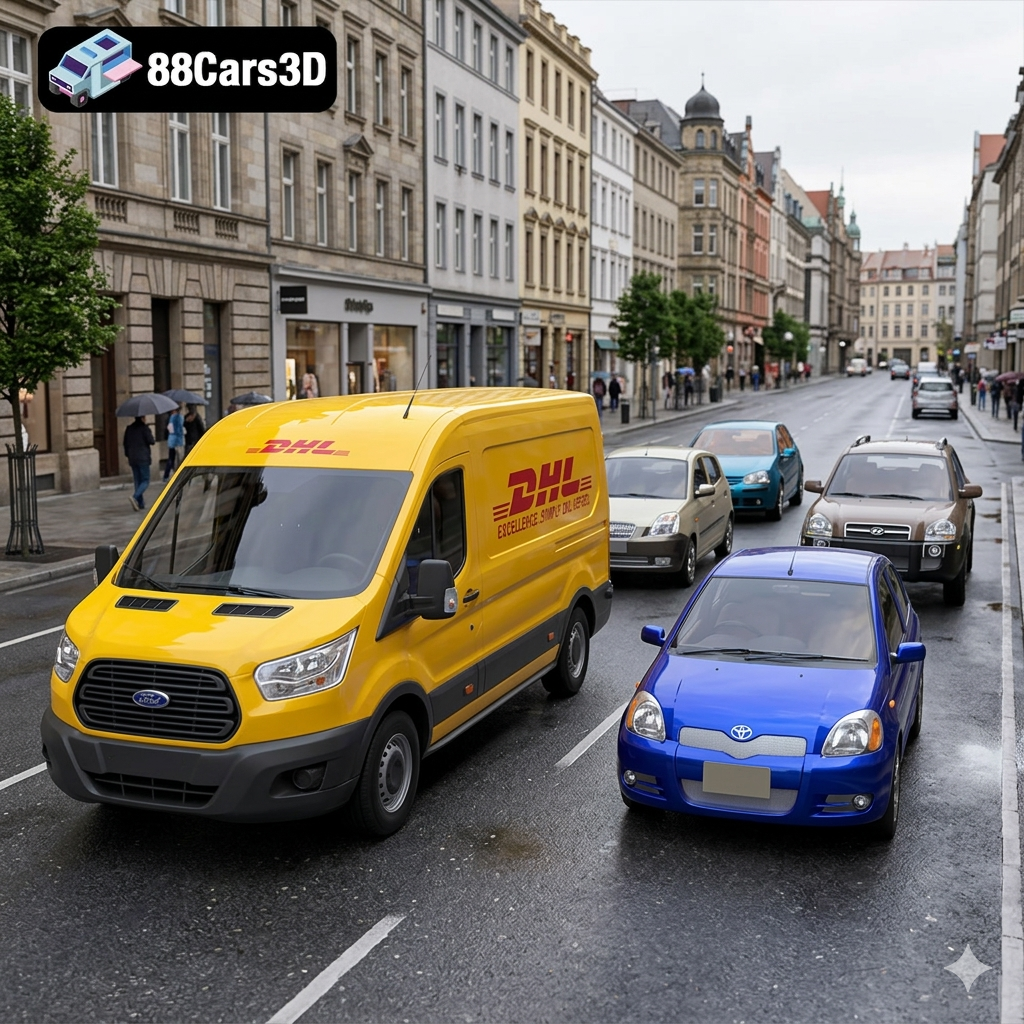
Download the Everyday City Traffic 3D Models Bundle. Includes the VW Golf, Kia Picanto, Hyundai Tucson, Toyota Yaris, and a DHL Ford Transit Van. Save big on this 5-in-1 pack, perfectly optimized for realistic ArchViz streets and game traffic.
Price: $99.99
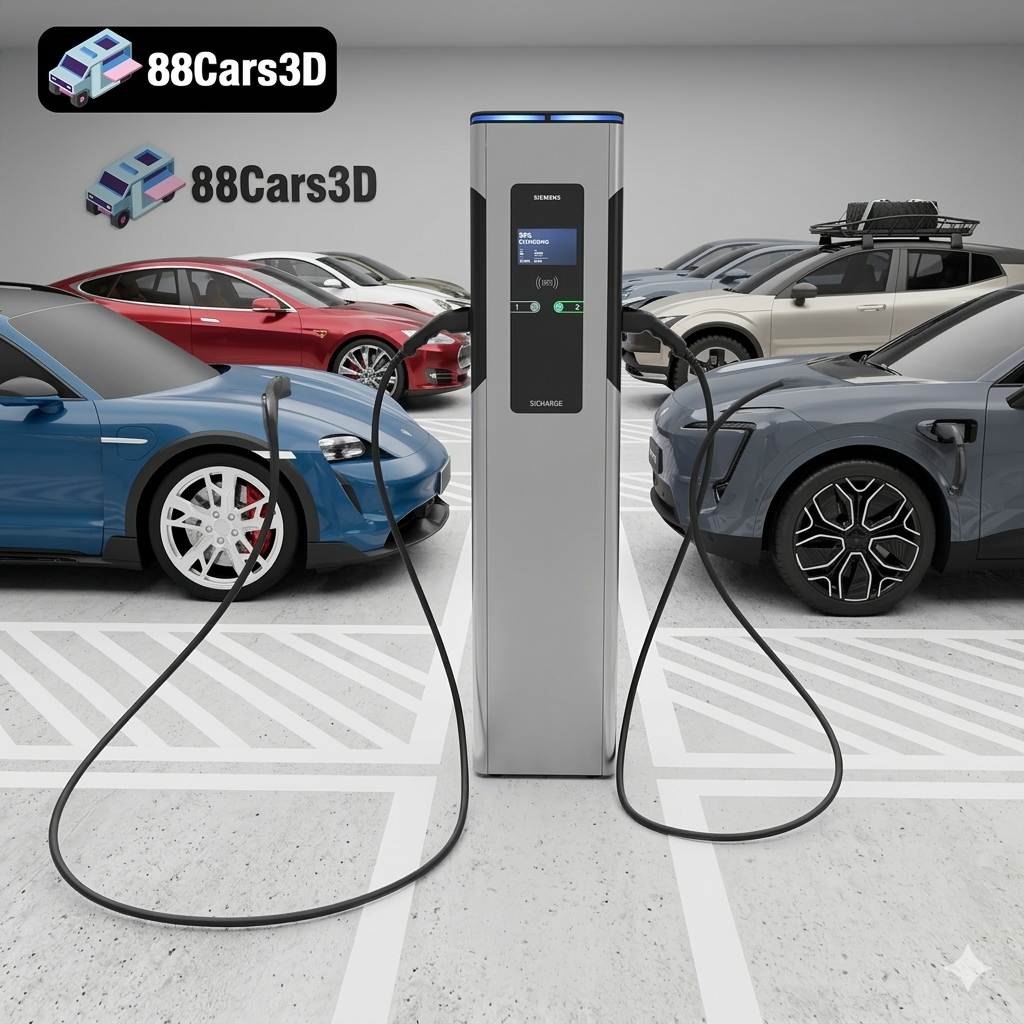
Download the Future of Mobility EV 3D Models Bundle. Includes the Volvo EX30, Tesla Model S, AVATR 11, Porsche Taycan, and a Siemens EV Charger. Save big on this highly optimized 5-in-1 pack for ArchViz and game development!
Price: $89.99

