Get 50% OFF All Premium 3D & STL Models!

In today’s visually driven world, the demand for stunning, photorealistic automotive content has never been higher. Whether it’s for an immersive video game, a captivating advertising campaign, a detailed architectural visualization, or a cutting-edge virtual reality experience, high-quality 3D car models are the foundational assets that bring these visions to life. These aren’t just simple digital representations; they are intricate feats of digital engineering, meticulously crafted to replicate every curve, panel gap, and material nuance of their real-world counterparts.
The journey from a blank canvas to a fully rendered automotive masterpiece involves a complex interplay of artistic skill, technical precision, and a deep understanding of various software and pipelines. Professionals in diverse industries rely on expertly built 3D vehicles to convey realism, evoke emotion, and drive engagement. This article delves into the technical intricacies, workflows, and applications of these vital assets, offering insights for both creators and those seeking to leverage the power of advanced automotive rendering and game assets.
The difference between an average 3D car model and a truly exceptional one lies in the meticulous attention to detail and technical execution. A superior model isn’t just about looking good; it’s about performing flawlessly across a multitude of applications and delivering consistent results that meet professional standards.
While visual fidelity is paramount, the underlying technical structure of a 3D car model dictates its usability and performance. A model with clean topology, optimized polygon counts, and properly unwrapped UVs will render faster, animate more smoothly, and integrate seamlessly into different software environments. This technical cleanliness prevents rendering artifacts, ensures consistent shading, and allows for efficient texture application. For real-time applications, such as game development or interactive configurators, an optimized model is crucial for maintaining high frame rates and a fluid user experience.
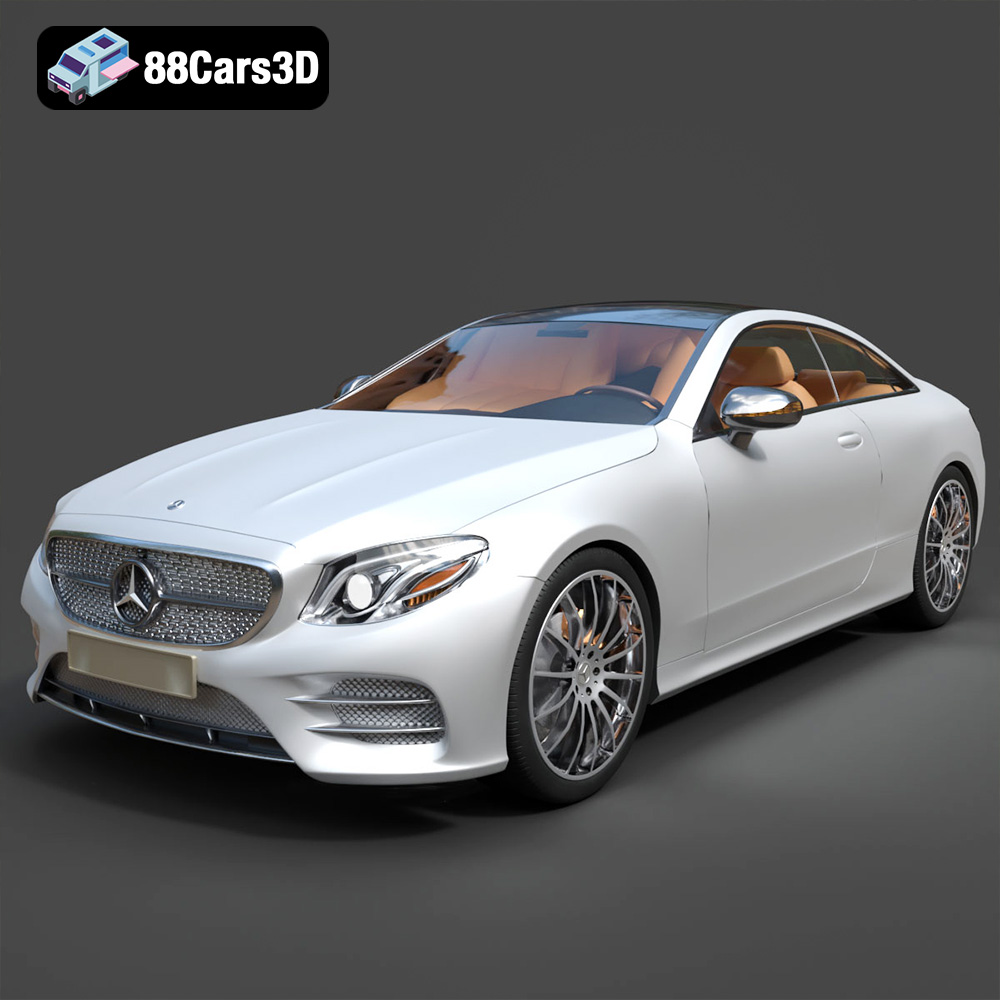
Consider a high-end visualization project where a car needs to be viewed from every angle, with close-ups on intricate details like headlights or interior stitching. A low-quality model would quickly expose its flaws, breaking the illusion of realism. Conversely, a high-quality asset, like those found on 88cars3d.com, is built with these demands in mind, offering the versatility to be adapted for various levels of detail without compromising integrity.
The utility of high-quality 3D car models extends across numerous industries:
The choice of file format is a critical technical decision that dictates how a 3D car model can be used, edited, and shared across different software and platforms. Each format is optimized for specific workflows and applications, carrying distinct advantages and limitations. Understanding these nuances is essential for anyone working with digital automotive assets, from modelers to game developers and visualization artists. On 88cars3d.com, models are often provided in multiple formats to ensure maximum compatibility and flexibility for professionals.
The .blend format is Blender’s native file type, encapsulating an entire Blender scene. This includes not just the mesh data, but also materials, textures, lighting setups, cameras, animations, rigging, modifiers, and even scripts. Its primary advantage is that it offers a fully editable, self-contained project for Blender users. When you download a .blend file, you gain full access to the artist’s original workflow, allowing for extensive modifications, re-texturing, or animation without losing any scene information. This makes it ideal for those who primarily work within the Blender ecosystem and require granular control over every aspect of the 3D car model.
The .fbx (Filmbox) format, developed by Autodesk, is arguably the most widely adopted interchange format in the 3D industry, especially prevalent in game development and animation pipelines. It excels at transferring 3D models, including geometry, materials, textures, animation data, skeletal rigs, and blend shapes, between different software packages like 3ds Max, Maya, Blender, and major game engines like Unreal Engine and Unity. Its strength lies in its robustness and widespread support, making it an ideal choice for collaborative projects or when preparing game assets for real-time environments where consistency and predictable import are crucial.
The .obj (Wavefront OBJ) format is one of the oldest and most universally supported 3D file formats. It primarily stores geometry data – vertices, normals, UV coordinates, and faces – along with references to external material files (.mtl). While it doesn’t support animation or rigging, its simplicity and widespread compatibility make it an excellent choice for static meshes, especially when you need to transfer a clean, fundamental mesh between almost any 3D software. For many rendering projects or as a base for further detailing, .obj files are a reliable and straightforward option for a 3D car model.
The .glb (GL Transmission Format Binary) is the binary version of glTF, a royalty-free format designed for efficient transmission and loading of 3D scenes and models by engines and applications. .glb files package all assets (geometry, materials, textures, animations) into a single file, making them highly optimized for web-based 3D, augmented reality (AR), and virtual reality (VR) experiences. Its compact size and ease of integration into browsers and mobile apps make it perfect for interactive web configurators, virtual showrooms, and mobile AR applications where quick loading times and real-time performance are critical for displaying 3D car models.
The .stl (Stereolithography) format is the de facto standard for 3D printing. It represents 3D surfaces as a series of connected triangles, describing only the surface geometry of a 3D object without any color, texture, or material information. For a 3D car model destined for physical output, an .stl file must be “watertight” – meaning it has no holes or gaps in its mesh – to ensure a successful print. This format is crucial for rapid prototyping, creating miniature models, or fabricating custom automotive components.
The .ply (Polygon File Format or Stanford Triangle Format) is another format that stores geometric data, including vertices, faces, normals, and color. It’s often used for scanned 3D data, particularly from laser scanners, and can store a wider range of properties per vertex or face than .obj, such as color, transparency, and range data. This makes it valuable for applications requiring precise mesh data, such as CAD integration, scientific visualization, or detailed analysis of 3D objects, including complex automotive components.
While not a standalone file format in the traditional sense, “.unreal” refers to assets that are already imported into and configured within the Unreal Engine ecosystem. These assets have typically gone through an FBX import process and then been optimized, had their materials set up, collision meshes generated, and LODs (Levels of Detail) implemented directly within Unreal Engine. Receiving an “.unreal” asset implies a fully prepared, engine-ready 3D car model, ready for immediate integration into an Unreal project, saving significant setup time for game developers and real-time visualization specialists.
The .max format is the native file type for Autodesk 3ds Max. Similar to .blend for Blender, a .max file contains the complete scene, including geometry, materials, textures, lighting, cameras, animation, and any modifiers or plugins used. It provides full editability and access to the original project parameters for users working in 3ds Max, a leading software for automotive rendering and visualization. This format is ideal for professionals who need to leverage 3ds Max’s advanced rendering capabilities, robust modeling tools, and extensive plugin ecosystem for their 3D car models.
Achieving photorealism in automotive rendering is an art form that requires a multi-faceted approach, combining technical mastery with artistic vision. The process is iterative and demanding, but the results are truly breathtaking.
The journey begins with meticulous modeling. For 3D car models, this involves translating real-world blueprints, CAD data, or reference images into a digital mesh. High-poly models are often created first, capturing every subtle curve and panel gap with exquisite detail. Clean topology, utilizing quads (four-sided polygons) and efficient edge loops, is paramount. This ensures smooth deformations during animation and prevents shading artifacts. Later, these high-poly models can be used to generate optimized low-poly versions through retopology, perfect for game assets, where performance is critical. The quality of the underlying mesh directly impacts how light interacts with the surface and how textures are applied.
Once the model’s geometry is perfect, the next step is to breathe life into its surfaces using physically-based rendering (PBR) materials and high-resolution textures. This is where the magic of automotive rendering truly shines. PBR workflows accurately simulate how light interacts with different real-world materials:
The complexity of car paint, with its clear coat, metallic flakes, and subtle reflections, requires sophisticated shader networks. Glass, chrome, rubber, and leather each demand their own carefully calibrated PBR material definitions. Crucially, precise UV mapping ensures that these textures wrap seamlessly around the complex curves of the vehicle without stretching or distortion.
Even the most perfectly modeled and textured car will look flat without expert lighting and camera work. This is where the artistic eye comes into play:
The composition of the shot, angle, and framing all contribute to the emotional impact of the final render. A perfectly balanced image elevates a simple 3D car model into a work of art, telling a story and capturing attention.
For interactive experiences, 3D car models transition from static renders to dynamic game assets. This requires careful optimization and integration into powerful game engines like Unreal Engine, where performance is just as critical as visual fidelity.
The first step is importing the FBX file into Unreal Engine. During this process, various settings are crucial for optimal performance:
Once imported, the car’s appearance and behavior are defined within Unreal:
Integrating a 3D car model into a game goes beyond just the vehicle itself:
The versatility of high-quality 3D car models extends far beyond traditional screens, opening doors to innovative applications in physical manufacturing, immersive experiences, and comprehensive visualization.
The ability to transform a digital model into a tangible object has revolutionized product development and hobbyist culture. For automotive applications, 3D car models prepared in formats like .stl are essential for:
Augmented Reality (AR) and Virtual Reality (VR) are transforming how we interact with products, offering unparalleled immersion. For the automotive industry, 3D car models are at the heart of these experiences:
The optimization of these models for real-time rendering, with careful management of polygon counts and draw calls, is paramount to prevent motion sickness and ensure a smooth, realistic experience in AR/VR headsets.
In architectural visualization (arch-viz) and product showcasing, vehicles are more than just background elements; they are integral to telling a complete story and conveying a sense of scale, realism, and lifestyle. High-quality 3D car models elevate these presentations:
The level of detail required can vary, but even for distant shots, an accurately scaled and textured vehicle makes a significant difference to the overall believability and impact of the visualization.
Developing high-quality 3D car models from scratch is an incredibly time-consuming and resource-intensive endeavor, often requiring hundreds of hours of expert craftsmanship. This is where a curated marketplace like 88cars3d.com becomes an invaluable resource for professionals across industries.
At 88cars3d.com, creators and studios can access a meticulously curated collection of premium 3D car models designed to meet the highest industry standards. Each model is a testament to technical excellence, featuring:
By leveraging the ready-to-use, high-quality game assets and visualization models available on 88cars3d.com, professionals can significantly reduce development time and costs, allowing them to focus on other critical aspects of their projects. Whether you’re a game developer needing a fleet of vehicles, an architect visualizing a new development, or a filmmaker creating a cinematic scene, 88cars3d.com provides the robust foundation you need to achieve stunning results.
The world of 3D car models is a complex, fascinating intersection of art and engineering, driving innovation across countless digital and even physical applications. From the meticulous crafting of clean geometry and PBR materials to the sophisticated integration into game engines like Unreal, every step is crucial for achieving the desired level of realism and performance. Understanding the technical nuances of various file formats further empowers creators to choose the right tools for their specific needs, ensuring seamless workflows and optimal outcomes.
As technology continues to advance, the demand for high-quality, versatile automotive rendering and game assets will only grow. For professionals seeking to push the boundaries of visual fidelity and interactive experiences, resources like 88cars3d.com stand as a beacon, offering meticulously crafted 3D car models that are ready to accelerate your projects to new heights of realism and engagement.

Price: $129.99
Price: $99.99
Price: $89.99