Get 50% OFF All Premium 3D & STL Models!

In the dynamic world of 3D visualization, automotive design, and game development, the demand for high-fidelity, production-ready 3D car models is constantly escalating. Professionals across various industries seek assets that not only look stunning but are also technically robust, easily integrated into diverse pipelines, and flexible enough for extensive customization. Whether you’re a seasoned architectural visualizer needing authentic vehicles to populate a street scene, a game developer crafting an immersive open-world experience, or an automotive designer presenting a new concept, the foundation of your success lies in the quality of your digital assets.
At the forefront of these needs stands the exceptional Jeep Commander 3D Model, a prime example of a versatile asset found on marketplaces like 88cars3d.com. This meticulously crafted digital recreation of the iconic full-size SUV offers a blend of historical design fidelity and modern technical optimization, making it an indispensable tool for a wide array of creative and professional applications. From realistic rendering and cinematic productions to interactive AR/VR experiences and even precise 3D printing, the Jeep Commander model provides a solid framework for any project.
The role of a well-executed 3D car model extends far beyond simple visual representation. It’s a foundational element that can define the realism, performance, and interactive potential of an entire project. Investing in a quality asset like the Jeep Commander 3D Model from 88cars3d.com saves countless hours of modeling time and ensures a professional-grade starting point.
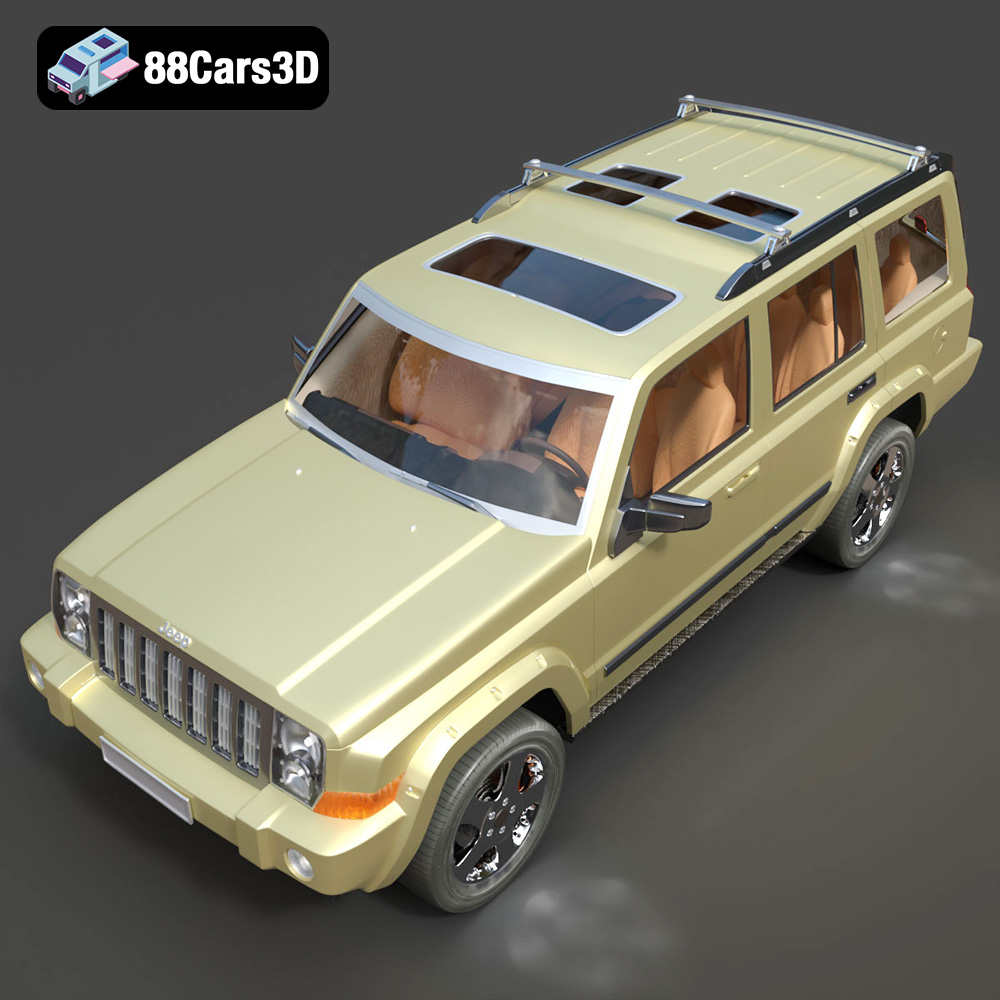
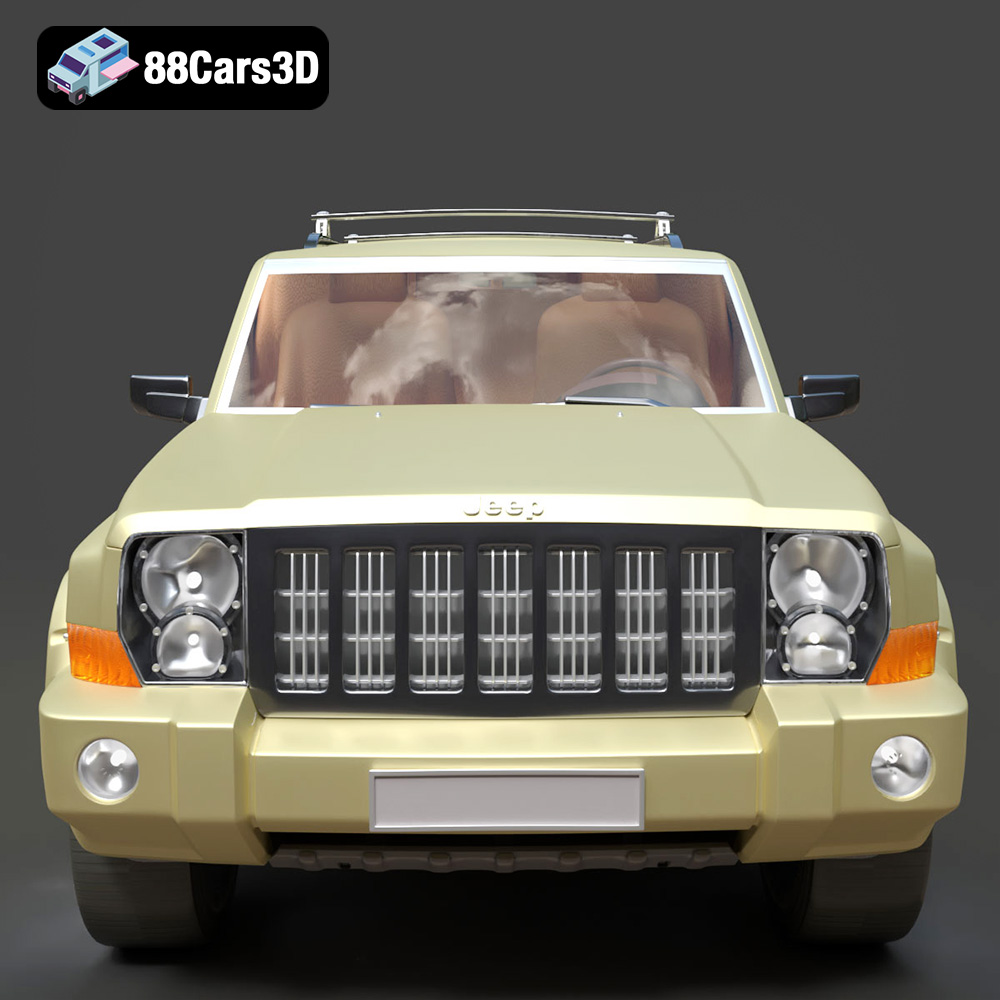
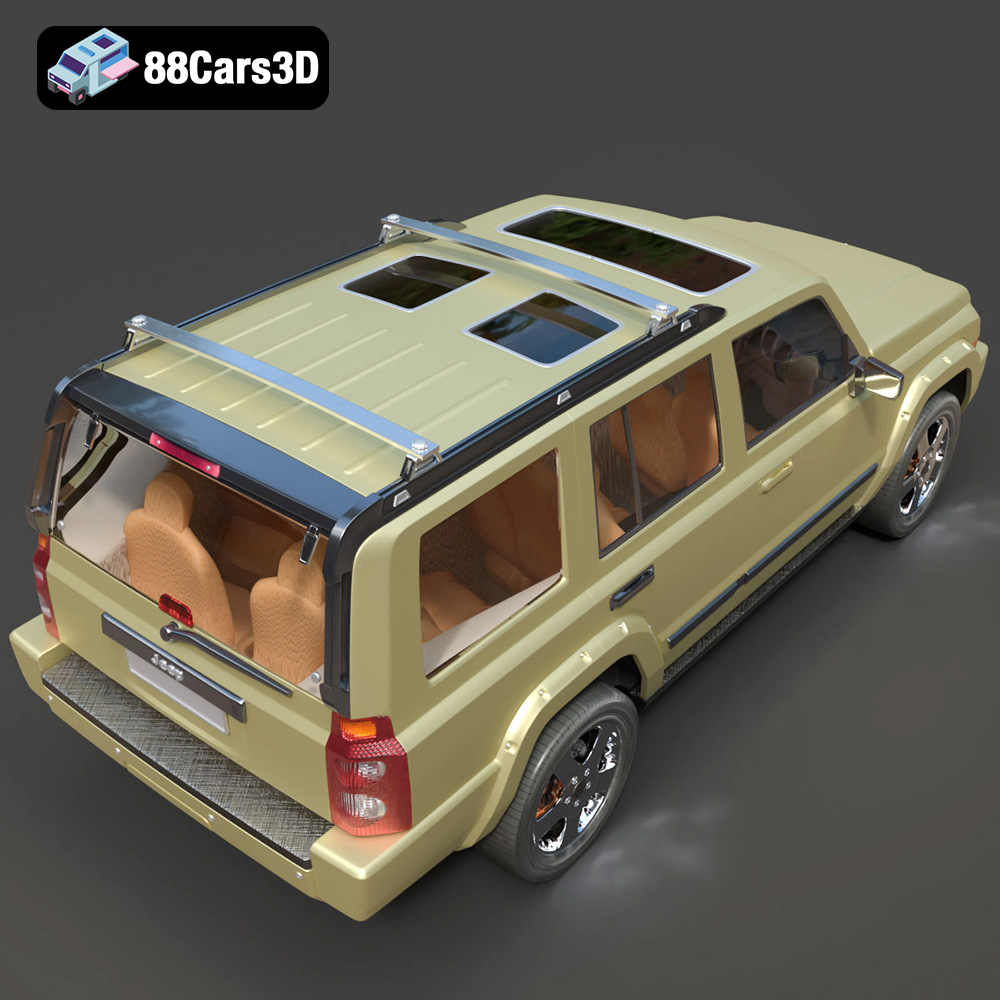
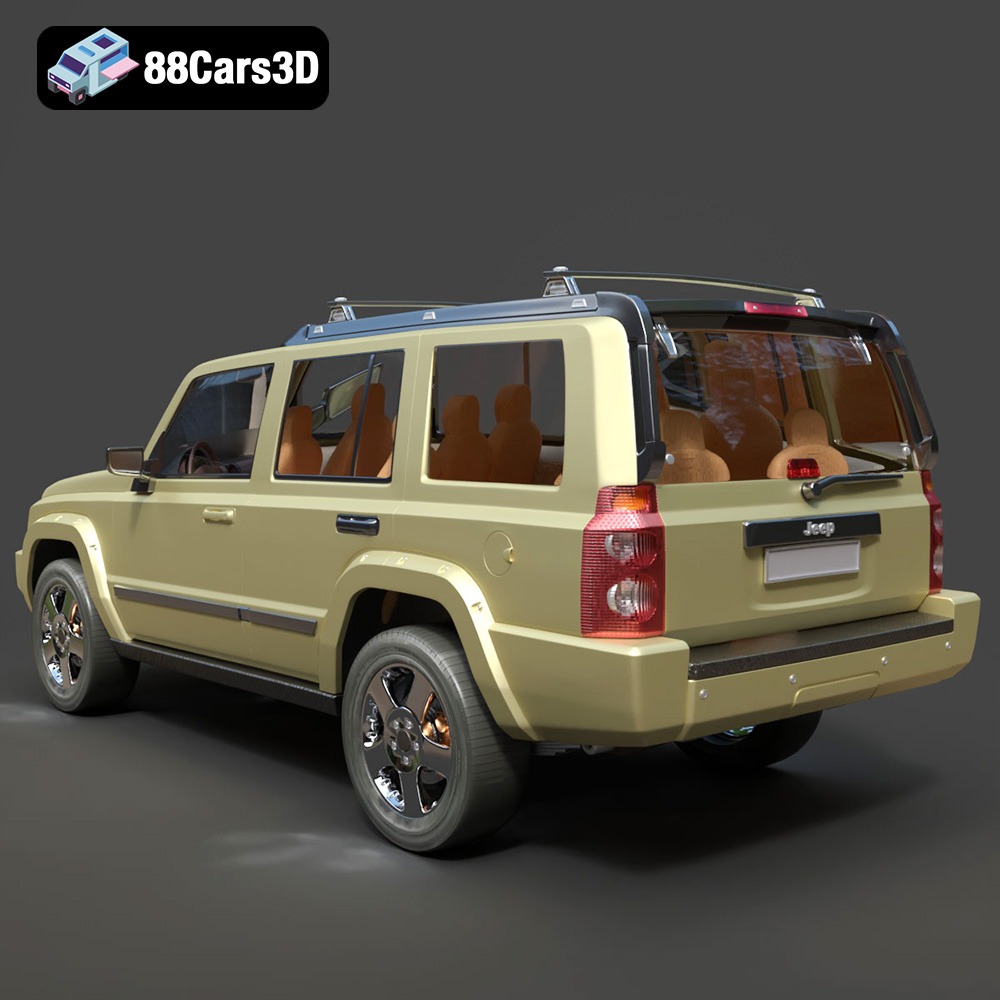
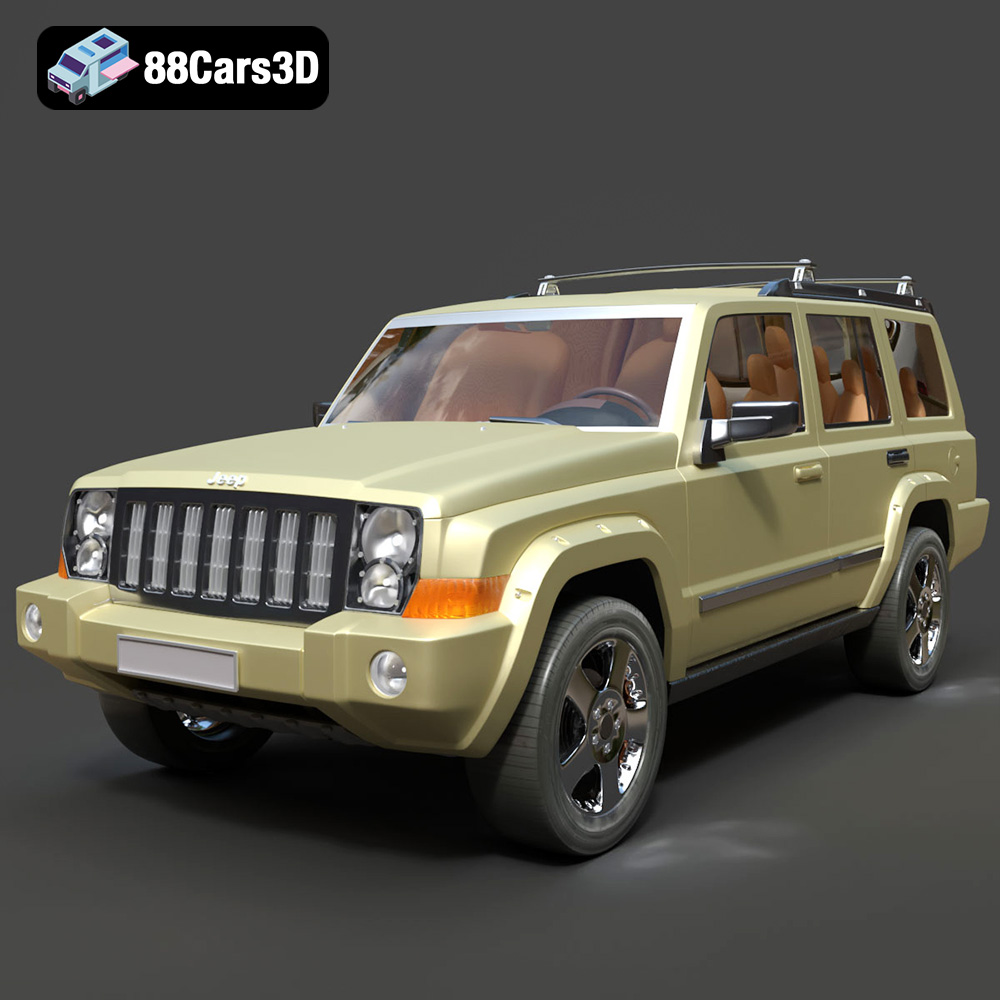
For studios specializing in automotive rendering, the realism of a vehicle model is paramount. A high-quality 3D car model needs accurate proportions, clean topology, and detailed components to stand up to close-up shots and high-resolution renders. The Jeep Commander model, with its signature seven-slot grille, rectangular headlight styling, detailed front and rear bumpers, and realistic roof rails, offers the granular detail required for compelling marketing visuals, architectural parking scenes, and cinematic productions. Its clean mesh structure with proper edge flow ensures smooth subdivisions and avoids rendering artifacts, crucial for photorealistic output.
In game development, the balance between visual fidelity and performance is critical. Game assets, particularly vehicles, must be optimized for real-time engines without sacrificing too much detail. The Jeep Commander 3D Model strikes this balance, featuring an optimized polygon count suitable for game engines while retaining enough detail for realistic visual effects. Its organized hierarchy, with separate mesh components for doors, hood, tailgate, and wheels, simplifies rigging for animation, damage systems, and interactive elements in open-world games or driving simulators.
Augmented Reality (AR) and Virtual Reality (VR) environments demand efficient, optimized 3D models to maintain smooth frame rates and immersive experiences. The Jeep Commander model is designed with this in mind, making it perfect for virtual showrooms, interactive configurators, and immersive vehicle demonstrations where users can explore the vehicle in a virtual space. The model’s real-world scale accuracy is also crucial for believable AR overlays and VR experiences, ensuring a sense of true presence and correct spatial representation.
One of the most critical aspects of working with 3D models, especially complex automotive assets like the Jeep Commander, is understanding the various file formats available. Each format serves a specific purpose, offering different levels of data retention, compatibility, and optimization for various workflows. The Jeep Commander 3D Model is provided in a comprehensive suite of formats, ensuring maximum flexibility for any project. Here’s a breakdown of the included formats and their ideal use cases:
The .blend format is Blender’s native file type. It’s a complete package, containing not just the mesh data but also materials, textures, lighting, cameras, animation data, and even the scene’s layout. For users primarily working in Blender, this is the most convenient format as it offers full editability and preserves all scene settings. When you download the Jeep Commander in .blend format, you get the model as it was set up by the artist, ready for immediate rendering in Cycles or Eevee, or for further modification and animation within Blender’s powerful environment.
FBX (Filmbox) is an industry-standard format for exchanging 3D data between different software applications. It’s particularly favored in game development for engines like Unreal Engine and Unity, and also widely used in animation and visual effects. An .fbx file can store not only geometry but also materials (though often simplified), textures, animations, and bone rigging. The .fbx version of the Jeep Commander ensures smooth import into these engines, preserving hierarchies, pivot points, and basic material assignments, making it ready for real-time optimization and interaction.
OBJ (or .obj) is one of the oldest and most universally supported 3D file formats. It’s a simple, text-based format that primarily stores geometry (vertices, faces, normals, UV coordinates) and can reference external material files (.mtl) for basic shading information. While it doesn’t support animation or rigging, its widespread compatibility makes it an excellent choice for transferring static models between almost any 3D software. The .obj version of the Jeep Commander is a reliable fallback for users needing to import the model into less common applications or for archival purposes, ensuring the core mesh data is always accessible.
GLB (GL Transmission Format Binary) is the binary version of glTF, a royalty-free specification for 3D scenes and models. It’s designed to be an efficient, interoperable format for the web, AR, and VR. A .glb file packages all necessary data—geometry, materials, textures, animations—into a single file, making it incredibly easy to load and display in browsers, mobile apps, and WebGL environments. The .glb version of the Jeep Commander is perfect for showcasing the model in a virtual showroom or embedding it directly into a website for interactive viewing without requiring complex plugins.
STL (Stereolithography) is the standard file format for 3D printing. It represents a 3D model as a series of connected triangles, defining only the surface geometry without color, texture, or other CAD attributes. For anyone looking to bring the digital Jeep Commander into the physical world as a scale model or prototype, the .stl format is essential. It’s the primary input for 3D slicer software, which prepares the model for printing by generating toolpaths and support structures. The availability of the Jeep Commander as an .stl ensures it has manifold geometry ready for physical fabrication.
PLY (Polygon File Format or Stanford Triangle Format) is another format that describes a 3D object as a collection of polygons. It can store a wider range of properties than .stl, including color, transparency, and sometimes even data from 3D scanners. While less common for general 3D model distribution, .ply is often used in scientific applications, CAD, and 3D scanning workflows where precise mesh data and attribute preservation are important. For specialized analysis or integration with CAD software, the .ply version of the Jeep Commander offers a robust, detailed mesh.
While not a standalone file extension in the same vein as .fbx or .obj, a “.unreal” asset typically refers to a file package specifically prepared for direct import and optimal performance within Unreal Engine. This often means the model has already been through an optimization pass, has correctly set up materials (using Unreal’s PBR workflow), and is ready to leverage features like Nanite and Lumen for cutting-edge real-time visuals. The inclusion of an Unreal-ready version of the Jeep Commander significantly streamlines the workflow for game developers and architectural visualization artists working within the Unreal ecosystem, minimizing setup time and maximizing engine performance.
The .max format is the native file type for Autodesk 3ds Max, one of the leading 3D modeling, animation, and rendering software packages. Similar to .blend, a .max file stores the complete scene, including geometry, materials (especially V-Ray or Corona materials), lighting, cameras, modifiers, and animation. For professionals using 3ds Max for high-end rendering, the .max version of the Jeep Commander provides the highest level of control and fidelity, allowing for direct manipulation of the model, materials, and scene setup for complex renders and animations.
The true value of a premium 3D model lies in its meticulous attention to detail and technical construction. The Jeep Commander 3D Model exemplifies this, offering a sophisticated asset that meets the rigorous demands of professional production pipelines. Its design is a testament to careful observation and skilled execution, capturing the essence of the real vehicle.
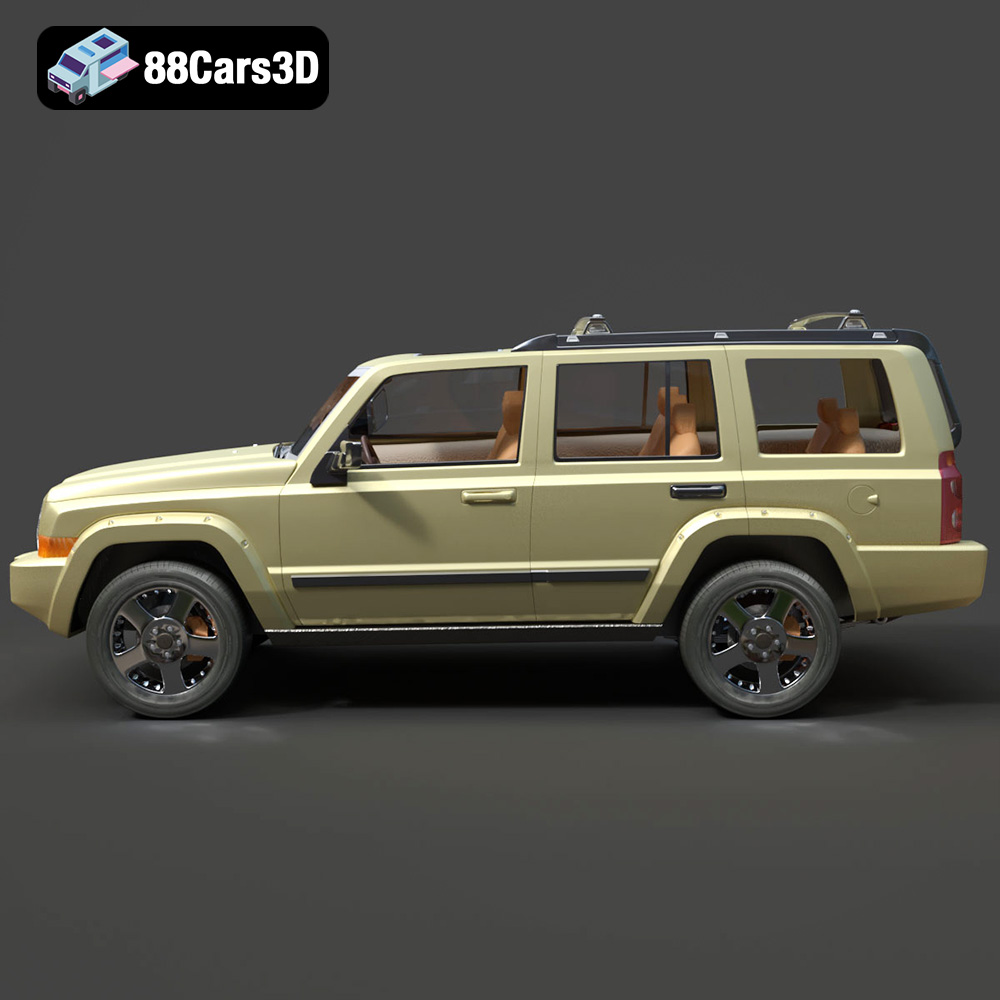
The Jeep Commander is recognized for its distinctive boxy styling and rugged presence. This 3D model accurately replicates the SUV’s precise body proportions, ensuring that its digital twin is immediately recognizable. Key exterior features, such as the signature seven-slot grille and rectangular headlight styling, are meticulously modeled. Furthermore, detailed front and rear bumpers with integrated fog light areas, realistic roof rails, side mirrors, door handles, and window trims contribute to an authentic appearance. The modeled wheels, tires, suspension clearance, and underbody structure add layers of realism, making the model convincing from every angle, whether for a close-up render or a dynamic driving simulation.
Beyond the impressive exterior, the Jeep Commander 3D Model also features a carefully represented interior. The dashboard, complete with a center console and infotainment area, is modeled, as are the steering wheel and instrument cluster. Crucially, the three-row seating layout, a defining characteristic of the Commander, is accurately represented, along with door panels and interior trim elements. While optimized for real-time engines, these interior details provide sufficient visual information for interior shots, virtual tours, or even character placement, enhancing the overall utility and realism of the model.
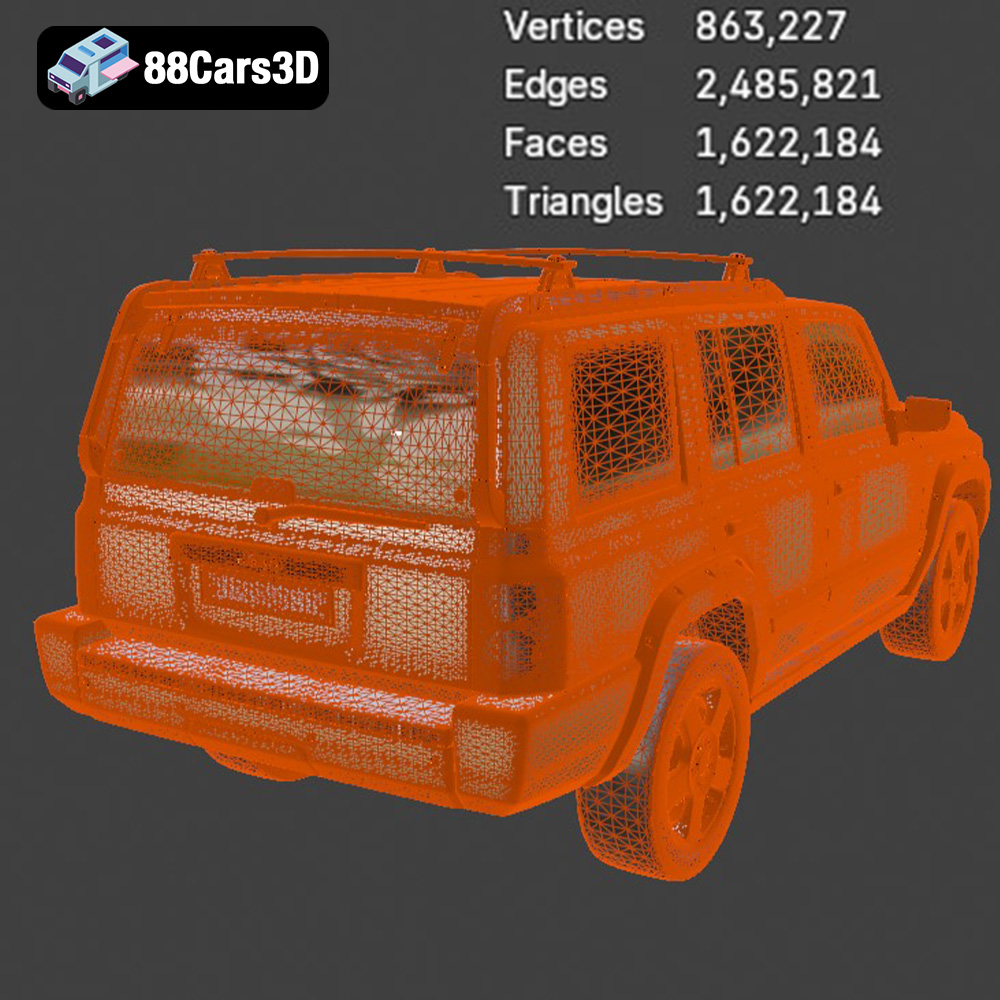
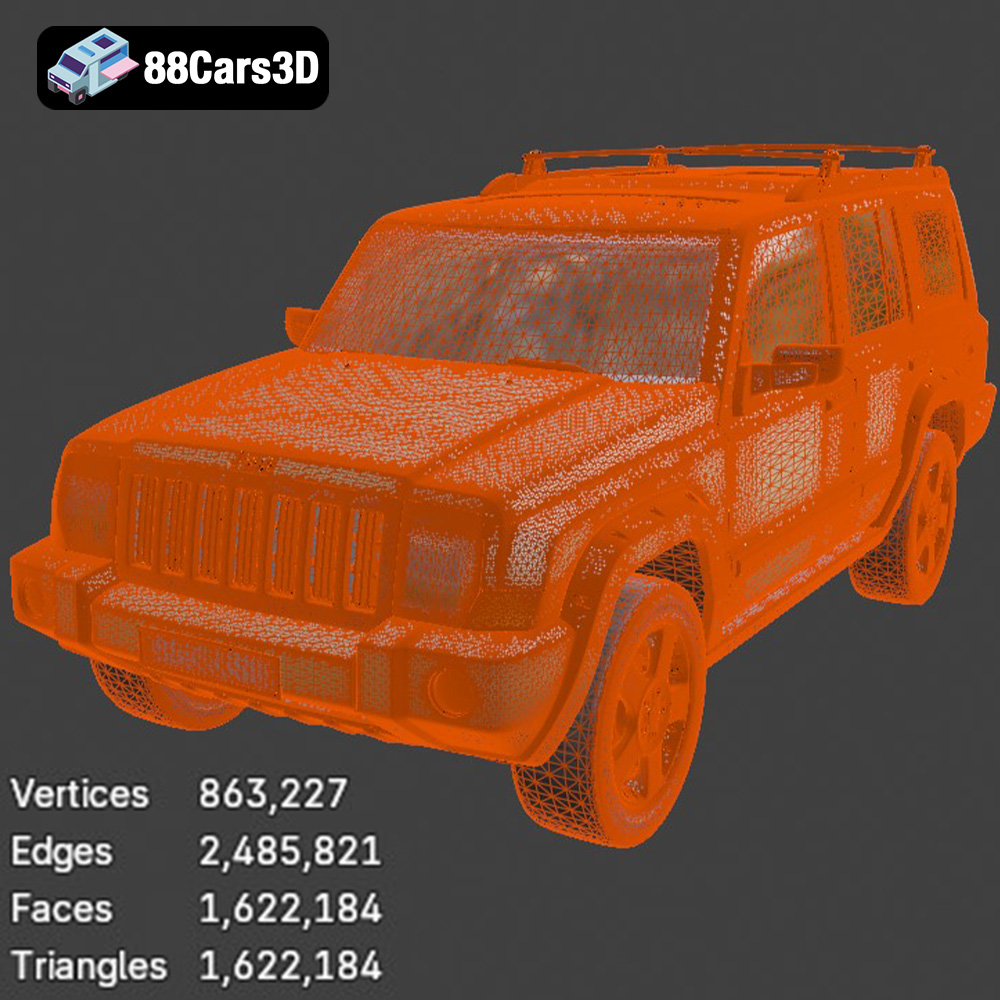
Technical quality is the backbone of any professional 3D asset. The Jeep Commander 3D Model boasts a clean mesh structure with proper edge flow, which is vital for smooth deformations during animation and artifact-free rendering, even with subdivision surfaces. Its real-world scale accuracy ensures seamless integration into scenes without manual scaling adjustments. An organized hierarchy for animation workflows means that components like doors, the hood, tailgate, and wheels are separate, pivot-correct meshes, ready for rigging and dynamic interaction. The optimized polygon count strikes a perfect balance, making it suitable for both high-quality, detailed rendering and efficient use in demanding game engines.
The versatility of the Jeep Commander 3D Model truly shines when integrated into professional 3D software pipelines. Its clean geometry and diverse file format support ensure a streamlined experience, regardless of your preferred toolset. We’ll explore how this model elevates projects within 3ds Max, Blender, and Unreal Engine.
For many architectural visualization and automotive marketing studios, 3ds Max remains the industry standard for high-end rendering and complex animations. The .max file provided with the Jeep Commander 3D Model is invaluable here. It means the model comes with its original hierarchy, potentially pre-configured materials (V-Ray, Corona, Arnold), and an optimized scene structure. Artists can easily integrate the Commander into large architectural scenes, set up advanced lighting, apply custom shaders, and rig it for sophisticated animations. The separate mesh components for doors, hood, and wheels allow for realistic opening and closing sequences, perfect for detailed product showcases or virtual commercials. Leveraging 3ds Max’s powerful rendering capabilities, artists can achieve photorealistic results, accentuating the Commander’s rugged design with realistic paint reflections, tire deformation, and environmental reflections.
Blender, with its growing capabilities and open-source nature, has become a powerhouse for indie game developers, freelancers, and smaller studios. The .blend file of the Jeep Commander offers a ready-to-use asset, preserving materials and textures for immediate rendering in Cycles or Eevee. Artists can quickly customize the model, change paint colors, modify wheel designs, or add off-road accessories using Blender’s extensive modeling and sculpting tools. For architectural visualization, dropping the Commander into a Blender scene to provide context and scale for buildings or urban landscapes is incredibly efficient. Its clean topology means it’s easy to work with modifiers, generate precise shadows, and ensure optimal performance even in complex scenes.
Unreal Engine leads the charge in real-time visualization, game development, and interactive experiences. The .fbx and dedicated .unreal formats of the Jeep Commander 3D Model are specifically designed for seamless integration into this powerful engine. Developers can import the model, apply PBR (Physically Based Rendering) materials, and immediately leverage Unreal’s advanced lighting systems like Lumen and real-time ray tracing. The optimized polygon count ensures that multiple instances of the Commander can populate an open-world environment without significant performance overhead. For AR/VR applications, the model’s clean structure and real-world scale are critical for creating immersive virtual showrooms or interactive driving simulations where users can explore the vehicle in a highly realistic, responsive environment.
One of the most exciting applications of a detailed 3D model like the Jeep Commander is its potential for 3D printing. Transforming a digital asset into a tangible collectible or prototype offers a unique blend of digital craftsmanship and physical artistry. The inclusion of an .stl format makes this process straightforward, allowing enthusiasts and professionals alike to create their own scale models.
The .stl file format is the standard for 3D printing as it defines the surface geometry using a mesh of triangles. When preparing the Jeep Commander .stl for printing, the first step involves importing it into a slicer software (e.g., Cura, PrusaSlicer). Here, you can adjust the scale to the recommended ratios (1:32, 1:24, 1:18, 1:12) as provided in the product description. It’s crucial to check for any non-manifold geometry or mesh errors, though a high-quality model like this from 88cars3d.com usually ensures a clean base. The slicer will then generate the G-code, the set of instructions for your 3D printer.
Achieving a high-quality physical print requires careful attention to printer settings. For the Jeep Commander 3D Model, the following recommendations ensure excellent detail and structural integrity:
Once printed, the physical Jeep Commander model can be transformed into a showroom-quality miniature through post-processing. This typically involves:
This process allows creators to produce stunning physical replicas, perfect for collectors, tabletop displays, or even as prototypes for custom accessories.
A truly professional 3D asset provides a robust foundation for boundless creative exploration. The Jeep Commander 3D Model is no exception, offering extensive customization options that allow artists to tailor it to specific project requirements or personal artistic visions.
The core model provides an accurate base, but its true potential is unleashed through customization. Users can easily change paint colors, experimenting with metallic silver, classic black, crisp white, or rugged dark green to match various moods or brand aesthetics. The flexibility extends to modifying wheel designs and tire styles, allowing for swaps between sleek urban alloys, aggressive off-road tires, or vintage steel wheels. This capability is crucial for creating diverse visual narratives, whether depicting a city cruiser or a wilderness explorer. The ability to add roof cargo boxes, off-road accessories, or custom decals further enhances its bespoke potential, allowing for unique overland builds or personalized brand vehicles.
Beyond individual aesthetic changes, the Jeep Commander 3D Model is designed for seamless integration into diverse environmental contexts. Artists can adjust lighting setups for day, night, or studio renders, completely altering the perceived atmosphere and highlighting different aspects of the vehicle’s design. Imagine the Commander illuminated by the harsh glow of desert sun, silhouetted against a dramatic sunset, or spotlighted in a sleek virtual showroom. These contextual adaptations are vital for compelling visualizations in advertising, film, or interactive simulations, where the vehicle needs to tell a story within its environment.
The organized hierarchy and clean geometry of the Commander model make it ideal for advanced applications. Beyond static renders, it can be animated for driving sequences, integrated into virtual production workflows, or used as a base for physical prototyping through 3D printing. For product designers, the model could serve as a canvas for designing and visualizing custom aftermarket accessories, such as custom bumpers, roof racks, or interior modifications, providing a cost-effective way to iterate on designs before physical manufacturing. Its precision and detail ensure that any modifications or additions will integrate seamlessly, reflecting real-world engineering principles.
In the fast-evolving landscape of 3D content creation, the importance of high-quality, technically sound assets cannot be overstated. The Jeep Commander 3D Model stands as a prime example of such an asset, meticulously crafted to meet the diverse demands of automotive rendering, game development, AR/VR experiences, and even precision 3D printing. Its accurate proportions, detailed exterior and interior, optimized polygon count, and organized hierarchy ensure that it is not just visually appealing but also a functional and flexible tool for professionals.
The comprehensive support for various file formats – from .blend and .max for native software workflows to .fbx and .unreal for real-time engines, and .stl for physical fabrication – makes the Jeep Commander 3D Model an incredibly versatile investment. Whether your project involves creating stunning photorealistic visualizations, building immersive virtual worlds, or crafting detailed physical miniatures, this model provides the essential foundation you need to achieve exceptional results.
By choosing professional-grade 3D car models like the Jeep Commander, available at 88cars3d.com, you empower your projects with efficiency, realism, and a vast scope for creative customization. It’s more than just a model; it’s a gateway to bringing your most ambitious automotive visions to life, across both digital and physical realms.
The Jeep Commander 3D Model is a precise digital recreation of the full-size SUV produced by Jeep. Known for its boxy styling, three-row seating configuration, and rugged 4×4 capability, the Commander blends classic Jeep DNA with family-oriented practicality. This 3D model captures the Commander’s distinctive squared body design, seven-slot grille, roof rails, elevated stance, and strong off-road character. Designed with clean topology and accurate proportions, it is ideal for rendering, animation, simulation, AR/VR applications, and game development.
$39.99
.4x4vehicle
.arvr
.blend
.car3dmodel
.commander
.familySUV
.fbx
.gameasset
.glb
.jeep
.max
.obj
.ply
.rendering
.simulation
.stl
.suv3dmodel
.unreal
.vehicleasset