Get 50% OFF All Premium 3D & STL Models!

In the vast landscape of digital content creation, from blockbuster video games to breathtaking architectural visualizations and advanced AR/VR experiences, the demand for realistic and optimized 3D assets is insatiable. Few assets are as universally crucial or as technically challenging to master as 3D car models. They serve as central characters in cinematic renders, essential elements in urban simulations, and detailed components for product showcases. The authenticity and performance of these models can significantly impact the final output, dictating everything from frame rates in a game engine to the photorealism of a marketing campaign.
Today, we delve into the intricate world of automotive 3D modeling, exploring what makes an asset truly valuable in a professional pipeline. We’ll specifically examine a prime example of versatility and optimization: the Chevrolet Spark LT 3D Model. This meticulously crafted digital recreation of the popular subcompact city car exemplifies how precise modeling, efficient topology, and broad file format compatibility come together to create an indispensable tool for designers, developers, and artists across various industries.
The success of any 3D project often hinges on the quality of its individual components. For scenes featuring vehicles, this means more than just a recognizable shape; it demands a model that can stand up to scrutiny, perform efficiently, and integrate seamlessly into diverse workflows. Investing in professional-grade 3D car models is not merely an aesthetic choice; it’s a strategic decision that impacts production timelines, resource allocation, and the overall integrity of the final product.
High-quality 3D car models are the bedrock of realistic automotive rendering. When creating cinematic sequences for commercials, virtual showrooms, or product design reviews, every curve, reflection, and material nuance must be perfect. A model with accurate proportions, clean surface geometry, and well-defined details allows for stunning close-ups and dynamic lighting setups, effectively blurring the line between digital and physical. Such models enable artists to showcase design intent, explore aesthetic variations, and present vehicles with unparalleled visual fidelity, making them indispensable for automotive studios and advertising agencies.
Beyond static renders, the real-time demands of game development and interactive experiences push the boundaries of 3D asset optimization. In these environments, polygon count, draw calls, and texture memory directly affect performance. An excellent 3D car model, such as the Chevrolet Spark LT 3D Model, strikes a delicate balance: visually rich enough to be convincing, yet optimized to run smoothly even when duplicated dozens or hundreds of times as background traffic. This efficient topology prevents performance bottlenecks, ensuring fluid framerates and immersive user experiences in everything from open-world games to AR/VR training simulations. For game assets, this efficiency is paramount, allowing developers to build vast, detailed worlds without sacrificing player experience.
The versatility of a 3D model is often defined by the range of file formats it supports. Each format is designed with specific use cases in mind, catering to different software ecosystems, project requirements, and delivery platforms. Understanding these formats is crucial for any professional working with 3D assets, as selecting the right one ensures compatibility, preserves data integrity, and streamlines workflows. The Chevrolet Spark LT 3D Model, available through 88cars3d.com, offers a comprehensive suite of formats, making it exceptionally adaptable.
The .blend format is the native file type for Blender, the popular open-source 3D creation suite. A .blend file typically encapsulates an entire Blender scene, including meshes, materials, textures, animations, lights, cameras, and even modifiers and physics simulations. For artists working primarily in Blender, this format offers the highest degree of editability and maintains all original scene data, allowing for seamless iteration and customization. If you plan to modify the Spark LT model extensively within Blender, this is your go-to format.
.fbx (Filmbox) is arguably the most widely used proprietary 3D file format for exchanging models between different software applications. Developed by Autodesk, FBX excels at preserving a wide range of data, including geometry, materials, textures, bone rigging, animation, and even lights and cameras. It is the preferred format for transferring 3D car models and other complex assets into game engines like Unreal Engine and Unity, as well as animation software such as Maya and 3ds Max. For real-time pipelines and projects requiring complex animation or rigging, the .fbx version of the Chevrolet Spark LT is ideal due to its robust data handling capabilities.
The .obj (Wavefront Object) format is a truly universal standard, supported by virtually every 3D application. It primarily stores geometric data (vertices, normals, texture coordinates, and faces) and can reference an accompanying .mtl (Material Template Library) file for basic material properties and texture assignments. While it doesn’t support advanced features like animation or rigging, its widespread compatibility makes it excellent for static geometry and foundational cross-software asset exchange. For simple imports or when maximum compatibility is needed, the .obj version of the Spark LT is a reliable choice.
.glb (GL Transmission Format Binary) is the binary version of glTF, a modern, open-standard file format designed for the efficient transmission and loading of 3D scenes and models in web and AR/VR environments. A .glb file contains all necessary data (geometry, materials, textures, animations) in a single, self-contained binary file, making it highly optimized for browser-based display, mobile AR applications, and quick previews. If you’re showcasing the Chevrolet Spark LT in an online configurator or an augmented reality app, .glb offers superior performance and ease of deployment.
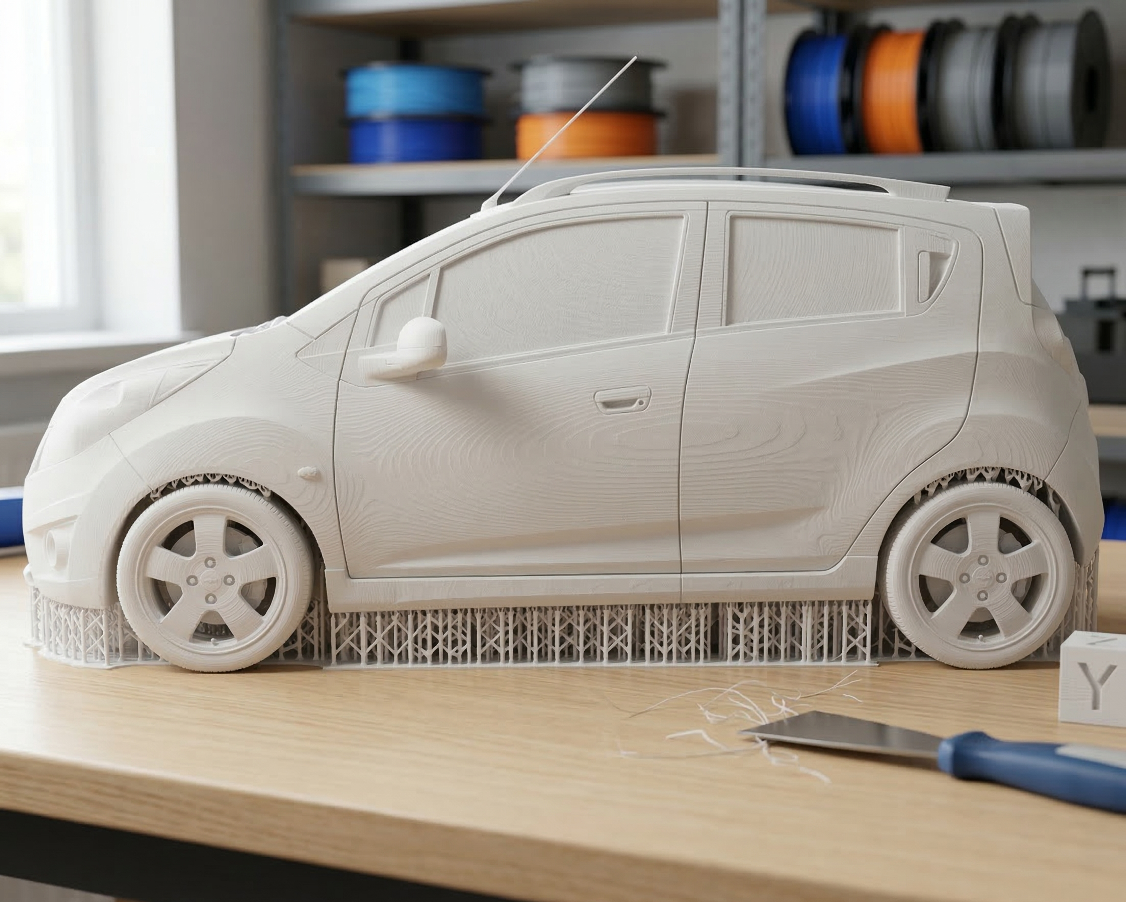
.stl (Stereolithography) is the de facto standard format for 3D printing. It describes only the surface geometry of a 3D object using a collection of interconnected triangles, without color or texture information. When preparing the Chevrolet Spark LT for physical fabrication, such as creating a scale model for an urban diorama, the .stl version is what your 3D printer slicing software will interpret. It’s crucial for rapid prototyping and bringing digital designs into the physical world, allowing enthusiasts to print their own miniature Spark LT models.
The .ply (Polygon File Format or Stanford Triangle Format) is a file format for storing three-dimensional data from 3D scanners. It can store various properties beyond just geometry, such as color, transparency, surface normals, and even confidence values for each vertex or face. While not as universally used as FBX or OBJ for general asset exchange, it’s particularly valuable in scientific computing, CAD applications, and when dealing with highly precise scan data or complex mesh analyses. For specific engineering or analytical tasks involving the Spark LT, the .ply format offers enhanced data integrity.
While not a standalone file format in the traditional sense, an .unreal asset usually refers to a file (often a highly optimized .fbx) that has been specifically prepared, imported, and configured for use within Unreal Engine. This can include specialized materials, collision meshes, LODs (Levels of Detail), and blueprint setups. An “unreal” variant of the Spark LT implies it’s ready to be dropped directly into an Unreal project with minimal additional setup, leveraging the engine’s rendering capabilities and real-time performance optimizations straight out of the box.
The .max format is the native file type for Autodesk 3ds Max, a leading software for 3D modeling, animation, rendering, and visualization. Similar to .blend files for Blender, a .max file contains the entire scene information, including meshes, textures, materials (especially V-Ray or Corona setups), lighting, cameras, animation data, and modifiers specific to 3ds Max. For users whose primary workflow is within 3ds Max for high-end automotive rendering or complex animation projects, the .max version of the Chevrolet Spark LT provides full creative control and access to all native features.
The Chevrolet Spark LT 3D Model available at 88cars3d.com stands as a testament to thoughtful 3D asset creation. It is not just a generic car model; it’s a meticulously crafted digital twin designed for maximum utility across a spectrum of professional applications. Its success lies in its balanced approach to detail, optimization, and real-world accuracy, encapsulating the essence of the popular subcompact city car.
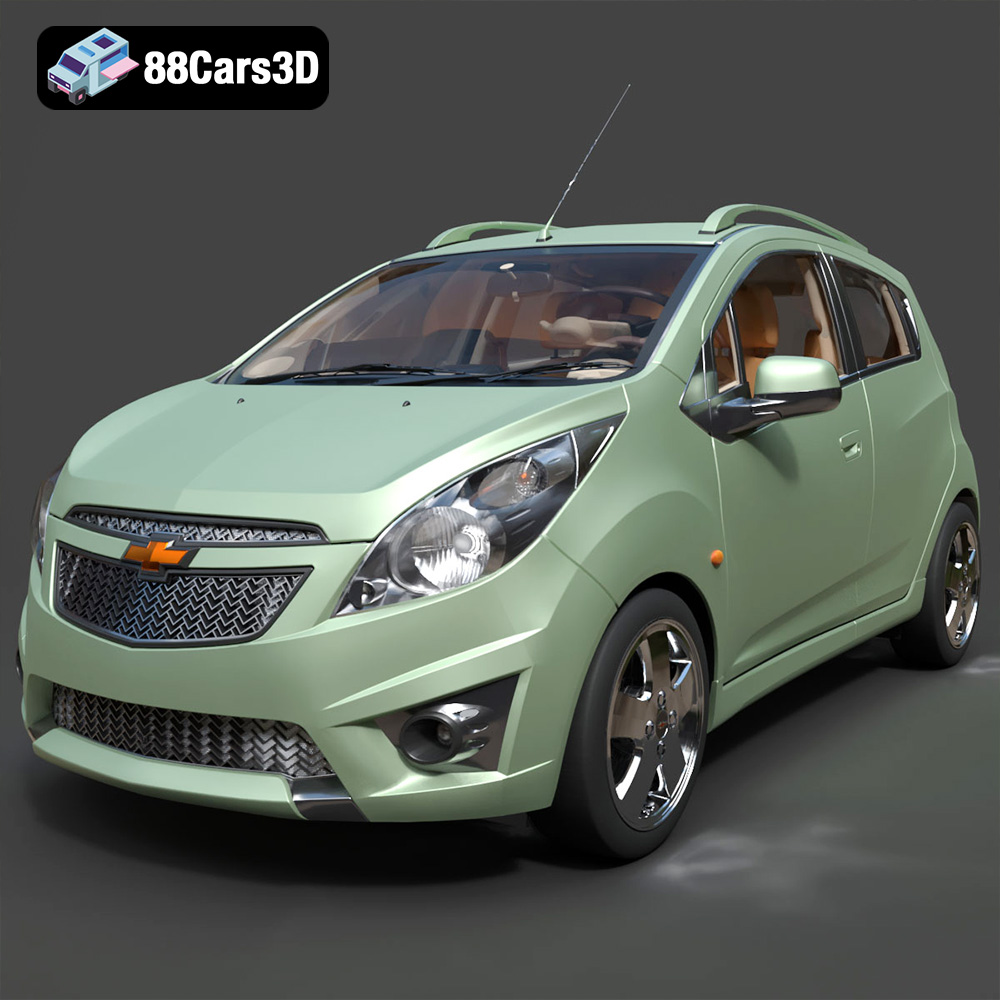
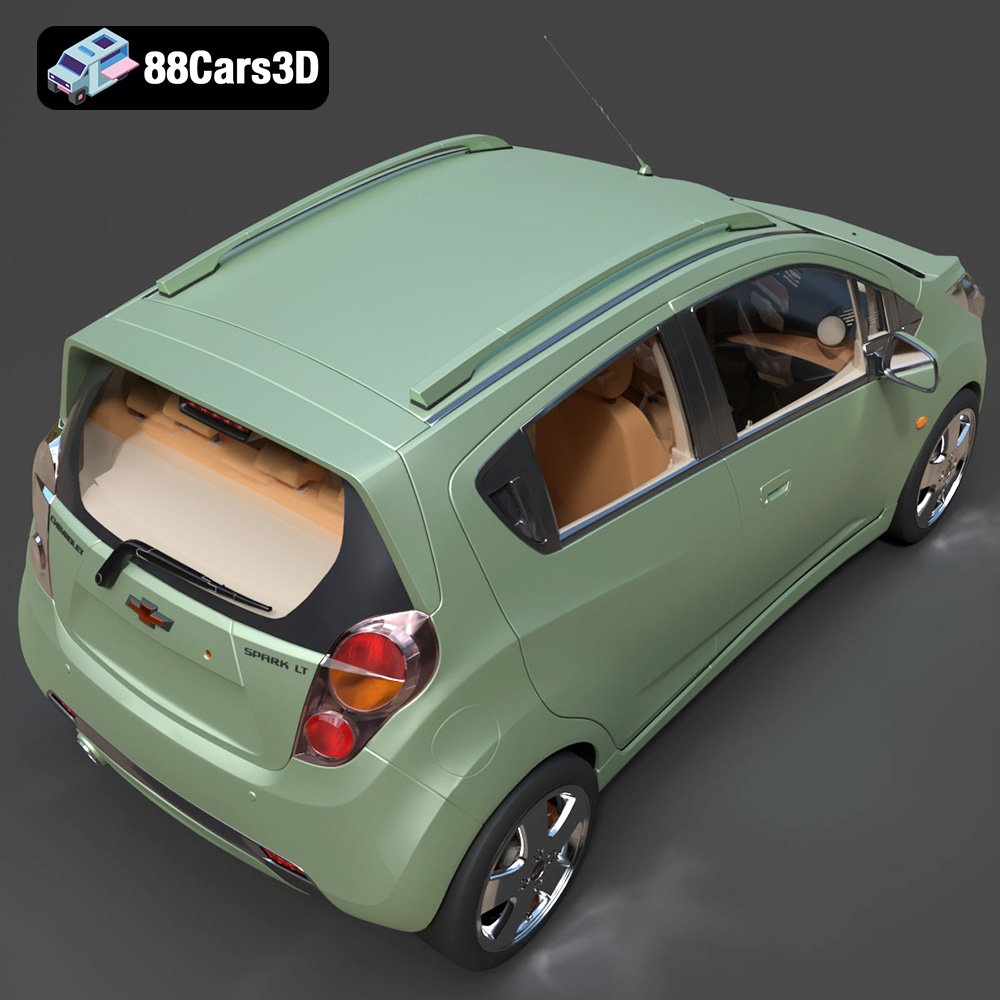
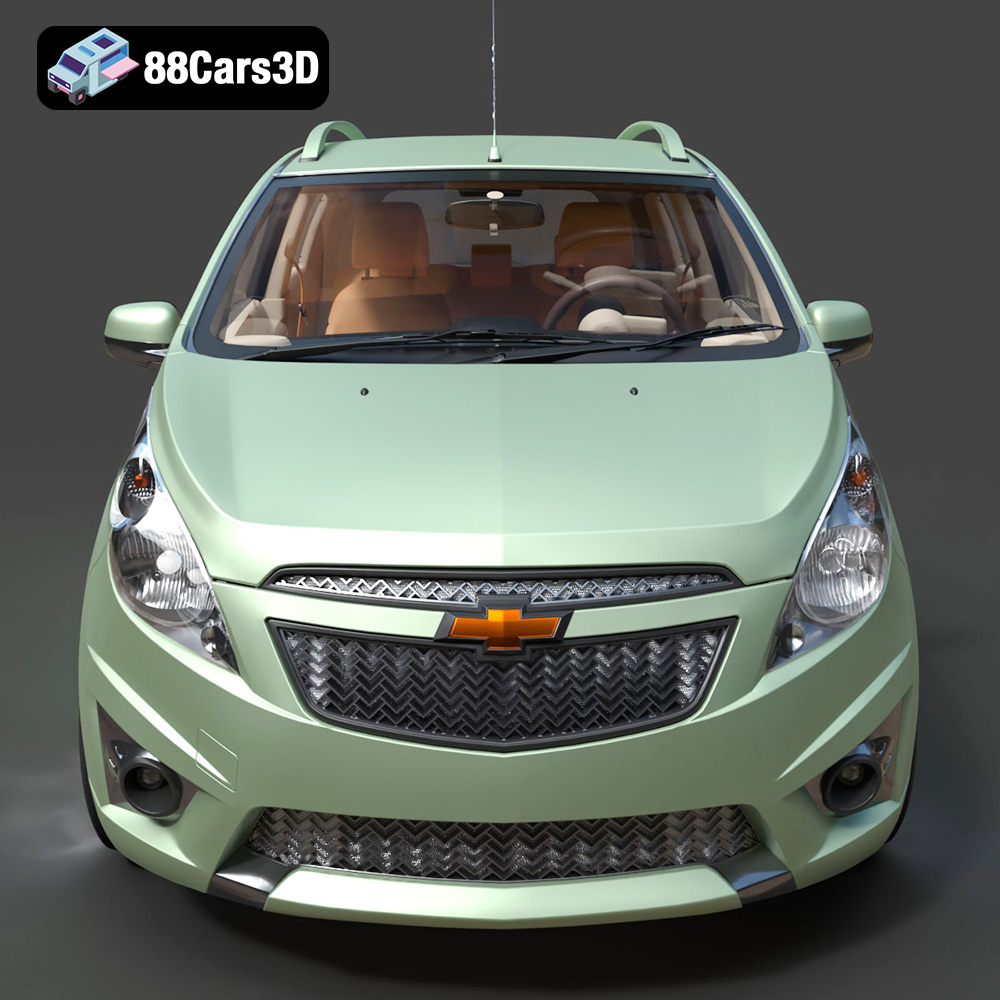
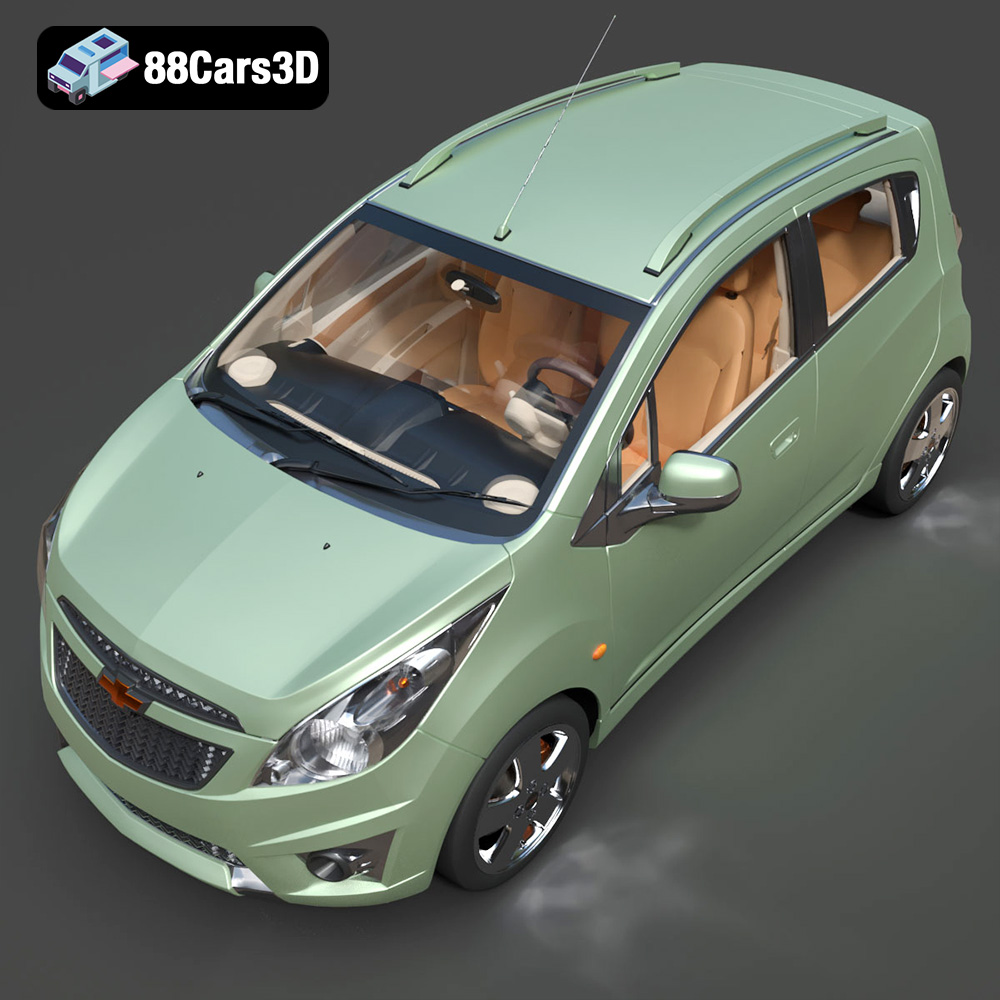
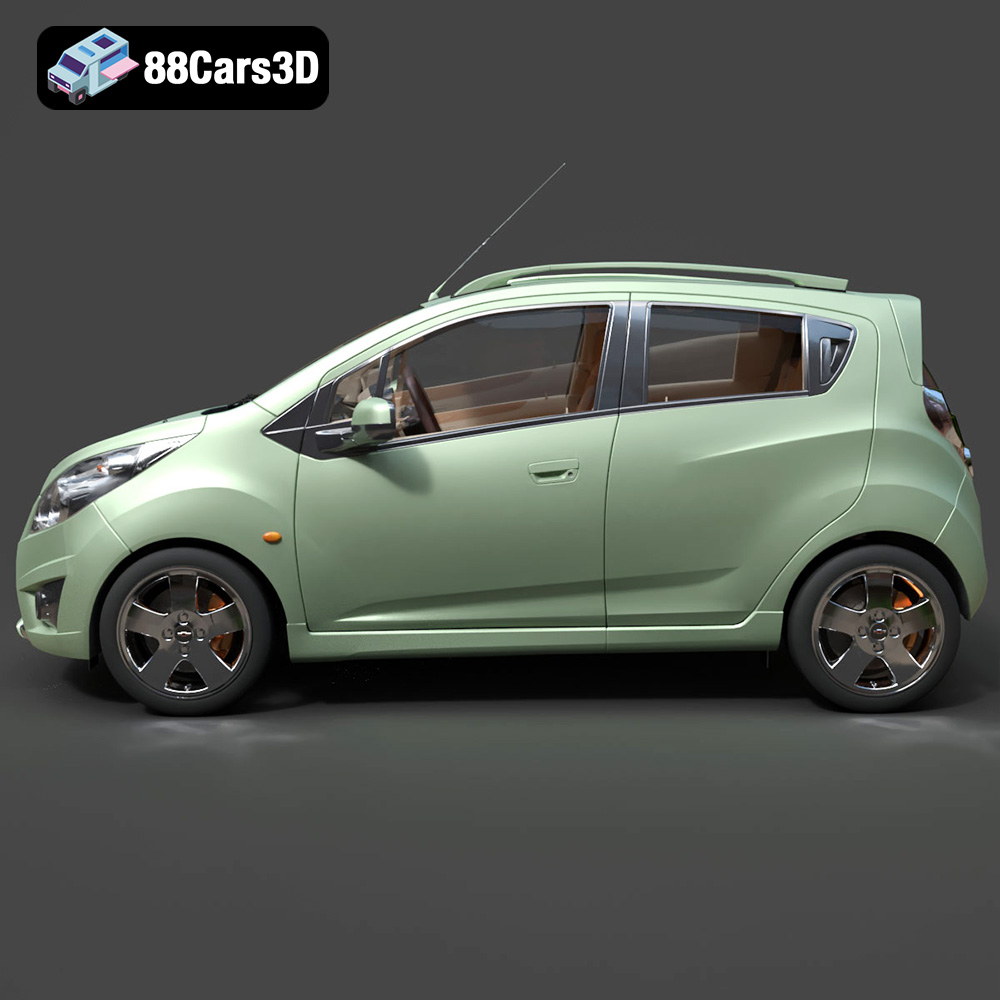
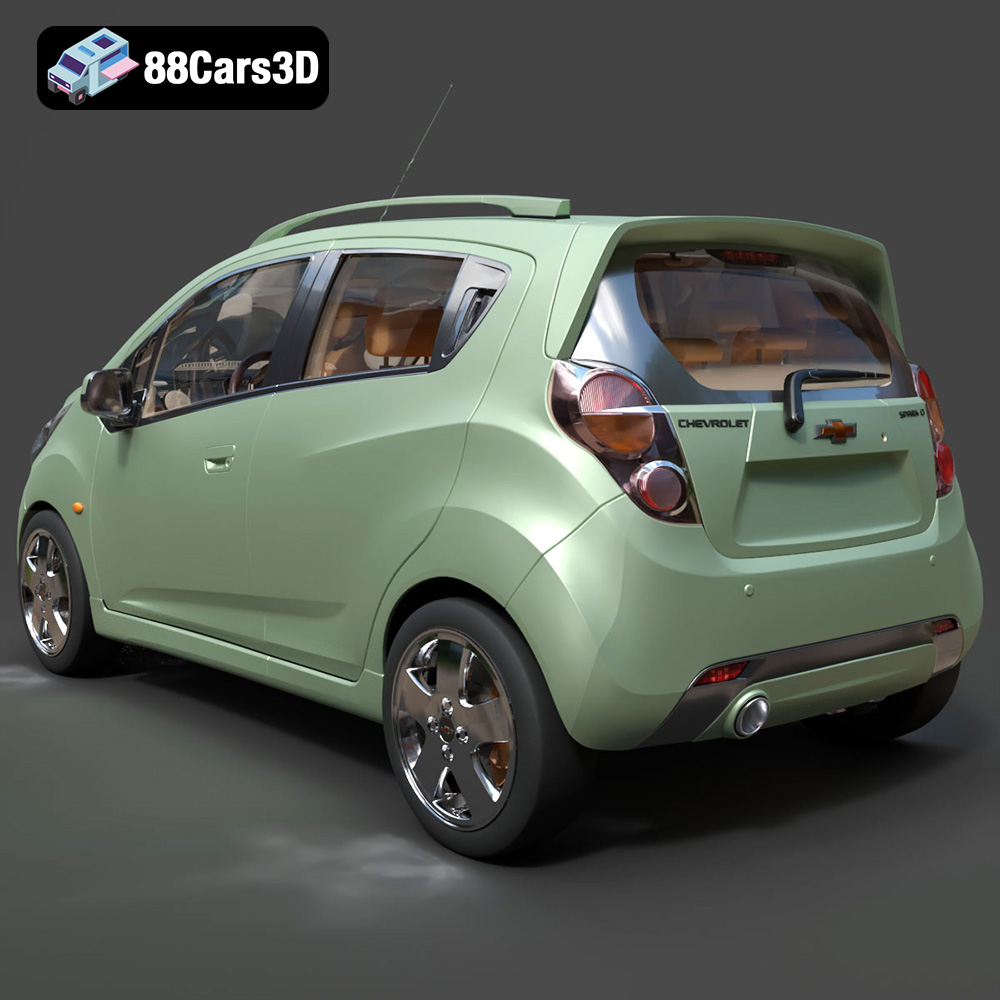
This 3D model beautifully translates the modern, urban aesthetic of the Chevrolet Spark LT into a digital format. Every defining characteristic of the latest generation Spark is accurately represented: the distinctive dual-port Chevrolet grille, the swept-back headlight housings, and the cleverly integrated rear door handles that mimic a sporty two-door silhouette. The compact hatchback proportions and sleek aerodynamic roofline, complete with an integrated rear spoiler, are all precisely captured. The attention to exterior detail extends to the textured factory alloy wheels wrapped in realistic street tires, ensuring that the model looks convincing from any angle, whether in a high-res render or a real-time game scene. Separate components for wheels, steering, and doors also pave the way for easy rigging and dynamic animation.
While often seen as a background vehicle, the Chevrolet Spark LT 3D Model doesn’t skimp on interior detail. It features a practical, modern driver-centric cabin layout, including a detailed dashboard with a central infotainment screen housing. The sporty, motorcycle-inspired instrument cluster representation adds character, while realistic seating geometry accommodates a four-passenger layout. Crucially, the interior geometry is optimized, meaning it provides enough visual information to look complete and appealing from the exterior or within a virtual reality experience, without adding excessive polygon overhead that would hinder performance in a game engine. This balance makes it versatile for both close-up architectural visualizations and efficient real-time walk-throughs.
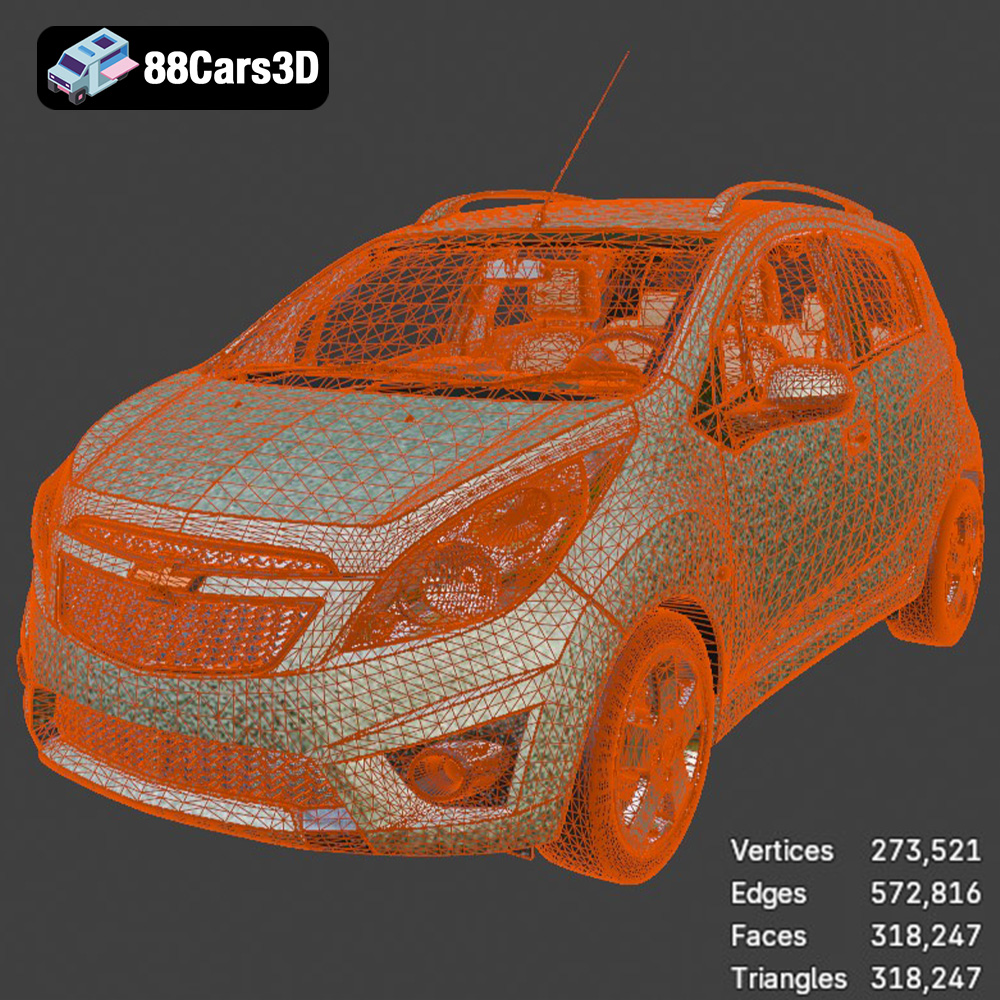
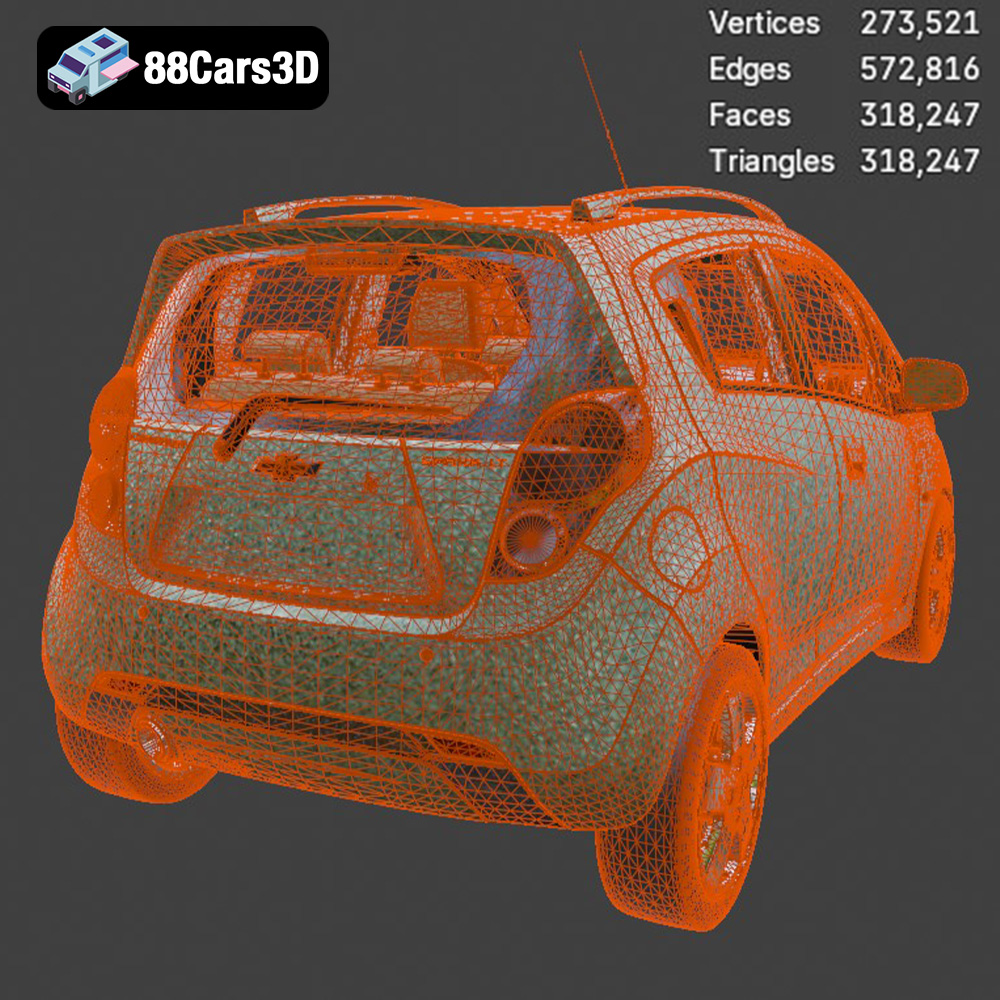
Underpinning the visual fidelity are robust technical specifications. The model boasts an optimized, clean mid-polygon topology, with 273,521 vertices, 572,816 edges, and 318,247 faces/triangles. This sub-320k triangle count is a sweet spot: detailed enough for appealing close-ups, yet lightweight enough to be duplicated dozens of times in a scene without taxing rendering resources or causing framerate drops in real-time applications. The topology is predominantly quad-heavy, facilitating easy subdivision or modification should further detail be required. Furthermore, the model adheres to real-world scale accuracy based on Chevrolet factory dimensions, ensuring seamless integration into architectural plans or scene layouts. Proper pivot setups for steering and wheel rotation further enhance its animation readiness, making it a truly game-ready and render-ready asset.
The true value of a versatile 3D asset like the Chevrolet Spark LT 3D Model becomes apparent when integrated into various professional pipelines. Its balanced design and multiple file formats ensure it’s not just a beautiful model, but a functional tool that accelerates production across industries.
For automotive rendering, the Spark LT provides a cost-effective solution for populating virtual environments. Artists can import the .max or .blend file into their chosen renderer (e.g., V-Ray or Corona in 3ds Max, or Cycles/Eevee in Blender) and quickly integrate it into a scene. Its accurate proportions and clean geometry respond beautifully to complex lighting setups, making it ideal for showcasing new infrastructure projects or urban design concepts. Imagine populating a bustling city street or a suburban driveway in an architectural visualization with multiple instances of this optimized 3D car model, instantly adding a layer of realism and context without significant performance penalties. Customization options allow for changing paint colors to match striking city-car palettes, adapting the model to different times of day or weather conditions, and breathing life into static architectural imagery.
In the realm of game development, the Chevrolet Spark LT excels as a game asset. Its optimized topology (just over 318k triangles) makes it an ultimate “everyday traffic” vehicle for open-world games, delivery simulators, and mobile racing titles. Game developers can leverage the .fbx or .unreal formats for direct import into Unreal Engine or Unity. The separate components for wheels, steering, and doors are critical for implementing realistic vehicle physics, animation, and interaction. Its lightweight nature means it can be instanced many times, creating dense, believable traffic flows in a virtual city without compromising the game’s framerate. This efficiency is a massive advantage, saving developers countless hours on optimization and allowing them to focus on gameplay and immersive world-building.
The utility of the Spark LT extends beyond traditional screen-based rendering. For interactive digital showrooms, city-planning VR experiences, or lightweight web configurators, the .glb format is excellent. It ensures efficient loading and rendering in browser-based or mobile AR applications, offering users an interactive way to explore the model. Furthermore, the inclusion of an .stl format opens the door to 3D printing. Hobbyists and professionals can convert the model for display-scale modern diecast projects or urban dioramas. Recommended print settings, such as a scale of 1:32 / 1:43 / 1:64, fine layer heights (0.04–0.12 mm for resin), and specific support requirements, ensure successful physical reproductions. Post-processing with sanding, primer, and vibrant factory colors can bring a miniature Spark LT to life on a tabletop, offering a tangible connection to the digital asset.
A high-quality 3D model isn’t just about its initial appearance; it’s about its adaptability and how it can continue to serve diverse creative needs over time. The Chevrolet Spark LT 3D Model exemplifies this principle, offering extensive customization options and contributing to a robust asset library.
The ability to customize a 3D car model significantly enhances its value. With the Spark LT, artists have the flexibility to change exterior paint colors to match striking, vibrant city-car palettes, reflecting different brands or stylistic choices. Modifying the wheel setup, swapping standard alloys for custom compact tuner wheels, can drastically alter the vehicle’s character. For commercial applications, adding custom decals or delivery branding to the side panels can transform the model into a fleet vehicle for renders. Furthermore, adapting lighting to simulate sunny urban commutes, rainy night-time city scenes, or dramatic showroom presentations allows the model to fit seamlessly into any narrative or environment. This level of customization ensures that the initial investment in the model continues to yield returns across multiple projects and aesthetic requirements.
In professional 3D production, time is a precious commodity. Relying on a library of pre-made, high-quality 3D car models, like those found on 88cars3d.com, allows artists and developers to streamline their workflows and focus on creative problem-solving rather than modeling every asset from scratch. The Chevrolet Spark LT, with its optimized topology and broad format compatibility, becomes a valuable cornerstone in such a library. Its reusability across game development, architectural visualization, and even 3D printing makes it a future-proof asset. Investing in assets that are meticulously crafted, technically sound, and versatile reduces production costs, accelerates timelines, and consistently elevates the visual quality of projects. For anyone looking to build a powerful toolkit of reliable 3D car models, a resource like 88cars3d.com offers carefully curated selections that meet professional standards.
The journey from concept to a fully realized digital environment is paved with countless decisions, not least of which is the selection of appropriate 3D assets. High-quality 3D car models are more than mere visual embellishments; they are fundamental components that define realism, dictate performance, and enable creative expression across a multitude of industries. The Chevrolet Spark LT 3D Model serves as an excellent illustration of how a meticulously crafted asset, with its balanced detail, optimized topology, and comprehensive file format support, can empower artists and developers.
Whether you’re populating a vast open-world game, rendering a photorealistic architectural scene, or bringing a design to life through AR/VR or 3D printing, the Spark LT offers a robust and versatile solution. Its adaptability, ease of integration, and technical excellence make it an invaluable addition to any professional’s toolkit. To explore this model further and discover a wide range of similarly high-quality 3D car models for your next project, visit 88cars3d.com. Elevate your creations with assets built for performance, realism, and boundless creative potential.
The Chevrolet Spark LT 3D Model is a highly accurate, efficiently modeled digital recreation of the popular subcompact city car. Known for its nimble handling, practical dimensions, and expressive styling, the Spark is a staple of modern urban environments across the globe. This 3D model beautifully captures the sleek, modernized aesthetic of the latest-generation Spark, featuring its signature swept-back headlight housings, the distinctive dual-port Chevrolet grille, its compact hatchback profile, and the cleverly integrated rear door handles that give it a sporty, two-door appearance. Built with a highly optimized, clean mid-polygon topology (just over 318k triangles), it strikes the perfect balance between visual fidelity for close-up renders and lightweight performance for real-time game engines. Perfect for populating modern city streets, architectural visualizations, urban traffic simulations, and mobile game development.
$29
.archviz
.automotive
.blend
.chevrolet
.fbx
.hatchback
.obj
.rendering
.subcompact
car-3d-model
chevy-spark
city-car
game-ready
mid-poly
spark-lt
traffic-car