Get 50% OFF All Premium 3D & STL Models!

In the dynamic world of digital content creation, the demand for high-fidelity 3D assets is ever-growing. From blockbuster video games to cutting-edge architectural visualizations and hyper-realistic product configurators, a meticulously crafted 3D model can be the linchpin of an entire project. Automotive design, in particular, thrives on precision, aesthetic appeal, and technical accuracy. Creating a stunning 3D car model is an art form, requiring a deep understanding of both vehicle design and advanced 3D software.
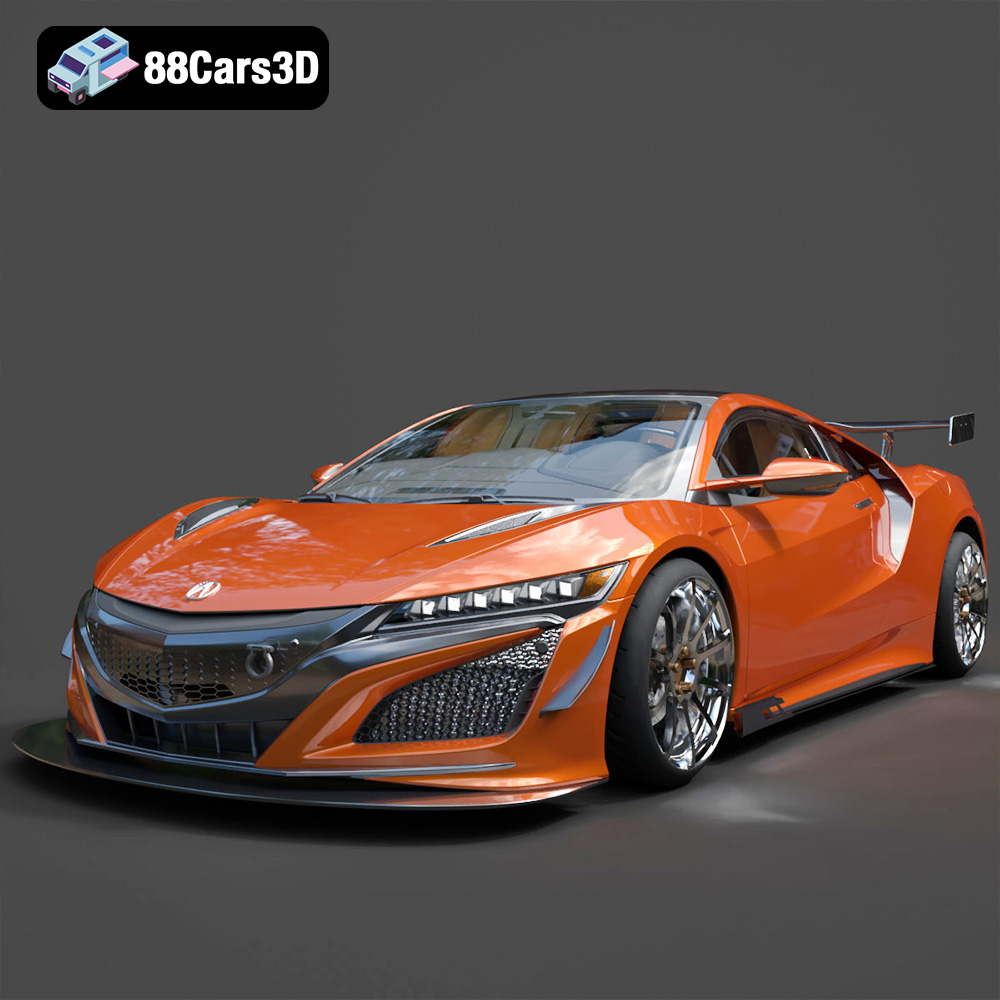
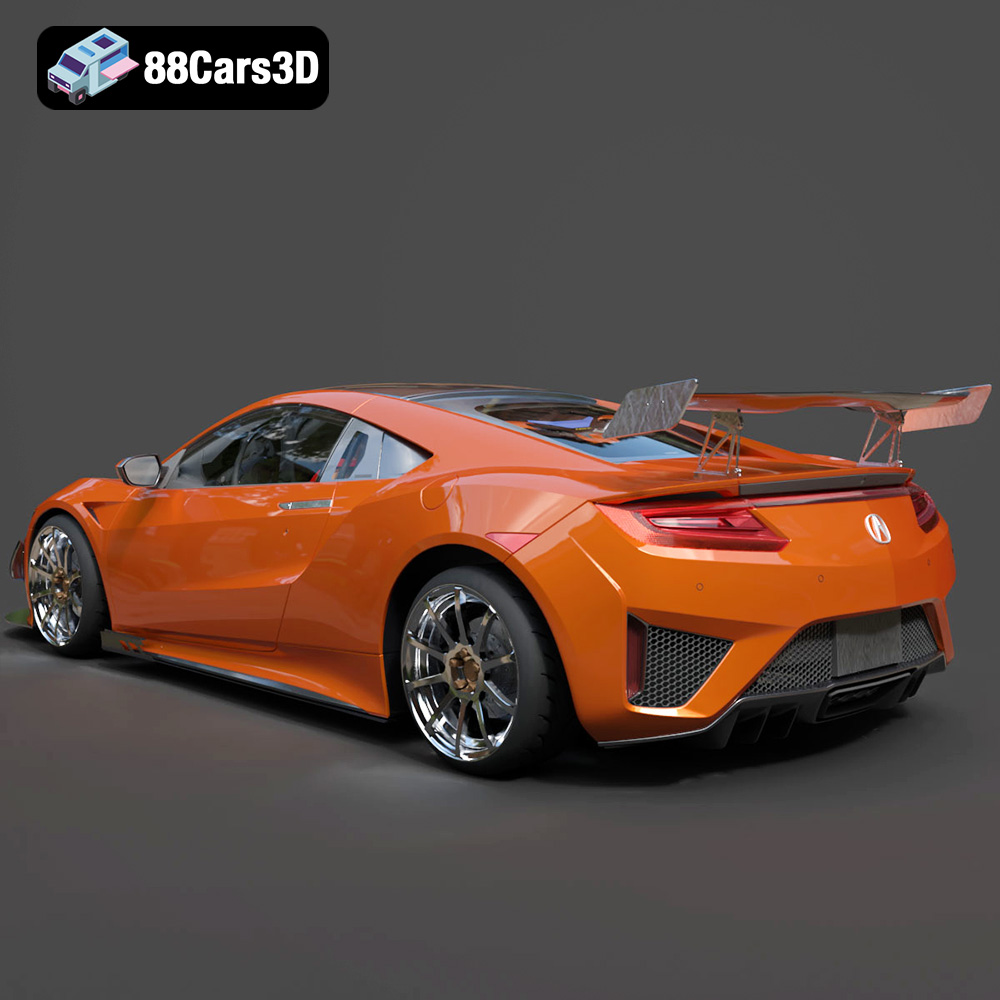
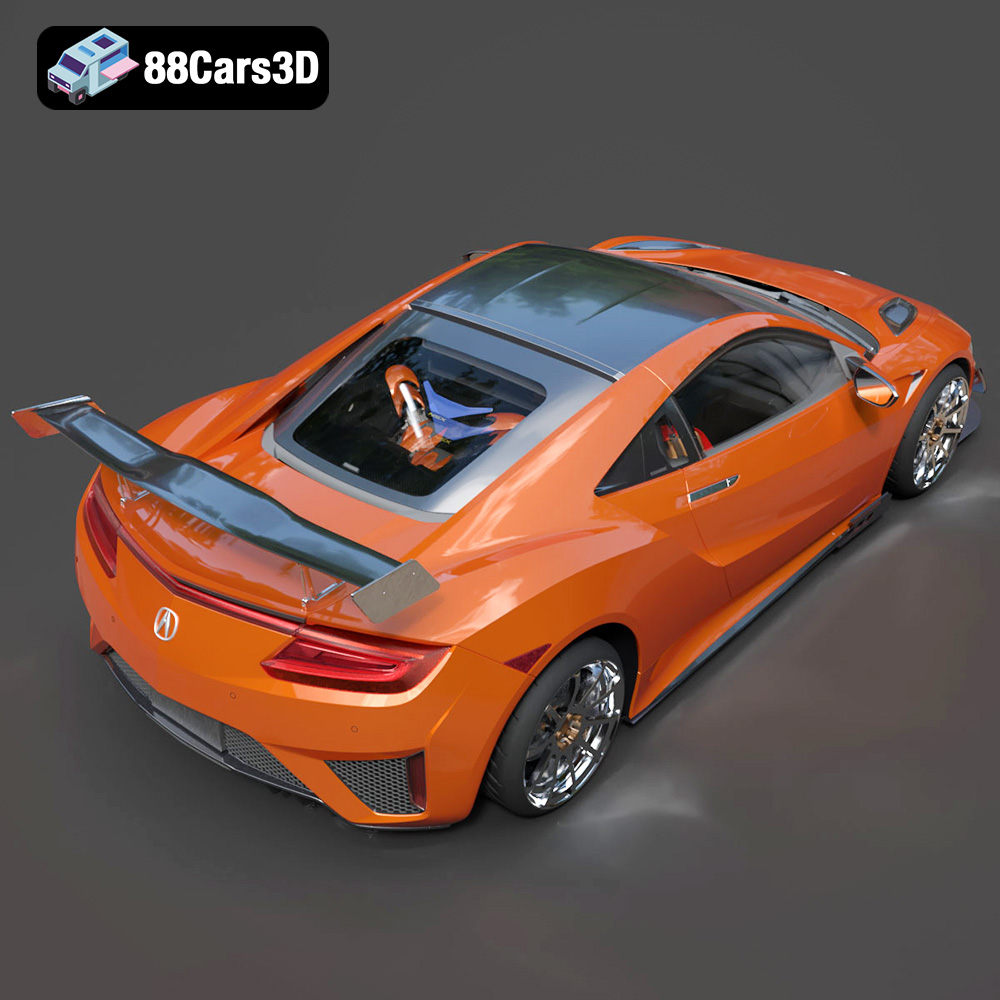
Today, we delve into the intricate world of premium 3D automotive assets, exploring how they empower professionals across various industries. We’ll examine the technical considerations, workflow advantages, and diverse applications that make high-quality models indispensable. As a prime example of excellence in this field, we’ll frequently reference the Acura NSX 2017 3D Model – a stunning digital recreation that encapsulates the precision and futuristic design of a legendary supercar, available through marketplaces like 88cars3d.com.
Navigating the landscape of 3D modeling often means grappling with a variety of file formats, each with its own strengths, weaknesses, and intended use cases. The choice of format can profoundly impact a project’s efficiency, compatibility, and final output. Understanding these distinctions is crucial for anyone working with 3D assets, whether for rendering, game development, or 3D printing. The Acura NSX 2017 3D Model, for instance, comes equipped with a comprehensive suite of formats, ensuring maximum versatility across different pipelines.
The .blend format is native to Blender, one of the most popular open-source 3D content creation suites. A .blend file saves not just the mesh data, but an entire scene, including materials, textures, lighting, cameras, animations, physics simulations, and modifiers. This makes it an ideal choice when you need a fully editable project file within Blender. For artists who prefer Blender’s powerful modeling, sculpting, and rendering capabilities (using Cycles or Eevee), the .blend format offers complete control and flexibility for further customization of the Acura NSX 2017 3D Model, from adjusting paint shaders to refining interior details or setting up complex animation sequences.
.fbx (Filmbox) is arguably the most widely adopted proprietary file format for 3D data exchange, especially within game development and animation pipelines. Developed by Autodesk, .fbx excels at preserving a broad range of 3D data, including geometry, materials (with some limitations), textures, animations, bones, and even camera data. Its robust support for skeletal animations and hierarchical structures makes it the go-to format for importing assets into game engines like Unreal Engine and Unity, where the Acura NSX 2017 3D Model, with its separate wheels, steering components, and doors, can be efficiently rigged and animated. The .fbx format ensures that the model’s proper pivot setup for steering and wheel rotation translates seamlessly into real-time environments.
The .obj (Wavefront OBJ) format is one of the oldest and most universally supported file formats for 3D geometry. It primarily stores vertex positions, UV coordinates, normals, and face information, often accompanied by a separate .mtl (material) file for basic material definitions. While .obj doesn’t typically store advanced features like animation or rigging, its simplicity and widespread compatibility make it an excellent choice for straightforward mesh transfer between virtually any 3D software package. For fundamental cross-software compatibility or for simply getting the raw geometry of the Acura NSX 2017 3D Model into an unfamiliar application, .obj remains a reliable standard.
.glb (GL Transmission Format Binary) is the binary version of glTF, a royalty-free specification for the efficient transmission and loading of 3D scenes and models by applications. Optimized for web, AR (Augmented Reality), and VR (Virtual Reality) environments, .glb packs geometry, textures, and animation into a single compact file, making it incredibly fast to load and display in browsers and mobile apps. Its efficiency is critical for interactive digital showrooms or AR/VR experiences featuring the Acura NSX 2017 3D Model, where performance and quick loading times are paramount.
.stl (STereoLithography) is the de facto standard file format for 3D printing. It represents 3D surfaces as a series of connected triangles, defining only the surface geometry of a 3D object without color, texture, or other CAD attributes. While simple, its ubiquity ensures compatibility with almost every 3D printer and slicing software. The Acura NSX 2017 3D Model, when converted to .stl, becomes a physical collectible, ready for display-scale supercar diecast hobbyists, requiring careful consideration of print settings like scale, layer height, and supports.
.ply (Polygon File Format) is another common format for storing 3D data, particularly useful for scanned data, CAD, and scientific analysis. Like .obj, it defines geometry, but .ply can also include properties like color, transparency, normals, texture coordinates, and even reliability information. It’s often preferred for its ability to handle more complex attributes and for its robust support in various CAD and mesh processing software, making it suitable for high-precision engineering visualization or reverse-engineering workflows of a model like the NSX.
The .unreal format signifies an asset specifically prepared for direct import or even native packaging within Unreal Engine. While typically assets are imported via .fbx and then converted internally by Unreal, sometimes a .unreal file represents a fully configured asset package with materials, blueprints, and collisions already set up. This highly optimized format streamlines the integration of models like the Acura NSX 2017 3D Model into a real-time environment, making it a truly “game-ready” asset for cinematic quality visuals within Unreal Engine.
Similar to .blend for Blender, .max is the native file format for Autodesk 3ds Max, a leading 3D modeling, animation, and rendering software widely used in architectural visualization, game development, and film. A .max file contains the complete scene data, including all geometry, materials, lighting, cameras, animations, and scene settings. For professionals operating within a 3ds Max pipeline, having the Acura NSX 2017 3D Model in .max format means having full access to its editable project file, allowing for advanced rendering setups with V-Ray or Corona, complex animation rigging, or detailed material adjustments, ensuring seamless integration into existing 3ds Max projects.
Recreating an iconic vehicle like the Acura NSX 2017 in 3D is a testament to the skill of the artist and the power of modern modeling techniques. It’s about more than just matching shapes; it’s about capturing the essence, the spirit, and the engineering philosophy behind the car. The Acura NSX, a rebirth of a legendary supercar, presents a particular challenge with its razor-sharp aesthetic, complex aerodynamic geometry, and futuristic mid-engine hybrid profile.
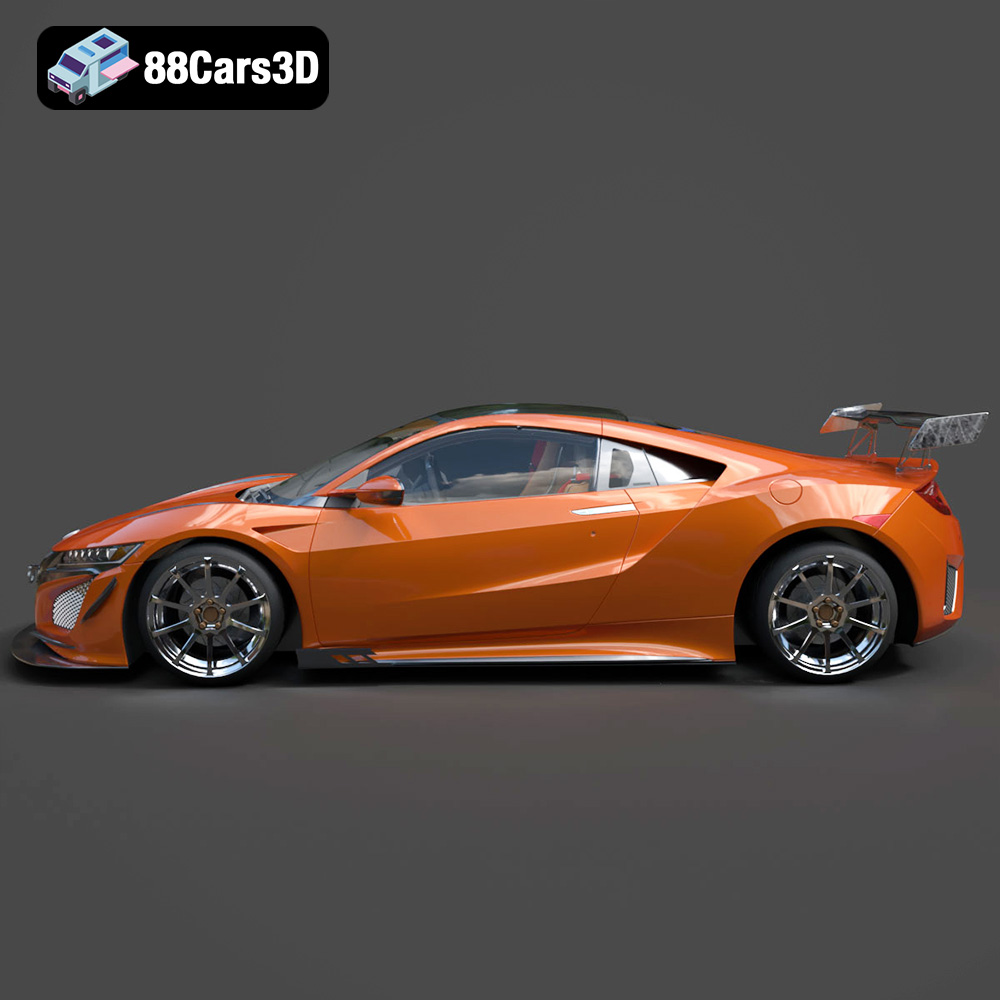
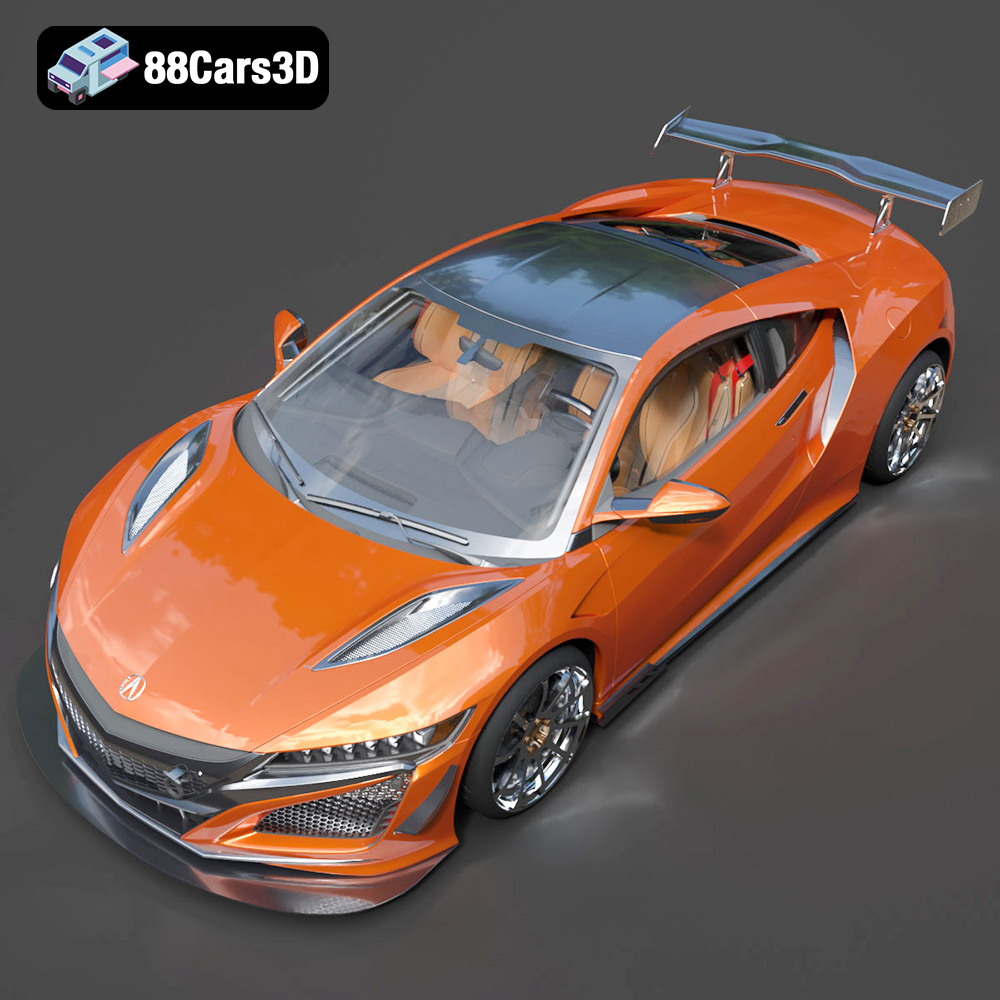
The foundation of any high-quality 3D car model lies in its accuracy. The Acura NSX 2017 3D Model exemplifies this with its “real-world scale accuracy based on the factory NSX dimensions.” This isn’t just a minor detail; it’s critical for realistic rendering, correct physics in game engines, and precise output for 3D printing. Every curve, every vent, and every panel gap must be meticulously replicated. Features like the distinctive Jewel Eye LED headlight clusters, the massive functional side air intakes, and the floating C-pillars are not merely visual elements but integral components of the car’s aerodynamic design, which must be respected in the 3D model.
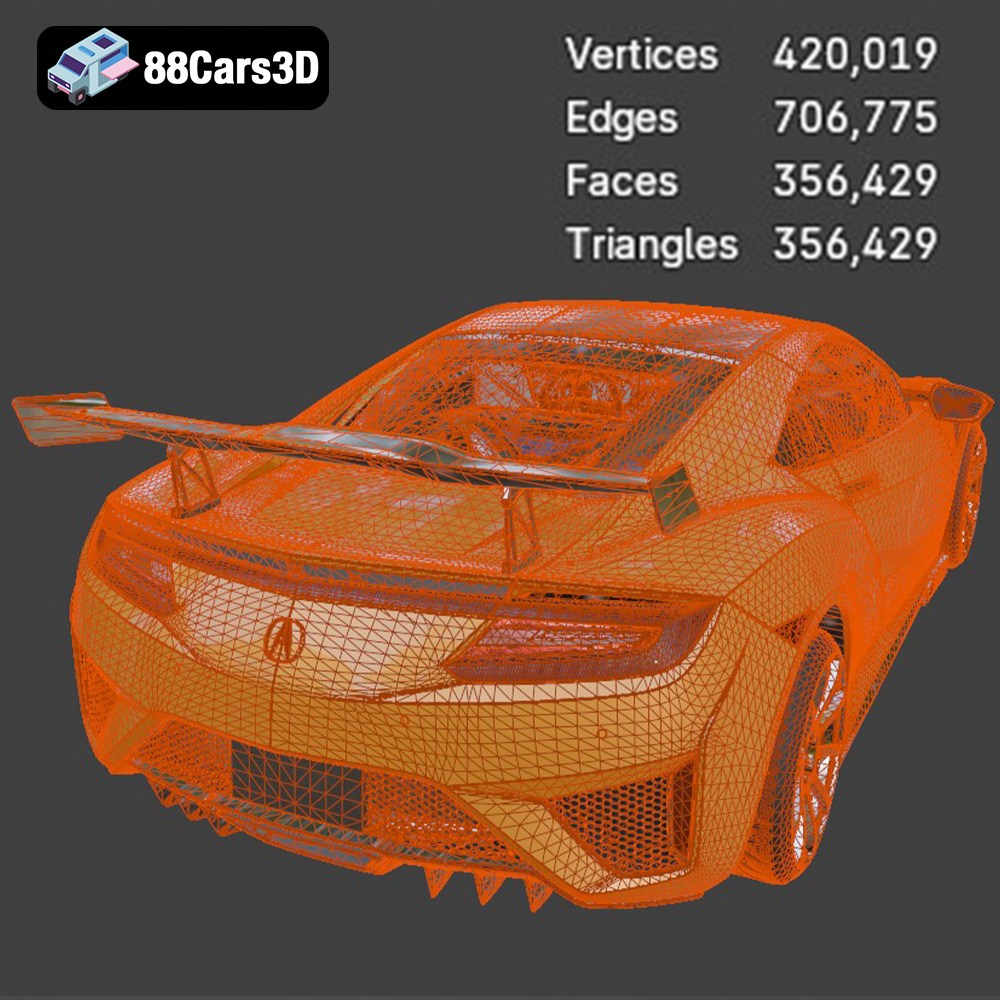
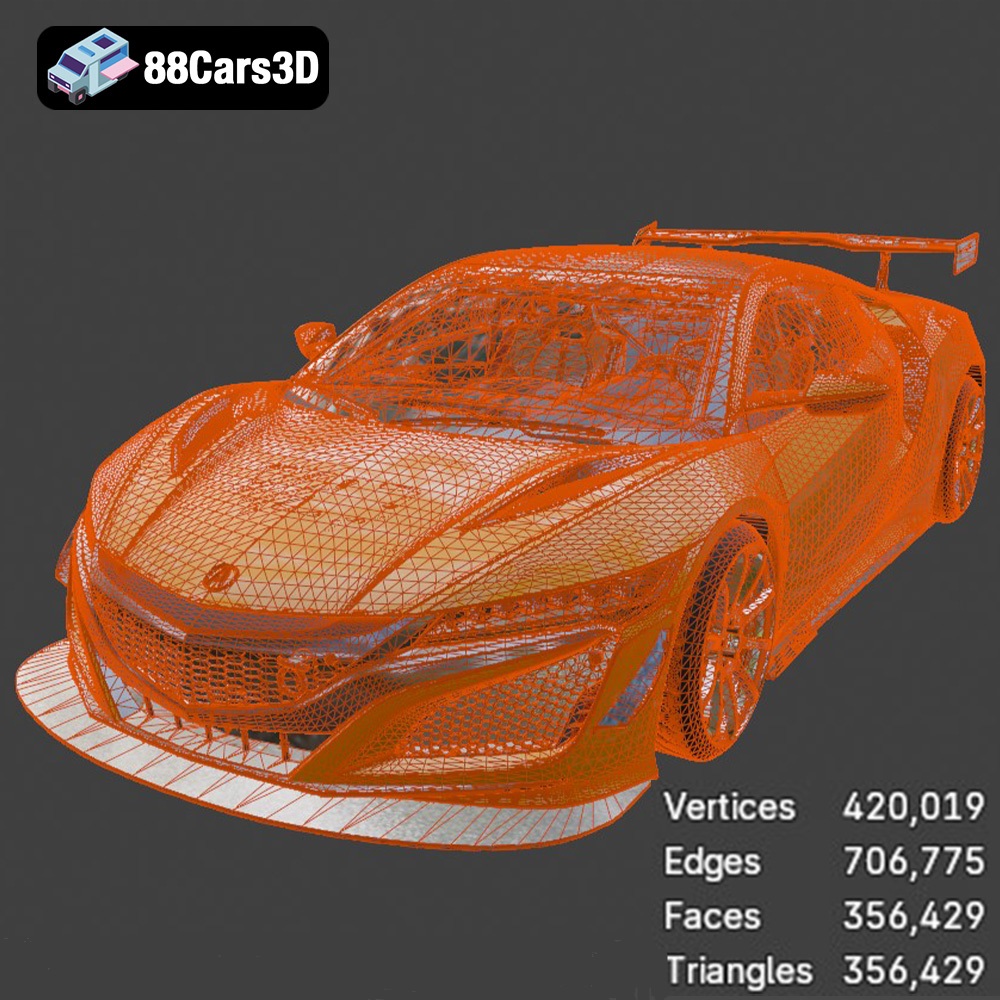
One of the most crucial technical aspects of a 3D model is its topology – how its vertices, edges, and faces are arranged. The description highlights a “perfectly balanced topology” with approximately 356,429 triangles. This is what’s often referred to as a “Goldilocks zone” topology: detailed enough for gorgeous studio renders, yet optimized enough for real-time applications. Poor topology can lead to rendering artifacts, inefficient deformation during animation, and excessive performance drain in game engines. A clean, efficient mesh like that of the Acura NSX 2017 3D Model ensures smooth shading, proper subdivision when needed, and ease of manipulation in software like 3ds Max or Blender.
A great 3D model isn’t just about static beauty; it’s about versatility and performance across various digital environments. The journey from a high-polygon modeling stage to a game-ready asset or a photorealistic render involves critical optimization steps. The Acura NSX 2017 3D Model is engineered to excel in both demanding rendering pipelines and resource-conscious real-time engines.
For cinematic automotive showcases, high-octane commercials, or luxury automotive galleries, the goal is photorealism. This requires a model capable of holding up under close-up scrutiny, with detailed materials, complex reflections, and accurate lighting. The balanced topology of the Acura NSX 2017 3D Model, combined with its “premium sport seating geometry with detailed bolsters and stitching lines” and “signature flat-bottom steering wheel,” provides an excellent foundation. In rendering software like 3ds Max (with V-Ray or Corona) or Blender (with Cycles), artists can leverage the model’s clean UVs (assuming they are present, which is standard for quality models) to apply high-resolution PBR (Physically Based Rendering) textures. This allows for realistic paint shaders, intricate carbon fiber details, and authentic material responses to studio lighting setups. Customization options, such as changing exterior paint colors or applying carbon fiber textures, further enhance its utility for bespoke rendering projects.
Game development demands a different kind of optimization. While visual quality is paramount, it must be balanced with strict performance budgets. A “hero” vehicle like the Acura NSX 2017 requires significant detail, especially for first-person POV or close-up action, yet it must run smoothly at high frame rates. The model’s “Goldilocks zone” triangle count makes it “an absolutely perfect ‘hero’ drivable vehicle for current-gen racing games.”
The utility of high-quality 3D car models extends far beyond digital screens. With the advent of accessible 3D printing technology, these digital assets can be transformed into tangible, physical objects, opening up new avenues for hobbyists, designers, and manufacturers. The Acura NSX 2017 3D Model is not just a digital asset; it’s also “convertible to .stl format for display-scale supercar diecast hobbyists,” bridging the gap between virtual and real.
3D printing allows for the creation of physical prototypes, scale models, and collectibles directly from a digital design. For a vehicle as iconic as the Acura NSX, this means enthusiasts can own a physical representation with remarkable accuracy. The .stl format provided with the model is the industry standard for 3D printing, ensuring compatibility with virtually all slicing software and printers.
Successfully 3D printing a complex automotive model like the NSX requires careful attention to specific settings. The product description provides excellent recommendations:
The versatility of a high-quality 3D car model, such as the Acura NSX 2017, makes it an invaluable asset across a multitude of professional domains. From initial concept visualization to final product marketing, these models streamline workflows and elevate the quality of output. 88cars3d.com offers a curated selection of such models, empowering professionals to achieve their creative and technical goals efficiently.
In the automotive industry, 3D models are central to every stage of design and marketing. Designers use them for rapid prototyping, aerodynamic simulations, and interior ergonomic studies. For visualization studios, the Acura NSX 2017 3D Model is perfect for creating “dramatic studio lighting setups, high-octane automotive commercials, and modern architectural driveway renders.” Imagine integrating this sleek supercar into a virtual architectural walkthrough, instantly elevating the perceived luxury and lifestyle of a property. The ability to customize paint colors, wheel finishes, and apply carbon fiber textures means the model can be tailored to specific client requests or marketing campaigns without needing to create a new model from scratch.
For game developers, the Acura NSX 2017 3D Model, with its “Goldilocks zone” topology, is a ready-to-deploy “hero” vehicle. Its optimized mesh, separate components for animation, and proper pivot setups drastically reduce the development time typically associated with integrating complex vehicle assets. It’s not just for racing games; it can be a central element in open-world environments, cinematic cutscenes, or even as a display piece in virtual garages. The inclusion of formats like .fbx and .unreal ensures seamless integration into major game engines like Unreal Engine, allowing developers to focus on gameplay mechanics and environmental design.
Beyond traditional games, the model shines in AR/VR applications. “Excellent for interactive digital showrooms, car configurators, and mobile AR experiences,” it allows potential customers to explore the NSX in a virtual space, change colors, open doors, and even ‘place’ the car in their own driveway using augmented reality. This level of interactive engagement is a powerful tool for marketing and sales in the modern era.
3D models of vehicles like the Acura NSX are also powerful educational tools. Automotive engineering students can study the car’s geometry, aerodynamic principles, and interior layout in an interactive 3D environment. Mechanics can use augmented reality to overlay repair instructions onto a physical vehicle. The detailed interior, with its “driver-centric, high-performance cockpit layout” and “digital instrument cluster representation,” offers a valuable resource for studying modern vehicle design principles without requiring access to a physical car.
While the digital model is a finished product, its .stl and .ply formats also hint at its potential for prototyping. Manufacturers can use such models for rapid physical prototyping of components, creating molds, or even for quality control and inspection by comparing scanned physical objects to the original 3D data. The accuracy required for the model to be 3D printable at various scales speaks to its foundational geometric integrity, making it suitable for more industrial applications where precision is paramount.
The world of 3D modeling is constantly evolving, but the core principles of quality, efficiency, and versatility remain paramount. A truly exceptional 3D car model, like the Acura NSX 2017 3D Model, is not merely a digital representation; it’s a meticulously engineered asset designed to meet the rigorous demands of diverse professional workflows. From its perfectly balanced topology optimized for both high-end rendering and real-time game engines, to its comprehensive suite of file formats ensuring seamless integration across various software, this model stands as a testament to the power of expert 3D craftsmanship.
Whether you’re an automotive visualization artist striving for photorealism, a game developer crafting an immersive racing experience, an AR/VR innovator building the next interactive showroom, or a hobbyist bringing a digital design to life through 3D printing, investing in premium 3D car models like the Acura NSX 2017 from a trusted source like 88cars3d.com provides a significant advantage. It allows creators to focus on their artistic vision and technical implementation, confident that the underlying asset is robust, accurate, and ready to perform. The ability to capture the complex aesthetics and engineering marvel of a supercar like the NSX in such a versatile digital package truly unlocks limitless creative possibilities.
The Acura NSX 2017 3D Model is a stunning digital recreation of the rebirth of a legendary supercar. Combining striking, aerodynamically optimized styling with a futuristic mid-engine hybrid profile, the 2017 NSX represents the pinnacle of modern precision craftsmanship. Built with a highly efficient and perfectly balanced mid-polygon topology (just over 356k triangles), it provides excellent visual fidelity for close-up automotive rendering while remaining highly optimized for use as a hero vehicle in modern game engines and real-time applications.
$45