Get 50% OFF All Premium 3D & STL Models!

In the dynamic world of 3D visualization, automotive models stand as a cornerstone across countless industries. From the adrenaline-pumping realism of modern racing simulators to the cutting-edge precision of architectural visualization, and from captivating product showcases to the immersive realms of virtual reality, the demand for high-quality, technically sound 3D car models is ever-growing. Crafting these digital masterpieces requires a blend of artistic vision, meticulous technical execution, and an understanding of diverse pipeline requirements.
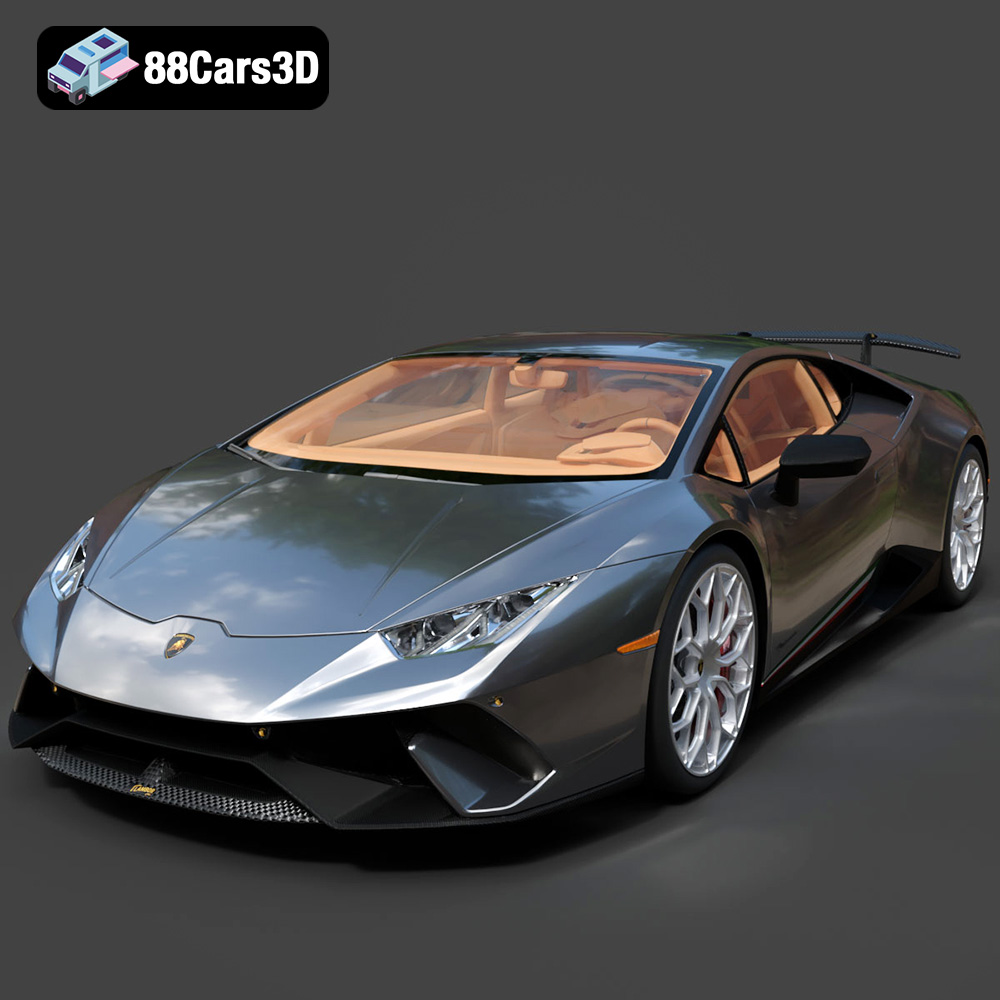
Today, we’re diving deep into the technical intricacies of automotive 3D modeling, exploring workflows, file formats, and the myriad applications that professionals leverage daily. We’ll specifically highlight how a model like the Lamborghini Huracán Performante LP 640-4 2017 3D Model exemplifies the pinnacle of optimized design, offering unparalleled versatility for artists and developers alike. This stunning digital recreation of a track-focused supercar is more than just a pretty render; it’s a testament to precision engineering, ready for everything from cinematic close-ups to real-time interactive experiences.
The choice of file format is critical for any 3D asset, determining its compatibility, efficiency, and suitability for various applications. A robust 3D model, like the Lamborghini Huracán Performante LP 640-4 2017 3D Model available at 88cars3d.com, offers a range of formats to ensure seamless integration into any workflow. Understanding these formats is paramount for professional success.
The .blend format is Blender’s native file type, containing a complete scene with mesh data, materials, textures, lighting, cameras, animations, and even custom scripts. It’s the ideal choice for Blender users, offering full editability and preserving all scene information. When you download a .blend file, you’re getting the original working file, allowing for deep customization and modification of the model’s topology, UVs, and material setups. For the Lamborghini Huracán Performante model, this means access to its clean, quad-based structure, enabling artists to tweak details or adapt it for specific project needs within Blender.
The .fbx (Filmbox) format is a proprietary file format owned by Autodesk, widely recognized as the industry standard for 3D data interchange. It supports geometry, materials, textures, animations, and rigging, making it perfect for transferring assets between different 3D software applications like 3ds Max, Maya, Blender, and directly into game engines like Unreal Engine and Unity. Its strength lies in its ability to preserve complex hierarchical data, ensuring that components like the Huracán Performante’s separate wheels, steering, and doors remain correctly parented and ready for animation. This format is crucial for real-time pipelines due to its efficiency and broad compatibility.
The .obj (Wavefront Object) format is one of the most widely supported and simplest 3D file formats. It primarily stores geometric data (vertices, normals, texture coordinates, and faces) along with references to external material files (.mtl). While it doesn’t support animation or rigging, its universal compatibility makes it an excellent choice for basic mesh transfer across virtually any 3D software. For artists needing to import the Huracán Performante’s core geometry into an older software version or a specialized rendering engine, .obj provides a reliable, fundamental mesh.
The .glb (GLB format, an extension of glTF) is a relatively newer format gaining significant traction, particularly for AR, VR, and web-based 3D applications. It’s designed for efficient transmission and loading of 3D scenes and models, packaging geometry, materials, textures, and animations into a single binary file. The Lamborghini Huracán Performante’s optimized poly count makes it incredibly suitable for .glb export, allowing for smooth, interactive experiences in browser-based configurators, mobile AR applications, or lightweight VR showrooms. Its compact nature is a huge advantage for performance-critical environments.
The .stl (Stereolithography) format is the de facto standard for 3D printing. It represents a 3D model as a series of connected triangles (a triangular mesh) and contains only geometric information, without color, texture, or material properties. While it simplifies the model, it is precisely what 3D printers need to interpret the object’s shape for physical fabrication. The Huracán Performante model is convertible to .stl, enabling hobbyists and professionals to 3D print scale models, with recommendations for resin printing to capture its intricate aerodynamic elements like the ALA rear wing and sharp splitter.
The .ply (Polygon File Format or Stanford Triangle Format) is a versatile format for storing 3D data, particularly noted for its ability to save properties beyond geometry, such as color, transparency, normals, and texture coordinates. It’s often used in scientific and engineering applications, 3D scanning, and CAD for its precision and flexibility in handling complex mesh data. While less common for direct rendering, it provides a robust option for those who need to import the Performante model into specialized analysis or manufacturing software.
The .unreal format (or typically, an FBX file specifically prepared and imported into Unreal Engine) signifies an asset that is ready for direct integration into the Unreal Engine ecosystem. This often means the model has already been optimized, has proper collision meshes, LODs (Levels of Detail), and a material setup compatible with Unreal’s Physically Based Rendering (PBR) system. The Lamborghini Huracán Performante LP 640-4 2017 3D Model, with its “engine-ready” designation, ensures it can be quickly dropped into an Unreal project as a drivable “hero” car, complete with proper pivots and a balanced poly count for optimal performance.
The .max format is the native file type for Autodesk 3ds Max, one of the most powerful and widely used 3D modeling, animation, and rendering software packages in the industry. Like .blend, it contains all scene data—geometry, materials, textures, lighting, cameras, animation, and modifiers—in a fully editable state. For users of 3ds Max, this format provides full control over the Huracán Performante model, allowing for advanced rendering setups, complex animations, and detailed scene compositions. Professionals often prefer the native format for extensive modifications or when leveraging 3ds Max’s robust toolset for high-end visualizations.
Creating a high-fidelity 3D car model is a sophisticated process that marries artistic talent with technical precision. It’s not just about replicating a vehicle’s form but understanding its underlying engineering and how that translates into a digital asset that performs flawlessly across different platforms.
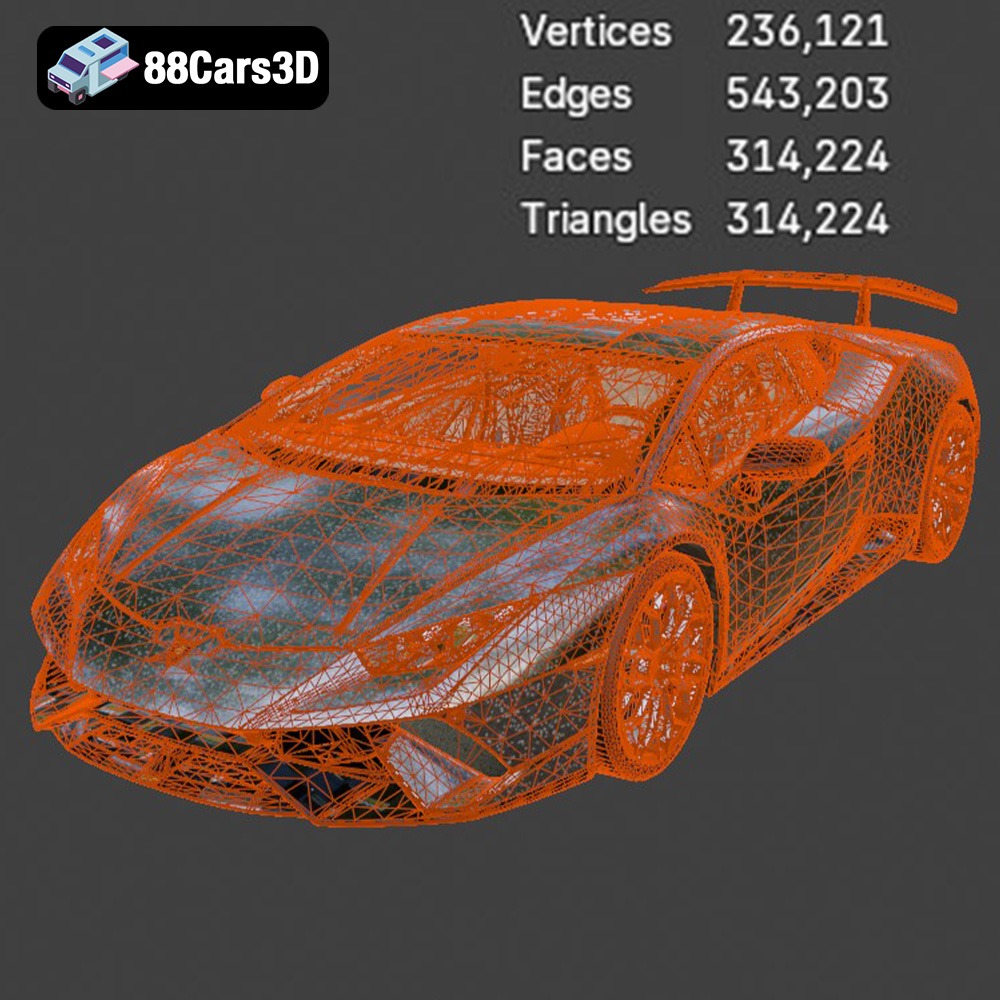
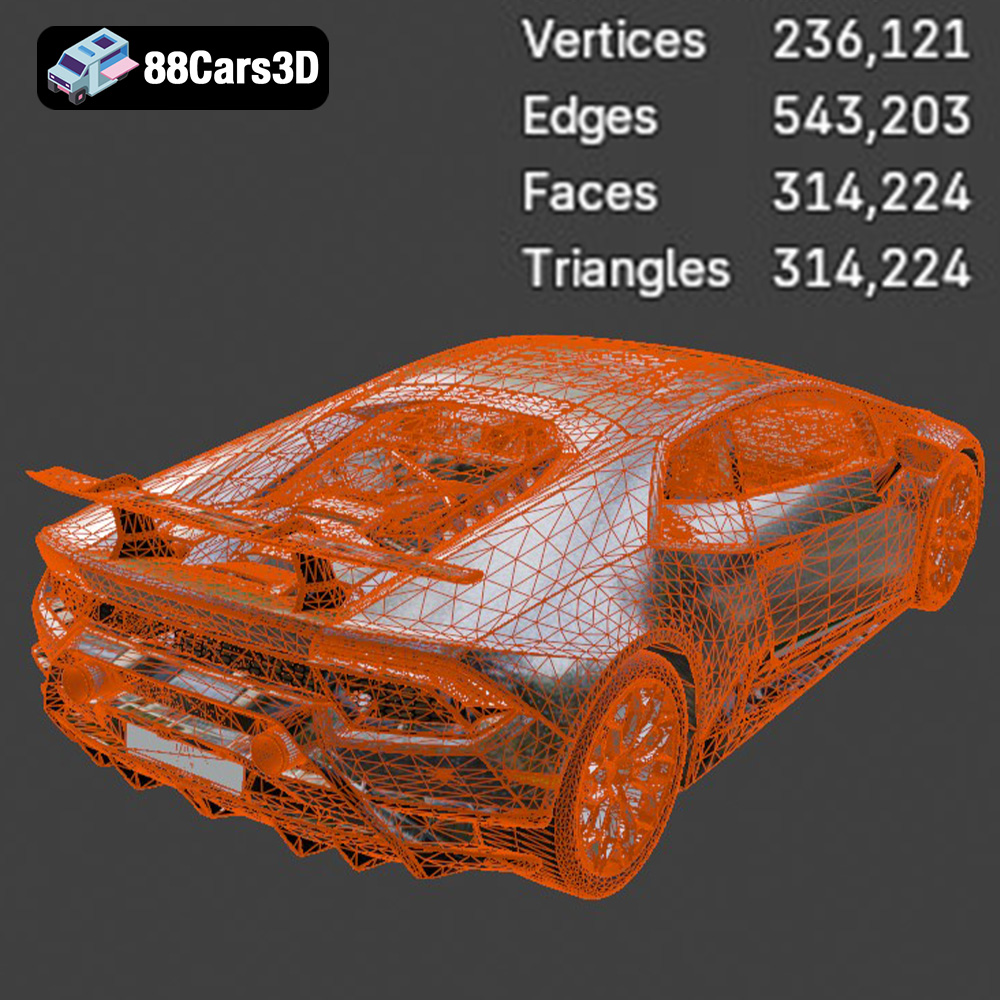
At the heart of any great 3D model is its topology – the arrangement of polygons. For automotive subjects, particularly supercars like the Lamborghini Huracán Performante, clean topology is paramount. The Performante model, with its ~314,224 triangles (or faces/polygons) and 236,121 vertices, showcases an incredibly efficient and clean mid-polygon structure. This quad-based topology is crucial for several reasons:
Beyond geometry, materials and textures breathe life into a 3D model. For a vehicle as distinctive as the Lamborghini Huracán Performante, this includes capturing the essence of its unique “Forged Composite” carbon fiber, the luxurious Alcantara of its interior, and the sharp reflections of its paintwork. High-quality 3D car models come with carefully crafted PBR (Physically Based Rendering) materials that accurately simulate how light interacts with different surfaces.
The Lamborghini Huracán Performante LP 640-4 2017 3D Model from 88cars3d.com includes textures and materials, ensuring that these visual nuances are preserved and ready for immediate use in rendering or game engines.
Professional 3D artists and studios leverage high-quality models like the Lamborghini Huracán Performante 3D Model across a spectrum of workflows, each demanding specific optimizations and considerations.
For high-end marketing, product showcases, or architectural renders, rendering quality is paramount. This involves:
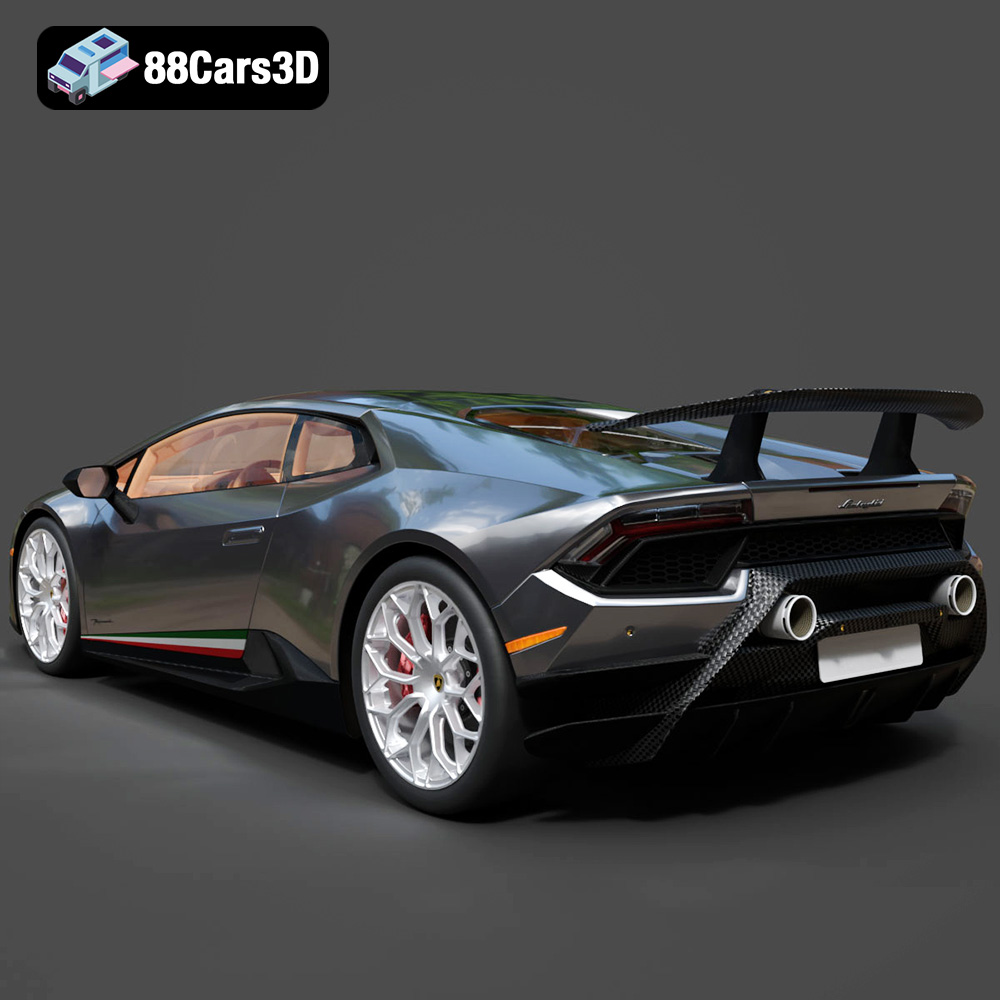
The accurate 2017 Huracán Performante proportions and details, including its ALA rear wing and high-mounted dual exhausts, are perfectly captured for these demanding rendering tasks, making it ideal for stunning automotive commercials or luxury visualizations.
Integrating a 3D car model into a game engine like Unreal Engine or Unity requires a different set of optimizations geared towards performance and interactivity.
This Lamborghini model’s careful optimization means developers save countless hours, focusing on gameplay rather than extensive asset cleanup.
Augmented Reality (AR) and Virtual Reality (VR) demand highly optimized assets for smooth, immersive experiences, often on mobile or standalone devices with limited processing power.
Imagine showcasing this supercar in an interactive VR showroom, allowing potential buyers to virtually sit inside, change colors, and inspect every detail – the optimized Lamborghini Huracán Performante 3D Model makes this a reality.
The availability of expertly crafted 3D models significantly impacts project timelines, quality, and overall efficiency for studios and individual artists. Investing in premium assets, such as those found on 88cars3d.com, is a strategic decision that pays dividends.
Modeling a highly detailed vehicle like the Lamborghini Huracán Performante from scratch can take hundreds of hours of a skilled artist’s time. This includes gathering blueprints, modeling every curve, creating clean topology, unwrapping UVs, texturing, and setting up materials. By purchasing a pre-made, high-quality 3D model, studios can drastically cut down on development time and reallocate their artists to other critical tasks. This is especially true for projects with tight deadlines, where time is literally money.
High-quality assets directly translate to higher visual fidelity in the final product. Meticulously recreated details, accurate proportions, and professionally crafted materials elevate the realism of any project. The Lamborghini Huracán Performante LP 640-4 2017 3D Model boasts features like:
These details are often what distinguish a professional production from an amateur one.
While pre-made, a good 3D model offers extensive customization options. The Lamborghini Huracán Performante model is no exception:
This flexibility ensures that the model can be seamlessly integrated into unique project visions without sacrificing its core quality or requiring extensive re-modeling.
The utility of a high-quality 3D car model extends beyond digital screens into the tangible world of physical objects. 3D printing offers a fascinating avenue for bringing virtual designs into reality, serving hobbyists and professionals alike.
The Lamborghini Huracán Performante LP 640-4 2017 3D Model, with its manifold geometry, is fully convertible to the .stl format, making it suitable for 3D printing. This allows enthusiasts and designers to create physical replicas, scale models, or even prototypes of the iconic supercar.
Successfully 3D printing a complex automotive model requires attention to specific settings and preparation:
Once printed, the journey from raw plastic to a showroom-quality miniature is completed through meticulous post-processing:
This process transforms the digital asset into a tangible collectible, a physical manifestation of a high-fidelity 3D car model.
The world of 3D automotive modeling is a sophisticated ecosystem where technical precision, artistic vision, and versatile asset management converge. From high-octane game development and cinematic rendering to immersive AR/VR experiences and physical 3D prints, the demand for truly exceptional 3D car models is higher than ever. Understanding the nuances of topology, material science, and file formats is not just beneficial but essential for professionals navigating this landscape.
The Lamborghini Huracán Performante LP 640-4 2017 3D Model exemplifies everything a professional-grade asset should be. Its meticulously optimized geometry, accurate detailing, and comprehensive file format support (including .blend, .fbx, .obj, .glb, .stl, .ply, .unreal, and .max) position it as an invaluable tool for any project. Whether you’re a game developer seeking a “hero” drivable supercar, an architect needing a luxury vehicle for a render, or a hobbyist aspiring to 3D print a scale replica, this model offers the perfect balance of fidelity and performance.
For those seeking to elevate their projects with high-quality 3D car models, exploring resources like 88cars3d.com offers access to a curated selection of assets that meet the rigorous demands of professional production. Investing in such quality ensures not only stunning visual results but also a streamlined workflow, empowering creators to focus on innovation and design without compromise. The digital garage of the future is here, and it’s built on foundations of precision, versatility, and unparalleled detail.
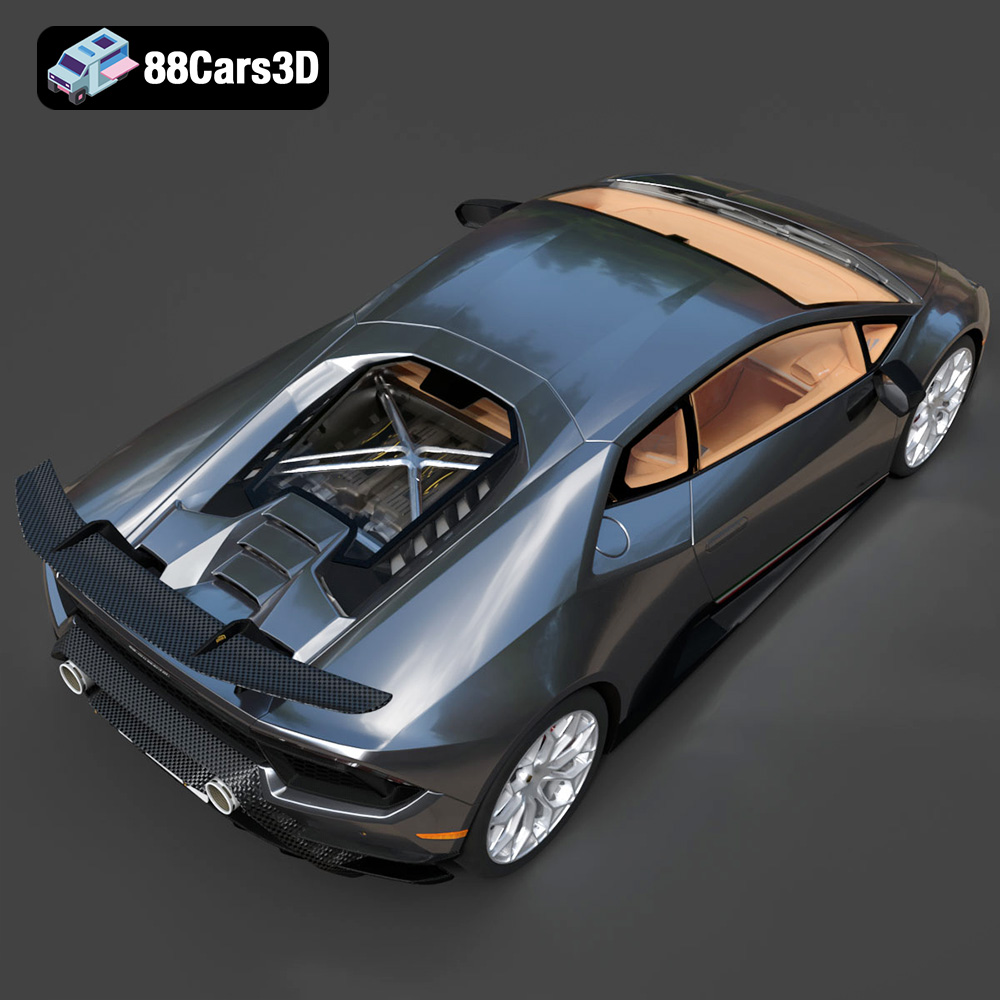
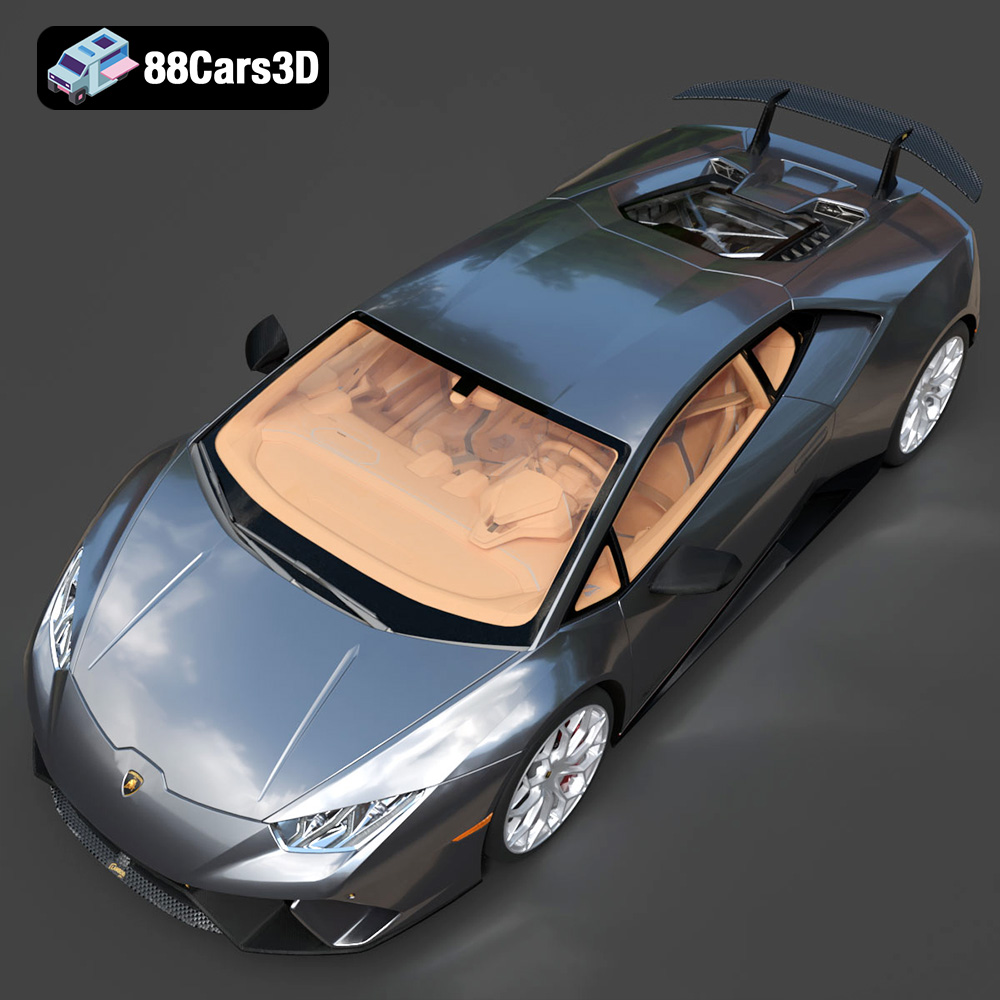
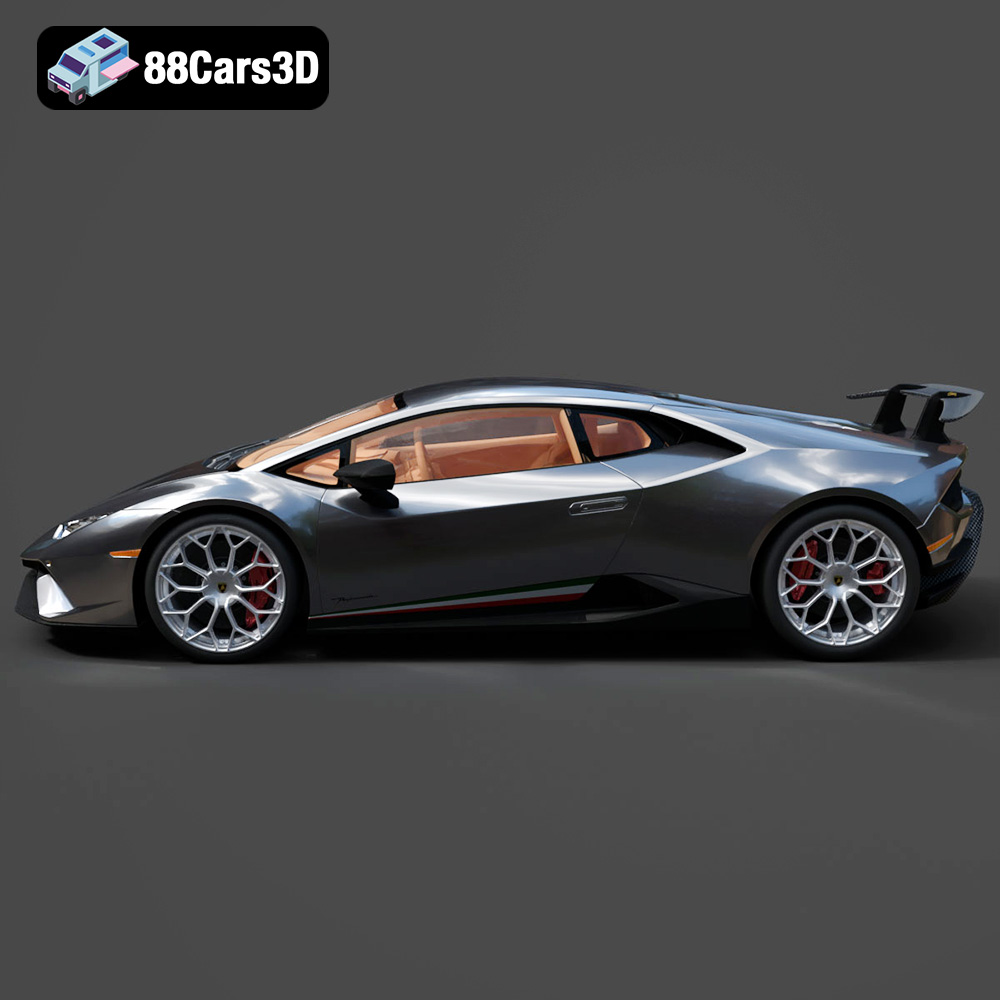
The Lamborghini Huracán Performante LP 640-4 (2017) 3D Model is a meticulously optimized digital recreation of the track-focused Italian supercar. Born to dominate the Nürburgring, the Performante takes the dramatic styling of the standard Huracán and injects it with aggressive, motorsport-derived aerodynamics, most notably the revolutionary ALA (Aerodinamica Lamborghini Attiva) system and widespread use of forged carbon fiber. This 3D model accurately captures the razor-sharp aesthetic of the Performante, featuring the signature high-mounted dual exhausts, the massive forged composite rear wing, a deep front splitter, and the unmistakable wedge-shaped profile. Built with an incredibly efficient and clean mid-polygon topology (just over 314k triangles), it strikes a flawless balance. It provides exceptional visual fidelity for stunning close-up automotive renders while remaining perfectly lightweight for use as a hero vehicle in modern real-time game engines.
$45
.automotive
.blend
.fbx
.huracan
.lamborghini
.rendering
.sports car
.stl
.supercar
.v10
3D Print Model
3D Printable
and modern Volvo factory colors (like Sage Green
Automotive Collectible
Car Prototype
car-3d-model
Digital Manufacture
FDM Ready
game-ready
Glacier Silver
lp640-4
Manifold Geometry.
mid-poly
Miniature Car
or Crystal White) paired with a gloss black roof.3D Printing
performante
Physical Asset
primer
Resin Print
Scale Model
SLA
Tabletop Display
track-car
VR/AR
wheel arches