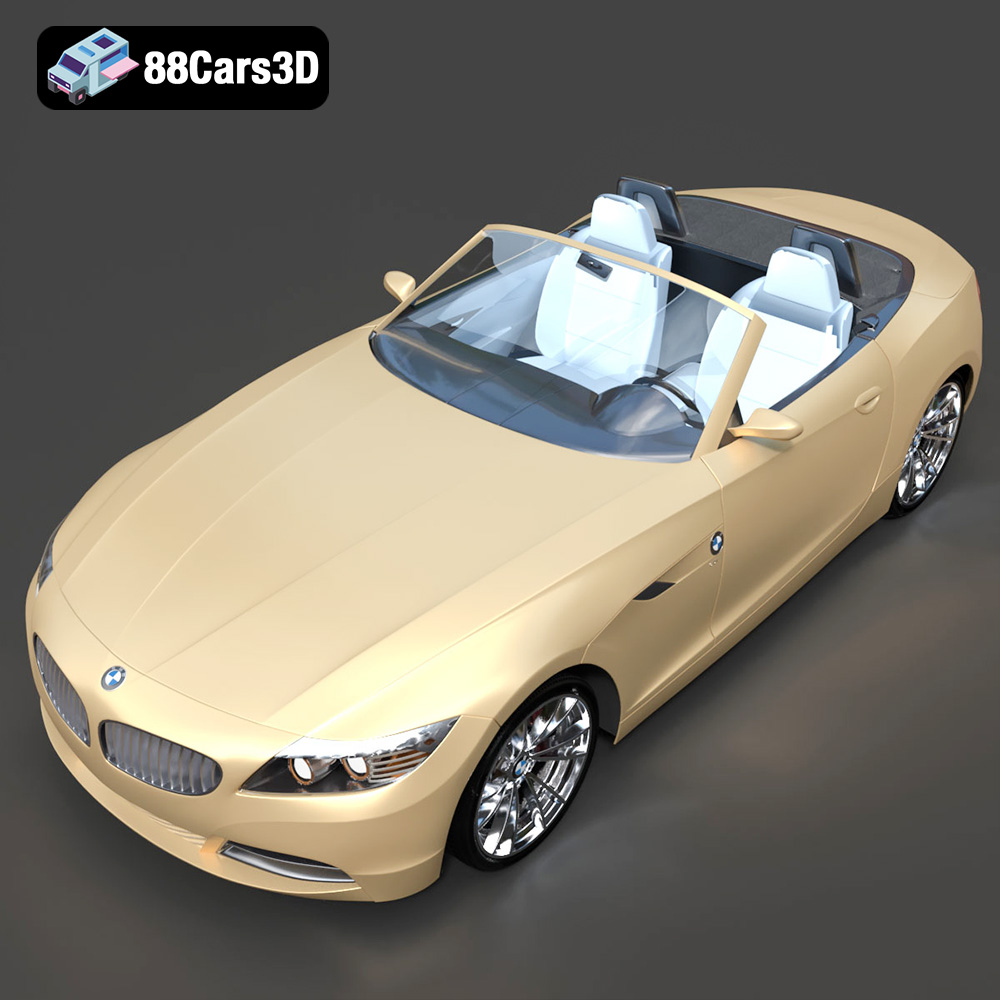
Retopology for 3D Scanned Vehicles: Clean Geometry for Games and VFX
The allure of capturing real-world objects in stunning 3D detail is undeniable. From LiDAR scans to intricate photogrammetry, 3D scanned vehicles offer an incredible starting point for digital assets. Imagine bringing a classic muscle car, a cutting-edge concept vehicle, or even a battle-worn tank directly into your game engine or VFX scene. However, the raw output from these scanning processes is rarely production-ready. It’s often a chaotic dense mesh of triangles, riddled with noise, non-manifold geometry, and an astronomical polycount that would choke even the most powerful real-time rendering engine.
This is where retopology steps in – the crucial, often underestimated, art and science of rebuilding a clean, optimized mesh on top of high-resolution source data. For 3D scanned vehicles, retopology isn’t just a recommendation; it’s a non-negotiable step to achieve performance, visual fidelity, and workflow efficiency in both game development and VFX pipelines. This comprehensive guide will dissect the necessity, process, and best practices of retopologizing scanned vehicle data, transforming messy point clouds into polished, game-ready or film-quality assets.
Why Retopology is Non-Negotiable for Scanned Vehicles
While 3D scanning delivers incredible detail, the resulting high poly mesh is inherently unsuited for direct use in most real-time or production environments. Here’s why retopology is indispensable:
- Polycount Reduction: Raw scans can contain millions, even tens of millions, of polygons. A primary goal of retopology is polycount reduction, creating a low poly mesh that runs smoothly in game engines without sacrificing visual integrity. This directly impacts frame rates and overall game performance.
- Efficient Rendering: Clean, quad-dominant topology allows for more efficient rendering by reducing draw calls and simplifying calculations. This is critical for real-time rendering.
- Levels of Detail (LODs): A well-retopologized model forms the perfect base for generating LODs (Levels of Detail), allowing game engines to swap to progressively lower-resolution models as the vehicle moves further from the camera, further optimizing performance.
Streamlined UV Mapping and Texturing Workflows
- Clean UV Unwrapping: Trying to UV unwrap a triangulated, inconsistent scan mesh is a nightmare. Retopology provides a predictable and manageable mesh structure, making UV unwrapping intuitive and minimizing distortion for optimal texture display.
- Accurate Map Baking: Retopologized meshes are ideal for baking high-resolution details (like normal maps, ambient occlusion, curvature maps) from the original scan data onto the new low-poly mesh. This process captures the intricate surface information without the polygon overhead.
- Simplified Painting: Clean UVs and topology make texture painting in software like Substance Painter far more efficient and precise.
Animation and Rigging Friendliness
- Predictable Deformation: If your vehicle needs to animate (e.g., suspension, opening doors, turning wheels), a clean edge flow is paramount. Poor topology can lead to pinching, tearing, and unpredictable deformations.
- Rigging Efficiency: Rigs are much easier to set up and control on a well-structured mesh, allowing for smooth articulation of components like doors, hoods, and steering mechanisms.
Pipeline Compatibility and Future-Proofing
- Industry Standards: Clean, quad-based geometry is an industry standard across 3D software. Retopologized assets integrate seamlessly into any 3D asset pipeline.
- Subdivision Surfaces: For VFX and cinematic rendering, the retopologized mesh can be easily subdivided (e.g., using Catmull-Clark) to achieve super high-resolution, smooth surfaces while maintaining a manageable base mesh for editing.
Understanding Vehicle-Specific Retopology Challenges
Vehicles present unique challenges that differentiate their retopology from organic models or simpler props.
Hard Surface Precision
Vehicles are characterized by crisp lines, precise panel gaps, and complex intersections of geometric forms. Maintaining these features is crucial during hard surface modeling and retopology. You must ensure edge loops accurately define sharp edges, bevels, and curves without introducing wobbles or distortions. The goal is to preserve the intricate details captured by the scan, translating them into clean, editable geometry.
Component-Based Structure
A vehicle is not a single monolithic object. It’s an assembly of distinct parts: chassis, doors, wheels, mirrors, lights, windows, interior, etc. Effective retopology involves:
- Separation: Treating each significant component as a separate piece of geometry where appropriate. This aids in rigging, animation, texturing, and LOD generation.
- Pivot Points: Considering future animation needs by ensuring that components like doors or wheels have appropriate topology around their hinge/rotation points to facilitate correct pivot placement.
- Hierarchical Organization: Building the retopologized model with a clear hierarchy in mind, making it easier to manage and manipulate.
Interior vs. Exterior Details
The level of detail required for interior versus exterior components often differs significantly.
- Prioritization: Focus retopology efforts on the most visible parts (e.g., the exterior body, wheels, visible cockpit elements).
- Optimization: For unseen or less critical interior components, a lower polygon count or even simplified geometry might be acceptable, optimizing resources without impacting visual quality where it matters most.
Managing Symmetries and Unique Elements
Most vehicles exhibit strong symmetry. Leveraging this in retopology can significantly speed up the process. However, be prepared for asymmetrical elements such as fuel caps, specific badging, or even intentional damage captured in the scan. You’ll often retopologize one half and mirror it, then carefully integrate unique details.
The Retopology Process: A Step-by-Step Guide for Vehicles
Transforming raw photogrammetry data or LiDAR scan data into a production-ready vehicle model involves a methodical approach.
Preparation: Cleaning the Scan Data
Before you even start retopologizing, the raw scan data needs significant mesh cleanup.
- Initial Decimation: Use tools like ZBrush’s Decimation Master or Maya’s Mesh > Reduce to perform an initial, aggressive polycount reduction. This makes the high-poly source easier to handle without losing primary forms.
- Hole Filling and Repair: Scan data often has holes, floating geometry, or non-manifold edges. Use sculpting software (ZBrush, Blender Sculpt Mode) or dedicated mesh repair tools (Meshmixer, ZRemesher’s “Close Holes”) to fix these issues. Ensure the source mesh is watertight if possible.
- Alignment and Scaling: Ensure the scan data is correctly oriented (e.g., aligned to world axes) and scaled to real-world dimensions.
Establishing Target Polycount and Edge Flow Strategy
This is a critical planning phase:
- Game vs. VFX: For games, define a strict target polycount range (e.g., 50k-150k triangles for a hero vehicle, less for background assets). For VFX, you might allow for higher polycounts as long as the mesh is optimized for subdivision.
- Reference and Analysis: Study wireframes of professional vehicle models. Identify where edge loops are crucial for form definition and deformation. Pay attention to how complex curves and sharp edges are handled.
- Silhouette Priority: Focus on maintaining the vehicle’s key silhouette with the fewest possible polygons. Add density only where necessary for details or deformation.
Several software packages offer robust retopology toolsets:
- ZBrush ZRemesher: While primarily an automatic retopology tool, ZRemesher excels with “ZRemesher Guides” and “PolyGroup It” to direct edge flow for hard-surface models. It’s often used for a quick initial pass that can then be refined manually.
- Maya Quad Draw: A staple for manual retopology, Quad Draw allows artists to draw quads directly onto the surface of the high-poly mesh, snapping to it in real-time. Paired with symmetry and edge-loop tools, it provides precise control.
- Blender Retopoflow/Shrinkwrap: Blender offers excellent manual retopology tools, particularly with the Retopoflow add-on. The native Shrinkwrap modifier is essential for projecting new geometry onto the high-poly target.
- 3D-Coat: Renowned for its intuitive retopology tools, 3D-Coat provides a very fluid workflow for drawing new polygons and defining edge loops.
- Topology Brushes: Many sculpting programs (ZBrush, Blender) also offer brushes that allow you to sculpt and manipulate existing topology, effectively performing a form of direct retopology.
Workflow Overview:
- Block Out Major Forms: Start by laying down large quads to define the primary shapes of the vehicle (hood, roof, doors, side panels). Don’t worry about minor details yet.
- Define Hard Edges: Introduce edge loops along sharp creases, panel lines, and where distinct parts meet. Use fewer polygons for flat surfaces and more for curved areas to maintain smoothness.
- Connect Components: Carefully bridge and connect the topology between separate vehicle components, ensuring a clean mesh flow across the entire asset.
- Iterate and Refine: Constantly check the mesh’s appearance, especially in shaded mode. Look for pinching or inconsistent density. Adjust vertices and edges to achieve a clean, even quad distribution. Pay attention to “poles” (vertices with more or less than 4 connecting edges) and try to place them in less visible or non-deforming areas.
Baking High-Resolution Details
Once the retopologized mesh (low-poly) is complete, the final step is to transfer the fine surface details from the original 3D scanned vehicle (high-poly) to the new mesh.
- Normal Maps: These are crucial for faking high-resolution surface details like bumps, scratches, and panel lines on a low-poly model.
- Ambient Occlusion (AO): Captures self-shadowing details, adding depth.
- Curvature Maps: Useful for edge wear and dirt accumulation in texturing.
- Software: Tools like Marmoset Toolbag, Substance Painter, XNormal, or even native functionality in Maya or Blender are used for this baking process. Ensure the low-poly and high-poly meshes are aligned perfectly for accurate projection.
Decision Framework: When to Manual vs. Semi-Auto Retopo for Vehicles
Choosing the right retopology approach depends on your project’s specific needs, the complexity of the vehicle, and the required quality.
| Feature |
Manual Retopology (e.g., Maya Quad Draw, Blender Retopoflow, 3D-Coat) |
Semi-Automatic/Assisted (e.g., ZBrush ZRemesher with guides, Instant Meshes) |
| Control |
Full, precise control over edge flow, polygon distribution, and pole placement. |
Good, but sometimes needs significant manual cleanup and refinement; less granular control. |
| Result Quality |
Excellent, production-ready for deformation, animation, and highly optimized LODs. |
Good for static meshes, often requires refinement for optimal deformation or specific edge flow. |
| Time Investment |
High, especially for complex vehicles. Requires skilled artists. |
Moderate, faster initial pass. Can significantly reduce time for simpler objects. |
| Ideal Use Case |
Hero assets, deformable parts (suspension, doors), characters, game-ready assets requiring strict polycount and clean topology. |
Static props, background assets, initial pass for very complex objects to get a base mesh for manual refinement. |
| Learning Curve |
High. Requires understanding of topology principles. |
Moderate. Easier to pick up, but mastering guide placement still requires skill. |
| Vehicle Context |
Critical for main vehicle bodies, interiors, animated components, and any asset that needs to deform or have a precise, optimized low poly mesh for game development or close-up VFX. |
Useful for blocking out large, relatively flat panels, or for an initial reduction pass on simple background vehicles before detailed manual work. |
Best Practices for Immaculate Vehicle Retopology
- Work with Symmetry: Always enable symmetry when applicable. This is a massive time-saver for vehicles.
- Consistent Quad Density: Aim for an even distribution of quad size across the surface. Avoid elongated or heavily stretched quads, especially on curved surfaces.
- Edge Loops for Hard Edges: Use at least two parallel edge loops to define sharp edges and panel lines. This holds the form when subdividing or baking normal maps.
- Avoid Triangles and N-gons: While a few triangles on flat, non-deforming surfaces might be acceptable for games (they’re converted to tris anyway), avoid them and N-gons in critical areas, especially where deformation or subdivision will occur.
- Manage Poles: Vertices with 5 or more connecting edges (poles) can cause pinching. Place them strategically in flat or less visible areas, away from major curves or deformation zones.
- Test Deformation and UVs Early: Periodically test how your mesh deforms (if animated) and if it’s unwrapping cleanly. This catches issues before they become deeply embedded.
- Organize Your Mesh: Use clear naming conventions (e.g., “Car_Body_LP,” “Wheel_Front_Left_HP”) and separate distinct components into individual objects.
- Plan for LODs: Consider what level of detail will be needed at different distances and plan your base mesh accordingly, making it easier to generate subsequent LODs.
Conclusion: Driving Performance and Realism with Smart Retopology
The journey from a raw, high-density 3D scanned vehicle to a perfectly optimized 3D asset is a testament to the artist’s skill and the power of intelligent workflow. Retopology, while often seen as a painstaking process, is the keystone that bridges the gap between the chaotic beauty of real-world scans and the demands of game development and high-end VFX.
By embracing thoughtful polycount reduction, precise edge flow, and meticulous UV unwrapping, you transform an unwieldy high poly mesh into a clean, animatable, and performant model. This not only ensures your optimized models look stunning but also run efficiently, providing a seamless experience for players and viewers alike. Master retopology, and you master the art of bringing realistic vehicles to life in the digital realm.
Ready to Transform Your Scans?
Are your photogrammetry data or LiDAR scan data bogged down by excessive polygons? Dive into the world of retopology and unleash the full potential of your 3D scanned vehicles. Explore industry-leading tools like ZBrush, Maya, and Blender, and start creating truly production-ready assets today!