The Art of Automotive Digitalization: Why High-Quality 3D Car Models Drive Innovation
In the fast-paced realms of automotive design, game development, cinematic rendering, and virtual reality, the demand for exceptionally detailed and technically sound 3D car models is higher than ever. These digital assets are the fundamental building blocks that allow artists, engineers, and developers to bring their visions to life, whether it’s for a high-octane racing game, a photorealistic architectural visualization, or a cutting-edge virtual showroom. The pursuit of realism and efficiency mandates models that are not only visually stunning but also optimized for performance and versatility across various platforms.
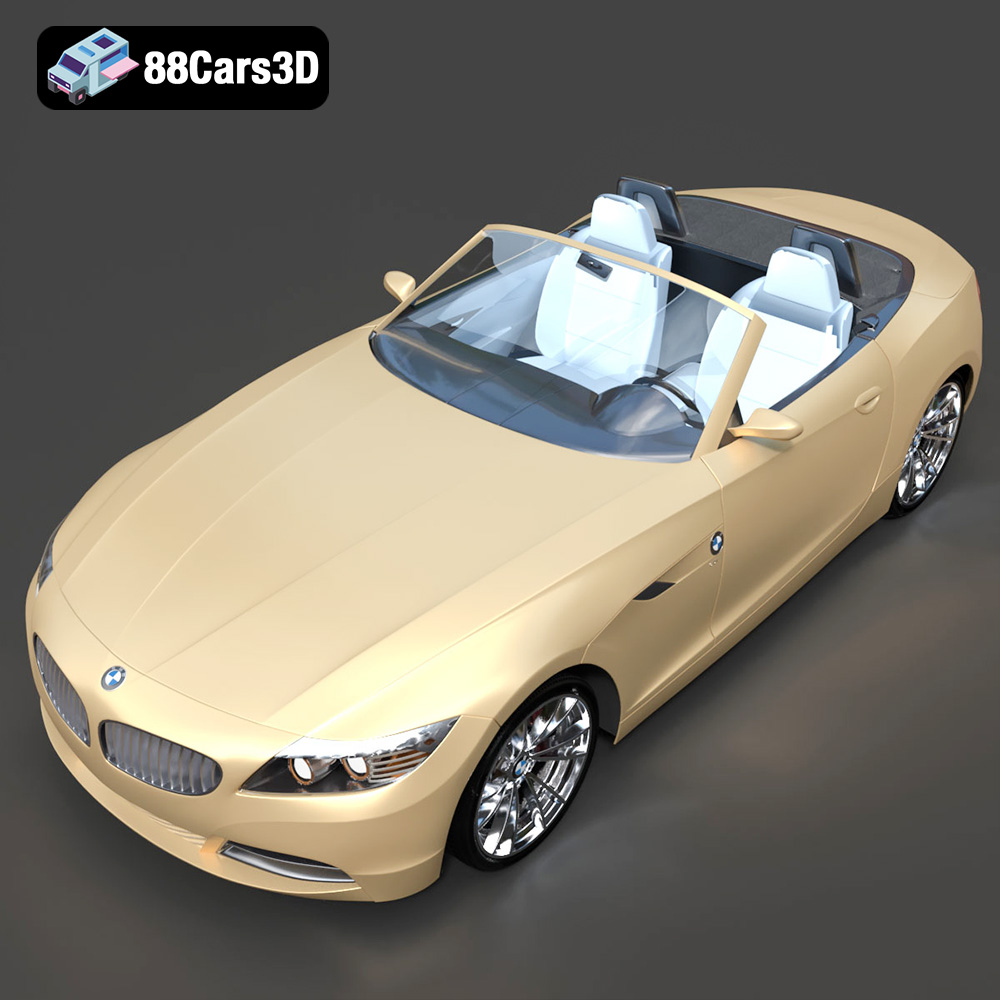
Among the vast array of available 3D car models, a premium asset like the BMW Z4 3D Model stands out. This meticulously crafted digital recreation of BMW’s iconic two-seat roadster embodies precision engineering and modern design, offering a perfect blend of aesthetic appeal and technical robustness. From its sculpted body lines to its signature kidney grille and sleek convertible profile, every detail is captured with unwavering accuracy. For professionals seeking to elevate their projects, acquiring such a high-fidelity model from a reputable source like 88cars3d.com provides an immediate advantage, streamlining workflows and ensuring exceptional results.
Understanding 3D Model File Formats
The journey of a 3D model from creation to its final application often involves traversing a landscape of diverse file formats, each with its own strengths and intended use cases. Selecting the correct format is crucial for maintaining model integrity, optimizing performance, and ensuring compatibility across different software and engines. The BMW Z4 3D Model, available on 88cars3d.com, is a prime example of an asset offered with a comprehensive suite of formats, empowering users with unparalleled flexibility.
The Backbone of Digital Assets: A Closer Look at File Types
Understanding these formats is not just about knowing their extensions; it’s about grasping their technical underpinnings, data structures, and the specific workflows they facilitate. A well-prepared 3D model package includes formats tailored for various professional pipelines, from detailed rendering to real-time interaction and even physical manufacturing.
Demystifying Each Format’s Purpose and Technical Nuances
- .blend – Fully Editable Blender Scene with Materials
The `.blend` format is Blender’s native file type, retaining all aspects of a Blender project. This includes not just the mesh data, but also materials, textures, lighting setups, cameras, animations, physics simulations, modifiers, and even custom scripts. For artists deeply integrated into the Blender ecosystem, receiving the BMW Z4 3D Model as a `.blend` file is invaluable. It allows for complete artistic freedom and easy modification of every component, from adjusting shaders to re-rigging parts for custom animations. Technical users can dive into the node-based material editor to fine-tune reflections or modify the existing UV layouts, ensuring maximum customization potential.
- .fbx – Ideal for Unreal, Unity, and Real-time Pipelines
FBX (Filmbox) is arguably the most widely adopted proprietary 3D exchange format, developed by Autodesk. It excels at transferring entire scenes, including geometry, materials (with some limitations), textures, animations, skinning information, and even camera data, between different 3D software applications and game engines. Its robustness makes it the go-to format for importing complex assets like the BMW Z4 3D Model into Unreal Engine or Unity. FBX files often carry embedded or linked textures, ensuring a smoother import process into real-time environments where optimization for performance is paramount. Developers appreciate its ability to maintain hierarchies and animation data accurately, crucial for interactive experiences and game assets.
- .obj – Universal Format for Cross-Software Compatibility
The OBJ (Object) format is a simpler, non-proprietary standard primarily focused on geometry data, including vertex positions, UV coordinates, normals, and material definitions (via an accompanying `.mtl` file). While it doesn’t store animation or rigging data, its universal compatibility makes it an excellent choice for basic mesh exchange between virtually any 3D software. For the BMW Z4 3D Model, an `.obj` file ensures that users of niche or legacy software can still access the core geometric data. It’s often used when only the static mesh is needed or when a clean, unadulterated model is required for a new project setup.
- .glb – Optimized for AR, VR, and Browser-based Display
GLB (GL Transmission Format Binary) is the binary version of glTF, specifically designed for efficient transmission and loading of 3D scenes and models on the web and in augmented/virtual reality applications. It packages all model data (geometry, materials, textures, animations) into a single file, making it incredibly streamlined for web browsers and mobile devices. For interactive virtual showrooms or AR experiences featuring the BMW Z4, the `.glb` format offers superior performance and integration, delivering high-quality visuals with minimal load times. Its compact nature and modern design make it a favorite for developers targeting cross-platform immersive experiences.
- .stl – Suitable for 3D Printing Output
STL (STereoLithography) is the de facto standard file format for 3D printing. It represents the surface geometry of a 3D object using a collection of interconnected triangles, creating a faceted approximation of the model. The simplicity of the `.stl` format makes it widely supported by 3D printers and slicing software. When preparing the BMW Z4 3D Model for physical output, converting to `.stl` is essential. It’s crucial that the model’s geometry is “manifold” (watertight, with no holes or self-intersecting faces) for successful printing, a characteristic often found in high-quality models like this one.
- .ply – Precision Mesh Format for CAD or Analysis
PLY (Polygon File Format) is another format used for storing 3D data, particularly from 3D scanners. It can store a wider range of properties than STL, including color, transparency, surface normals, and texture coordinates, often used for point cloud data or high-resolution mesh representations. While less common for general asset exchange than FBX or OBJ, it provides a precise, detailed mesh representation suitable for CAD applications, engineering analysis, or situations where very dense and accurate surface data of the BMW Z4 is required for inspection or reverse engineering.
- .unreal – Engine-Ready Asset for Real-time Environments
While not a standalone general 3D format in the way FBX or OBJ are, an `.unreal` asset typically refers to an asset that has been specifically prepared, optimized, and packaged for direct import or use within the Unreal Engine ecosystem. This might involve `.uasset` files or a specific import pipeline that ensures materials, textures, collision meshes, and LODs (Levels of Detail) are correctly configured for Unreal’s real-time rendering pipeline. For the BMW Z4, having an `.unreal` package signifies that the model is already tailored for optimal performance and visual fidelity within Unreal Engine, saving significant setup time for game developers and real-time visualization specialists.
- .max – Editable 3ds Max Project for Animation and Rendering
The `.max` format is the native file type for Autodesk 3ds Max, one of the leading software packages for 3D modeling, animation, and rendering. Like `.blend` for Blender, a `.max` file contains all scene information: geometry, materials, lighting, cameras, animations, modifiers, and plugins specific to 3ds Max. For professionals relying on 3ds Max for their automotive rendering and visualization projects, the inclusion of the BMW Z4 3D Model as a `.max` file offers the highest level of editability and integration, allowing them to leverage 3ds Max’s powerful rendering capabilities (e.g., V-Ray, Corona Renderer) and animation tools directly.
The provision of such a comprehensive array of file formats for the BMW Z4 3D Model underscores the commitment of 88cars3d.com to professional users, ensuring maximum utility and seamless integration into virtually any production pipeline.
Crafting Realism: The Technical Excellence of the BMW Z4 3D Model
Achieving photorealism and functional versatility in 3D automotive models requires more than just artistic flair; it demands rigorous technical execution. The BMW Z4 3D Model is a testament to this principle, meticulously engineered to meet the stringent demands of professional production environments. Its foundation lies in its superior geometry, intelligent topology, and inherent readiness for dynamic interaction.
Precision Geometry and Topology
The core of any high-quality 3D model is its underlying mesh. The BMW Z4 model exemplifies best practices in mesh construction, ensuring it performs optimally across diverse applications.
- Clean Quad-Based Mesh and Real-World Scale
The model boasts clean, quad-based topology, which is the industry standard for subdivision surfacing and animation. Quads (four-sided polygons) deform more predictably and allow for smoother surfaces when subdivided, which is critical for the organic curves and sharp creases of an automotive body. This clean topology also makes UV unwrapping and texturing a more straightforward process. Furthermore, the model is built to real-world scale accuracy. This seemingly minor detail is profoundly important for rendering and simulation, ensuring correct physical interactions, lighting calculations, and seamless integration into existing scene environments without cumbersome resizing.
- Optimized Polygon Count for Performance
While detail is paramount, an excessively high polygon count can cripple real-time performance and slow down rendering. The BMW Z4 3D Model strikes an excellent balance, offering an optimized polygon count. This means it has sufficient detail for high-quality close-up renders while remaining efficient enough for real-time applications like game engines and AR/VR. This optimization is achieved through intelligent mesh construction, where polygons are allocated strategically to areas requiring more detail (e.g., headlights, grilles, wheels) and kept sparser in less critical areas, often accompanied by well-baked normal maps to simulate finer details without adding geometry.
Modular Design and Animation Readiness
Beyond static representation, a truly professional 3D car model is designed with motion and interactivity in mind, making it a valuable asset for dynamic simulations and animations.
- Separated Components for Dynamic Control
The BMW Z4 3D Model features separated components for crucial parts like doors, hood, trunk, and wheels. This modularity is a technical advantage, allowing animators to easily articulate these elements for opening and closing sequences, car chases, or service bay visualizations. Each component can be individually transformed, textured, or even replaced, offering unparalleled flexibility for customization and dynamic scene creation. This level of separation is a hallmark of assets designed for professional production pipelines where iterative changes and animation are common.
- Proper Pivot Placement for Seamless Animation
A common pitfall in lower-quality models is incorrect pivot point placement. The BMW Z4 model ensures proper pivot placement for all animatable components. For instance, the wheels rotate accurately around their central axis, doors swing open from their hinges, and the steering wheel turns correctly. This attention to detail eliminates frustrating setup times for animators, allowing them to jump straight into creating compelling sequences. Correct pivots are fundamental for believable motion and are a clear indicator of a model’s professional-grade preparation.
This technical foundation makes the BMW Z4 3D Model from 88cars3d.com a robust and versatile asset, ready to be deployed in the most demanding professional projects, from high-end automotive rendering to interactive game environments.
Professional Workflows: Integrating the BMW Z4 into Your Projects
The true value of a high-quality 3D car model is unlocked when it seamlessly integrates into diverse professional workflows. The BMW Z4 3D Model is engineered with this versatility in mind, providing artists and developers with a powerful tool for a multitude of applications, from photorealistic rendering to interactive game environments.
Automotive Rendering and Visualization in 3ds Max and Blender
For architectural visualization studios, advertising agencies, and automotive design firms, photorealistic rendering is paramount. The BMW Z4 3D Model is ideally suited for creating stunning visuals that rival real-world photography.
- Setting Up Studio Scenes and Lighting
In Autodesk 3ds Max or Blender, the accurate real-world scale and clean topology of the BMW Z4 model make it a perfect candidate for studio lighting setups. Artists can quickly import the `.max` or `.blend` file, place the car on a virtual stage, and experiment with various lighting schemes—from softbox configurations for a luxury showroom feel to dramatic rim lighting for a sleek, aggressive look. High Dynamic Range Imagery (HDRI) can be effortlessly employed to simulate realistic environments, be it a sun-drenched coastal highway or an elegant urban street. The model’s optimized mesh ensures smooth rendering, even with complex global illumination calculations.
- Advanced Material Shaders and Texturing
The model’s clean UV mapping allows for easy application of advanced material shaders. Artists can leverage physically based rendering (PBR) workflows to create incredibly realistic paint finishes, such as multi-layer metallic flakes, pearlescent effects, or matte wraps. Detailed textures for tires, brake discs, and interior elements can be assigned, enhancing realism. The included materials in the `.blend` and `.max` files provide a strong starting point, often utilizing sophisticated node-based setups that can be easily tweaked for specific project requirements, ensuring the Z4 always looks its best.
Game Development and Real-time Applications with Unreal Engine
The demand for realistic vehicle assets in game development and real-time simulations is immense. The BMW Z4 3D Model, with its optimized polygon count and engine-ready formats, is a game-changer for these applications.
- Asset Import and Optimization for Game Engines
Using the `.fbx` or the specialized `.unreal` file, developers can swiftly import the BMW Z4 into Unreal Engine (or Unity). The model’s optimized geometry and proper pivot placements simplify the process of setting up collision meshes, Levels of Detail (LODs), and dynamic materials. LODs are crucial for performance in games, allowing the engine to swap lower-polygon versions of the model at a distance, maintaining high frame rates without sacrificing visual fidelity up close. The clean topology also aids in generating accurate lightmaps for static lighting scenarios within game levels.
- Interactive Vehicle Systems and Physics Integration
Once imported, the separated components (doors, wheels, steering) of the Z4 are ideal for integrating interactive vehicle systems. Game developers can easily rig the car for physics-based driving mechanics, enabling realistic suspension, steering, and wheel rotation. Scripting can be applied to open and close doors, activate headlights, or even change paint colors in real-time configurators, perfect for virtual showrooms or driving simulations. The optimized interior mesh is also a significant advantage, ensuring that players get a detailed cockpit view without excessive performance overhead, allowing for immersive first-person driving experiences.
Whether for high-end cinematic renders or interactive real-time experiences, the BMW Z4 3D Model from 88cars3d.com offers the flexibility and technical foundation needed to excel in demanding professional production pipelines.
Beyond the Screen: 3D Printing the BMW Z4
The utility of a high-quality 3D model extends far beyond digital screens. For enthusiasts, collectors, and prototyping professionals, the ability to transform a virtual asset into a tangible object through 3D printing is a significant advantage. The BMW Z4 3D Model is specifically designed with this capability in mind, offering a pathway to creating physical collectible roadster miniatures and display models.
Preparing the Model for Physical Fabrication
Successful 3D printing hinges on proper preparation of the digital model. The inherent qualities of the BMW Z4 3D Model make this process streamlined.
- Ensuring Manifold Geometry for STL Output
The `.stl` format is the industry standard for 3D printing, and its effectiveness relies on the model having “manifold” geometry. This means the mesh must be completely watertight, with no gaps, self-intersecting faces, or non-uniform normals. The clean quad-based topology and meticulous construction of the BMW Z4 3D Model ensure it is inherently manifold or easily convertible to be so, minimizing errors during the slicing process. Tools within Blender or 3ds Max can confirm manifoldness before exporting to `.stl`, ensuring a reliable print. The product description explicitly mentions its suitability for 3D printing, confirming its robust geometry for physical production.
- Recommended Scales and Print Settings
The provided 3D print settings offer crucial guidance for optimal results. Recommended scales of 1:24, 1:18, 1:12, or 1:10 allow for flexibility depending on the desired size and level of detail. For FDM printers, a layer height of 0.10–0.18 mm and wall thickness of 2–3 mm are suggested for structural integrity and surface quality. Infill of 15–30% balances strength and material consumption. Crucially, specific support requirements are outlined for delicate areas like mirrors and open roof edges, along with an innovative print orientation (body printed upside-down) to ensure a smooth finish on the most visible surfaces like the roof and hood. Separating wheels for printing allows for greater detail and easier post-processing, making the physical model truly shine.
Post-Processing for a Flawless Finish
The journey from a raw 3D print to a showroom-ready miniature involves skilled post-processing, transforming the layered plastic into a polished replica.
- Sanding, Priming, and Painting Techniques
After printing, the model will typically require sanding to remove layer lines and achieve a smooth surface. Various grades of sandpaper, often wet-sanded, are used, followed by a primer coat. The primer serves multiple purposes: it highlights imperfections, provides a uniform base for paint, and helps the paint adhere better. For a realistic finish on the BMW Z4, metallic paints are often chosen to mimic the car’s original luster, applied in thin, even coats to preserve detail. Airbrushing offers the best control and smoothest application for intricate car bodies.
- Creating Collectible Roadsters and Prototypes
With careful painting and detailing, the 3D printed BMW Z4 can be transformed into a stunning collectible roadster miniature. Beyond hobbyists, this capability is invaluable for automotive designers and engineers who can use these physical models for rapid prototyping, concept validation, and client presentations. Holding a tangible representation of the Z4, even at a reduced scale, provides a unique perspective that digital models cannot fully replicate, allowing for evaluation of ergonomics, proportions, and aesthetic appeal in the physical realm. The final touch of a clear coat not only protects the paint but also adds a professional, glossy finish, truly bringing the miniature Z4 to life.
The inclusion of 3D printable files and detailed printing guidelines for the BMW Z4 3D Model exemplifies the comprehensive utility provided by 88cars3d.com, catering to both digital and physical creative endeavors.
Customization and Creative Freedom
A truly valuable 3D asset provides not just a static representation, but a foundation for boundless creativity. The BMW Z4 3D Model empowers artists and designers with extensive customization options, allowing them to tailor the iconic roadster to suit any narrative, aesthetic, or functional requirement.
Tailoring the BMW Z4 to Your Vision
The modularity and clean construction of the BMW Z4 model ensure that making modifications is a seamless process, whether for aesthetic or practical purposes.
- Color, Finish, and Styling Modifications
One of the most immediate and impactful customizations is altering the car’s appearance. With the BMW Z4 3D Model, changing the body color and finish is straightforward. Artists can experiment with a wide spectrum of hues, from classic BMW blues to aggressive reds or subtle greys. Beyond color, the finish can be dramatically altered—from a high-gloss metallic sheen that catches every highlight, to a sophisticated matte finish, or a sporty satin look. Furthermore, elements like wheel styles can be swapped out, and brake caliper colors modified to match brand aesthetics or personal preferences. Adding performance package styling, such as unique aero elements or racing stripes, can transform the car’s character, making it suitable for a diverse range of scenes from luxury advertisements to high-speed race simulations.
- Dynamic Environment Adjustments
Beyond the car itself, the model’s adaptability extends to its environment. The accurate real-world scale and robust geometry make it easy to integrate the Z4 into various lighting setups. Artists can adjust lighting environments for different moods and times of day. Imagine the Z4 cruising along a sun-drenched coastal road, glistening under a dramatic sunset, or parked elegantly in a brightly lit studio. These environmental changes, combined with custom car finishes, allow for an endless array of visual narratives and promotional content.
Unlocking Potential Across Diverse Applications
The customization capabilities of the BMW Z4 3D Model directly translate into its versatility across numerous professional applications.
- AR/VR Showcases and Simulations
For virtual showrooms and interactive car configurators, the ability to customize the Z4 in real-time is crucial. Customers could select different paint options, interior trims, or wheel designs directly within an AR app on their phone or a VR experience. The optimized mesh and clean UVs ensure that these changes render smoothly and quickly, providing a seamless and engaging user experience. The model’s preparation for real-time engines like Unreal and Unity makes it an ideal candidate for such immersive applications, allowing for immediate visual feedback on design choices.
- Promotional Visuals and Training Modules
Marketing teams can leverage the customized BMW Z4 for impactful promotional visuals, creating bespoke renders for campaigns, social media, or product launches. The separated components and correct pivot points also lend themselves well to training modules. Technicians could virtually disassemble and reassemble parts of the car, understanding its mechanics without needing a physical vehicle. This versatility ensures that the BMW Z4 3D Model remains a relevant and powerful tool across the entire lifecycle of a project, from initial concept visualization to final marketing and beyond.
The rich customization options inherent in the BMW Z4 3D Model empower creative professionals to push boundaries and deliver unique, compelling content, reinforcing its position as a premium asset available at 88cars3d.com.
Conclusion
The world of 3D modeling for automotive design, game development, and visualization demands assets that are not merely aesthetically pleasing but are built with technical precision and professional flexibility in mind. The BMW Z4 3D Model exemplifies these qualities, offering an unparalleled level of detail, clean topology, and multi-format compatibility that caters to a wide spectrum of creative and technical workflows.
From its optimized polygon count ideal for fast-paced game engines to its manifold geometry perfect for 3D printing collectible miniatures, this model is a testament to meticulous craftsmanship. Its support for industry-standard software like 3ds Max and Blender, alongside its readiness for real-time environments such as Unreal Engine, ensures that professionals can integrate it seamlessly into their projects, saving invaluable time and resources. Whether you are crafting photorealistic automotive renders, building immersive AR/VR experiences, or fabricating physical scale models, the BMW Z4 3D Model provides the robust foundation you need.
Investing in such a high-quality 3D car model from 88cars3d.com is not just acquiring a digital asset; it’s investing in efficiency, versatility, and the potential to elevate your projects to the highest professional standards. Explore the capabilities of this exceptional BMW Z4 3D Model and unlock new dimensions of creativity and technical excellence in your next endeavor.
Featured 3D Model
BMW Z4 3D Model 3D Printable STL
The BMW Z4 3D Model is a premium digital recreation of the iconic two-seat roadster developed by BMW. Known for its sporty proportions, long hood, short rear deck, and dynamic performance styling, the Z4 embodies precision engineering and modern roadster design. This 3D model accurately captures the Z4’s low stance, sculpted body lines, signature kidney grille, aerodynamic side vents, and sleek convertible profile. Designed with clean geometry and real-world scaling, it is ideal for rendering, animation, game development, AR/VR applications, and automotive simulations. Perfect for coastal driving scenes, luxury showrooms, racing environments, promotional visuals, and interactive vehicle experiences. Includes .blend, .fbx, .obj, .glb, .stl, .ply, .unreal, and .max formats for rendering, simulation, AR/VR, game development, and 3D printing.
$29.90
View This Model
Related Tags
.arvr
.blend
.bmw
.car3dmodel
.convertible
.fbx
.gameasset
.glb
.max
.obj
.ply
.rendering
.roadster
.simulation
.sportsCar
.stl
.unreal
.vehicleasset
.z4
automotive3d