Get 50% OFF All Premium 3D & STL Models!

“`html
The world of 3D printing, especially for intricate models like those found at 88cars3d.com, hinges on the quality of your STL files. These files are the digital blueprints that translate your design into physical objects. However, not all STL files are created equal, and often, a downloaded model might need adjustments – perhaps to fit your specific printer, improve printability, or even to make modifications for a unique project. Whether you’re a seasoned maker or just starting, understanding the right software tools is crucial for success. This guide will dive deep into the best free and paid software available for editing, repairing, and optimizing STL files, empowering you to transform any 3D model into a perfect print.
We’ll explore workflows for common tasks like fixing non-manifold geometry, adding or removing details, scaling models, and preparing them for seamless slicing. From powerful, professional suites to accessible, user-friendly options, you’ll discover the tools that best suit your needs and budget, ensuring your 3D printing projects, especially those stunning printable car models, come to life flawlessly.
Before diving into software, it’s essential to grasp what an STL file actually is and why it often requires editing. STL, which stands for Stereolithography or Standard Tessellation Language, represents a 3D surface geometry using a collection of triangular facets. Each triangle is defined by the coordinates of its three vertices and a normal vector, indicating which side of the triangle is “outside” the object. This seemingly simple format has become the de facto standard for 3D printing, but its reliance on tessellation can lead to several common issues that necessitate software intervention.
The core concept here is mesh topology. A “watertight” or manifold mesh is one that encloses a volume without holes, self-intersections, or disconnected components. Think of it like a balloon; air can’t escape, and there are no internal walls or overlapping surfaces. However, during design, export, or even due to limitations in some modeling software, STL files can become “non-manifold.” This can manifest as:
These topological errors are the primary reason why many downloaded STL files, even those from reputable sources, need repair. Additionally, you might need to edit an STL file for reasons beyond just fixing errors. This could include scaling models to fit your print bed, combining multiple STL files into one, shelling (hollowing) a solid model to save material, or even sculpting minor additions or subtractions to customize a design. Understanding these potential issues and requirements will guide your choice of software.
A manifold mesh is non-negotiable for successful 3D printing. Your slicer software (like Cura or PrusaSlicer) interprets the STL file to determine how to lay down plastic layer by layer. If the mesh isn’t manifold, the slicer can’t accurately define the internal volume and external surface. This often results in:
Therefore, any software you choose must have robust tools for identifying and repairing these topological defects. For enthusiasts downloading printable car models from platforms like 88cars3d.com, ensuring the files are watertight before sending them to the slicer is a critical first step.
While STL is ubiquitous, it’s important to note that other file formats exist and can sometimes be relevant. OBJ (Wavefront .obj) files are similar to STL in that they represent 3D geometry with polygons (often triangles or quads), but they can also store color, texture, and material information. FBX (Filmbox) is a proprietary Autodesk format that supports complex scene data, including animations, lighting, and more. Sometimes, you might encounter models in these formats. Most 3D modeling software can import OBJ and FBX and export them as STL, or directly edit them. If you’re working with a model that has color or texture information you wish to preserve (for painting or rendering), you might work with OBJ initially before converting to STL for printing. However, for pure 3D printing, the STL format remains the primary target.
Fortunately, powerful tools for working with STL files are available at no cost, making them accessible to everyone. These free solutions range from dedicated mesh repair utilities to full-fledged 3D modeling packages. Choosing the right free tool often depends on the complexity of the repair needed and your familiarity with 3D modeling concepts.
For basic repairs and common issues, dedicated repair tools are often the quickest and easiest to use. They employ automated algorithms to detect and fix problems like holes, flipped normals, and non-manifold edges. These are excellent starting points, especially if you’re new to mesh editing. Once the file is repaired and watertight, you can often proceed directly to slicing. However, if you need to make modifications beyond simple repairs – such as adding custom features, simplifying complex meshes, or scaling precisely – you might need to move to a more comprehensive 3D modeling application.
Autodesk Meshmixer is a long-standing favorite in the 3D printing community for good reason. It’s incredibly powerful for a free tool, offering a robust suite of features specifically geared towards preparing 3D models for printing. Its intuitive interface makes it accessible even for beginners, while its advanced capabilities cater to experienced users.
Key features for STL editing:
Workflow Example: Repairing a downloaded car model
Blender is a professional-grade, open-source 3D creation suite that boasts an incredibly powerful modeling toolkit. While it has a steeper learning curve than Meshmixer, its capabilities are virtually limitless. For users who want fine-grained control over mesh topology, complex boolean operations, or even full-blown 3D modeling, Blender is an exceptional choice.
Key features for STL editing:
Workflow Example: Combining two car parts
If you’re using Windows 10 or 11, Microsoft 3D Builder is a pre-installed gem that’s surprisingly capable for basic STL editing and repair. It offers a user-friendly interface that makes common tasks straightforward.
Key features:
Workflow Example: Basic cleanup and scaling
While free options are excellent, professional-grade software often provides more advanced features, better performance for very large or complex meshes, and dedicated workflows for specific industries. These tools are typically used in engineering, product design, and high-end manufacturing, but they can be invaluable for serious hobbyists and professionals working with intricate models like those from 88cars3d.com.
Paid software often excels in areas like complex geometric modeling, advanced mesh analysis, automated repair for extremely corrupted files, and integration with larger CAD/CAM workflows. If you find yourself frequently needing to perform sophisticated edits, work with massive assemblies, or require the highest level of precision and reliability, investing in one of these tools might be worthwhile. Many offer free trials, allowing you to test their capabilities before committing.
Autodesk Netfabb is a comprehensive software solution designed specifically for additive manufacturing. It goes far beyond basic repair and offers advanced tools for build preparation, simulation, and optimization. If you’re serious about preparing complex models for professional printing or ensuring the absolute best results from downloaded STL files, Netfabb is a top contender.
Key features for STL editing:
Workflow Example: Preparing a complex car chassis for printing
Materialise Magics is another industry-leading software package specifically developed for 3D printing data preparation. Like Netfabb, it offers a comprehensive suite of tools for repairing, editing, and optimizing STL files for various printing technologies.
Key features:
Workflow Example: Optimizing a detailed body kit for FDM printing
Regardless of the software you choose, adopting a systematic approach to editing and repairing STL files will save you time and prevent frustration. Understanding common pitfalls and employing best practices can turn a problematic file into a perfect print.
For hobbyists and makers downloading models, especially intricate ones like detailed printable car models, consistency is key. Develop a routine for inspecting and repairing files before they hit the slicer. This often involves a quick automatic repair followed by a visual inspection and targeted manual fixes. Don’t underestimate the value of previewing your sliced model layer by layer; this is often where unseen geometry issues become apparent in the slicing software itself.
Proper support generation is crucial for overhangs and bridges in complex models. Many slicers (like Cura and PrusaSlicer) have excellent automatic support tools, but sometimes manual intervention or pre-generated supports within the STL file are necessary. Software like Meshmixer, Netfabb, and Magics allow you to add supports directly to the STL before slicing.
Once your STL file is repaired and edited, the next step is to ensure your slicer settings are appropriate. This is especially true if you’ve made significant modifications, such as splitting a model or significantly changing its scale.
The work doesn’t end when the print is finished. Post-processing is key to achieving a professional look, especially for detailed models like cars.
Navigating the world of STL file editing can seem daunting, but with the right software and a systematic approach, it becomes an accessible and rewarding part of the 3D printing process. For beginners and those needing quick fixes, Microsoft 3D Builder offers simplicity, while Autodesk Meshmixer provides a powerful, free, and versatile platform for most common repair and modification tasks. If you require more advanced control, are comfortable with complex interfaces, or need to perform intricate modeling operations, Blender is an unparalleled free open-source solution.
For professionals, engineers, or serious hobbyists who demand the highest level of precision, automated repair capabilities, and advanced build preparation features, paid solutions like Autodesk Netfabb and Materialise Magics are industry standards. When downloading high-quality printable car models from marketplaces such as 88cars3d.com, understanding which tool is best suited for potential edits – whether it’s a simple scale adjustment or a complex modification – will significantly enhance your printing success. Remember that the goal is always to create a watertight, printable mesh, and the software you choose is your key to achieving that perfect digital-to-physical transformation.
“`

Texture: Yes | Material: Yes | 3D Printable: Yes. Download the Italian Thoroughbreds Bundle featuring 5 iconic 3D models: Lamborghini Huracán Performante, Ferrari 458 Italia, Lamborghini Urus, Diablo SV, and Maserati GT. Optimized for 4K rendering and 3D printing (STL included). Save 50% with this ultimate Italian vehicle collection.
Price: $199.99

Download the Elite Future Mobility Bundle featuring 4 highly optimized 3D models: Tesla Model S, Avatr 11, Li L9, and Zoox Robotaxi. Perfect for ArchViz, Smart City renders, and game dev. Optimized for Unreal Engine and Blender. Includes .fbx, .obj, and .max formats.
Price: $99

🚗 5 Iconic German Cars (BMW M4 G82, M5 CS, X3, 1 Series & Mercedes E-Class). ✅ Optimized for ArchViz: Ready for Corona & V-Ray. 💰 Save €71 with this limited-time collection! 🚀 Instant Download after purchase.
Price: $119

Download the Extreme Off-Road & Survival 3D Models Bundle! Includes the Brabus 800 Adventure, Dodge Ram Bigfoot, Spec Truck, and a Caravan. Save over €210 on this premium 4-in-1 off-grid vehicle pack for ArchViz and game development.
Price: $149.99

Download the Heavy Duty & Commercial Logistics 3D Models Bundle! Includes the Ford Sterling, Caterpillar CT680, Mercedes Citaro Bus, and Vito Van. Save over €130 on this massive, game-ready 4-in-1 industrial vehicle pack.
Price: $109.99

Download the Ultimate Custom Motorcycles 3D Models Bundle. Includes a Custom Chopper, Ducati 916 Café Fighter, Harley XR1200X, and BMW K100. Perfect premium props for luxury ArchViz garages. Save over €250 today!
Price: $159.99

Download the ultimate JDM Street Racing 3D Models Bundle! Includes the Nissan GT-R, Toyota Supra, Mazda RX-7, Lancer Evo IX, and Honda NSX. Save big on this highly optimized, game-ready 5-in-1 Japanese legend car pack.
Price: $129.99

Download the ultimate American Muscle & Cinematic Classics 3D Models Bundle! Includes the Dodge Charger ’68, Mustang Eleanor GT500, Camaro Z28 ’79, and a custom ’69 Mustang. Save over €240 on this game-ready, premium 4-in-1 pack.
Price: $149.99
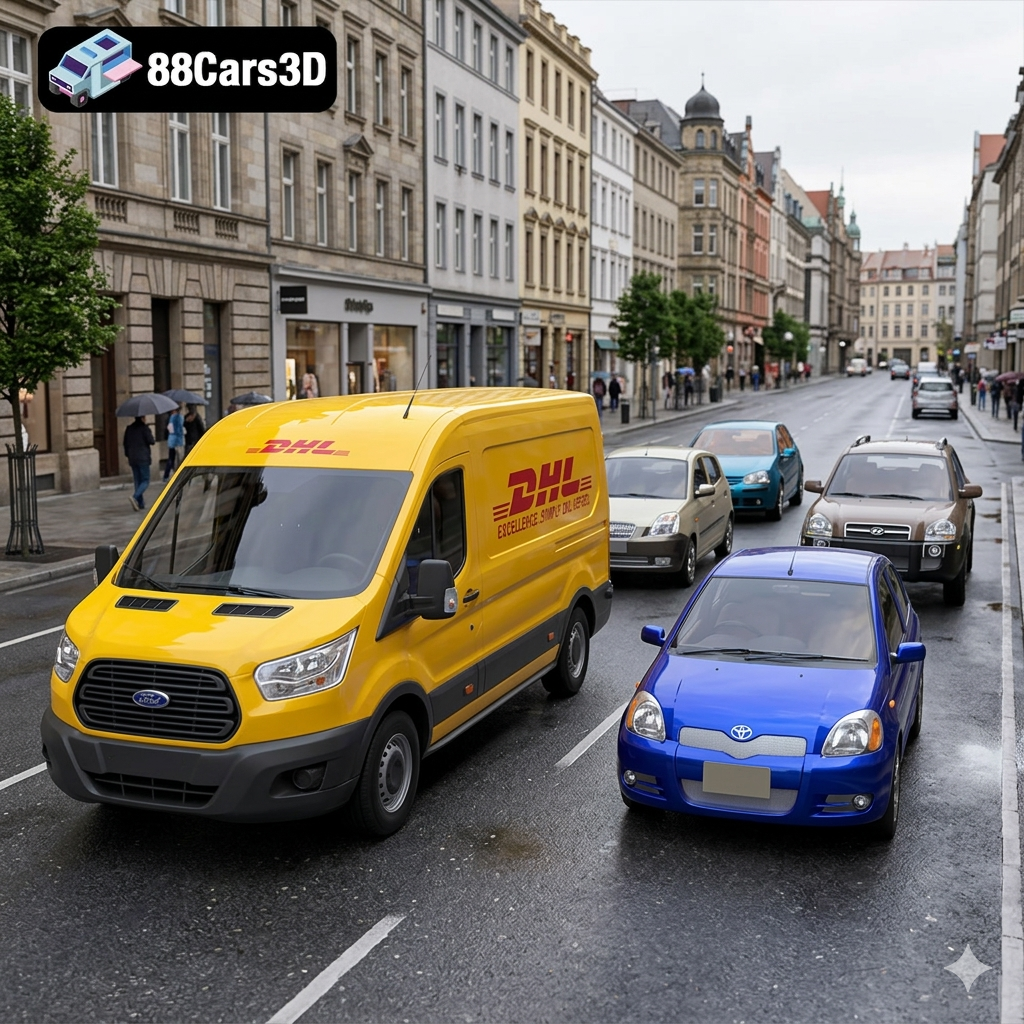
Download the Everyday City Traffic 3D Models Bundle. Includes the VW Golf, Kia Picanto, Hyundai Tucson, Toyota Yaris, and a DHL Ford Transit Van. Save big on this 5-in-1 pack, perfectly optimized for realistic ArchViz streets and game traffic.
Price: $99.99

Download the Future of Mobility EV 3D Models Bundle. Includes the Volvo EX30, Tesla Model S, AVATR 11, Porsche Taycan, and a Siemens EV Charger. Save big on this highly optimized 5-in-1 pack for ArchViz and game development!
Price: $89.99

