Get 50% OFF All Premium 3D & STL Models!

The world of 3D modeling continually bridges the gap between digital creativity and tangible history. From cutting-edge futuristic vehicles to iconic classics, the demand for meticulously crafted 3D assets is ever-present across industries like gaming, film, architectural visualization, and product design. These digital assets serve as the backbone for immersive experiences, high-fidelity renders, and even physical prototypes. While modern machinery often captures the spotlight, there’s an undeniable charm and character in vintage vehicles that makes them invaluable additions to any digital library.
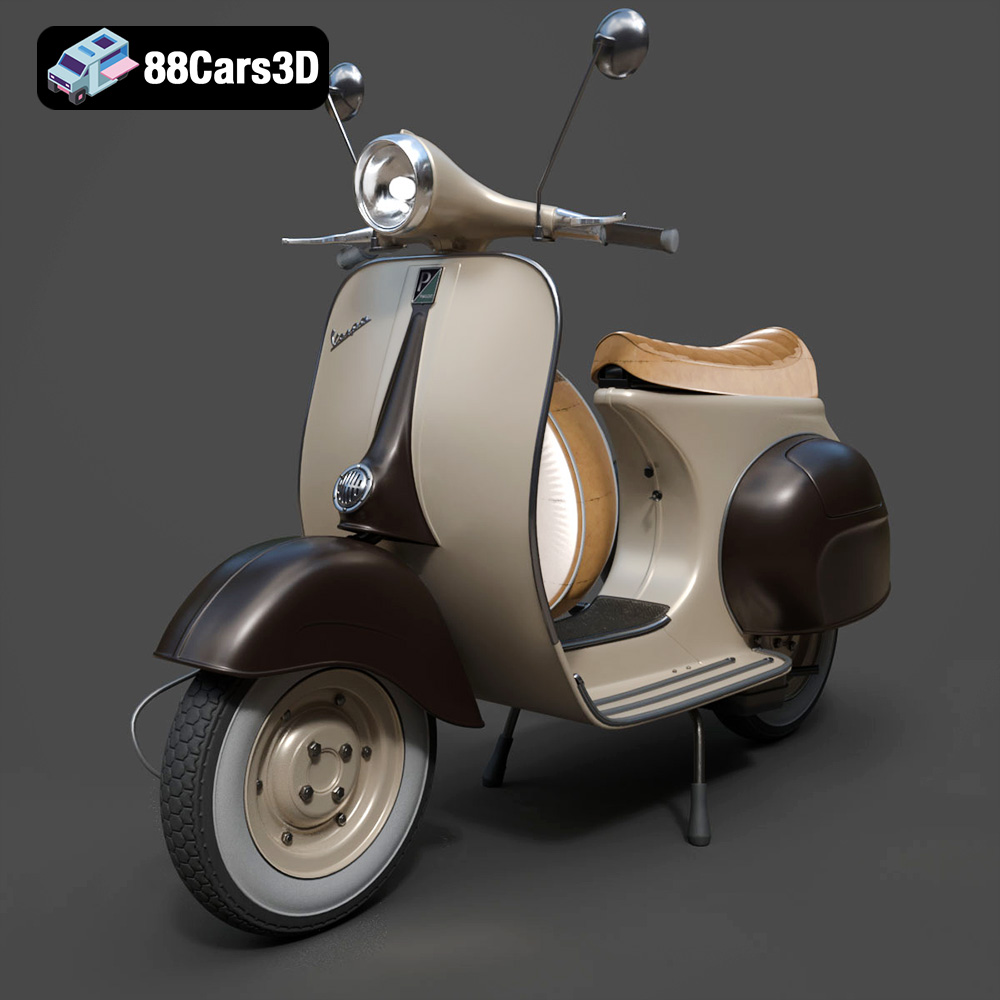
Few vehicles encapsulate this timeless appeal better than the classic Italian scooter, a symbol of freedom, style, and post-war innovation. Imagine bringing the cobblestone streets of Rome or the sun-drenched coastlines of the Mediterranean to life with authentic period details. This is precisely where a high-quality 3D model of an iconic vehicle becomes indispensable. For creators seeking to infuse their projects with a touch of authentic mid-century European flair, the Vespa VNB 125 3D Model stands out as a prime example of digital craftsmanship. This detailed recreation isn’t just a static object; it’s a versatile asset, ready to elevate rendering, game development, AR/VR experiences, and even become a physical collectible through 3D printing. A truly exceptional 3D asset, like this Vespa VNB 125, offers not just visual fidelity but also the technical versatility to seamlessly integrate into diverse professional pipelines.
In the expansive landscape of 3D content creation, understanding the various file formats is as crucial as mastering the modeling tools themselves. Each format serves a specific purpose, offering unique advantages for different stages of a project, software compatibility, and target applications. A truly versatile 3D model, such as the Vespa VNB 125 from 88cars3d.com, is often provided in multiple formats to ensure maximum utility for professionals. Let’s delve into the technical nuances of the most common formats:
The .blend format is the native file type for Blender, the powerful open-source 3D creation suite. When you download a .blend file, you’re getting a fully editable Blender scene. This means not only the mesh data but also materials, textures, lighting setups, camera positions, animations, and even physics simulations are contained within. For artists deeply integrated into the Blender workflow, this format offers unparalleled flexibility. It allows for immediate editing, tweaking of materials, re-posing components, or extracting specific elements without any loss of data that might occur during format conversion. It’s ideal for those who want to dive deep into the model’s construction or extend its functionality within Blender.
Autodesk’s .fbx (Filmbox) format is arguably the most widely adopted interchange format in the 3D industry, particularly favored for game development and real-time pipelines like Unreal Engine and Unity. Its strength lies in its ability to store comprehensive scene information, including geometry, materials, textures, animations, skinning, and camera data, while maintaining robust compatibility across various 3D applications (Maya, 3ds Max, Blender, Cinema 4D, etc.). The .fbx format ensures that assets transfer smoothly between different software packages, preserving crucial metadata and hierarchy, making it an essential choice for collaborative projects and streamlined integration into game engines.
The .obj (Wavefront OBJ) format is a classic and highly universal option primarily for storing 3D geometry data. It’s a simple, human-readable text file that defines vertices, normals, UV coordinates, and faces. While it can reference external material (.mtl) files and texture maps, it doesn’t typically store advanced scene information like animations or rigging. Its widespread compatibility makes it a safe bet for cross-software transfers where only the core mesh data is needed. If you need to import a model into almost any 3D software or CAD package without worrying about complex features, .obj is a reliable choice.
The .glb (GL Transmission Format Binary) is an increasingly vital format, especially in the realm of augmented reality (AR), virtual reality (VR), and browser-based 3D applications. It’s a binary version of glTF (Graphics Language Transmission Format), designed for efficient transmission and loading of 3D scenes and models. A .glb file packages all necessary assets—geometry, materials, textures, and animations—into a single file, making it incredibly convenient for web viewers, mobile AR experiences (like Apple’s ARKit or Google’s ARCore), and applications where file size and quick loading are paramount. Its optimization for real-time rendering on diverse hardware makes it a frontrunner for the interactive web and immersive technologies.
The .stl (Stereolithography) format is the de facto standard for 3D printing. It represents a 3D model as a series of connected triangles (a tessellated surface) without color, texture, or other advanced attributes. Its simplicity makes it universally understood by 3D slicing software, which converts the model into printable layers. While it doesn’t contain visual information, the accuracy of its triangular representation is critical for successful physical production. For the Vespa VNB 125, the .stl variant opens up opportunities for creating tangible scale models, making it a favorite for hobbyists and product designers alike.
The .ply (Polygon File Format) is another format for storing 3D data, capable of representing a wider range of properties than .obj or .stl. It can store not only geometry (vertices and faces) but also color, transparency, normals, texture coordinates, and even reliability information for each vertex or face. It’s often used in applications requiring high precision, such as 3D scanning, CAD software, and scientific visualization or analysis, where detailed attribute information is important for data integrity and processing.
The .unreal format, or more accurately, assets pre-optimized and packaged for direct import into Unreal Engine projects, represents a significant advantage for game developers and real-time visualizers. While often an .fbx internally, these files might come with pre-configured materials, collision meshes, LODs (Levels of Detail), and blueprint setups, saving countless hours of manual setup in Unreal Engine. This “engine-ready” state means artists and developers can drop the asset directly into their scene with minimal fuss, making the integration of the Vespa VNB 125 into a virtual world incredibly efficient.
Similar to .blend for Blender, the .max format is the native file type for Autodesk 3ds Max. This comprehensive project file retains all the intricacies of a 3ds Max scene, including geometry, modifiers, materials, textures, lighting, cameras, animation keyframes, and render settings. It’s the ultimate format for users who work within the 3ds Max ecosystem, offering full editability and access to all the features and tools available in the software. For professional studios relying on 3ds Max for architectural visualization, product rendering, or animation, having the native .max file ensures complete creative control over the asset.
The inclusion of such a diverse array of formats for the Vespa VNB 125 3D Model highlights 88cars3d.com’s commitment to providing versatile, professional-grade assets that cater to the multifaceted needs of the 3D industry.
Creating a truly outstanding 3D model, especially of an iconic vehicle like the Vespa VNB 125, involves far more than just visual replication. It demands a deep understanding of topology, scale, and functional design, ensuring the model is not only aesthetically pleasing but also technically robust for a myriad of applications. This particular model exemplifies precision in digital automotive design.
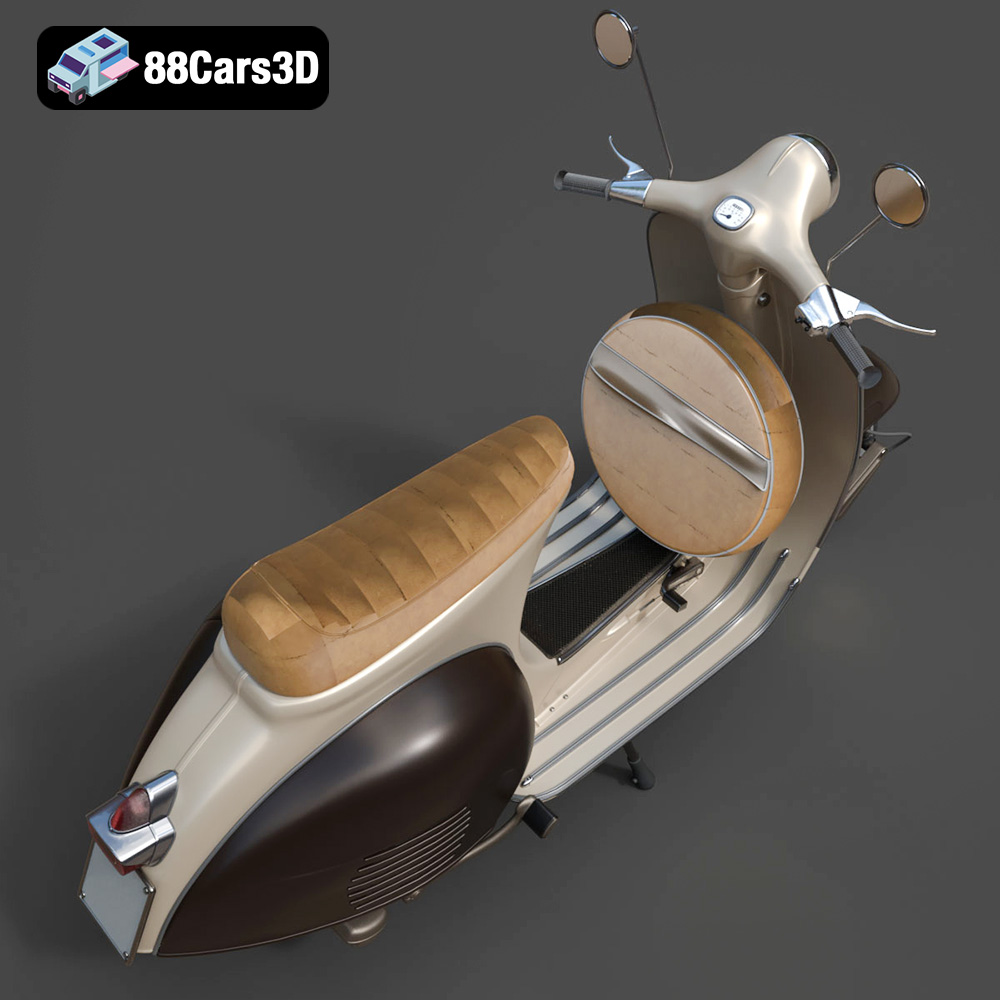
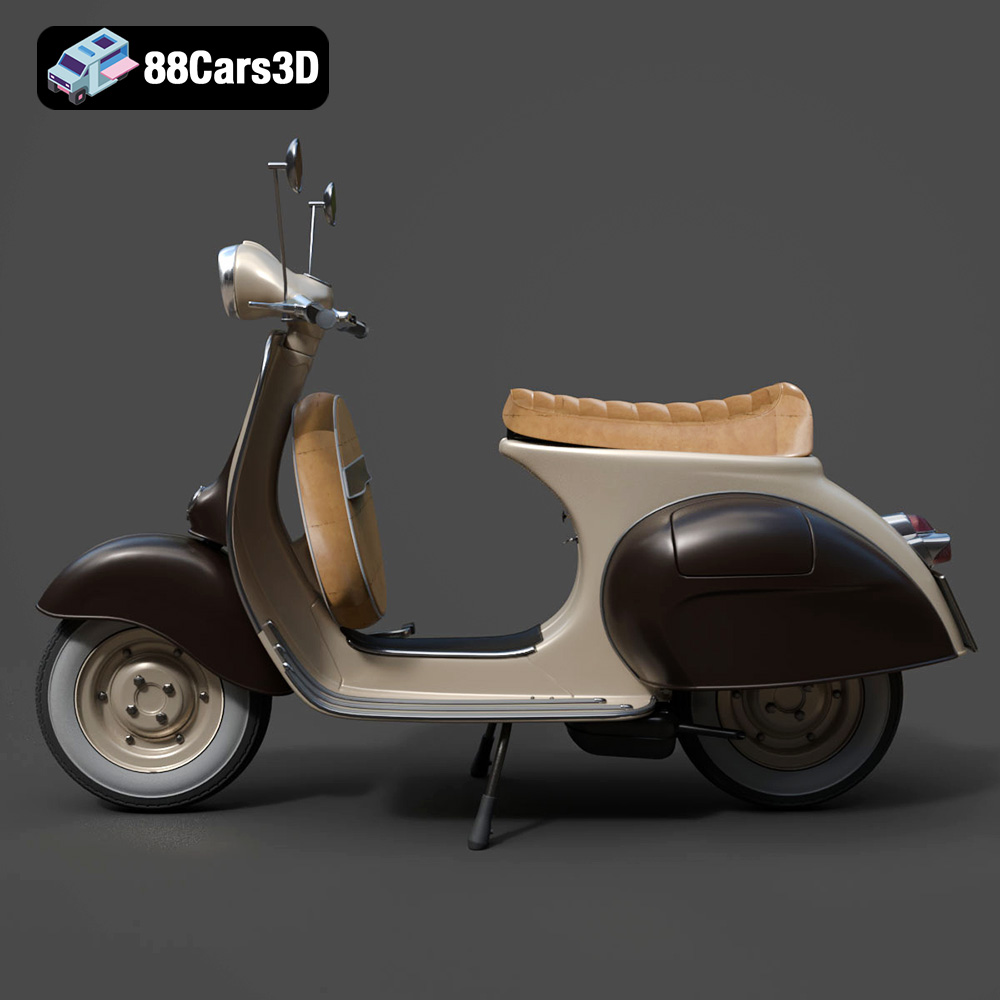
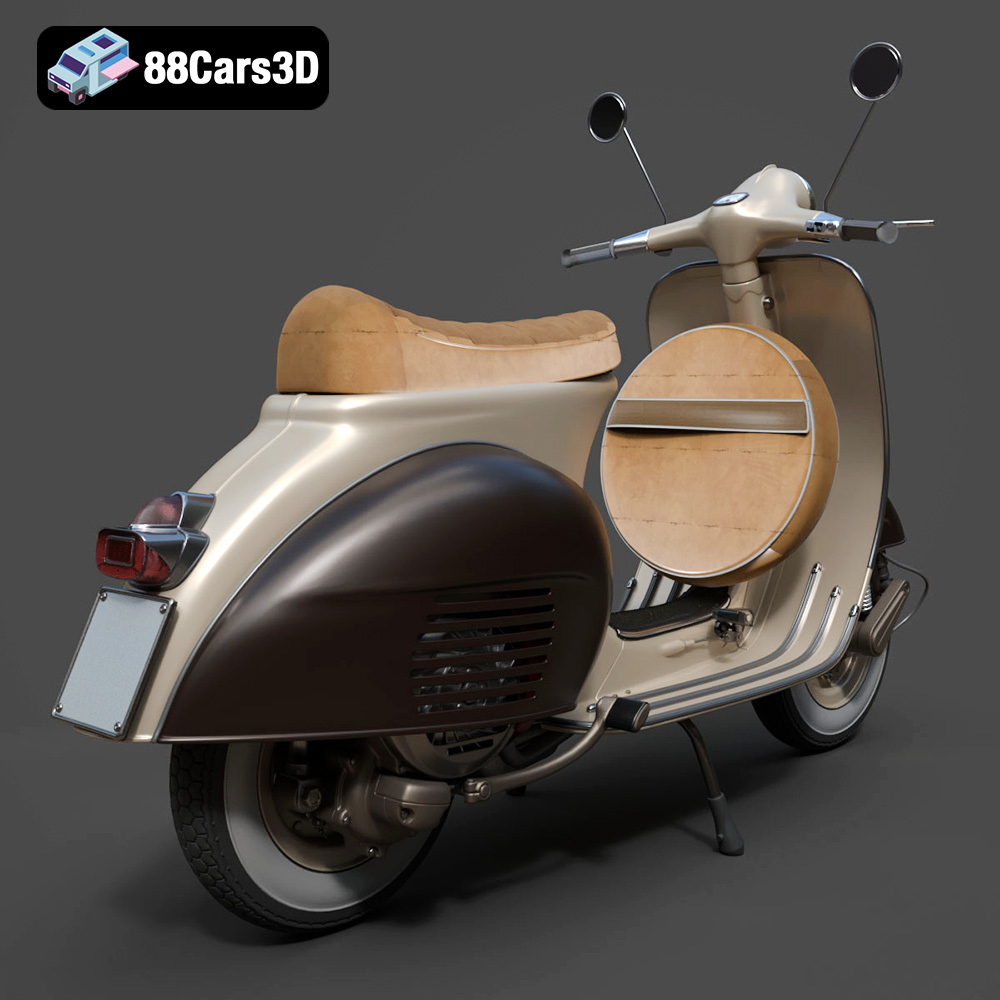
The essence of the Vespa VNB 125 lies in its distinctive silhouette and elegant curves, features that are meticulously reproduced in this 3D model. From the signature rounded leg shield and front fender to the streamlined side panels with their subtle air vent details, every aspect reflects accurate body proportions. The circular headlamp, often a focal point of vintage Vespas, features authentic chrome trim, contributing to the model’s period-correct aesthetic. Even the rear-mounted engine housing structure, the detailed exhaust system, and the realistic suspension components are faithfully captured, adding to the overall authenticity. The period-correct wheel and tire dimensions further cement its historical accuracy, making it a perfect stand-in for real-world photo shoots or historical recreations.
A key technical advantage for animators and game developers is the design choice to include separate wheels and a distinct steering assembly. This thoughtful segmentation ensures that the model is “animation-ready” right out of the box, allowing for realistic wheel rotation, steering articulation, and suspension movement without complex rigging setups from scratch. The proper pivot setup is a subtle but critical detail that simplifies integration into interactive environments.
While often viewed from the exterior, the rider’s area of any vehicle model is crucial for close-up shots, interactive experiences, or VR/AR applications. The Vespa VNB 125 3D Model does not skimp on these details. It features a fully detailed handlebar assembly, complete with an accurately replicated speedometer housing and distinct throttle and brake lever detailing. The footboard boasts a period-appropriate ribbed pattern, enhancing realism. Furthermore, the model is designed to accommodate both single-seat or dual-seat configurations, offering customization options that cater to specific scene requirements. This level of internal detailing showcases a commitment to comprehensive design, optimizing geometry for both high-quality renders and efficient real-time engine performance.
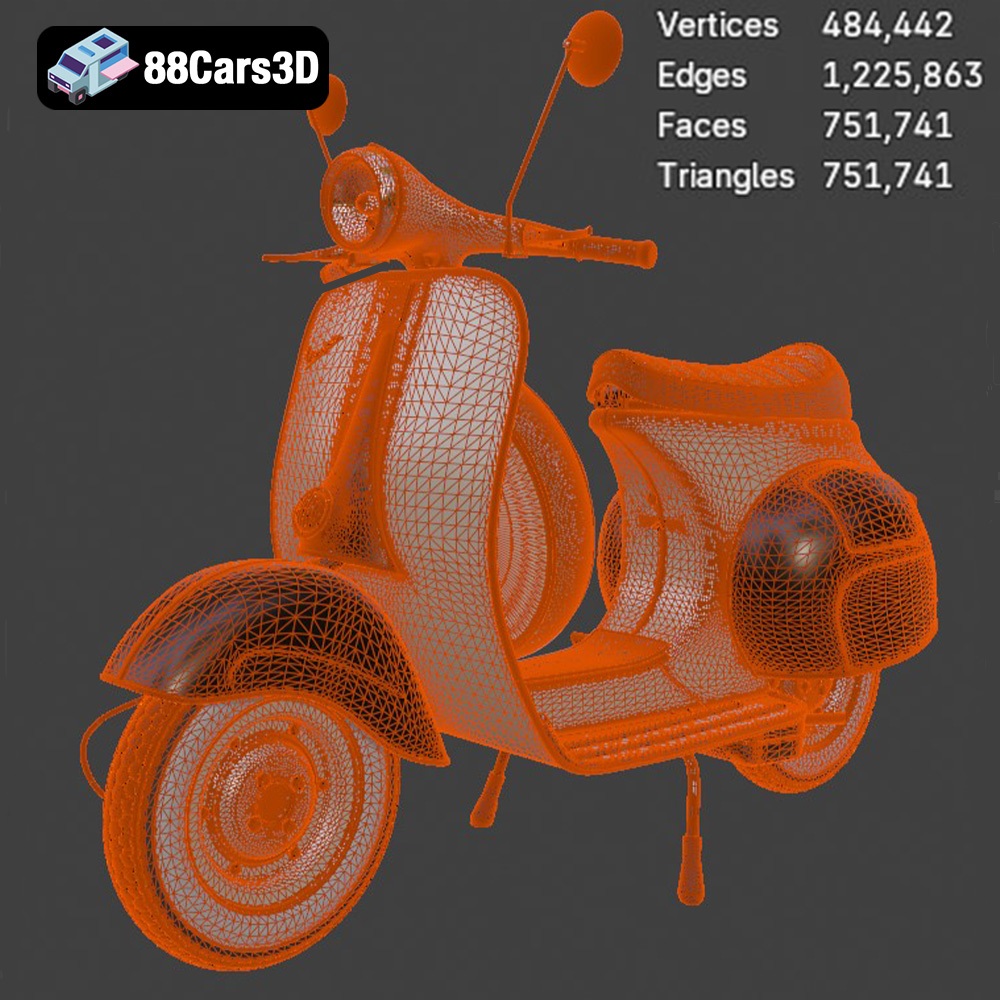
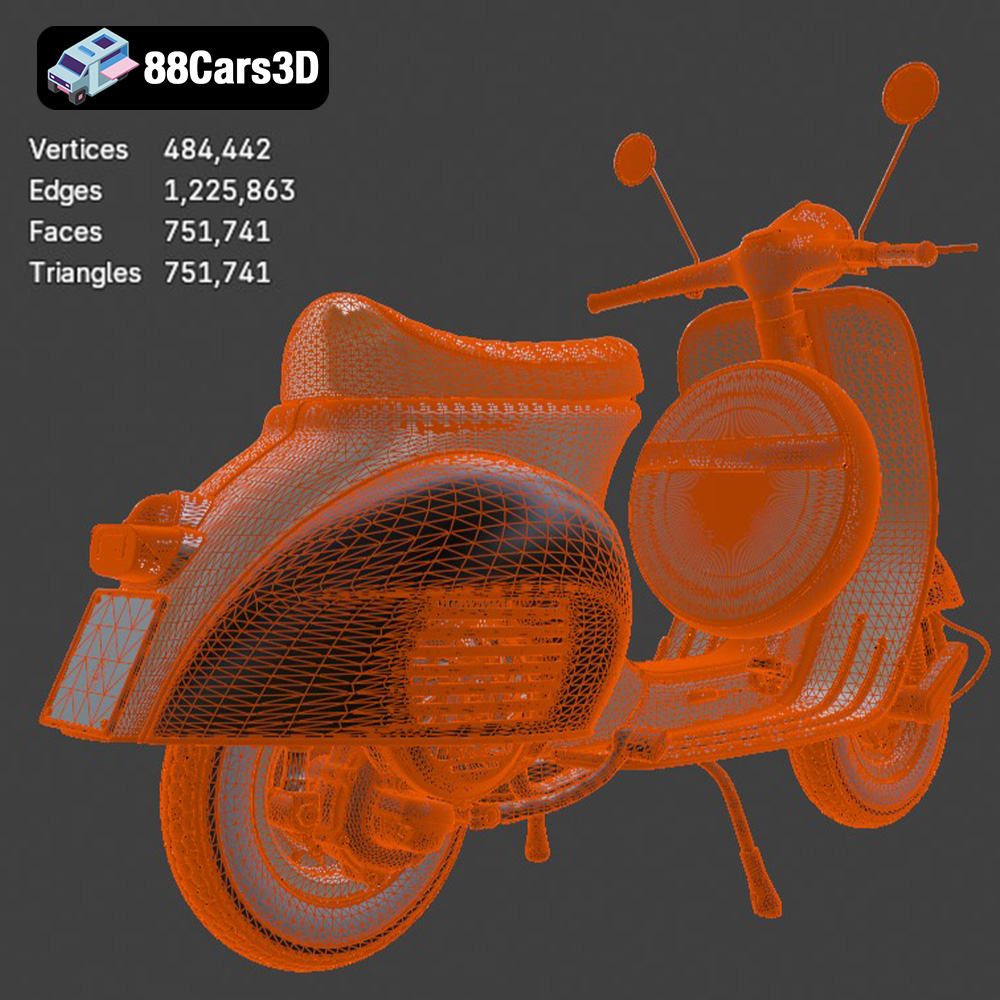
Beyond visual fidelity, the true mark of a professional-grade 3D model lies in its underlying technical structure. The Vespa VNB 125 features a clean and well-organized mesh structure, characterized by optimized polygon flow. This means that the geometry is efficient, reducing unnecessary poly counts while maintaining smooth curves and sharp details, which is paramount for performance in game engines and for clean subdivision surfacing in rendering software. Real-world scale accuracy is maintained throughout, ensuring that the model fits seamlessly into scenes without requiring manual resizing or scaling adjustments, saving valuable production time. This attention to technical advantages ensures compatibility with major 3D software platforms and engines, reinforcing its value as a versatile asset available on 88cars3d.com.
The true power of a high-quality 3D asset is its adaptability across diverse professional workflows. The Vespa VNB 125 3D Model, with its detailed design and technical robustness, is engineered to be a valuable component in various creative and technical pipelines, enhancing projects from cinematic sequences to interactive simulations.
For automotive artists and visualization specialists, the Vespa VNB 125 is an ideal subject for captivating renders. Imagine it parked elegantly outside a Parisian café, cruising along an Italian coastline at sunset, or serving as a stylish backdrop for a retro lifestyle advertisement. In 3ds Max or Blender, artists can leverage the model’s clean topology and accurate proportions to create stunning visuals. Textures, if included, provide realistic material properties, from the glossy pastel paint finishes to the gleam of chrome. Lighting artists can experiment with HDRIs (High Dynamic Range Images) to place the Vespa in realistic environments, reflecting natural light and shadow. The model’s optimized geometry ensures that even with complex rendering engines like V-Ray, Corona Renderer, or Cycles, rendering times remain manageable while producing photorealistic output. It’s perfect for vintage advertising visuals, lifestyle branding, and retro automotive promotions that demand authenticity and visual charm.
The demand for realistic and performant vehicle assets in game development is immense. The Vespa VNB 125 3D Model is optimized for exactly this purpose. Its clean mesh structure and real-world scale make it a prime candidate for integration into popular game engines like Unreal Engine and Unity. Game developers can utilize the .fbx or pre-configured .unreal files to quickly import the scooter, set up collisions, and integrate it into their game world. The separate wheels and steering assembly with proper pivots simplify the implementation of vehicle physics and animations, allowing players to ride or interact with the scooter authentically. It’s suitable for open-world urban games set in the 1960s, European-themed environments, or even mobile games requiring lightweight yet detailed assets. The ability to customize colors and add vintage decals further enhances its utility, allowing developers to create diverse variations from a single base model.
Augmented Reality (AR) and Virtual Reality (VR) platforms are transforming how we interact with digital content, offering immersive experiences that blur the lines between virtual and real. The Vespa VNB 125 3D Model, particularly in its optimized .glb format, is perfectly suited for these applications. Developers can use it to create interactive historical vehicle showcases, allowing users to “walk around” the classic scooter in AR on their phone, or explore its intricate details in a VR museum environment. For simulation and training, the model can be incorporated into virtual garages for mechanical demonstrations, or used in classic vehicle restoration previews, offering a detailed and accurate representation for learning and visualization. Its clean topology and efficient data structure ensure smooth performance in these demanding real-time environments, providing a seamless and engaging user experience.
The versatility of a high-quality 3D model extends far beyond digital rendering and interactive experiences. With advancements in additive manufacturing, digital assets can effortlessly transition into the physical world, creating tangible collectibles, prototypes, and decorative pieces. The Vespa VNB 125 3D Model, provided in a ready-to-print .stl format, is an excellent candidate for 3D printing, allowing enthusiasts to hold a piece of automotive history in their hands.
The inclusion of the .stl file format is a clear indicator that this model has been prepared with 3D printing in mind. An .stl file represents the model’s geometry as a series of triangles, a universal language for 3D printers and slicing software. The model’s clean and manifold geometry is crucial here; it means the mesh is watertight and free from errors that could cause issues during the slicing process, ensuring a successful print. For enthusiasts and collectors, this translates into the ability to create highly detailed scale scooter models and decorative miniatures that capture the essence of the original.
To achieve the best results when 3D printing the Vespa VNB 125, adhering to specific settings is vital. The product description provides excellent guidelines:
Once printed, post-processing is where the model truly comes to life. Recommendations include sanding to smooth out any layer lines, applying a primer to create a uniform surface for paint, and then finishing with a gloss pastel paint. Replicating the classic pastel finishes seen on vintage Vespas, combined with chrome detailing on elements like the headlamp trim and exhaust, will elevate the printed model to a museum-quality collectible. This hands-on process allows creators to add their personal touch, making each printed Vespa unique.
A truly valuable 3D asset provides not just a foundation but also ample room for creative expression and adaptation. The Vespa VNB 125 3D Model is designed with customization in mind, offering artists and developers the flexibility to tailor its appearance and context to suit a myriad of project requirements. This capacity for personalization makes it an incredibly versatile investment for any digital production.
The ability to easily change the body color is a fundamental customization. While vintage Vespas are iconic in their original hues, the model allows for experimentation with a palette of classic pastel finishes or even contemporary colors, adapting the scooter to different eras or stylistic preferences. Imagine a vibrant turquoise Vespa for a cheerful beach scene, or a subdued cream for a historical documentary. Beyond color, the option to add vintage decals or country-specific license plates further enhances authenticity, allowing the model to represent a specific region or historical period with precision. This level of detail is crucial for projects aiming for historical accuracy or a particular brand aesthetic.
The physical configuration of the scooter can also be adjusted. Whether a project calls for a solo rider or a romantic duo, the model supports configuring a single-seat or dual-seat version. This subtle change can dramatically alter the narrative potential of a scene. Furthermore, for more detailed dioramas or functional representations, creators can add rear luggage racks or even a spare wheel, accessories that were common during the VNB 125’s era and contribute significantly to its character.
Beyond the model itself, creative control extends to how it’s presented within a scene. Adjusting the lighting is paramount for conveying mood and time of day. Artists can configure lighting for a bright, energetic daytime city scene, casting crisp shadows, or for a warm, nostalgic sunset promenade, bathing the Vespa in soft, golden light. These environmental considerations transform the model from a simple asset into a storytelling element, creating specific atmospheres that resonate with the viewer. From realistic reflections on its polished surfaces to the subtle interplay of light and shadow, the Vespa VNB 125 responds beautifully to advanced lighting setups, proving its mettle in high-fidelity rendering environments.
In today’s fast-paced digital production environment, time is a precious commodity. Creating highly detailed, technically sound 3D models from scratch can be an incredibly time-consuming and resource-intensive endeavor. This is where marketplaces like 88cars3d.com provide immense value, offering pre-made, professional-grade 3D car models and vehicle assets that are ready for immediate integration into projects.
Investing in a premium asset like the Vespa VNB 125 3D Model means acquiring a product that has already undergone rigorous design, optimization, and quality control. This saves countless hours of modeling, texturing, and rigging, allowing artists and developers to focus on the creative aspects of their projects—scene composition, animation, storytelling, and interactive design. The extensive list of included file formats ensures broad compatibility, mitigating the headaches often associated with format conversion and ensuring a smooth workflow across different software platforms and engines. Whether you’re a freelance artist on a tight deadline, a small game studio, or a large visualization firm, access to a library of high-quality 3D assets is a strategic advantage.
Moreover, the detailed technical specifications and explicit application guidelines provided with assets from 88cars3d.com, like the Vespa VNB 125, offer a clear understanding of what you’re acquiring. This transparency builds confidence and ensures that the asset meets professional standards for automotive rendering, game assets, AR/VR, and 3D printing. It’s not just a model; it’s a meticulously engineered solution designed to empower creative professionals and enhance their output.
The Vespa VNB 125 is more than just a scooter; it’s a cultural icon, a testament to Italian design, and a symbol of an era. Bringing such a beloved piece of history into the digital realm requires a blend of artistic vision and technical prowess. The Vespa VNB 125 3D Model successfully achieves this, offering a highly detailed, technically optimized, and incredibly versatile asset for a wide array of applications.
From captivating photorealistic renders that evoke nostalgia, to seamless integration into dynamic game environments, and even the creation of tangible scale models through 3D printing, this model proves its worth across the creative spectrum. Its comprehensive file format support, including .blend, .fbx, .obj, .glb, .stl, .ply, .unreal, and .max, ensures that professionals in any field can utilize it efficiently. The meticulous attention to exterior and interior detailing, coupled with its robust technical advantages like clean topology and proper pivot setups, makes it a reliable and powerful tool for any project aiming for authenticity and visual excellence. For those seeking to infuse their digital worlds with the timeless elegance and practical charm of classic European design, the Vespa VNB 125 3D Model from 88cars3d.com is an indispensable asset, ready to inspire and elevate your next creation.
The Vespa VNB 125 3D Model is a high-detail digital recreation of the iconic Italian scooter produced during the early 1960s. Known for its elegant curves, monocoque steel body, and lightweight urban practicality, the VNB 125 represents the golden era of classic European scooter design. This 3D model accurately captures the rounded front leg shield, signature circular headlamp, streamlined side panels, single-seat or dual-seat configuration, exposed handlebar assembly, and period-correct wheel styling. Designed with clean topology and real-world scale accuracy, it is ideal for rendering, animation, game development, AR/VR environments, and historical vehicle visualization. Perfect for retro city streets, European alleyways, beach promenades, café scenes, and cinematic vintage productions.
$19.88