Get 50% OFF All Premium 3D & STL Models!

In the dynamic world of 3D visualization, the demand for high-quality, technically sound assets is ever-present. From crafting breathtaking automotive renders that blur the line between virtual and reality, to developing immersive game environments and interactive AR/VR experiences, the foundation of any successful project lies in the quality of its 3D models. A truly exceptional 3D model isn’t just about aesthetic appeal; it’s about meticulous craftsmanship, optimized geometry, and versatile file formats that empower creators across diverse disciplines. It’s about a commitment to detail that captures the essence of a real-world object and translates it flawlessly into the digital realm.
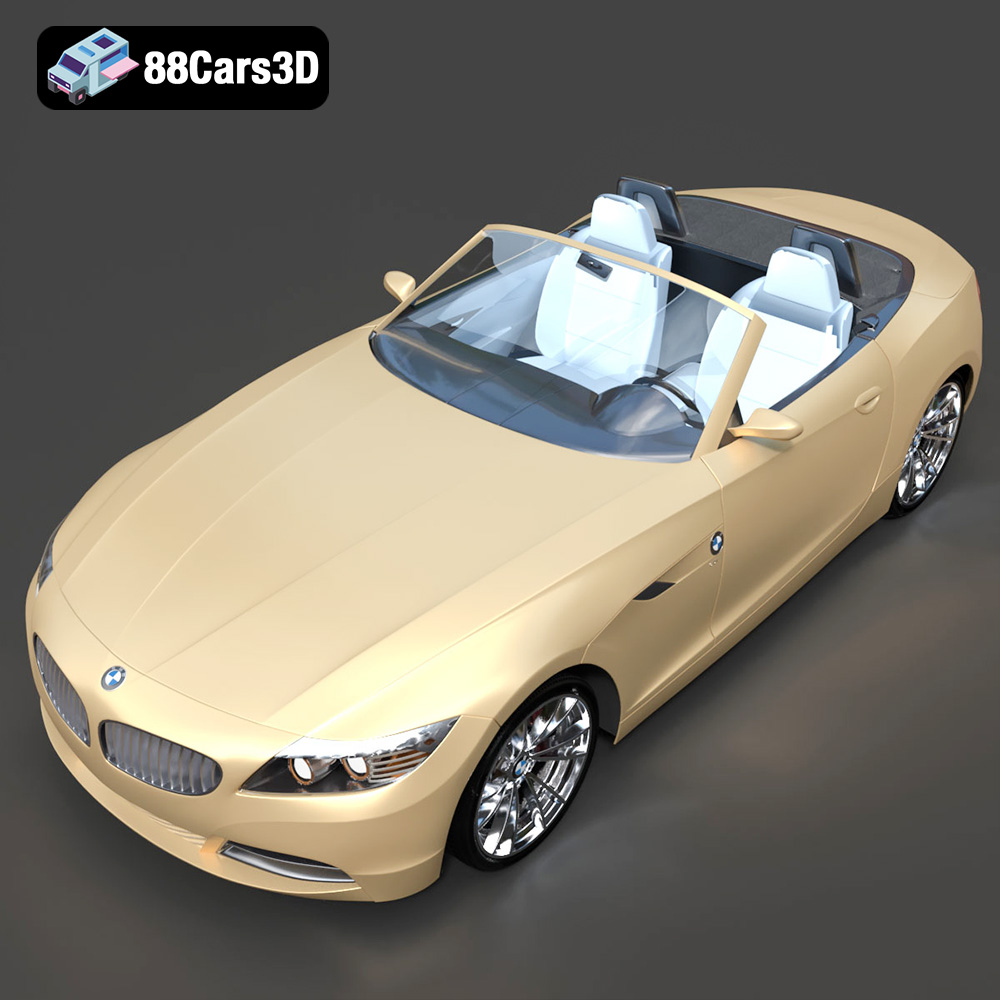
Today, we delve into the world of professional 3D car models by examining a prime example of excellence: the BMW Z4 3D Model available on 88cars3d.com. This premium digital recreation of BMW’s iconic two-seat roadster exemplifies the fusion of artistic vision and technical precision. Known for its sporty proportions, long hood, short rear deck, and dynamic performance styling, the Z4 embodies precision engineering and modern roadster design. This particular model captures the Z4’s low stance, sculpted body lines, signature kidney grille, aerodynamic side vents, and sleek convertible profile with stunning accuracy. Designed with clean geometry and real-world scaling, it stands as a testament to what a professional-grade 3D asset should offer to artists and developers alike.
The choice of a 3D model file format is far more than a mere technicality; it’s a strategic decision that dictates compatibility, workflow efficiency, and the ultimate utility of your digital asset. A comprehensive 3D model like the BMW Z4 3D Model from 88cars3d.com often comes packaged with multiple formats, ensuring maximum flexibility for various professional applications. Understanding the nuances of each is crucial for any serious 3D artist or developer.
The .blend format is native to Blender, the powerful open-source 3D creation suite. When you receive a .blend file, you’re not just getting the mesh data; you’re getting a complete Blender scene. This includes all materials, textures, lighting setups, cameras, animations, modifiers, and even custom node setups. For users deeply integrated into the Blender ecosystem, a .blend file offers unparalleled editability and creative freedom. You can deconstruct the model, modify its topology, tweak materials, or even re-rig it for custom animations without any data loss from format conversions. It’s the most flexible option for deep customization and leveraging Blender’s robust toolset.
.fbx (Filmbox) is arguably the most widely adopted proprietary file format for 3D data interchange between various software applications. Developed by Autodesk, it excels at storing not only geometric data (vertices, faces, normals, UVs) but also a vast array of associated data, including animations, skeletons, skinning information, blend shapes, cameras, and lights. This makes .fbx indispensable for pipelines involving multiple software packages, particularly when moving assets between modeling software (like 3ds Max or Blender) and game engines (Unreal, Unity). Its efficiency and comprehensive data support make it an ideal choice for complex rigged characters and animated scenes, providing a reliable bridge across different platforms.
The .obj (Wavefront Object) format is a foundational, non-proprietary format that has been around for decades. It’s celebrated for its simplicity and near-universal compatibility across almost all 3D software. An .obj file primarily stores geometric data – vertices, texture coordinates, normals, and faces – along with references to external material files (.mtl). While it doesn’t support animations or advanced scene data like .fbx, its widespread support makes it a safe bet for basic mesh transfer and archiving. If you need a clean, universal mesh to start with in any program, .obj is often the go-to.
.glb (GLB, the binary format for glTF) is a relatively newer format rapidly gaining traction, especially in web-based 3D, AR, and VR applications. glTF (Graphics Language Transmission Format) is an open standard designed for the efficient transmission and loading of 3D scenes and models by applications. .glb packages all necessary data (geometry, materials, textures, animations) into a single, compact binary file, making it incredibly efficient for web streaming and real-time display. It’s the “JPEG of 3D,” optimized for speed and performance, perfect for virtual showrooms or interactive experiences where file size and loading times are critical.
.stl (STereoLithography) is the de facto standard file format for 3D printing. Unlike other formats that store complex mesh data, .stl represents a 3D model as a collection of unconnected triangular facets, without color, texture, or other attributes. Its simplicity makes it universally readable by 3D printers and slicing software. While it doesn’t retain design-level details, it’s the critical output format for transforming a digital model like the BMW Z4 3D Model into a tangible object, allowing enthusiasts to print collectible roadster miniatures and display models.
The .ply (Polygon File Format or Stanford Triangle Format) is another format for storing 3D data, particularly useful for scanned data and technical applications. It supports a wider range of properties than .obj, including color, transparency, normals, texture coordinates, and even reliability information for each face or vertex. This makes it a powerful format for applications requiring precise mesh data, such as CAD, scientific visualization, and 3D scanning workflows where high fidelity and additional attribute data are paramount.
While not a universal exchange format in the same vein as .fbx or .obj, the term .unreal refers to assets specifically prepared and optimized for direct integration into Unreal Engine projects. This often means carefully configured FBX files with proper material assignments, collision meshes, LODs (Levels of Detail), and sometimes even pre-set Blueprints or animations. When a vendor provides an “.unreal” file, it signifies an engine-ready asset, saving developers significant setup time and ensuring optimal performance within the demanding real-time environment of Unreal Engine. The BMW Z4 3D Model is designed with this efficiency in mind, offering a streamlined path for game developers.
Similar to .blend, the .max format is the native file type for Autodesk 3ds Max. It stores a complete 3ds Max scene, including all geometry, materials, lighting, cameras, animations, and scene configurations. For professionals working within a 3ds Max pipeline, the .max file provides full access to the original scene, enabling comprehensive editing, advanced rendering setups (like V-Ray or Corona), and complex animation sequences. It offers the highest level of detail and control for those leveraging 3ds Max’s extensive feature set for architectural visualization, product design, and automotive rendering.
The inclusion of such a broad range of formats with the BMW Z4 3D Model underscores its versatility and value, allowing artists and studios to seamlessly integrate it into their preferred software and workflows, from high-end cinematic rendering to interactive real-time applications and even physical 3D prints.
Creating a truly convincing 3D car model is a sophisticated endeavor, blending artistic skill with rigorous technical understanding. It’s more than just replicating shapes; it’s about translating the designer’s intent, the engineer’s precision, and the vehicle’s dynamic presence into a digital asset. The BMW Z4 3D Model exemplifies these principles, offering a benchmark for quality in the automotive 3D space.
At the core of any outstanding automotive 3D model is its design fidelity. This means accurately capturing every curve, every subtle crease, and every iconic element that defines the vehicle. For the BMW Z4, this includes its signature kidney grille, the intricate detailing of its headlights and taillights, the sculpted hood, and the precise aerodynamics of its body panels. A skilled 3D artist doesn’t just trace lines; they interpret the interplay of light and shadow on surfaces, ensuring that the digital model evokes the same emotional response as its real-world counterpart. This meticulous attention extends to the interior, where the sport-style cockpit, detailed dashboard, and contoured sport seats contribute to a fully immersive experience.
Beyond aesthetics, the technical construction of a 3D model is paramount. The BMW Z4 3D Model boasts “clean quad-based topology.” This is a critical feature, especially for models intended for animation, subdivision, or high-fidelity rendering. Quad-based meshes deform more predictably, are easier to sculpt, and render smoother surfaces when subdivided. Triangles are generally avoided in areas that need smooth deformation or where further modeling might occur. Furthermore, “real-world scale accuracy” ensures that the model integrates seamlessly into architectural visualizations, simulations, or virtual environments without needing manual scaling adjustments, saving valuable production time and maintaining visual integrity.
A well-made 3D car model strikes a balance between detail and performance. An “optimized polygon count” means that the model provides sufficient detail for its intended application (be it close-up renders or real-time game environments) without being overly heavy, which can lead to slow viewport performance and increased render times. Efficient UV mapping, although not explicitly detailed in the product description, is implicitly present in the model’s compatibility with major 3D platforms and its readiness for rendering and game development. Proper UVs ensure textures are applied without stretching or distortion, and that different material zones are clearly defined. The “separated components for doors, hood, trunk, and wheels” with “proper pivot placement for animation” are further indicators of a model designed for professional pipelines, allowing for dynamic interactions and storytelling.
The versatility of the BMW Z4 3D Model makes it an invaluable asset across a spectrum of professional 3D workflows. Its inclusion of multiple file formats, from .max and .blend for comprehensive scene development to .fbx and .unreal for real-time applications, ensures its adaptability.
For automotive visualization studios and product designers, the .max format offers the full power of Autodesk 3ds Max combined with advanced render engines like V-Ray or Corona. Imagine setting the BMW Z4 in a luxury showroom, bathed in soft, diffused studio lighting, or placing it on a sun-drenched coastal road. With its detailed exterior features like the modeled alloy wheels, brake discs, and performance tires, and its meticulously crafted interior, the model is render-ready. Artists can leverage 3ds Max’s robust material editors to create realistic car paint, chrome, glass, and leather. The clean quad topology facilitates the use of subdivision surfaces, ensuring perfectly smooth reflections and an immaculate finish that would be indistinguishable from a real photograph. The proper pivot placement for components like doors and wheels allows for sophisticated animation, showcasing the vehicle in dynamic promotional content.
The gaming industry and real-time visualization fields demand assets that are not only visually stunning but also highly optimized for performance. The inclusion of the .unreal (and .fbx) format for the BMW Z4 is a game-changer. Developers can import the model directly into Unreal Engine, where its optimized polygon count and clean geometry translate into efficient rendering. With its separated components and proper pivot points, the Z4 can be easily rigged for vehicle physics, allowing players to drive it through open-world environments or engage in high-octane racing simulations. Materials can be quickly adapted to Unreal’s physically based rendering (PBR) system, with support for customizable body colors, wheel styles, and lighting environments, making it suitable for both game development and interactive virtual showrooms.
In game development, efficient asset management is key. The BMW Z4 3D Model provides a solid foundation that can be further optimized. Game artists might create multiple Levels of Detail (LODs) from the base mesh to ensure the car renders efficiently at varying distances, reducing the poly count for distant views. The separated components are ideal for implementing destruction physics or customizable parts. The “optimized interior mesh” ensures that even in first-person views or camera pans through the cabin, the detail holds up without excessive performance cost, making it suitable for racing games, open-world driving simulations, and realistic traffic systems where performance is paramount.
Beyond traditional rendering and game development, the BMW Z4 3D Model opens doors to innovative applications, enabling creators to push the boundaries of digital and physical experiences.
The rise of Augmented Reality (AR) and Virtual Reality (VR) has transformed how we interact with digital content. The BMW Z4, particularly in its .glb format, is perfectly suited for these immersive platforms. Imagine a virtual showroom where prospective buyers can walk around, inspect the car from every angle, open doors, and even customize its color and trim in real-time. This interactive capability, combined with the model’s “real-world scale accuracy,” creates compelling virtual experiences that can replicate or even enhance physical interactions. For AR applications, the Z4 can be placed in real-world environments via a smartphone or headset, allowing users to visualize the car in their driveway or a specific location before it even exists physically, serving as a powerful marketing and visualization tool.
One of the most exciting aspects of this particular model is its readiness for 3D printing. The product description highlights its convertibility to .stl format for “collectible roadster miniatures and display models.” This bridges the gap between the digital and the physical, allowing enthusiasts to hold a tangible representation of this iconic car. The provided 3D print settings are invaluable for achieving high-quality results:
These detailed instructions ensure that even hobbyists can achieve museum-quality results, transforming a digital asset into a cherished physical collectible.
With its separated components and proper pivot placement, the BMW Z4 3D Model is engineered for animation. From opening doors and trunks to steering wheels and rotating tires, every moving part is set up for ease of use. This makes it ideal for cinematic sequences, automotive commercials, or even interactive training modules. Imagine a sweeping camera shot revealing the Z4 driving along a scenic route, its convertible roof gracefully retracting, all rendered with stunning realism. The clean topology also ensures smooth deformations for any subtle body flex or suspension movement that an animator might wish to depict.
In a marketplace flooded with digital assets, the discerning professional understands that quality is not just a feature; it’s a necessity. When sourcing 3D car models, especially for demanding projects like automotive rendering or game development, the provenance and technical integrity of the model are paramount. 88cars3d.com stands out as a reliable provider of such premium assets, and the BMW Z4 3D Model is a prime example of their commitment to excellence.
Every professional project requires assets that are built to a high standard. The models found on 88cars3d.com, like this BMW Z4, are characterized by their “clean quad-based topology,” “real-world scale accuracy,” and “optimized polygon count.” These aren’t just buzzwords; they represent foundational principles of good 3D modeling that ensure a smooth workflow, predictable results, and the ability to scale models for various uses without encountering significant technical hurdles. The meticulous detailing of both exterior and interior elements, combined with proper pivot placements for animation, speaks to a rigorous quality assurance process that anticipates the needs of demanding production pipelines.
One of the strongest arguments for choosing premium 3D car models like the BMW Z4 from 88cars3d.com is their inherent versatility. With a comprehensive array of included file formats (.blend, .fbx, .obj, .glb, .stl, .ply, .unreal, .max), these models are truly “compatible with major 3D platforms and engines.” This means whether you’re working on a high-end cinematic rendering project in 3ds Max, developing an immersive racing game in Unreal Engine, creating an AR configurator, or even preparing a physical 3D print, the model is ready to integrate seamlessly. This multi-format support minimizes conversion headaches and ensures that the investment in a single asset can benefit numerous projects across different industries.
Ultimately, 88cars3d.com positions itself as more than just a marketplace; it’s a resource for creators seeking reliable, high-fidelity assets that accelerate their projects. By providing meticulously crafted automotive rendering and game assets, they empower artists and developers to focus on their creative vision rather than getting bogged down by technical issues or having to build complex models from scratch. The comprehensive product descriptions, including detailed technical advantages and application scenarios, further instill confidence, ensuring that buyers know exactly what they are getting and how best to utilize it for their specific needs. It’s about empowering creativity with dependable tools.
The world of 3D visualization is a complex tapestry of artistry and technical mastery. High-quality 3D car models serve as the essential threads that hold this tapestry together, enabling creators to bring their visions to life with unparalleled realism and efficiency. The BMW Z4 3D Model stands as a shining example of such an asset, meticulously crafted to meet the demanding requirements of modern automotive rendering, game development, AR/VR experiences, and even physical 3D printing.
From its clean quad-based topology and real-world scale to its comprehensive array of file formats and detailed interior and exterior features, this model is engineered for excellence. It streamlines workflows for professionals using software like 3ds Max, Blender, and Unreal Engine, allowing them to focus on innovative applications rather than technical challenges. Whether you’re aiming for photorealistic renders, fluid real-time simulations, or a tangible miniature collectible, the versatility and precision of this BMW Z4 model make it an invaluable addition to any professional’s toolkit.
For those seeking to elevate their projects with premium automotive rendering assets and robust game assets, exploring the curated selection at 88cars3d.com is a step towards achieving truly remarkable results. The BMW Z4 3D Model exemplifies the quality and versatility that discerning artists and developers have come to expect from leading asset marketplaces.
The BMW Z4 3D Model is a premium digital recreation of the iconic two-seat roadster developed by BMW. Known for its sporty proportions, long hood, short rear deck, and dynamic performance styling, the Z4 embodies precision engineering and modern roadster design. This 3D model accurately captures the Z4’s low stance, sculpted body lines, signature kidney grille, aerodynamic side vents, and sleek convertible profile. Designed with clean geometry and real-world scaling, it is ideal for rendering, animation, game development, AR/VR applications, and automotive simulations. Perfect for coastal driving scenes, luxury showrooms, racing environments, promotional visuals, and interactive vehicle experiences. Includes .blend, .fbx, .obj, .glb, .stl, .ply, .unreal, and .max formats.
$29.90
.arvr
.blend
.bmw
.car3dmodel
.convertible
.fbx
.gameasset
.glb
.max
.obj
.ply
.rendering
.roadster
.simulation
.sportsCar
.stl
.unreal
.vehicleasset
.z4
automotive3d