Get 50% OFF All Premium 3D & STL Models!

In the world of real-time rendering and interactive experiences, realism is paramount. For developers, artists, and visualization professionals leveraging Unreal Engine, the pursuit of truly immersive environments often hinges on the authenticity of natural elements. Few elements are as complex and visually demanding as water. Historically, creating convincing water in real-time has been a monumental challenge, requiring intricate shader work, complex physics simulations, and significant performance optimization.
Unreal Engine’s dedicated Water System has revolutionized this landscape, providing a robust, highly customizable, and performant solution for generating everything from tranquil lakes and winding rivers to dynamic oceans. This powerful toolkit empowers creators to craft stunning aquatic environments that not only look incredible but also interact realistically with other scene elements. For automotive visualization, game development, or any project aiming for unparalleled fidelity, mastering this system is indispensable. Imagine showcasing a meticulously detailed sports car from 88cars3d.com gracefully navigating a coastal road, with the ocean’s dynamic reflections enhancing every curve. This guide will take you on a deep dive into the Unreal Engine Water System, covering everything from initial setup and material customization to advanced optimization and interactive features, ensuring your water scenes are as breathtakingly real as possible.
The Unreal Engine Water System, introduced as a native plugin, offers a comprehensive suite of tools designed to simplify the creation and management of large-scale water bodies. Unlike previous methods that often relied on custom shaders and static meshes, this system is built on dynamic mesh generation, advanced material features, and integrated physics, providing a cohesive and scalable solution. It integrates seamlessly with Unreal Engine’s landscape system, automatically conforming to terrain and allowing for intuitive sculpting of coastlines and riverbeds.
At its heart, the system is composed of specialized Water Body Actors: Water Body Ocean, Water Body Lake, and Water Body River. Each is pre-configured with distinct material properties and behaviors, allowing artists to quickly establish the desired aquatic environment. The system also leverages spline-based editing for rivers and lakes, offering precise control over their shape and flow. Beyond just visual representation, the Water System provides integrated buoyancy physics, enabling objects to float and interact realistically with the water surface. This holistic approach significantly reduces the development time and complexity associated with high-fidelity water simulation.
One of the key advantages of this system is its performance-oriented design. It employs techniques such as tessellation for dynamic wave detail, Level of Detail (LOD) management for distant views, and configurable rendering features to ensure that realistic water doesn’t come at an exorbitant performance cost. Whether you’re targeting high-end PC visualizations or optimizing for AR/VR applications, the Water System provides the tools to scale your water complexity effectively. For more foundational information on Unreal Engine’s core features, always refer to the official documentation at dev.epicgames.com/community/unreal-engine/learning.
Each Water Body Actor serves a specific purpose, tailored with default properties for its intended use case. The Water Body Ocean is designed for vast, open water scenarios, featuring large-scale waves, a global water material, and integrated planar reflections. It automatically generates an infinite plane of water, interacting with any underlying landscape or geometry. The Water Body Lake is ideal for enclosed or semi-enclosed bodies of water, supporting static water levels and shoreline generation. Its splines allow for custom shapes, and it offers parameters for wave intensity, foam, and depth-based color. Lastly, the Water Body River is spline-based and generates a flowing body of water that can follow complex paths. It features parameters for flow direction, current speed, and can dynamically adjust its width and depth based on spline points, making it perfect for winding waterways or even flood simulations.
The Water System isn’t just about visuals; it deeply integrates with Unreal Engine’s physics and landscape systems. When you place a Water Body Actor, it automatically detects and adapts to the landscape, generating realistic shorelines and underwater terrain. The system modifies the landscape’s heightmap and material layers to create a seamless transition between land and water, including shoreline foam and wetness effects. Furthermore, it includes a robust Buoyancy Component that can be added to any Actor. This component calculates the forces exerted by the water, allowing objects to float, bob, and react to waves and currents. For game developers creating maritime vehicles or interactive objects, this integrated physics solution significantly streamlines the development process. Artists can also leverage the Water Mass component for more detailed buoyancy calculations and fluid interactions.
Getting started with the Unreal Engine Water System is straightforward. First, ensure the “Water” plugin is enabled in your Project Settings (Edit > Plugins > Water). Once enabled, you can find the Water Body Actors under the “Water” category in the Place Actors panel. Dragging one into your scene immediately generates a water body, automatically interacting with your existing landscape. For a Water Body River or Lake, you’ll see a spline that you can manipulate to define the shape and course of your water. You can add or remove spline points, and adjust their tangents to create smooth curves or sharp turns. For the Ocean, its parameters control global wave patterns and overall appearance.
The real power of the Water System lies in its extensive customization options. Each Water Body Actor exposes a wide array of properties in the Details panel, allowing you to fine-tune its appearance and behavior. You can adjust wave height, speed, direction, foam intensity, and even subsurface scattering. The system utilizes a master water material instance, providing a centralized place to modify global water properties. However, you can also create unique material instances for individual Water Body Actors if you require distinct visual styles within the same scene. Experimentation with these parameters is key to achieving the desired look, whether it’s the choppy surface of a storm-ravaged ocean or the calm, reflective surface of a pristine lake.
Beyond the visual aspects, you can also configure interaction properties. For instance, the Water Body Lake and River actors allow you to define parameters for how they displace the landscape, control wetness effects on the shoreline, and even incorporate physics zones for specific buoyancy behaviors. This level of granular control ensures that your water not only looks realistic but also contributes meaningfully to the gameplay or interactive experience. When integrating high-fidelity automotive assets, such as the premium 3D car models available on 88cars3d.com, into a scene with realistic water, the attention to detail truly pays off, creating compelling and believable environments for your vehicles.
After dragging a Water Body Actor into your scene, the first step is often to adjust its scale and position. For Rivers and Lakes, manipulating the spline points is crucial. Select the Water Body Actor, then click on individual spline points to move them, or hold Alt and drag to create new ones. You can adjust the width and depth of the river or lake at each spline point, allowing for varied terrain interaction. The Water System automatically modifies the landscape to accommodate the water, carving out riverbeds or shaping lake shores. You can control the intensity of this landscape deformation through properties like “Water Zone > Landscape Carve Depth” and “Shoreline Settings > Shoreline Carve Scale.” For oceans, simply positioning the actor defines its base level, and the system handles the infinite plane generation, with parameters like “Ocean > Deep Water Depth” influencing its overall appearance and light interaction. Careful iteration between spline adjustment and landscape sculpting provides the best results.
The visual fidelity of your water largely depends on its material. The Water System comes with highly optimized and complex materials that handle reflections, refractions, foam, depth colors, and more. To customize, select your Water Body Actor and find the “Water Material” property in the Details panel. You can create a new Material Instance from the default Water_Material and assign it. This allows you to tweak a vast array of parameters: “Wave > Wave Height,” “Wave > Wave Speed,” “Foam > Foam Intensity,” “Color > Deep Color,” “Color > Shallow Color,” and many others. Experiment with these values to achieve different moods and environmental conditions. For instance, increasing wave height and speed, and adding more intense foam, can simulate a turbulent storm. For subtle ripples, reduce wave height and frequency. The “Caustics” settings further enhance realism by projecting moving light patterns onto underwater surfaces. Pay attention to the “Reflection” and “Refraction” settings to ensure your water interacts correctly with its surroundings and any objects submerged within it.
Achieving truly realistic water in Unreal Engine goes beyond basic material adjustments; it involves a deep understanding of Physically Based Rendering (PBR) principles and leveraging Unreal Engine’s advanced rendering features. The Water System’s default materials are built with PBR in mind, accurately simulating how light interacts with water’s surface and volume. Key PBR parameters like roughness, metallic, and subsurface scattering are crucial for conveying different water types. For instance, very calm, clear water will have low roughness, acting almost like a mirror, while turbulent, muddy water will exhibit higher roughness. The system also intelligently handles foam and wetness, applying PBR values to these elements to ensure they look naturally integrated into the scene.
Unreal Engine’s powerful global illumination and reflection systems, particularly Lumen and Screen Space Reflections (SSR), play a vital role in water realism. Lumen, with its dynamic global illumination and reflections, provides incredibly accurate real-time reflections on water surfaces, picking up environmental lighting, sky, and nearby objects. This is critical for making water feel integrated into the scene. For refraction, the system uses screen space techniques to bend and distort the view of objects seen through the water, further enhancing the illusion of depth and transparency. The interplay of these rendering techniques with the water material’s PBR properties is what ultimately sells the realism, whether it’s the subtle shimmer of a sunlit pond or the ominous reflections of a moonlit ocean.
Furthermore, the Water System supports advanced visual effects like caustics, which are light patterns created by the refraction of light through water onto submerged surfaces. These dynamic caustics significantly enhance underwater realism and can be customized in terms of intensity and projection distance. By combining meticulously tuned PBR materials with cutting-edge rendering features, developers can create water bodies that are not just visually appealing but also physically plausible, contributing to a truly immersive and believable environment for any scene, from high-stakes game levels to cinematic automotive showcases.
Diving deeper into the Water Material Instance, several advanced parameters are key to pushing visual fidelity. Under the “Surface Properties” group, “Refraction Depth Bias” and “Refraction Strength” control how much objects seen through the water are distorted. Tweaking these can simulate different water densities or turbidities. The “Subsurface Scattering” group is crucial for simulating light penetrating and scattering within the water volume. “SS Color” and “SS Opacity” directly influence how light diffuses through the water, giving it a translucent, volumetric feel. For example, a deep blue SS Color with high opacity might simulate deep ocean water, while a lighter, greener color with less opacity could represent shallow tropical water. The “Foam” section offers detailed control over foam patterns, distribution, and blending. You can adjust “Foam Fade Distance,” “Foam Threshold,” and “Foam Color” to create subtle shore foam, wake trails, or crashing waves. Remember that each parameter contributes to the overall look, and finding the right balance often requires artistic judgment and iteration.
Lumen is a game-changer for water reflections. Enabled as part of your project’s global illumination and reflections settings (Project Settings > Rendering > Global Illumination and Reflections), Lumen provides dynamic, real-time reflections that capture the entire scene, including dynamic objects and emissive materials. For water, this means that sky, clouds, surrounding terrain, and any vehicles from 88cars3d.com will be accurately reflected on the water’s surface with physically correct bounces. While Screen Space Reflections (SSR) are also used by the Water System for finer details and refractions, Lumen fills in the gaps beyond the screen edge and offers more robust global reflections. For optimal performance, consider combining Lumen with Reflection Captures for static elements and planar reflections for very specific, high-priority surfaces if needed, though Lumen often suffices for general water reflection needs. Ensuring your project’s rendering settings are configured for high-quality reflections will maximize the visual impact of your water.
While the Water System excels at generating large-scale water bodies, true immersion comes from dynamic interactions. This is where Unreal Engine’s Niagara particle system and Blueprint visual scripting become indispensable. Niagara, Unreal Engine’s next-generation particle system, is perfectly suited for creating localized water effects such as splashes, ripples from falling objects, waterfalls, rain hitting the surface, or even vehicle wakes. Its modular design allows artists to build complex particle behaviors from a series of emitters, modules, and parameters, enabling incredibly detailed and performant fluid effects. For instance, a vehicle driving through water can trigger a Niagara system that generates realistic spray and foam, seamlessly blending with the underlying Water System.
Blueprint visual scripting provides the logic to drive these interactions. You can use Blueprints to detect collisions between objects and the water surface, trigger Niagara effects based on impact velocity or depth, and manage the buoyancy of objects. For game development, this allows for sophisticated gameplay mechanics, such as a player character swimming, boats navigating currents, or interactive puzzles involving water levels. In architectural or automotive visualization, Blueprints can enable interactive elements like changing water conditions (e.g., calm to choppy), activating fountains, or showcasing a car’s waterproof capabilities in a virtual environment. The synergy between the Water System, Niagara, and Blueprint creates a truly dynamic and responsive aquatic experience, making your environments feel alive.
Understanding how to connect these systems is key. A common workflow involves adding a “Water Interaction” volume or collision primitive to your water body, which can then trigger Blueprint events. These events, in turn, can spawn Niagara particle systems at the point of interaction, passing relevant parameters like velocity, size, or material properties to ensure the effects match the interaction. This layered approach ensures that the visual fidelity extends beyond the static appearance of the water to its active and reactive behavior within the scene.
Creating dynamic water splashes, ripples, and foam effects with Niagara adds significant realism. Start by creating a new Niagara System (right-click in Content Browser > FX > Niagara System). You can choose from existing templates or build from scratch. For a simple splash, you’d typically have emitters for:
Key Niagara modules for water effects include “Spawn Burst,” “Sphere Location,” “Velocity,” “Gravity,” “Collision,” and “Scale Color/Size over Life.” To link this to the Water System, you might use a Blueprint. For example, on an overlap event with a vehicle’s tire and the Water Body, spawn a Niagara System at the impact location. The vehicle’s velocity can be passed as a parameter to the Niagara System, influencing the intensity and spread of the splash, making it dynamic and realistic. Further details on Niagara’s capabilities can be found in the Unreal Engine documentation.
The Water System provides a BuoyancyComponent, which is the foundation for realistic floating objects. Attach this component to any Actor you want to float (e.g., a boat, a log, or even a buoyant vehicle). In its details panel, you can specify parameters like “Fluid Density” (the density of the water the object is in) and “Buoyancy Impulse Strength.” Crucially, you need to define “Pontoon Locations” – these are points on your mesh where buoyancy forces will be applied. Multiple pontoons across the bottom of a boat, for instance, will ensure stable floating and realistic tilting. In Blueprint, you can access the BuoyancyComponent to get information like water depth at a specific point or the current wave height. For vehicles, you can combine this with custom physics logic: when a vehicle enters the water, switch its physics from tire-based simulation to buoyancy and hydrodynamics. For example, a car driving into water could trigger a Blueprint event to disable wheel friction and enable buoyancy, affecting its speed and movement. This interaction can be further refined by adding drag forces based on submerged volume, using events triggered by the Water Body to transition between land and water movement states.
Despite its impressive capabilities, the Unreal Engine Water System, like any complex real-time rendering feature, demands careful optimization to maintain high frame rates, especially for performance-sensitive applications like games, AR/VR experiences, or large-scale automotive configurators. The dynamic nature of water (waves, reflections, refractions, foam) means that its rendering cost can be significant. Understanding where to make trade-offs between visual fidelity and performance is crucial for a smooth user experience. This involves managing tessellation, optimizing material complexity, employing effective culling strategies, and scaling features based on the target platform and viewing distance.
Unreal Engine offers several built-in mechanisms to help mitigate performance impact. Level of Detail (LOD) for the water mesh itself ensures that less geometric detail is rendered for distant water surfaces. Dynamic tessellation, while providing high-fidelity waves up close, can be controlled to reduce polygon count further away. The complexity of the water material is another primary factor. Heavily complex shaders with numerous texture lookups, intricate calculations for foam, or expensive lighting models can quickly become a bottleneck. Streamlining these materials and leveraging material instance parameters to disable less critical features at lower quality settings can yield significant performance gains. Furthermore, efficient culling of objects interacting with water, and careful management of reflection and refraction quality settings, are paramount.
For AR/VR applications or mobile games, where performance budgets are extremely tight, aggressive optimization is often necessary. This might involve reducing the number of active wave types, simplifying foam algorithms, or relying more on static cube map reflections rather than real-time solutions like Lumen. By systematically addressing these areas, developers can create stunning water environments that not only look incredible but also perform efficiently across a wide range of hardware, ensuring that the focus remains on the immersive experience rather than frame rate drops.
The Water System automatically generates LODs for its mesh, but you can fine-tune their behavior. Within the Water Body Actor’s Details panel, under “Water Mesh,” you’ll find parameters for “Render > Max Tessellation Factor” and “Render > LOD Scale.” The tessellation factor controls the maximum detail of the water surface, directly impacting polygon count. Lowering this value, especially for distant LODs, can provide substantial performance savings. The “LOD Scale” influences how quickly LODs transition based on distance. For very large bodies of water, ensure distant LODs are aggressive. Additionally, under “Water Material” parameters, look for “Tessellation > Global Tessellation Factor” to set a project-wide maximum. For AR/VR, consider disabling tessellation entirely for distant water or setting a very low maximum to reduce GPU overhead. For best practices on optimizing mesh complexity, consult the Unreal Engine documentation on LODs.
Effective culling ensures that only visible water elements are rendered. Unreal Engine’s frustum culling handles basic visibility, but for water, you might also consider distance-based culling for smaller, localized water interaction effects (Niagara systems). Shader complexity is a major performance contributor. Simplify your water material instances:
Profiling your GPU using the console command `stat gpu` or the GPU Visualizer (`ctrl+shift+,`) will help identify bottlenecks in your water material, allowing you to target specific areas for optimization.
The flexibility of Unreal Engine’s Water System extends far beyond static water bodies, enabling complex and dynamic scenarios that are vital for high-end cinematic productions, immersive virtual reality experiences, and sophisticated automotive showcases. Integrating the Water System with other powerful Unreal Engine tools like Sequencer, virtual production workflows, and even custom physics can unlock new levels of creativity and realism. For instance, using Sequencer, you can choreograph intricate water movements, change environmental parameters over time, and blend between different water conditions to tell a compelling story or highlight a product’s capabilities.
In virtual production, where real-time rendering is projected onto LED walls to create immersive backgrounds for live-action filming, the Water System can provide dynamic backdrops that react to the camera and lighting. Imagine filming a car commercial with a real vehicle in front of an LED wall displaying a stormy ocean rendered by Unreal Engine’s Water System – the reflections and movement would be perfectly synchronized, creating a seamless illusion. This integration requires a careful understanding of rendering pipelines and synchronization, but the results can be truly groundbreaking. Similarly, for interactive automotive configurators, the Water System can create stunning environments for vehicles, allowing users to see how different car models from 88cars3d.com might look parked by a serene lake or driving through a dynamic coastal scene, reacting to the environment in real-time.
Furthermore, custom physics and advanced interactions can be built upon the Water System’s foundations. While it provides basic buoyancy, more sophisticated fluid dynamics (e.g., simulating a complex river current interacting with multiple objects) can be achieved through a combination of Blueprint, C++, and custom force fields. This opens up possibilities for highly realistic environmental simulations, advanced gameplay mechanics, and cutting-edge visual effects that push the boundaries of real-time rendering. The key is to see the Water System not as an isolated feature, but as a robust platform that can be extended and integrated into a broader, interconnected Unreal Engine workflow.
Sequencer, Unreal Engine’s multi-track editor for creating cinematic sequences, is invaluable for orchestrating dynamic water scenes. You can keyframe almost any parameter of a Water Body Actor within Sequencer. For example:
By adding the Water Body Actor to your Sequencer track, you gain access to its entire set of properties. You can also trigger Niagara particle systems (e.g., for splashes) or other Blueprint events (e.g., a boat moving) directly within Sequencer, synchronizing all elements for a perfectly choreographed scene. This allows for breathtaking cinematic camera passes over or through water, showcasing every ripple and reflection with precision.
In virtual production settings, where an Unreal Engine scene drives an LED volume, realistic water is critical for immersive backgrounds. The Water System provides a dynamic environment that reacts correctly to virtual lighting and camera movements, creating believable reflections and refractions on the LED screen. For automotive visualization, this means a car model can appear to be physically present at a dynamic beach or lakeside, with real-time reflections of the water appearing on the car’s paintwork, and the ambient light from the water body accurately tinting the scene. Careful calibration of the virtual camera and the LED wall’s physical properties is essential to ensure seamless integration. This workflow often involves:
This advanced application of the Water System elevates automotive presentations, offering an unparalleled level of realism and interactivity for car configurators, commercials, and design reviews.
Unreal Engine’s Water System stands as a testament to the engine’s commitment to delivering unparalleled realism and powerful, artist-friendly tools. From its intuitive setup with specialized Water Body Actors for oceans, lakes, and rivers, to its deep integration with PBR materials, Lumen for global illumination and reflections, and Niagara for dynamic particle effects, the system provides a comprehensive solution for crafting stunning aquatic environments. We’ve explored the nuances of material customization, the critical role of performance optimization through LODs and shader efficiency, and the exciting possibilities of integrating water into advanced workflows like cinematic Sequencer productions and cutting-edge virtual production for automotive visualization.
Mastering the Water System empowers you to transform your scenes from static backdrops into living, breathing environments that react realistically and captivate your audience. Whether you’re aiming for the serene reflections of a calm lake or the dramatic spray of a stormy ocean, the tools are at your fingertips. By leveraging the technical insights and best practices discussed in this guide, you can overcome the historical challenges of real-time water and elevate the visual fidelity of your projects. The power of realistic water, combined with high-quality assets (like the stunning 3D car models found on 88cars3d.com), creates an immersive experience that truly stands out. Dive in, experiment, and let the Unreal Engine Water System bring your worlds to life with unparalleled authenticity.
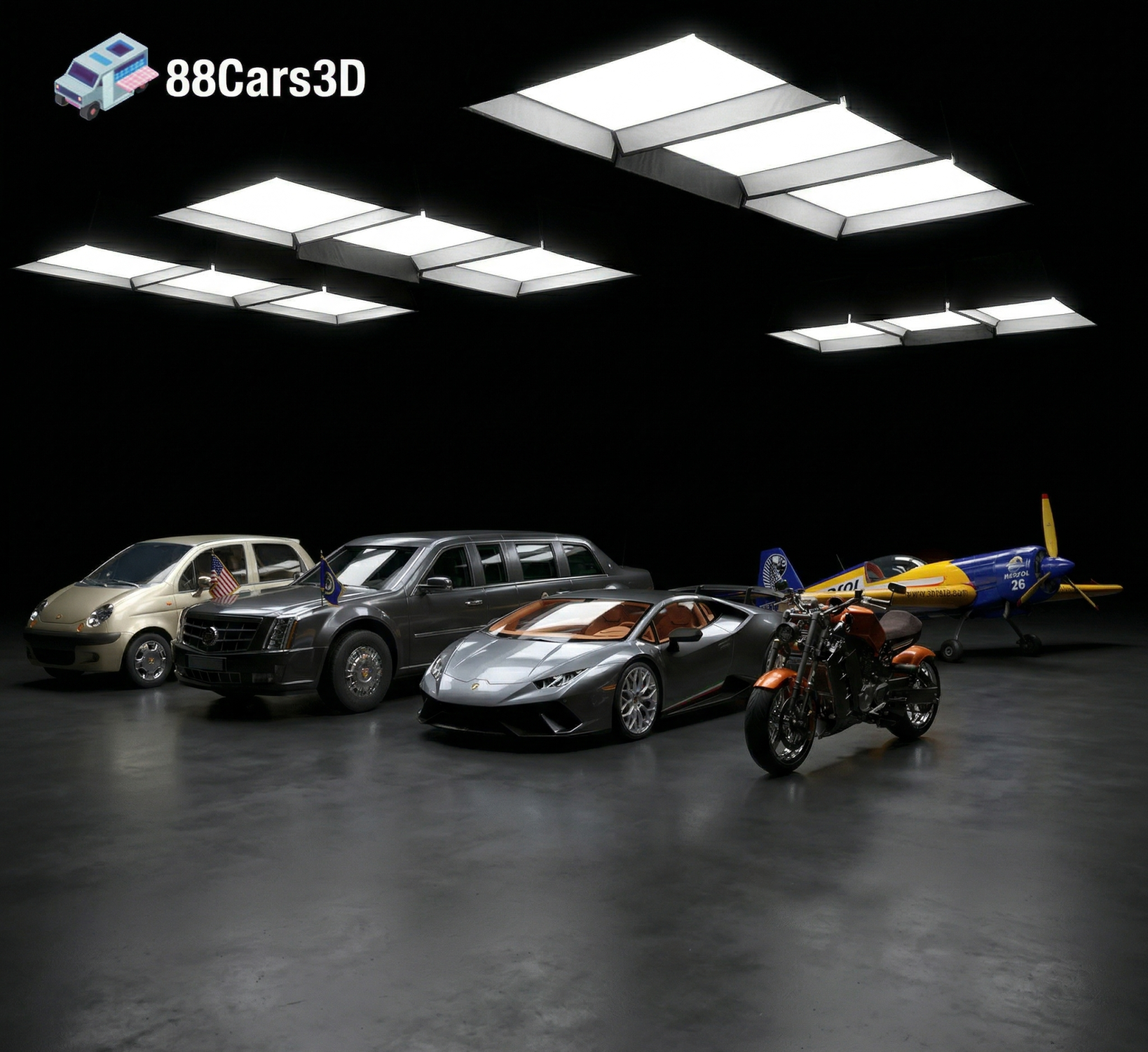
Texture: Yes | Material: Yes | 3D Printable: Yes. Download the Ultimate Creators’ Showcase featuring 5 premium 3D models: Lamborghini Huracan, ZAV Concept Motorcycle, Sukhoi SU-26, Presidential Limousine, and Daewoo Damas. Optimized for 4K CGI rendering and 3D printing. Save massive with this exclusive multi-category bundle!
Price: $99.99

Texture: Yes | Material: Yes | 3D Printable: Yes. Download the Italian Thoroughbreds Bundle featuring 5 iconic 3D models: Lamborghini Huracán Performante, Ferrari 458 Italia, Lamborghini Urus, Diablo SV, and Maserati GT. Optimized for 4K rendering and 3D printing (STL included). Save 50% with this ultimate Italian vehicle collection.
Price: $199.99

Download the Elite Future Mobility Bundle featuring 4 highly optimized 3D models: Tesla Model S, Avatr 11, Li L9, and Zoox Robotaxi. Perfect for ArchViz, Smart City renders, and game dev. Optimized for Unreal Engine and Blender. Includes .fbx, .obj, and .max formats.
Price: $99

🚗 5 Iconic German Cars (BMW M4 G82, M5 CS, X3, 1 Series & Mercedes E-Class). ✅ Optimized for ArchViz: Ready for Corona & V-Ray. 💰 Save €71 with this limited-time collection! 🚀 Instant Download after purchase.
Price: $119

Download the Extreme Off-Road & Survival 3D Models Bundle! Includes the Brabus 800 Adventure, Dodge Ram Bigfoot, Spec Truck, and a Caravan. Save over €210 on this premium 4-in-1 off-grid vehicle pack for ArchViz and game development.
Price: $149.99

Download the Heavy Duty & Commercial Logistics 3D Models Bundle! Includes the Ford Sterling, Caterpillar CT680, Mercedes Citaro Bus, and Vito Van. Save over €130 on this massive, game-ready 4-in-1 industrial vehicle pack.
Price: $109.99

Download the Ultimate Custom Motorcycles 3D Models Bundle. Includes a Custom Chopper, Ducati 916 Café Fighter, Harley XR1200X, and BMW K100. Perfect premium props for luxury ArchViz garages. Save over €250 today!
Price: $159.99

Download the ultimate JDM Street Racing 3D Models Bundle! Includes the Nissan GT-R, Toyota Supra, Mazda RX-7, Lancer Evo IX, and Honda NSX. Save big on this highly optimized, game-ready 5-in-1 Japanese legend car pack.
Price: $129.99

Download the ultimate American Muscle & Cinematic Classics 3D Models Bundle! Includes the Dodge Charger ’68, Mustang Eleanor GT500, Camaro Z28 ’79, and a custom ’69 Mustang. Save over €240 on this game-ready, premium 4-in-1 pack.
Price: $149.99

Download the Everyday City Traffic 3D Models Bundle. Includes the VW Golf, Kia Picanto, Hyundai Tucson, Toyota Yaris, and a DHL Ford Transit Van. Save big on this 5-in-1 pack, perfectly optimized for realistic ArchViz streets and game traffic.
Price: $99.99

