Get 50% OFF All Premium 3D & STL Models!

The world of 3D modeling has revolutionized how we interact with design, entertainment, and even historical preservation. At its core, it offers an unparalleled ability to recreate, simulate, and innovate. For enthusiasts and professionals in automotive design, game development, film, or visualization, the demand for high-quality, technically sound 3D car models is ever-present. These digital assets are not merely pretty pictures; they are the fundamental building blocks for sophisticated projects, requiring precision, optimized geometry, and versatile file formats.
Few vehicles embody a rich cultural narrative quite like the Volkswagen Bus. An undisputed icon of freedom, adventure, and a bygone era, its distinctive silhouette instantly evokes a sense of nostalgia. Capturing this essence in a 3D model demands meticulous attention to detail, ensuring every curve, panel, and feature resonates with its real-world counterpart. This is where models like the Volkswagen Bus 3D Model from 88cars3d.com shine, offering a perfect blend of artistic fidelity and technical robustness for a myriad of applications, from stunning automotive rendering to interactive game environments and even physical 3D prints.
Choosing the right file format is as crucial as the model itself. Each format is designed with specific strengths, catering to different workflows, software compatibilities, and end-use applications. Understanding these nuances is paramount for anyone working with 3D car models, ensuring seamless integration and optimal performance. The Volkswagen Bus 3D Model, for instance, comes equipped with a comprehensive suite of formats, offering unparalleled flexibility.
The .blend format is Blender’s native file type, encompassing an entire scene with all its elements: meshes, materials, textures, lighting, cameras, animations, and even physics simulations. For artists and studios primarily operating within Blender, this is the most powerful format as it retains full editability and all native Blender features. It allows for complex material node setups, procedural textures, and non-destructive modifiers, making it ideal for deep customization and ongoing development. A .blend file like the one provided for the Volkswagen Bus offers a starting point that can be infinitely tweaked, from adjusting its two-tone paint scheme to reconfiguring its interior layout or adding roof rack accessories.
As one of the most widely adopted interchange formats, .fbx (Filmbox) excels at transferring 3D data between different software applications and game engines. It supports geometry, materials, textures, animations, skinning, and blend shapes. Its robust nature makes it the go-to choice for real-time pipelines like Unreal Engine and Unity. When importing the Volkswagen Bus 3D Model as .fbx, developers can expect its clean mesh structure, proper pivot setup for steering and wheel rotation, and optimized polygon flow to translate smoothly, making it an excellent game asset or AR/VR experience component.
The .obj (Wavefront OBJ) format is a simple, universal geometry format. It’s highly compatible with virtually all 3D software due to its ASCII-based structure. While it excels at preserving mesh data (vertices, faces, UV coordinates), it typically references materials and textures via separate .mtl files. This makes .obj a reliable choice for transferring basic mesh information when broad compatibility is prioritized over complex scene data. For the Volkswagen Bus, an .obj export ensures that its accurate body proportions and detailed exterior features are accessible across any platform, ready for custom texturing and shading.
The .glb (GLB, Binary GL Transmission Format) is a compact, self-contained format optimized for efficient transmission and loading in web applications, augmented reality (AR), and virtual reality (VR) environments. It bundles geometry, materials, and textures into a single binary file. This optimization is crucial for delivering smooth, interactive experiences on lower-power devices or over networks. The Volkswagen Bus 3D Model as a .glb is perfect for immersive classic vehicle showcases or interactive camper van experiences directly in a browser or on mobile AR/VR platforms.
The .stl (Stereolithography) format is the de facto standard for 3D printing. It represents 3D surfaces as a collection of unconnected triangular facets, making it ideal for translating digital models into physical objects. While it doesn’t store color or texture information, its focus on manifold geometry ensures printability. The Volkswagen Bus 3D Model’s availability in .stl format directly supports the creation of collectible scale van models and display miniatures, adhering to recommended print settings for various scales and material properties.
The .ply (Polygon File Format or Stanford Triangle Format) is often used for storing 3D data from 3D scanners, CAD applications, or for scientific analysis. It supports not only geometry but can also include properties like color, transparency, surface normals, and texture coordinates per vertex or face. For the Volkswagen Bus, a .ply file would be valuable for precision engineering, historical automotive modeling, or detailed restoration visualization where accurate mesh data with additional per-vertex information is beneficial.
The .unreal format signifies an asset specifically prepared and optimized for direct integration into Unreal Engine projects. This often means the model has already been imported, set up with appropriate materials, collision meshes, LODs (Levels of Detail), and possibly basic blueprints or skeletal meshes for animation. This pre-optimized state significantly accelerates development time for game developers looking to drop the Volkswagen Bus 3D Model directly into their virtual worlds, ensuring real-time performance and visual fidelity without extensive setup work.
The .max format is the native scene file for Autodesk 3ds Max. Like .blend for Blender, it contains the complete scene data, including all geometry, textures, lighting, cameras, animation keyframes, and modifiers specific to 3ds Max. For professionals working in architectural visualization, product design, or cinematic rendering with 3ds Max, this format provides full editability and control, allowing them to leverage 3ds Max’s powerful rendering engines and animation tools to create highly detailed and dynamic scenes with the Volkswagen Bus 3D Model.
The essence of a truly valuable 3D model lies in its meticulous attention to both form and function. The Volkswagen Bus 3D Model exemplifies this principle, offering a high-detail digital recreation that faithfully captures the spirit of this automotive icon. Every aspect, from its instantly recognizable silhouette to its functional components, has been considered.
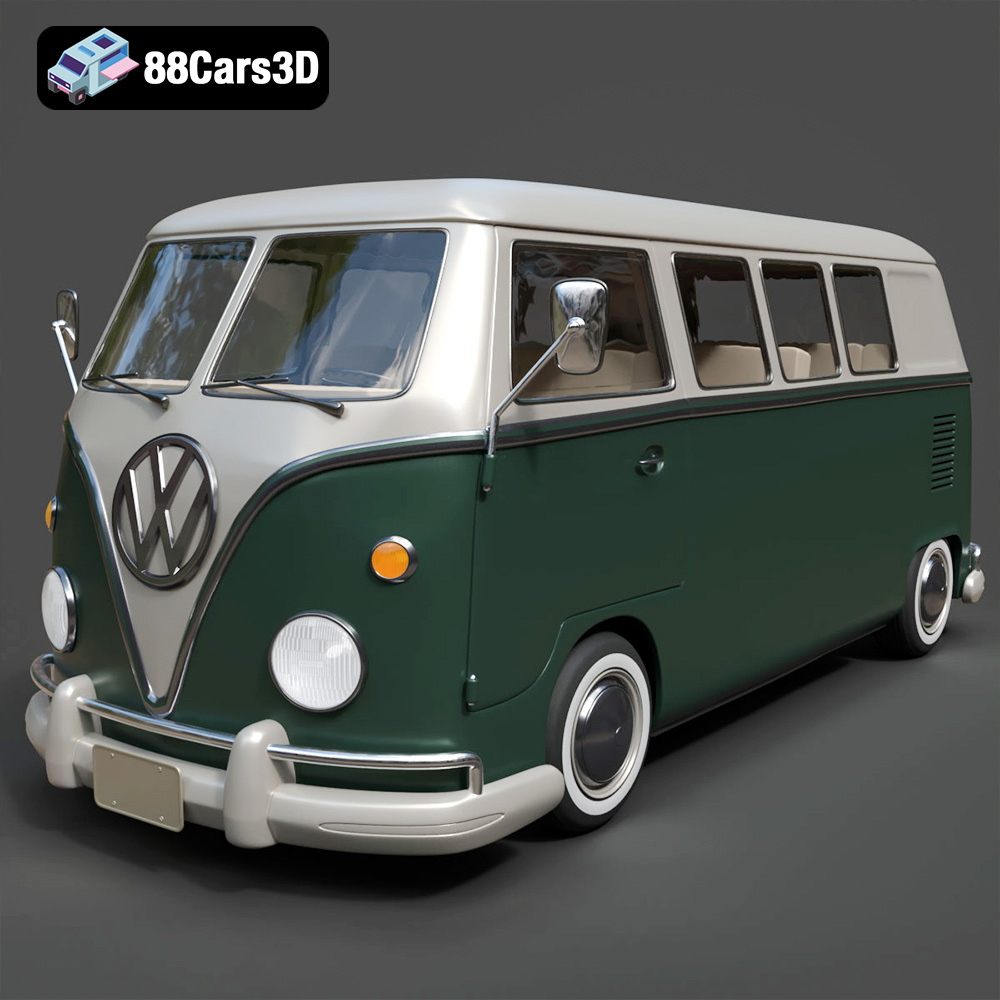
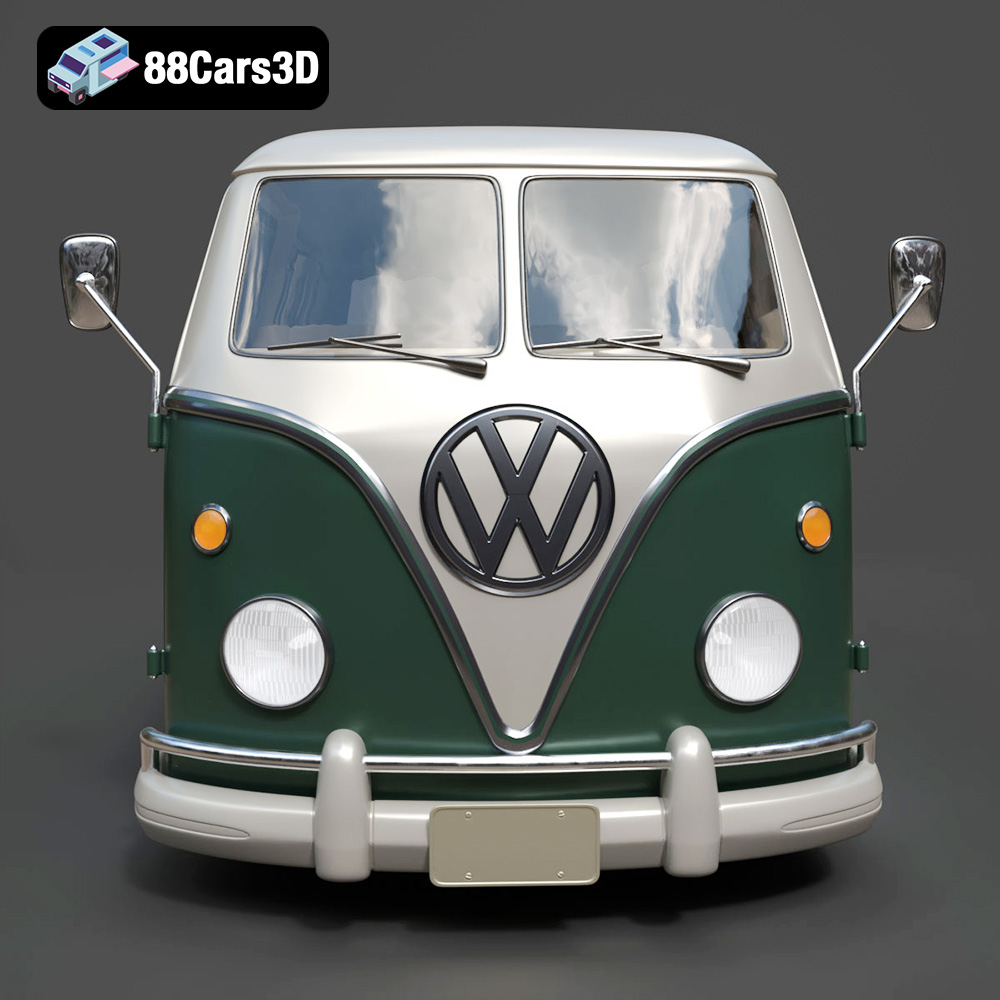
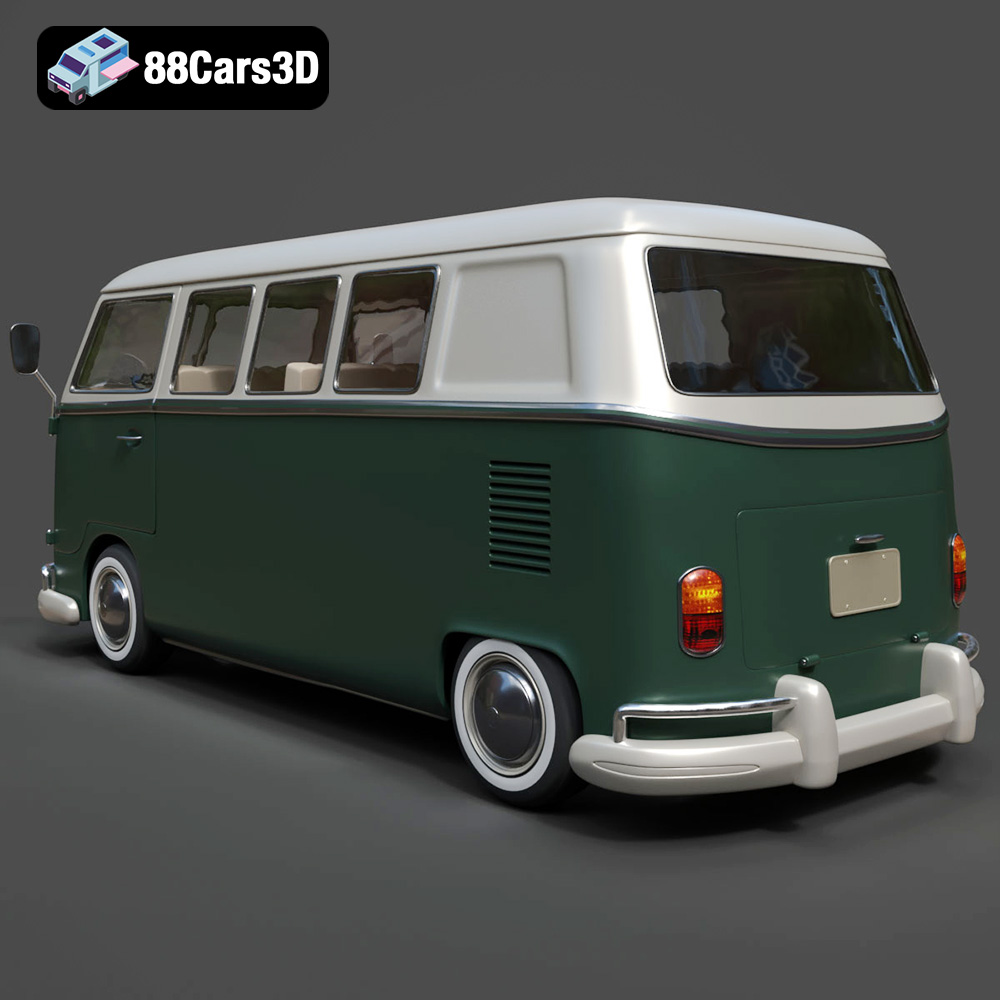
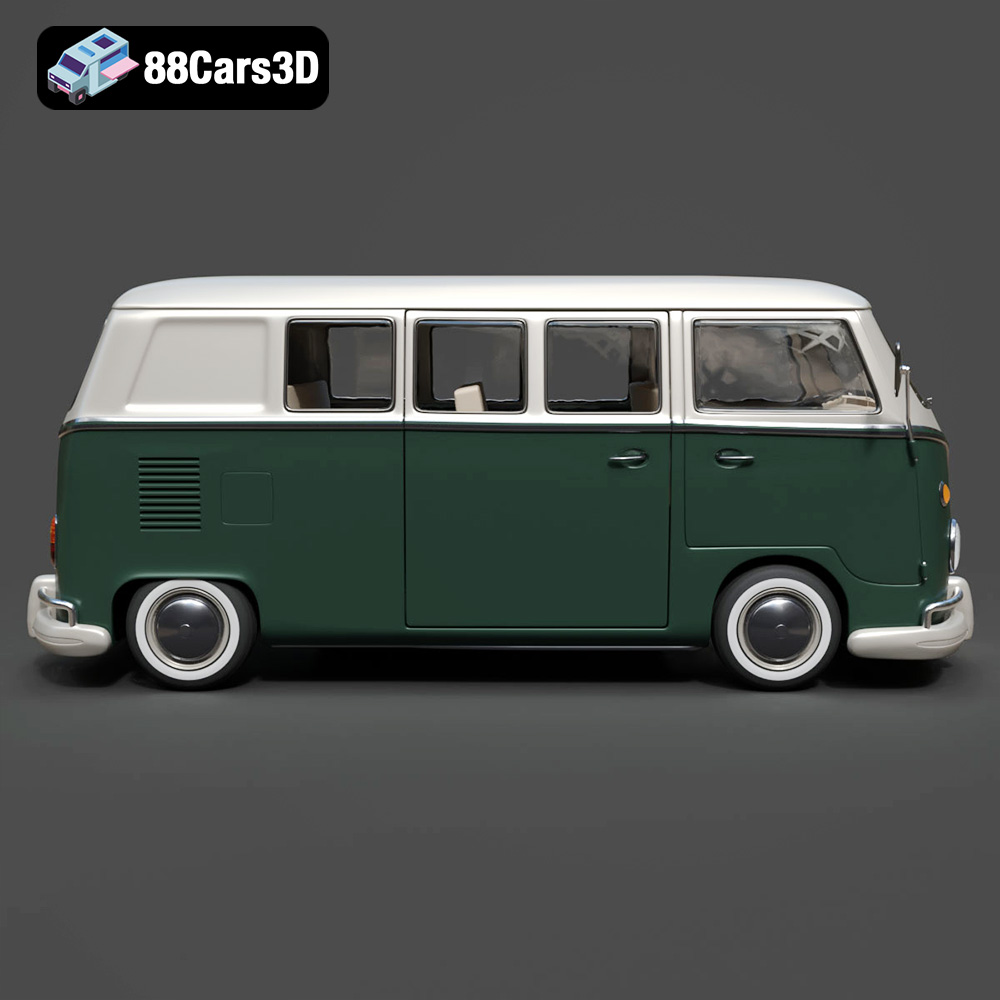
The product description highlights the accurate classic Volkswagen Bus body proportions, a critical factor for any authentic representation. The rounded front fascia with its signature V-panel styling, circular headlights, and chrome bumper detailing are all faithfully recreated. These aren’t just aesthetic choices; they are historical markers that define the vehicle. Large side window configurations, the classic sliding side door setup, and the subtle nuances of the rear engine compartment structure are all present. Furthermore, the model includes period-correct wheels and tire dimensions, crucial for maintaining realism. For animators, the inclusion of separate wheels and steering components is a significant technical advantage, enabling realistic motion and dynamic scene creation without complex rigging workarounds.
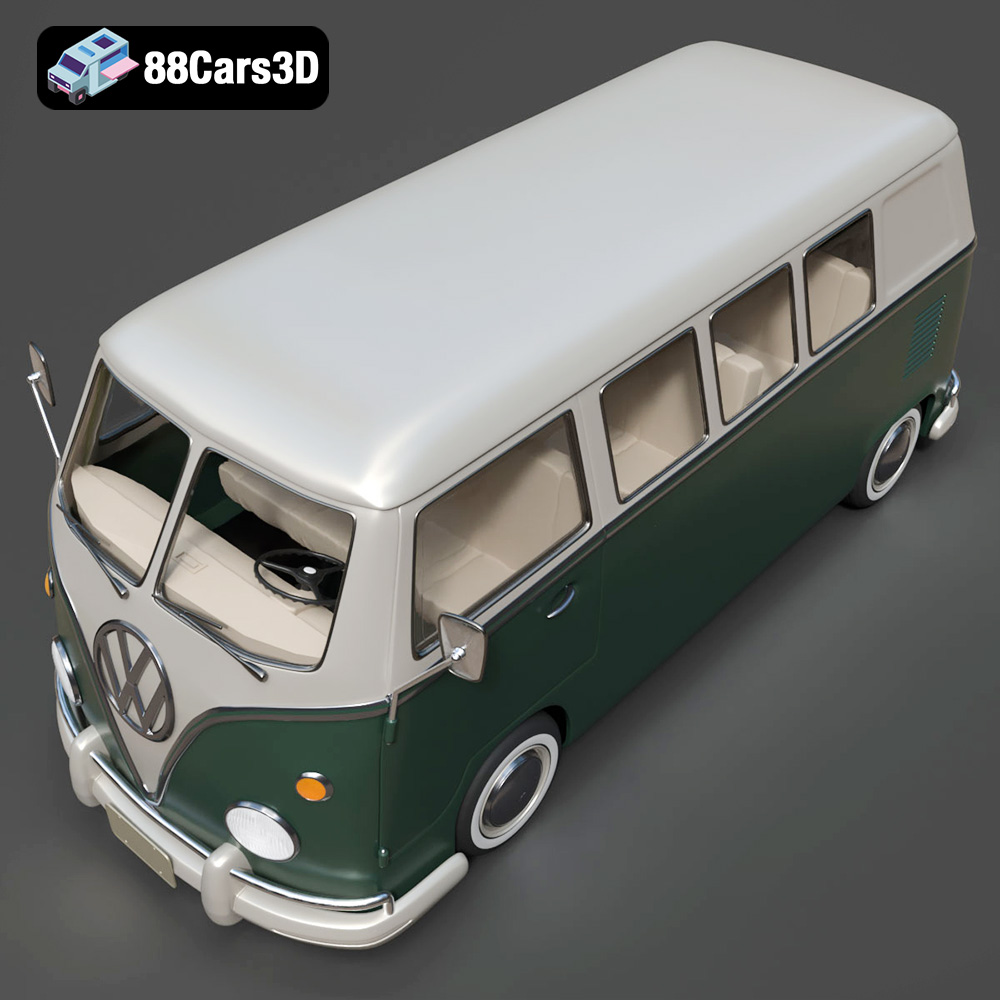
The realism doesn’t stop at the exterior. The interior of the Volkswagen Bus 3D Model is equally detailed, featuring a classic dashboard layout with analog gauges, a steering wheel, and a vintage control panel. Passenger seating configurations, interior paneling, and floor detailing contribute to a complete and immersive experience. This level of interior detail is vital for close-up renders, walkthroughs in AR/VR, or interior camera shots in cinematic productions. Crucially, the geometry for these interior elements is optimized for both real-time engines and high-quality renders, ensuring it looks fantastic without overburdening performance.
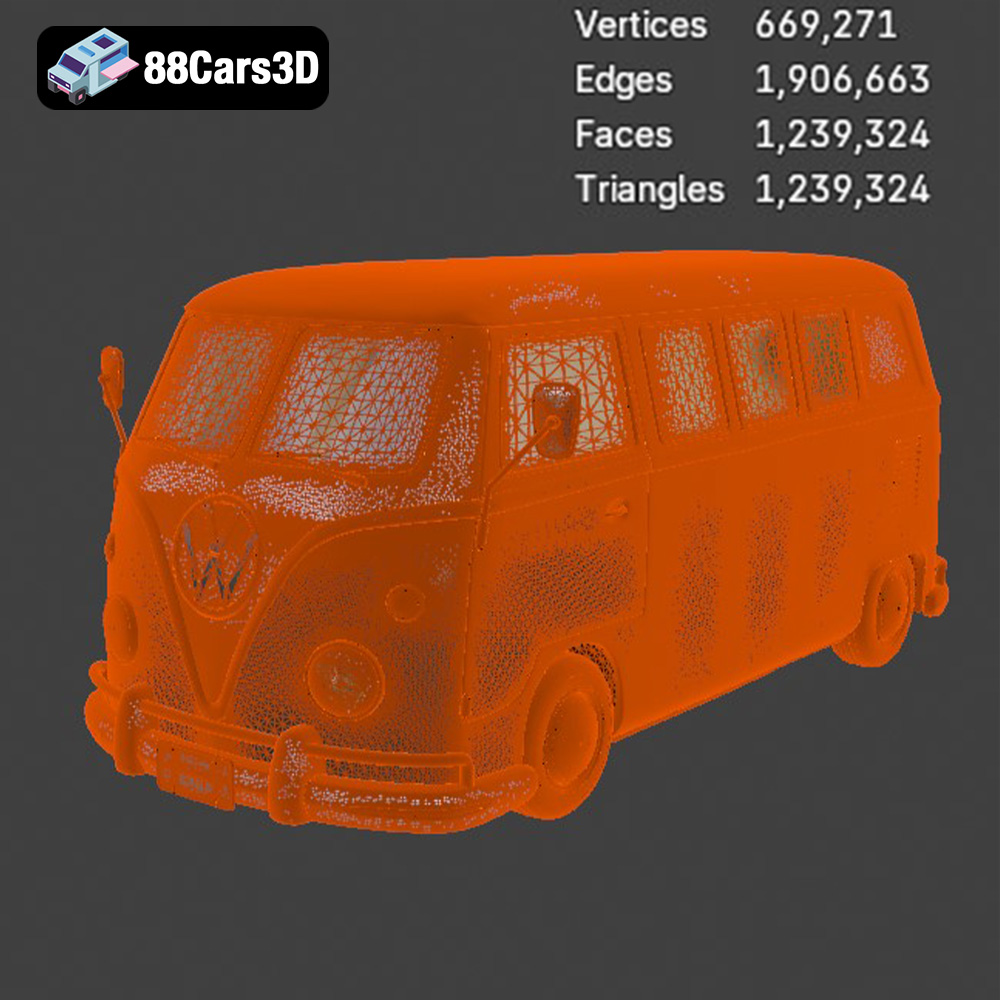
Beyond visual accuracy, the underlying technical structure of a 3D model dictates its utility. The Volkswagen Bus 3D Model boasts several technical advantages that make it a robust asset for professionals. Its clean and well-organized mesh structure ensures ease of modification and texturing. Real-world scale accuracy is non-negotiable for integration into diverse scenes, whether for architectural visualization or realistic game environments. The proper pivot setup for steering and wheel rotation simplifies animation processes, allowing artists to quickly set up driving sequences. Finally, optimized polygon flow contributes to both efficient rendering and real-time performance, striking a balance between detail and computational cost. This attention to technical quality from 88cars3d.com ensures that the model is not just visually appealing, but also functionally superior.
The versatility of the Volkswagen Bus 3D Model allows it to seamlessly integrate into a wide array of professional workflows, catering to different industries and technical requirements. From cinematic-quality renders to interactive simulations, its robust design supports numerous creative endeavors.
For artists focused on photorealistic automotive rendering, the Volkswagen Bus 3D Model provides an excellent foundation. In 3ds Max, users can leverage the included .max file to dive directly into a fully editable project. This allows for advanced material creation using V-Ray or Corona Renderer, fine-tuning lighting scenarios, and crafting complex environmental backdrops. Imagine a sunset render on a virtual beach, the Bus bathed in golden light, its chrome accents gleaming. Similarly, Blender users benefit from the native .blend file, enabling them to utilize Blender’s Cycles or Eevee render engines. Artists can apply custom two-tone paint schemes, add realistic dust and wear, and create stunning visual narratives for lifestyle marketing, vintage branding, or travel-themed promotions. The clean topology and optimized polygon flow ensure efficient rendering times without sacrificing visual quality.
Game developers and AR/VR creators demand models that are not only visually appealing but also highly optimized for real-time performance. The Volkswagen Bus 3D Model, with its .fbx and .unreal formats, is perfectly suited for these demanding environments. Importing into Unreal Engine, developers can quickly set up physics, collision meshes, and implement basic vehicle controls. The model’s optimized geometry ensures smooth frame rates in open-world exploration games, retro-themed environments, or driving simulators. For AR/VR experiences, the .glb format is invaluable, allowing for immersive classic vehicle showcases or interactive camper van tours that run fluidly on mobile and headset devices. The proper pivot setup for animated components like wheels and steering further simplifies the integration into real-time interactive systems, making it a ready-to-use game asset.
Beyond digital displays, the Volkswagen Bus 3D Model offers tangible possibilities through 3D printing. The inclusion of the .stl format, specifically designed for additive manufacturing, transforms this digital asset into a physical collectible. The product details provide specific 3D print settings, recommending scales like 1:32, 1:24, 1:18, or 1:12, along with parameters for layer height, wall thickness, and infill. These guidelines are crucial for achieving successful prints, whether on FDM or resin printers. For smaller scales or finer details, resin printing is often recommended. Users can print the body upright for optimal surface detail and the wheels separately for better resolution and assembly. Post-processing steps like sanding, priming, and applying two-tone paint finishes or optional decals allow for further customization, turning a digital file into a unique, desk-ready miniature car or automotive collectible.
The true value of a versatile 3D asset lies in its ability to inspire and adapt to diverse creative visions. The Volkswagen Bus 3D Model offers extensive opportunities for customization and integration into compelling scenarios, enabling artists and developers to tell unique stories.
Imagine a cinematic scene: a sun-drenched beach, waves gently lapping, and a meticulously rendered Volkswagen Bus parked by the shore, ready for a surf trip. This model is perfect for creating such evocative visual narratives. With its classic dashboard layout and passenger seating, artists can stage an interior shot of vintage luggage, a map, and an old camera on the seats, transporting viewers back to the 60s. For a city environment, the Bus could be placed on a cobbled street, bathed in the warm glow of streetlights, surrounded by other period-correct elements. The ability to adjust lighting for beach sunsets or urban vintage scenes directly influences the mood and storytelling potential, making it ideal for high-impact lifestyle marketing and nostalgic visualizations.
In the realm of interactive media, the Volkswagen Bus 3D Model opens doors to engaging user experiences. Game developers can integrate it into an open-world exploration game, allowing players to drive this iconic vehicle through sprawling landscapes, experiencing virtual road trips. Imagine a historical simulation where players restore and customize their own Bus, learning about its mechanics and cultural significance. For AR/VR, the model can form the centerpiece of an immersive virtual showroom or a guided tour through a customizable camper van interior. Users could “step inside” the Bus, change its paint job, add a roof rack or camper accessories, or even configure its passenger or camper interior layout in real-time. This level of interaction turns a static model into a dynamic, experiential asset.
Beyond the screen, the Volkswagen Bus 3D Model provides a fascinating pathway to physical creation through 3D printing. Consider a hobbyist creating a diorama of a classic Californian surf scene. Printing the Bus at a 1:24 scale, they can then meticulously paint it, add tiny surfboard accessories, and integrate it into their miniature world. For automotive enthusiasts, printing a series of these models at different scales allows for a unique collectible display. The guidelines for supports and print orientation, such as printing the body upright and wheels separately, ensure the best possible quality for physical output. The recommendation for post-processing—sanding, primer, two-tone paint finish, and optional decals—underscores the potential for personalized, museum-quality miniatures. This aspect bridges the digital and physical, offering a tangible connection to the iconic vehicle.
In a marketplace filled with digital assets, discerning quality is paramount. For professionals seeking reliable 3D car models, the technical excellence and versatility offered by platforms like 88cars3d.com make a significant difference. The Volkswagen Bus 3D Model is a testament to the commitment to precision and utility that defines their offerings.
High-quality 3D car models are not just about visual appeal; they are about technical integrity. 88cars3d.com emphasizes clean and well-organized mesh structures, real-world scale accuracy, and optimized polygon flow. These are the unsung heroes of efficient workflows. A model with poor topology can lead to rendering artifacts, difficult UV mapping, and frustrating animation issues. By contrast, an optimized model like the Volkswagen Bus ensures smooth operations, faster render times, and fewer headaches for artists and developers. This foundational quality means less time spent on fixing issues and more time dedicated to creative output, whether for automotive rendering, game assets, or intricate visualizations.
The comprehensive range of included file formats (.blend, .fbx, .obj, .glb, .stl, .ply, .unreal, .max) is a critical advantage provided by 88cars3d.com. This extensive compatibility ensures that regardless of your preferred software or target platform—be it 3ds Max for architectural visualization, Blender for animation, Unreal Engine for game development, or simply a 3D printer for a physical model—you have an appropriate, engine-ready asset. This eliminates the need for complex conversions or re-topology, saving invaluable project time. When investing in 3D car models, knowing that they are designed for seamless integration into diverse professional pipelines provides peace of mind and accelerates project delivery.
The journey from concept to rendered reality, or from digital blueprint to tangible object, is paved with the quality of the assets we choose. The Volkswagen Bus 3D Model stands as a prime example of a meticulously crafted digital asset that transcends mere aesthetics, offering profound technical advantages for a wide spectrum of applications. From its accurately proportioned exterior to its detailed interior, and from its clean mesh to its multi-format compatibility, it embodies the professionalism required for modern 3D workflows.
Whether you are an automotive rendering specialist aiming for photorealistic visuals, a game developer crafting immersive open-world environments, an AR/VR enthusiast building interactive experiences, or a hobbyist eager to 3D print an iconic collectible, this model delivers. Its flexibility across various file formats ensures seamless integration into major software platforms and engines, while its inherent detail and optimization promise both visual fidelity and performance efficiency. For those seeking high-quality 3D car models that truly accelerate their projects, exploring offerings like the Volkswagen Bus 3D Model at 88cars3d.com is an investment in both creativity and technical excellence.
The Volkswagen Bus 3D Model is a high-detail digital recreation of the iconic rear-engine van that became a cultural symbol of freedom, travel, and 1960s counterculture. Known for its rounded body shape, split or panoramic windshield variants, and practical interior space, the Volkswagen Bus remains one of the most recognizable classic vehicles in automotive history. This 3D model accurately represents the signature front V-shaped panel, circular headlights, large windows, sliding side door configuration, rear engine layout, chrome bumpers, and vintage wheel styling. Designed with clean topology and real-world scale accuracy, it is ideal for rendering, animation, simulation, game development, and AR/VR experiences. Perfect for retro road trips, beach environments, festival scenes, vintage urban streets, and cinematic productions.
$29.99
.arvr
.automotive
.blend
.campervan
.car3dmodel
.classicvan
.fbx
.gameasset
.glb
.max
.obj
.ply
.rendering
.retrovehicle
.simulation
.stl
.unreal
.vintagecar
.volkswagen
.vwbus