Get 50% OFF All Premium 3D & STL Models!

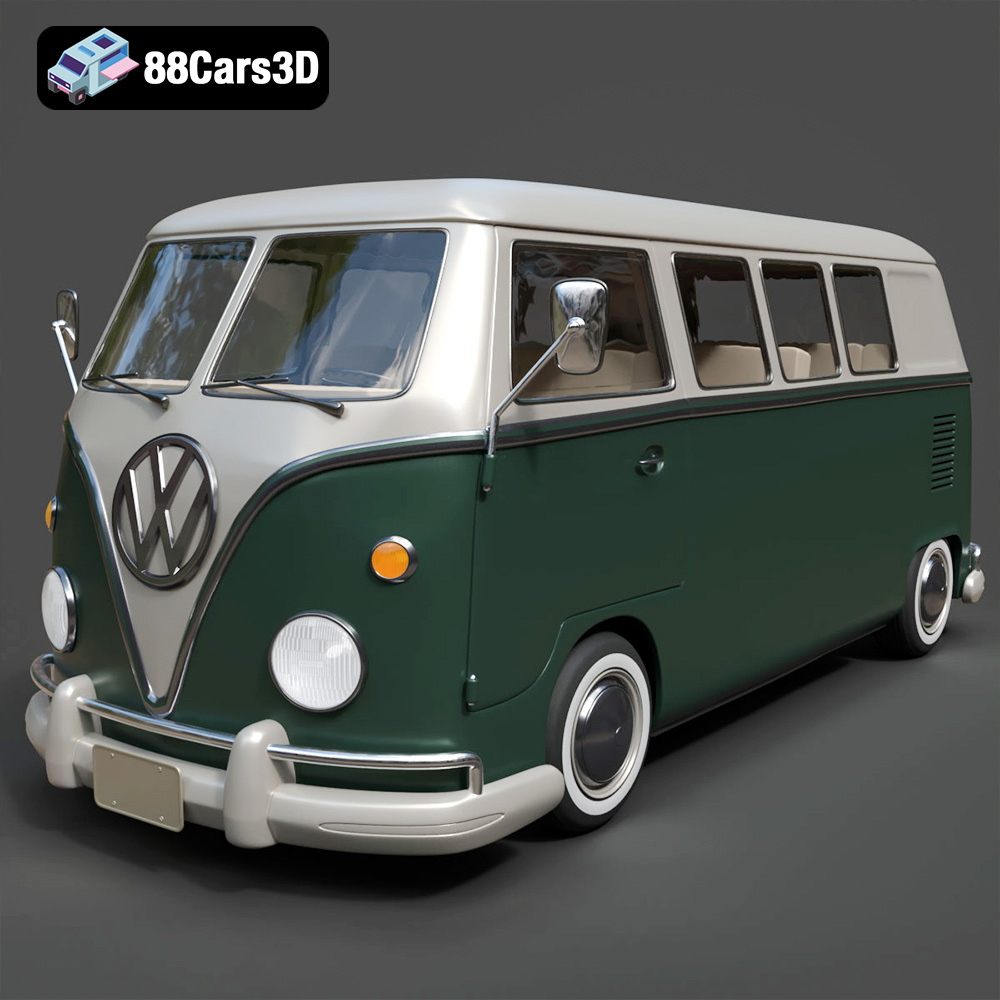
Few vehicles hold the enduring charm and cultural significance of the Volkswagen Bus. More than just a mode of transport, it embodies a spirit of adventure, freedom, and timeless design. From its iconic rounded silhouette to its distinctive V-shaped front panel and panoramic windows, the VW Bus is instantly recognizable and deeply nostalgic. In the rapidly evolving world of 3D visualization, game development, and even physical fabrication, having access to a meticulously crafted digital representation of such an icon is invaluable.
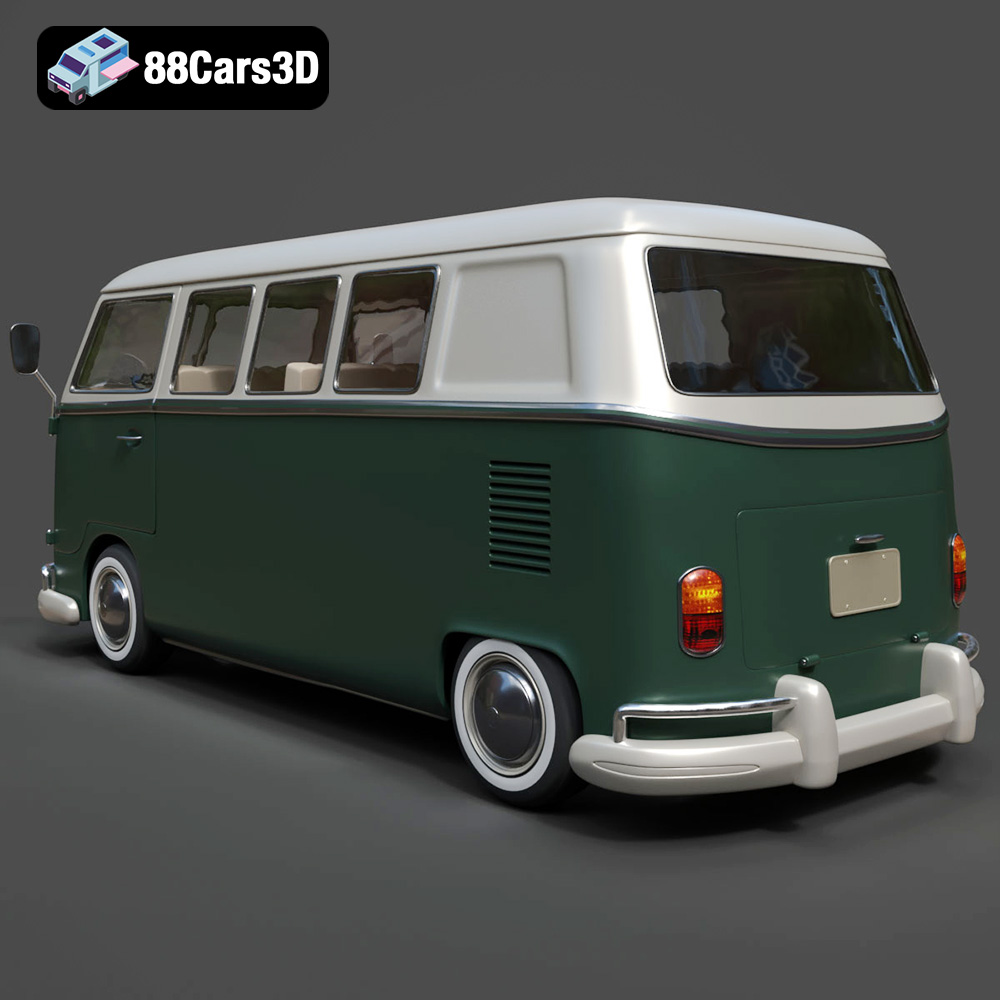
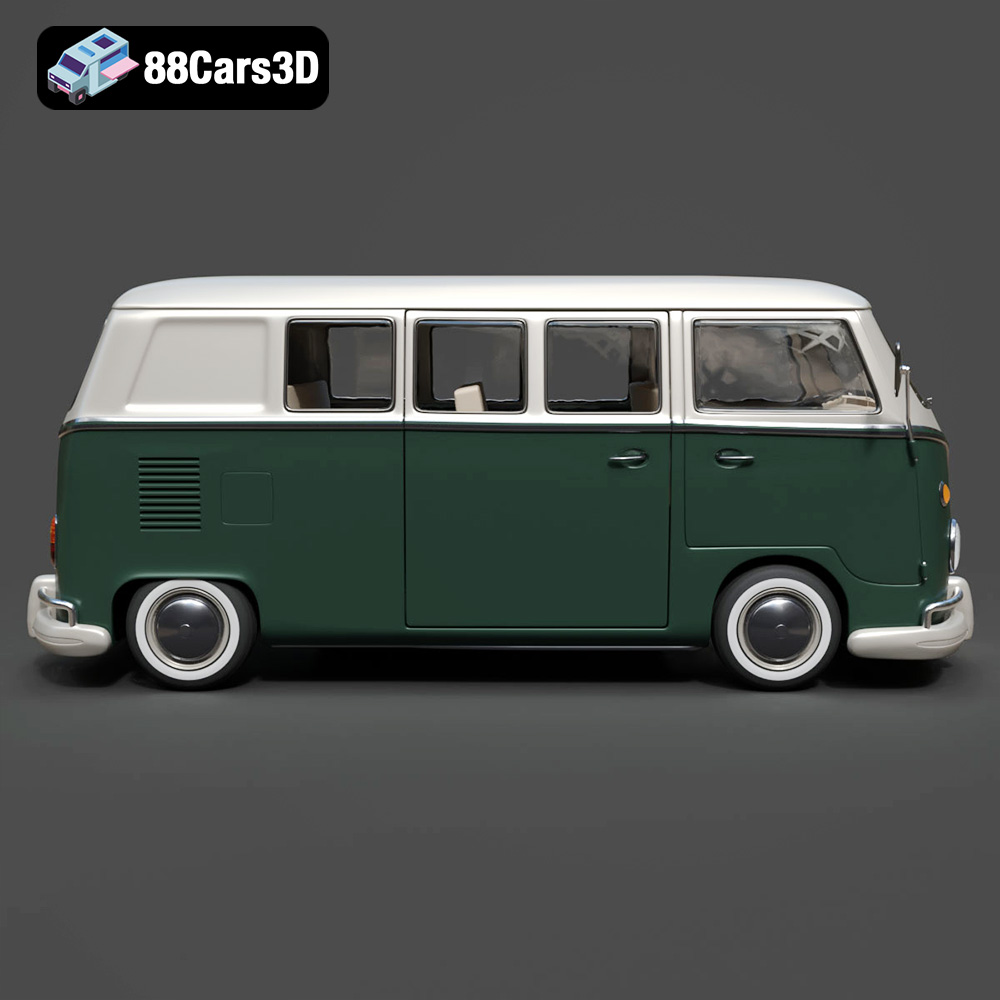
Today, artists, developers, and designers demand high-fidelity assets that not only look authentic but also perform flawlessly across diverse platforms. The Volkswagen Bus 3D Model, available at 88cars3d.com, is precisely this type of asset. This digital recreation captures the essence of the classic rear-engine van with exceptional detail, offering a robust foundation for a myriad of creative and technical projects. Whether you’re aiming for a photorealistic automotive rendering, an immersive game environment, an augmented reality experience, or even a tangible 3D-printed collectible, this model provides the necessary precision and flexibility.
The versatility of a 3D model is often defined by the file formats it supports. Different formats are optimized for various stages of a project, from initial editing to real-time deployment or physical output. The Volkswagen Bus 3D Model, for instance, comes equipped with a comprehensive suite of formats, ensuring seamless integration into virtually any professional pipeline. Understanding these formats is crucial for maximizing your workflow efficiency and achieving your project goals.
The .blend file is the native format for Blender, a powerful open-source 3D creation suite. When you acquire a .blend file, you’re getting a fully editable scene, complete with materials, textures, lighting setups, and any existing animations or rigs. This format is ideal for artists who primarily work in Blender, allowing them to dive deep into the model’s structure, adjust its topology, modify materials, or even re-texture the iconic Volkswagen Bus to suit specific artistic visions. It offers maximum flexibility for customization and advanced scene development within the Blender ecosystem.
The .fbx (Filmbox) format is a proprietary file format owned by Autodesk, widely recognized as the industry standard for 3D data interchange. Its strength lies in its ability to store not just mesh data, but also animations, rigs, cameras, and lights, making it incredibly versatile. For projects involving Unreal Engine, Unity, or other real-time pipelines, .fbx is often the go-to choice. It efficiently transfers complex scene information between different 3D applications like 3ds Max, Maya, and Blender, making the Volkswagen Bus 3D Model readily usable in most game development and animation studios.
The .obj (Wavefront OBJ) format is a simple, universal geometry definition file format that supports both polygon and free-form curves. While it doesn’t typically store animation or rigging data, it’s excellent for cross-software compatibility, reliably transferring mesh data (vertices, UVs, normals) between almost any 3D software. For basic model import and static renders, the .obj version of the Volkswagen Bus provides a clean and universally accessible mesh that can be easily textured and rendered in any package.
The .glb (GL Transmission Format Binary) is a modern, optimized format specifically designed for efficient transmission and loading of 3D scenes and models in AR, VR, and browser-based applications. It bundles the 3D model, textures, and animations into a single file, making it incredibly convenient for web and mobile deployment. The .glb version of the Volkswagen Bus 3D Model is perfect for interactive online configurators, augmented reality apps where the bus can appear in your real-world environment, or virtual reality experiences that allow users to step inside the classic van.
The .stl (Stereolithography) format is the standard file type for 3D printing. It describes only the surface geometry of a 3D object using a mesh of triangular facets, without any color, texture, or other CAD attributes. For anyone looking to bring the digital Volkswagen Bus to life as a physical collectible or scale model, the .stl file is essential. It provides a watertight, manifold mesh ready for slicing software and subsequent fabrication, allowing you to hold a piece of automotive history in your hands.
The .ply (Polygon File Format or Stanford Triangle Format) is another common file format for storing 3D data, particularly useful for scanned data, CAD, and scientific applications requiring high precision. While similar to .obj in storing mesh information, .ply can also include properties like color, transparency, and surface normals for each vertex or face. It offers a robust alternative for intricate models where precise geometry and additional per-vertex data are critical, such as detailed automotive analysis or specialized manufacturing processes for the Volkswagen Bus.
The .unreal format, or more accurately, assets packaged for Unreal Engine, implies a highly optimized, engine-ready version of the model. This typically means the mesh has been correctly scaled, materials are set up with PBR (Physically Based Rendering) parameters, and collision meshes, LODs (Levels of Detail), and potentially animation blueprints are configured. For game developers and cinematic artists working within Unreal Engine, this pre-packaged asset significantly streamlines the integration of the Volkswagen Bus, saving valuable development time and ensuring optimal performance within a real-time environment.
Finally, the .max file is the native format for Autodesk 3ds Max, one of the most widely used 3D modeling, animation, and rendering software packages in the architecture, engineering, and entertainment industries. A .max file of the Volkswagen Bus 3D Model provides full access to the original project, allowing for intricate modifications, advanced animation setups, and rendering with powerful engines like V-Ray or Corona. It’s the ultimate format for professionals who need deep control over every aspect of the model within a 3ds Max workflow.
Creating compelling visuals for automotive marketing, historical documentaries, or even personal projects demands more than just a decent model; it requires meticulous attention to detail in rendering. The Volkswagen Bus 3D Model excels in this regard, offering a pristine foundation for photorealistic results.
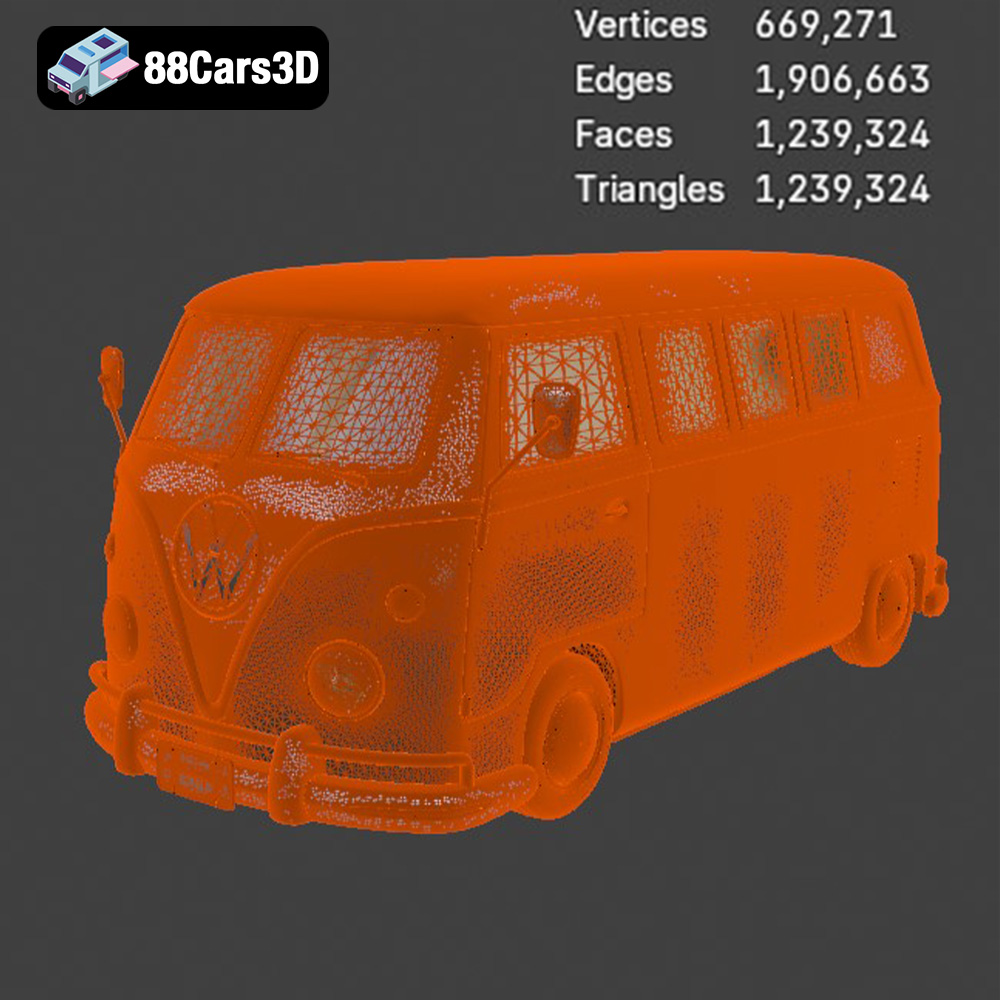
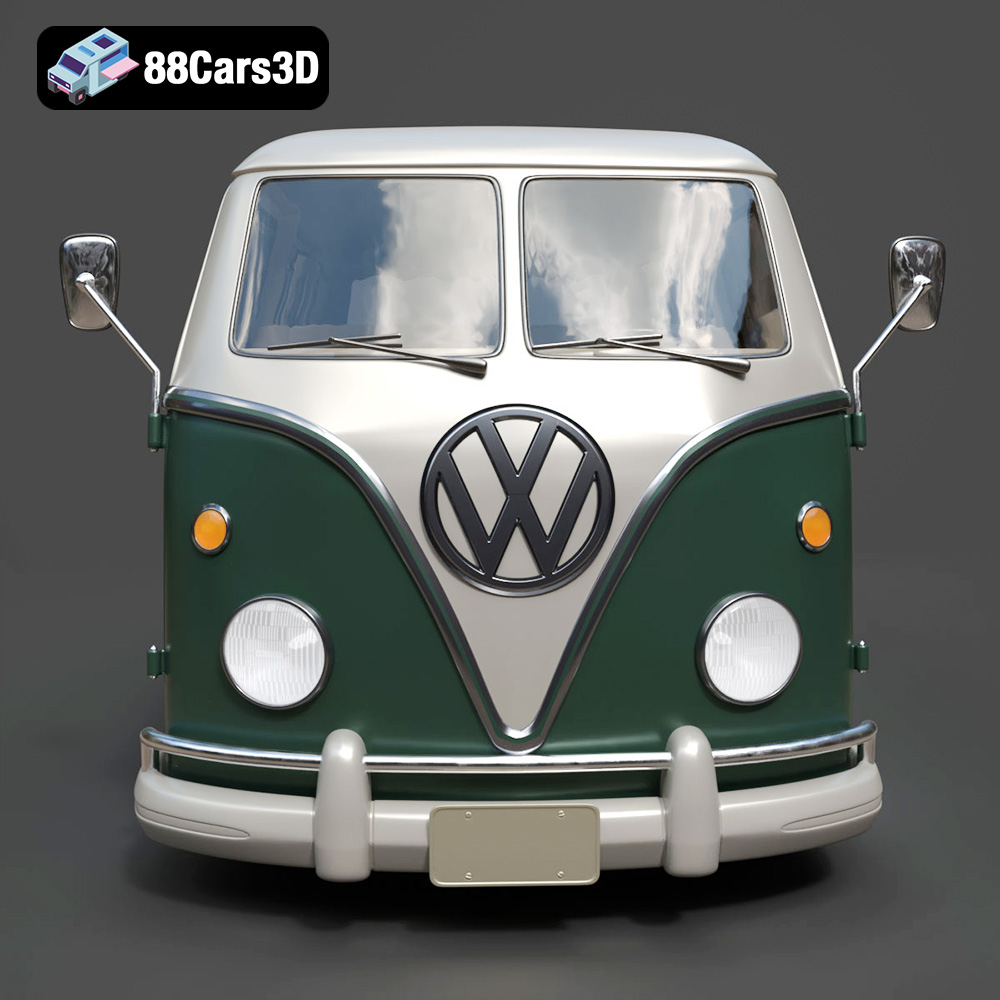
The inherent quality of this 3D model lies in its clean topology and real-world scale accuracy. Every curve of the rounded body, the signature front V-shaped panel, and the intricate chrome bumpers are faithfully recreated. This clean mesh structure is critical for achieving flawless sub-division surfaces in rendering, eliminating artifacts and ensuring smooth reflections. Furthermore, professional 3D car models like this one typically feature robust UV mapping, essential for applying high-resolution PBR (Physically Based Rendering) textures. These textures – diffuse, roughness, metallic, normal maps – interact with light in a physically accurate manner, allowing the digital Volkswagen Bus to gleam under virtual sunlight or show subtle wear and tear, depending on your artistic direction. The distinct period-correct wheels and tire dimensions further enhance this visual fidelity, ensuring the vehicle looks grounded and authentic in any scene.
Achieving a stunning render goes hand-in-hand with expert lighting and environment design. The Volkswagen Bus 3D Model is a perfect subject for evoking specific moods. Imagine it bathed in the warm glow of a beach sunset, utilizing an HDR (High Dynamic Range) image to capture realistic sky and environmental lighting. Or perhaps set against a bustling vintage urban street, with nuanced artificial lights highlighting its classic lines. In 3ds Max, Blender, or other rendering suites, artists can leverage advanced rendering engines like V-Ray, Corona Renderer, or Blender Cycles to simulate global illumination, physically accurate reflections, and intricate shadow details. Coupled with volumetric fog or dust elements, the Volkswagen Bus can be placed in scenes that tell a compelling story, whether it’s a retro road trip advertisement or a nostalgic cinematic production.
The demand for interactive 3D content is soaring, driven by the expansion of game development, augmented reality (AR), and virtual reality (VR). The Volkswagen Bus 3D Model is not just for static renders; it’s built to thrive in dynamic, real-time environments, offering an immersive digital journey.
For game developers, performance is paramount. The Volkswagen Bus 3D Model’s optimized geometry and clean mesh structure make it an ideal game asset. Whether destined for an open-world exploration game, a retro driving simulator, or a period-specific adventure, its efficiency ensures smooth framerates. When importing into engines like Unreal Engine or Unity via the .fbx or .unreal formats, developers benefit from a model with properly set pivots for steering and wheel rotation, simplifying animation and vehicle physics integration. Additionally, implementing Levels of Detail (LODs) is crucial for managing performance at varying distances from the camera, something a well-structured model facilitates. Collision meshes can be easily generated or included, allowing for realistic interactions within the game world, transforming the classic van into a playable, drivable experience.
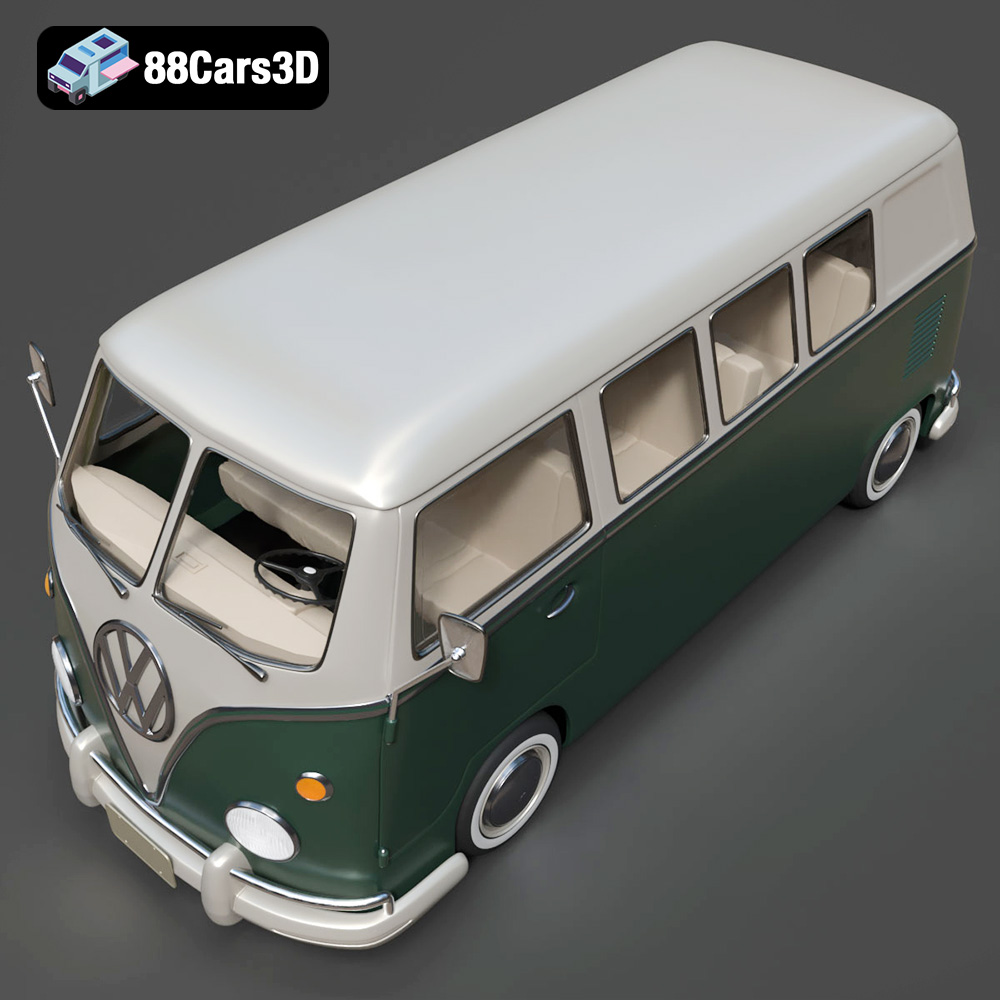
The immersive nature of AR/VR and the accessibility of WebGL demand optimized, lightweight models. The Volkswagen Bus 3D Model, particularly in its .glb format, is perfectly suited for these cutting-edge applications. Imagine pointing your phone at a surface and having a photorealistic Volkswagen Bus appear in your living room, scaling it, and walking around it in augmented reality. Or stepping into a VR environment where you can explore the interior of this classic van, experiencing its passenger seating configuration and vintage control panel in full 3D. The optimized geometry and efficient material setup ensure that these experiences run smoothly on various devices, offering rich visual detail without compromising performance. This allows for compelling interactive classic vehicle showcases and engaging virtual camper van experiences, bringing automotive history to a new generation through technology.
While digital visualization offers endless possibilities, there’s a unique satisfaction in holding a physical representation of a beloved object. The Volkswagen Bus 3D Model bridges this gap, providing the perfect data for 3D printing, enabling creators to produce tangible collectibles and scale models.
The conversion of a digital 3D model into a physical object starts with the right file format – primarily .stl. The Volkswagen Bus 3D Model’s clean and well-organized mesh structure is a significant advantage here. A “manifold” mesh, meaning it has no holes, self-intersecting geometry, or inverted normals, is crucial for successful 3D printing. Any irregularities in the mesh can lead to errors during slicing and printing. This model, designed with professional standards, ensures a robust and watertight mesh, ready for slicing software. This allows enthusiasts and collectors to print their own detailed scale models of the Volkswagen Bus, whether for display, tabletop gaming, or custom dioramas. The ability to produce a tangible artifact from a digital asset opens up new avenues for creative expression and personal customization.
The journey from digital file to physical model involves careful consideration of 3D printing parameters. For the Volkswagen Bus 3D Model, specific recommendations are provided to achieve optimal results. Recommended scales like 1:32, 1:24, 1:18, or 1:12 allow for varying levels of detail and print times. A layer height of 0.12–0.20 mm balances print speed with surface quality, while a wall thickness of 1.5–2.5 mm ensures structural integrity. Infill settings (15–30%) provide internal support without excessive material consumption. Crucially, supports are required for intricate features like mirrors, bumpers, and window overhangs to prevent sagging during printing. The suggested print orientation, with the body printed upright for best surface detail and wheels printed separately, maximizes print quality. Post-processing is where the model truly comes to life: sanding for smoothness, primer for adhesion, a classic two-tone paint finish, and optional decals or chrome accents can transform a raw print into a stunning, museum-quality replica. This comprehensive approach to 3D printing turns a digital asset into a cherished automotive collectible.
The true value of a high-quality 3D asset lies not just in its initial fidelity, but in its adaptability and how it streamlines professional workflows. The Volkswagen Bus 3D Model from 88cars3d.com offers extensive customization potential, making it an indispensable tool for a wide array of projects.
Beyond its default appearance, this 3D car model is a blank canvas for creativity. Artists can easily implement two-tone or custom body paint schemes, reflecting iconic historical variations or entirely new artistic interpretations. The modular nature of well-designed 3D models allows for the addition of various accessories – imagine a roof rack laden with surfboards for a beach scene, or camper accessories for an adventurous road trip render. The interior, with its classic dashboard layout and passenger seating, can be reconfigured from a simple passenger setup to a full camper interior, complete with beds and kitchenettes. Adding retro decals or custom travel branding can further personalize the model, tying it into specific narratives or marketing campaigns. Even adjusting the lighting for a golden hour beach sunset or a moody urban vintage scene can drastically alter the model’s perception, showcasing its versatility in conveying different atmospheres.
In demanding production environments, time is money. Starting a project with a pre-made, professionally crafted 3D model like the Volkswagen Bus from 88cars3d.com significantly accelerates the development process. Instead of spending countless hours on modeling and texturing from scratch, artists and developers can immediately focus on scene composition, animation, lighting, and integration into their target platforms. The technical advantages – clean mesh, real-world scale, proper pivot setup, and optimized polygon flow – ensure that the model is ready to use without extensive clean-up or rework. This level of quality and readiness is invaluable for automotive rendering, game development, AR/VR experiences, and visualization projects, allowing teams to deliver high-quality results efficiently and consistently. Investing in such a robust asset is a strategic decision that pays dividends in both time saved and the caliber of the final output.
The Volkswagen Bus is more than just a vehicle; it’s a cultural icon whose spirit resonates across generations. In the digital realm, its enduring appeal is perfectly captured by the Volkswagen Bus 3D Model. This meticulously crafted asset offers unparalleled versatility, from delivering stunning photorealistic renders for advertising and visualization to performing seamlessly within the demanding environments of game development and AR/VR. Its robust construction and support for a wide array of file formats – including .blend, .fbx, .obj, .glb, .stl, .ply, .unreal, and .max – ensure it’s a valuable tool for virtually any creative or technical pipeline, including the exciting prospect of 3D printing physical miniatures.
Whether you’re an automotive artist seeking precision, a game developer building an immersive world, an AR/VR creator crafting interactive experiences, or a hobbyist dreaming of a custom 3D-printed collectible, this Volkswagen Bus 3D Model provides the ideal foundation. It embodies the perfect blend of artistic fidelity and technical optimization, ready to fuel your next project. Explore this exceptional model and a diverse range of other high-quality 3D car models and game assets at 88cars3d.com, where professional-grade resources empower your creative vision.
The Volkswagen Bus 3D Model is a high-detail digital recreation of the iconic rear-engine van, a cultural symbol of freedom and travel. Accurately representing its signature V-shaped panel, circular headlights, and practical interior, this model is designed with clean topology and real-world scale accuracy. Ideal for rendering, animation, simulation, game development, AR/VR, and easily convertible to .stl format for 3D printing collectible scale models. Includes a comprehensive suite of file formats for diverse professional workflows.
$29.99
.arvr
.automotive
.blend
.campervan
.car3dmodel
.classicvan
.fbx
.gameasset
.glb
.max
.obj
.ply
.rendering
.retrovehicle
.simulation
.stl
.unreal
.vintagecar
.volkswagen
.vwbus