Get 50% OFF All Premium 3D & STL Models!

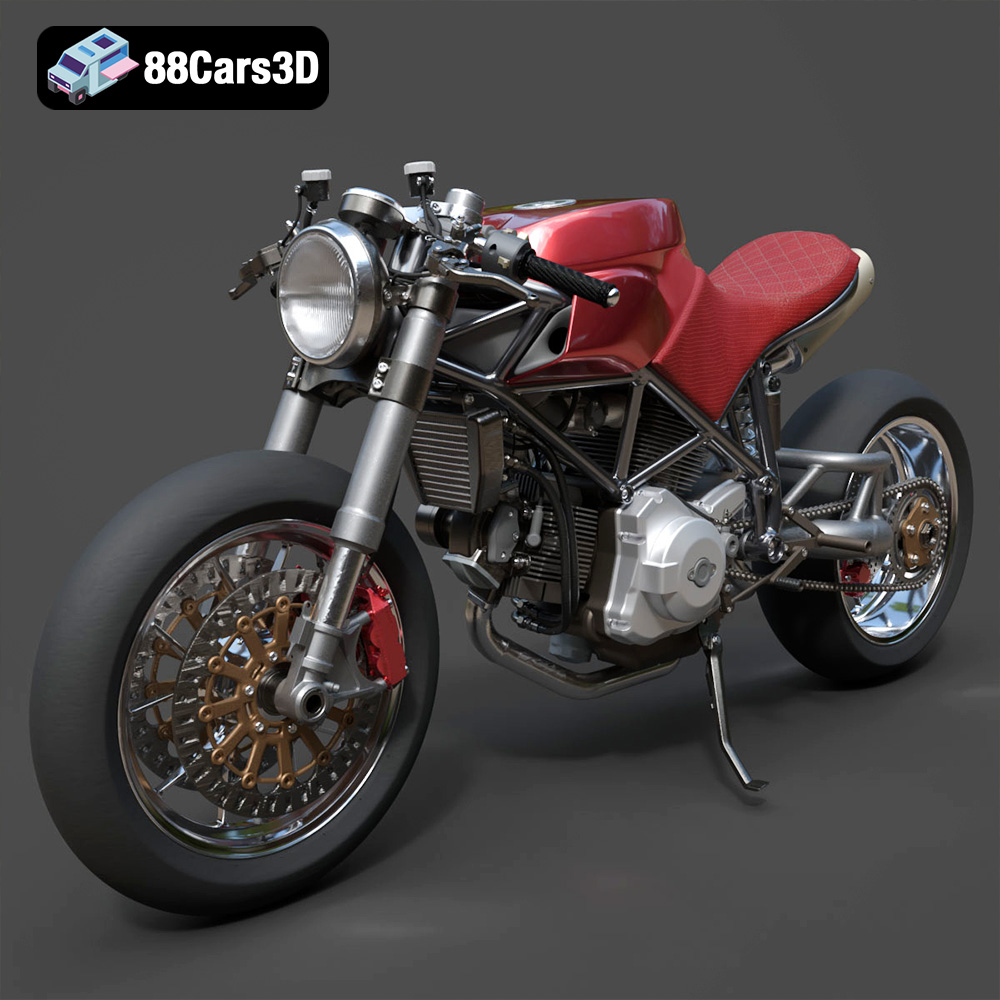
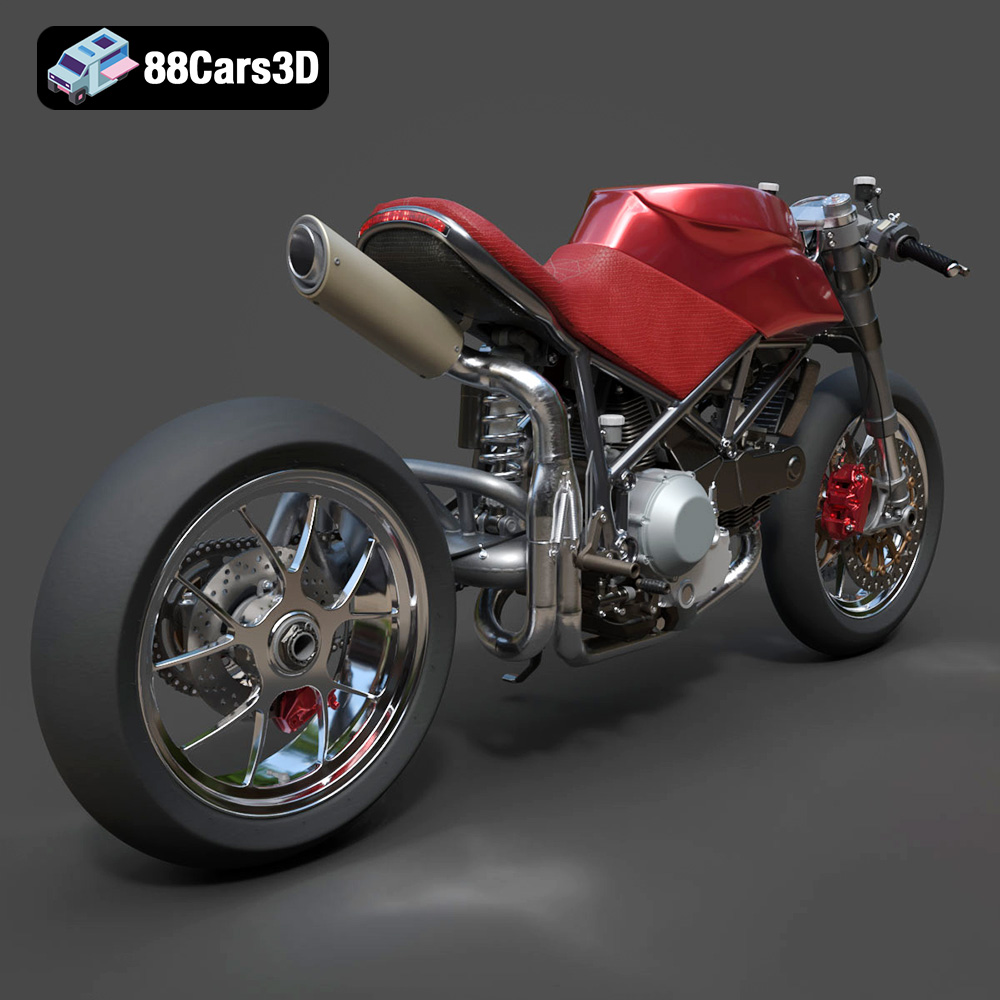
In the vibrant world of 3D artistry and automotive design, the fusion of iconic heritage with radical customization often results in truly breathtaking creations. For designers, animators, game developers, and visualization specialists, the demand for high-fidelity, meticulously crafted digital assets is paramount. This is especially true when it comes to capturing the raw emotion and mechanical artistry of custom-built motorcycles. Today, we delve into a prime example of such digital mastery: the Ducati 916 Custom Café Fighter 3D Model, an asset that pushes the boundaries of detail and versatility, available at 88cars3d.com.
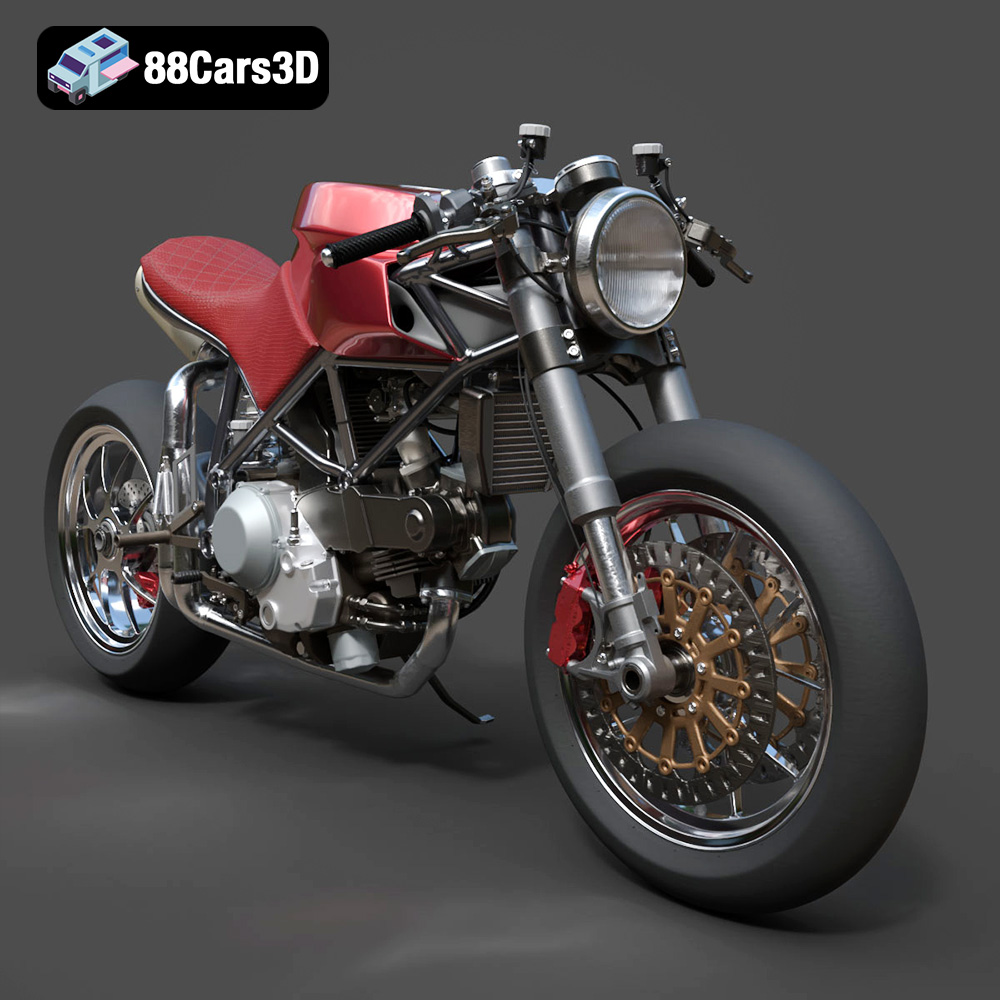
This isn’t just any motorcycle model; it’s a digital homage to the legendary 1990s Italian sportbike, reimagined with the aggressive, stripped-down aesthetic of a streetfighter and the retro-modern sleekness of a café racer. It’s a testament to what happens when mechanical precision meets artistic vision, making it an indispensable tool for anyone looking to create stunning automotive rendering, cinematic sequences, or high-fidelity 3D prints.
Custom motorcycles are more than just vehicles; they are expressions of identity, feats of engineering, and canvases for personal style. The café racer movement, born from post-war rebellion, and the streetfighter trend, emerging from wrecked superbikes, both celebrate stripping away the unnecessary to reveal the raw, mechanical heart of the machine. The Ducati 916 Custom Café Fighter 3D Model captures this spirit with extraordinary fidelity.
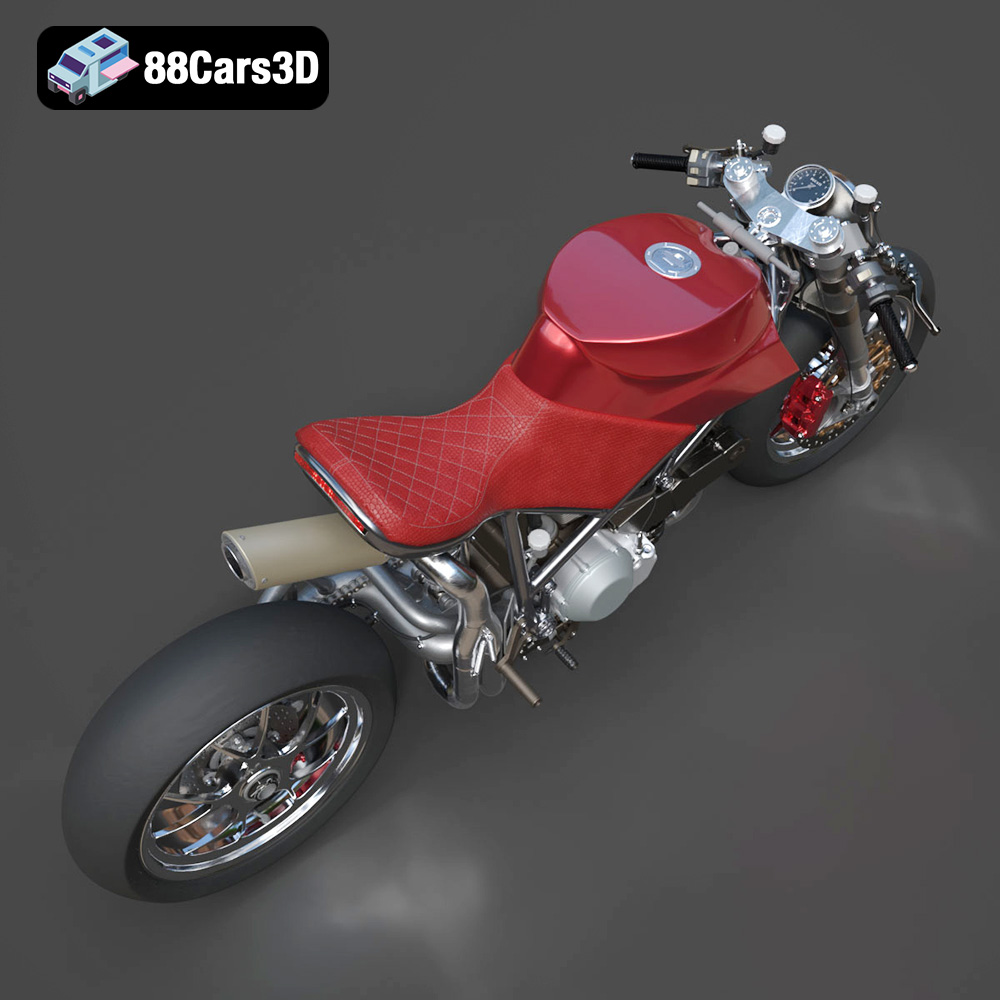
The journey of creating such a detailed 3D asset begins with a deep appreciation for the source material and the custom ethos it represents. The Ducati 916, with its iconic steel trellis frame, powerful L-twin engine, and distinctive single-sided swingarm, provides an exceptional foundation. The “Café Fighter” transformation then involves carefully conceptualizing how to strip away the factory fairings, expose the mechanical marvels beneath, and integrate custom elements like a minimalist tail section, bespoke headlight assembly, and aggressive riding ergonomics. This model embodies that vision, translating every curve, weld, and bolt into a digital masterpiece. It’s designed to evoke the feeling of a high-end custom garage build, ready for its close-up in any digital scene.
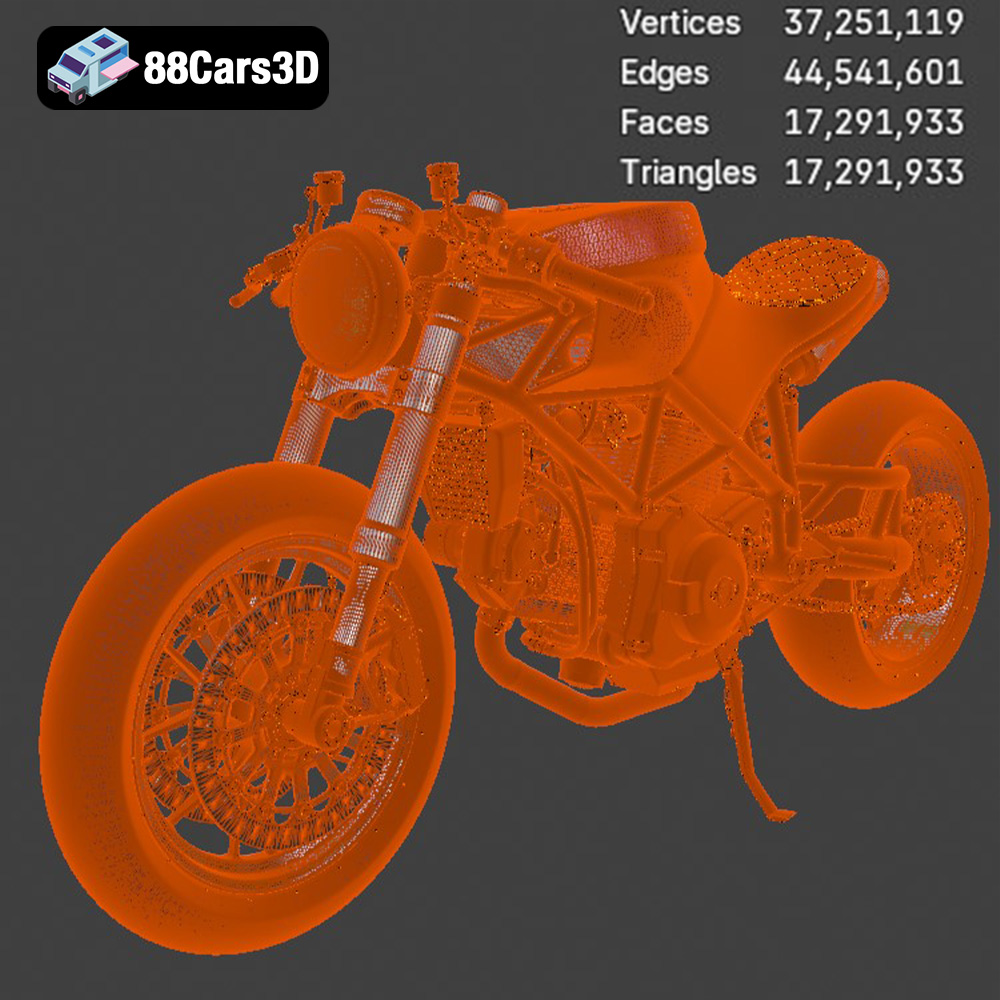
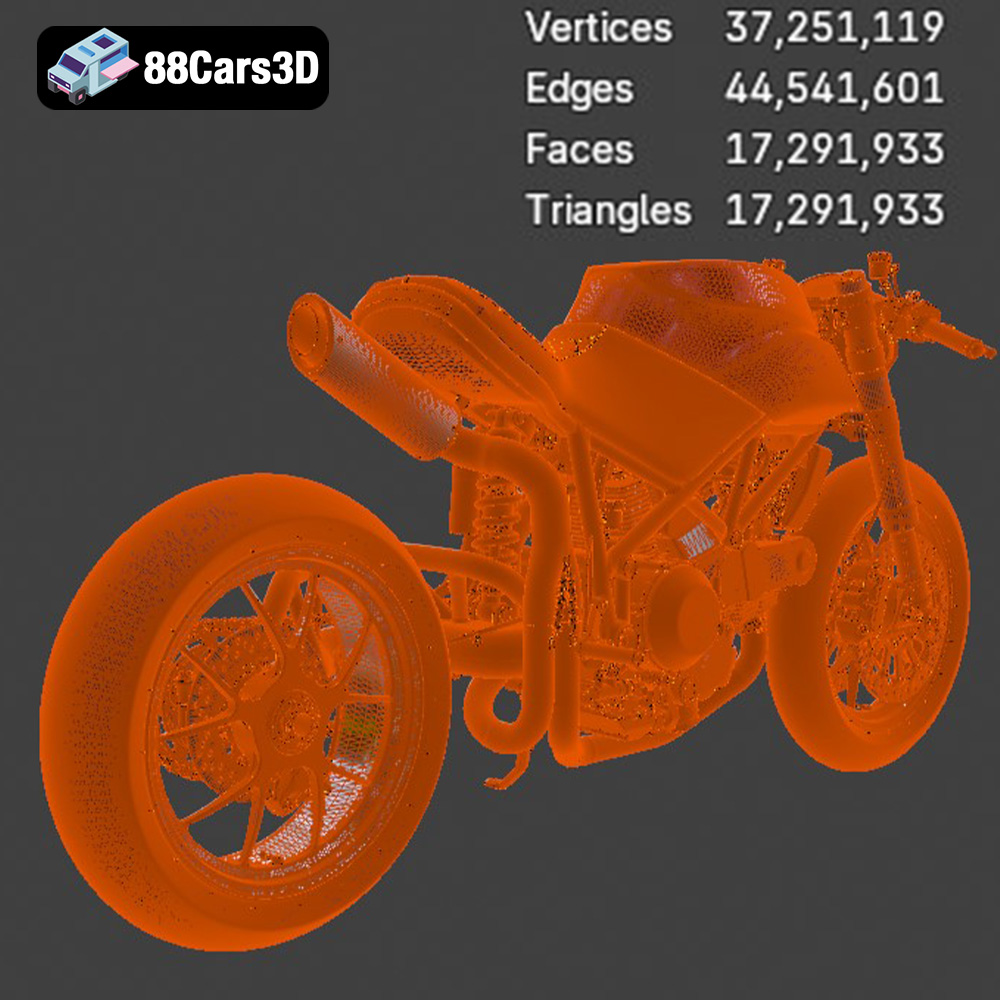
What truly sets this Ducati 916 Custom Café Fighter 3D Model apart is its uncompromising level of geometric detail. Boasting over 17 million polygons (specifically, 17,291,933 faces/triangles), it’s built for extreme visual fidelity. This isn’t an arbitrary number; it’s a deliberate choice to ensure that every component, from the intricate cooling fins of the L-twin engine block to the delicate welds of the trellis frame, holds up under the closest scrutiny. The dry clutch cover, the transmission, the custom swept exhaust system with realistic heat-stain material zones, and even the smallest bolts are modeled with an obsessive precision that mirrors real-world engineering. This ultra-high-poly mesh structure ensures that whether you’re rendering a static image or a cinematic fly-through, the model’s mechanical realism remains uncompromised.
The utility of any professional 3D asset lies not only in its visual quality but also in its accessibility and compatibility across various software and platforms. The Ducati 916 Custom Café Fighter 3D Model from 88cars3d.com is provided in a comprehensive suite of file formats, ensuring that artists, designers, and developers can seamlessly integrate it into their preferred workflows. Understanding the strengths of each format is crucial for maximizing efficiency and achieving desired outcomes.
Each 3D file format is designed with specific use cases in mind. Some are optimized for native software environments, others for broad interoperability, and still others for specialized applications like real-time engines or 3D printing. Selecting the correct format can save countless hours in conversion, data loss, and optimization efforts.
The inclusion of such a broad range of formats with the Ducati 916 Custom Café Fighter 3D Model ensures that whether your project involves high-end rendering, physical manufacturing, or interactive experiences, you have the right tools at your disposal, straight from 88cars3d.com.
Automotive rendering demands nothing less than perfection. From the subtle glint of chrome to the realistic deformation of tires, every detail contributes to the illusion of reality. The Ducati 916 Custom Café Fighter 3D Model, with its extreme polycount and meticulous design, is an ideal candidate for pushing the boundaries of photographic realism in digital automotive rendering.
The 17.2 million polygons of this custom motorcycle translate directly into breathtaking close-up renders. Imagine a studio setup, crisp lighting highlighting the brushed metal of the custom exhaust, the worn texture of the stitched leather seat, or the raw machined surfaces of the L-twin engine. Renderers like V-Ray, Corona Renderer (for 3ds Max), or Cycles (for Blender) can leverage this geometric density to produce incredibly smooth surfaces and sharp details, free from artifacts or low-poly approximations. The model’s real-world scale accuracy further enhances realism, allowing for precise camera work and depth of field effects. This level of detail makes it perfect for high-end automotive advertising campaigns, product visualization, or showcasing bespoke designs in a virtual gallery.
Beyond isolated studio shots, the Ducati 916 Custom Café Fighter excels when integrated into dynamic, narrative-rich environments. Picture it parked under the moody glow of a neon-lit urban alley, or cruising through a sun-drenched coastal road. The robust mesh provides an excellent foundation for advanced material work, where you can customize fuel tank colors (classic red, matte carbon fiber), adjust engine finishes (high-polish titanium, blacked-out thermal wrap), and even adapt lighting for dramatic effect. When combined with realistic environment maps, intricate lighting setups, and post-processing, this 3D car model becomes a powerful storytelling tool for cinematic productions and hyper-realistic visualization projects.
The beauty of 3D modeling extends beyond the screen. For enthusiasts, collectors, and designers, having a tangible representation of a digital asset is incredibly rewarding. The Ducati 916 Custom Café Fighter 3D Model is not just a rendering powerhouse; it’s also an excellent base for highly detailed, large-scale custom motorcycle resin prints, thanks to its robust .stl file format inclusion.
3D printing this intricate motorcycle model requires careful consideration, and the provided technical specifications are invaluable. Resin printing is highly recommended due to its ability to capture fine mechanical details that would be lost on a filament (FDM) printer. Imagine the delicate trellis frame, the thin spokes of the custom wheels, and the exposed engine components reproduced with stunning accuracy. Recommended scales (1:12, 1:10, 1:8) ensure a substantial and impressive physical model, while layer heights of 0.04–0.12 mm guarantee smooth surfaces and sharp edges. Supports will be essential for overhangs like handlebars, exhaust pipes, and the kickstand, ensuring structural integrity during the printing process. Proper print orientation, such as printing the frame angled and wheels separately, further optimizes the output for both detail and strength.
The journey from a raw 3D print to a display-ready model involves a meticulous post-processing phase. Sanding, priming, and painting are critical steps. This is where the digital customization options truly come to life in the physical world. Artists can choose to paint the iconic Red for the trellis frame, apply metallicizer paints for the engine block, and opt for matte or gloss finishes for custom panels. The ability to modify engine and exhaust finishes, or recreate distressed brown leather for the seat, offers an unparalleled opportunity for personal expression and creating truly unique physical collectibles. For anyone looking to bring a piece of digital automotive art into their physical collection, this 3D printable STL model provides an exceptional foundation.
While the Ducati 916 Custom Café Fighter 3D Model is an undisputed champion for high-fidelity rendering and 3D printing, its suitability for real-time applications like game development or AR/VR requires a specific workflow. The sheer polycount (over 17 million) is a clear indicator that direct integration into a game engine is not feasible without significant optimization.
For game developers or AR/VR creators, the journey begins with intelligent asset optimization. This involves a crucial process known as retopology, where a new, clean, and much lower-polygon mesh is created over the high-detail model. Tools like Blender’s Quad Remesher, ZBrush’s ZRemesher, or Maya’s retopology tools become indispensable. Once a game-ready mesh is created (often under 100k polygons for a detailed vehicle), the intricate details from the original 17.2M poly model are “baked” onto texture maps (like normal maps, ambient occlusion maps, curvature maps). These maps then give the low-poly model the illusion of high detail, without the performance cost. Good UV mapping is critical at this stage to ensure baked textures display correctly and efficiently.
Once optimized, the retopologized and textured model, typically in .fbx format, can be imported into game engines like Unreal Engine or Unity. The inclusion of an “.unreal” format suggests a path towards streamlined integration, but optimization remains key. Within the engine, artists will set up PBR materials using the baked textures, ensure proper collision meshes, and implement Levels of Detail (LODs). The model’s thoughtful pivot setup for steering, wheel rotation, and kickstand articulation provides a significant head start for animators and riggers, allowing for realistic in-game movement and interaction. While the initial polycount demands extra work, the unparalleled detail of the original asset means that the baked normal maps will be exceptionally rich, resulting in a low-poly asset that still boasts incredible visual quality. This demonstrates how high-quality 3D car models from marketplaces like 88cars3d.com serve as an excellent foundation for even the most demanding real-time projects.
The appeal of the Ducati 916 Custom Café Fighter 3D Model extends far beyond traditional automotive visualization. Its high quality and specialized design make it a versatile asset for a multitude of professional 3D art applications.
For architectural visualization (arch-viz) artists, integrating a highly detailed vehicle can dramatically enhance a scene. Imagine this stunning custom motorcycle parked in the meticulously rendered garage of a luxury modern home, or displayed in the foyer of an exclusive dealership. It instantly adds a layer of lifestyle, realism, and aspirational appeal, transforming a static architectural render into a vibrant, engaging narrative. The model serves as a focal point, drawing the viewer’s eye and imbuing the space with personality.
For educational institutions and industrial design studios, such a detailed model is an invaluable resource. It can be used to study complex mechanical assemblies, understand motorcycle design principles, or even serve as a high-fidelity virtual prototype for exploring potential modifications before committing to physical fabrication. Its exposed engine and frame make it an excellent tool for demonstrating internal components and engineering solutions in a visually engaging way.
In the realm of filmmaking and virtual production, the Ducati 916 Custom Café Fighter 3D Model is ready for cinematic close-ups and dynamic sequences. It can be used for pre-visualization, helping directors plan shots and blocking, or integrated directly into virtual sets. Its uncompromised mechanical detail ensures that it will stand up to the rigorous demands of large screens and high-resolution output, making it a reliable asset for any digital artist or studio.
The Ducati 916 Custom Café Fighter 3D Model represents the pinnacle of digital automotive artistry. It’s a meticulously crafted asset that blends the timeless appeal of the Ducati 916 with the aggressive, stripped-down aesthetic of a modern custom build. With over 17 million polygons, it offers an unparalleled level of detail, making it an indispensable tool for professional artists seeking the highest visual fidelity in their projects.
Whether your passion lies in creating breathtaking automotive rendering, producing cinematic sequences, bringing physical models to life through 3D printing, or embarking on complex game development projects (with appropriate optimization), this model provides an exceptional foundation. Its comprehensive file format support ensures compatibility across diverse pipelines, empowering creators with flexibility and control. For those who demand quality and precision in their 3D car models, the Ducati 916 Custom Café Fighter 3D Model, available at 88cars3d.com, is an investment in excellence, pushing the boundaries of what’s possible in the digital realm.
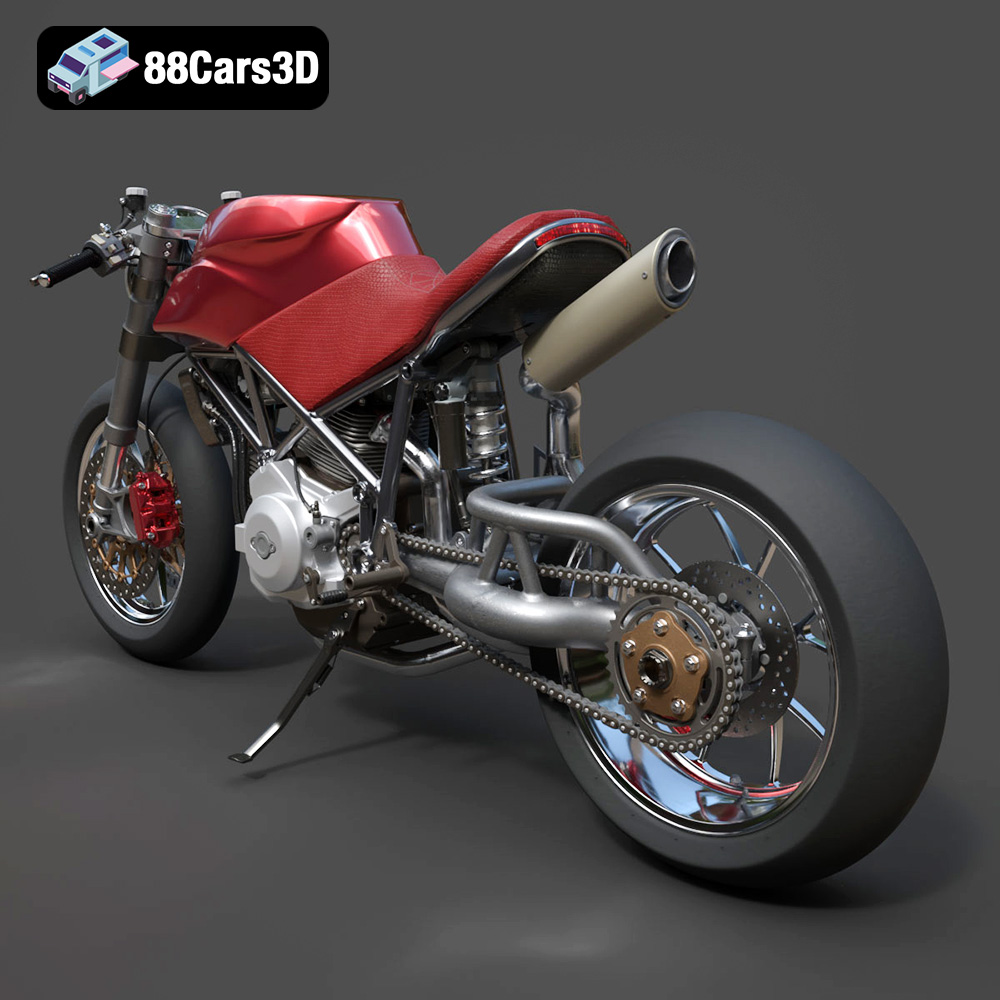
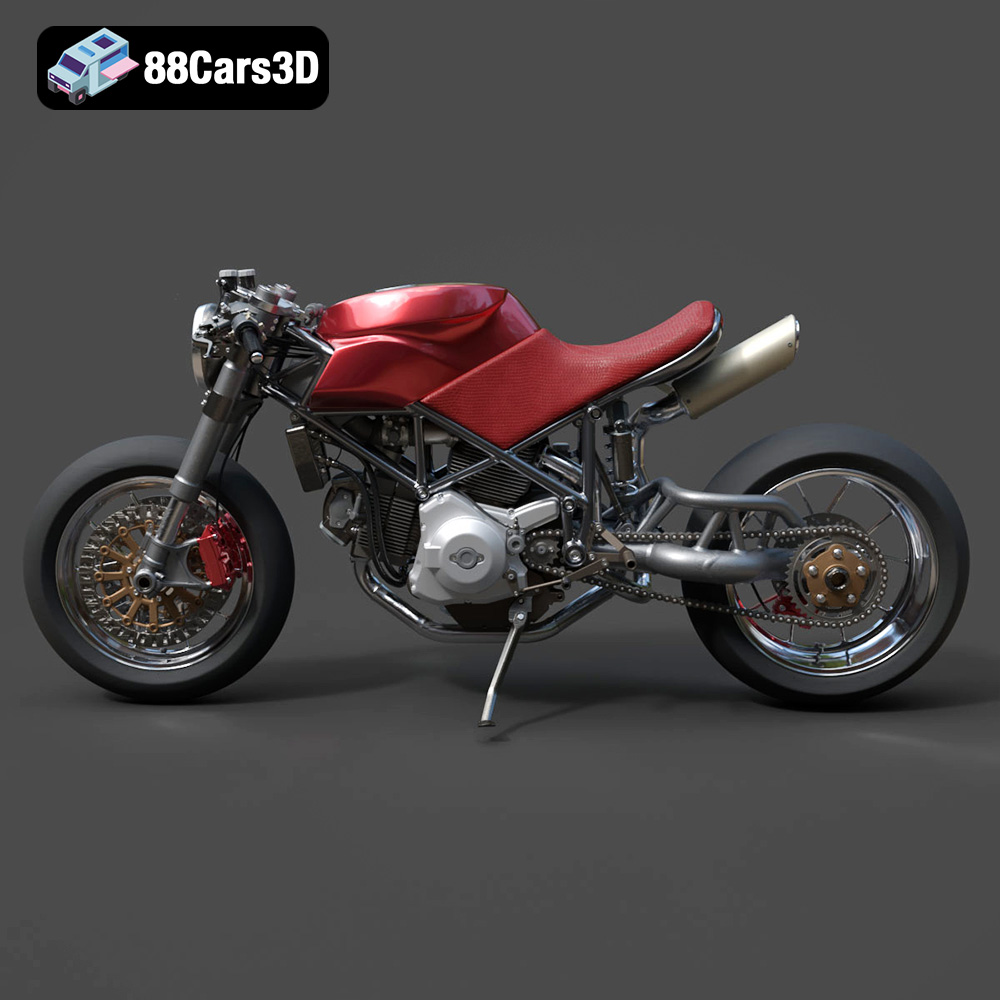
The Ducati 916 Custom Café Fighter 3D Model is an ultra-high-detail digital recreation of a bespoke custom motorcycle build, based on the legendary 1990s Italian sportbike. Inspired by iconic digital concepts that blend the raw mechanical aggression of a streetfighter with the retro-modern sleekness of a café racer, this model strips away the factory fairings to proudly expose the beautiful steel trellis frame, the legendary L-twin engine, and the signature single-sided swingarm. Built with an extreme, uncompromised level of geometric detail (over 17 million polygons), it provides maximum visual fidelity for extreme close-up rendering, cinematic automotive visualization, and high-end 3D printing.
$130
.blend
.ducati
.fbx
.obj
.rendering
.stl
.streetfighter
17m-polygons
3d printing
916
cafe-racer
car-3d-model
custom-motorcycle
engine-details
l-twin
trellis-frame
ultra-high-poly