Get 50% OFF All Premium 3D & STL Models!

In the rapidly evolving landscape of 3D visualization, automotive design, and real-time interactive experiences, the demand for exceptionally detailed and technically sound 3D car models has never been higher. Whether you’re an architect visualizing a logistic hub, a game developer crafting an immersive trucking simulator, or a marketing agency producing a high-impact commercial, the quality of your digital assets directly impacts the realism and credibility of your final output. Precision, authenticity, and technical robustness are paramount, transforming mere digital objects into dynamic storytelling elements.
At the forefront of these robust assets stands a model like the Caterpillar CT680 Tractor Truck 2015 3D Model. This particular model, available on 88cars3d.com, encapsulates the essence of heavy-duty vocational engineering, bringing the rugged reliability and distinctive design of Caterpillar’s iconic truck into the digital realm with remarkable accuracy. It’s more than just a model; it’s a meticulously crafted digital twin, ready to be integrated into diverse professional workflows, from photorealistic renders to interactive AR/VR applications and even 3D printing.
The Caterpillar CT680 Tractor Truck, first introduced in 2015, quickly became a staple in the heavy-duty vocational sector. Known for its robust construction, impressive hauling capabilities, and distinctive aerodynamic yet aggressive styling, it’s a machine built for durability and performance in the demanding worlds of construction, logistics, and long-haul transport. Recreating such an industrial workhorse in 3D requires an acute understanding of both its aesthetic and its functional design.
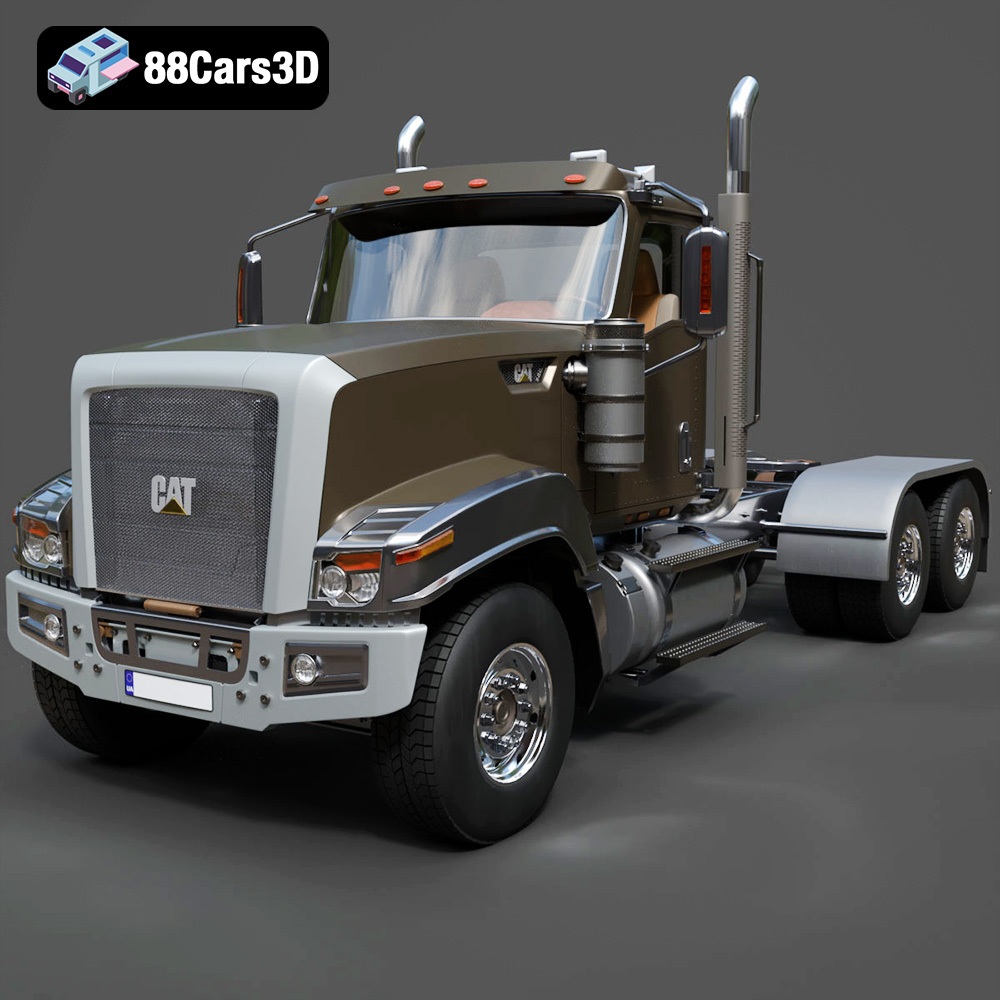
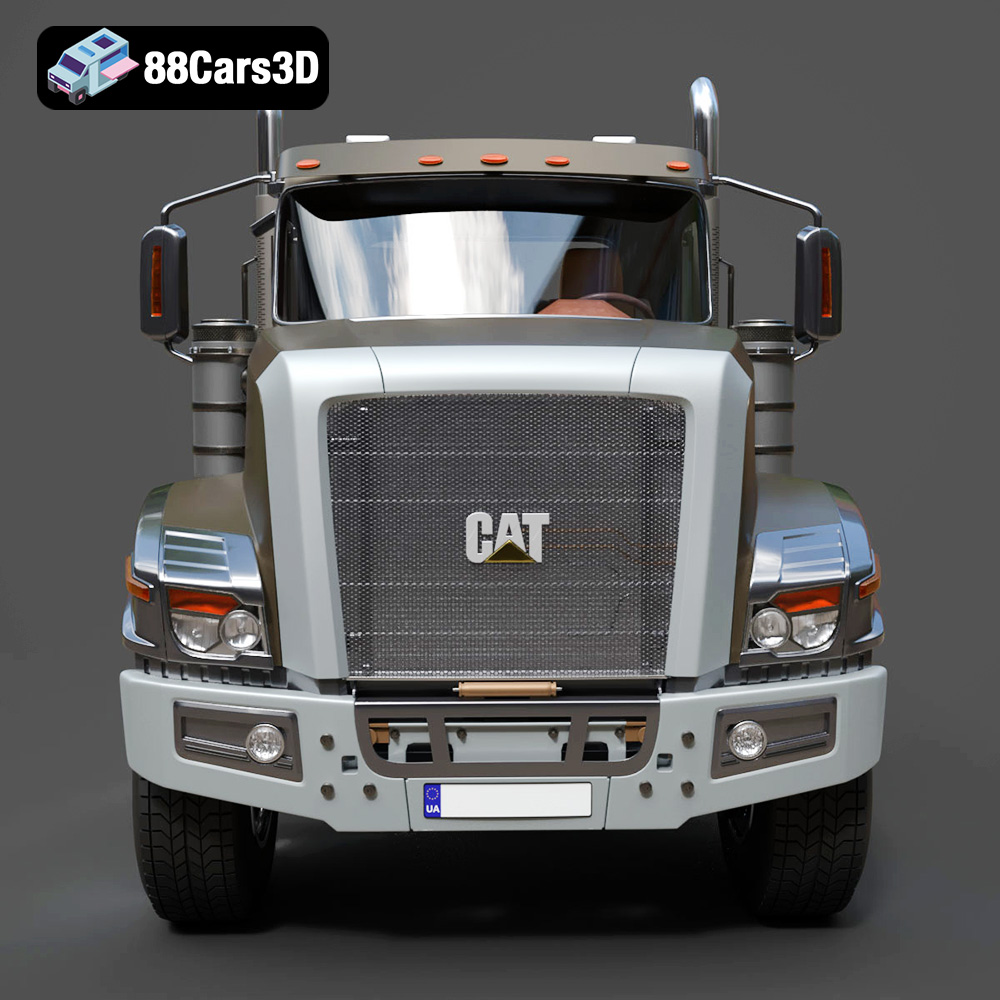
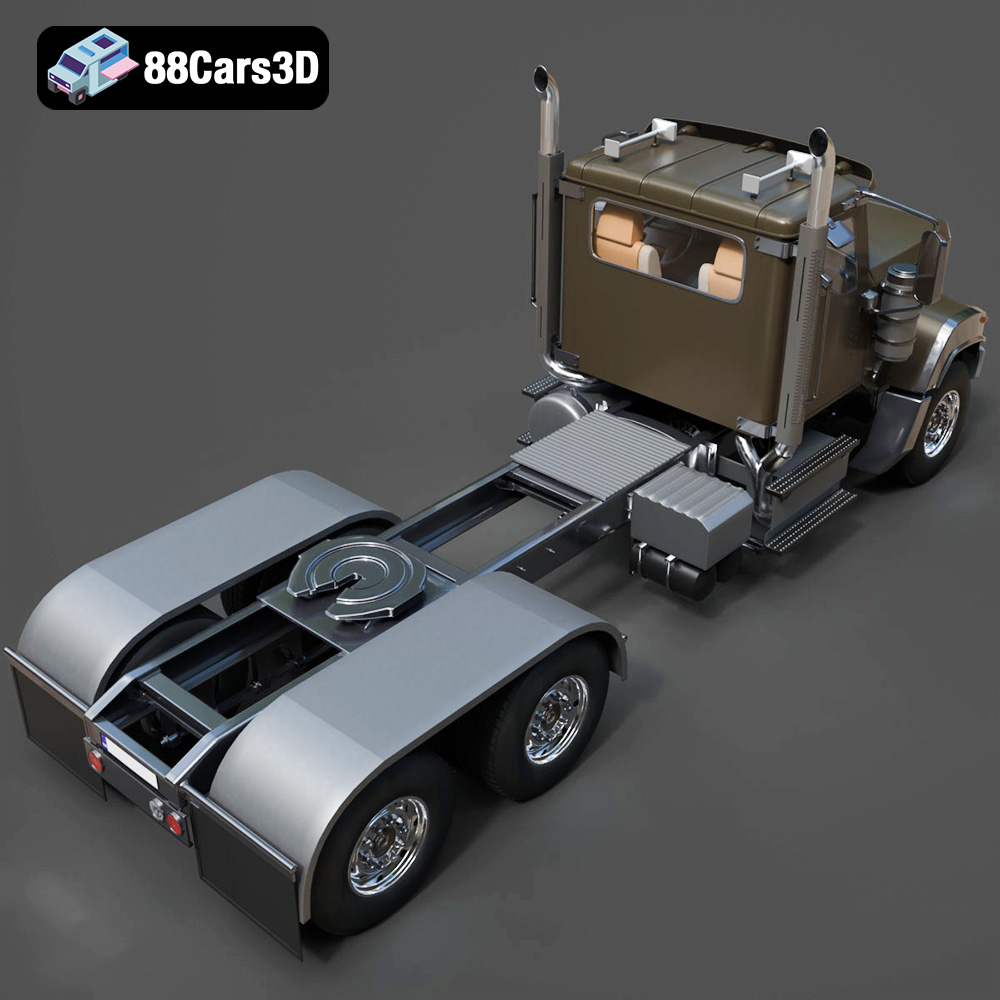
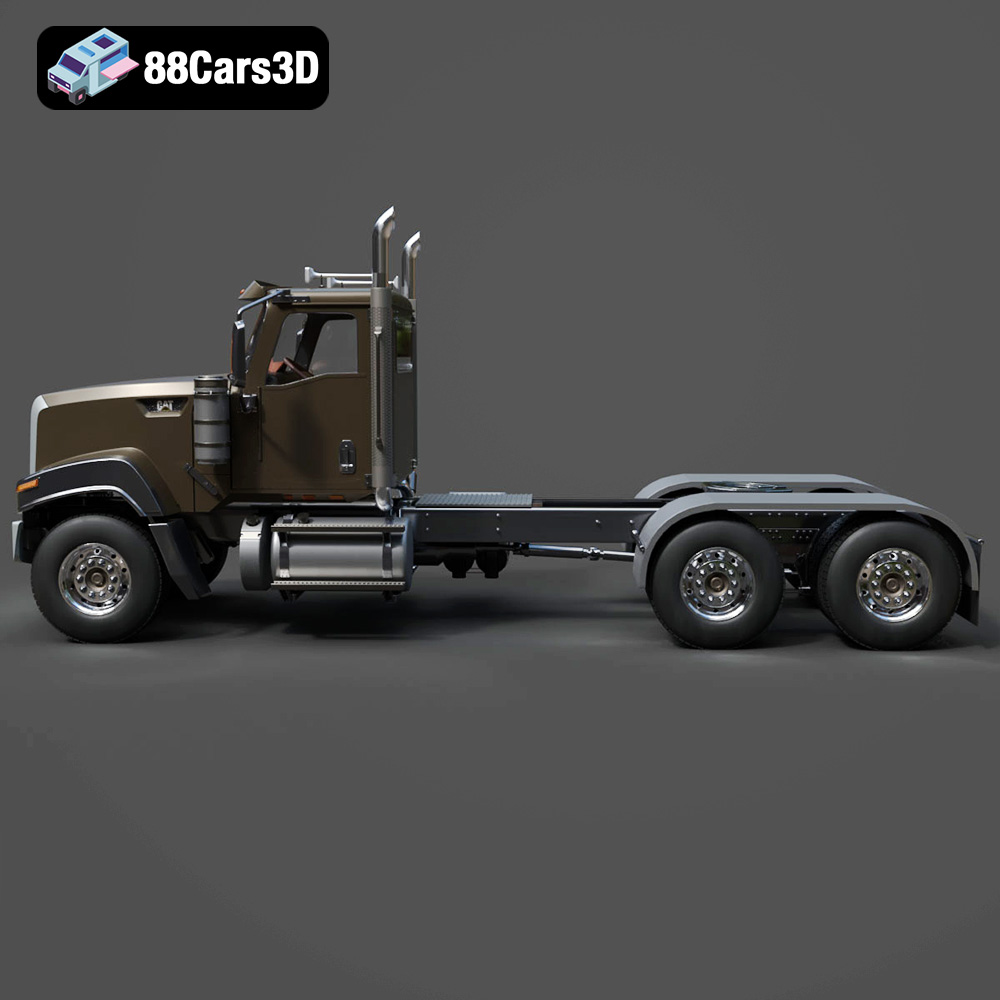
The Caterpillar CT680 Tractor Truck 2015 3D Model meticulously captures these attributes. From the signature bold grille and aerodynamic hood contours to the reinforced bumper and extended mirrors, every exterior detail has been carefully modeled. Even the exposed chassis frame, fuel tanks, exhaust system, and the critical fifth-wheel coupling system are accurately represented. This level of detail ensures that whether the model is viewed up close in a high-resolution render or as part of a sprawling digital environment, its authenticity shines through, grounding your project in realism.
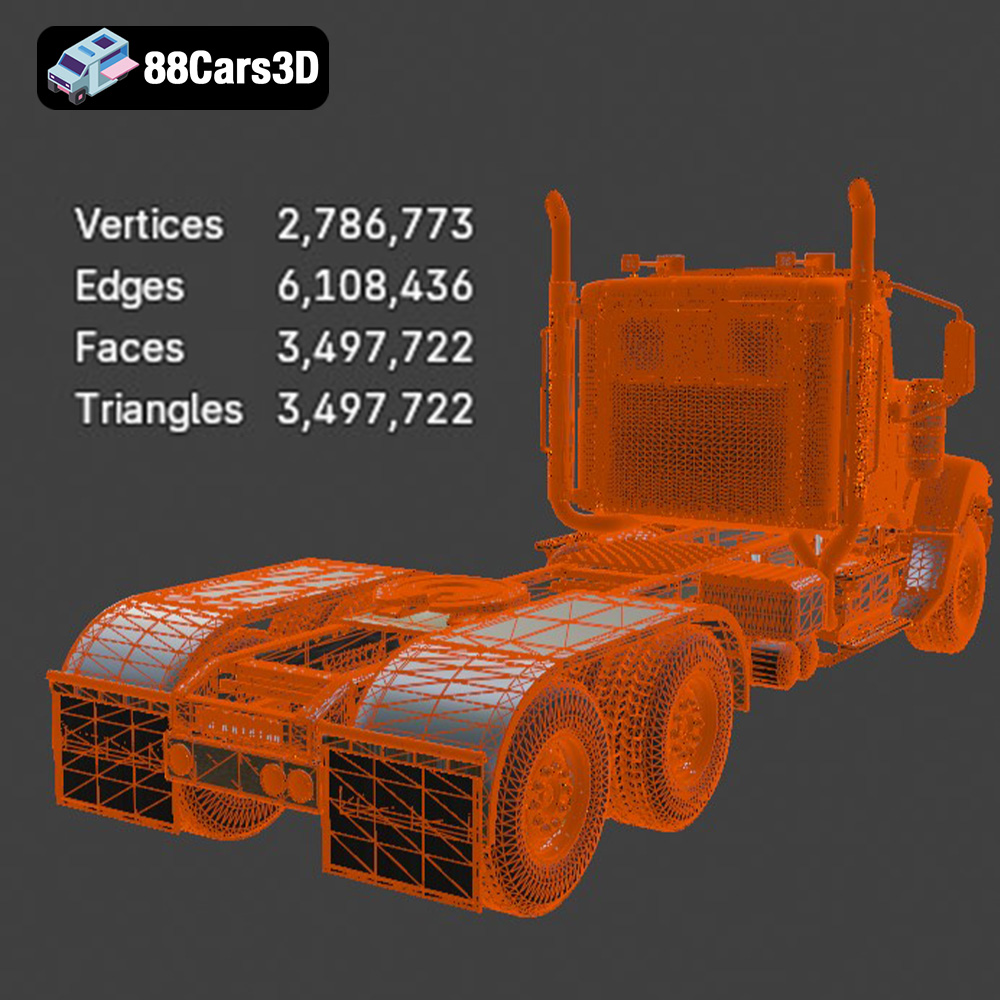
The technical advantages of this 3D model are as significant as its visual fidelity. It boasts clean and well-organized mesh structure, which is crucial for smooth performance and easy modification. Artists and developers will appreciate the real-world scale accuracy, ensuring seamless integration into scenes without needing constant adjustments. Furthermore, the model features a proper pivot setup for steering and wheel rotation, making it animation-ready right out of the box. This attention to mechanical detail, combined with optimized polygon flow, strikes a perfect balance between visual realism and efficient performance, making it suitable for both high-quality renders and demanding real-time engines.
The CT680’s design ethos—industrial strength meeting aerodynamic efficiency—is perfectly translated into this 3D asset. Its digital representation offers unparalleled versatility for various applications. Imagine leveraging this model for hyper-realistic industrial marketing visuals, creating compelling transportation advertising, or developing engaging logistics presentations. For game developers, it provides a solid foundation for truck simulators and open-world heavy transport games, while AR/VR specialists can build immersive fleet demonstrations and industrial training simulations. This model truly bridges the gap between the real-world utility of the CT680 and its vast potential in virtual environments.
Choosing the right 3D file format is a critical decision that impacts workflow efficiency, compatibility, and the ultimate utility of a 3D asset. The Caterpillar CT680 Tractor Truck 2015 3D Model, like many high-quality assets available on 88cars3d.com, is offered in a comprehensive suite of formats, each serving distinct purposes and catering to specific professional pipelines. Understanding these formats is key to maximizing your investment and streamlining your project development.
The variety of formats ensures that regardless of your preferred software or end-use case, the CT680 model is compatible. For rendering artists, the .max or .blend files offer complete scene data for immediate high-quality output. Game developers will gravitate towards .fbx and .unreal for their optimized performance and engine-specific configurations. Those venturing into AR/VR will appreciate the lightweight and self-contained nature of .glb. And for hobbyists and professionals looking to bring the CT680 into the physical world, the .stl provides the perfect foundation for 3D printing. Each format is provided with the intent of facilitating a seamless and efficient workflow across the diverse spectrum of 3D applications.
The true value of a high-quality 3D asset lies in its ability to integrate seamlessly into diverse professional pipelines. The Caterpillar CT680 Tractor Truck 2015 3D Model has been designed with this versatility in mind, offering clean topology, real-world scale, and optimized geometry that makes it a perfect fit for a range of industry-standard software and engines.
For artists focused on photorealistic rendering, the CT680 model provides an exceptional starting point. In 3ds Max, utilizing render engines like V-Ray or Corona Renderer, designers can easily import the .max file, which often comes with pre-configured materials, or quickly set up new PBR (Physically Based Rendering) shaders. The model’s detailed grille, hood contours, and realistic lighting components mean that with proper studio lighting and environmental setups, stunning marketing visuals, architectural visualizations of logistics yards, or dramatic advertising imagery can be achieved. The accurate chassis and fifth-wheel allow for dynamic scenes with attached trailers, adding another layer of realism.
Similarly, for users of Blender, the native .blend file provides a complete scene ready for rendering with Cycles or Eevee. The clean mesh structure and proper UV mapping (implied by compatibility) allow for easy material assignment and texture painting. Artists can leverage Blender’s powerful node-based material system to create custom wear-and-tear effects, metallic paint finishes, or add fleet branding, bringing the CT680 to life in detailed animations or high-resolution stills for commercial presentations or industrial simulations.
In the realm of real-time applications, such as game development and interactive simulations, efficiency and optimization are paramount. The .fbx and .unreal formats of the CT680 model are tailored for engines like Unreal Engine. Game developers can import the FBX with confidence, knowing the polygon flow is optimized for performance without sacrificing visual fidelity. The separate wheels and steering components, along with a proper pivot setup, are crucial for creating drivable vehicles in a simulator or an open-world game. Custom collision meshes can be easily generated, and LODs (Levels of Detail) can be implemented to ensure smooth frame rates across various hardware specifications.
For large-scale logistics simulators or vocational training applications, the CT680 model can be integrated into dynamic environments, complete with physics-based driving mechanics, environmental interactions, and even AI-driven vehicle traffic. Its realistic proportions and detailed exterior features make it an ideal asset for building believable heavy transport systems and freight simulations.
The rise of Augmented Reality (AR) and Virtual Reality (VR) demands highly optimized yet visually compelling assets. The .glb format, specifically designed for web and AR/VR, makes the CT680 an excellent candidate for interactive fleet demonstrations, virtual showrooms, or immersive industrial walkthroughs. Companies can showcase their transport capabilities or demonstrate new equipment in a fully interactive 3D space, allowing clients or trainees to inspect the truck from every angle, without the need for physical prototypes.
For industrial visualization, the model’s accuracy allows engineers and designers to use it in virtual mock-ups, planning site logistics, or even simulating maintenance procedures in a safe, digital environment. The versatility of the Caterpillar CT680 Tractor Truck 2015 3D Model ensures that it serves not just as a visual prop, but as a functional component in advanced digital ecosystems.
The journey of a 3D model doesn’t always end on a screen. For enthusiasts, collectors, or even educational purposes, the ability to transform a digital asset into a tangible object is a powerful capability. The Caterpillar CT680 Tractor Truck 2015 3D Model explicitly supports this through its 3D printable .stl format, enabling the creation of detailed physical scale models.
Bringing a complex automotive model like the CT680 into the physical world requires careful consideration of 3D printing parameters. The recommended scales (1:32, 1:24, 1:18, 1:14) ensure that critical details remain discernible, balancing print time with fidelity. For optimal results, especially with finer details like the grille, exhaust stacks, and chassis elements, a layer height of 0.12–0.20 mm is suggested. This balances print speed with surface smoothness. A wall thickness of 2–3 mm provides structural integrity, crucial for a model of this size, preventing fragility. An infill of 20–35% typically offers a good compromise between strength and material usage.
Supports are almost always necessary for complex geometries with overhangs, and for the CT680, these would include the mirrors, exhaust stacks, and various chassis components. Thoughtful print orientation is also key: printing the cab upright helps preserve its intricate contours, while the chassis printed flat offers stability and reduces warping. Printing wheels separately allows for enhanced detail and easier post-processing, giving them a sharper, more realistic appearance.
Once printed, the physical CT680 model offers a new canvas for customization and realism. Post-processing steps like sanding, priming, and an industrial paint finish are essential to smooth out layer lines and create a professional look. This is where the model truly comes alive, as you can apply custom colors, weathering effects, and even add miniature decals to represent specific fleet branding or company logos. This tactile experience, from printing to painting, offers a unique way to interact with a high-fidelity 3D car model, making it a perfect collectible or a tangible representation for presentations.
The versatility of the Caterpillar CT680 Tractor Truck 2015 3D Model extends across numerous industries, providing tangible benefits and driving innovation in various applications. Its detailed design and robust technical specifications make it a go-to asset for professionals seeking realism and performance.
One of the most impactful applications of this 3D model is in the field of logistics training and simulation. Companies can integrate the CT680 into virtual reality environments to train new drivers on vehicle operation, complex maneuvers, and safety protocols without the risks and costs associated with real-world training. Imagine a virtual scenario where a trainee practices backing up to a loading dock, navigating tight construction sites, or managing complex loads using a lifelike CT680. The accurate physics and visual fidelity provided by this model create an immersive and effective learning experience, significantly reducing training time and increasing driver proficiency.
For marketing agencies and automotive manufacturers, the Caterpillar CT680 Tractor Truck 2015 3D Model is an invaluable asset for creating compelling visuals. Instead of expensive photoshoots or physical prototypes, high-resolution renders of the CT680 can be generated for brochures, online campaigns, and television commercials. This allows for unparalleled flexibility in showcasing the truck in various environments – from bustling cityscapes to rugged construction sites or vast highways – with different lighting conditions and customization options. The ability to change body colors, add custom decals, and attach compatible trailers digitally means endless possibilities for bespoke marketing materials that truly stand out.
Game developers striving for realism in vehicle simulators or open-world games will find the CT680 model to be a foundational piece. Its optimized polygon flow and proper pivot setup make it ideal for integration into game engines, delivering a balance between visual quality and real-time performance. Players can experience the nuances of driving a heavy-duty tractor truck, transporting virtual cargo across expansive landscapes, or participating in complex logistics challenges. The detailed exterior and interior features contribute significantly to player immersion, making the virtual driving experience as close to reality as possible. Titles focused on construction, freight, or general trucking simulations greatly benefit from such a high-fidelity asset, adding depth and credibility to the gameplay.
Investing in a high-quality 3D asset like the Caterpillar CT680 Tractor Truck 2015 3D Model from 88cars3d.com is about more than just acquiring a static digital object. It’s about gaining a versatile tool that can be adapted and enhanced to meet evolving project needs and extend its utility far into the future.
The customization options inherent in this model are a significant advantage. The clean topology and well-organized mesh structure allow for easy modification of the vehicle’s appearance. Artists can quickly change body colors to match specific fleet branding guidelines, apply custom decals and company logos, or even modify wheel configurations to represent different load-bearing capacities or terrain requirements. This flexibility means that a single base model can be transformed into multiple variations, representing an entire digital fleet tailored to specific clients or project scenarios, all while maintaining a consistent level of quality and detail.
Beyond aesthetics, the model’s design with separate wheels and steering components, along with a functional fifth-wheel plate, means it’s ready for dynamic use. Attaching compatible trailer models can instantly expand its utility, transforming it from a standalone tractor into a fully operational transport rig. This adaptability makes it suitable for diverse simulation setups, from urban delivery challenges to long-haul freight operations, showcasing its capabilities in a multitude of contexts.
High-quality 3D car models are a long-term investment. An asset like the CT680, with its accurate proportions, real-world scale, and broad compatibility, will remain relevant across multiple projects and technology cycles. As rendering techniques improve, or as game engines become more sophisticated, this foundational model can be easily updated with new textures, materials, or shader technologies to keep pace with cutting-edge visual standards. Its clean geometry reduces the likelihood of future compatibility issues, ensuring that your initial investment continues to pay dividends for years to come. This future-proofing aspect is crucial for studios and individual artists looking to build a robust and versatile library of digital assets.
The world of 3D visualization is built on the foundation of high-quality assets, and the Caterpillar CT680 Tractor Truck 2015 3D Model exemplifies what a premium asset should be. From its meticulous digital recreation of a heavy-duty icon to its broad compatibility across diverse file formats like .blend, .fbx, .obj, .glb, .stl, .ply, .unreal, and .max, this model is a powerhouse for any creative endeavor. Whether you are developing immersive game environments, crafting stunning automotive renders, building interactive AR/VR experiences, or even producing physical 3D prints, the CT680 offers the precision, flexibility, and technical integrity required by today’s demanding professional workflows.
Its optimized geometry, real-world scale, and ready-to-animate components streamline production, allowing artists and developers to focus on creativity rather than wrestling with problematic assets. For those seeking to elevate their projects with unparalleled realism and performance, the Caterpillar CT680 Tractor Truck 2015 3D Model available at 88cars3d.com is an indispensable tool. It’s not just a model; it’s a gateway to bringing robust industrial presence into your digital and physical creations, solidifying your commitment to excellence in automotive rendering and game asset development.
The Caterpillar CT680 Tractor Truck 2015 3D Model is a high-detail digital recreation of the heavy-duty vocational tractor developed by Caterpillar Inc. Built for durability and on-highway performance, the CT680 combines industrial strength with aerodynamic efficiency, making it a popular choice for logistics, construction, and long-haul transport operations. This 3D model accurately represents the truck’s aerodynamic hood, bold grille design, reinforced bumper, extended mirrors, exposed chassis frame, and fifth-wheel coupling system. Designed with clean topology and real-world proportions, it is ideal for rendering, animation, simulation, game development, and AR/VR industrial visualization. Perfect for highway scenes, logistics yards, construction environments, freight simulations, and commercial fleet presentations. Includes .blend, .fbx, .obj, .glb, .stl, .ply, .unreal, and .max formats.
$9.9
.arvr
.blend
.caterpillar
.ct680
.fbx
.gameasset
.glb
.heavydutytruck
.industrialvehicle
.logisticsvehicle
.max
.obj
.ply
.rendering
.simulation
.stl
.tractortruck
.truck3dmodel
.unreal