Get 50% OFF All Premium 3D & STL Models!

In the fast-evolving world of 3D modeling, where photorealism and cutting-edge technology push boundaries daily, there remains a profound appreciation for the echoes of the past. Vintage designs, with their unique charm, robust craftsmanship, and nostalgic appeal, offer a rich tapestry for artists, developers, and designers to explore. Far from being mere relics, these historical artifacts, meticulously recreated in three dimensions, serve as powerful tools for storytelling, immersive experiences, and captivating visuals.
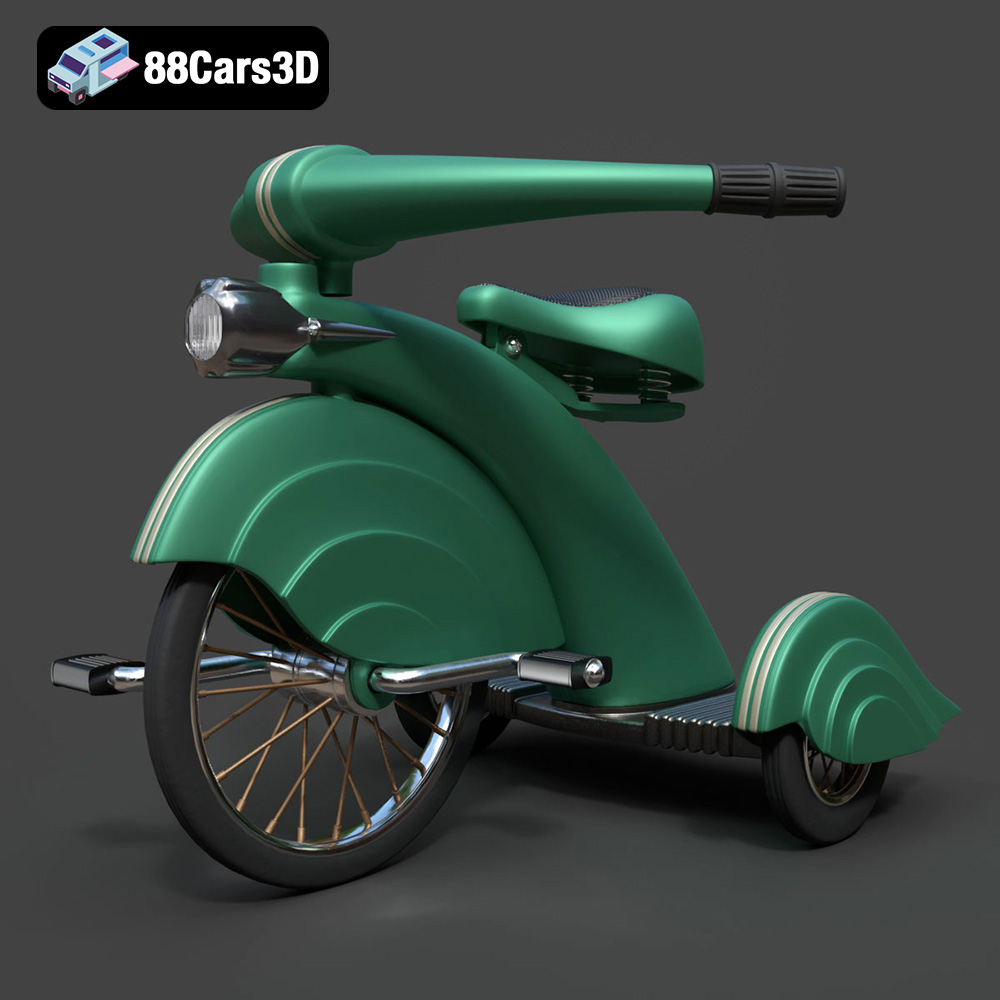
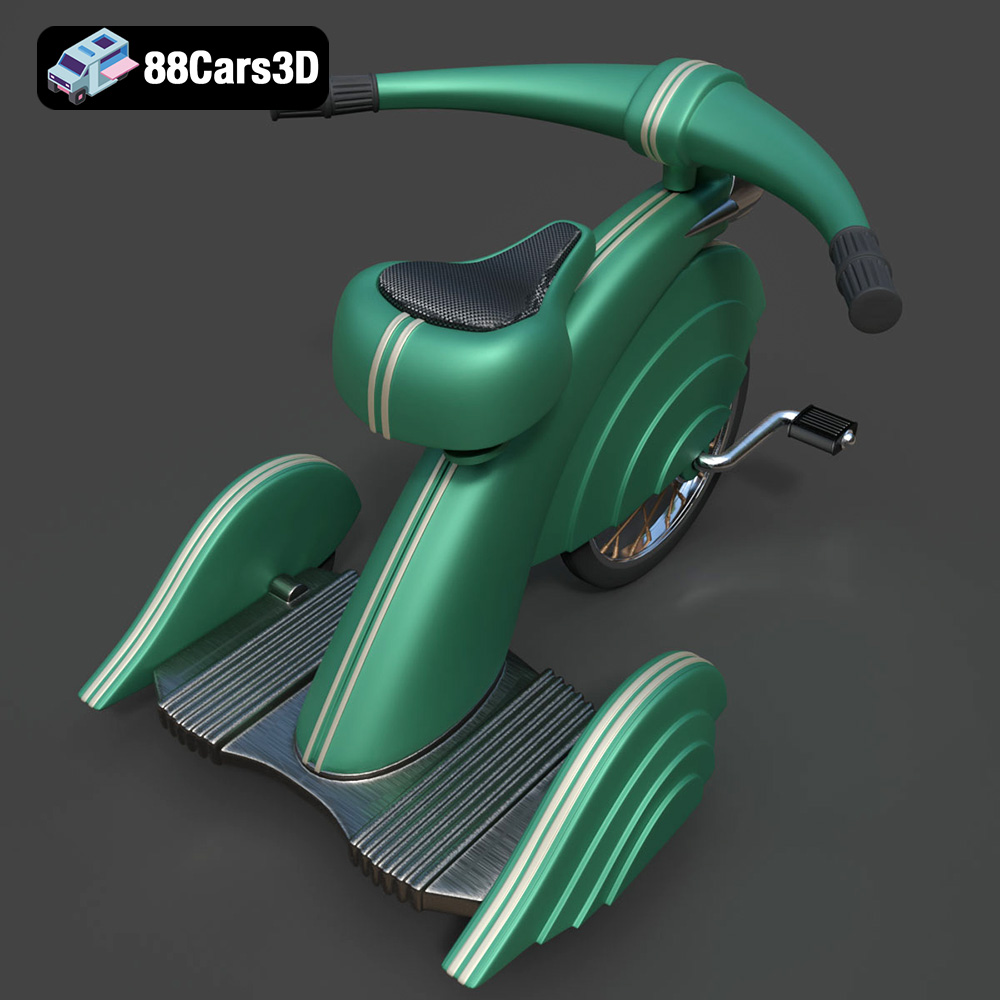
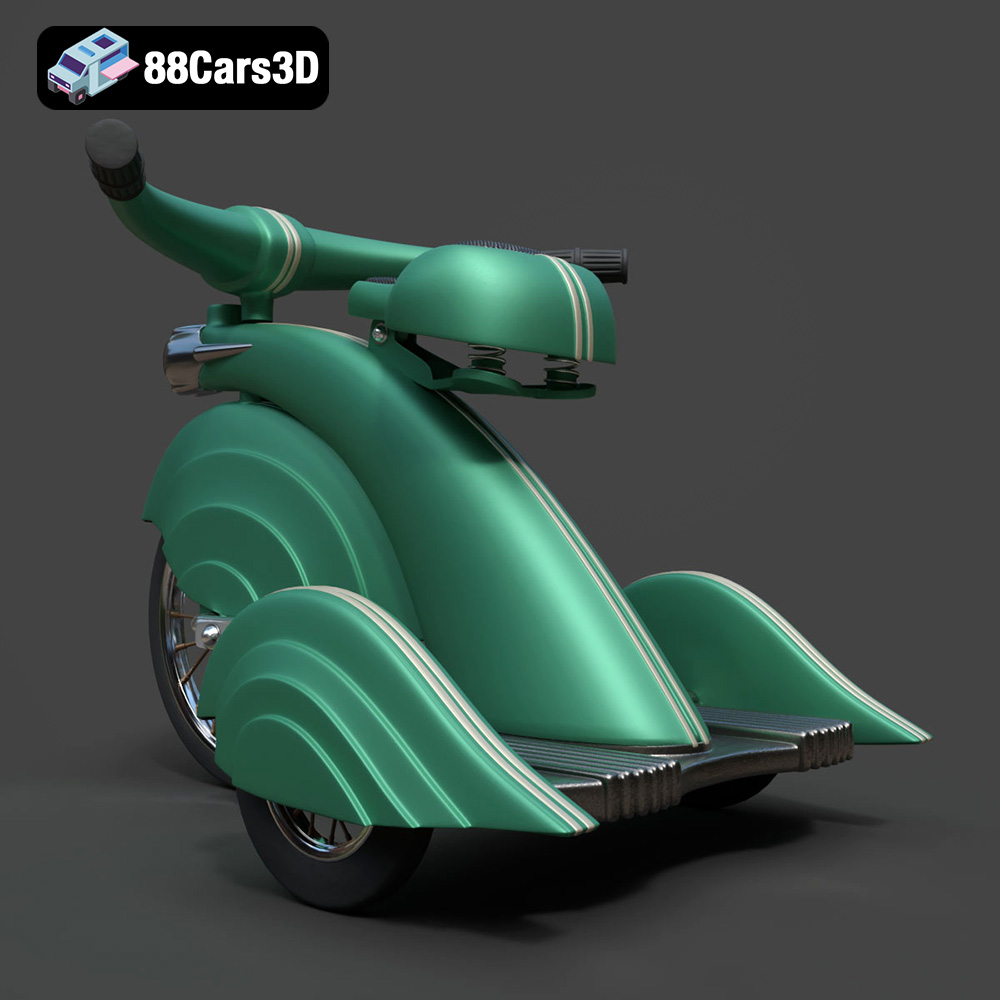
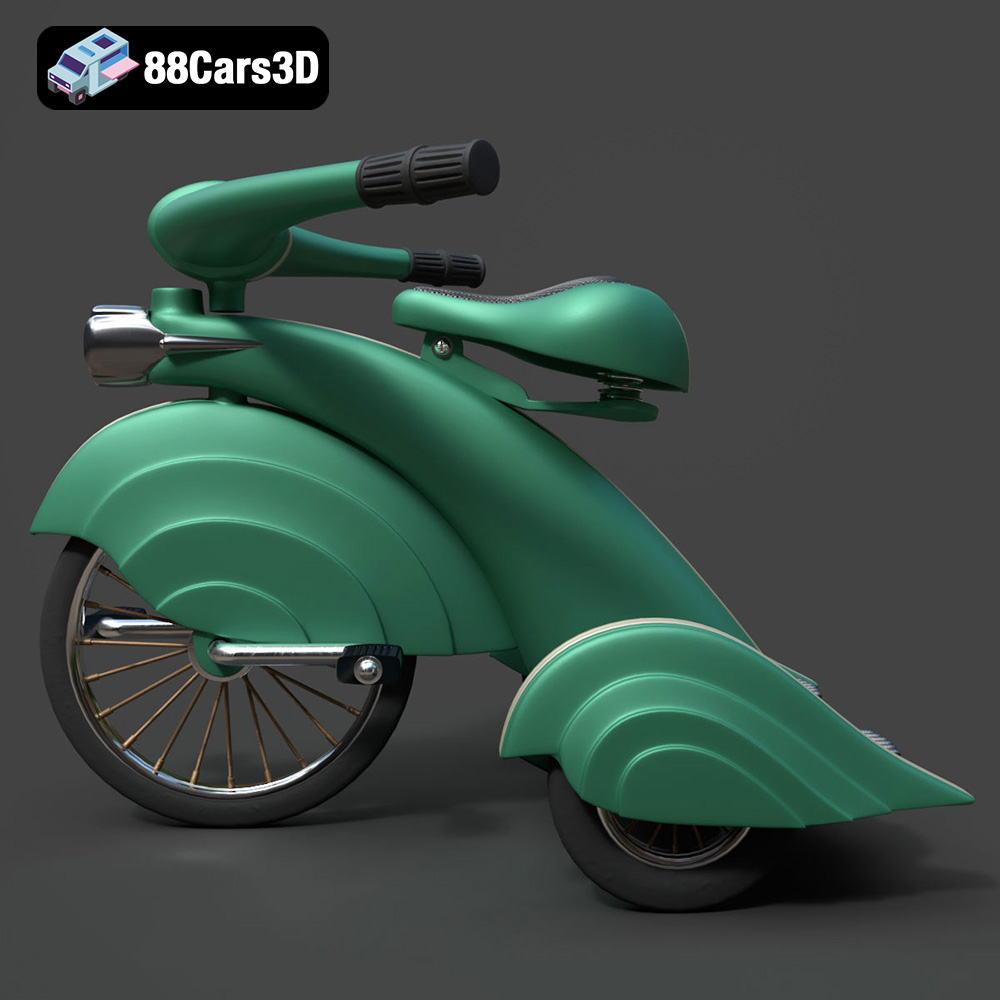
Imagine a scene: a sun-drenched attic, dust motes dancing in the light, revealing forgotten treasures. Or perhaps a bustling 1930s street scene, alive with the sounds and sights of a bygone era. Such detailed narratives are often anchored by authentic period pieces. One such piece, a testament to simpler times yet brimming with character, is the Vintage Tricycle 1930 3D Model. This exceptional asset, available on 88cars3d.com, is not just a digital object; it’s a meticulously crafted journey back to the early 20th century, offering unparalleled versatility for rendering, animation, historical visualization, game development, AR/VR experiences, and even physical 3D printing.
Recreating historical objects in 3D demands a blend of artistic skill and an almost archaeological dedication to detail. It’s about more than just matching proportions; it’s about understanding the ethos of an era and translating that into a digital form that resonates with authenticity.
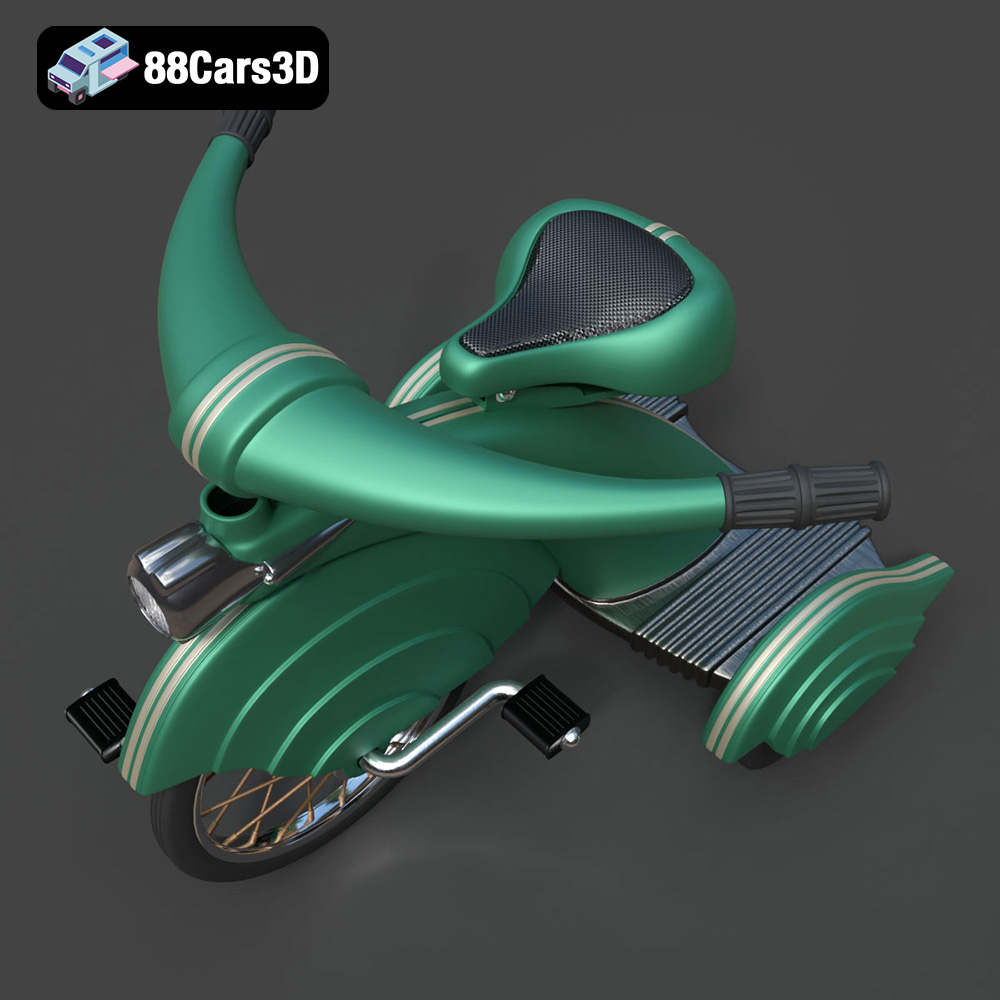
The Vintage Tricycle 1930 3D Model exemplifies this commitment to historical accuracy. Inspired by the craftsmanship of the 1930s, every curve, joint, and component reflects the robust yet elegant aesthetic of that period. Key design elements include:
This attention to detail ensures that whether the tricycle is placed in a high-fidelity render or an interactive game environment, its historical context is immediately recognizable and credible.
A true master of 3D modeling understands that authenticity extends beyond surface appearance. The mechanical and structural details of an object are crucial for both visual believability and practical application, especially for animation or simulation.
These elements combine to create a model that isn’t just a static prop but a potential character in its own right, ready for dynamic scenes and interactive experiences.
When working with 3D assets, particularly for diverse applications like rendering, game development, AR/VR, and 3D printing, understanding the various file formats is paramount. Each format serves specific purposes, offering unique advantages in terms of compatibility, data retention, and optimization. The Vintage Tricycle 1930 3D Model, like many high-quality assets on 88cars3d.com, is provided in a comprehensive array of formats to ensure maximum flexibility for professionals across different pipelines.
The .blend format is the native file type for Blender, the popular open-source 3D creation suite. It’s a complete package, containing not just the mesh data but also materials, textures, lighting setups, cameras, animation data, modifiers, and even scene properties. For Blender users, this format offers the most flexibility, allowing direct access to every aspect of the model for modification, re-texturing, rigging, and animation without any loss of data. If you’re planning extensive customization or integration into a Blender-centric workflow, the .blend file is your go-to choice for the Vintage Tricycle model.
.fbx (Filmbox) is arguably the most widely used proprietary 3D file format for data exchange between different 3D software applications and game engines. Developed by Autodesk, it excels at storing complex scene data, including geometry, materials, textures, animations, and skeletal data. Its binary nature makes it efficient, and its robust support for animation makes it ideal for real-time pipelines like Unreal Engine and Unity. When importing the Vintage Tricycle into a game engine or another DCC application, .fbx is generally the recommended format due to its reliability in transferring animated components and PBR materials.
The .obj (Wavefront Object) format is a venerable and highly compatible format, primarily used for exchanging 3D geometry data. It’s a text-based format that defines vertices, normals, UV coordinates, and faces. While it’s excellent for transferring static mesh data across virtually any 3D software, it typically does not store animation, rigging, or scene information like lights and cameras. Material definitions are usually handled by an accompanying .mtl file. For basic static renders or when cross-software compatibility for geometry is the top priority, the .obj version of the Vintage Tricycle is a reliable choice.
.glb (GL Transmission Format Binary) is a modern, efficient, and self-contained format designed for the web and AR/VR applications. It’s a binary version of GLTF, embedding all assets (geometry, materials, textures, animations) into a single file. This makes it incredibly easy to load and display 3D models directly in web browsers, mobile apps, and various AR/VR platforms with minimal overhead. For interactive web experiences or augmented reality visualizations of the Vintage Tricycle, the .glb format offers optimal performance and ease of deployment.
.stl (Stereolithography) is the de facto standard file format for 3D printing and rapid prototyping. It represents a 3D model as a collection of triangulated surfaces, defining the geometry of a solid object without color, texture, or other CAD attributes. For the Vintage Tricycle, the .stl format ensures manifold geometry, meaning it’s a watertight mesh suitable for slicing and physical fabrication. If you plan to create a tangible replica of this classic toy, the .stl file is essential, allowing you to bring the digital model into the physical world.
The .ply (Polygon File Format) is a versatile format for storing graphical objects, often used for 3D scanned data or precise meshes in CAD applications. It can store a variety of properties beyond just geometry, including color, transparency, normals, texture coordinates, and even reliability information. While less common for general asset exchange than FBX or OBJ, its precision and ability to carry detailed attribute data make it valuable for scientific visualization, reverse engineering, or niche CAD workflows involving the Vintage Tricycle model.
While “.unreal” isn’t a single universal file extension, its inclusion signifies an asset specifically optimized and prepared for seamless integration into Unreal Engine. This typically means the asset, likely an .fbx or similar, has been imported and configured within Unreal Engine, potentially including:
This “engine-ready” format for the Vintage Tricycle saves developers significant time, allowing for immediate placement and use in Unreal Engine projects without extensive setup.
Finally, the .max format is the native file type for Autodesk 3ds Max, a powerful 3D modeling, animation, and rendering software. Similar to .blend, a .max file contains the entire scene, including geometry, materials, textures, lights, cameras, animation, and any modifiers or rigging applied. For users of 3ds Max, this format offers full editability and access to the original scene setup of the Vintage Tricycle, making it ideal for advanced customization, animation pipelines, or rendering with high-end renderers like V-Ray or Corona.
By offering the Vintage Tricycle 1930 3D Model in this comprehensive suite of formats, 88cars3d.com ensures that professionals, regardless of their preferred software or end-use application, have the right tools to integrate this exceptional model into their projects efficiently and effectively.
The versatility of a well-crafted 3D model like the Vintage Tricycle 1930 transcends specific niches, finding valuable applications across a spectrum of creative and technical industries.
For advertising agencies, architectural visualization studios, and film productions, the power of nostalgia is a potent tool. The Vintage Tricycle 1930 3D Model is a perfect candidate for injecting character and warmth into various visual projects.
With its clean topology and real-world scale, artists can easily integrate it into complex scenes, apply advanced materials, and achieve stunning, photorealistic renders.
The demand for high-quality, optimized game assets is ever-growing. The Vintage Tricycle 1930 3D Model is perfectly suited for real-time applications, thanks to its careful construction and performance-oriented mesh.
By sourcing such well-optimized assets from marketplaces like 88cars3d.com, game developers can significantly streamline their workflow and focus on gameplay innovation.
One of the most exciting aspects of 3D modeling is the ability to bridge the gap between digital design and physical reality through 3D printing. The Vintage Tricycle 1930 3D Model, with its available .stl format, opens up a world of possibilities for tangible creations.
The provided 3D print settings – including layer height recommendations (0.08–0.16 mm), wall thickness (1.2–2 mm), infill (15–25%), and support requirements for handlebars and frame curves – ensure a successful print. Post-processing steps like sanding, priming, and applying a glossy enamel or vintage matte paint finish can elevate the printed model to a high-quality collectible.
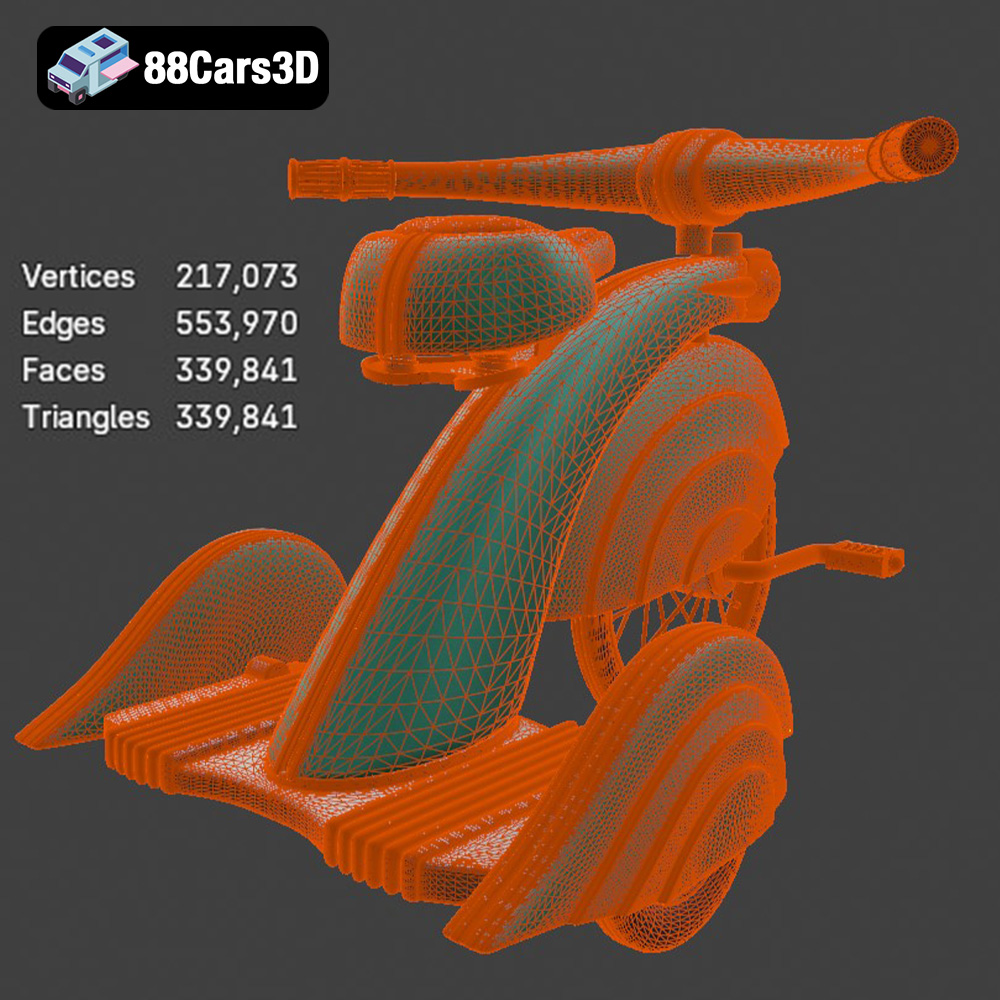
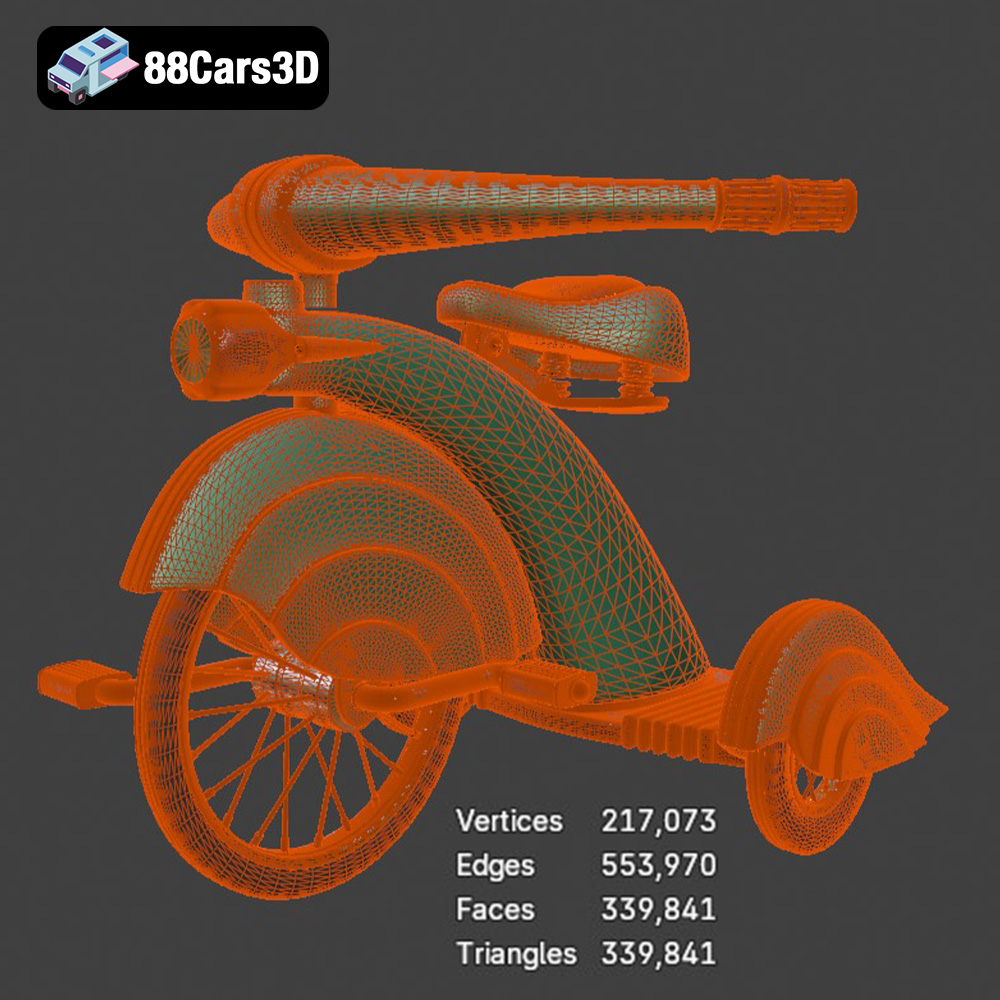
The quality of a 3D model isn’t just about how good it looks in a promotional image; it’s about the underlying technical craftsmanship that makes it easy to work with and perform optimally across various platforms. The Vintage Tricycle 1930 3D Model stands out due to its adherence to best practices in 3D asset creation.
A “clean and well-organized mesh structure” and “optimized polygon flow” are not just buzzwords; they are foundational principles for efficient 3D assets.
This technical foundation makes the Vintage Tricycle a joy to work with, whether you’re a seasoned professional or an aspiring artist.
An asset’s utility significantly increases when it’s designed with animation in mind. The Vintage Tricycle excels here with specific features that empower animators:
These technical advantages ensure that the Vintage Tricycle 1930 3D Model is not just a beautiful static prop but a dynamic, production-ready asset for complex projects.
While the historical accuracy of the Vintage Tricycle 1930 3D Model is a core strength, its design also allows for extensive customization, enabling artists to adapt it to diverse creative visions.
The clean mesh and organized materials of the model provide a perfect canvas for creative experimentation:
These customization options extend the model’s utility far beyond its initial historical context, making it a versatile asset for any project.
The true value of a premium 3D asset lies in its ability to integrate smoothly into existing production pipelines. The comprehensive file format support for the Vintage Tricycle 1930 3D Model ensures this:
By providing a high-quality, pre-optimized asset, 88cars3d.com empowers professionals to kickstart their projects with confidence, knowing they have a reliable and versatile foundation.
The journey through the intricate details of the Vintage Tricycle 1930 3D Model reveals far more than just a digital toy. It highlights the significant role that meticulously crafted 3D assets play in enriching our digital and physical worlds. From capturing the authentic spirit of a bygone era to offering unparalleled technical flexibility, this model stands as a prime example of how historical inspiration can meet modern technology.
Its accurate design, robust mechanical detailing, and readiness for a multitude of applications—be it high-end rendering, immersive game development, interactive AR/VR experiences, or tangible 3D prints—make it an indispensable asset for a wide range of creative professionals. The availability in diverse formats like .blend, .fbx, .obj, .glb, .stl, .ply, .unreal, and .max ensures that every user can integrate it seamlessly into their preferred workflow.
Whether you’re an automotive rendering specialist, a game developer seeking authentic props, or an architect building a historically rich visualization, the Vintage Tricycle 1930 3D Model from 88cars3d.com offers a foundation of quality and versatility. It’s an investment in historical accuracy and creative potential, ready to add a touch of timeless charm to your next project.
The Vintage Tricycle 1930 3D Model is a high-detail digital recreation of a classic early 20th-century three-wheeled bicycle designed for children. Inspired by 1930s craftsmanship, this model captures the nostalgic charm of vintage steel construction, oversized front wheel, curved handlebars, simple saddle seat, and solid rubber tires. Built with clean topology and real-world scale accuracy, it is ideal for rendering, animation, historical visualization, game development, and AR/VR experiences.
$4.99
.1930s
.antiquetoy
.arvr
.blend
.classictricycle
.fbx
.gameasset
.glb
.max
.nostalgicdesign
.obj
.ply
.rendering
.retrobike
.simulation
.stl
.toy3dmodel
.unreal
.vintagetricycle