Get 50% OFF All Premium 3D & STL Models!

In the expansive realm of 3D artistry and digital creation, the ability to accurately and compellingly represent iconic vehicles is paramount. From breathtaking cinematic sequences to hyper-realistic video games and cutting-edge architectural visualizations, a high-quality 3D model can elevate any project. Few vehicles command attention quite like a Harley-Davidson, and among its legendary lineage, the Night Rod stands out as a dark, aggressive powerhouse—a perfect fusion of American muscle and precision engineering. Capturing this essence digitally requires meticulous attention to detail, optimized topology, and versatile file formats.
Today, we delve into the technical intricacies and creative potential of such an asset, specifically focusing on the Harley-Davidson Night Rod 3D Model, a premium offering available on 88cars3d.com. This model is not just a digital replica; it’s a meticulously crafted tool designed to seamlessly integrate into professional workflows across rendering, game development, AR/VR, and even 3D printing. We’ll explore how this asset delivers unparalleled fidelity and flexibility, empowering artists and developers to bring their visions to life with speed and precision.
The success of any 3D project often hinges on the compatibility and efficiency of its assets. A high-quality 3D model is only as useful as its ability to integrate into diverse software environments and pipelines. The Harley-Davidson Night Rod 3D Model, like many premium 3D car models and game assets, comes equipped with a comprehensive suite of file formats, each serving distinct purposes for different stages and applications in a professional workflow. Understanding these formats is crucial for leveraging the full potential of your digital purchases.
For users deeply entrenched in the Blender ecosystem, the .blend file is the most powerful and flexible option. It represents a complete Blender scene, containing not just the raw mesh data but also materials, textures, lighting setups, camera positions, and any applied modifiers or animation data. This format allows for full editability, giving artists the freedom to dissect, modify, and re-engineer every aspect of the Harley-Davidson Night Rod model. From adjusting subdivision levels to tweaking material node setups or even re-rigging components, the .blend file provides a native, uncompromised starting point for customization within Blender.
The .fbx (Filmbox) format is arguably the most widely adopted interchange format in the 3D industry. Developed by Autodesk, it’s designed to facilitate the transfer of 3D data between different software applications like Maya, 3ds Max, Cinema 4D, Unreal Engine, and Unity. An .fbx file can encapsulate geometry, UVs, normal maps, textures (references), animations, rigging, and even basic material properties. For the Harley-Davidson Night Rod, its .fbx version is ideal for exporting into real-time game engines or other DCC (Digital Content Creation) software, ensuring that essential attributes like pivot points for wheels and steering are preserved for animation setup. Its binary nature also makes it relatively compact and efficient for transfer.
The .obj (Wavefront Object) format is one of the oldest and most universal 3D file formats, renowned for its simplicity and broad compatibility. It primarily stores geometric data – vertices, faces, normals, and UV coordinates – and often comes with an accompanying .mtl (material library) file that defines basic material properties like diffuse color and texture map references. While .obj files do not support animation, rigging, or advanced material setups, they are an excellent choice for straightforward mesh transfer between almost any 3D software. The Night Rod’s .obj version serves as a robust fallback for projects that require only the fundamental geometry, ensuring cross-software compatibility for even niche applications.
The .glb (GL Transmission Format Binary) format is a relatively newer contender, rapidly gaining traction for its efficiency and optimization for web-based 3D applications, augmented reality (AR), and virtual reality (VR) experiences. A .glb file is a self-contained, binary format that bundles all necessary assets—geometry, materials, textures, and even animations—into a single file. This makes it incredibly lightweight and fast-loading, perfect for displaying the Harley-Davidson Night Rod in interactive online showrooms, mobile AR apps, or WebXR environments. Its compact nature significantly reduces load times, offering a seamless user experience for browser-based viewers.
The .stl (Stereolithography) format is the cornerstone of 3D printing. It describes only the surface geometry of a 3D object using a mesh of interconnected triangles. Crucially, .stl files do not contain color, texture, or material information, focusing solely on the physical form. For projects requiring a physical manifestation of the Harley-Davidson Night Rod, the .stl file is essential. It enables users to prepare the model for additive manufacturing, converting the digital blueprint into a tangible collectible or prototype. Ensuring the mesh is “manifold” (watertight, without gaps or overlaps) is vital for a successful 3D print, and high-quality assets like this one are typically prepared with this in mind.
The .ply (Polygon File Format, sometimes called the Stanford Triangle Format) is a versatile format capable of storing a wide range of properties, including geometry, color, transparency, normals, and even texture coordinates. While less common for manually created assets, it’s frequently used for 3D scan data and applications requiring highly detailed geometric and attribute information. The .ply format offers a robust solution for preserving precision mesh data, which can be useful for advanced analysis or integration into CAD (Computer-Aided Design) workflows or scientific visualization where the Night Rod’s exact dimensions and surface properties are critical.
The inclusion of an .unreal file likely signifies a pre-configured asset designed for direct import and optimal performance within Unreal Engine. While not a standalone file format in the traditional sense (Unreal uses .uasset internally), this typically means the package includes the .fbx model along with pre-setup materials, textures, and even blueprints or animation sequences ready to be dropped directly into an Unreal project. This dramatically streamlines the workflow for game developers, saving countless hours on material setup, collision generation, and ensuring the Harley-Davidson Night Rod is engine-ready for real-time environments, whether as a drivable vehicle or a static prop.
Similar to .blend for Blender users, the .max file is the native format for Autodesk 3ds Max. This format provides the complete scene data, including geometry, materials (with complex shaders), lighting, cameras, animation timelines, and all modifiers or plugins specific to 3ds Max. For professionals working in architectural visualization, high-end automotive rendering, or complex animation, the .max file offers unparalleled control. It’s the ideal choice for integrating the Night Rod into projects where the full power of 3ds Max’s rendering engines (like V-Ray or Corona Renderer) and animation tools are required for producing the most photorealistic results.
This diverse range of formats ensures that the Harley-Davidson Night Rod 3D Model is not just a beautiful asset, but a highly adaptable and professional-grade tool ready for any creative challenge.
Creating a truly outstanding 3D vehicle model is an art form that blends technical precision with an understanding of automotive design. The Harley-Davidson Night Rod 3D Model exemplifies this synthesis, offering a digital recreation that is both visually stunning and technically sound. It’s a testament to the fact that top-tier 3D car models are more than just meshes; they are carefully engineered assets.
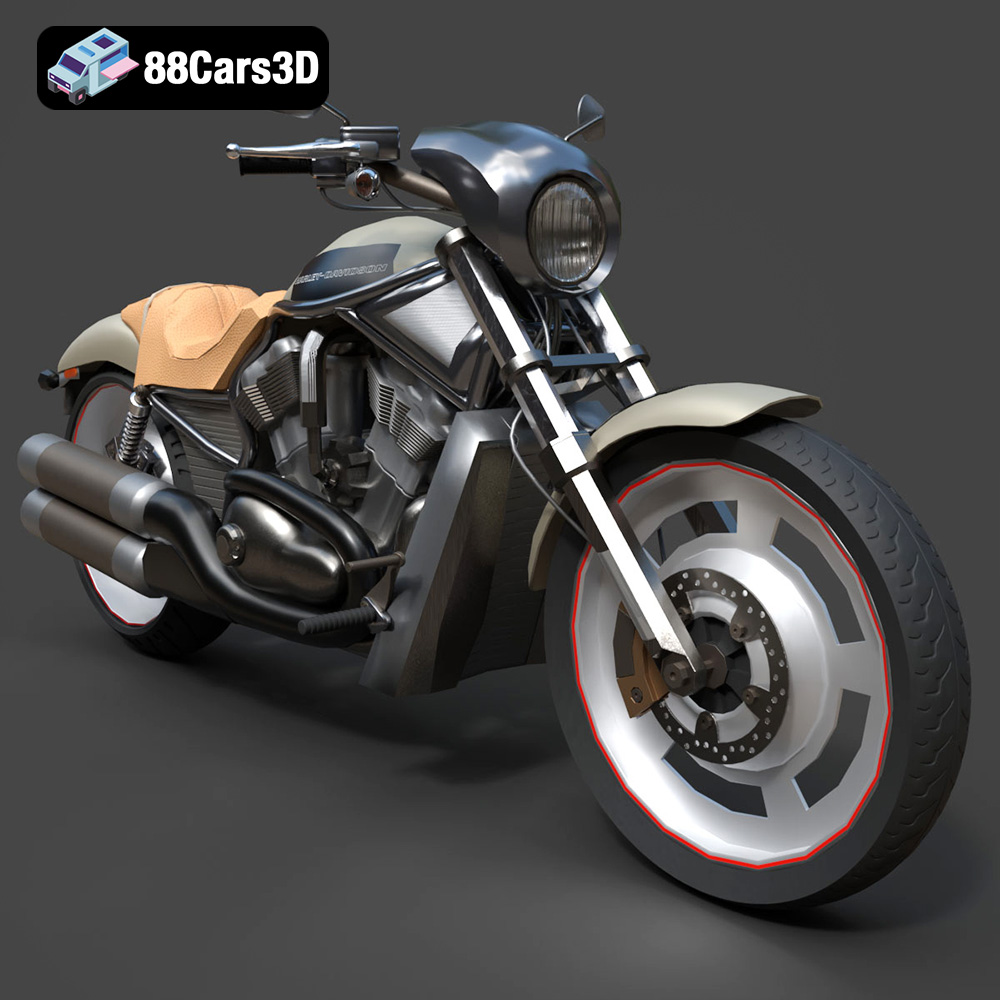
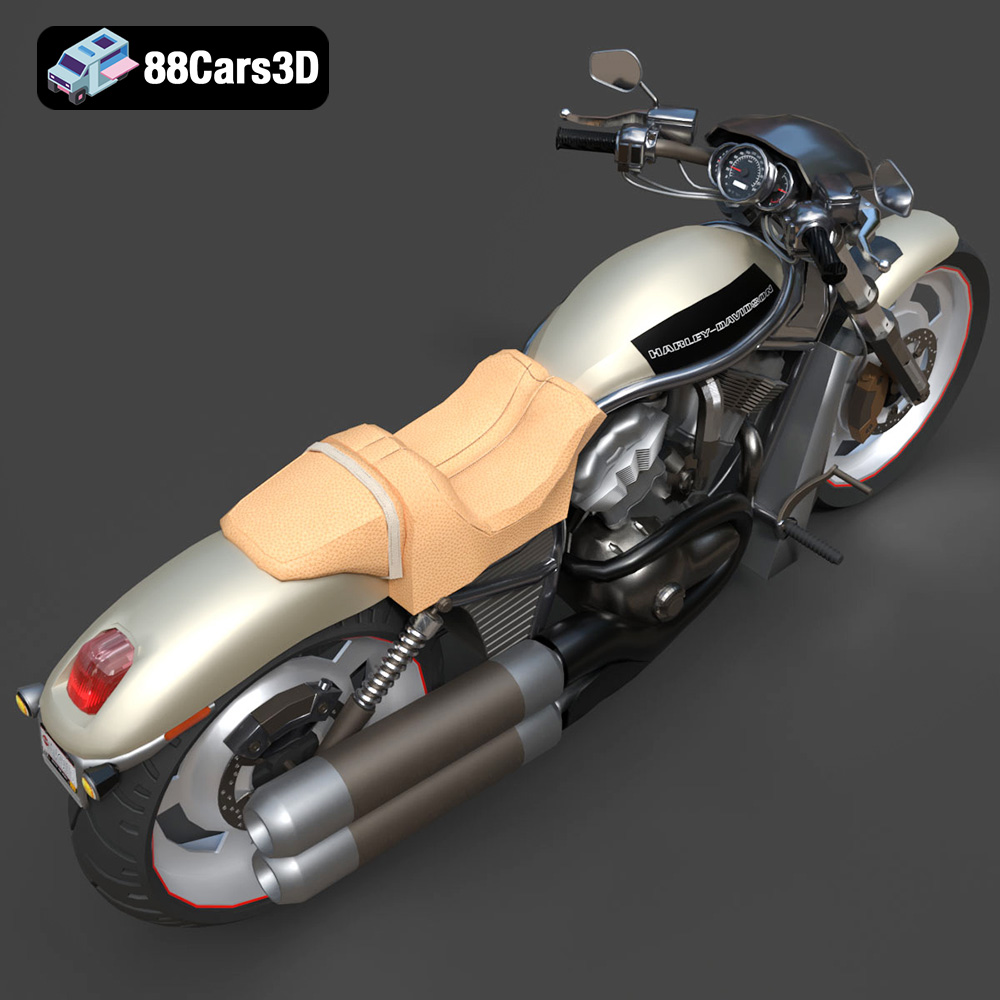
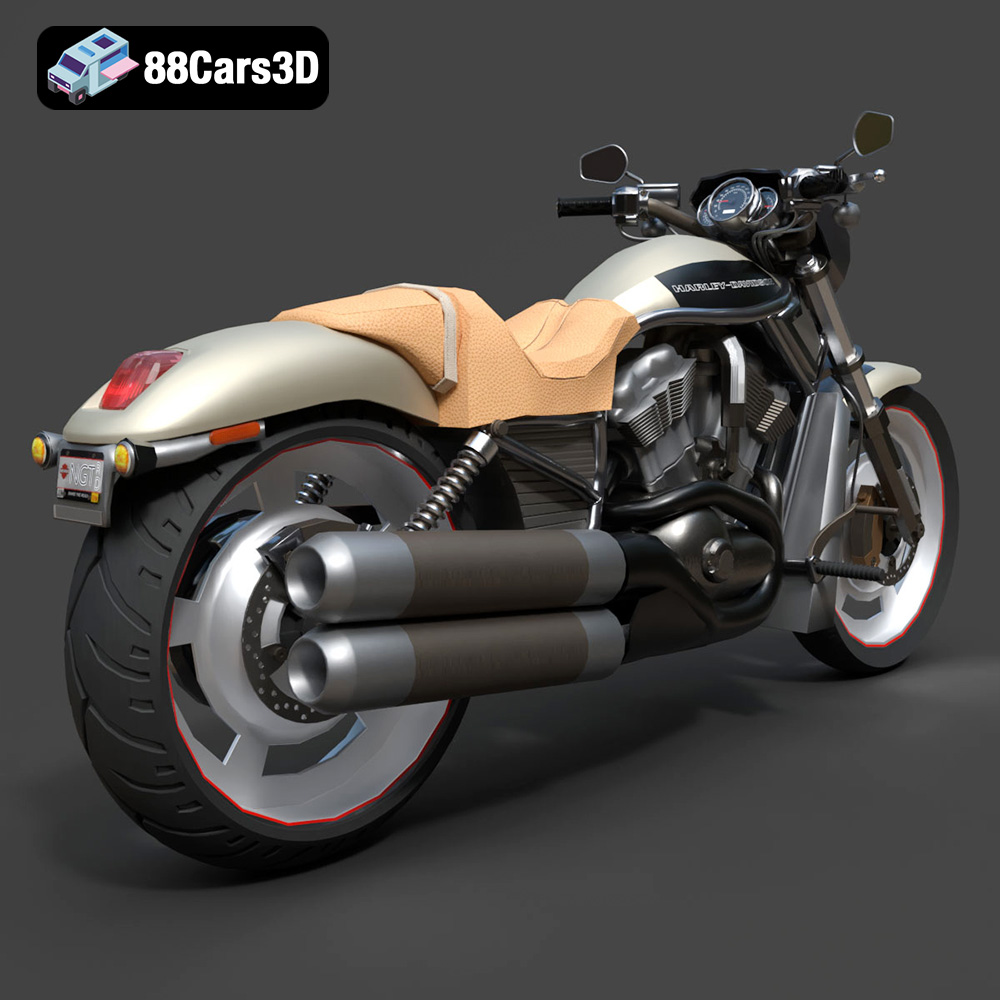
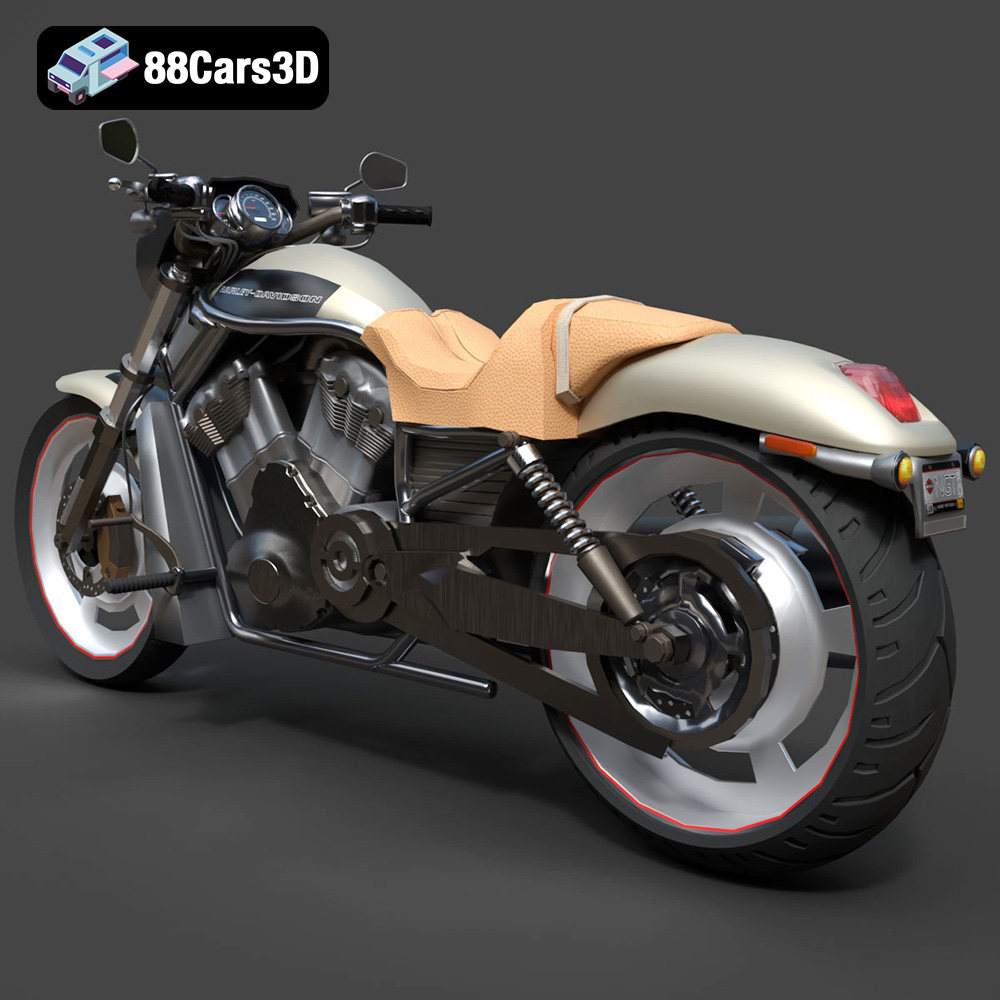
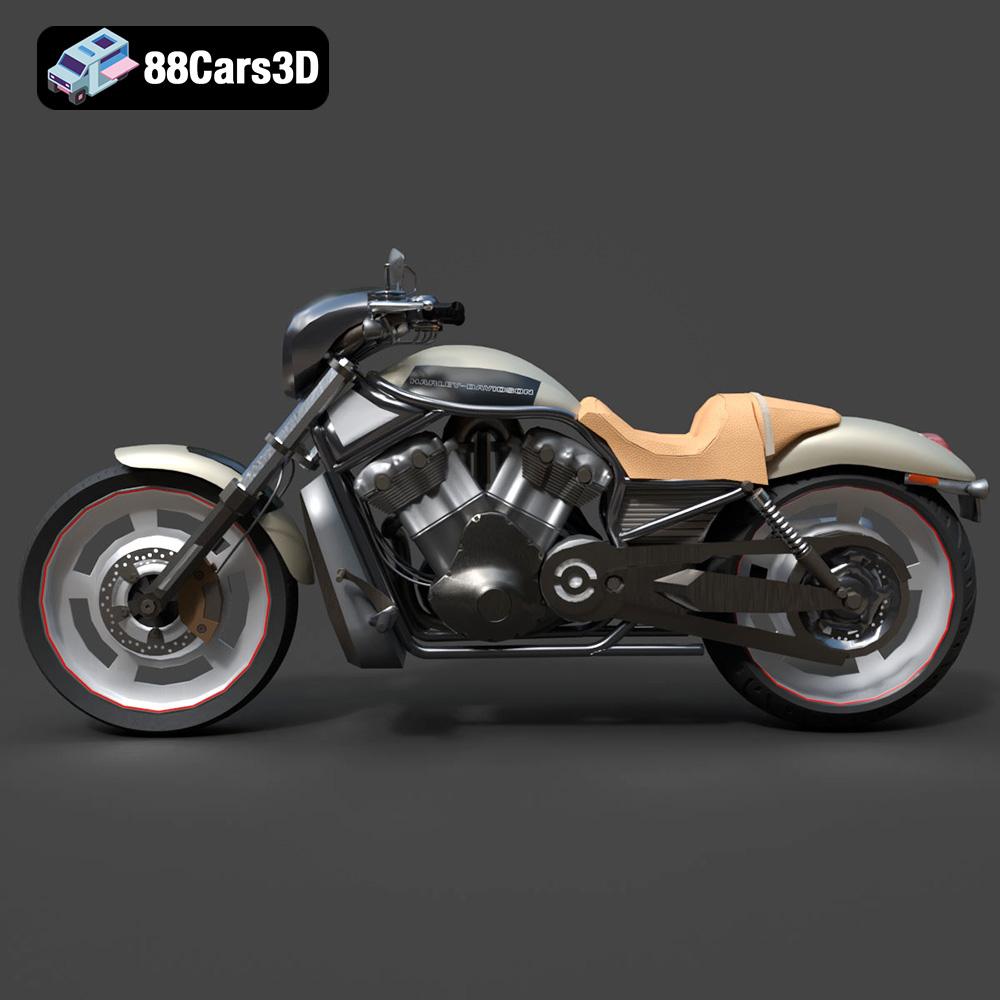
The Night Rod, a member of the iconic VRSC (V-Rod) family, is famed for its aggressive, low-slung drag-bike profile and its liquid-cooled Revolution V-Twin engine, a marvel developed in partnership with Porsche. This 3D model accurately captures that sinister aesthetic. From the signature blacked-out styling on the frame, engine, and front forks to the distinctive swept-back dual exhaust system, every detail contributes to its authentic representation. The massive 240mm rear tire, mounted on slotted or solid cast wheels, perfectly conveys the bike’s raw power and road presence. Even the aerodynamic speed screen cowl and sleek, chopped rear fender are faithfully reproduced, ensuring that the model instantly recognizable as the legendary machine it portrays.
The cockpit and rider interface also receive meticulous attention. The deep, low-slung drag-style saddle geometry, forward-reaching drag handlebars with detailed grips, mirrors, and levers, and authentic forward foot control and peg placements are all present. This level of detail isn’t just for show; it’s optimized geometry suitable for immersive first-person POV experiences in gaming or VR, where the rider’s interaction with the bike is crucial.
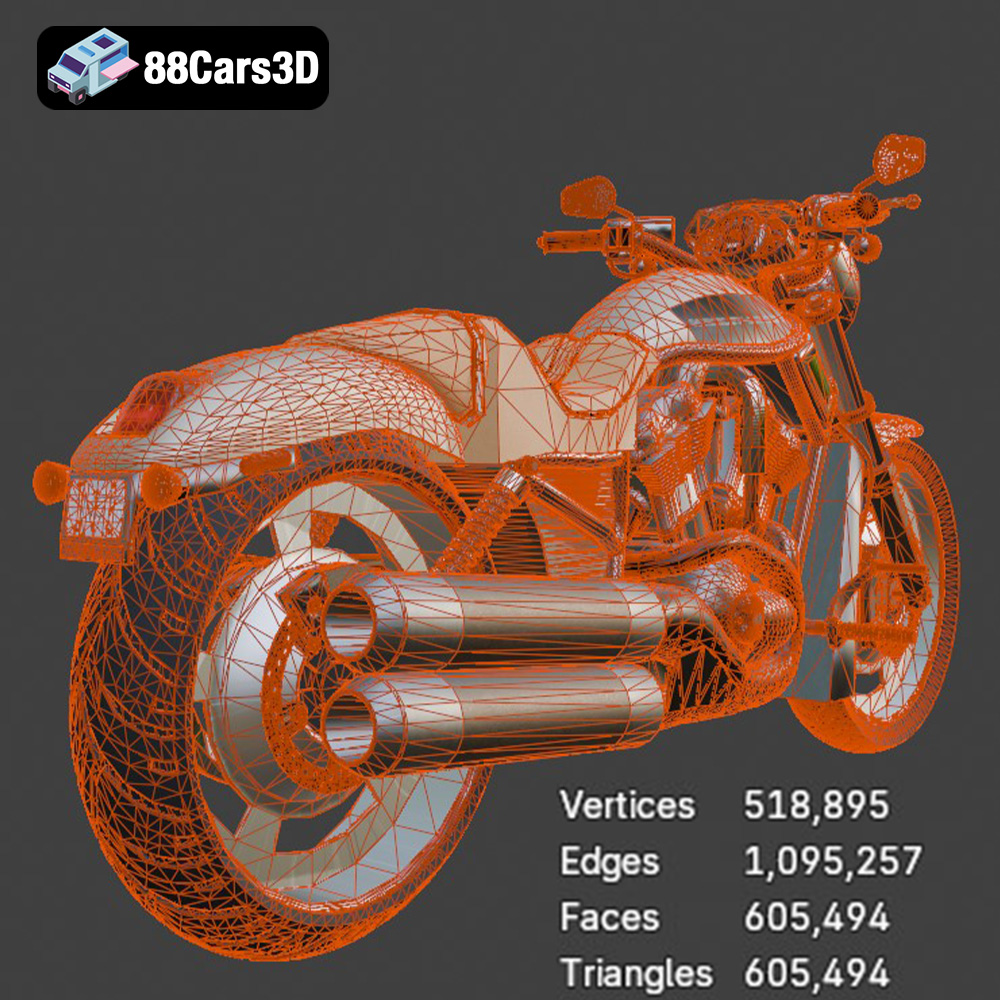
One of the most critical aspects of a professional 3D model is its topology – the way its polygons are structured. The Harley-Davidson Night Rod 3D Model boasts an incredibly balanced, high-polygon topology, weighing in at just over 600k triangles (specifically 605,494 triangles). This figure is a sweet spot, delivering premium close-up mechanical detail without the crushing memory load typically associated with multi-million polygon CAD rips. With 518,895 vertices and 1,095,257 edges, the mesh density is perfectly calibrated for excellent visual fidelity in high-resolution renders while remaining highly manageable as a hero vehicle for current-generation game engines like Unreal Engine 5 or Unity HDRP. This optimized high-detail topology ensures smooth subdivision where needed, clean deformation for animation, and efficient rendering.
A static model can be beautiful, but an animatable one opens up a world of possibilities. The Night Rod model is designed with animation in mind, featuring separate wheels, steering components, and suspension elements. Furthermore, it includes a proper pivot setup for steering, wheel rotation, and even kickstand articulation. This modularity is essential for creators who need to animate the bike for cinematics, interactive product configurators, or dynamic gameplay sequences. The careful separation of components and accurate pivot placements significantly reduce the setup time for rigging and animation, allowing artists to focus on creative movement rather than technical preparation.
The versatility of the Harley-Davidson Night Rod 3D Model extends far beyond its inherent beauty. Its robust technical specifications and careful construction make it an indispensable asset across a spectrum of professional 3D applications, from high-stakes automotive rendering to immersive game development.
For rendering artists and automotive visualization specialists, this model is a dream come true. Its high-detail topology and accurate geometry are primed for photorealistic output. Imagine the Night Rod in moody studio lighting setups, its blacked-out chrome gleaming under carefully placed spotlights. It’s perfect for dark lifestyle brand campaigns, gritty urban cyberpunk scenes, or intense street-racing visuals. Whether you’re using V-Ray or Corona Renderer in 3ds Max, Cycles in Blender, or Marmoset Toolbag for real-time presentation, the model’s clean mesh and attention to detail ensure a stunning result. The ability to customize fuel tank and fender colors, or swap out exhaust systems, further enhances its utility for specific client briefs requiring unique visual storytelling.
In the demanding world of game development, balancing visual fidelity with performance is an ongoing challenge. The Harley-Davidson Night Rod 3D Model strikes this balance expertly, making it an excellent “hero” drivable vehicle for current-gen console and PC games. At ~605k triangles, it offers significant detail for close-up views and immersive first-person perspectives without overwhelming the game engine. Its compatibility with Unreal Engine 5 and Unity HDRP ensures that developers can integrate it with minimal friction, leveraging pre-built materials or easily adapting custom shaders. The proper pivot setup for articulation is a massive time-saver for vehicle rigging, allowing designers to quickly implement realistic physics and driving mechanics. This asset is a powerful component for creating compelling `game assets` that stand out.
The burgeoning fields of Augmented Reality (AR) and Virtual Reality (VR) demand highly optimized yet visually rich 3D assets. The Night Rod model is perfectly suited for these environments. Its balanced poly count allows for smooth performance in VR applications, enabling the creation of high-end virtual motorcycle showrooms where potential buyers can explore the bike from every angle, customize options, and even sit on it virtually. For AR, the model can be placed in real-world environments via mobile apps, offering a compelling interactive experience. The inclusion of the .glb format is particularly beneficial here, ensuring efficient loading and display in web-based or mobile AR/VR platforms, making this one of the most versatile `3D car models` for modern interactive applications.
Beyond screen-based applications, the Harley-Davidson Night Rod 3D Model offers a unique pathway into the physical world through 3D printing. For hobbyists, collectors, or even professional designers prototyping physical representations, this feature opens up new dimensions of creativity.
The inclusion of an .stl file makes the Night Rod model directly convertible for 3D printing. The .stl format triangulates the model’s surface, creating a “watertight” mesh that 3D printers can interpret to build up layers of material. This allows enthusiasts to create tangible scale models of the iconic power cruiser. From a miniature desk ornament to a more substantial display piece, the ability to physically hold a representation of this legendary bike is incredibly satisfying. It transforms the digital asset into a unique collectible, perfect for custom motorcycle hobbyists.
To achieve the best possible physical replica, understanding 3D print settings is crucial. For the Harley-Davidson Night Rod 3D Model, recommended scales include 1:12, 1:10, and 1:8, allowing for a good balance of detail and manageable print size. A layer height of 0.04–0.08 mm is suggested, with resin printing (SLA/DLP) highly recommended. Resin printers excel at capturing the intricate details of the engine cooling fins and wheel designs, which might be lost with coarser FDM printing. A wall thickness of 1.2–2.0 mm and an infill of 20–30% ensure structural integrity without excessive material usage. Supports will be necessary for complex overhangs such as the radiator shroud, handlebars, exhaust pipes, and kickstand. Printing the frame angled for structural integrity and the wheels and exhaust separately will yield the cleanest results, minimizing visible layer lines and support marks on critical surfaces.
Once printed, the physical Night Rod model can be further enhanced through post-processing. This typically involves sanding to smooth out any layer lines or imperfections, followed by priming to create an even surface for paint. For an authentic look, painting options include classic Vivid Black or Black Denim for the bodywork, combined with gloss and matte black mixes for the engine accents, mimicking the bike’s signature blacked-out styling. With careful attention to detail in printing and finishing, the digital Harley-Davidson Night Rod can be transformed into a stunning, museum-quality scale model, a true testament to the power of digital manufacturing.
Beyond its out-of-the-box readiness, the Harley-Davidson Night Rod 3D Model offers extensive customization options, allowing artists to tailor the asset to their specific creative vision and project requirements. This flexibility is a hallmark of truly professional `3D car models`.
One of the most immediate customization avenues is altering the bike’s color scheme. While the Night Rod is famous for its blacked-out styling, the model provides the foundation to experiment with other iconic Harley-Davidson colors. Imagine a Racing Orange stripe cutting through the Vivid Black tank, or a full Black Denim finish for an even grittier appearance. These changes can dramatically shift the mood and context of your renders or game scenes. Furthermore, the modular design allows for swapping stock components for custom aftermarket parts. For instance, replacing the stock dual exhaust with custom pipes can give the bike a unique personality, reflecting the widespread customization culture among real-world Harley owners.
For those looking to push the visual fidelity even further without increasing the polygon count, advanced techniques like baking normal maps are invaluable. These textures can simulate high-poly details such as intricate weld marks, fine engine casing textures, or subtle surface imperfections, adding an incredible layer of realism to the model without impacting real-time performance. Coupled with sophisticated material shaders, artists can create physically based rendering (PBR) materials that accurately react to light, mimicking the reflectivity of chrome, the dullness of matte paint, or the subtle sheen of leather on the saddle. This allows for a vast range of visual styles, from gritty realism to stylized renders.
Lighting is another powerful customization tool. The Night Rod model excels in dramatic lighting scenarios. Imagine it bathed in the moody, neon glow of a futuristic city street, reflecting vibrant cyberpunk hues, or starkly illuminated by the harsh sunlight of a desert highway. The ability to adapt lighting and environmental setups empowers artists to tell diverse stories and evoke specific emotions, making the Harley-Davidson Night Rod 3D Model a truly versatile narrative element.
The Harley-Davidson Night Rod is more than just a motorcycle; it’s a statement. And in the digital realm, the Harley-Davidson Night Rod 3D Model from 88cars3d.com is a powerful tool for making an equally strong statement. We’ve explored its meticulous digital craftsmanship, from its accurate recreation of the iconic VRSC aesthetic and Porsche-engineered Revolution V-Twin engine to its optimized 605k triangle topology that strikes a perfect balance between detail and performance.
This comprehensive asset is designed for seamless integration into a myriad of professional workflows. Whether you’re an automotive rendering specialist aiming for photorealistic visuals, a game developer in need of a high-fidelity hero vehicle, or an AR/VR creator building immersive experiences, this model provides the necessary foundation. Its extensive range of included file formats—from .blend and .max for native DCC work to .fbx and .unreal for game engines, and even .stl for 3D printing—ensures unparalleled versatility. The specific 3D print settings even allow enthusiasts to transition this digital masterpiece into a tangible collectible.
With features like separate components for animation, proper pivot setups, and vast customization potential, the Harley-Davidson Night Rod 3D Model is not just another asset; it’s an investment in quality, flexibility, and creative freedom. For anyone serious about crafting compelling visual narratives or building immersive digital worlds, this model is an indispensable addition to their library of `3D car models` and `game assets`. Explore its potential today and bring the legend to life in your next project, confidently sourced from 88cars3d.com.
The Harley-Davidson Night Rod 3D Model is a high-detail digital recreation of the legendary dark custom power cruiser. Part of the iconic VRSC (V-Rod) family, the Night Rod is famous for its aggressive, low-slung drag-bike profile and its liquid-cooled Revolution V-Twin engine—developed in partnership with Porsche. Characterized by its blacked-out styling and massive rear tire, it represents a perfect fusion of American muscle and high-performance engineering. Built with an incredibly balanced, high-polygon topology (just over 600k triangles), it provides excellent visual fidelity for close-up rendering while remaining highly manageable as a hero vehicle for current-generation game engines. Perfectly balanced for rendering, game development, and 3D printing. Includes .blend, .fbx, .obj, .glb, .stl, .ply, .unreal, and .max formats.
$9.99
.blend
.fbx
.obj
.rendering
.stl
blacked-out
drag-bike
game asset
harley-davidson
mid-poly
motorcycle-3d-model
night-rod
power-cruiser
revolution-engine
v-rod
VR/AR
vrsc