Get 50% OFF All Premium 3D & STL Models!

“`html
The world of 3D printing has revolutionized model making, prototyping, and even parts production across various industries, and the automotive sector is no exception. For enthusiasts and professionals alike, the ability to bring digital car models to life through 3D printing is incredibly exciting. But the key to achieving exceptional results lies in selecting the right materials. This article dives deep into the best resins and filaments for 3D printing automotive models, covering everything from material properties to printer settings and post-processing techniques. Whether you’re aiming for a display piece, a functional prototype, or an educational model, understanding the nuances of each material will significantly impact the final outcome. We’ll explore the characteristics of popular filaments like PLA, ABS, and PETG, as well as delve into the world of resins, including standard, tough, and high-temperature options. Get ready to unlock the secrets to creating stunning and durable automotive 3D prints.
Fused Deposition Modeling (FDM) is a widely accessible 3D printing technology, and filaments are its lifeblood. The choice of filament dictates the strength, flexibility, and aesthetic qualities of your automotive print. Different filaments offer distinct advantages and disadvantages, making it crucial to select the one that aligns with your project’s requirements. Let’s examine some of the most popular options:
PLA is a biodegradable thermoplastic derived from renewable resources like corn starch or sugarcane. It’s known for its ease of printing, low odor, and wide availability. PLA is an excellent option for beginners because it requires lower printing temperatures (typically 180-220°C) and doesn’t necessarily need a heated bed. However, PLA has limitations. It’s less heat-resistant than other filaments, becoming soft at temperatures above 60°C, making it unsuitable for parts exposed to direct sunlight or high temperatures inside a car. It’s also more brittle and less impact-resistant than ABS or PETG. Consider PLA for display models or parts that won’t be subjected to significant stress or heat. When downloading models from marketplaces such as 88cars3d.com, PLA is a good starting point for initial test prints.
ABS is a petroleum-based thermoplastic known for its strength, durability, and heat resistance. It’s a popular choice for functional parts and automotive components that need to withstand higher temperatures. ABS requires higher printing temperatures (220-250°C) and a heated bed (80-110°C) to prevent warping and ensure proper layer adhesion. ABS also releases fumes during printing, so good ventilation is essential. While ABS offers superior strength compared to PLA, it’s more prone to warping and requires more experienced users to achieve successful prints. You’ll often need an enclosure to maintain a stable temperature during printing. Common applications include interior car parts, housings, and components that require good impact resistance.
PETG combines the best aspects of PLA and ABS. It’s easier to print than ABS, has good strength and impact resistance, and is more heat-resistant than PLA. PETG also has good chemical resistance. It typically requires a nozzle temperature of 230-250°C and a bed temperature of 70-80°C. PETG is a versatile filament suitable for a wide range of automotive applications, including exterior trim, interior components, and functional prototypes. While PETG is more flexible than ABS, it’s still rigid enough for many automotive applications. It’s also less prone to warping than ABS and doesn’t release harmful fumes. PETG is a great all-around choice for automotive 3D printing.
Stereolithography (SLA) and Digital Light Processing (DLP) 3D printing use liquid resins that are cured by UV light. This technology offers significantly higher resolution and detail compared to FDM printing, making it ideal for intricate automotive models with fine features. However, resin printing requires more post-processing, including washing and curing. Different resin types offer varying properties, affecting the strength, flexibility, and temperature resistance of your prints.
Standard resin is the most common and affordable type of resin. It’s known for its high detail and smooth surface finish, making it ideal for display models and prototypes where aesthetics are paramount. Standard resin comes in a variety of colors, allowing for visually appealing prints. However, standard resin is typically brittle and not suitable for functional parts that will be subjected to significant stress. It also has lower heat resistance compared to other resin types. Consider standard resin for creating visually stunning automotive models that will be displayed rather than used functionally. Platforms like 88cars3d.com offer print-ready STL files that are perfect for standard resin printing.
Tough resin is engineered to provide increased strength and impact resistance compared to standard resin. It’s a good choice for functional prototypes or parts that need to withstand some stress. Tough resin still offers good detail, although not quite as high as standard resin. It’s more expensive than standard resin but provides a significant improvement in durability. Tough resin is suitable for creating automotive components that require some level of functionality, such as brackets or housings. It also generally has better heat resistance than standard resin.
High-temperature resin is designed to withstand elevated temperatures without deforming or softening. It’s essential for creating automotive parts that will be exposed to engine heat or direct sunlight. High-temperature resin can maintain its shape and properties at temperatures up to 200°C or even higher, depending on the specific formulation. This type of resin is typically more expensive and requires more specialized printing and curing procedures. It’s best suited for applications such as engine components, exhaust system parts, or other high-heat environments. High-temperature resin may not offer the same level of detail as standard or tough resin, but its heat resistance makes it indispensable for certain automotive applications.
The slicing process converts your 3D model into a series of instructions that the 3D printer can understand. Optimizing slicing parameters is crucial for achieving high-quality automotive prints. Different slicers offer a wide range of settings that can be adjusted to fine-tune the printing process. Here are some key parameters to consider:
Layer height determines the thickness of each layer in your 3D print. Lower layer heights result in smoother surfaces and finer details, but they also increase print time. Higher layer heights reduce print time but may compromise surface quality. For automotive models, a layer height of 0.1-0.2 mm is a good starting point for FDM printing. For resin printing, layer heights of 0.025-0.05 mm are common. Experiment with different layer heights to find the optimal balance between detail and print time for your specific model and printer.
Infill refers to the internal structure of your 3D print. Infill density determines the amount of material used inside the model, affecting its strength and weight. Higher infill densities result in stronger and heavier prints, while lower infill densities result in weaker and lighter prints. The infill pattern also influences the strength and weight distribution. Common infill patterns include grid, honeycomb, and gyroid. For automotive models, an infill density of 15-25% is often sufficient for display models. For functional parts, higher infill densities may be necessary. Experiment with different infill patterns to optimize strength and weight for your specific application.
Support structures are temporary structures that are printed to support overhangs and bridges in your 3D model. They are essential for printing complex geometries that would otherwise collapse during printing. Support structures need to be carefully designed and placed to minimize their impact on the surface finish of the printed part. Different slicers offer various support generation options, including tree supports, linear supports, and custom supports. For automotive models, consider using tree supports, as they tend to be easier to remove and leave fewer marks on the surface. Experiment with different support settings to optimize support generation and removal for your specific model.
Post-processing is an essential step in transforming a raw 3D print into a polished automotive model. It involves a series of techniques that improve the surface finish, remove imperfections, and enhance the overall appearance of the print. Here are some common post-processing techniques:
The first step in post-processing is to remove the support structures. Carefully remove the supports using pliers, cutters, or other appropriate tools. Be gentle to avoid damaging the printed part. After removing the supports, sanding is necessary to smooth the surface and remove any remaining support marks. Start with coarse-grit sandpaper (e.g., 120 grit) to remove larger imperfections, then gradually move to finer-grit sandpaper (e.g., 400 grit, 600 grit, 800 grit) to achieve a smooth finish. Wet sanding can help to reduce dust and improve the surface finish. For resin prints, proper washing with isopropyl alcohol (IPA) is crucial to remove uncured resin before curing. It’s also important to cure resin prints under UV light for the recommended time to achieve optimal strength and durability.
Priming is essential for creating a smooth and uniform surface for painting. Apply several thin coats of primer, allowing each coat to dry completely before applying the next. Sand the primed surface with fine-grit sandpaper (e.g., 600 grit) to remove any imperfections. After priming, you can paint the model using your desired color and finish. Use high-quality automotive paints for a durable and realistic finish. Apply several thin coats of paint, allowing each coat to dry completely before applying the next. Clear coating adds a protective layer and enhances the gloss of the paint. Automotive clear coats are typically 2-part systems requiring mixing, but they provide superior durability and shine.
Many automotive models consist of multiple parts that need to be assembled after printing and post-processing. Use appropriate adhesives, such as super glue or epoxy, to join the parts together. Be precise and careful to ensure a clean and seamless assembly. Detailing adds realism and enhances the overall appearance of the model. Use fine-tipped brushes and paints to add details such as panel lines, rivets, and other small features. Consider using weathering techniques to add a realistic worn appearance to the model. Applying decals and stickers can further enhance the realism and detail. Remember to set aside ample time for assembly and detailing, as this is where the model truly comes to life.
Even with careful planning and preparation, 3D printing can sometimes present challenges. Here are some common issues encountered when printing automotive models and how to address them:
Warping occurs when the printed part lifts from the build plate during printing, especially with ABS and other filaments that shrink as they cool. To prevent warping, ensure that the build plate is clean and level. Use a heated bed and set the temperature according to the filament manufacturer’s recommendations. Apply a bed adhesion aid, such as glue stick, hairspray, or blue painter’s tape. Enclosures can also help to maintain a stable temperature and prevent warping. For resin printing, ensure that the build plate is properly leveled and that the resin is properly mixed and stored.
Stringing occurs when filament leaks from the nozzle during travel moves, leaving thin strands of plastic between parts of the print. Blobs are small clumps of plastic that accumulate on the surface of the print. To reduce stringing and blobs, adjust the retraction settings in your slicer. Increase the retraction distance and speed. Also, decrease the printing temperature and increase the travel speed. Ensure that the filament is dry and properly stored. For resin printing, ensure that the exposure time is properly calibrated and that the resin is not overcured.
Layer delamination occurs when the layers of the print separate from each other. This can be caused by insufficient layer adhesion, low printing temperature, or drafts in the printing environment. To improve layer adhesion, increase the printing temperature and reduce the printing speed. Ensure that the bed is properly leveled and that the first layer is properly adhered to the build plate. Enclosures can also help to maintain a stable temperature and prevent layer delamination. Consider using a filament with better layer adhesion properties.
Selecting the right materials is paramount for achieving exceptional results in automotive 3D printing. Whether you opt for the ease of PLA, the durability of ABS, the versatility of PETG, or the high detail of resins, understanding the properties of each material will significantly impact the final outcome. By optimizing slicing parameters, employing effective post-processing techniques, and troubleshooting common printing issues, you can unlock the full potential of 3D printing and create stunning automotive models. Remember to experiment with different settings and materials to find what works best for your specific printer and project. And be sure to check out marketplaces like 88cars3d.com for high-quality STL files of your favorite car models. So, dive in, experiment, and bring your automotive visions to life through the power of 3D printing!
“`
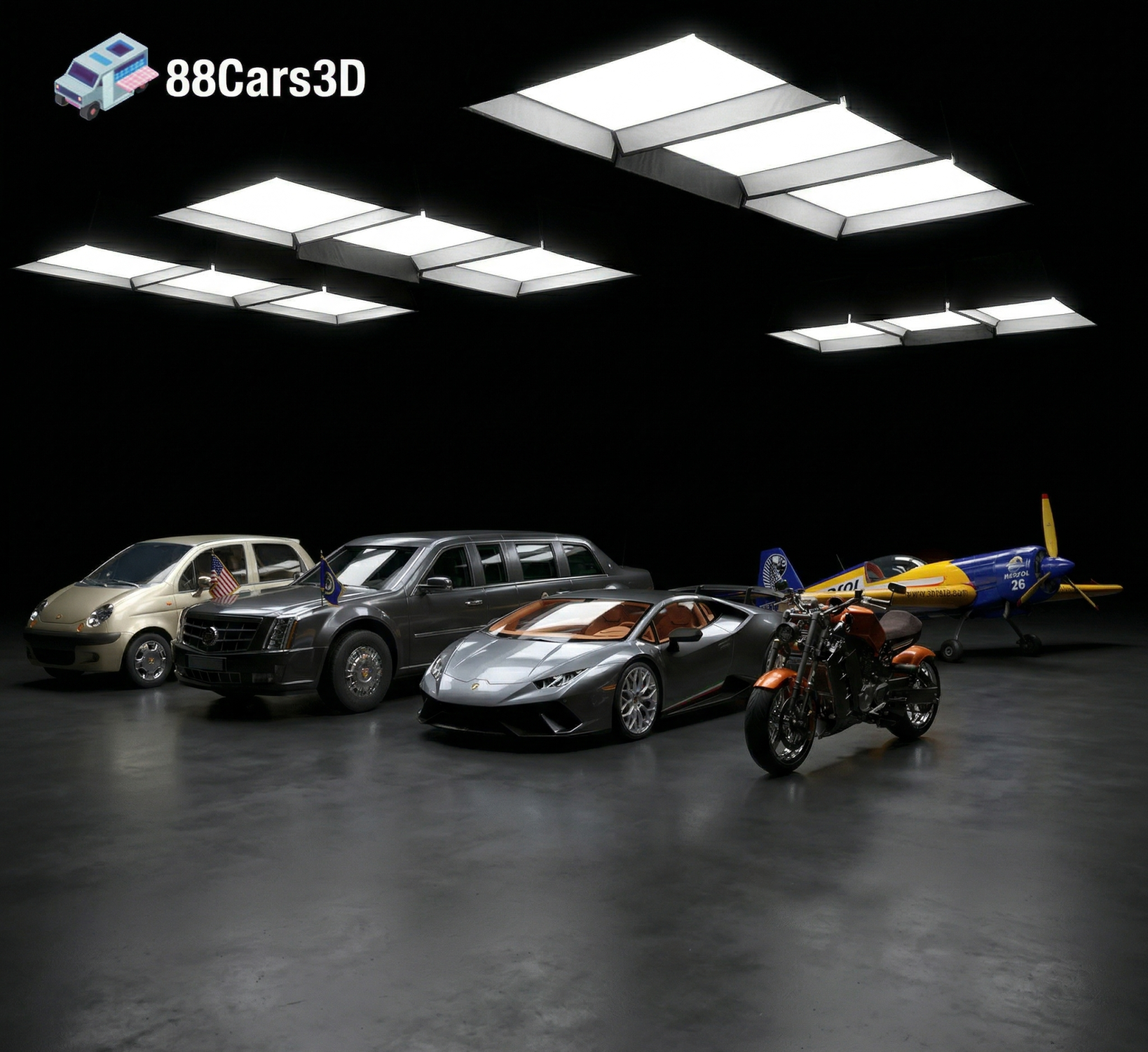
Texture: Yes | Material: Yes | 3D Printable: Yes. Download the Ultimate Creators’ Showcase featuring 5 premium 3D models: Lamborghini Huracan, ZAV Concept Motorcycle, Sukhoi SU-26, Presidential Limousine, and Daewoo Damas. Optimized for 4K CGI rendering and 3D printing. Save massive with this exclusive multi-category bundle!
Price: $99.99

Texture: Yes | Material: Yes | 3D Printable: Yes. Download the Italian Thoroughbreds Bundle featuring 5 iconic 3D models: Lamborghini Huracán Performante, Ferrari 458 Italia, Lamborghini Urus, Diablo SV, and Maserati GT. Optimized for 4K rendering and 3D printing (STL included). Save 50% with this ultimate Italian vehicle collection.
Price: $199.99

Download the Elite Future Mobility Bundle featuring 4 highly optimized 3D models: Tesla Model S, Avatr 11, Li L9, and Zoox Robotaxi. Perfect for ArchViz, Smart City renders, and game dev. Optimized for Unreal Engine and Blender. Includes .fbx, .obj, and .max formats.
Price: $99

🚗 5 Iconic German Cars (BMW M4 G82, M5 CS, X3, 1 Series & Mercedes E-Class). ✅ Optimized for ArchViz: Ready for Corona & V-Ray. 💰 Save €71 with this limited-time collection! 🚀 Instant Download after purchase.
Price: $119

Download the Extreme Off-Road & Survival 3D Models Bundle! Includes the Brabus 800 Adventure, Dodge Ram Bigfoot, Spec Truck, and a Caravan. Save over €210 on this premium 4-in-1 off-grid vehicle pack for ArchViz and game development.
Price: $149.99

Download the Heavy Duty & Commercial Logistics 3D Models Bundle! Includes the Ford Sterling, Caterpillar CT680, Mercedes Citaro Bus, and Vito Van. Save over €130 on this massive, game-ready 4-in-1 industrial vehicle pack.
Price: $109.99

Download the Ultimate Custom Motorcycles 3D Models Bundle. Includes a Custom Chopper, Ducati 916 Café Fighter, Harley XR1200X, and BMW K100. Perfect premium props for luxury ArchViz garages. Save over €250 today!
Price: $159.99

Download the ultimate JDM Street Racing 3D Models Bundle! Includes the Nissan GT-R, Toyota Supra, Mazda RX-7, Lancer Evo IX, and Honda NSX. Save big on this highly optimized, game-ready 5-in-1 Japanese legend car pack.
Price: $129.99

Download the ultimate American Muscle & Cinematic Classics 3D Models Bundle! Includes the Dodge Charger ’68, Mustang Eleanor GT500, Camaro Z28 ’79, and a custom ’69 Mustang. Save over €240 on this game-ready, premium 4-in-1 pack.
Price: $149.99

Download the Everyday City Traffic 3D Models Bundle. Includes the VW Golf, Kia Picanto, Hyundai Tucson, Toyota Yaris, and a DHL Ford Transit Van. Save big on this 5-in-1 pack, perfectly optimized for realistic ArchViz streets and game traffic.
Price: $99.99

