Get 50% OFF All Premium 3D & STL Models!

In the rapidly evolving landscape of real-time rendering, virtual production, and interactive experiences, the demand for dynamic and lifelike character animation is paramount. Whether you’re crafting immersive video games, developing compelling automotive visualization projects, or building cutting-edge virtual reality training simulations, fluid and responsive character movement adds an invaluable layer of realism and engagement. Historically, character rigging and animation have often been complex, time-consuming processes, often requiring specialized external software and multiple rounds of iteration.
Enter Unreal Engine’s Control Rig – a powerful, in-engine rigging and animation tool that has revolutionized how developers and artists approach character workflows. Control Rig empowers you to build highly customizable, procedural rigs directly within Unreal Engine, enabling real-time manipulation, interactive animation, and seamless integration with other engine systems like Sequencer and Blueprint. This deep dive will explore how Control Rig can elevate your character animation setup, from initial skeletal mesh preparation to advanced interactive controls, with a particular focus on its applications in automotive visualization and real-time rendering contexts. Get ready to unlock new levels of creative control and efficiency in your Unreal Engine projects.
Unreal Engine’s Control Rig offers a paradigm shift in character animation workflows by allowing artists and technical animators to construct and manipulate character rigs directly within the engine. It’s a node-based system, similar to Material Editor or Blueprint, providing a visual scripting environment to define the relationships, constraints, and behaviors of your character’s skeletal hierarchy. This procedural approach means that rigs are highly flexible, non-destructive, and incredibly adaptable, significantly accelerating iteration times and fostering more experimental animation.
The core philosophy behind Control Rig is to bring the power of professional rigging tools into a real-time environment. Instead of round-tripping between a DCC (Digital Content Creation) application like Maya or Blender and Unreal Engine for every rig adjustment or animation tweak, Control Rig allows for instantaneous feedback. This tight integration means animators can work alongside level designers and programmers, seeing the character animate in the final environment, reacting to lighting, physics, and gameplay events in real-time. This efficiency is crucial for projects with tight deadlines, especially in virtual production or game development where continuous iteration is key to achieving the desired fidelity. Furthermore, Control Rig isn’t just for primary characters; it’s equally potent for secondary animations, props, and even complex mechanical rigs, offering a versatile solution for a wide range of animation challenges.
Control Rig is essentially a graph editor where you define how a set of “controls” (visual manipulators) drives the underlying “bones” of your skeletal mesh. Each connection and operation in the graph is represented by a node, allowing for intricate logical relationships. Key nodes include “Get Transform” and “Set Transform” for reading and writing bone positions, “Parent Constraint” for establishing hierarchical relationships, and various Inverse Kinematics (IK) solvers like FABRIK and Two Bone IK for intuitive limb posing. Its significance for real-time production lies in its ability to generate animation data on the fly, directly within the engine’s runtime. This means lighter animation assets, as only control data needs to be stored, and dynamic adjustments can be made at any point, even during gameplay or live virtual production sessions.
For automotive visualization, this capability opens doors to unprecedented realism. Imagine animating a driver getting into a car sourced from a marketplace like 88cars3d.com, smoothly turning the steering wheel, and interacting with interior components. Control Rig allows for this level of nuanced character interaction, making your virtual automotive presentations more engaging and believable. It frees artists from rigid animation cycles, enabling organic, context-aware movements that respond to the scene.
The advantages of Control Rig extend beyond simple manipulation. Its procedural nature provides significant benefits:
This level of integration and flexibility makes Control Rig an indispensable tool for any Unreal Engine developer looking to create high-quality, dynamic character animations, whether for game characters, virtual presenters, or interactive drivers in automotive showcases.
Before diving into the intricacies of Control Rig creation, it’s essential to properly prepare your character’s skeletal mesh. A well-organized and correctly imported skeletal mesh forms the foundation for any robust rig. Poorly optimized or incorrectly structured assets can lead to frustrating issues down the line, from distorted deformations to performance bottlenecks. The goal is to ensure that your character model, whether a highly detailed human character or a stylized avatar, is ready to be seamlessly integrated into Unreal Engine’s animation pipeline and take full advantage of Control Rig’s capabilities.
This preparation phase involves critical steps such as ensuring clean mesh topology, correct UV mapping for materials, and most importantly, a properly constructed skeletal hierarchy with appropriate joint orientations. While Control Rig can be quite forgiving, starting with a clean slate significantly streamlines the rigging process. When sourcing character assets, consider platforms like 88cars3d.com which, while primarily known for vehicle models, often feature high-quality driver and passenger models optimized for Unreal Engine, complete with clean topology and well-defined skeletons that are ideal for Control Rig implementation.
The journey begins with importing your skeletal mesh. Ensure your 3D modeling software exports the model as an FBX file, as this is the standard format for Unreal Engine. During export, verify that you include the mesh, skin, and skeleton. Once imported into Unreal Engine, inspect the skeletal mesh asset:
If you encounter issues with joint orientation, you can often reorient them within your DCC application or, for minor adjustments, use the ‘Edit Bone’ tools in Unreal Engine’s Skeletal Mesh Editor (though DCC is usually preferred for major changes).
Once your skeletal mesh is optimized, creating the Control Rig asset is straightforward:
Animation > Control Rig > Control Rig.New Control From Selected. This creates a visual manipulator directly in the viewport.Initially, these controls won’t do anything. The next step, which we’ll cover in the following section, involves connecting these controls to the bones via the Control Rig graph, defining their influence and behavior through nodes and solvers. This foundational setup is crucial for establishing a stable and intuitive animation environment.
With your skeletal mesh properly prepared and your initial Control Rig asset created, the real magic begins: building the core logic of your rig. This involves understanding the fundamental components of Control Rig – controls, bones, and solvers – and then connecting them in a logical flow using the node-based graph editor. The goal is to establish a clear hierarchy of influence, allowing animators to pose the character intuitively and efficiently. A well-designed foundational rig anticipates common animation needs and provides the necessary tools to achieve natural-looking motion with minimal effort.
Crafting a robust Control Rig is an iterative process. You’ll start with basic limb controls and then gradually build up complexity, adding more sophisticated systems for finer manipulation. Understanding the interaction between different node types and how data flows through the graph is key to creating a responsive and stable rig. This section will guide you through the initial steps of connecting your controls to the skeletal mesh and introducing essential solvers that bring your character to life.
At the heart of Control Rig are three fundamental concepts:
To begin connecting them in the Control Rig graph:
This establishes a simple data flow: control moves → IK solver calculates → bone transforms update → character poses.
Building a functional Control Rig relies heavily on a selection of core nodes:
A common initial setup for a leg using Two Bone IK would involve:
Repeat this process for all major limbs, then consider spine controls using FABRIK or a series of Parent Constraints. Remember to reference the official Unreal Engine documentation at dev.epicgames.com/community/unreal-engine/learning for comprehensive details on each node and their specific parameters.
Once you have a foundational rig with basic IK and FK controls, the next step is to introduce advanced techniques that enhance the animator’s control and facilitate more nuanced, lifelike motion. These techniques move beyond simple bone manipulation to incorporate dynamic blending, precise spatial control, and custom procedural logic. Mastering these advanced concepts allows you to create highly expressive rigs capable of addressing complex animation scenarios, from intricate character interactions to specialized virtual production requirements.
The true power of Control Rig lies in its ability to combine simple nodes into sophisticated systems. This section delves into methodologies for seamless IK/FK blending, leveraging different transform spaces for precise control, and integrating custom logic to push the boundaries of what’s possible directly within Unreal Engine. These enhancements not only improve the quality of your character animations but also significantly accelerate the overall animation pipeline by providing animators with more intuitive and powerful tools.
One of the hallmarks of a professional character rig is the ability to seamlessly transition between Forward Kinematics (FK) and Inverse Kinematics (IK). FK is ideal for fluid, arcing motions (e.g., waving an arm), where each joint is rotated individually. IK, as discussed, is perfect for precise placement (e.g., touching a target, foot planting). Control Rig makes implementing IK/FK blending intuitive:
This setup allows animators to dial in the exact blend amount, giving them maximum flexibility. For example, a character driving a car (perhaps a model from 88cars3d.com) might use IK for their hands on the steering wheel, but then switch to FK for more expressive gesturing once they exit the vehicle. This dynamic blending is crucial for versatile character performances.
Understanding transform spaces is critical for robust rigging. Controls and bones exist in different reference frames:
Constraints are equally vital for precision. Beyond ‘Parent Constraint’, Control Rig offers ‘Transform Constraint’ which can constrain specific components of a transform (e.g., only rotation, or only X-axis movement). This is invaluable for:
While Control Rig’s graph offers a vast array of nodes, there will be times when you need truly custom logic. This is where the ability to integrate Blueprint functions and variables directly within your Control Rig becomes invaluable. You can create custom ‘Rig Functions’ and ‘Rig Units’ that encapsulate complex calculations or specific behaviors unique to your character or project.
For example, you could create a custom Rig Unit to:
These custom units appear as single nodes in your Control Rig graph, keeping the overall rig clean and modular. They leverage the full power of Blueprint, allowing for complex mathematics, conditional logic, and interaction with game state, extending Control Rig’s capabilities far beyond its default node library. This modularity means that custom behaviors can be easily reused and shared across multiple rigs, significantly boosting efficiency for large-scale projects.
Once your Control Rig is robust and feature-rich, the next phase is to use it to create compelling character animations. Control Rig isn’t just a static setup; it’s a dynamic tool for animators to pose, keyframe, and refine movements directly within Unreal Engine. Its seamless integration with core animation tools like Sequencer and Blueprint unlocks versatile workflows, catering to both cinematic storytelling and interactive real-time experiences. This section explores how to leverage Control Rig to breathe life into your characters, whether they’re driving a high-fidelity car model from 88cars3d.com or interacting with a virtual environment.
The ability to animate in-engine provides significant advantages, including immediate visual feedback in the final rendering environment, eliminating the need for constant exports and imports. This fosters a more iterative and creative process, allowing animators to make artistic decisions with full context. From meticulous keyframe animation for a cinematic sequence to dynamic, responsive controls for a playable character, Control Rig serves as the central hub for all your character animation needs.
Sequencer is Unreal Engine’s powerful multi-track non-linear editor for creating cinematic sequences, cutscenes, and cinematics. Control Rig integrates seamlessly with Sequencer, making it an incredibly potent tool for cinematic animation:
+ Control Rig. Choose your Control Rig asset.Bake Animation Sequence. This converts the procedural rig data into traditional bone transform curves, which can be optimized for playback and exported if needed. Baking is also crucial for performance, as it removes the runtime evaluation cost of the Control Rig graph during gameplay.This workflow is ideal for creating high-quality, pre-rendered animations for automotive commercials, virtual tours, or character-driven narratives. You can animate a character interacting with a steering wheel, opening a car door, or showcasing vehicle features with precise control, all within the context of your final scene and lighting setup.
For interactive experiences, game characters, or real-time configurators, Control Rig can be dynamically driven by Blueprints. This opens up possibilities for player-controlled characters, AI-driven agents, or responsive virtual assistants:
Consider an automotive AR/VR experience where a user interacts with a car model. A virtual assistant character (animated with Control Rig) could gesture towards different features. Its hand IK targets could be driven by Blueprint events triggered by user interaction, making the character feel truly present and responsive. This blending of real-time control with robust procedural rigging is a cornerstone of modern interactive experiences.
While Control Rig offers unparalleled flexibility and power, like any complex system in real-time rendering, it comes with performance considerations. An unoptimized Control Rig, especially one with numerous complex solvers and intricate logic, can impact your game’s or application’s frame rate. Therefore, understanding how to profile, optimize, and strategically utilize Control Rig is crucial for maintaining smooth performance, particularly in demanding scenarios like virtual production, high-fidelity game development, or interactive automotive visualizations where every millisecond counts.
The key to efficient Control Rig usage lies in a balance between creative freedom and technical discipline. This involves being mindful of the complexity you introduce, knowing when to bake animations, and employing smart techniques to reduce the computational load during runtime. By adopting best practices, you can harness the full power of Control Rig without compromising the performance and responsiveness of your Unreal Engine projects.
The performance cost of a Control Rig primarily stems from its evaluation graph. Each node and connection in your Control Rig graph represents a calculation that needs to be performed every frame to determine the final bone transforms. Several factors contribute to this cost:
You can profile Control Rig performance using Unreal Engine’s built-in profilers (e.g., Session Frontend). Look for ‘Animation’ and ‘Control Rig’ sections to identify specific nodes or parts of your rig that are consuming the most CPU time. Analyzing this data is the first step in identifying bottlenecks.
Optimizing your Control Rig involves several strategies:
For virtual production or real-time automotive visualizations, where character interactions with vehicles (e.g., driver hand placement on a steering wheel from 88cars3d.com models) are common, baking animation for static sequences or using optimized Control Rigs for interactive elements is crucial. Always prioritize visual fidelity in the foreground and optimize background elements or less critical interactions.
Level of Detail (LOD) systems are fundamental for optimizing character performance in real-time. For skeletal meshes, LODs reduce polygon counts and bone counts at a distance. When using Control Rig, consider its interaction with LODs:
By strategically combining Control Rig’s power with thoughtful optimization techniques, you can achieve highly expressive and performant character animations that meet the demands of even the most rigorous real-time projects.
Unreal Engine’s Control Rig stands as a testament to the power of in-engine tools for modern content creation. It has transformed the complex landscape of character animation, offering a robust, flexible, and intuitive solution for artists and developers alike. From setting up foundational skeletal connections to implementing advanced IK/FK blending, dynamic constraints, and custom procedural logic, Control Rig empowers you to craft believable and responsive character movements directly within your Unreal Engine projects.
The ability to iterate rapidly, achieve real-time feedback, and seamlessly integrate with vital engine systems like Sequencer for cinematic storytelling and Blueprint for interactive experiences makes Control Rig an indispensable asset. Whether you’re animating drivers in high-fidelity vehicles from 88cars3d.com, creating engaging virtual presenters for automotive showcases, or populating immersive game worlds, Control Rig provides the precision and efficiency needed to elevate your real-time character animation workflows. Remember to balance creative ambition with thoughtful optimization, leveraging techniques like animation baking and modular design to maintain peak performance.
Embrace the procedural power of Control Rig and unlock new creative possibilities for your characters. Experiment with its node-based graph, explore its diverse solvers, and integrate it deeply into your Unreal Engine pipelines. The future of real-time character animation is here, and with Control Rig, you’re equipped to shape it. Begin exploring the potential today and bring your characters to life with unprecedented fidelity and control.
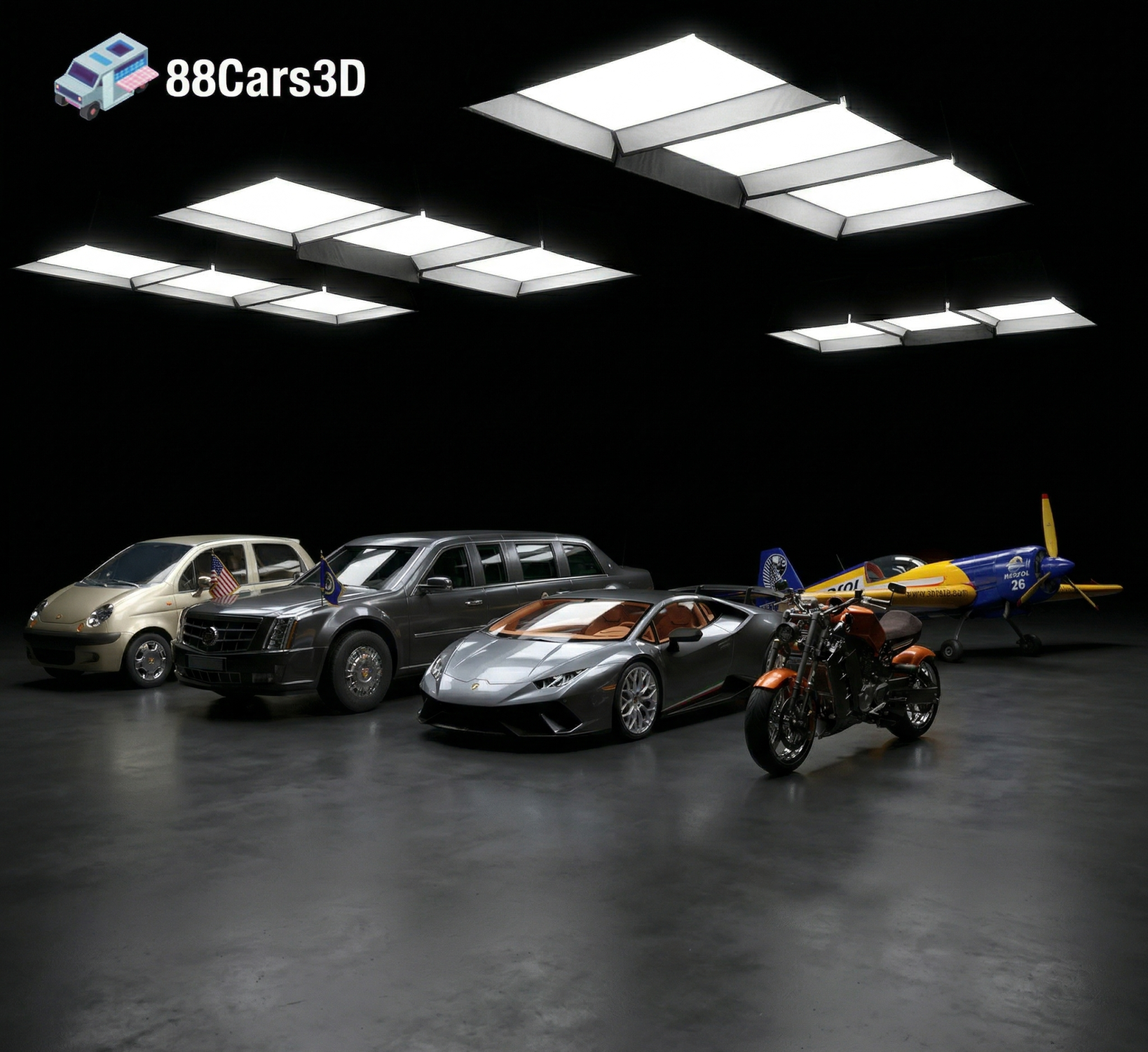
Texture: Yes | Material: Yes | 3D Printable: Yes. Download the Ultimate Creators’ Showcase featuring 5 premium 3D models: Lamborghini Huracan, ZAV Concept Motorcycle, Sukhoi SU-26, Presidential Limousine, and Daewoo Damas. Optimized for 4K CGI rendering and 3D printing. Save massive with this exclusive multi-category bundle!
Price: $99.99

Texture: Yes | Material: Yes | 3D Printable: Yes. Download the Italian Thoroughbreds Bundle featuring 5 iconic 3D models: Lamborghini Huracán Performante, Ferrari 458 Italia, Lamborghini Urus, Diablo SV, and Maserati GT. Optimized for 4K rendering and 3D printing (STL included). Save 50% with this ultimate Italian vehicle collection.
Price: $199.99

Download the Elite Future Mobility Bundle featuring 4 highly optimized 3D models: Tesla Model S, Avatr 11, Li L9, and Zoox Robotaxi. Perfect for ArchViz, Smart City renders, and game dev. Optimized for Unreal Engine and Blender. Includes .fbx, .obj, and .max formats.
Price: $99

🚗 5 Iconic German Cars (BMW M4 G82, M5 CS, X3, 1 Series & Mercedes E-Class). ✅ Optimized for ArchViz: Ready for Corona & V-Ray. 💰 Save €71 with this limited-time collection! 🚀 Instant Download after purchase.
Price: $119

Download the Extreme Off-Road & Survival 3D Models Bundle! Includes the Brabus 800 Adventure, Dodge Ram Bigfoot, Spec Truck, and a Caravan. Save over €210 on this premium 4-in-1 off-grid vehicle pack for ArchViz and game development.
Price: $149.99

Download the Heavy Duty & Commercial Logistics 3D Models Bundle! Includes the Ford Sterling, Caterpillar CT680, Mercedes Citaro Bus, and Vito Van. Save over €130 on this massive, game-ready 4-in-1 industrial vehicle pack.
Price: $109.99

Download the Ultimate Custom Motorcycles 3D Models Bundle. Includes a Custom Chopper, Ducati 916 Café Fighter, Harley XR1200X, and BMW K100. Perfect premium props for luxury ArchViz garages. Save over €250 today!
Price: $159.99

Download the ultimate JDM Street Racing 3D Models Bundle! Includes the Nissan GT-R, Toyota Supra, Mazda RX-7, Lancer Evo IX, and Honda NSX. Save big on this highly optimized, game-ready 5-in-1 Japanese legend car pack.
Price: $129.99

Download the ultimate American Muscle & Cinematic Classics 3D Models Bundle! Includes the Dodge Charger ’68, Mustang Eleanor GT500, Camaro Z28 ’79, and a custom ’69 Mustang. Save over €240 on this game-ready, premium 4-in-1 pack.
Price: $149.99

Download the Everyday City Traffic 3D Models Bundle. Includes the VW Golf, Kia Picanto, Hyundai Tucson, Toyota Yaris, and a DHL Ford Transit Van. Save big on this 5-in-1 pack, perfectly optimized for realistic ArchViz streets and game traffic.
Price: $99.99

