Get 50% OFF All Premium 3D & STL Models!

“`html
The world of 3D printing has opened up incredible possibilities for hobbyists, engineers, and designers alike. At the heart of this revolution lies the STL file format, the de facto standard for representing 3D models. Whether you’re downloading printable car models from platforms like 88cars3d.com or creating your own designs from scratch, the ability to edit and manipulate STL files is crucial for achieving successful and high-quality prints. This guide will delve into the best free and paid software options available for editing STL files, covering everything from basic mesh repair to advanced sculpting and design modifications. We’ll explore the key features, strengths, and weaknesses of each software, empowering you to choose the right tool for your specific needs and skill level. Get ready to take your 3D printing journey to the next level!
In this comprehensive guide, you will learn:
Before diving into the software options, it’s essential to understand the fundamentals of STL files and why editing them is often necessary for successful 3D printing. STL, which stands for Stereolithography, represents the surface geometry of a 3D object using a collection of triangles. This simplicity makes it universally compatible with 3D printers and slicing software. However, the nature of this representation can also lead to certain issues that need to be addressed before printing.
STL files store information about each triangle, including its vertices (coordinates in 3D space) and normal vector (direction perpendicular to the triangle’s surface). A well-formed STL file has a “manifold” mesh, meaning it’s closed, has no holes, and each edge is shared by exactly two triangles. Non-manifold meshes can cause significant problems during slicing and printing, leading to unexpected errors and failed prints. Understanding the importance of a clean and watertight mesh is paramount for achieving dimensionally accurate and structurally sound prints.
STL files often contain errors such as:
These errors can arise from various sources, including design software glitches, data conversion issues, or improper mesh simplification. Ignoring these errors can lead to slicing failures, printing artifacts, and weakened structural integrity. For example, a small hole in the bottom of a printable car model from 88cars3d.com could cause the entire print to collapse if not properly repaired before slicing.
For hobbyists and makers on a budget, several excellent free software options are available for editing STL files. These tools offer a wide range of functionalities, from basic mesh repair to more advanced sculpting and design features. While they might not have the full power of commercial software, they are often more than sufficient for common STL editing tasks.
MeshMixer, developed by Autodesk, is a free and powerful tool specifically designed for working with mesh data. It excels at repairing broken meshes, simplifying complex models, and adding support structures. Key features include:
To repair an STL file in MeshMixer, import the model and use the “Analysis” -> “Inspector” tool. It automatically identifies problem areas, which you can then fix using the “Auto Repair All” option. For removing supports after printing, consider using MeshMixer to add strategic breaking points or “weak links” to make removal easier and less likely to damage the model.
Blender is a free and open-source 3D creation suite that offers a vast array of tools for modeling, sculpting, animation, and rendering. While it has a steeper learning curve than MeshMixer, its capabilities are virtually limitless. For STL editing, Blender provides:
A good workflow in Blender for editing an STL car model might involve importing the STL, using the “Remesh” modifier to create a more uniform mesh, and then using sculpting tools to refine the body lines or add custom details. When exporting the modified model, make sure to check the “Selection Only” option to export only the edited object. For automotive models, a common issue is overly dense meshes. Blender’s decimate modifier can effectively reduce the polygon count without significantly impacting visual fidelity.
While free software options are excellent for many users, professional users often require the advanced features and dedicated support offered by paid software. These tools provide a higher level of precision, control, and automation, making them ideal for complex projects and demanding workflows. When sourcing intricate designs like highly detailed printable car models, having robust software is crucial for adaptation and refinement.
Autodesk Netfabb is a comprehensive software solution specifically designed for additive manufacturing. It offers a wide range of tools for STL editing, mesh repair, support generation, and build preparation. Key features include:
Netfabb’s strength lies in its ability to handle large and complex models with ease. It can automatically repair even the most severely damaged STL files, making it a valuable tool for professionals working with intricate designs. Using Netfabb’s build simulation can significantly reduce the risk of print failures, especially with large or complex parts. Before sending a model to the printer, always run a simulation to identify potential weak points or areas prone to warping.
ZBrush, developed by Pixologic, is a powerful digital sculpting tool widely used in the film, game, and animation industries. While not strictly an STL editor, its sculpting capabilities make it ideal for creating highly detailed and organic shapes. It can seamlessly export to STL format for 3D printing.
ZBrush is particularly well-suited for adding intricate details to existing STL models. For example, you could use it to sculpt realistic tire treads onto a printable car model or add custom emblems and logos. A typical workflow involves importing an STL file, using the sculpting tools to add details, and then using the ZRemesher to optimize the mesh for 3D printing. Remember to experiment with different brush settings and sculpting techniques to achieve the desired level of detail. Always decimate the mesh appropriately before exporting to ensure reasonable file sizes and print times.
While editing STL files is crucial, the slicing process is equally important for achieving successful 3D prints. Slicing software converts the 3D model into a series of layers that the 3D printer can understand. It also allows you to adjust various printing parameters, such as layer height, infill density, and print speed. Choosing the right slicing software and optimizing its settings is essential for maximizing print quality and efficiency.
Ultimaker Cura is a free and open-source slicing software widely used by 3D printing enthusiasts. It offers a user-friendly interface and a wide range of customizable settings, making it suitable for both beginners and experienced users. Key features include:
Cura is an excellent choice for slicing STL files from 88cars3d.com. To optimize your prints, experiment with different layer heights and infill densities. Lower layer heights (e.g., 0.1mm) will result in smoother surfaces but longer print times. Higher infill densities (e.g., 50%) will increase the strength of the model but also increase material usage. Adaptive layer height can automatically adjust the layer height dynamically based on the geometry, prioritizing detail where it’s needed and speed where it isn’t.
PrusaSlicer is another popular free and open-source slicing software known for its advanced features and precise control over print parameters. It offers a more complex interface than Cura but provides a greater level of customization. Key features include:
PrusaSlicer is a great choice for printing complex models with intricate details. Its advanced support generation capabilities can significantly improve the print quality of overhanging features. Experiment with different support styles and densities to find the optimal settings for your specific model and printer. For parts requiring high precision, consider using PrusaSlicer’s “External perimeters first” setting to improve dimensional accuracy.
Printing automotive models presents unique challenges due to their complex shapes, intricate details, and the need for high accuracy. Optimizing both the STL file and the printer settings is crucial for achieving realistic and aesthetically pleasing results.
The orientation of the model on the print bed significantly affects print quality, support requirements, and structural integrity. Consider the following factors when choosing the print orientation:
Ensuring proper bed adhesion is also critical, especially for large models. Use a heated bed, apply a bed adhesion agent (e.g., glue stick, hairspray), and level the bed carefully. For large parts, a brim or raft can significantly improve adhesion and prevent warping. Consider using a higher bed temperature for the first few layers to enhance adhesion. A temperature of 65°C for PLA and 110°C for ABS is generally recommended.
The choice of material depends on the desired properties of the finished model. PLA is a good general-purpose material that is easy to print and provides good detail. ABS is more durable and heat-resistant but requires a heated bed and good ventilation. PETG offers a balance of strength, flexibility, and ease of printing. Resin printing, while offering superior detail, requires more complex post-processing.
Post-processing techniques can significantly enhance the appearance and functionality of 3D-printed automotive models. These techniques include:
Even with careful planning and optimized settings, 3D printing is not always perfect. Common issues can arise, and knowing how to troubleshoot them is crucial for achieving successful prints. Here are some common problems and their solutions:
Warping occurs when the corners of the print lift off the print bed due to thermal contraction. To prevent warping:
Stringing occurs when the printer extrudes filament while moving between parts, leaving thin strands of plastic. Blobs are small, irregular deposits of plastic on the surface of the print. To prevent stringing and blobs:
Layer shifting occurs when the print head suddenly shifts position, resulting in misaligned layers. To prevent layer shifting:
Mastering STL file editing and 3D printer settings is essential for anyone serious about 3D printing, especially when working with detailed models like printable car models from platforms like 88cars3d.com. By understanding the nuances of STL files, exploring different software options, and optimizing your printer settings, you can significantly improve the quality and success rate of your prints. Remember to experiment, troubleshoot, and continuously learn to refine your skills and unlock the full potential of 3D printing. Start with the free software options to get a feel for the process, and then consider upgrading to paid software as your needs become more complex. With the right tools and techniques, you can bring your digital designs to life and create stunning 3D-printed masterpieces.
Here are some actionable next steps:
“`
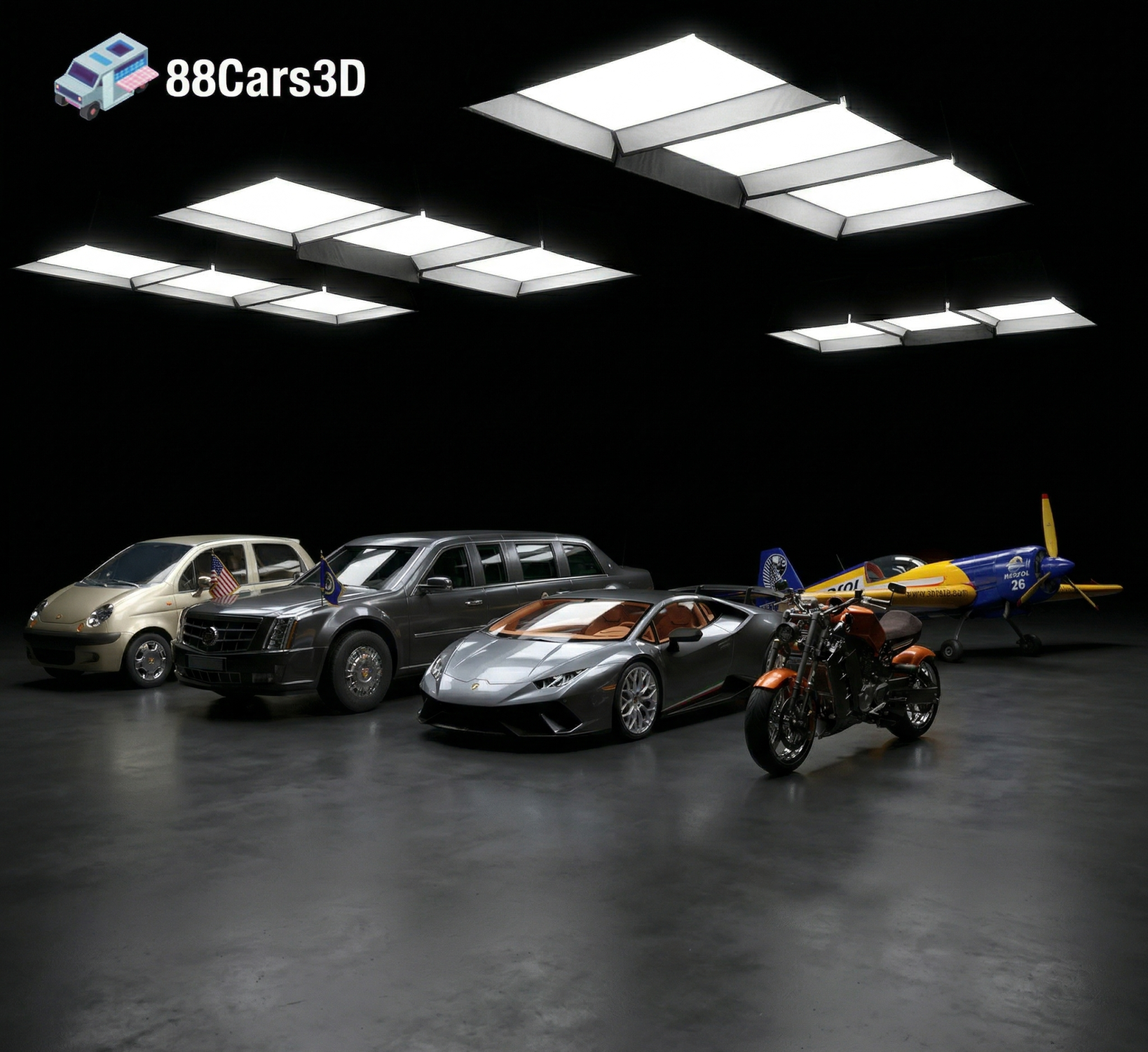
Texture: Yes | Material: Yes | 3D Printable: Yes. Download the Ultimate Creators’ Showcase featuring 5 premium 3D models: Lamborghini Huracan, ZAV Concept Motorcycle, Sukhoi SU-26, Presidential Limousine, and Daewoo Damas. Optimized for 4K CGI rendering and 3D printing. Save massive with this exclusive multi-category bundle!
Price: $99.99

Texture: Yes | Material: Yes | 3D Printable: Yes. Download the Italian Thoroughbreds Bundle featuring 5 iconic 3D models: Lamborghini Huracán Performante, Ferrari 458 Italia, Lamborghini Urus, Diablo SV, and Maserati GT. Optimized for 4K rendering and 3D printing (STL included). Save 50% with this ultimate Italian vehicle collection.
Price: $199.99

Download the Elite Future Mobility Bundle featuring 4 highly optimized 3D models: Tesla Model S, Avatr 11, Li L9, and Zoox Robotaxi. Perfect for ArchViz, Smart City renders, and game dev. Optimized for Unreal Engine and Blender. Includes .fbx, .obj, and .max formats.
Price: $99

🚗 5 Iconic German Cars (BMW M4 G82, M5 CS, X3, 1 Series & Mercedes E-Class). ✅ Optimized for ArchViz: Ready for Corona & V-Ray. 💰 Save €71 with this limited-time collection! 🚀 Instant Download after purchase.
Price: $119

Download the Extreme Off-Road & Survival 3D Models Bundle! Includes the Brabus 800 Adventure, Dodge Ram Bigfoot, Spec Truck, and a Caravan. Save over €210 on this premium 4-in-1 off-grid vehicle pack for ArchViz and game development.
Price: $149.99

Download the Heavy Duty & Commercial Logistics 3D Models Bundle! Includes the Ford Sterling, Caterpillar CT680, Mercedes Citaro Bus, and Vito Van. Save over €130 on this massive, game-ready 4-in-1 industrial vehicle pack.
Price: $109.99

Download the Ultimate Custom Motorcycles 3D Models Bundle. Includes a Custom Chopper, Ducati 916 Café Fighter, Harley XR1200X, and BMW K100. Perfect premium props for luxury ArchViz garages. Save over €250 today!
Price: $159.99

Download the ultimate JDM Street Racing 3D Models Bundle! Includes the Nissan GT-R, Toyota Supra, Mazda RX-7, Lancer Evo IX, and Honda NSX. Save big on this highly optimized, game-ready 5-in-1 Japanese legend car pack.
Price: $129.99

Download the ultimate American Muscle & Cinematic Classics 3D Models Bundle! Includes the Dodge Charger ’68, Mustang Eleanor GT500, Camaro Z28 ’79, and a custom ’69 Mustang. Save over €240 on this game-ready, premium 4-in-1 pack.
Price: $149.99

Download the Everyday City Traffic 3D Models Bundle. Includes the VW Golf, Kia Picanto, Hyundai Tucson, Toyota Yaris, and a DHL Ford Transit Van. Save big on this 5-in-1 pack, perfectly optimized for realistic ArchViz streets and game traffic.
Price: $99.99

