The automotive industry is in a perpetual state of innovation, not just in vehicle design and engineering, but also in how cars are envisioned, presented, and experienced. Unreal Engine has emerged as a powerhouse, revolutionizing automotive visualization and real-time rendering. From hyper-realistic marketing campaigns and interactive configurators to cutting-edge virtual production and immersive AR/VR experiences, Unreal Engine offers unparalleled tools for bringing 3D car models to life with stunning fidelity and performance.
For artists, designers, and developers eager to dive into this exciting intersection, mastering Unreal Engine is a crucial step. This comprehensive guide will walk you through the essential workflows, technical considerations, and best practices for leveraging Unreal Engine with high-quality 3D car models. We’ll cover everything from project setup and model import to advanced material creation, real-time lighting, and optimization techniques. Whether you’re aiming to create a jaw-dropping cinematic, an engaging interactive demo, or a robust game environment, understanding these foundations will empower you to unlock the full potential of your automotive projects within Unreal Engine.
Prepare to transform static 3D assets into dynamic, interactive, and visually breathtaking experiences. Let’s get started on your journey to becoming a proficient Unreal Engine automotive artist.
Setting the Stage: Your First Unreal Engine Project for Automotive Visualization
Embarking on any Unreal Engine project begins with a solid foundation. Proper project setup ensures you have the right tools and settings from the outset, paving the way for efficient development, especially when working with high-fidelity 3D car models. This initial phase involves selecting the appropriate project template, configuring essential settings, and familiarizing yourself with the core components of the Unreal Engine editor interface.
When starting a new project, prioritize performance and visual quality. For automotive visualization, which often demands photorealism, selecting a template that emphasizes high-quality rendering is key. The “Blank” or “Architectural” templates offer a clean slate, while the “Automotive Product Configurator” template (available in newer UE versions) provides a head start with relevant assets and blueprints. While it might seem counter-intuitive for beginners to avoid a game template, the default game templates often include game-specific assets and logic that can unnecessarily bloat your project and confuse the initial setup for purely visualization-focused work.
Choosing the Right Template and Project Settings
Upon launching Unreal Engine, you’re presented with the project browser. Here’s a recommended path for automotive visualization:
- Category: Select “Film, Television & Live Events” or “Architecture, Engineering & Construction.” While “Games” is an option, the other categories often align better with visualization needs.
- Template: For maximum control and minimalism, “Blank” is an excellent choice. If you want some pre-configured elements for scene presentation, “Archviz” or “Automotive Product Configurator” can save time. The latter is particularly useful as it often includes basic camera controls, turntable setups, and material switcher logic.
- Project Settings:
- Blueprint or C++: For most visualization and interactive demos, Blueprint is sufficient and recommended for faster iteration. C++ is for highly custom engine features or performance-critical game logic.
- Target Platform: “Desktop” is standard. If targeting AR/VR, select “Mobile/Tablet” or “Mixed Reality” later in project settings.
- Quality Preset: Always choose “Maximum Quality.” This enables high-end rendering features by default.
- Starter Content: For learning and prototyping, including “Starter Content” can be useful, as it provides basic shapes, materials, and textures for testing. However, for final production, you’ll replace these with your custom assets.
- Ray Tracing: In newer Unreal Engine versions (UE 4.27+ and UE5), ensure Ray Tracing is enabled if your hardware supports it and you aim for highly realistic lighting and reflections. For UE5, Lumen and Nanite inherently leverage modern GPU capabilities to deliver stunning results without explicit Ray Tracing settings in many cases, though path tracing still requires it.
Once your project is created, navigate to Edit > Project Settings. Key areas to review include:
- Rendering: Enable features like “Lumen Global Illumination,” “Lumen Reflections,” “Virtual Shadow Maps” (for UE5), “High Precision Normals,” and “Support Compute Skin Cache” (if character animation is needed, less critical for cars). For detailed information on rendering settings, refer to the official Unreal Engine documentation.
- Engine > Input: Configure custom controls if needed for interactive experiences.
- Maps & Modes: Set your default editor and game maps.
Navigating the Editor Interface
The Unreal Engine editor can seem daunting at first, but its layout is logically designed:
- Viewport: Your primary window for viewing and interacting with your 3D scene. Learn camera controls (Alt + Left Mouse Button to orbit, Alt + Right Mouse Button to zoom, Alt + Middle Mouse Button to pan).
- Modes Panel: Access tools for placing actors, sculpting landscapes, creating foliage, and modeling.
- World Outliner: A hierarchical list of all actors (objects) in your current level. Essential for organization and selection.
- Details Panel: Displays properties and settings of the currently selected actor or asset. This is where you’ll spend a lot of time adjusting materials, transforms, and component settings.
- Content Browser: Your asset management hub. Import, organize, and browse all your project’s assets (3D models, textures, materials, blueprints). Use folders extensively to keep your project tidy.
Understanding these fundamental panels and their interplay is crucial for an efficient workflow. Customize your layout by dragging and docking panels to suit your preferences.
Bringing Your Automotive Vision to Life: Importing & Optimizing 3D Car Models
The quality of your source 3D car models is paramount. Platforms like 88cars3d.com offer optimized models for Unreal Engine, featuring clean topology, UV mapping, and realistic material setups. Once you have these high-quality assets, the next step is to correctly import and prepare them for real-time rendering within Unreal Engine. This process involves careful consideration of file formats, import settings, and initial optimization steps to ensure performance and visual fidelity.
Common file formats for importing 3D models into Unreal Engine include FBX (Filmbox) and USD (Universal Scene Description). FBX has long been the industry standard due to its broad support across 3D software and its ability to store mesh data, materials, textures, animations, and skeletal information. USD, on the other hand, is gaining significant traction, particularly in virtual production and large-scale collaborative projects, offering a more robust framework for scene composition and non-destructive workflows. When sourcing automotive assets from marketplaces such as 88cars3d.com, look for models provided in these formats, often accompanied by well-structured texture sets.
Essential Import Settings for FBX/USD
When you drag an FBX or USD file into the Content Browser, Unreal Engine presents an import dialog with numerous options. These settings are critical for correct model representation:
- Geometry:
- Combine Meshes: Often, car models are composed of many separate parts (body, wheels, interior components). For performance, consider combining meshes where appropriate, especially for static elements. However, if you need individual control over components (e.g., opening doors), keep them separate.
- Generate Missing Collision: Crucial for physics-based interactions. For vehicles, you’ll often create custom collision shapes or use a simplified convex hull rather than relying on complex mesh collision.
- Build Adjacency Buffer: Generally recommended for proper lighting and shading.
- Normal Import Method: “Import Normals and Tangents” is usually the best choice, preserving the author’s intended shading.
- Materials:
- Import Materials: Enable this to import basic material placeholders. You’ll typically replace or refine these with Unreal Engine’s PBR Material Editor.
- Import Textures: Enable to bring in associated texture maps.
- Transform: Ensure “Convert Scene Unit” and “Convert Scene” options are set correctly to match your modeling software’s unit scale and coordinate system. Common issues arise here, leading to models appearing too large/small or rotated incorrectly.
- LODs: If your FBX contains Level of Detail (LOD) meshes, ensure “Import LODs” is checked. This is a critical performance optimization.
- Static Mesh vs. Skeletal Mesh: Car bodies are usually Static Meshes. If the model includes animation (e.g., suspensions, steering), it might come as a Skeletal Mesh, but for most visualization, static meshes are preferred for performance.
For USD, the process is similar but offers more advanced stage management capabilities. USD allows you to compose scenes from multiple USD layers, providing flexibility for variations and collaborative workflows. You can import individual USD assets or entire USD stages, linking them non-destructively.
Initial Optimization: Static Mesh Editor & Collision
Once imported, open your static mesh asset by double-clicking it in the Content Browser. The Static Mesh Editor provides a suite of tools for pre-render optimization:
By diligently managing these import and initial optimization steps, you lay the groundwork for a performant and visually stunning automotive project in Unreal Engine.
Crafting Realism: PBR Materials for Automotive Excellence
The visual appeal of 3D car models in Unreal Engine hinges significantly on the quality and accuracy of their materials. Physically Based Rendering (PBR) is the industry standard for achieving photorealistic results, mimicking how light interacts with surfaces in the real world. Mastering the PBR workflow in Unreal Engine’s Material Editor is essential for automotive visualization, allowing you to create everything from reflective car paint and intricate carbon fiber to supple leather and translucent glass.
PBR materials rely on a set of standardized texture maps that define a surface’s properties, dictating how light is absorbed, reflected, and scattered. The core principle is energy conservation: light reflected from a surface cannot be more intense than the light that hits it. This ensures materials behave realistically under various lighting conditions, eliminating the need for artists to “fake” light interactions. The consistency provided by PBR is invaluable, especially in dynamic real-time environments where lighting changes constantly due to factors like Lumen’s global illumination or changing time-of-day settings.
Deconstructing PBR: Base Color, Metallic, Roughness, Normal
The primary texture maps for a PBR material in Unreal Engine, typically following the Metallic-Roughness workflow, are:
- Base Color (Albedo): A color map representing the diffuse color of a dielectric (non-metal) surface or the specular color of a metallic surface, without any lighting information. This map should be flat and desaturated for metals, representing the tint of their reflection. For non-metals (plastics, rubber, leather), it represents their inherent color.
- Technical Tip: Ensure Base Color textures are in sRGB color space.
- Metallic: A grayscale map (typically black and white) defining whether a surface point is metallic (white, value 1) or dielectric (black, value 0). Intermediate values (grays) are typically avoided for pure metals/non-metals but can be used for blended materials or oxidized surfaces.
- Technical Tip: This map should be a linear (non-sRGB) texture.
- Roughness: A grayscale map defining the microscopic surface irregularities. A value of 0 (black) represents a perfectly smooth, mirror-like surface (e.g., polished chrome). A value of 1 (white) represents a completely rough, diffuse surface (e.g., matte rubber). Intermediate values create varying degrees of glossiness.
- Technical Tip: This map should be a linear (non-sRGB) texture.
- Normal Map: A tangent-space texture (often blueish-purple) that fakes high-detail geometry by manipulating how light is shaded across a surface, without adding actual polygons. It provides the illusion of bumps, scratches, and intricate details.
- Technical Tip: This map should be set to “Normal Map” texture type in Unreal Engine’s texture properties, which handles proper compression and gamma correction.
In the Unreal Engine Material Editor, you connect these texture maps to the corresponding input pins of the main Material Node. For example, the Base Color texture plugs into the “Base Color” input, the Metallic texture into “Metallic,” and so on. You can also use constant values for simple materials (e.g., a solid color for a plastic part, a single roughness value for a uniformly glossy surface).
Advanced Material Techniques: Clear Coat, Anisotropy, Decals
Automotive materials often require advanced shaders to achieve true realism:
- Car Paint (Clear Coat): Modern car paint has multiple layers: a base color coat and a transparent, reflective clear coat on top. Unreal Engine’s Material Editor supports this with the Clear Coat and Clear Coat Roughness inputs. Connect your paint’s base color and metallic/roughness values to the standard inputs, then define the clear coat’s reflectivity and smoothness using the Clear Coat inputs. You can also simulate the subtle flake effect often seen in metallic paints using custom shader logic and a detailed normal map.
- Anisotropy: Some materials, like brushed metal (e.g., chrome trim, dashboard accents), exhibit anisotropic reflections, where reflections stretch in a particular direction due to microscopic grooves on the surface. Unreal Engine supports this via the Anisotropy and Tangent inputs. You’ll typically need a tangent space normal map or a custom tangent vector to define the direction of the anisotropic effect. This effect significantly enhances the realism of brushed or spun metal surfaces.
- Glass & Translucency: Car windows require proper refraction and reflection. Use a translucent material with a suitable “Blend Mode” (e.g., Translucent or AlphaComposite) and adjust the “Opacity” and “Refraction” inputs. For realistic glass, consider using a high-quality cubemap for reflections or ensuring Lumen/Ray Tracing are active for accurate real-time reflections and refractions. For simple, non-interactive glass, a masked material with a defined opacity mask can also be performant.
- Decals: Logos, warning labels, or racing stripes can be applied as decals. Unreal Engine’s Deferred Decal Actor allows you to project materials onto existing surfaces, saving geometry and draw calls. Create a material with “Decal” as the Domain, and apply it to a Decal Actor. This is incredibly versatile for adding fine surface details without modifying the mesh directly.
Experimentation is key. Start with simple PBR setups and gradually introduce complexity for materials like carbon fiber, tire rubber, headlights, and interior fabrics. Regularly test your materials under various lighting conditions to ensure consistency and realism.
Illuminating Your Scene: Real-Time Lighting with Lumen & Beyond
Lighting is arguably the most critical element in defining the mood, realism, and visual appeal of any scene, especially in automotive visualization. Unreal Engine’s advanced real-time lighting solutions, particularly Lumen in Unreal Engine 5, offer unprecedented levels of fidelity and dynamic capabilities. Understanding how to leverage these tools, alongside traditional lighting methods, is essential for showcasing your 3D car models in the best possible light.
Lumen is Unreal Engine 5’s fully dynamic global illumination (GI) and reflections system. It calculates diffuse inter-reflection and specular reflections bounce-by-bounce, in real-time, across massive, detailed environments. This means light from one surface realistically bounces onto others, illuminating the scene naturally without pre-baked lightmaps, dramatically accelerating artist workflows and enabling truly dynamic changes to lighting. Prior to Lumen, achieving realistic GI in real-time was often a compromise between baked solutions (Lightmass), screen-space effects, or costly ray-tracing implementations. Lumen bridges this gap beautifully, making dynamic environments with realistic lighting more accessible than ever.
Mastering Lumen: Global Illumination and Reflections
To fully utilize Lumen for your automotive scenes, ensure it’s enabled in your Project Settings (Edit > Project Settings > Rendering > Global Illumination > Global Illumination Method: Lumen; Reflections > Reflection Method: Lumen).
Here’s how Lumen fundamentally changes your lighting workflow:
- Dynamic GI: Place a light source, and its light will naturally bounce around your scene, illuminating indirect areas. Move the light, and the GI updates instantly. This is revolutionary for showcasing car interiors or complex engine bays, where light interaction is crucial.
- Real-Time Reflections: Lumen provides high-quality, physically accurate reflections for both opaque and translucent surfaces. This is critical for reflective car paint, chrome, and glass. Ensure your materials have correct Metallic and Roughness values to feed Lumen accurate surface properties for reflection calculations.
- Emissive Materials as Light Sources: Lumen allows emissive materials (e.g., car headlights, dashboard screens) to contribute to global illumination, casting light onto surrounding geometry. This simplifies the setup of many car-specific lighting elements.
- Optimizing Lumen: While powerful, Lumen can be performance-intensive. Adjust quality settings in Project Settings > Rendering > Lumen. For instance, increasing the “Ray Lighting Quality” or “Reflections Quality” can boost fidelity at a performance cost. Consider the “Lumen Scene View Distance” for large environments. For optimizing Lumen performance, consult the official Unreal Engine documentation.
For scenes that demand ultimate fidelity and can afford higher render times (e.g., offline renders or virtual production on high-end hardware), consider Unreal Engine’s Path Tracer. This is a physically accurate, unbiased renderer built into Unreal, providing ground truth lighting for comparison and final output. It’s not real-time, but offers unparalleled quality for still images and cinematic sequences.
Enhancing Visuals with HDRI Backdrops and Directional Lights
While Lumen handles complex bounce lighting, primary light sources still play a vital role:
- Directional Light: Represents the sun. It’s the most impactful light source, casting strong, parallel shadows. Configure its angle, intensity, and color to match your desired time of day or environment. For dynamic sun effects, link it to a sky sphere or use the “Sky Atmosphere” system. Ensure “Cast Shadows” is enabled.
- Sky Light: Captures the distant environment’s lighting information and applies it to your scene as ambient light. For realistic outdoor scenes, pair it with a High Dynamic Range Image (HDRI). A static Sky Light will bake its lighting, but for Lumen, set its “Source Type” to “Captured Scene” and ensure “Real Time Capture” is enabled for dynamic results. An HDRI-backed Sky Light provides natural-looking ambient light and reflections, particularly for car paint.
- Rect Lights/Spot Lights: For specific illumination, like studio setups, accentuating car features, or simulating interior cabin lights, use Rect Lights (ideal for soft, even area lighting) and Spot Lights (for focused beams). Rect Lights are excellent for creating rim lights or soft box effects, crucial for detailed automotive renders.
- Post Process Volume: This is where you fine-tune the final look. Add a Post Process Volume to your scene, set its “Boundless” property to true, and adjust settings like Exposure, White Balance, Color Grading, Bloom, Vignette, and Depth of Field. For automotive, accurate color grading and subtle bloom can significantly enhance realism. Enabling Screen Space Global Illumination (SSGI) within the Post Process Volume can sometimes provide additional subtle GI if Lumen is not sufficient, but generally, Lumen supplants SSGI.
A typical workflow involves starting with a Directional Light and Sky Light (with an HDRI), enabling Lumen, and then adding accent lights (Rect Lights, Spot Lights) as needed to highlight the car’s curves and details. Constantly iterate, adjusting light positions, intensities, and colors, observing their interplay, and refining with Post Process settings until you achieve the desired photorealistic result.
Performance and Fidelity: Nanite, LODs, and Optimization Strategies
Achieving photorealistic automotive visualization in real-time demands a delicate balance between visual fidelity and performance. High-quality 3D car models, with their intricate details and complex geometry, can quickly strain system resources. Unreal Engine provides a robust suite of tools, prominently Nanite and Level of Detail (LOD) systems, along with various optimization strategies, to ensure your projects run smoothly without sacrificing visual quality.
Before Unreal Engine 5, managing high-polygon models was a constant struggle. Artists would spend countless hours creating and baking normal maps, generating multiple LODs, and optimizing meshes to meet performance budgets. While these skills are still valuable, especially for mobile platforms or legacy workflows, Nanite has fundamentally reshaped this paradigm. Nanite virtualized geometry allows artists to import film-quality assets with millions or even billions of polygons directly into Unreal Engine, rendering them in real-time with unprecedented efficiency.
Harnessing Nanite for High-Poly Car Models
Nanite is a core feature of Unreal Engine 5, designed to handle immense geometric complexity. It works by intelligently streaming and rendering only the necessary triangle data at a pixel-level granularity, eliminating traditional LODs for Nanite-enabled meshes and drastically reducing draw calls.
For your 3D car models:
- Enable Nanite: When importing high-poly meshes (or from the Static Mesh Editor), simply check the “Enable Nanite” box. Unreal Engine will convert the mesh into the Nanite format. This is ideal for the car body, intricate engine components, and detailed interior elements.
- Benefits:
- Unprecedented Detail: Import CAD data or photogrammetry scans with millions of polygons directly.
- Eliminates LODs (for Nanite meshes): Nanite handles automatic simplification and culling, making manual LOD creation largely unnecessary for these meshes.
- Reduced Draw Calls: Instead of drawing thousands of meshes, Nanite processes geometry more efficiently.
- Improved Performance: Fewer performance bottlenecks related to high poly counts.
- Considerations:
- Static Meshes Only: Nanite currently only supports static meshes. Moving parts that require animation (e.g., opening doors, rotating wheels, deformable tires) will still need traditional skeletal meshes or non-Nanite static meshes.
- Transparent/Masked Materials: Nanite generally works best with opaque materials. While it has some experimental support for masked materials, traditional non-Nanite meshes are often preferred for glass and other translucent elements to ensure proper rendering order and effects.
- Memory Usage: While efficient at rendering, Nanite assets can still consume significant memory on disk and in GPU VRAM due to their high detail.
For parts of the car that require animation or specialized material effects not fully supported by Nanite (like the windows, deformable tires, or exhaust particles), use traditional static meshes or skeletal meshes.
Manual and Automatic LOD Generation for Scalability
While Nanite simplifies geometry management for static opaque meshes, traditional LODs (Level of Detail) remain crucial for non-Nanite meshes, particularly for interactive Unreal Engine game assets, AR/VR applications, or older hardware where Nanite might not be fully utilized or performant.
- Creating LODs: In the Static Mesh Editor, under the “LOD Settings” section, you can generate new LODs. Unreal Engine offers automatic generation based on a percentage of triangles or screen size.
- LOD0: Full detail, used when the object is close to the camera (e.g., 1.0 screen size).
- LOD1: Reduced detail, activated when the object occupies a smaller screen area (e.g., 0.5 screen size, 50% triangles).
- LOD2, LOD3+: Further reductions for objects far away. For distant cars in a large scene, a very simplified mesh or even an impostor/billboard might be used.
- Optimizing LOD Transitions: Ensure smooth transitions between LODs by carefully setting “Screen Size” values. Visual pop-in can be distracting.
- Performance Impact: Properly configured LODs dramatically reduce the vertex and triangle count processed by the GPU for distant objects, leading to significant performance gains, especially in scenes with many vehicles or a large environment.
Essential Optimization Practices for Automotive Scenes
Beyond Nanite and LODs, several other strategies are vital for optimizing your Unreal Engine automotive projects:
- Texture Resolution and Streaming: Use appropriate texture resolutions. 4K or 8K for primary car body parts is common, but reduce for less visible areas. Ensure “Texture Streaming” is enabled in Project Settings to load textures dynamically based on camera distance, saving VRAM. Configure Mip Gen Settings for each texture to “From Texture Group” for proper scaling.
- Material Complexity: While detailed materials are essential, complex shader graphs can impact performance. Optimize by using Material Functions for reusable logic, consolidating nodes, and avoiding unnecessary calculations. Utilize texture atlases where possible to reduce draw calls.
- Lighting Optimization:
- Reduce Dynamic Lights: While Lumen is powerful, having many overlapping dynamic lights can be costly. Use them judiciously.
- Static Lighting (Lightmass): For completely static environments (like a showroom floor), consider baking lightmaps with Lightmass. This is highly performant but lacks dynamic capabilities. However, for dynamic automotive configurators, Lumen is typically preferred.
- Shadows: Experiment with shadow quality settings. Virtual Shadow Maps (UE5) are high quality but can be demanding. Cascaded Shadow Maps are a good alternative for directional lights. Lower shadow map resolutions for less critical lights.
- Culling and Visibility:
- Occlusion Culling: Unreal Engine automatically culls (doesn’t render) objects hidden behind others. Optimize your scene geometry to maximize this.
- Distance Culling: Set “Cull Distance Volume” or “Per-Actor Cull Distance” settings for objects that can be entirely removed when far away.
- Scalability Settings: Educate users on how to adjust Unreal Engine’s built-in scalability settings (e.g., Engine Scalability Settings > Resolution, View Distance, Anti-Aliasing, Post-Processing) to match their hardware capabilities. This is critical for wider accessibility.
- Profiling: Use Unreal Engine’s profiling tools (Stat Unit, Stat FPS, Stat GPU, Profiler) to identify performance bottlenecks. This allows you to target specific areas for optimization rather than guessing.
By integrating these practices, you can ensure your Unreal Engine automotive visualizations are not only visually stunning but also performant and accessible across a range of hardware.
Unleashing Interactivity: Blueprint Scripting for Automotive Experiences
Beyond static renders, one of Unreal Engine’s most compelling strengths for automotive visualization is its ability to create interactive experiences. Blueprint visual scripting empowers artists and designers, even those without extensive coding knowledge, to build complex logic, user interfaces, and dynamic simulations. This capability is fundamental for creating engaging car configurators, interactive showrooms, and dynamic driving simulations.
Blueprint is a complete visual scripting system within Unreal Engine. It allows you to define object behavior, create game logic, and handle user input through a node-based interface. Instead of writing lines of code, you connect nodes that represent functions, events, and variables. This visual approach significantly lowers the barrier to entry for interactivity, enabling rapid prototyping and iteration for automotive projects. For instance, changing a car’s color, opening doors, or even simulating basic vehicle physics can all be achieved with Blueprint.
Basic Blueprint for Vehicle Interaction
Let’s consider a simple interactive scenario: opening and closing a car door.
- Prepare your Asset: Ensure your 3D car model has separate static mesh components for the main body and the door. Position the door’s pivot point correctly at the hinge in your 3D modeling software, or adjust it in Unreal Engine’s Static Mesh Editor.
- Create an Actor Blueprint: Right-click in the Content Browser > Blueprint Class > Actor. Name it something descriptive, like “BP_InteractiveCar.”
- Add Components: Open “BP_InteractiveCar.” In the Components panel, add your car’s main body static mesh and the door static mesh. Parent the door mesh to the body mesh.
- Define Interaction Event: In the Event Graph, add an “Event OnComponentHit” node or “Event OnActorBeginOverlap” if you’re using a trigger volume. For simple interaction, a “Left Mouse Click” event on the car component is also viable.
- Toggle Door State:
- Create a Boolean variable, “IsDoorOpen?” to track the door’s state.
- Use a “Branch” node (If/Else statement) to check “IsDoorOpen?”.
- If true (door is open), rotate the door mesh back to its closed position using a “Set Relative Rotation” node. Set “IsDoorOpen?” to false.
- If false (door is closed), rotate the door mesh to its open position. Set “IsDoorOpen?” to true.
- You can use a “Timeline” node to create a smooth, interpolated rotation over time rather than an instant snap. This provides a more professional feel.
This basic setup can be extended for hood/trunk openings, wheel rotations, and more. The key is breaking down complex interactions into manageable, logical steps within Blueprint.
Building an Interactive Car Configurator
Automotive configurators are a prime application for Blueprint. Users can customize aspects of the car in real-time, from paint colors and wheel designs to interior materials and optional features. Here’s a high-level overview:
- Material Switching:
- Dynamic Material Instances: For changing car paint colors, create a Master Material that exposes a “Vector Parameter” for the base color. In Blueprint, create a “Dynamic Material Instance” from this Master Material for each car part (body, calipers, etc.). Then, use Blueprint to set the “Vector Parameter Value” to a new color when the user selects it. This is highly efficient as it reuses the same shader.
- Material Slot Swapping: For entirely different material types (e.g., matte vs. glossy paint), you can swap material slots on the mesh or use different Static Mesh Variants.
- Mesh Switching (for Wheels/Components):
- Store different wheel models (Static Meshes) as variables in your Blueprint.
- When a user selects a new wheel, use a “Set Static Mesh” node to swap out the current wheel mesh for the selected one. Ensure the new mesh has appropriate LODs and collision.
- UI Integration (UMG):
- Use Unreal Motion Graphics (UMG) to design an intuitive user interface (buttons, sliders, dropdowns) for your configurator.
- In UMG widgets, create events that trigger Blueprint logic in your “BP_InteractiveCar” actor. For example, a “Paint Color” button in UMG could call a custom event in the car Blueprint that changes the car’s paint material.
- Camera Control:
- Implement smooth camera movements or preset camera angles for presenting different views of the car. Use “Set View Target with Blend” to smoothly transition between cameras.
- For turntable views, attach the camera to a spring arm and rotate the parent actor.
- Saving/Loading Configurations: For more advanced configurators, you can use Unreal’s “SaveGame” system to store user choices and load them later.
The power of Blueprint lies in its modularity. You can create separate Blueprint classes for individual interactive components (e.g., a “BP_Door” that handles its own open/close logic) and then integrate them into a larger “BP_Car” actor. This keeps your logic organized and reusable, crucial for complex real-time rendering projects.
Beyond the Garage: Advanced Applications and Production Workflows
Unreal Engine’s capabilities extend far beyond simple static renders or basic interactive demos. For the automotive industry, it’s becoming an indispensable tool across the entire product lifecycle, from concept design and marketing to training and virtual events. Understanding these advanced applications and integrating them into your workflow can significantly elevate the impact and utility of your 3D car models.
Real-time technology, exemplified by Unreal Engine, is blurring the lines between traditional pre-rendered content and interactive experiences. This shift enables faster iteration, more immersive presentations, and unprecedented flexibility in production. Whether it’s crafting a Hollywood-grade commercial, showcasing a new model in an AR app, or running a collaborative design review in VR, Unreal Engine provides the framework for these cutting-edge applications.
Cinematic Sequences with Sequencer
For high-quality automotive commercials, product reveals, or dynamic presentations, Unreal Engine’s Sequencer is a professional-grade, non-linear cinematic editor. It allows you to choreograph every aspect of your scene, from camera movements and actor animations to material changes and particle effects, all in real-time.
Key features and workflow:
- Track-Based Editing: Add tracks for your camera, car model (Skeletal or Static Mesh), lights, and effects.
- Camera Animation: Create realistic, smooth camera movements using keyframes, animation curves, or even by recording input from a virtual camera (Cine Camera Actor) or a physical camera tracking system.
- Actor Animation: Animate specific car components (doors opening, wheels turning, suspension compression) by keyframing their transforms or by importing FBX animations.
- Material Parameter Tracks: Animate material properties over time, such as fading the car paint, changing its metallic value, or activating emission for headlights. This is incredibly powerful for visual storytelling.
- Lighting and Effects: Keyframe light intensities, colors, or positions. Integrate Niagara particle systems for exhaust fumes, dust, or rain effects, animating their parameters directly in Sequencer.
- Audio and Post-Processing: Add sound effects, music, and control Post Process Volume settings (like Depth of Field, Bloom, Lens Flares) to achieve a desired cinematic look.
- Render Output: Use the Movie Render Queue for high-quality offline renders, supporting features like supersampling, motion blur, and anti-aliasing for professional broadcast-quality output. This can leverage the Path Tracer for ultimate fidelity.
Sequencer is pivotal for creating marketing content that once required expensive and time-consuming traditional rendering farms, now achievable interactively. For comprehensive Sequencer tutorials, Epic Games’ learning resources are invaluable.
Immersive Experiences: AR/VR and Virtual Production Considerations
Unreal Engine is at the forefront of immersive technologies, offering robust support for Augmented Reality (AR), Virtual Reality (VR), and Virtual Production workflows, all highly relevant to the automotive sector.
AR/VR Optimization:
- Performance Budget: AR/VR have much stricter performance requirements than desktop rendering (e.g., 90+ FPS per eye for comfortable VR). This means traditional optimization techniques like aggressive LODs, texture streaming, simplified materials, and optimized geometry (even for Nanite-enabled scenes if there are non-Nanite components) become critical again.
- Baked Lighting: For maximum performance in VR, especially on mobile VR platforms, consider using baked static lighting (Lightmass) instead of Lumen, though Lumen with optimized settings can work for PC VR.
- Mobile AR: For platforms like iOS ARKit or Android ARCore, target mobile renderer features. Optimize assets heavily, potentially targeting lower polygon counts for the car model (~50k-150k triangles) and reduced texture resolutions (1K-2K).
- Interaction Design: Design intuitive user interfaces and interactions for AR/VR, leveraging motion controllers or touch-based input.
Virtual Production and LED Wall Workflows:
Virtual Production, often utilizing large LED volumes, allows for real-time in-camera visual effects, blending physical sets with digital environments. For automotive, this means placing a real car (or actor) on a stage and surrounding it with a dynamic, digital environment rendered by Unreal Engine on LED screens. This technique is rapidly transforming automotive commercials and film production.
- NDisplay: Unreal Engine’s nDisplay system is fundamental for virtual production, enabling content to be rendered across multiple synchronized displays (LED walls, monitors, projectors) from a single Unreal Engine scene. It handles correct perspective correction for the camera within the volume.
- In-Camera VFX: The ability to see the final composite live on set, with accurate reflections of the digital environment on the car’s surfaces, empowers directors and cinematographers to make creative decisions in real-time, eliminating costly reshoots.
- Performance: Running nDisplay requires extremely high performance to maintain smooth frame rates across multiple high-resolution screens. This often necessitates cutting-edge hardware, highly optimized Unreal Engine game assets, and careful scene management.
- Workflow: Integrating live camera tracking (e.g., Mo-Sys, Stype) with Unreal Engine ensures the virtual environment reacts dynamically to camera movements, maintaining seamless parallax.
These advanced applications underscore Unreal Engine’s versatility. By mastering the core techniques for importing, texturing, lighting, and optimizing 3D car models, you position yourself at the forefront of innovation in automotive visualization, ready to tackle the most demanding and exciting projects in the industry.
Conclusion: Accelerating Your Automotive Vision with Unreal Engine
The journey into Unreal Engine for automotive visualization is a rewarding one, opening doors to unparalleled creative control and photorealistic results. We’ve covered the essential groundwork, from setting up your initial project and efficiently importing high-quality 3D car models to crafting believable PBR materials and illuminating your scenes with dynamic lighting systems like Lumen. We also delved into critical optimization strategies, leveraging features like Nanite and LODs, and explored how Blueprint visual scripting can transform static models into engaging, interactive experiences.
Unreal Engine is not just a tool; it’s an ecosystem that continues to evolve, pushing the boundaries of real-time rendering. The principles discussed here—meticulous asset preparation, adherence to PBR workflows, intelligent lighting design, and performance-conscious development—form the bedrock of success in any Unreal Engine project, especially in the demanding field of automotive rendering. By embracing these best practices, you can create stunning visuals, develop interactive configurators, and even contribute to cutting-edge virtual production pipelines.
Your next steps should involve hands-on practice. Experiment with different 3D car models, refine your material skills, play with various lighting setups, and start building simple interactive elements using Blueprint. Remember that platforms like 88cars3d.com provide a wealth of high-quality, pre-optimized 3D car models, giving you a significant head start on your projects. Continuously explore the vast resources available on the official Unreal Engine learning portal and engage with the vibrant Unreal Engine community. The automotive visualization landscape is rapidly innovating, and with Unreal Engine, you’re equipped to drive that future.
Featured 3D Car Models
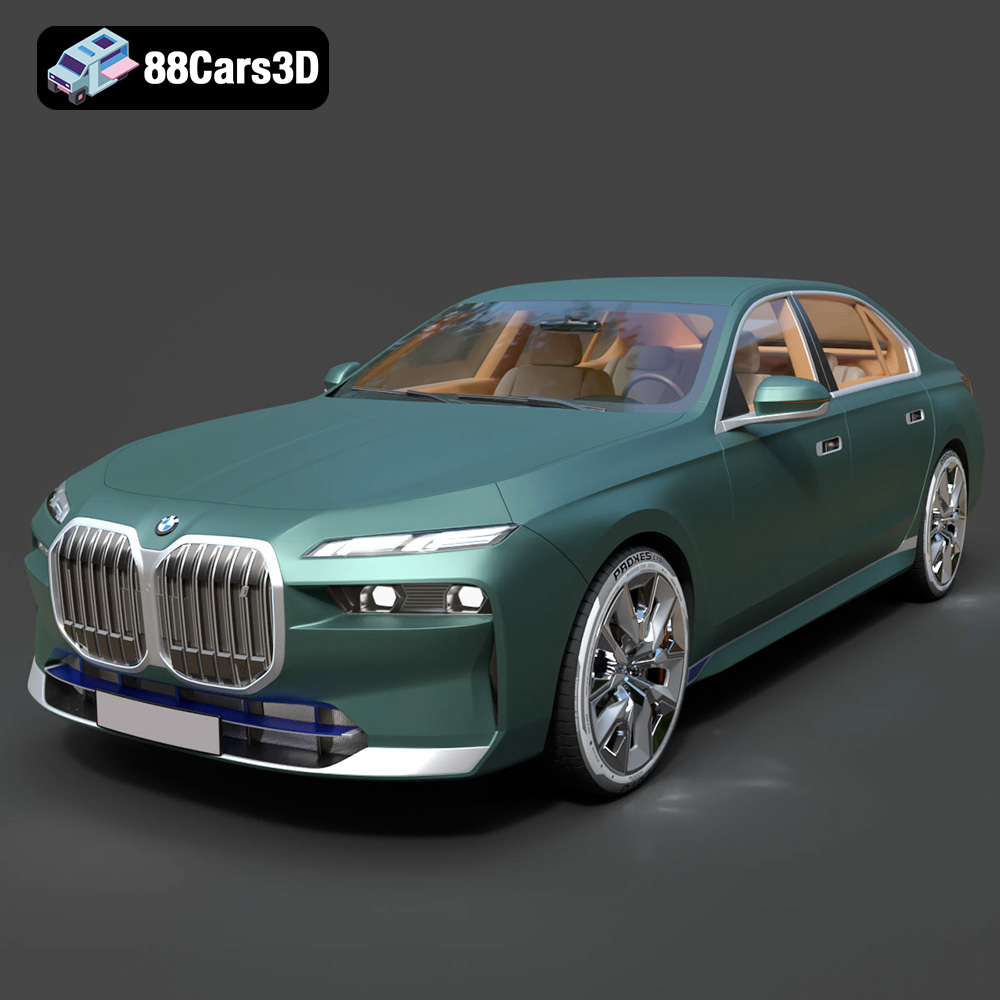
Texture: Yes | Material: Yes Download the ultra-high-detail BMW i7 (2023) 3D Model (4.14M Triangles). Features the illuminated kidney grille, split crystal headlights, fully modeled Theatre Screen interior, and monolithic luxury styling. Perfect for ArchViz, VFX, and cinematic rendering. Includes .blend, .fbx, .obj, .glb, .stl, and .max formats.
Price: $19.99
View Product
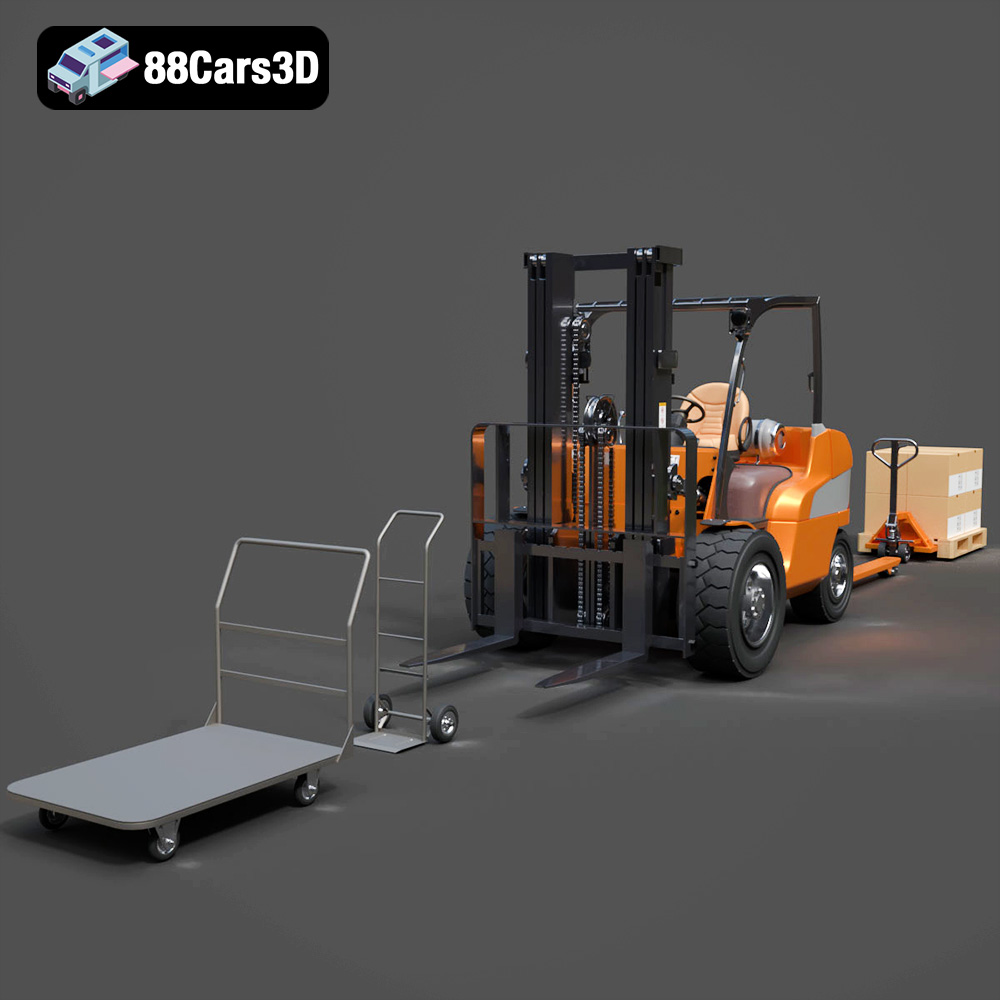
Texture: Yes | Material: Yes Download the highly detailed CAT Manual Loader & Warehouse Carts Kit 3D Model (2.4M Triangles). Features a macro-detailed hydraulic pallet jack, heavy-duty forks, and transport carts. Perfect for industrial ArchViz, factory rendering, and logistics simulations. Includes .blend, .fbx, .obj, .glb, .stl, and .max formats.
Price: $19.99
View Product
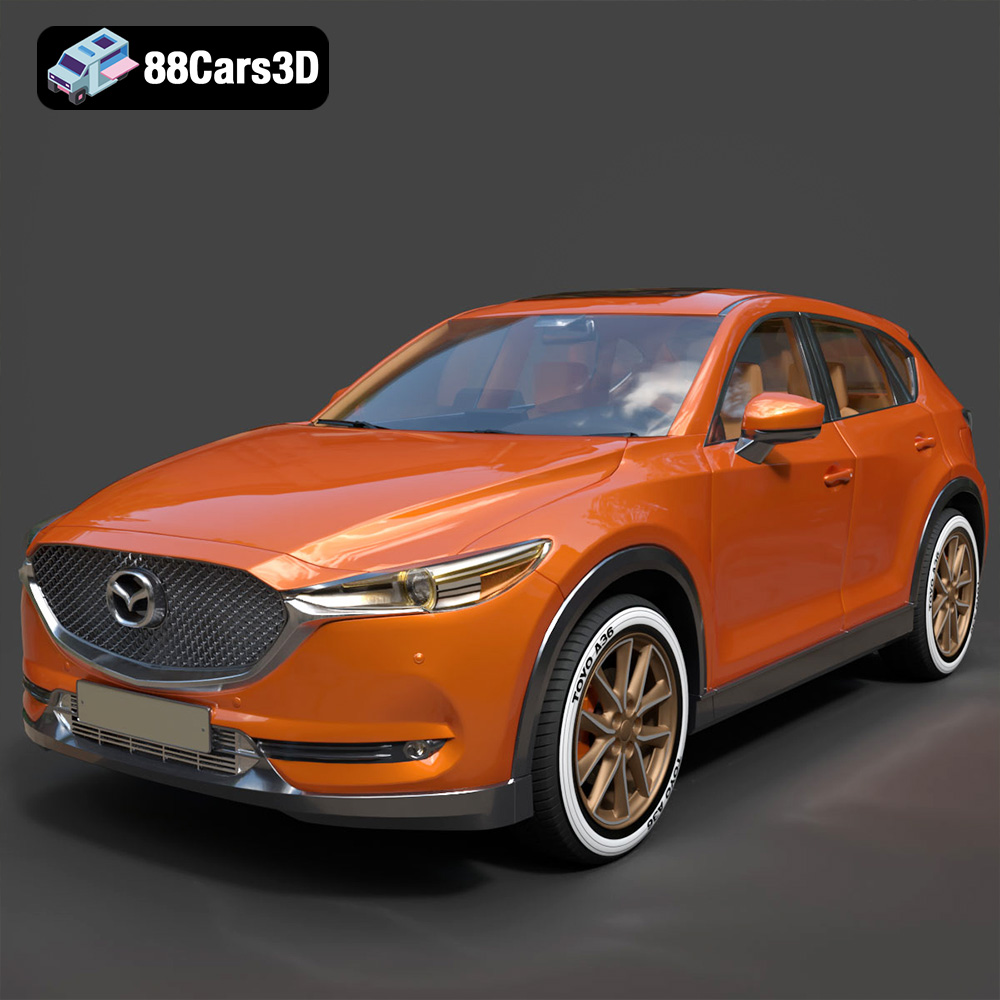
Texture: Yes | Material: Yes
Download the highly optimized Mazda CX-5 2014 3D Model (294k Triangles). Features the dynamic Kodo design language, signature grille, and a clean interior. Perfectly balanced for ArchViz, background traffic, and game development. Includes .blend, .fbx, .obj, .glb, .stl, and .max formats.
Price: $19.99
View Product
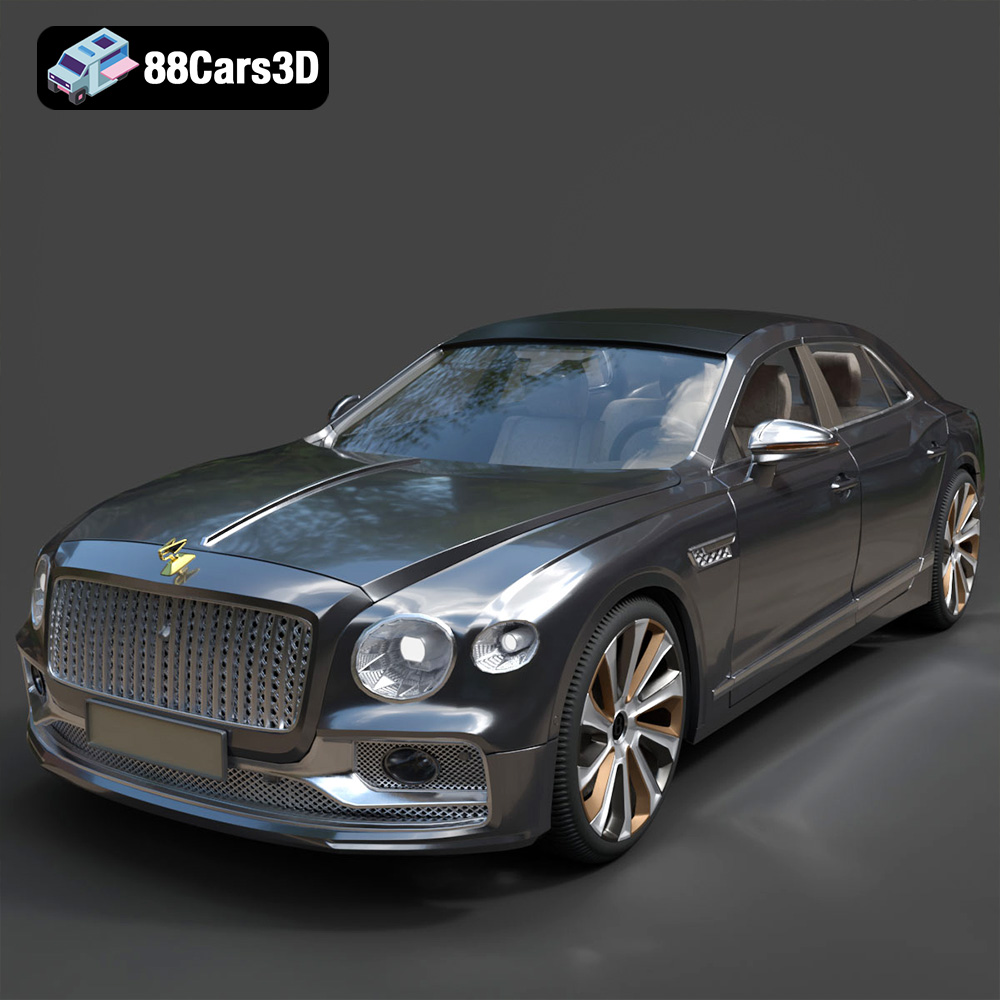
Texture: Yes | Material: Yes Download the ultra-high-detail Bentley Flying Spur Mulliner 2022 3D Model (2.94M Triangles). Features the bespoke Double Diamond grille, a fully modeled diamond-quilted interior, and exquisite luxury styling. Perfect for high-end ArchViz, VFX, and cinematic rendering. Includes .blend, .fbx, .obj, .glb, .stl, and .max formats.
Price: $19.90
View Product
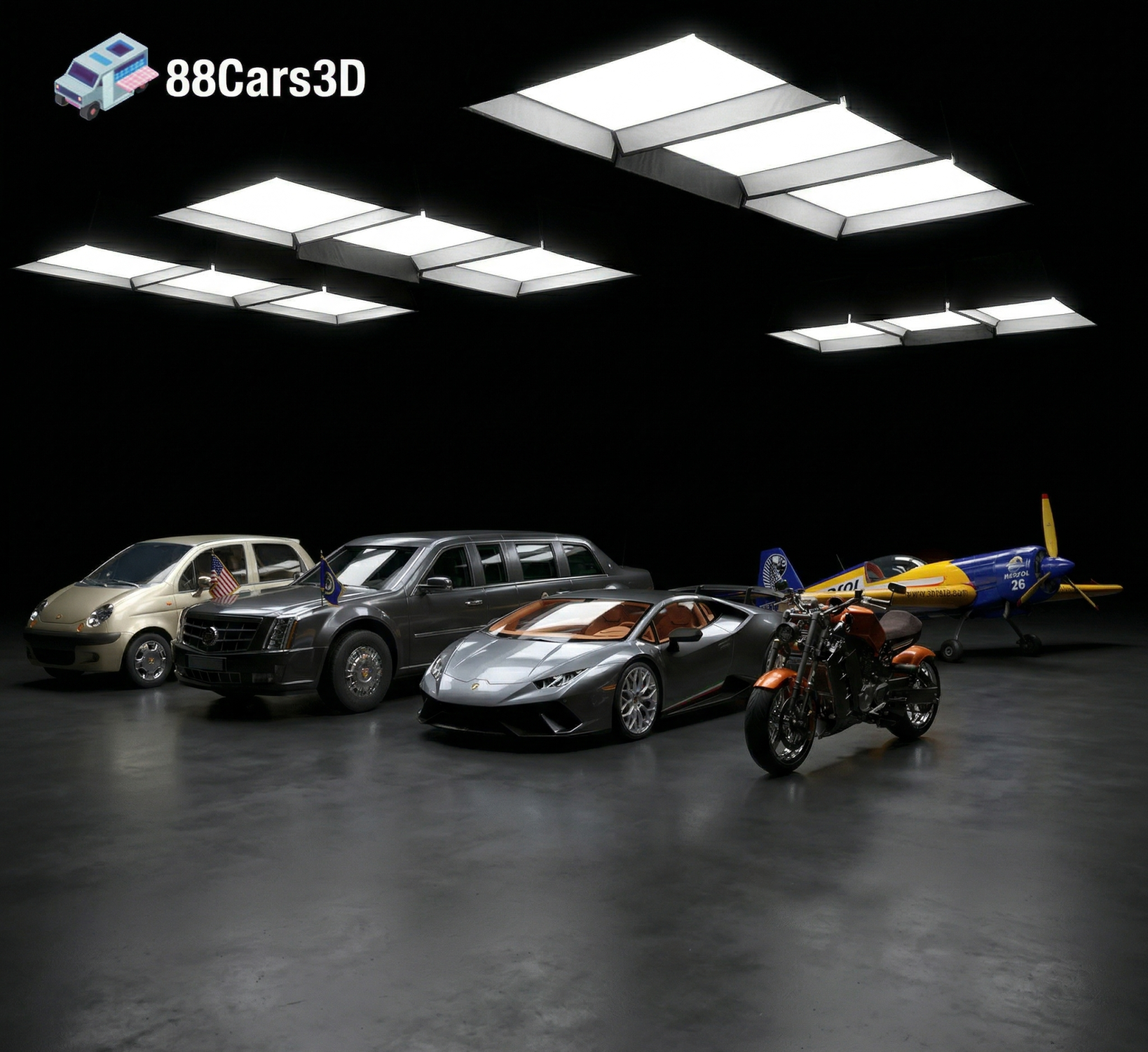
Texture: Yes | Material: Yes | 3D Printable: Yes. Download the Ultimate Creators’ Showcase featuring 5 premium 3D models: Lamborghini Huracan, ZAV Concept Motorcycle, Sukhoi SU-26, Presidential Limousine, and Daewoo Damas. Optimized for 4K CGI rendering and 3D printing. Save massive with this exclusive multi-category bundle!
Price: $99.99
View Product

Texture: Yes | Material: Yes | 3D Printable: Yes. Download the Italian Thoroughbreds Bundle featuring 5 iconic 3D models: Lamborghini Huracán Performante, Ferrari 458 Italia, Lamborghini Urus, Diablo SV, and Maserati GT. Optimized for 4K rendering and 3D printing (STL included). Save 50% with this ultimate Italian vehicle collection.
Price: $199.99
View Product

Download the Elite Future Mobility Bundle featuring 4 highly optimized 3D models: Tesla Model S, Avatr 11, Li L9, and Zoox Robotaxi. Perfect for ArchViz, Smart City renders, and game dev. Optimized for Unreal Engine and Blender. Includes .fbx, .obj, and .max formats.
Price: $99
View Product

🚗 5 Iconic German Cars (BMW M4 G82, M5 CS, X3, 1 Series & Mercedes E-Class). ✅ Optimized for ArchViz: Ready for Corona & V-Ray. 💰 Save €71 with this limited-time collection! 🚀 Instant Download after purchase.
Price: $119
View Product

Download the Extreme Off-Road & Survival 3D Models Bundle! Includes the Brabus 800 Adventure, Dodge Ram Bigfoot, Spec Truck, and a Caravan. Save over €210 on this premium 4-in-1 off-grid vehicle pack for ArchViz and game development.
Price: $149.99
View Product

Download the Heavy Duty & Commercial Logistics 3D Models Bundle! Includes the Ford Sterling, Caterpillar CT680, Mercedes Citaro Bus, and Vito Van. Save over €130 on this massive, game-ready 4-in-1 industrial vehicle pack.
Price: $109.99
View Product


