Get 50% OFF All Premium 3D & STL Models!

The world of automotive design holds an undeniable allure, captivating enthusiasts with everything from the timeless elegance of vintage roadsters to the cutting-edge aggression of hypercars. For 3D artists, this passion translates into a fascinating challenge: accurately capturing the essence and intricate details of these machines in a virtual realm. However, modeling a classic car is a vastly different undertaking than crafting a modern vehicle, demanding distinct approaches to topology, material creation, and optimization. This comprehensive guide will navigate the nuanced differences between modeling classic and modern cars, delving into the specific techniques, workflows, and considerations necessary to achieve stunning, photorealistic results for rendering, game development, AR/VR, and more. By the end, you’ll possess a deeper understanding of how to tackle the unique demands of each era, elevating your automotive 3D artistry to new heights.
The most immediate and apparent difference between classic and modern cars lies in their fundamental design language. Understanding these aesthetic philosophies is the first step in successful 3D modeling, as they dictate everything from surface flow to the smallest detail.
Classic cars, particularly those from the early to mid-20th century, often feature organic, hand-formed body panels. Think of the sweeping fenders, pronounced wheel arches, and elegant, continuous curves that define iconic models. These designs prioritized aesthetic flow and a certain “sculpted” quality, often constrained by the manufacturing techniques of the era. Panel gaps were typically more noticeable, and components like headlights and bumpers were often distinct, protruding elements. The modeling approach for these vehicles emphasizes maintaining incredibly smooth, unbroken surface transitions, ensuring reflections glide effortlessly across large, flowing areas without any pinching or artifacting. Achieving this requires meticulous attention to edge flow that follows the natural contours of the body, allowing for clean subdivision smoothing.
Modern cars, by contrast, are paragons of aerodynamic efficiency and complex engineering. Their forms are often characterized by sharp, precise creases, intricate multi-surface curvature, and highly integrated components. Headlights and grilles merge seamlessly with the bodywork, and panel gaps are minimized to enhance both aesthetics and aerodynamic performance. Designers leverage advanced computational tools to sculpt forms that slice through the air, resulting in aggressive lines, dramatic undercuts, and a more “engineered” aesthetic. For 3D artists, this means mastering techniques for capturing these crisp edges and complex intersections, often requiring tighter edge loops and strategic use of support edges to maintain sharpness even under subdivision surfaces. The challenge lies in balancing precision with efficient polygon distribution.
The material palettes of classic and modern cars also diverge significantly. Classic vehicles often boast an abundance of polished chrome, which gleams with characteristic reflections, rich wood grain interiors, supple leather upholstery, and simpler, often curved glass forms. When modeling, the focus for these materials is on achieving authentic reflectivity and texture depth. Polished chrome demands a high metallic value and low roughness in a PBR workflow, often with subtle surface imperfections to enhance realism. Wood and leather textures need to convey natural grain and subtle wear, contributing to the vintage appeal.
Modern cars feature a broader and more technologically advanced array of materials. Carbon fiber, with its distinctive weave and deep clear coat, is commonplace. Matte and satin finishes, intricate LED lighting arrays, complex multi-layered plastics, and expansive, integrated glass areas define their surfaces. For 3D artists, this translates to more sophisticated PBR material setups. Carbon fiber requires detailed normal maps for its weave and often a layered shader for the clear coat. LED headlights necessitate emissive materials and precise light dispersion models. The challenge is in accurately representing the interplay of these diverse materials, from the subtle translucency of modern plastics to the sharp, precise reflections off a matte paint finish, all contributing to a high-tech visual identity.
Stepping inside, the differences are equally stark. Classic car interiors often exude a sense of analog charm and spacious comfort. Mechanical switches, prominent analog gauges, large steering wheels, and often more utilitarian but durable materials like sturdy fabric or simple leather define the cockpit. The modeling here focuses on replicating tactile elements, often with slightly larger tolerances and a charming, less-than-perfect handcrafted feel. Details such as stitching on upholstery and the subtle wear on chrome switches add to the authenticity.
Modern car interiors are technological hubs. Digital dashboards, expansive touchscreens, intuitive infotainment systems, haptic feedback controls, and ergonomic, driver-focused cockpits are standard. Ambient lighting, intricate panel gaps, and advanced driver-assistance technology integration are key. Modeling these interiors demands extreme precision for screen elements, intricate button arrays, and complex surface transitions. Emissive textures for screens and button backlights, combined with carefully crafted normal and displacement maps for complex textures and modern materials, are essential to capture the high-tech, integrated feel. The challenge lies in creating highly detailed, functional-looking environments that reflect the vehicle’s advanced capabilities.
The underlying mesh structure, or topology, is the backbone of any high-quality 3D model, especially for cars where reflections and deformations are critical. The design philosophies of classic and modern vehicles profoundly influence how you approach building this foundation.
Modeling a classic car’s body panels presents unique topology challenges. The emphasis is on gracefully managing large, flowing surfaces with minimal, if any, sharp creases. The goal is to create a mesh that, when subdivided, produces perfectly smooth, organic curves without any unsightly pinches, bumps, or wobbles in the reflections. This often means using a slightly looser edge flow, allowing the subdivision modifier more room to interpolate smooth surfaces. Dealing with intricate chrome trim, separate body panels, and more pronounced panel gaps also requires careful edge loop placement to define these distinct elements without affecting the main body’s smoothness. A quad-dominant topology is almost always preferred, ensuring clean deformation and predictable subdivision behavior. Artists often spend considerable time finessing the edge flow around areas like headlight bezels, grille openings, and fender flares to maintain that characteristic vintage smoothness, ensuring every vertex contributes to the overall aesthetic harmony.
Modern car topology, conversely, revolves around capturing sharp, precise creases and complex intersecting surfaces with unwavering accuracy. The tight tolerances and integrated design elements demand a topology that can maintain crispness even after subdivision. This often involves placing tighter edge loops along hard edges and using additional support edges very close to the primary edge to prevent softening. The challenge is to maintain these sharp details without introducing an excessive polygon count in flatter areas where it’s not needed, thus balancing detail with efficiency. For areas like aerodynamic vents, intricate headlight clusters, and multi-faceted body panels, the edge flow must carefully define each plane and transition. Techniques like creasing edges (if your software supports it) or strategically placed holding loops become paramount. The density of polygons will naturally be higher in areas of high curvature and intricate detail, tapering off to optimize performance on simpler, flatter surfaces. The precision required means every vertex and edge loop must serve a specific purpose in defining the final form.
Regardless of whether you’re modeling a classic or modern vehicle, several fundamental topology best practices remain universal. A quad-only approach (or as close to it as possible) is highly recommended. N-gons (faces with more than four edges) and T-junctions (where an edge ends in the middle of another edge) can lead to unpredictable subdivision results, shading artifacts, and issues with deformation. Consistent edge flow is crucial for both smooth reflections on curved surfaces and clean deformation during animation. This means edges should ideally flow along the natural contours of the model, rather than terminating abruptly. Using high-quality reference images and blueprints is non-negotiable for achieving accuracy. Start with a solid base mesh, blocking out the primary forms before adding details. Regular checks of your mesh in different shading modes (e.g., flat shading, smooth shading with subdivisions) and under various lighting conditions are essential to catch and correct any topological imperfections early in the modeling process. This iterative refinement ensures a clean, robust, and animation-ready mesh.
Once the topology is refined, the next critical step is to prepare your model for texturing through UV mapping and then to create compelling PBR materials that truly bring your automotive masterpiece to life.
For classic cars, UV mapping strategies can often be simpler, primarily due to their less complex surface geometry and often uniform material properties across large panels. The focus is on creating large, seamless UV islands for elements like the main body paint, chrome trim, and interior leather. The primary goal is to minimize visible seams and ensure a consistent texel density across these broad surfaces. Texel density, or the resolution of the texture per unit of surface area, is crucial to prevent pixelation on larger panels when zoomed in. Often, a single large UV island can accommodate the entire body paint, allowing for high-resolution, seamless paint textures. Smaller, distinct UV islands will be created for elements like tires, steering wheels, and unique chrome pieces. Simplicity in UV layout often translates to easier texture painting and less likelihood of distortion, making it a more forgiving process for models with fewer intricate details and sharp angles.
Modern cars, with their intricate designs, integrated components, and diverse material zones, demand a far more sophisticated UV mapping approach. You’ll likely be managing numerous material zones – from intricate headlight arrays and complex grilles to carbon fiber accents, digital display screens, and multi-layered plastics. For extremely high-resolution details on integrated body panels and specific components, using UDIMs (multi-tile UVs) is a common and effective strategy. UDIMs allow you to spread the UVs for a single mesh across multiple texture files, effectively bypassing the resolution limitations of a single texture map. This is particularly useful for achieving extreme detail on large, complex surfaces without compromising quality. Furthermore, optimizing UV space for texture atlases is crucial, especially for game engines. This involves consolidating multiple smaller material elements into a single UV map to reduce draw calls and improve performance. Precision unwrapping is paramount for sharp creases and complex geometry, ensuring that texture details align perfectly with the model’s high-fidelity surfaces without stretching or distortion. This often involves more intricate seam placement and careful unfolding to maintain accurate texture projection across challenging geometries.
Physically Based Rendering (PBR) is the cornerstone of modern material creation, ensuring your 3D car models react realistically to light in any environment. Understanding the two primary PBR workflows – metallic/roughness and specular/glossiness – is essential. The metallic/roughness workflow, popular in game engines and many renderers, uses a Metallic map (0 for dielectric, 1 for metallic) and a Roughness map (0 for perfectly smooth, 1 for completely rough) alongside Base Color. For car paint, this means creating a complex shader network that simulates multiple layers: the base color, metallic flakes, and a clear coat. The clear coat layer is crucial for realism, adding a layer of gloss, reflection, and Fresnel effect (how reflection strength changes with viewing angle). Chrome requires high metallic values and very low roughness. Glass needs transparency, refraction, and careful attention to its roughness. Rubber and plastics require specific roughness and normal maps to convey their unique textures. Software like Substance Painter is invaluable for creating these detailed material layers, allowing artists to paint directly onto the 3D model, generating all necessary PBR maps (Base Color, Metallic, Roughness, Normal, Height, etc.) simultaneously. This iterative process of creating, applying, and refining materials ensures that every surface of your classic or modern car model interacts with light in a visually convincing and physically accurate manner.
The final step in bringing your 3D car model to life is rendering – transforming your mesh and materials into a captivating image or animation. The choice of rendering workflow and artistic direction can dramatically alter how a classic versus a modern car is perceived.
Rendering a classic car is often about evoking a sense of nostalgia, elegance, and timeless beauty. The lighting setups typically lean towards soft, diffused illumination that lovingly caresses the car’s organic curves and highlights the subtle nuances of its hand-formed panels. Studio setups with large softboxes or environmental lighting mimicking the “golden hour” (sunrise or sunset) are popular choices, as they produce warm, long shadows and rich, saturated colors. The environment for a classic car render is often simpler, perhaps a quaint cobblestone street, a sun-drenched pastoral landscape, or a minimalist studio backdrop, all designed to keep the focus squarely on the vehicle. Post-processing plays a significant role in enhancing the vintage feel: subtle chromatic aberration, a touch of film grain, a warm color grade, and a judicious use of depth of field to draw the eye to specific details. When working in renderers like Corona, V-Ray, Cycles, or Arnold, special attention should be paid to metallic paints – ensuring the flake size and density are period-accurate – and the complex reflective properties of polished chrome, which should display crisp, yet not overly harsh, reflections of the environment. The goal is to create an image that feels like a treasured photograph from a bygone era.
Modern car rendering, in contrast, is about showcasing innovation, performance, and cutting-edge design. The lighting setups are typically more dynamic and dramatic, designed to accentuate sharp lines, complex creases, and technological features. High Dynamic Range Images (HDRIs) are indispensable for providing realistic environmental reflections and illumination, particularly from urban settings, futuristic test tracks, or sleek architectural backdrops. Spotlights, area lights, and even IES (Illuminating Engineering Society) profiles are used precisely to highlight specific design elements like intricate headlight arrays, aerodynamic vents, or carbon fiber weaves. The environments tend to be equally dynamic, reflecting the car’s aggressive or sophisticated persona – think bustling cityscapes, high-tech garages, or abstract, minimalist spaces that emphasize form. Post-processing for modern car renders focuses on crispness, strong contrast, subtle lens flares to convey dynamic energy, and realistic motion blur for shots implying speed. Accurate material properties are paramount for advanced composites, LED lighting elements, and intricate digital displays, ensuring they glow and reflect with high fidelity. The aim is to produce a visually impactful image that communicates the vehicle’s advanced engineering and contemporary appeal.
Blender, with its powerful Cycles and Eevee render engines, offers excellent capabilities for both classic and modern automotive rendering. For setting up an HDRI environment in Cycles, you would typically go to the ‘World’ properties panel, change the ‘Surface’ to ‘Background’, and connect an ‘Environment Texture’ node to the ‘Color’ input. Load your desired HDRI map into this node. You can further adjust the strength and rotation of the HDRI for optimal lighting. Blender’s official documentation provides detailed guidance on this process. For more specific, directed lighting, you can add various light sources such as ‘Area’ lights for soft, diffused illumination (ideal for classic cars), ‘Spot’ lights for focused beams to highlight details, and ‘Point’ lights. Using IES profiles with spot lights can accurately simulate real-world light fixtures, adding another layer of realism. Experiment with different light sizes, strengths, and colors to sculpt the desired mood. For comprehensive details on setting up world lighting and using various light objects in Blender 4.4, you can refer to the official documentation: World Properties in Cycles and Light Objects in Blender.
For those creating automotive assets for interactive experiences like video games, virtual reality, or augmented reality, optimization is as crucial as visual fidelity. The differences between classic and modern car designs also influence optimization strategies.
The core principle of game engine optimization is balancing visual quality with performance. While classic cars might have simpler overall forms, certain unique characteristics like pronounced fenders or intricate chrome details might warrant a slightly higher polygon count in specific areas to maintain their distinctive shape. However, modern cars, with their sharp creases, complex grilles, and detailed lighting clusters, often require aggressive optimization strategies to keep polygon budgets in check without losing critical design features.
Level of Detail (LODs) is paramount for both, but particularly beneficial for modern cars. LODs are simplified versions of your model that automatically switch in based on the camera’s distance, drastically reducing the rendering load. For intricate modern car components like complex headlights or grilles, aggressive LODs can significantly improve performance when the car is viewed from a distance.
Reducing draw calls is another critical optimization. This involves combining multiple meshes into single objects and using texture atlasing (combining multiple smaller textures into one larger texture map) to minimize the number of times the engine has to tell the GPU to draw something. For a classic car with distinct chrome pieces, you might combine all chrome elements into one mesh with one material, whereas a modern car might have many small, distinct elements that can be combined.
Choosing the right file format is crucial for seamless integration into various game engines and real-time applications. FBX is by far the most common and versatile format for transferring 3D assets to game engines like Unity and Unreal Engine, supporting meshes, materials, animations, and skeletal data. OBJ is a widely supported format for mesh data but lacks support for animations or advanced material setups. GLB (GLTF Binary) is increasingly popular for web-based 3D, AR, and VR applications due to its efficiency and PBR material support. USDZ is Apple’s proprietary format for AR experiences, offering robust PBR material and animation support specifically for iOS devices. When exporting, paying close attention to scale, pivot points, and coordinate systems is vital to ensure your model appears correctly in the target engine. Platforms like 88cars3d.com offer high-quality 3D car models in multiple file formats, streamlining the process for artists and developers by providing readily compatible assets for diverse projects.
Augmented Reality (AR) and Virtual Reality (VR) environments demand even more stringent optimization due to the need for high frame rates and the limitations of mobile devices (for AR). This translates to significantly lower polygon counts, simplified material setups (often with baked lighting to save real-time calculation), and aggressive texture atlasing. For AR, ensuring correct real-world scale and accurate pivot points for interaction is crucial. Specific optimization techniques for mobile AR platforms like Apple ARKit and Google ARCore involve reducing mesh complexity further, using mobile-friendly shaders, and sometimes even baking environmental lighting directly into the textures. When sourcing models from marketplaces such as 88cars3d.com, ensuring they provide AR/VR optimized versions or are suitable for further optimization is a key consideration for performance-critical projects. Maintaining visual fidelity within these tight constraints is a continuous challenge, requiring clever texturing and material techniques to compensate for lower polygon counts.
Beyond traditional rendering and game development, high-quality 3D car models find applications in diverse industries, each with its own specific requirements and best practices.
Transforming a digital car model into a physical object via 3D printing requires meticulous preparation. The primary concern is ensuring a “watertight” and “manifold” mesh. A watertight mesh means there are no holes or gaps in the surface, preventing the printer from misinterpreting the model’s volume. Manifold geometry ensures that every edge is connected to exactly two faces, preventing non-physical geometry that can confuse slicing software. Common challenges include addressing wall thickness (ensuring parts are thick enough to be structurally sound), managing overhangs (features that extend outwards and might require support structures), and repairing non-manifold edges. Tools like Blender’s built-in 3D Print Toolbox can be invaluable for analyzing and repairing meshes for printability, identifying issues like non-manifold edges, intersections, and thin walls. Proper scaling for the desired physical size and considering the chosen printing material’s properties (e.g., strength, flexibility) are also crucial steps in preparing your 3D car model for a successful physical realization.
For automotive designers, 3D models are essential tools for concept presentation, marketing, and iterative design. This application often demands the highest fidelity renders, bordering on photographic realism, to effectively communicate design intent and appeal. Modern cars often begin their lives as CAD (Computer-Aided Design) data, which offers unparalleled precision. Artists then convert and refine this data, often remodeling for animation and rendering, or using it as a direct base for high-quality visualization assets. The workflow often involves tight integration between design, engineering, and visualization teams, with continuous feedback loops. The ability to quickly generate high-quality renders of different color schemes, material options, and lighting environments is critical for making informed design decisions and presenting new concepts to stakeholders. This field pushes the boundaries of rendering technology, demanding advanced shader development and sophisticated lighting setups to create compelling visual narratives.
In professional 3D production pipelines, especially when working on large-scale automotive projects, efficient workflow integration and collaboration are paramount. Implementing version control systems (like Git) for 3D assets ensures that changes are tracked, allows for easy rollbacks, and prevents accidental overwrites when multiple artists are working on the same project. Adhering to strict naming conventions for meshes, materials, textures, and scenes is crucial for maintaining organization and clarity across the team. Consistent file structures and asset management practices streamline the process of locating, updating, and reusing assets. Platforms like 88cars3d.com streamline this process by providing readily available, high-quality assets that adhere to industry standards, reducing the initial modeling burden and allowing teams to focus on specialized tasks. Effective communication, standardized workflows, and well-documented processes are the pillars of successful collaborative 3D automotive projects, ensuring that all contributors work cohesively towards a shared vision and produce consistent, high-quality results.
Modeling classic and modern cars in 3D is a journey that celebrates the evolution of automotive design while demanding a versatile toolkit of technical skills. We’ve explored how the distinct aesthetics of each era fundamentally influence every stage of the 3D pipeline, from the organic curves and hand-formed panels of a vintage beauty to the aerodynamic precision and integrated complexity of a contemporary marvel. Mastering topology for smooth reflections versus crisp edges, crafting PBR materials for chrome and leather versus carbon fiber and LEDs, and optimizing for nostalgic renders versus dynamic real-time experiences are all crucial distinctions.
Ultimately, success in automotive 3D hinges on a blend of technical mastery and artistic sensitivity. Whether you’re aiming for a photorealistic render, an optimized game asset, or a precise model for 3D printing or AR/VR, understanding these nuanced differences will empower you to create compelling and accurate representations. Continue to refine your eye for detail, experiment with new techniques, and always strive for the highest quality. For those looking to kickstart their projects or expand their asset libraries, explore the vast collection of high-quality 3D car models available on 88cars3d.com, offering assets suitable for every application, from timeless classics to cutting-edge modern vehicles. Your next masterpiece awaits.
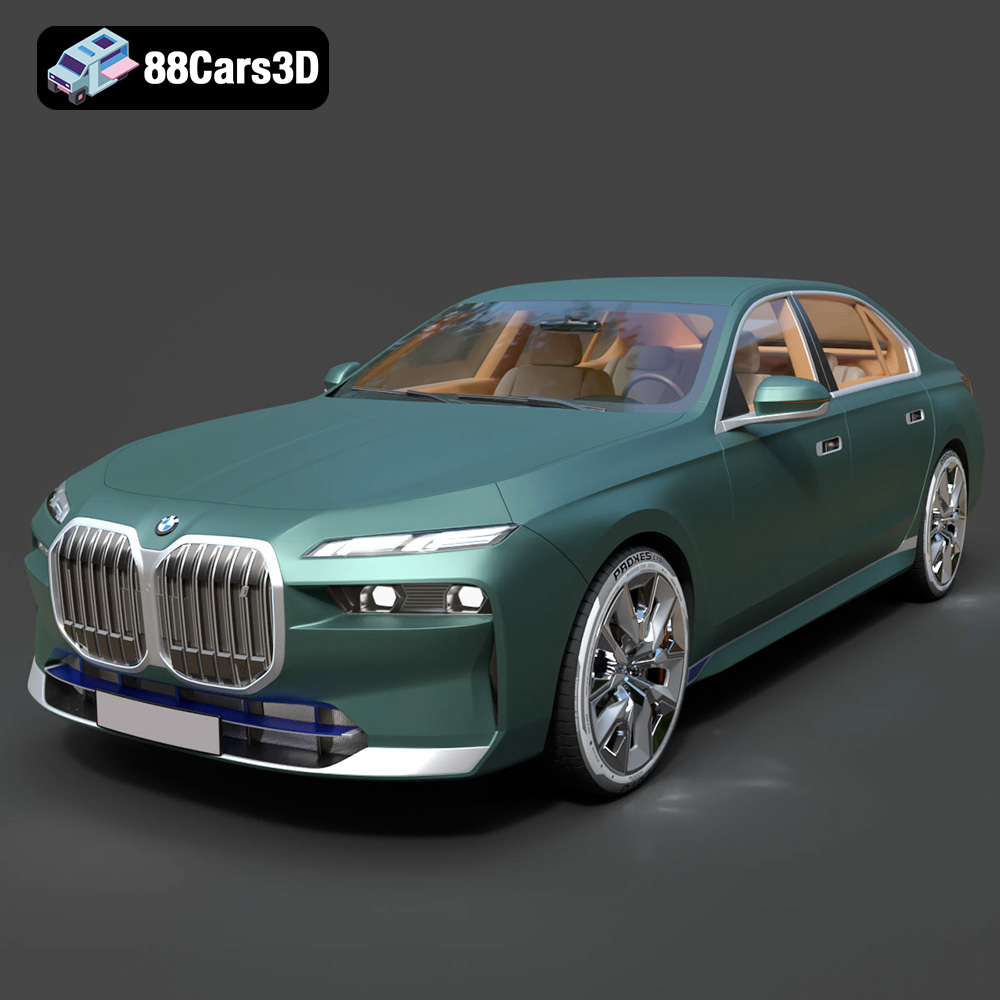
Texture: Yes | Material: Yes Download the ultra-high-detail BMW i7 (2023) 3D Model (4.14M Triangles). Features the illuminated kidney grille, split crystal headlights, fully modeled Theatre Screen interior, and monolithic luxury styling. Perfect for ArchViz, VFX, and cinematic rendering. Includes .blend, .fbx, .obj, .glb, .stl, and .max formats.
Price: $19.99
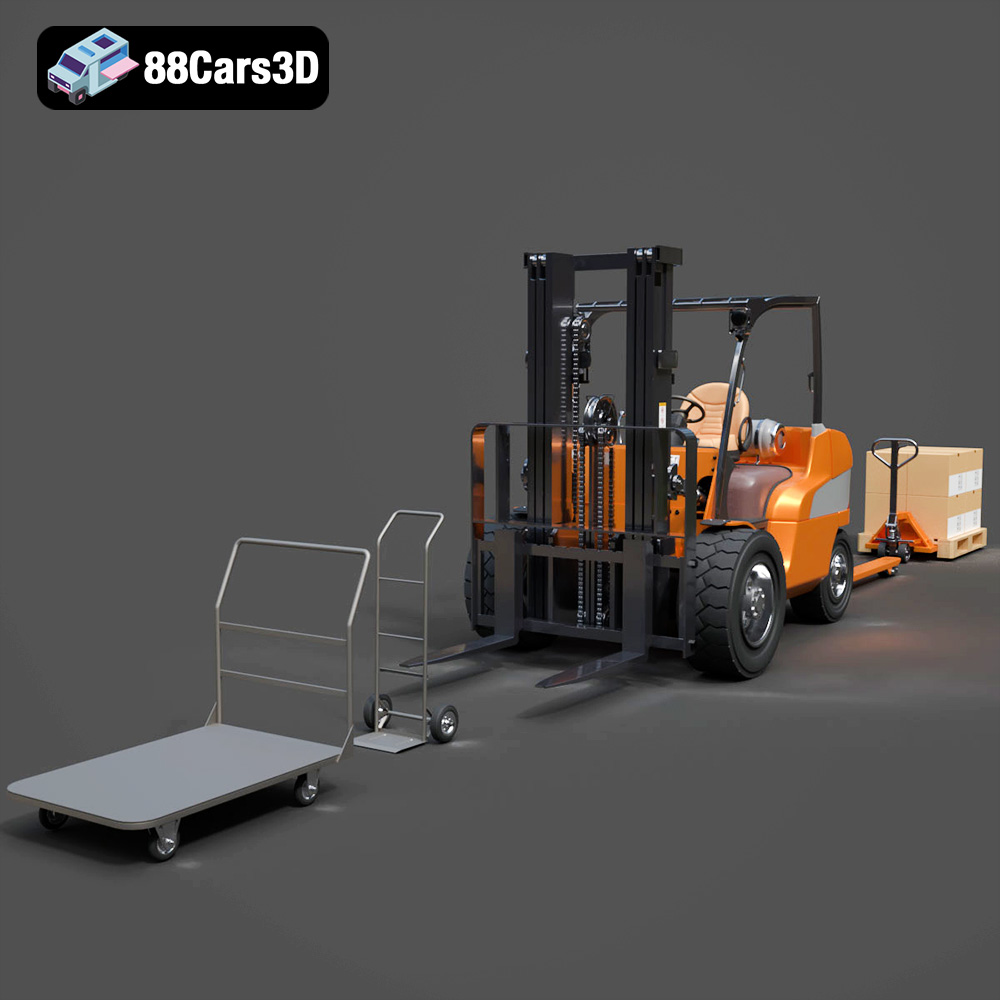
Texture: Yes | Material: Yes Download the highly detailed CAT Manual Loader & Warehouse Carts Kit 3D Model (2.4M Triangles). Features a macro-detailed hydraulic pallet jack, heavy-duty forks, and transport carts. Perfect for industrial ArchViz, factory rendering, and logistics simulations. Includes .blend, .fbx, .obj, .glb, .stl, and .max formats.
Price: $19.99
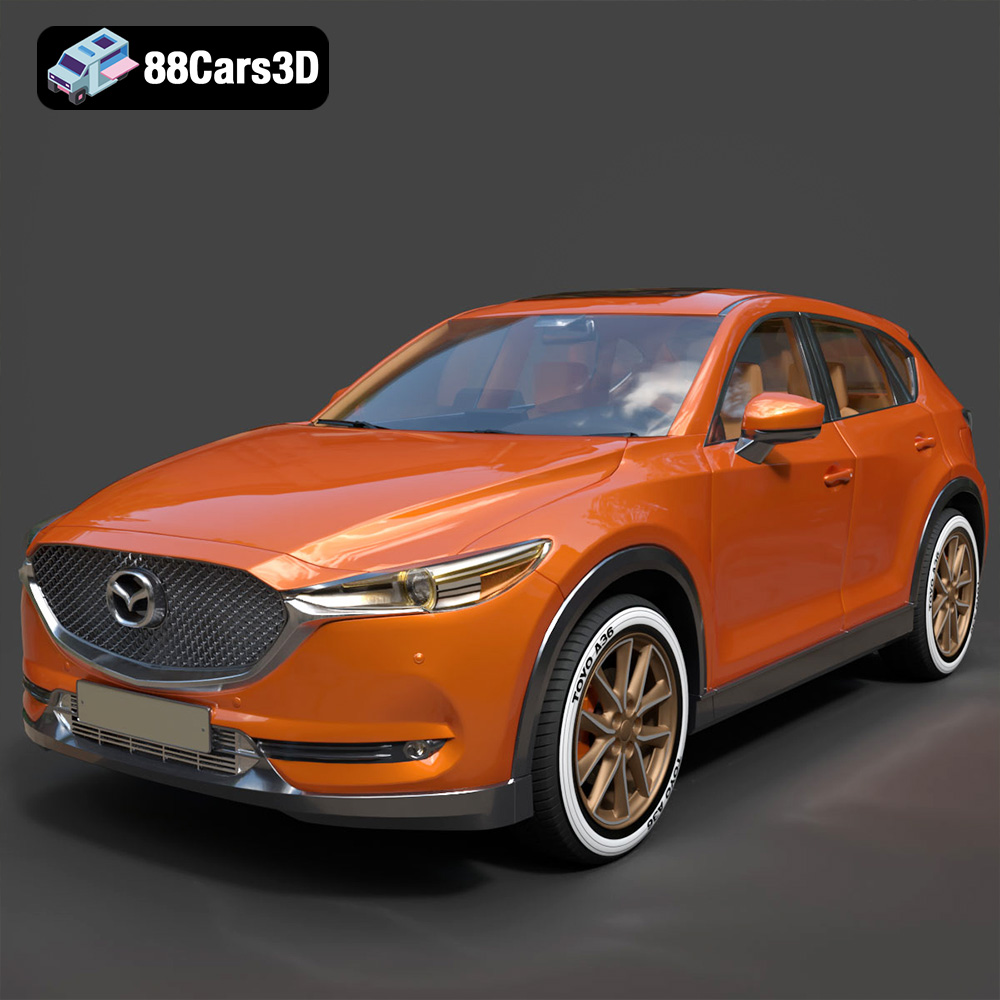
Texture: Yes | Material: Yes
Download the highly optimized Mazda CX-5 2014 3D Model (294k Triangles). Features the dynamic Kodo design language, signature grille, and a clean interior. Perfectly balanced for ArchViz, background traffic, and game development. Includes .blend, .fbx, .obj, .glb, .stl, and .max formats.
Price: $19.99
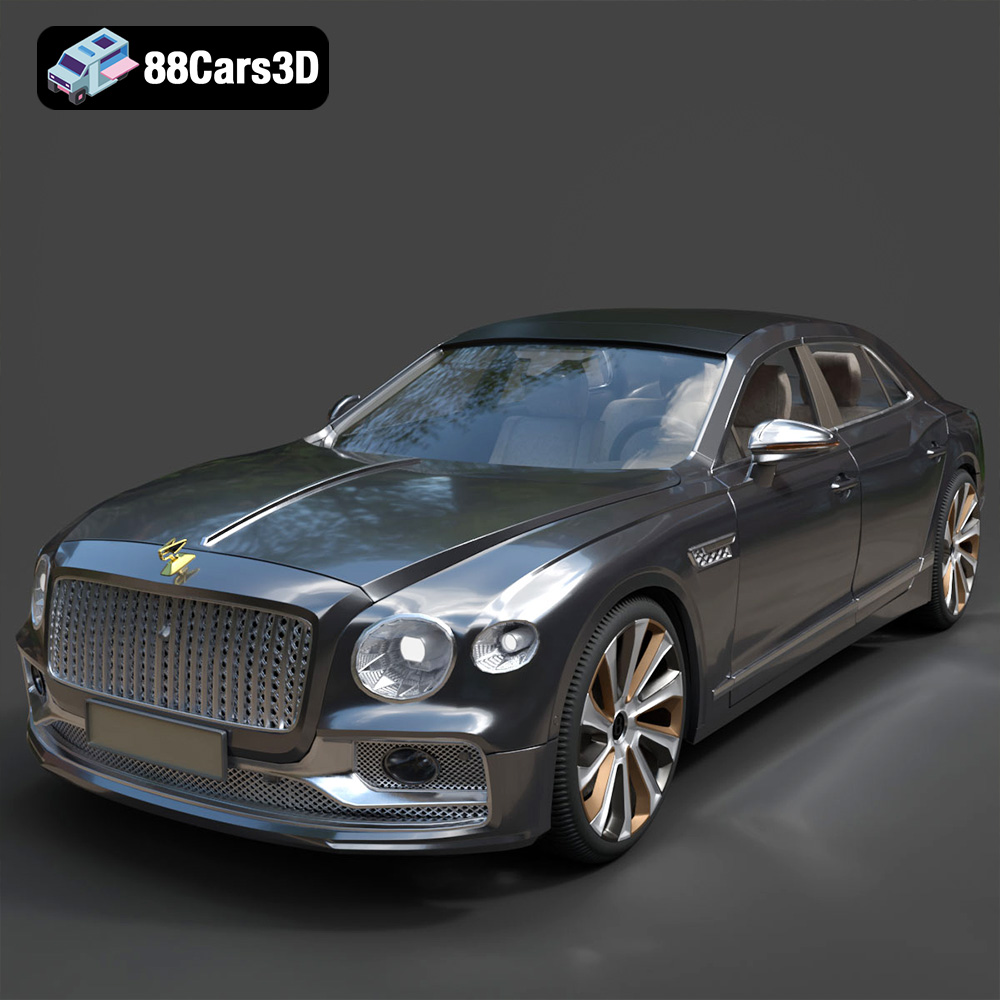
Texture: Yes | Material: Yes Download the ultra-high-detail Bentley Flying Spur Mulliner 2022 3D Model (2.94M Triangles). Features the bespoke Double Diamond grille, a fully modeled diamond-quilted interior, and exquisite luxury styling. Perfect for high-end ArchViz, VFX, and cinematic rendering. Includes .blend, .fbx, .obj, .glb, .stl, and .max formats.
Price: $19.90
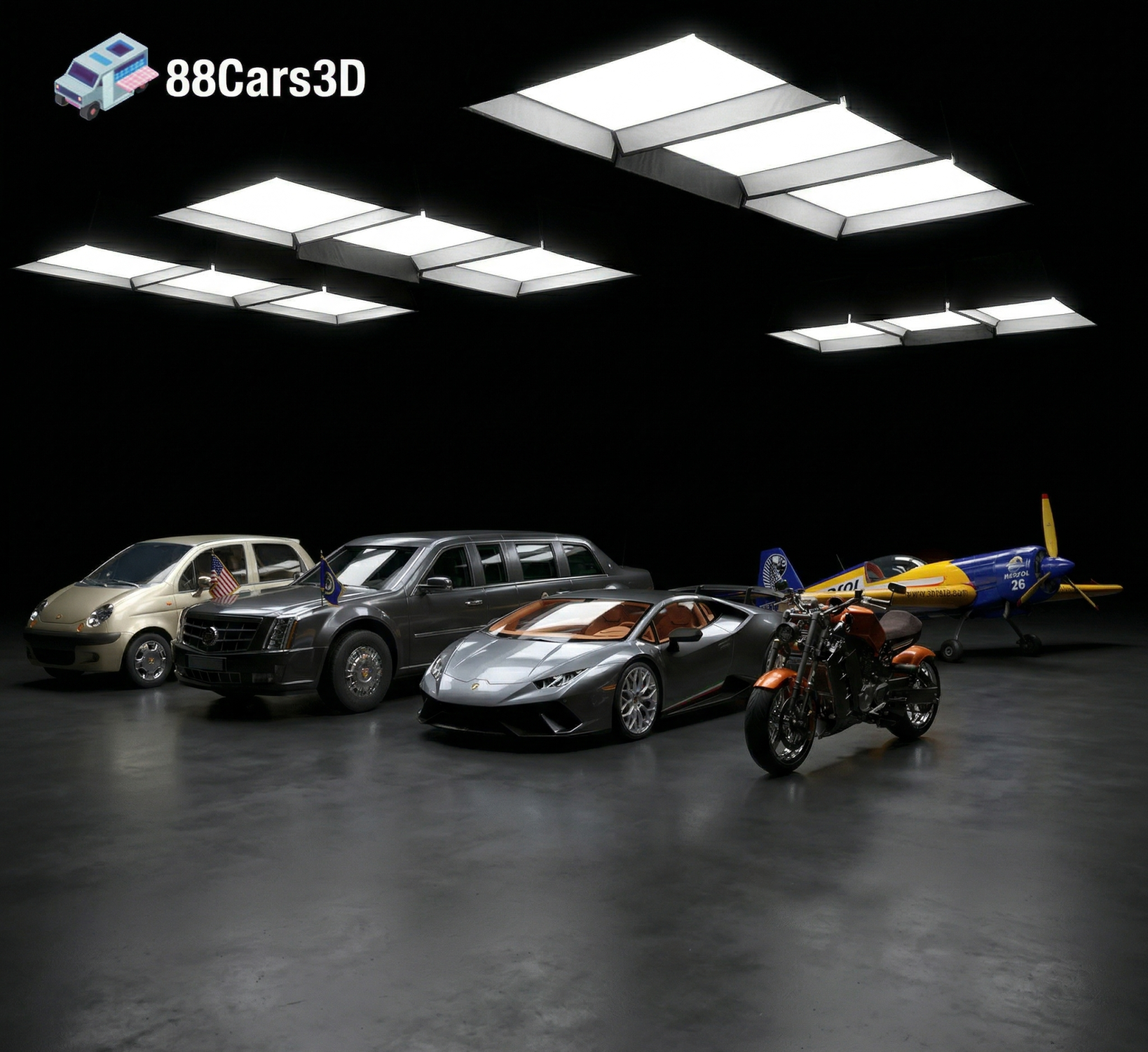
Texture: Yes | Material: Yes | 3D Printable: Yes. Download the Ultimate Creators’ Showcase featuring 5 premium 3D models: Lamborghini Huracan, ZAV Concept Motorcycle, Sukhoi SU-26, Presidential Limousine, and Daewoo Damas. Optimized for 4K CGI rendering and 3D printing. Save massive with this exclusive multi-category bundle!
Price: $99.99

Texture: Yes | Material: Yes | 3D Printable: Yes. Download the Italian Thoroughbreds Bundle featuring 5 iconic 3D models: Lamborghini Huracán Performante, Ferrari 458 Italia, Lamborghini Urus, Diablo SV, and Maserati GT. Optimized for 4K rendering and 3D printing (STL included). Save 50% with this ultimate Italian vehicle collection.
Price: $199.99

Download the Elite Future Mobility Bundle featuring 4 highly optimized 3D models: Tesla Model S, Avatr 11, Li L9, and Zoox Robotaxi. Perfect for ArchViz, Smart City renders, and game dev. Optimized for Unreal Engine and Blender. Includes .fbx, .obj, and .max formats.
Price: $99

🚗 5 Iconic German Cars (BMW M4 G82, M5 CS, X3, 1 Series & Mercedes E-Class). ✅ Optimized for ArchViz: Ready for Corona & V-Ray. 💰 Save €71 with this limited-time collection! 🚀 Instant Download after purchase.
Price: $119

Download the Extreme Off-Road & Survival 3D Models Bundle! Includes the Brabus 800 Adventure, Dodge Ram Bigfoot, Spec Truck, and a Caravan. Save over €210 on this premium 4-in-1 off-grid vehicle pack for ArchViz and game development.
Price: $149.99

Download the Heavy Duty & Commercial Logistics 3D Models Bundle! Includes the Ford Sterling, Caterpillar CT680, Mercedes Citaro Bus, and Vito Van. Save over €130 on this massive, game-ready 4-in-1 industrial vehicle pack.
Price: $109.99

