Get 50% OFF All Premium 3D & STL Models!

In the dynamic world of 3D visualization, from cinematic productions and cutting-edge game development to product design and architectural renders, the quality of your 3D assets is paramount. Automotive models, in particular, demand a meticulous eye for detail, accurate proportions, and robust technical construction to truly shine. Whether you’re a seasoned professional creating a photorealistic scene or an aspiring artist building your first interactive environment, the foundation of your project lies in exceptional 3D car models.
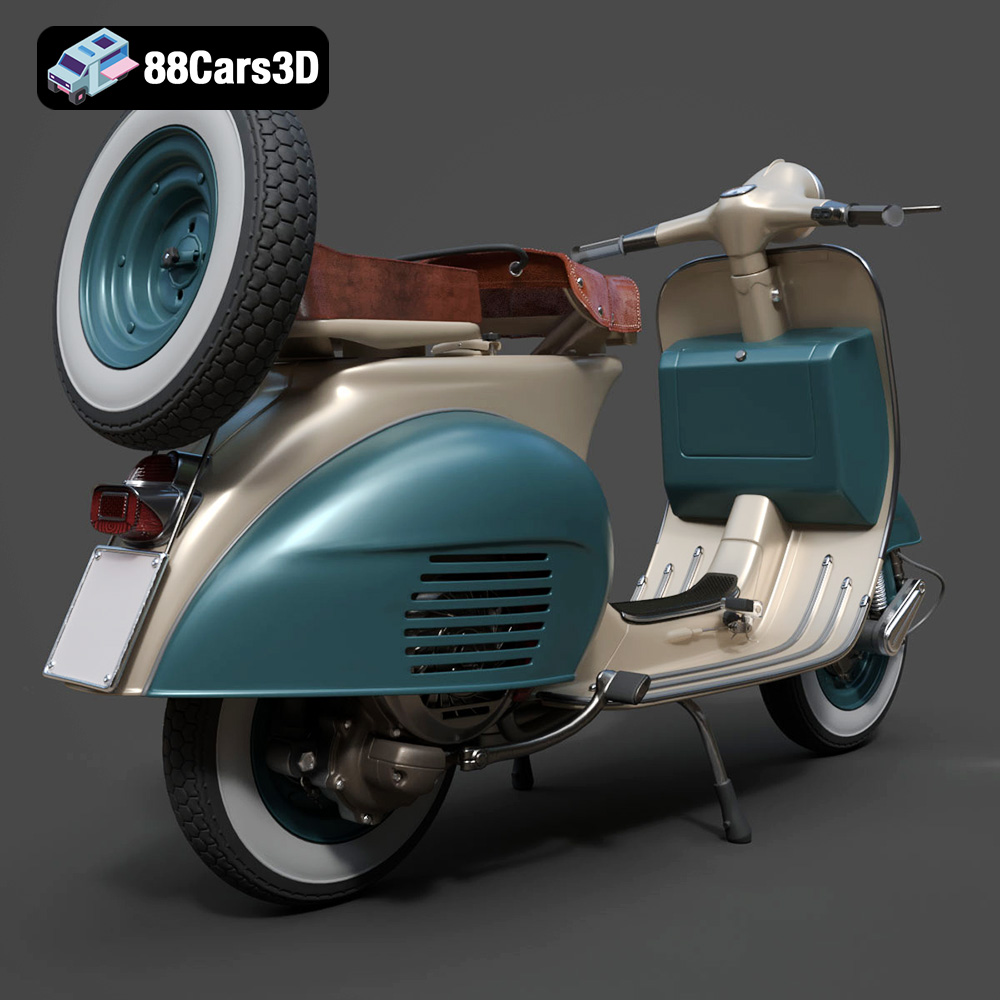
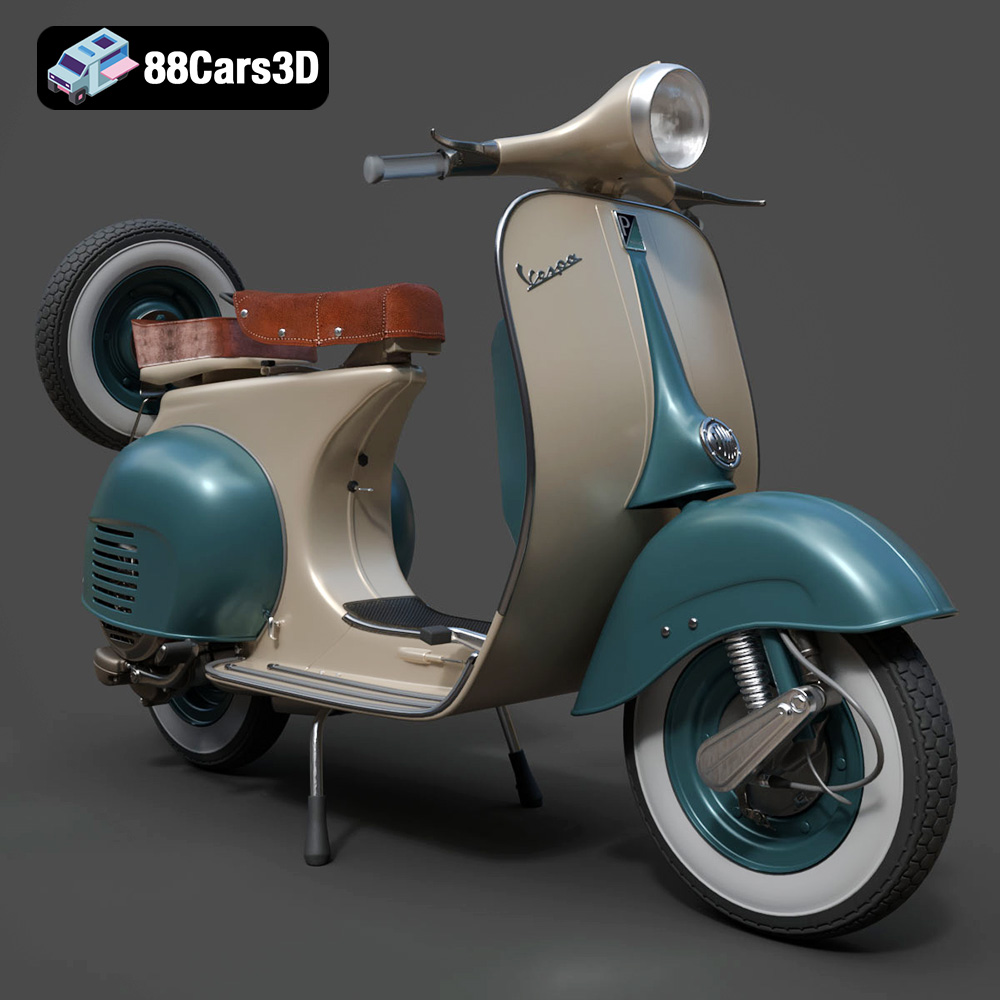
Today, we delve into the intricate processes behind creating, utilizing, and optimizing these complex assets, using a perfect example of timeless design: the Vespa VNB 125-B 3D Model. This iconic Italian scooter, available at 88cars3d.com, offers a glimpse into the high standards required for versatile, production-ready 3D content. Its blend of historical accuracy and technical precision makes it an ideal subject to explore the multifaceted applications of premium 3D models in various industries.
Choosing the correct file format is a critical first step for any 3D project, as it dictates compatibility, feature preservation, and pipeline efficiency. A high-quality asset like the Vespa VNB 125-B 3D Model often comes with a suite of formats, each tailored for specific software, engines, or applications. Understanding their nuances is key to a smooth workflow.
The .blend format is native to Blender, an increasingly popular open-source 3D creation suite. When you receive a .blend file, you’re getting a fully editable Blender scene. This includes not just the mesh data, but also materials, textures, lighting, cameras, animations, rigging, and even modifiers. It’s ideal for Blender users who want full control and the ability to dissect how the model was constructed, adjust shaders, or integrate it seamlessly into an existing Blender project. For the Vespa VNB 125-B, the .blend file would allow artists to easily modify colors, adjust chrome reflections, or set up custom animation sequences directly within Blender’s intuitive environment.
.fbx (Filmbox) is a proprietary file format developed by Autodesk, serving as a widely accepted interchange format across various 3D applications and game engines. It’s particularly favored for its robust support of mesh data, materials, textures, animations, and skeletal deformation. This makes it an excellent choice for transferring assets between software like 3ds Max, Maya, Blender, and directly into game engines like Unreal Engine and Unity. For a model like the Vespa VNB 125-B, an .fbx file ensures that the geometry, UV maps, and basic material assignments are preserved, making it ideal for immediate import into a real-time pipeline, whether for a game or an AR/VR experience.
The .obj (Wavefront OBJ) format is one of the oldest and most universal 3D file formats. It primarily stores geometry data, including vertices, normals, UV coordinates, and faces, making it excellent for cross-software compatibility. While it supports basic material assignments through an accompanying .mtl file, it doesn’t typically store advanced material nodes, rigging, or animation data. Its strength lies in its simplicity and widespread adoption, ensuring that almost any 3D software can open and import the model’s core geometry. The Vespa VNB 125-B in .obj format guarantees that its classic silhouette and detailed components can be accessed by virtually any artist, regardless of their preferred 3D application.
.glb (GL Transmission Format Binary) is a relatively newer format designed for efficient transmission and loading of 3D scenes and models in web and real-time applications, particularly AR/VR environments. It’s a binary version of GLTF, consolidating all assets (geometry, textures, animations) into a single file. This makes it incredibly efficient for streaming and display in web browsers, mobile AR apps, and immersive VR experiences where quick loading times and smaller file sizes are crucial. A .glb version of the Vespa VNB 125-B is perfect for showcasing the model interactively on a website or integrating it into an augmented reality showroom.
.stl (Stereolithography) is the most common file format for 3D printing. It describes only the surface geometry of a 3D object using a collection of interconnected triangles. It lacks color, texture, or material information, focusing solely on the object’s physical shape. For the Vespa VNB 125-B, the .stl format is essential for converting the digital model into a tangible object, allowing enthusiasts to print a miniature replica or a detailed scale model. It’s critical that .stl files are “manifold” – watertight and without holes – to ensure successful printing, a characteristic often found in high-quality printable models.
.ply (Polygon File Format or Stanford Triangle Format) is another format used to store 3D data, particularly from 3D scanners. It can store a wider range of properties than .stl, including color, transparency, and sometimes even a confidence map for each vertex. It’s often used for precision mesh data in scientific, engineering, or CAD applications where additional data per vertex or face might be relevant for analysis or manufacturing. While less common for general 3D assets, its inclusion for the Vespa VNB 125-B demonstrates a commitment to providing options for highly specialized applications.
The .unreal format, or more accurately, assets packaged for Unreal Engine (often derived from .fbx imports), represents a truly engine-ready asset. This implies not just the raw mesh but also properly configured materials, textures, LODs (Levels of Detail), and potentially collision meshes, all optimized for Unreal Engine’s rendering pipeline. An Unreal-ready Vespa VNB 125-B means minimal setup for game developers or virtual production artists, allowing them to drop the scooter directly into a scene with pre-optimized performance and visual fidelity.
Finally, the .max format is the native file type for Autodesk 3ds Max, a leading software for 3D modeling, animation, and rendering. Similar to .blend, it stores the complete scene data, including geometry, materials, lighting, cameras, modifiers, and animation curves. This provides 3ds Max users with the most flexible and editable version of the model, allowing for comprehensive customization, detailed rendering setups, and complex animation sequences. The .max file for the Vespa VNB 125-B allows artists to fully leverage 3ds Max’s powerful toolset to create stunning, photorealistic visuals or integrate the scooter into larger architectural visualization projects.
The true value of a premium 3D model lies in its faithful reproduction of the original. The Vespa VNB 125-B 3D Model from 88cars3d.com exemplifies this principle, meticulously recreating a classic icon with digital precision. This isn’t just a generic scooter; it’s a specific variant from the early 1960s, embodying subtle design refinements that define its era.
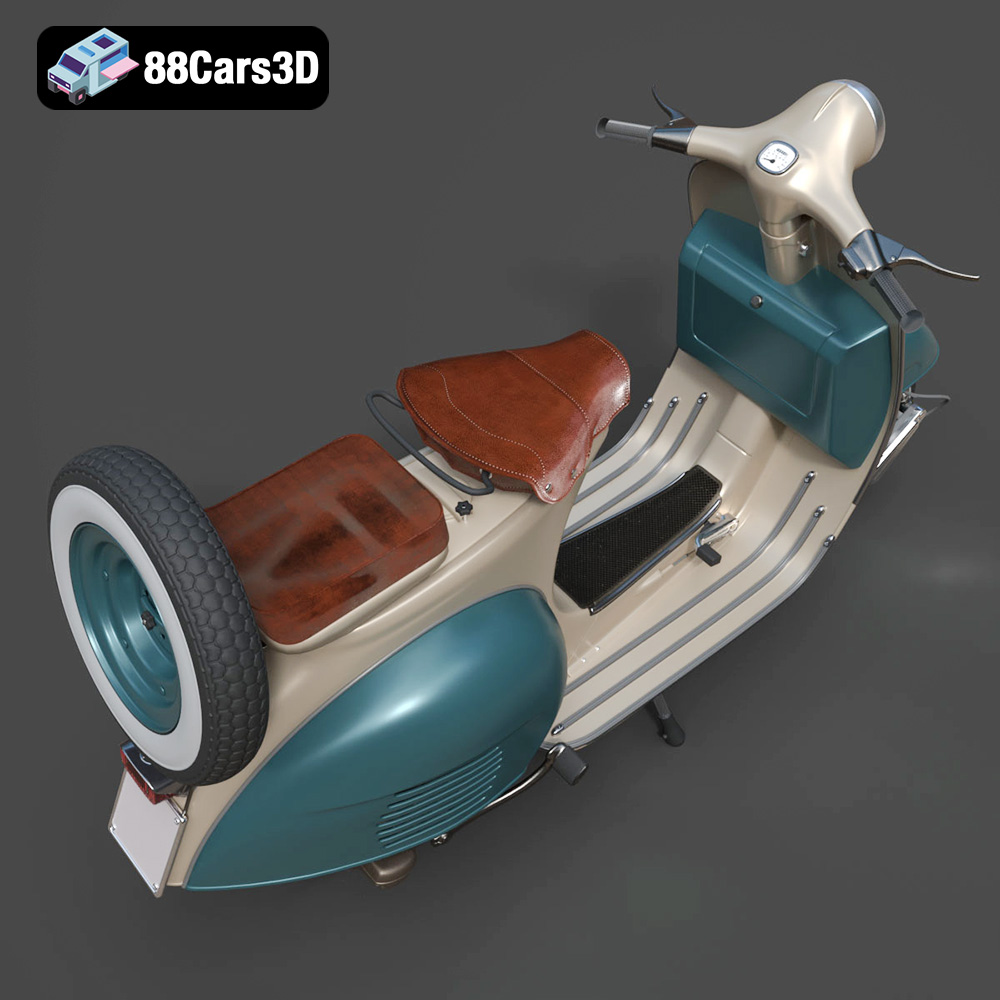
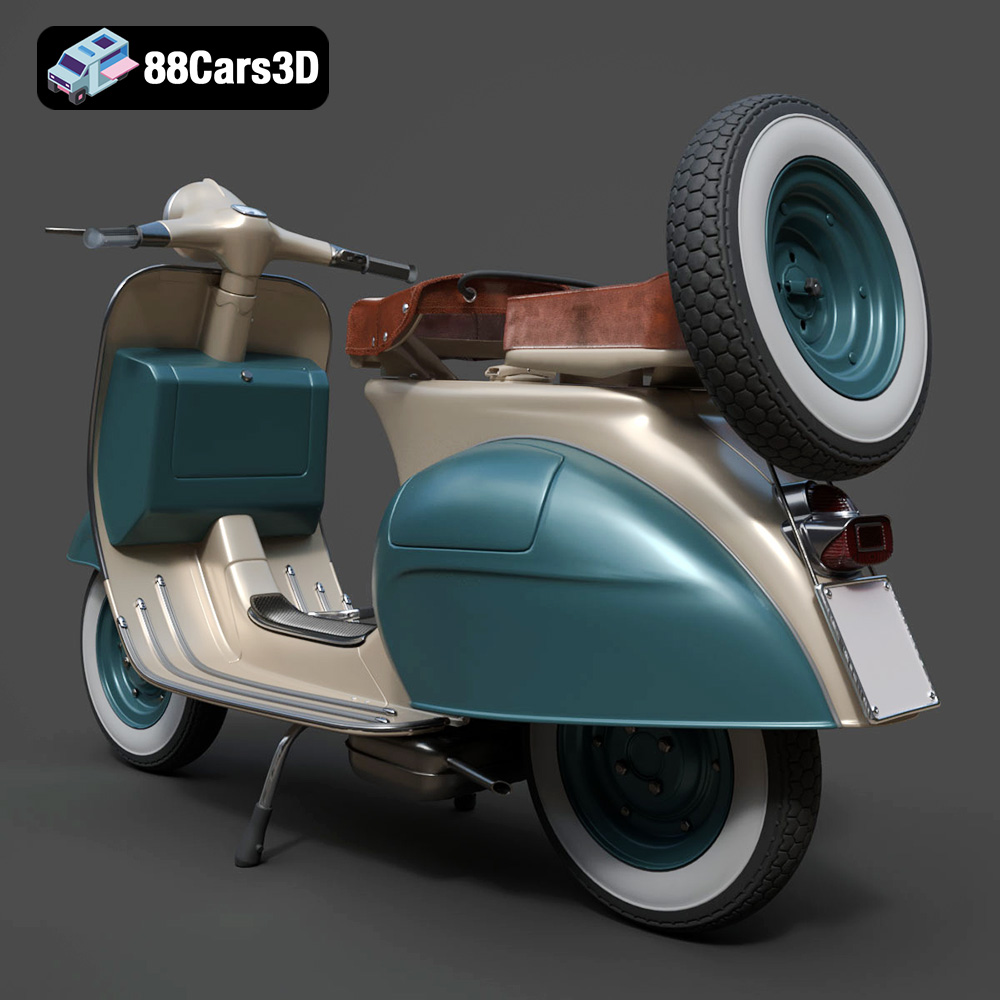
The model accurately captures the distinctive monocoque steel body, the rounded front leg shield, and the iconic chrome-trimmed circular headlamp that are hallmarks of Vespa’s timeless appeal. Every curve and panel reflects real-world scale accuracy, which is crucial for photorealistic rendering and seamless integration into scenes. This level of detail extends to the vented side panels, exposed handlebar assembly, and vintage wheel configuration, ensuring that the digital model evokes the same sense of nostalgic charm as its physical counterpart.
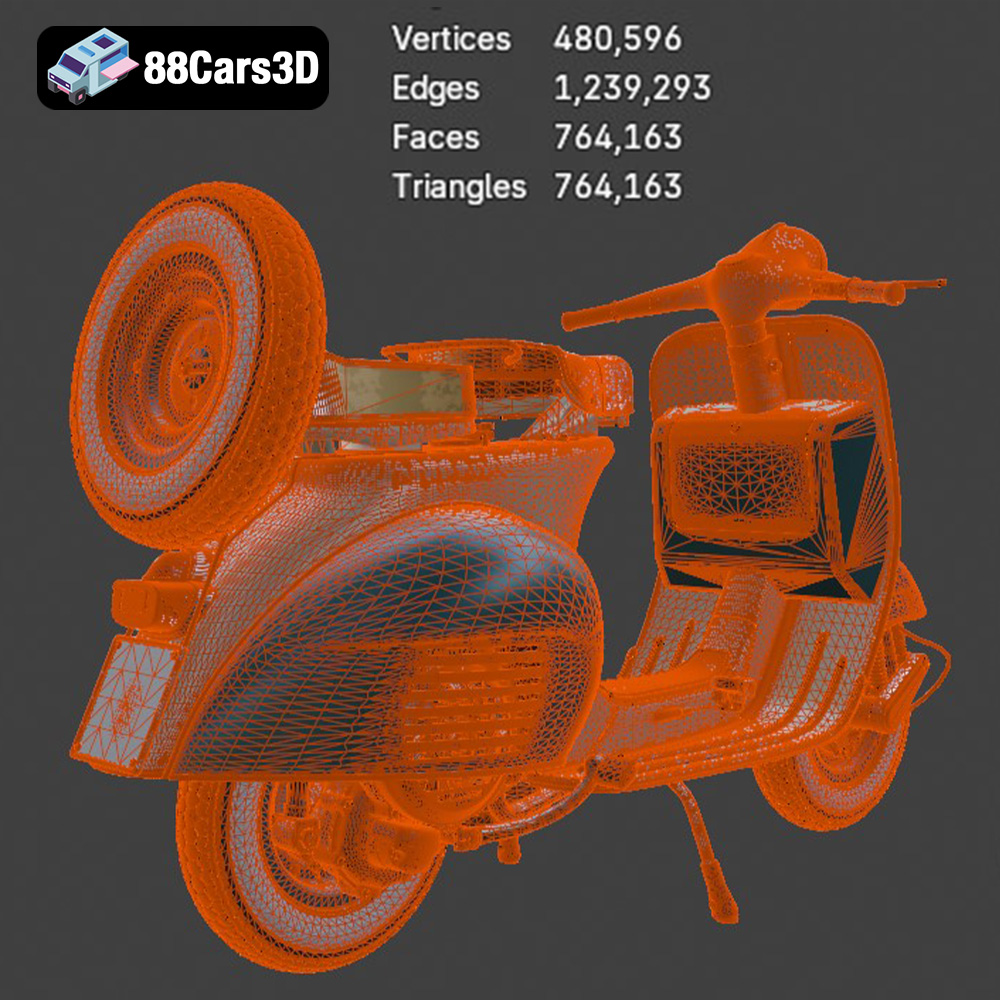
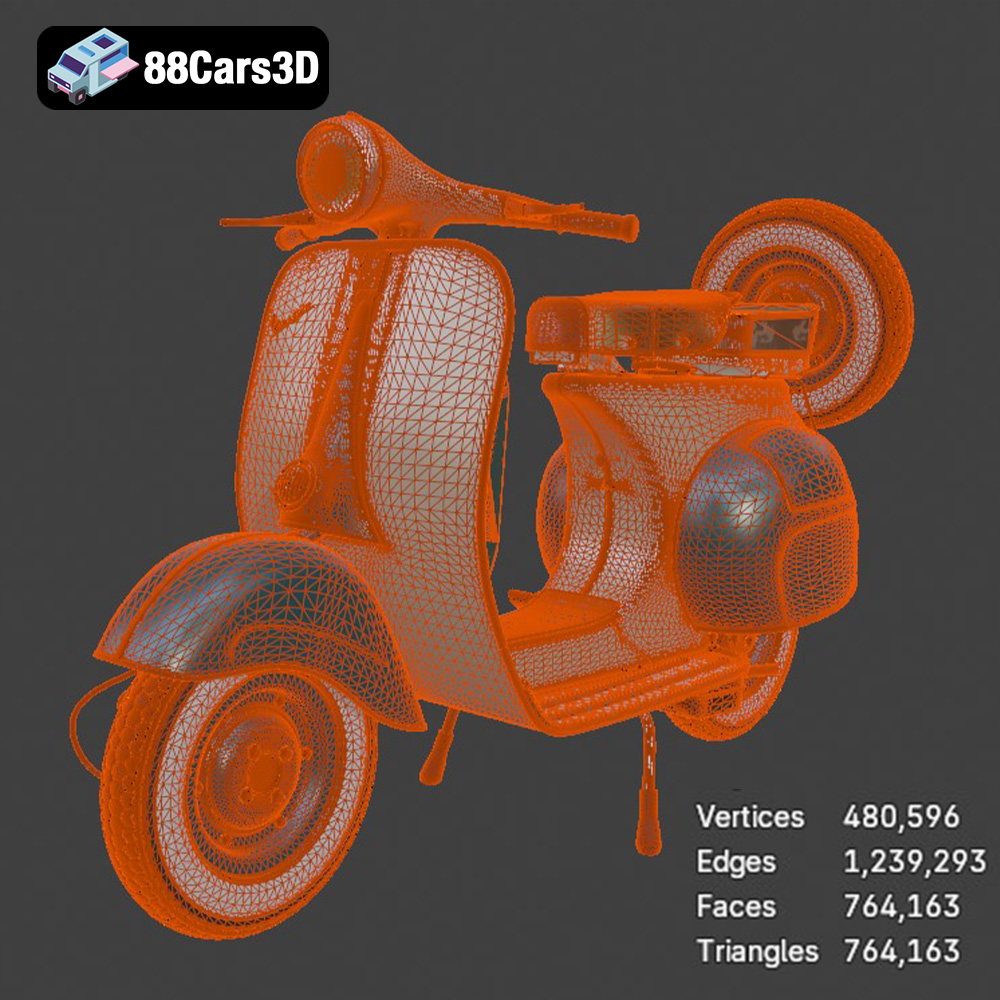
Beyond visual fidelity, the Vespa VNB 125-B boasts a clean topology and well-organized mesh structure. This is a technical advantage that simplifies UV unwrapping, texturing, and most importantly, allows for smooth subdivision for close-up renders without distorting the mesh. The proper pivot setup for steering and wheel rotation further enhances its utility, making it animation-ready straight out of the box. These technical considerations are what elevate a simple model to a professional-grade asset, enabling its use across rendering, animation, simulation, game development, and AR/VR environments without extensive rework.
High-quality 3D car models like the Vespa VNB 125-B are invaluable assets for artists specializing in rendering and visualization. They serve as central elements in creating compelling narratives for advertising, product showcases, architectural visualizations, and cinematic sequences. Let’s explore how this model fits into common rendering workflows using industry-standard software.
For artists working in 3ds Max, the included .max file for the Vespa VNB 125-B offers the highest degree of flexibility. The clean geometry and real-world scale are a perfect starting point for setting up advanced rendering scenes. Users can quickly apply their preferred rendering engine, such as V-Ray or Corona Renderer, to achieve photorealistic results. The detailed model allows for intricate material assignments: polished chrome on the trim and headlamp, a subtle metallic flake on the body paint, and a convincing leather texture for the seat. Artists can leverage 3ds Max’s powerful lighting systems to simulate natural daylight, create dramatic studio setups, or capture the warm glow of a sunset on a coastal promenade, enhancing the scooter’s retro appeal for lifestyle branding or period productions.
Blender users benefit immensely from the native .blend file, which often comes with pre-configured materials and potentially even lighting setups. This allows for immediate use with Blender’s powerful rendering engines: Eevee for real-time visualization and Cycles for path-traced photorealism. Artists can experiment with Blender’s node-based shader system to customize the Vespa’s materials, perhaps adding a subtle dirt layer or a wet-surface effect for a rainy street scene. The separate wheels and steering assembly facilitate easy animation, allowing for dynamic camera shots, subtle idle movements, or even full ride cycles. This makes the Vespa VNB 125-B ideal for creating animated shorts, explainer videos, or interactive web experiences where visual fidelity and performance are key.
In game development and interactive experiences, realism must be balanced with performance. Assets need to be optimized for real-time rendering, typically meaning efficient polygon counts, well-managed textures, and robust collision setups. The Vespa VNB 125-B 3D Model is designed with these considerations in mind, making it an excellent game asset.
The inclusion of the .fbx and .unreal formats makes the Vespa VNB 125-B particularly suitable for Unreal Engine. Importing the .fbx is straightforward, and the clean geometry ensures that Unreal’s automatic LOD generation can produce efficient lower-detail versions for distant views. For a truly “engine-ready” asset, the .unreal file or an optimized .fbx would typically include pre-configured material instances, allowing developers to easily swap colors or adjust parameters without modifying core textures. Collision meshes can be added for realistic interaction within the game world. Imagine the Vespa VNB 125-B as a static prop or even a drivable vehicle in an open-world game set in 1960s Europe, its optimized polygon flow ensuring smooth frame rates even in densely populated scenes.
Augmented and Virtual Reality demand even stricter performance optimizations. The .glb format, included with the Vespa model, is a testament to its suitability for these platforms. Its single-file nature and efficient data compression ensure rapid loading and display on mobile devices or VR headsets. For immersive retro vehicle showrooms or interactive classic scooter experiences, developers can leverage the model’s clean geometry and pre-baked ambient occlusion maps (if included) to maintain visual quality without taxing system resources. The Vespa VNB 125-B can become a focal point in a virtual tour of Italian streets or an interactive educational experience about vintage automotive design.
While digital visualization is a primary use, the capabilities of modern 3D models extend into the physical realm through 3D printing. The Vespa VNB 125-B 3D Model, explicitly advertised as 3D printable, opens up exciting avenues for collectors, hobbyists, and product designers alike.
The .stl file format is the bridge between the virtual model and a physical print. For the Vespa VNB 125-B, this means transforming the high-detail digital recreation into a tangible, collectible scooter miniature or a scale display model. The product description provides crucial 3D print settings: recommended scales (1:18, 1:12, 1:10), layer height (0.08–0.16 mm), wall thickness (1.2–2.0 mm), and infill (15–25%). These parameters are vital for ensuring a successful print with optimal detail and structural integrity, whether using FDM or resin printers.
The true magic of 3D printing often lies in the post-processing. The Vespa model, once printed, can be sanded, primed, and painted to achieve stunning realism. Imagine a gloss pastel or cream paint finish, combined with meticulous chrome detailing on the headlight trim and handlebars. The recommendation for separate printing of the body upright (for a smooth curved finish) and wheels separately demonstrates a thoughtful approach to optimizing the print for aesthetics and ease of assembly. This allows for customization, enabling enthusiasts to create a miniature replica that truly matches their vision, perhaps even replicating a specific vintage color scheme or adding a tiny rear rack accessory, mirroring the customization options of the digital model.
In any professional 3D pipeline, time is money, and quality is reputation. Sourcing meticulously crafted 3D models saves countless hours of modeling, texturing, and optimization. This allows artists and studios to focus on creativity, composition, and delivering exceptional final products. This is precisely where marketplaces like 88cars3d.com shine.
Instead of building every asset from scratch, which can be a time-consuming and resource-intensive endeavor, professionals can leverage pre-made, high-quality 3D car models. The Vespa VNB 125-B, with its clean topology, real-world scale, and multiple included formats, is a prime example of an asset that can be dropped into a project and immediately integrated. This accelerates workflows for everything from architectural visualizations that need authentic vehicles to populating open-world game environments with believable props. The technical advantages, such as proper pivot setups for animation and optimized polygon flow, mean less troubleshooting and more creative exploration for the artist.
88cars3d.com isn’t just a repository of models; it’s a curated marketplace focused on delivering high-quality 3D car models that meet professional standards. Whether you’re in search of classic Italian scooters, vintage muscle cars, or contemporary automotive designs, the emphasis on detail, accuracy, and versatility across multiple formats ensures that you’re investing in assets that perform. This commitment to quality empowers creators across various industries – from film and advertising to interactive media and product design – to elevate their projects with stunning visual fidelity and robust technical foundations.
The world of 3D modeling is constantly evolving, demanding assets that are not only visually striking but also technically robust and versatile. As we’ve explored through the detailed examination of the Vespa VNB 125-B 3D Model, a high-quality asset serves as the cornerstone for a multitude of applications – from breathtaking automotive rendering and dynamic game development to immersive AR/VR experiences and tangible 3D prints.
Understanding the nuances of different file formats, appreciating the meticulous craftsmanship of accurate digital reproductions, and leveraging optimized assets for various professional pipelines are all critical components of modern 3D production. By choosing assets built with clean topology, real-world scale, and a focus on detail, artists and studios can significantly enhance their creative output and efficiency.
The Vespa VNB 125-B 3D Model stands as a testament to the power of a well-crafted digital asset, capable of transporting viewers back to the charming streets of 1960s Italy or serving as a versatile prop in a cutting-edge virtual environment. For those seeking premium 3D car models that deliver on both aesthetic appeal and technical performance, a visit to 88cars3d.com is an excellent starting point for transforming your creative visions into stunning realities.
The Vespa VNB 125-B 3D Model is a high-detail digital recreation of the classic Italian scooter variant from the early 1960s. The VNB 125-B maintained the timeless Vespa silhouette while incorporating subtle production refinements, improved mechanical components, and refined detailing that defined the era of practical European urban mobility. This 3D model accurately captures the monocoque steel body construction, rounded front leg shield, chrome-trimmed circular headlamp, vented side panels, exposed handlebar assembly, and vintage wheel configuration. Built with clean topology and real-world scale accuracy, it is ideal for rendering, animation, simulation, game development, and AR/VR classic vehicle environments. Perfect for retro European streets, café scenes, coastal promenades, lifestyle branding visuals, and cinematic period productions.
$4.99
.arvr
.blend
.classicscooter
.fbx
.gameasset
.glb
.italianscooter
.max
.motorcycle3dmodel
.obj
.ply
.rendering
.retro
.simulation
.stl
.twowheeler
.unreal
.urbanvehicle
.vespa
.vintagevehicle
.vnb125b