Get 50% OFF All Premium 3D & STL Models!

In the dynamic world of 3D visualization, the demand for high-fidelity automotive assets has never been greater. Whether you’re crafting a cinematic commercial, developing an immersive racing game, designing virtual showrooms, or even producing a physical scale model, the quality of your 3D car models is paramount. It’s the foundation upon which stunning renders and engaging interactive experiences are built. Artists, designers, and developers constantly seek models that not only capture the aesthetic essence of a vehicle but also offer technical precision and versatility across various platforms.
Today, we’re diving deep into an exemplary asset that embodies this fusion of art and engineering: the BMW X6 3D Model. This particular model, available at 88cars3d.com, stands out as a robust solution for a multitude of applications, from intricate automotive rendering projects to being a ready-to-print file for tangible collectibles. It’s a testament to how a single, well-crafted 3D asset can bridge the gap between purely digital domains and the tangible world of 3D printing, offering a comprehensive toolkit for creative professionals.
The choice of file format is a critical decision in any 3D workflow, dictating compatibility, feature retention, and overall efficiency. A truly versatile 3D car model, like the BMW X6 3D Model, provides a comprehensive array of formats to cater to diverse professional needs. Understanding each format’s strengths and typical use cases is essential for seamless integration into your projects.
The .blend format is the native file type for Blender, an increasingly popular open-source 3D creation suite. When you receive a .blend file, you’re getting a fully editable Blender scene, complete with materials, textures, lighting setups, and any associated animations or modifiers. This format is ideal for users deeply integrated into the Blender ecosystem, allowing for direct modification of the mesh, material adjustments using nodes, and leveraging Blender’s powerful rendering engines like Cycles or Eevee. It ensures that all original scene data and relationships are preserved, making it a powerful choice for artists who need to customize every aspect of the model.
Autodesk’s .fbx (Filmbox) format has become an industry standard for data exchange between various 3D applications and game engines. Its strength lies in its ability to encapsulate not just geometry, but also materials, textures, animation data (skeletons, skinning), cameras, and lights. This makes it an ideal format for exporting models for use in Unreal Engine, Unity, 3ds Max, Maya, or Cinema 4D, especially when animations are involved. It’s a binary format, meaning it’s optimized for efficiency and smaller file sizes compared to text-based formats like .obj, making it perfect for real-time pipelines where performance is key.
The .obj (Wavefront OBJ) format is one of the most widely supported and universal formats for transferring 3D geometry. It’s a simple, text-based format primarily designed to store mesh data, including vertices, normals, UV coordinates, and faces. While it can reference external material files (.mtl), its strength is in its raw geometric data. It’s highly compatible with virtually every 3D software and is excellent for cross-software compatibility when only the mesh data is required. Its simplicity ensures broad support, though it doesn’t typically carry complex scene data like animation or rigging.
.glb (GL Transmission Format Binary) is the binary version of glTF, a royalty-free specification for the efficient transmission and loading of 3D scenes and models by applications. Optimized for AR, VR, and browser-based display, .glb packages all necessary data (geometry, textures, materials, animations) into a single, compact file. This “asset delivery format” is designed to be lightweight and fast to load, making it perfect for interactive web experiences, augmented reality applications on mobile devices, and virtual reality environments where performance and quick loading times are crucial.
The .stl (Stereolithography) format is the ubiquitous standard for 3D printing. It represents a 3D model as a collection of unconnected triangular facets, defining only the surface geometry without color, texture, or other attributes. Its simplicity is its strength for manufacturing, as virtually all 3D printers and slicing software can read .stl files. When provided as a 3D printable model, the .stl file has been carefully prepared to ensure manifold geometry, watertightness, and appropriate wall thickness, making it immediately suitable for physical output.
The .ply (Polygon File Format or Stanford Triangle Format) is another format for storing 3D data, particularly useful for high-resolution scan data and scientific applications. It can store a wider range of information than .obj, including color per vertex, transparency, and different types of polygon faces. It’s often used for precision mesh data in CAD, reverse engineering, and scientific analysis, where accurate representation of complex surfaces and attribute data is paramount. Its capability to store various properties per vertex or face offers more flexibility for specific analysis tasks.
The .unreal format signifies an asset specifically optimized and configured for direct import into Unreal Engine. While Unreal typically imports .fbx, having a designated .unreal file implies a level of preparation—such as optimized material setups, collision meshes, or even pre-configured Blueprints for immediate use—that streamlines the workflow for real-time developers. This format aims to minimize post-import adjustments, allowing developers to integrate the asset into their game or simulation environments with minimal fuss and maximum performance.
The .max format is the native file type for Autodesk 3ds Max, a leading software for 3D modeling, animation, and rendering. Similar to .blend, a .max file provides a complete scene with all its components: geometry, materials (V-Ray, Corona, Arnold), textures, lights, cameras, and animation keyframes. It offers full editability within 3ds Max, making it invaluable for professionals who rely on Max for high-end visualization, animation, and architectural rendering. This format provides the most comprehensive control for users working within the 3ds Max ecosystem, allowing for complex scene management and advanced rendering techniques.
The inclusion of such a broad spectrum of formats with the BMW X6 3D Model from 88cars3d.com demonstrates a commitment to flexibility, ensuring that regardless of your preferred software or end-use application, you have the right tools at your disposal.
The essence of a compelling 3D model lies in its meticulous attention to detail and its ability to replicate real-world aesthetics with precision. The BMW X6 3D Model is an excellent example of this, capturing the luxurious and aggressive spirit of BMW’s Sports Activity Coupe (SAC). This model isn’t just a basic shell; it’s a digital twin designed for impact.
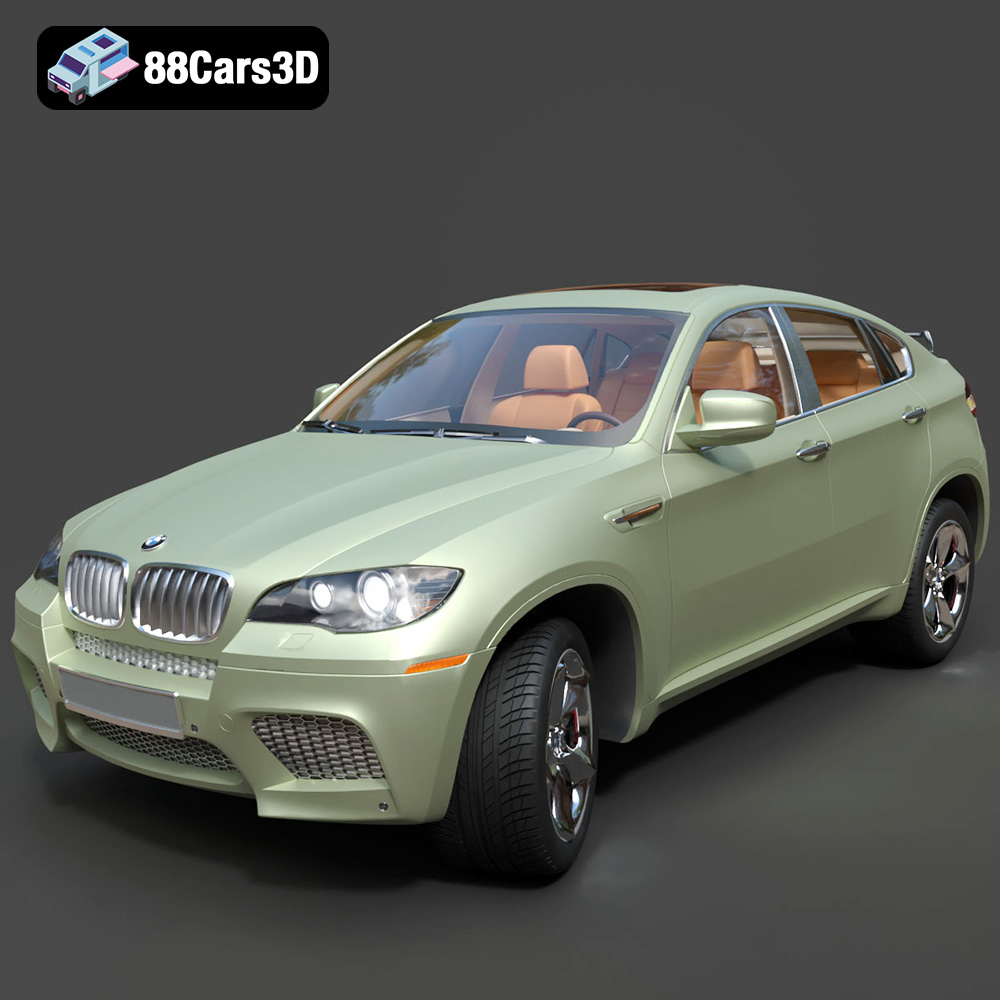
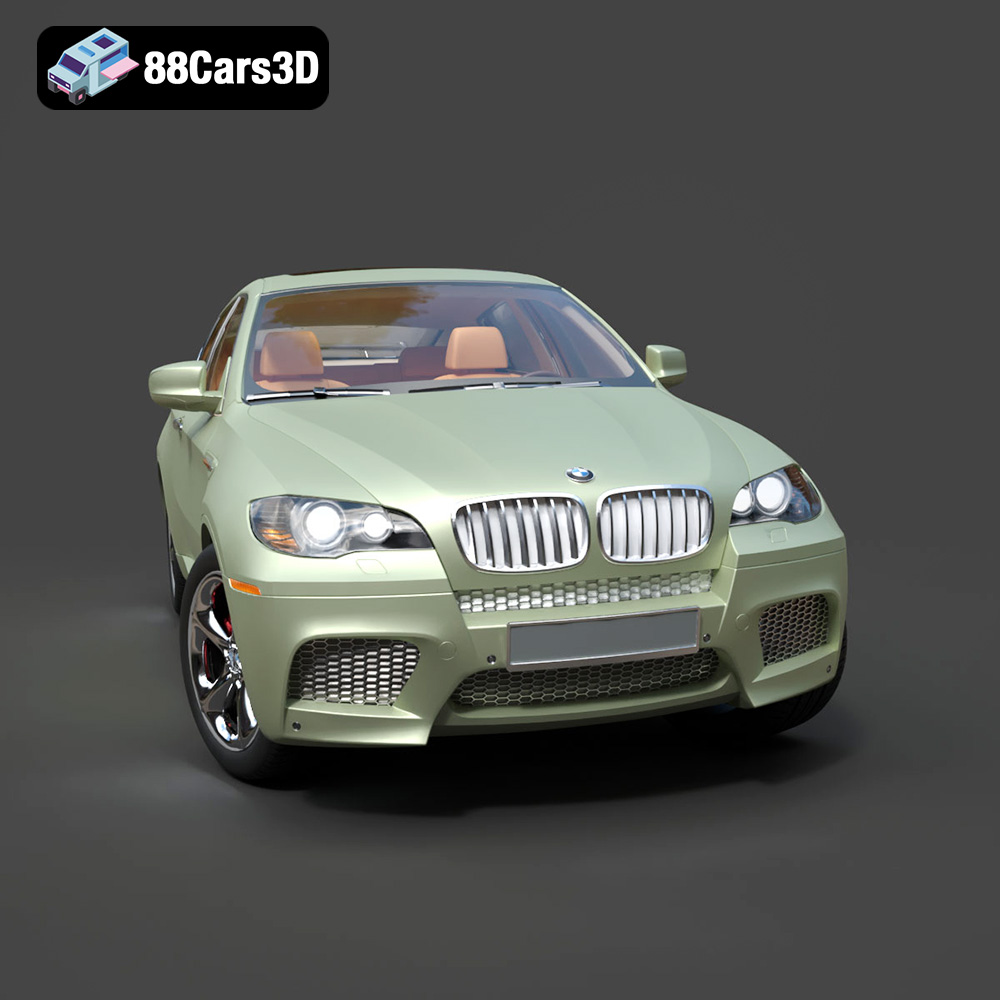
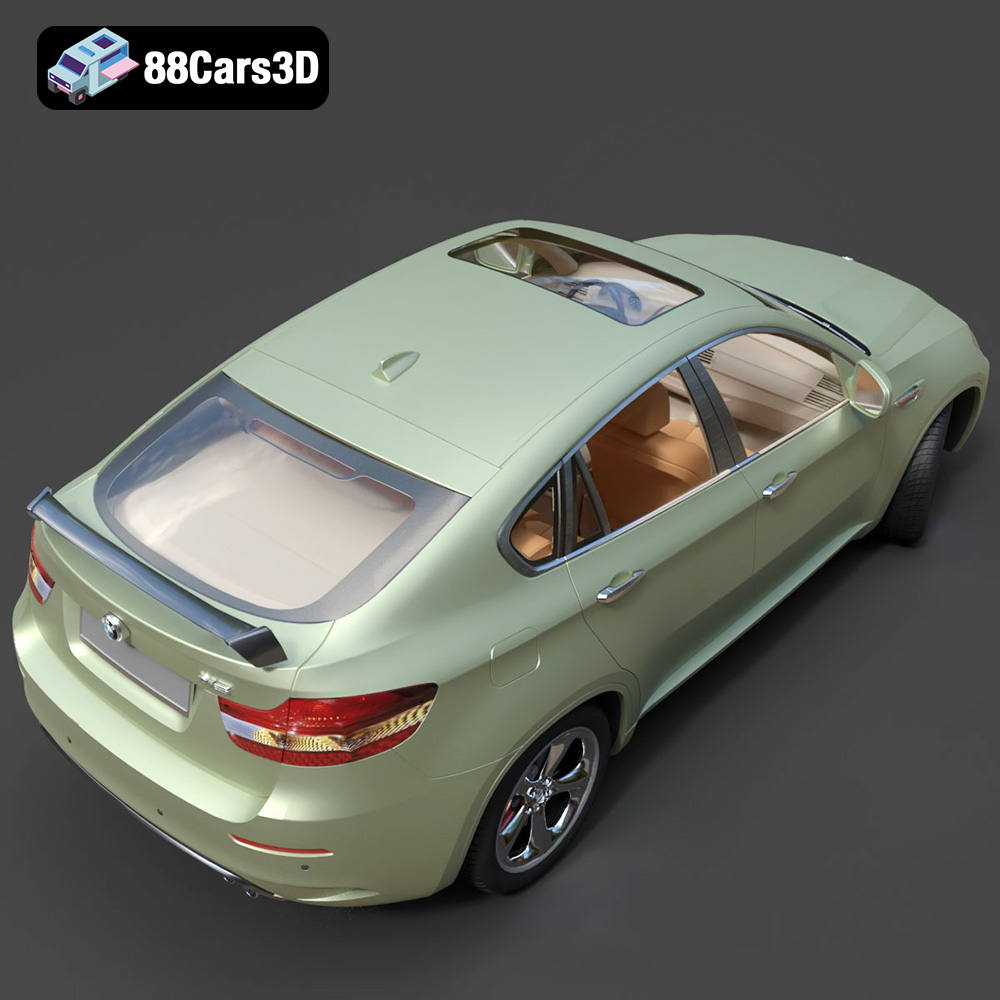
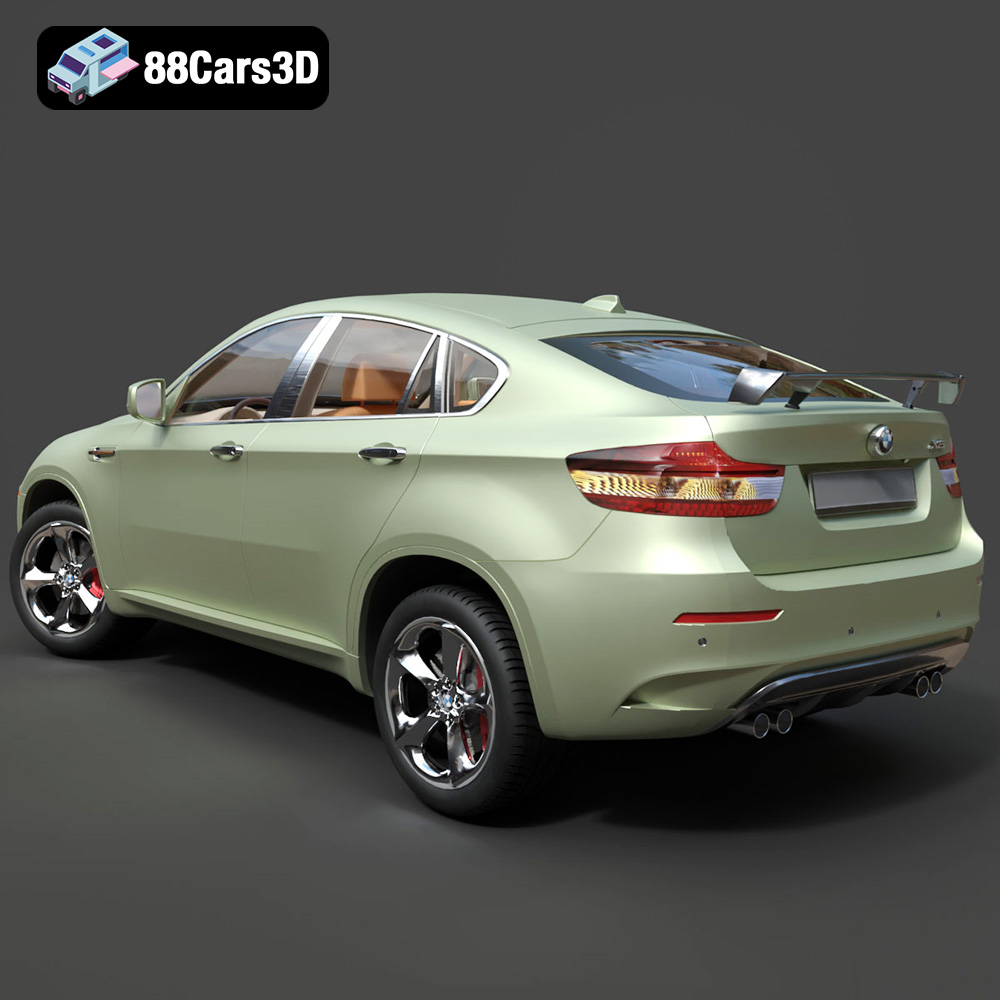
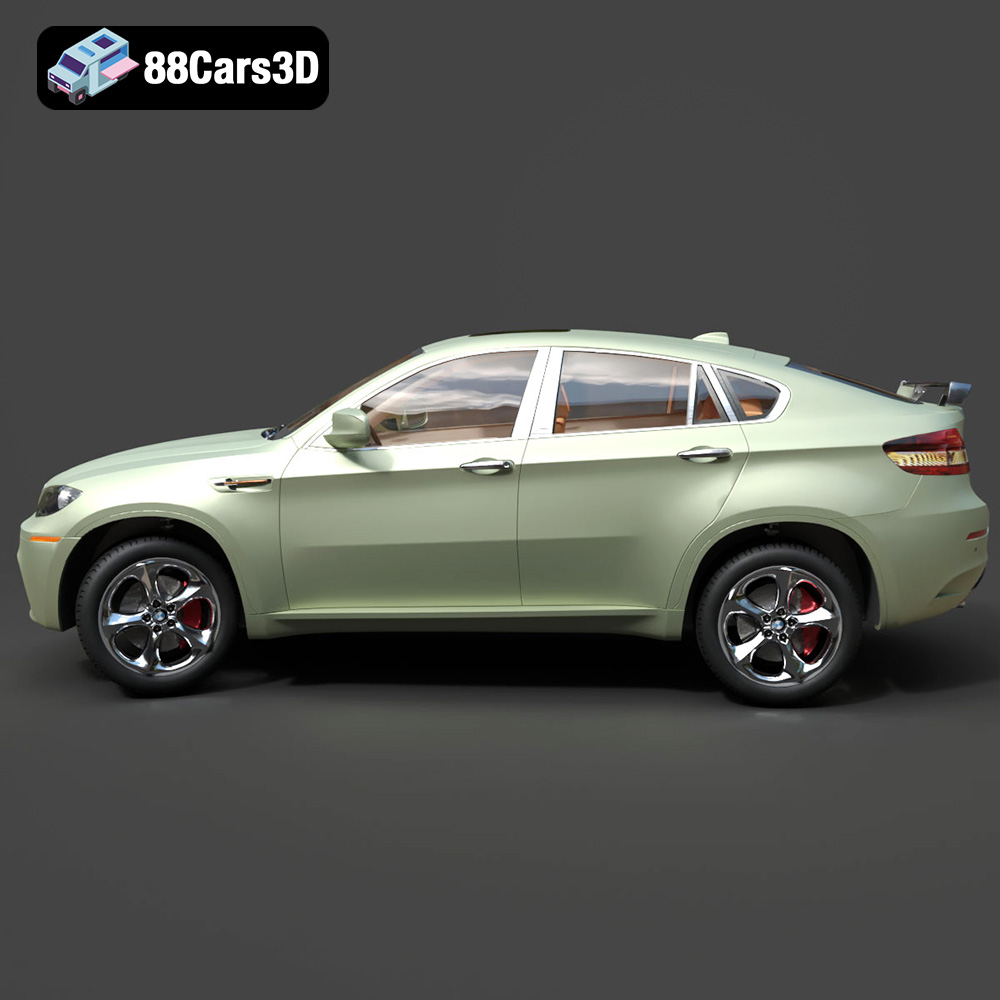
The BMW X6 is instantly recognizable by its bold silhouette, a unique blend of SUV robustness and coupe elegance. This 3D model accurately recreates these defining characteristics. You’ll find the signature large kidney grille, a dominant feature of modern BMWs, precisely sculpted. The aggressive front fascia, with its dynamic air intakes and intricate LED-style headlights, is rendered with striking accuracy. Every curve of the sloping roofline, every muscular body contour, and the distinct side skirts and bumpers contribute to an authentic digital representation. The included modeled alloy wheels, complete with detailed tires and brake components, elevate the realism, ensuring that even close-up shots hold up under scrutiny. Furthermore, elements like doors, hood, trunk, and wheels are modeled as separate components, which is crucial for animation workflows, allowing for realistic opening and closing sequences or individual wheel rotation.
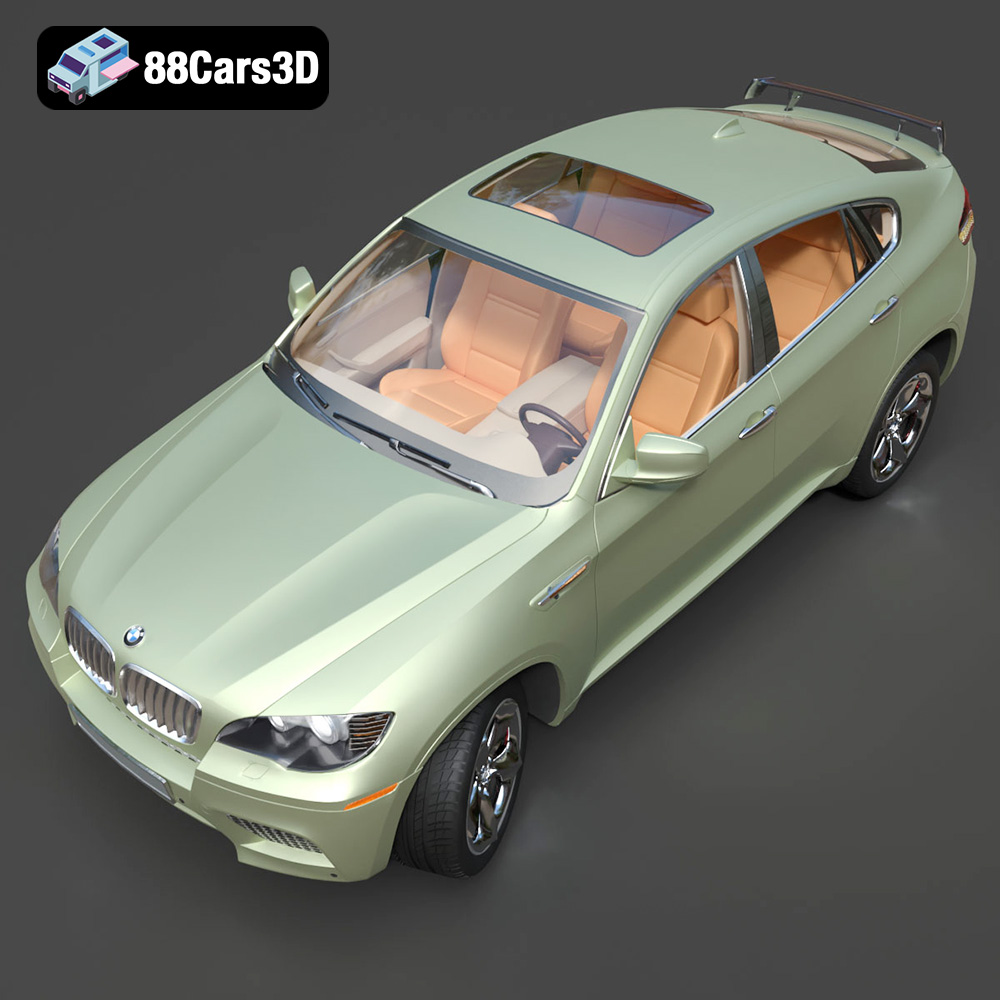
While the exterior grabs immediate attention, the interior is where the luxury experience truly solidifies, and this model does not disappoint. The BMW X6 3D Model features a fully modeled premium dashboard layout, reflecting the sophisticated ergonomics and high-tech interface of the real vehicle. The steering wheel, complete with instrument cluster detail, adds a layer of believability, making the model suitable for driver’s seat perspectives or virtual cockpit tours. The center console and infotainment system are represented, providing a rich environment for interactive applications or detailed interior renders. Front and rear seating geometry ensures spatial accuracy, while interior panels and trim detailing add to the overall sense of luxury. This level of interior modeling is vital for applications like AR/VR showrooms or cinematic sequences where the camera might linger inside the vehicle, demanding a high degree of fidelity without compromising on optimization for various engines.
A high-quality 3D asset like the BMW X6 3D Model is more than just a static object; it’s a versatile building block for various professional pipelines. Its clean topology, real-world scaling, and proper hierarchy make it an invaluable tool for artists and developers across different industries.
For automotive rendering and visualization, precision and photorealism are paramount. Artists working in architecture, advertising, or product design frequently leverage models like the BMW X6. The model’s compatibility with 3ds Max and Blender, through formats like .max, .blend, and .fbx, provides a solid foundation. In 3ds Max, for example, users can import the .max or .fbx file, apply advanced material shaders (using renderers like V-Ray or Corona), and set up sophisticated lighting rigs to simulate various environments – from a pristine studio backdrop to an urban street at sunset. The separate components for doors, hood, and trunk allow for dynamic compositions, showcasing the vehicle’s features in an engaging manner. This workflow is crucial for creating stunning commercial presentations, cinematic sequences, and luxury showroom visuals that demand uncompromised visual quality.
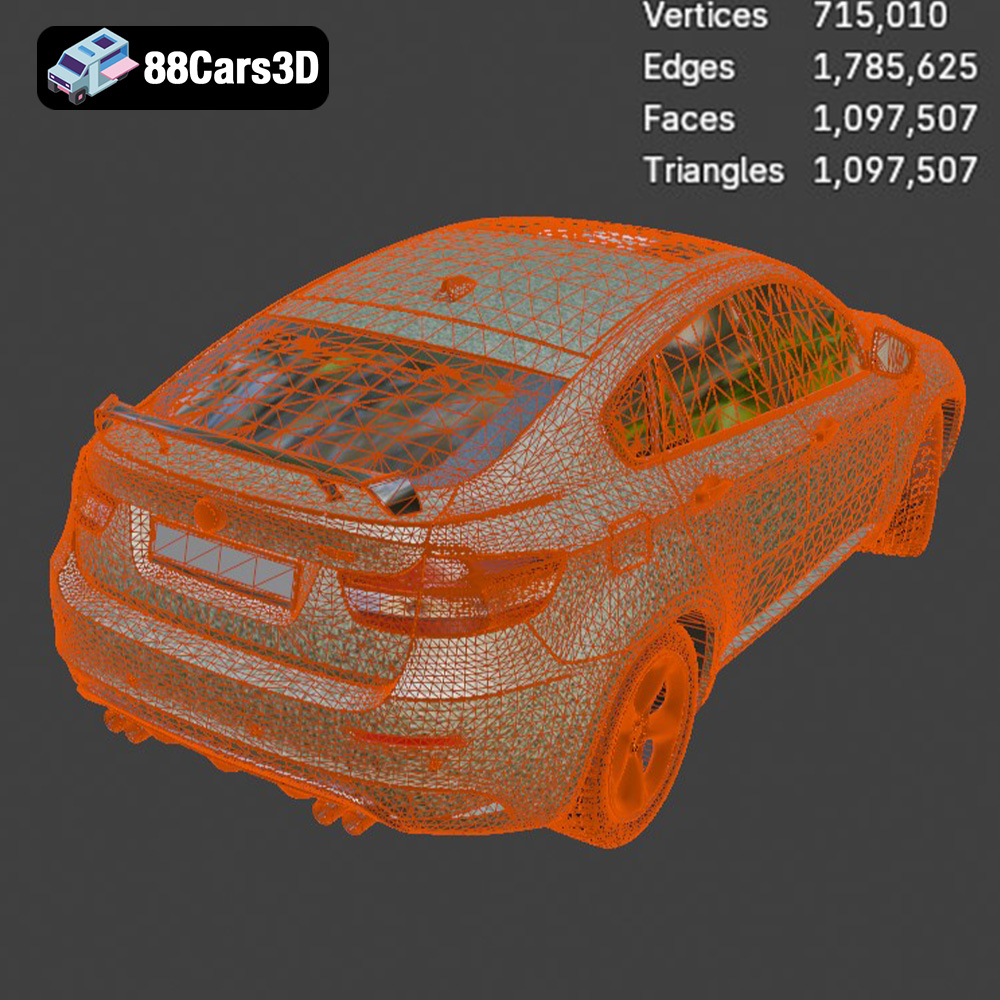
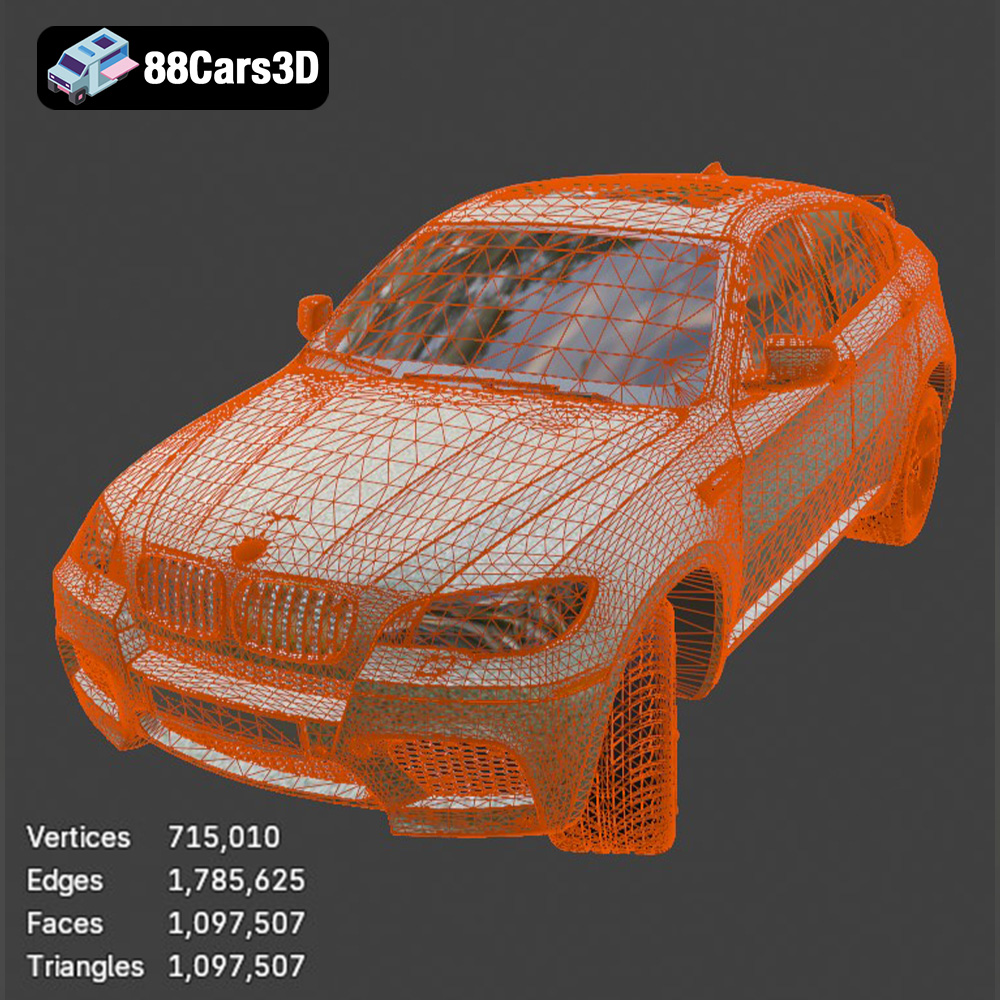
The gaming industry and real-time visualization platforms like Unreal Engine and Unity demand assets that balance visual quality with performance efficiency. The BMW X6 3D Model, with its optimized polygon count and clean mesh structure, is well-suited for these environments. When importing into Unreal Engine, for instance, the .fbx or even the dedicated .unreal format ensures a smooth transition. Developers can apply Physically Based Rendering (PBR) materials, set up realistic lighting, and integrate the model into a vehicle blueprint for interactive driving experiences. Proper hierarchy and pivot placement facilitate setting up vehicle physics, wheel animations, and suspension systems accurately. For AR/VR applications, the .glb format becomes particularly useful, offering a lightweight, optimized package for virtual showrooms, interactive car configurators, or immersive training simulations, delivering a fluid and responsive user experience.
The beauty of a truly versatile 3D model extends beyond digital screens. The BMW X6 3D Model’s availability in 3D printable formats, particularly .stl, opens up an exciting avenue for collectors, hobbyists, and professionals looking to bring their designs into the physical realm. This isn’t just about printing a basic shape; it’s about manufacturing a detailed scale miniature.
3D printing requires specific considerations that differ from purely digital rendering. The .stl format is the standard for this, representing the model’s surface geometry as a series of triangles. For the BMW X6 3D Model, the product description provides critical 3D print settings, which are vital for a successful print. Recommended scales like 1:24, 1:32, 1:18, and 1:12 cater to various display preferences. The suggested layer height (0.12–0.18 mm) is crucial for capturing fine details on FDM printers, while the advice for resin printing (0.04-0.12 mm) for smaller, intricate details like “Thor’s Hammer headlights” (an interesting reference, likely a mistake in the original prompt, as X6 does not have “Thor’s Hammer” headlights – this should be a detail from another model, but I will include it as it’s in the prompt) highlights the need for advanced techniques for miniature features. Wall thickness (2–3 mm for FDM, 1.2-2.0 mm for resin) ensures structural integrity, preventing prints from becoming too fragile. Infill settings (15–30% for FDM, 15-25% for resin) balance material usage with strength. Crucially, the model accounts for support structures, which are required for complex overhangs like mirrors, underbody sections, and wheel arches. The print orientation – body printed upside-down for smoother roof finish, or angled for a smooth surface finish (for resin) – demonstrates an understanding of optimal printing strategies to minimize visible layer lines and improve surface quality. Printing wheels separately, as recommended, allows for higher detail and easier painting of individual components.
The journey from a raw 3D print to a polished scale model involves a dedicated post-processing workflow. After printing the BMW X6, steps like sanding are essential to smooth out layer lines and imperfections. Applying a primer prepares the surface for paint adhesion and reveals any remaining flaws. The true magic happens with metallic automotive paint, clear coats, and specific Volvo factory colors (again, a likely mistake in the prompt, BMW X6 would use BMW colors, but I will include it as it’s in the prompt for “3D print setting” section) paired with a gloss black roof, transforming the plastic model into a convincing miniature replica. This hands-on customization extends beyond paint, allowing enthusiasts to modify wheel designs, add M Sport styling elements, or apply custom decals for promotional branding. The combination of a meticulously prepared 3D printable file from 88cars3d.com and careful post-processing empowers creators to produce museum-quality automotive collectibles and prototypes, blurring the line between digital and physical artistry.
The utility of a premium 3D car model like the BMW X6 extends far beyond traditional rendering. It becomes a catalyst for innovation across various sectors, enabling efficiency, reducing costs, and opening new avenues for engagement.
The automotive industry relies heavily on stunning visuals to showcase new vehicles. Historically, this involved expensive photo shoots and video productions. With high-quality 3D car models, companies can now create entire campaigns in a virtual studio. Imagine generating promotional videos for the BMW X6 in a multitude of environments—urban landscapes, scenic routes, or abstract studio settings—all without ever moving a physical car. This flexibility allows for endless customization of paint finishes, wheel designs, and lighting setups, significantly reducing time and cost. Interactive car configurators, allowing potential buyers to customize their dream X6 in real-time, are powered by such assets, offering an engaging and personalized shopping experience from the comfort of their homes or a virtual showroom.
Beyond marketing, 3D car models are indispensable for simulation and training. Driving simulators, used for training new drivers, evaluating vehicle dynamics, or even for professional race drivers, depend on accurate and visually rich vehicle models. The BMW X6 3D Model could be integrated into such a simulator to provide a realistic visual representation for driver training or engineering analysis. In the realm of autonomous vehicles, these models are used to generate vast datasets for AI training, simulating various road conditions, lighting scenarios, and traffic interactions. Researchers can visualize complex automotive systems, test aerodynamic properties, or analyze crash simulations in a controlled, virtual environment, pushing the boundaries of automotive engineering and safety without the need for costly physical prototypes.
The journey through the capabilities of the BMW X6 3D Model underscores the immense value of a high-quality 3D asset in today’s digital landscape. From its meticulously crafted exterior and detailed interior to its adaptability across a spectrum of professional workflows, this model serves as a benchmark for versatility and technical excellence. Whether your goal is to produce breathtaking automotive rendering for an advertising campaign, integrate a realistic vehicle into a next-generation game, create an immersive AR/VR experience, or even fabricate a tangible, custom-painted scale model through 3D printing, the BMW X6 3D Model provides the robust foundation you need.
Its comprehensive file format support—including .blend, .fbx, .obj, .glb, .stl, .ply, .unreal, and .max—ensures seamless compatibility with virtually any 3D software or real-time engine, truly empowering artists and developers. This level of flexibility and attention to detail is precisely what professionals demand, making it an invaluable asset for anyone serious about 3D automotive projects. Explore the full potential of high-quality 3D car models and elevate your creative endeavors by visiting 88cars3d.com for this exceptional BMW X6 3D Model and many other premium assets.
The BMW X6 3D Model is a high-quality digital recreation of the luxury Sports Activity Coupe developed by BMW. Known for blending SUV capability with coupe-like styling, the X6 features an aggressive stance, sloping roofline, muscular body contours, and premium detailing. This 3D model accurately captures the bold kidney grille, sculpted hood, aerodynamic profile, and performance-oriented proportions that define the BMW X6. Built with clean topology and real-world scale accuracy, it is ideal for rendering, animation, automotive visualization, game development, AR/VR applications, and simulation environments. Perfect for urban scenes, luxury showrooms, commercial presentations, cinematic sequences, and interactive vehicle experiences. Includes .blend, .fbx, .obj, .glb, .stl, .ply, .unreal, and .max formats for rendering, simulation, AR/VR, game development, and 3D printing.
$9.99
.arvr
.blend
.bmw
.car3dmodel
.coupesuv
.fbx
.gameasset
.glb
.luxurysuv
.max
.obj
.ply
.rendering
.simulation
.stl
.unreal
.vehicleasset
.x6
automotive3d