Get 50% OFF All Premium 3D & STL Models!

In the dynamic world of 3D visualization, the demand for high-fidelity automotive assets continues to accelerate. From breathtaking cinematic renders to hyper-realistic game environments and interactive AR/VR experiences, a meticulously crafted 3D car model is the foundation of any successful project. Artists, designers, and developers constantly seek models that strike the perfect balance between visual accuracy, technical optimization, and flexibility across diverse platforms.
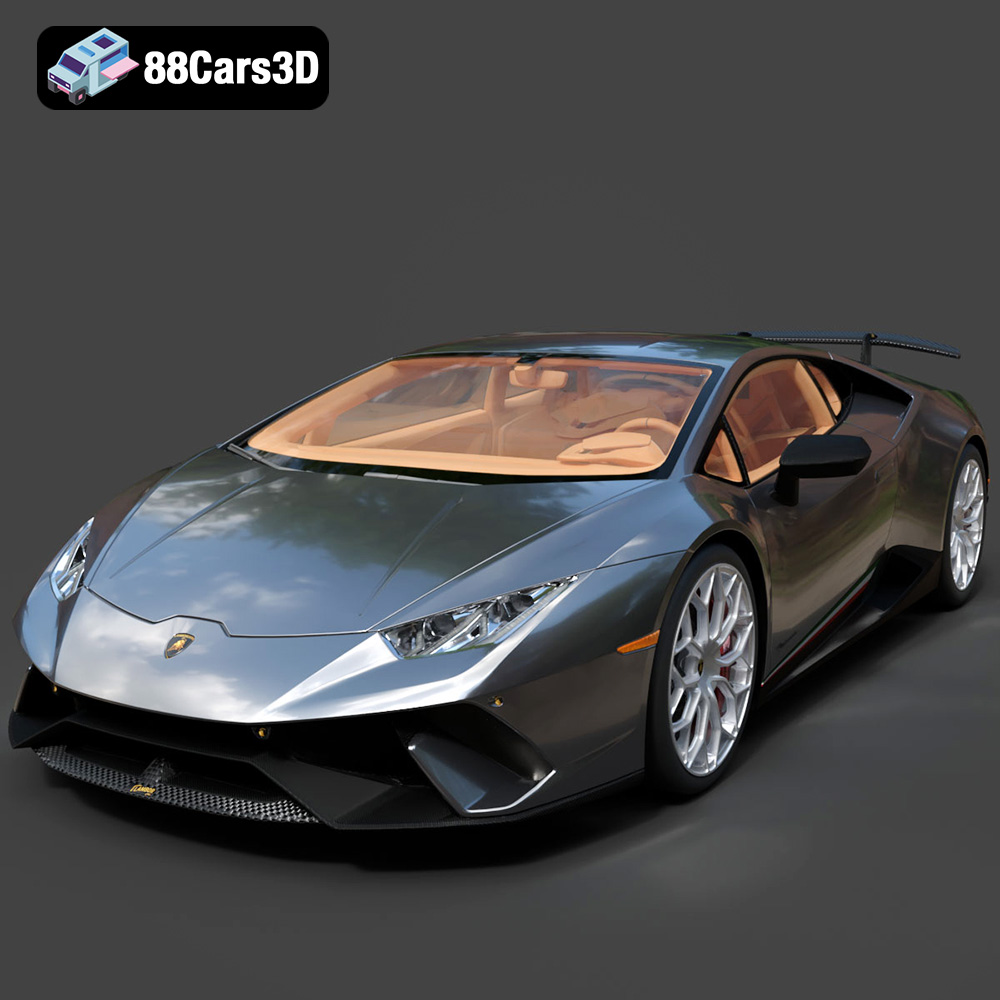
Today, we’re taking an in-depth look at an exceptional example that embodies these qualities: the Lamborghini Huracán Performante LP 640-4 2017 3D Model. This isn’t just any digital car; it’s a testament to precision and performance, digitally recreated to capture the raw, track-focused aggression of its real-world counterpart. Available on 88cars3d.com, this model stands out as a versatile asset, ready to integrate into your most ambitious projects, whether you’re creating a stunning automotive rendering or developing a next-generation racing simulator.
Throughout this article, we’ll dissect the technical prowess of this model, explore its applications across various industries, and provide insights into optimizing your workflow with such a high-caliber asset. Prepare to delve into the intricate details that make the digital Lamborghini Huracán Performante a true masterpiece.
The choice of file format for a 3D model is often as critical as the model itself. Different formats serve different purposes, offering specific advantages for compatibility, functionality, and performance across various software and platforms. The Lamborghini Huracán Performante LP 640-4 2017 3D Model from 88cars3d.com comes equipped with an impressive array of formats, ensuring maximum utility for any professional workflow. Understanding each one is key to leveraging your assets effectively.
The .blend format is the native file type for Blender, the popular open-source 3D creation suite. When you acquire the Huracán Performante model in .blend, you receive a fully editable Blender scene. This means all materials, textures, lighting setups, cameras, and potentially even rigging or animation data are preserved within a single file. For Blender artists, this provides immediate access to the model’s complete structure, allowing for effortless modifications, custom rendering, and integration into existing Blender projects without any conversion issues. It’s ideal for those who want to dive straight into customizing every aspect of the supercar, from its unique Forged Composite textures to intricate lighting scenarios.
.fbx (Filmbox) is arguably the most widely adopted proprietary 3D exchange format, especially prevalent in the game development and visual effects industries. Its strength lies in its ability to store comprehensive scene data, including geometry, materials, textures, animation, and rigging, while maintaining broad compatibility across major 3D software like 3ds Max, Maya, Blender, and crucially, game engines such as Unreal Engine and Unity. For a model like the Huracán Performante, .fbx is the go-to for exporting into a real-time environment. It ensures that the model’s clean topology, pivot points for wheels and steering, and material assignments are accurately transferred, making it ready for physics simulations, collisions, and gameplay implementation as a “hero” drivable vehicle.
The .obj (Wavefront OBJ) format is a universal standard, renowned for its simplicity and wide compatibility. It primarily stores geometry (vertices, normals, texture coordinates, and faces) and can reference external material (.mtl) files for basic shading information. While it doesn’t support animation or advanced scene data like .fbx, its strength lies in its ubiquitous support across virtually all 3D applications. When you need a clean mesh that can be imported into almost any software without complex dependencies, .obj is an excellent choice. It’s perfect for cross-software collaboration or as a base for further detailing and texturing in a new environment.
.glb (GL Transmission Format Binary) is the binary version of glTF, a royalty-free specification for the efficient transmission and loading of 3D scenes and models by applications. Optimized for real-time applications, especially in web-based AR/VR, .glb packages all assets (geometry, materials, textures, animations) into a single, self-contained file. This makes it incredibly efficient for streaming and display in web browsers, mobile AR apps, and VR experiences. The Performante model in .glb is ideal for creating interactive digital showrooms or supercar configurators, allowing users to experience the model seamlessly on various devices.
The .stl (STereoLithography) format is synonymous with 3D printing. It represents a 3D model as a collection of unconnected triangular facets, defining the surface geometry without any color or texture information. For enthusiasts looking to bring the digital Huracán Performante into the physical world, the .stl format is essential. It provides the manifold (watertight) geometry required by 3D printers, making it suitable for creating scale models for display or hobbyist projects, especially recommended for resin printing to capture the intricate aerodynamic details.
The .ply (Polygon File Format or Stanford Triangle Format) is primarily used for storing 3D data from 3D scanners, CAD applications, and scientific analysis. It can store a variety of properties including color, transparency, surface normals, texture coordinates, and even reliability information. While less common for direct rendering or game assets, the .ply format for the Huracán Performante could be valuable for engineers or artists who need to perform specific mesh analysis, reverse engineering, or integrate the model into a precision CAD pipeline, ensuring high accuracy of the geometric data.
The inclusion of an .unreal file (or specific Unreal Engine asset packages, typically .uasset files imported and saved within the engine) signifies that the model is already prepped or optimized for direct import and use within Unreal Engine. This often means textures are correctly linked, materials are set up with Unreal’s Physically Based Rendering (PBR) workflow, and potentially even basic collision meshes or LODs (Levels of Detail) are configured. For game developers working with Unreal, this significantly streamlines the workflow, offering a plug-and-play solution for integrating the Lamborghini Huracán Performante as a high-performance hero vehicle straight into their projects.
Finally, the .max format is the native file type for Autodesk 3ds Max, a leading software for 3D modeling, animation, and rendering. Like .blend for Blender, a .max file provides a complete scene, including all modifiers, material setups (e.g., V-Ray, Corona), lighting, and camera configurations. For 3ds Max users, this format is indispensable, allowing direct access to the model’s editable splines, meshes, and intricate material definitions. It’s the ultimate choice for automotive rendering specialists who demand full control over the scene for high-end visualizations and animations, leveraging 3ds Max’s powerful toolset.
The true value of a premium 3D model lies in its ability to meticulously replicate its real-world counterpart, not just aesthetically but also structurally and technically. The Lamborghini Huracán Performante LP 640-4 2017 3D Model exemplifies this principle, offering an incredibly detailed and optimized representation that serves multiple professional purposes. Its design is a thoughtful balance between visual fidelity and performance efficiency.
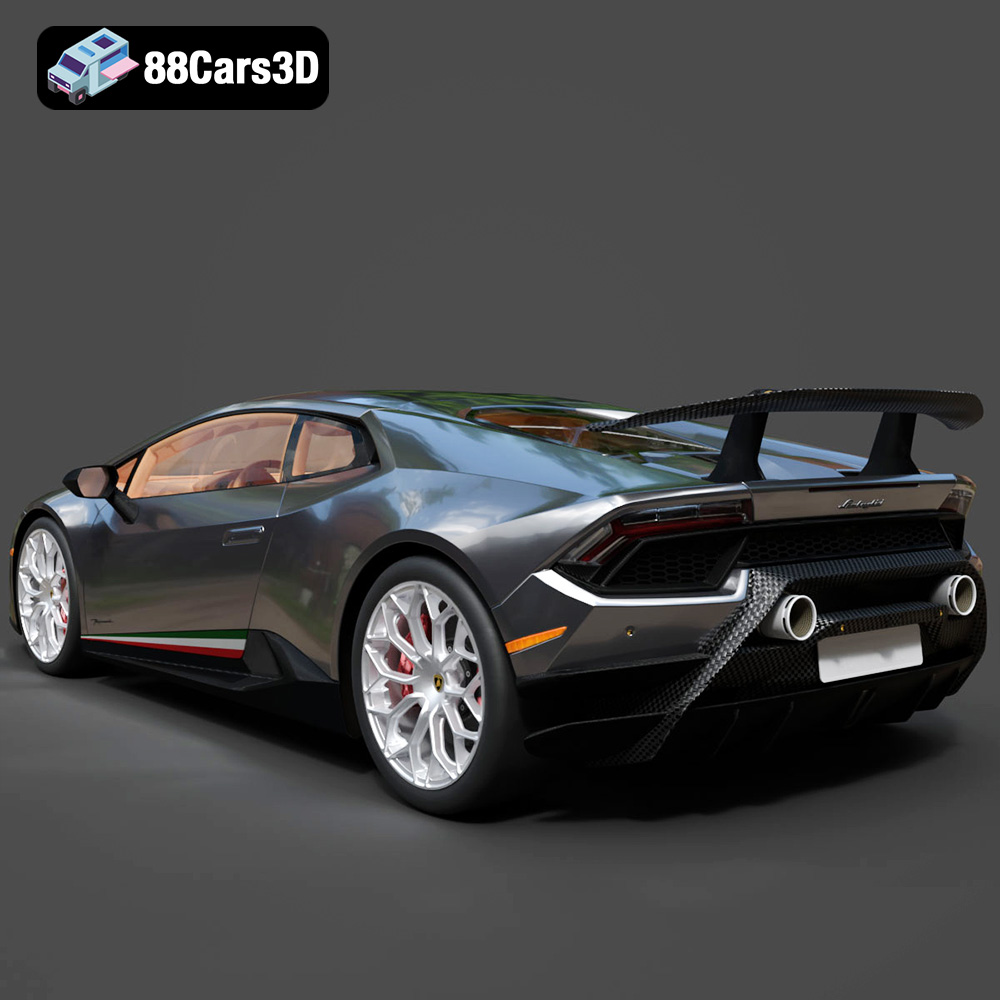
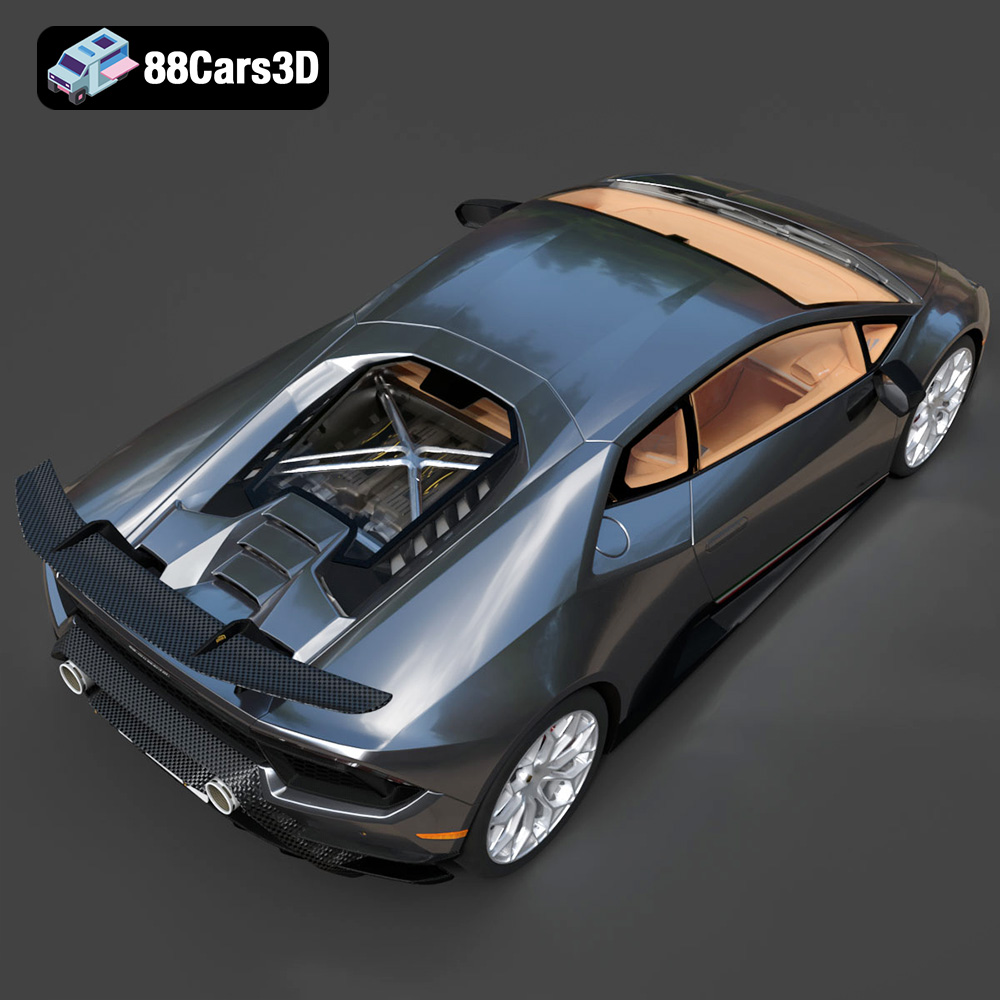
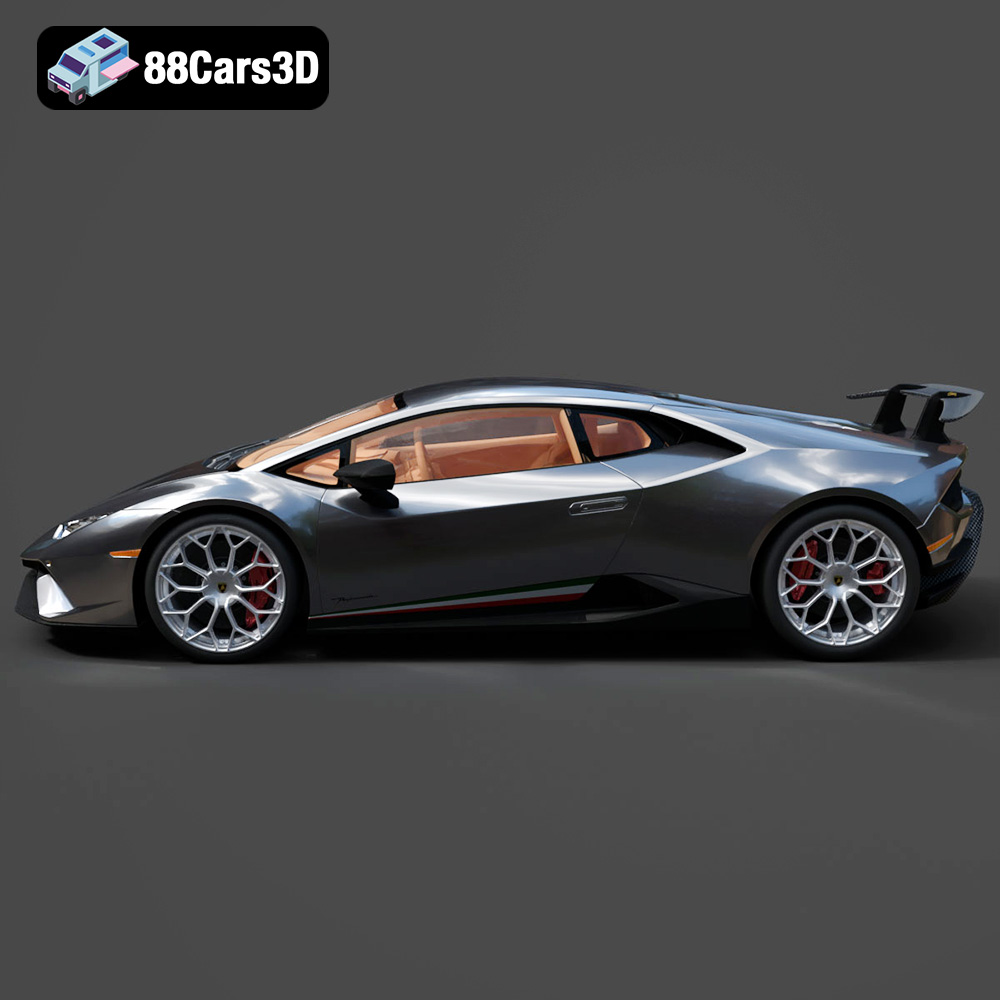
The Huracán Performante is defined by its aggressive, motorsport-derived aerodynamics, and this 3D model captures every nuance. The model faithfully reproduces the vehicle’s accurate 2017 proportions and its distinctive aerodynamic geometry. Key features like the revolutionary ALA (Aerodinamica Lamborghini Attiva) rear wing and active aero front splitter are precisely modeled, reflecting the intricate engineering of the original car. These aren’t just cosmetic additions; their geometry is distinct, allowing for potential animation or demonstration of their active functionality in advanced simulations.
Further enhancing its authenticity are the signature high-mounted dual exhaust system, seamlessly integrated into the rear fascia, and the unmistakable Y-shaped LED daytime running lights and sharp taillight clusters. The model also accounts for Lamborghini’s unique “Forged Composite” carbon fiber textures on elements like the wing and bumpers, providing a robust base for realistic material application. Even the lightweight forged alloy wheels, complete with massive carbon-ceramic brake calipers, are rendered with exquisite detail, ensuring that close-up renders reveal no compromises in quality. Crucially, components like wheels, steering, and doors are separated, preparing the model for realistic animation and rigging within any professional pipeline.
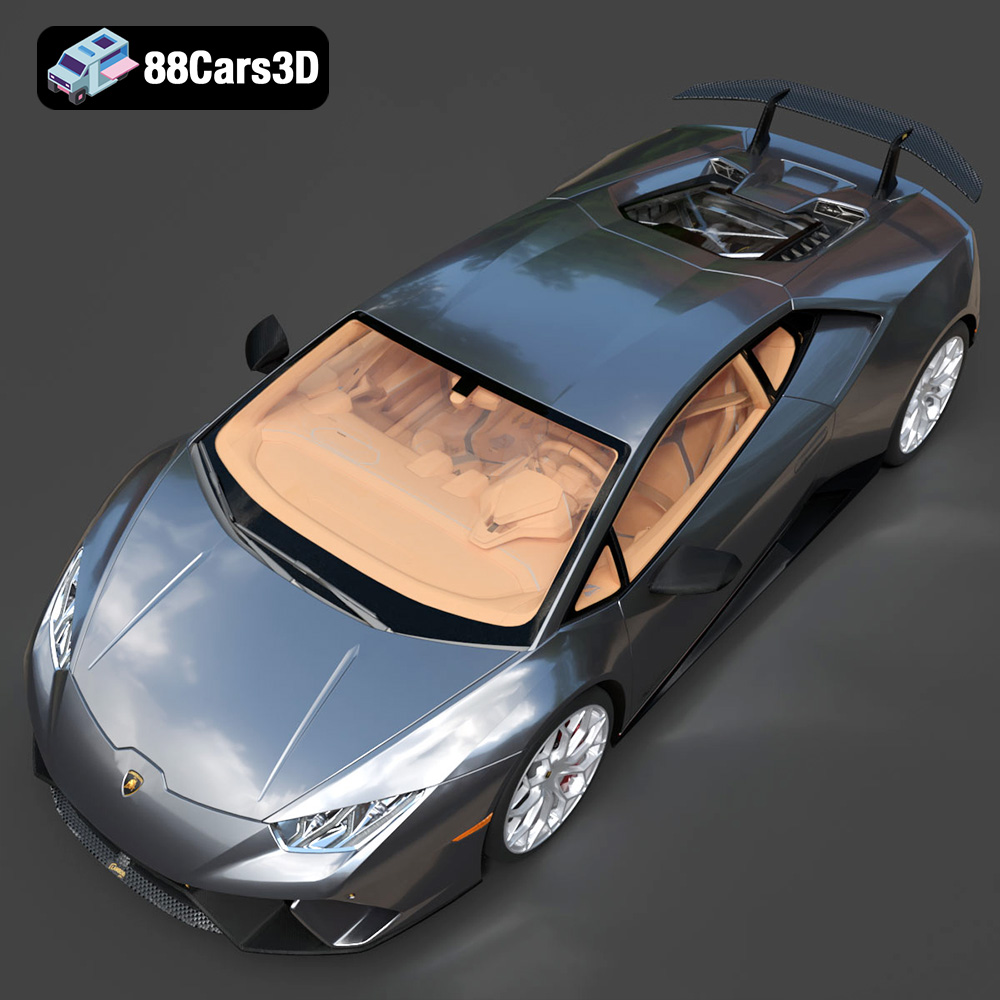
Stepping inside the digital cockpit of the Huracán Performante reveals an equally impressive level of detail. The model replicates the authentic, track-focused, driver-centric layout, featuring premium sport bucket seat geometry designed for Alcantara texture mapping – a critical detail for rendering the luxurious yet performance-oriented interior. The signature flat-bottom steering wheel, complete with the iconic red Anima driving mode selector, is accurately modeled, as is the hexagonal-themed center console with its jet-fighter-style ignition cover.
Every element is thoughtfully optimized. The interior geometry is specifically tailored for smooth first-person POV experiences, making it an ideal choice for immersive gaming or virtual reality applications where users might be “inside” the car. This optimization ensures that even complex interior details perform efficiently without sacrificing visual quality, a crucial factor for real-time environments.
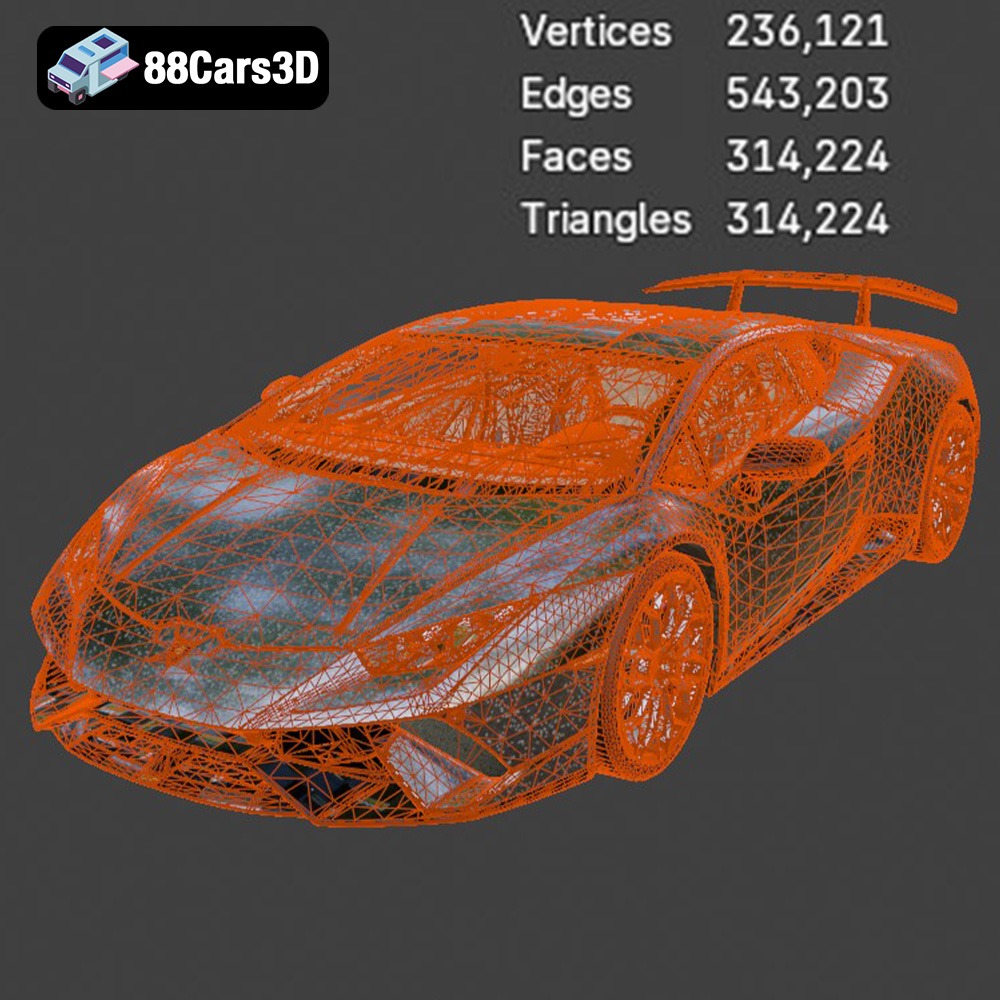
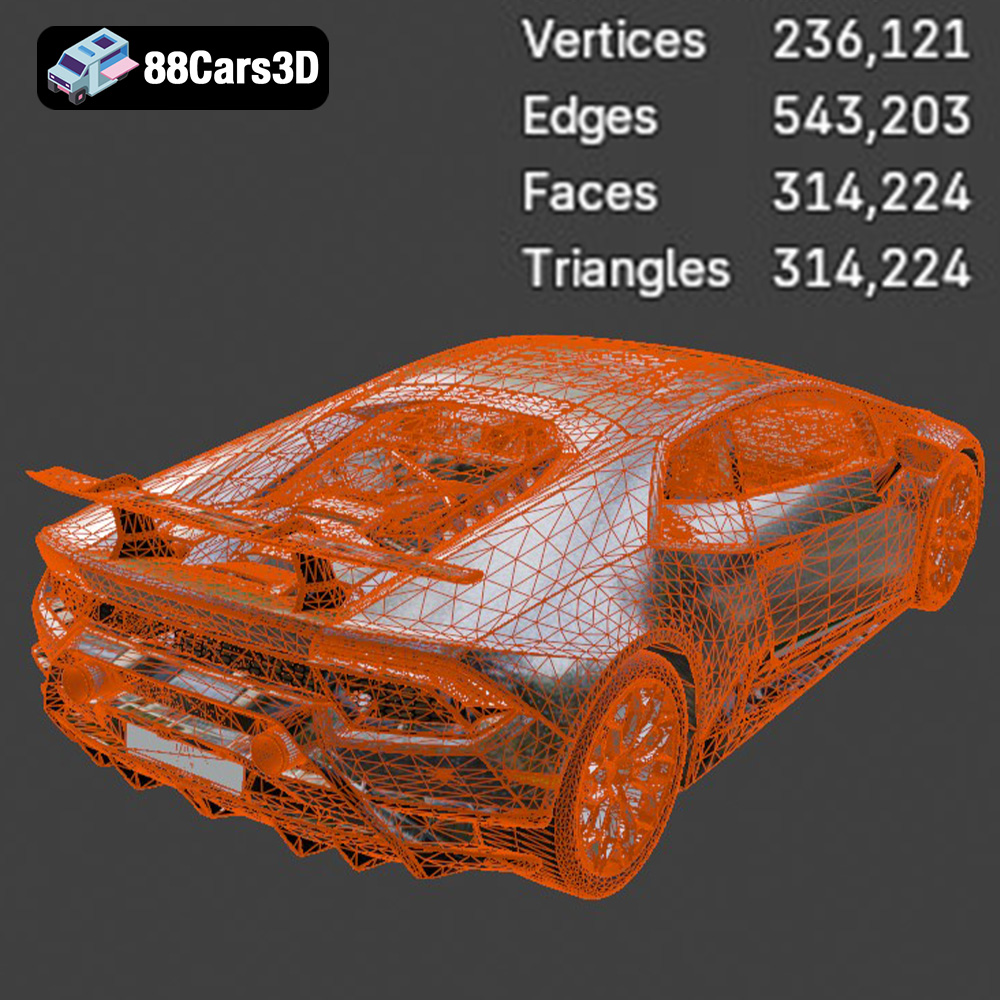
One of the most significant advantages of this Lamborghini Huracán Performante 3D Model is its highly optimized topology. With 236,121 vertices, 543,203 edges, and 314,224 faces/triangles, it strikes a flawless balance. This clean, quad-based structure, meticulously maintained throughout the model, is an absolute dream for both high-end rendering and game development.
At approximately 314k triangles, the model is detailed enough to provide exceptional visual fidelity for stunning close-up automotive renders, where every curve and panel gap must be perfect. Simultaneously, it remains perfectly lightweight, allowing it to function as a drivable “hero” car in modern real-time game engines like Unreal Engine or Unity, running smoothly at 60+ FPS. This optimization eliminates the need for extensive manual mesh reduction, saving countless hours for developers. Furthermore, the model is built with real-world scale accuracy based on Lamborghini factory dimensions, and features proper pivot setups for realistic steering and wheel rotation, ensuring immediate functional integration into interactive simulations.
The versatility of the Lamborghini Huracán Performante LP 640-4 2017 3D Model extends across numerous professional applications. Its optimized geometry and comprehensive file format support ensure seamless integration into diverse creative pipelines, empowering artists and developers to achieve stunning results with maximum efficiency.
For high-end automotive rendering, the .max format provides the ultimate flexibility within Autodesk 3ds Max. Professionals can leverage the software’s robust toolset alongside render engines like V-Ray or Corona Renderer to produce photorealistic images and animations. The clean topology of the Performante model from 88cars3d.com ensures smooth subdivisions and accurate reflections, critical for rendering the car’s sleek surfaces and intricate aerodynamics.
For game developers, the Huracán Performante model is a dream asset. Its mid-polygon count (~314k triangles) positions it perfectly as a “hero” drivable supercar in current-gen racing games, open-world titles, and driving simulators. The inclusion of .fbx and .unreal formats significantly streamlines the import process into Unreal Engine and Unity.
The optimized poly count of the Huracán Performante makes it an excellent candidate for AR/VR applications, where performance is paramount. Whether building interactive digital showrooms, supercar configurators, or mobile AR experiences, this model provides the visual fidelity without the performance overhead.
The utility of a high-quality 3D model like the Lamborghini Huracán Performante extends beyond virtual environments. For hobbyists, collectors, or even designers needing a physical prototype, the ability to 3D print the model is a valuable asset. The inclusion of the .stl format facilitates this transition from digital to tangible.
When converting a complex automotive model like the Huracán Performante for 3D printing, the .stl format is the industry standard. It simplifies the geometry into a mesh of triangles, defining the surface of the object. The clean, manifold geometry of this particular model ensures that the .stl conversion will result in a watertight, printable object without gaps or errors, which are common headaches with lower-quality models.
Achieving a high-quality physical replica requires careful consideration of 3D printing settings, particularly for a model as detailed as the Huracán Performante.
One of the enduring values of a professionally crafted 3D model like the Lamborghini Huracán Performante from 88cars3d.com is the immense creative freedom it offers. While the model is stunning out of the box, its clean structure and logical organization make it a perfect canvas for personalization and adaptation to specific project needs.
The ability to customize a model quickly and effectively is a huge time-saver and a creative boon. With this Performante model, you’re not locked into a single aesthetic. As mentioned, changing exterior paint colors is straightforward, allowing artists to explore the full spectrum of Lamborghini’s Ad Personam factory options, from vibrant metallics to sophisticated matte finishes. This is invaluable for client presentations where various color schemes need to be showcased.
Beyond color, artists can emphasize the unique “Forged Composite” material on various parts like the rear wing, engine cover, and bumpers. By adjusting material properties or even swapping texture maps, the distinctive mottled appearance of this advanced carbon fiber can be highlighted to great effect. Similarly, modifying the wheel setup, perhaps swapping the standard alloys for more aggressive center-lock racing wheels, can dramatically alter the car’s character to fit a particular scene or game requirement. Adapting lighting setups for different moods – be it the dramatic glow of a neon-lit city street or the stark clarity of a brightly lit race track – further extends the model’s versatility.
Starting with a strong, optimized base model like the Lamborghini Huracán Performante LP 640-4 2017 3D Model is paramount for any professional project. It eliminates the need to build a complex vehicle from scratch, a task that can consume hundreds of hours. Instead, artists can focus their creative energy on lighting, texturing, animation, or scene composition, knowing that the underlying geometry is flawless and game-ready.
This efficiency translates directly into cost savings and faster project turnaround times. For studios and freelance artists, acquiring such a robust and versatile asset from reputable sources like 88cars3d.com means investing in quality that pays dividends across multiple projects. Whether it’s for a high-stakes commercial, a demanding game title, or an innovative AR/VR experience, the model’s technical integrity ensures a smooth workflow and a stunning final output.
The Lamborghini Huracán Performante LP 640-4 2017 3D Model is more than just a digital representation of a supercar; it’s a meticulously engineered asset designed to meet the rigorous demands of professional 3D production. From its precise aerodynamic geometry and detailed interior to its optimized, game-ready topology, every aspect has been crafted with performance and visual fidelity in mind.
Whether you’re an automotive renderer seeking photorealistic results in 3ds Max, a game developer building the next blockbuster title in Unreal Engine, an AR/VR innovator creating immersive experiences, or a hobbyist bringing a digital dream to life through 3D printing, this model provides an unparalleled foundation. Its comprehensive file format support, including .blend, .fbx, .obj, .glb, .stl, .ply, .unreal, and .max, ensures seamless integration into virtually any workflow.
Embrace the power of highly optimized 3D car models and elevate your automotive rendering and game assets with this exceptional model. Discover the blend of artistic precision and technical excellence that defines premium 3D content. Experience the difference a truly professional asset makes by exploring the Lamborghini Huracán Performante LP 640-4 2017 3D Model and other high-quality 3D car models available at 88cars3d.com.
The Lamborghini Huracán Performante LP 640-4 (2017) 3D Model is a meticulously optimized digital recreation of the track-focused Italian supercar. Born to dominate the Nürburgring, the Performante takes the dramatic styling of the standard Huracán and injects it with aggressive, motorsport-derived aerodynamics, most notably the revolutionary ALA (Aerodinamica Lamborghini Attiva) system and widespread use of forged carbon fiber. This 3D model accurately captures the razor-sharp aesthetic of the Performante, featuring the signature high-mounted dual exhausts, the massive forged composite rear wing, a deep front splitter, and the unmistakable wedge-shaped profile. Built with an incredibly efficient and clean mid-polygon topology (just over 314k triangles), it strikes a flawless balance. It provides exceptional visual fidelity for stunning close-up automotive renders while remaining perfectly lightweight for use as a hero vehicle in modern real-time game engines.
$9.99
.automotive
.blend
.fbx
.huracan
.lamborghini
.rendering
.sports car
.stl
.supercar
.v10
3D Print Model
3D Printable
and modern Volvo factory colors (like Sage Green
Automotive Collectible
Car Prototype
car-3d-model
Digital Manufacture
FDM Ready
game-ready
Glacier Silver
lp640-4
Manifold Geometry.
mid-poly
Miniature Car
or Crystal White) paired with a gloss black roof.3D Printing
performante
Physical Asset
primer
Resin Print
Scale Model
SLA
Tabletop Display
track-car
VR/AR
wheel arches