Get 50% OFF All Premium 3D & STL Models!

In the dynamic world of real-time rendering, automotive visualization, and game development, Unreal Engine stands as a powerful tool for creating stunning, high-fidelity experiences. However, the sheer complexity of modern projects, especially those involving intricately detailed 3D car models, can quickly spiral into chaos without proper asset management and project organization. Imagine navigating a sprawling digital garage filled with hundreds of vehicle variants, textures, and blueprints – a dream for a developer, but a potential nightmare if not meticulously structured.
At 88cars3d.com, we understand that starting with high-quality, optimized 3D car models is paramount. Our assets feature clean topology, realistic PBR materials, and careful UV mapping, providing a solid foundation. Yet, even the best assets require a robust organizational framework within Unreal Engine to truly shine and ensure project scalability, efficiency, and collaborative success. This comprehensive guide will walk you through establishing an impeccable asset management strategy, from initial project setup to advanced optimization techniques, ensuring your Unreal Engine automotive projects run smoothly and deliver exceptional results. We’ll delve into workflows, technical specifications, and best practices that professionals leverage daily, equipping you with the knowledge to conquer complexity and elevate your real-time rendering capabilities.
The success of any Unreal Engine project, particularly in automotive visualization where asset fidelity and iteration speed are critical, begins with a well-thought-out foundation. A haphazard approach to project setup and file structure can quickly lead to broken references, duplicated assets, and countless hours lost in troubleshooting. By investing time upfront in defining a clear directory structure and consistent naming conventions, you lay the groundwork for a scalable, maintainable, and collaborative development environment.
Proper project organization also directly impacts performance. A clean project is easier to audit for oversized textures, unnecessary meshes, or unused assets that can bloat project size and increase load times. For teams working on large-scale automotive configurators or virtual production scenes, this foundational discipline is not merely a recommendation; it’s a critical requirement for efficient iteration and successful deployment. Understanding how Unreal Engine handles assets and references is key to building a resilient project structure from the ground up, ensuring that every high-quality 3D car model you import integrates seamlessly into your digital ecosystem.
One of the most effective strategies for managing assets is to implement a logical and consistent folder structure. While there isn’t a single “perfect” structure, a commonly adopted approach is to organize assets by type, functionality, or discipline. For automotive projects, a hybrid approach often works best. Consider a root folder named “Vehicles” that contains subfolders for each car model, e.g., “Vehicles/SportsCar_A.” Within each car model’s folder, you might then categorize by asset type: “Meshes,” “Materials,” “Textures,” “Blueprints,” “Animations,” “Audio,” and “VFX.” This approach keeps all related assets for a specific vehicle contained, simplifying navigation and maintenance. For environmental assets or general project components, separate top-level folders like “Environment,” “UI,” or “Shared_Materials” would be appropriate.
Beyond folders, stringent naming conventions are vital. Every asset should have a clear, descriptive name that includes a prefix indicating its type. This makes assets easily identifiable in the Content Browser and prevents conflicts. Common prefixes include: SM_ (Static Mesh), SK_ (Skeletal Mesh), T_ (Texture), M_ (Master Material), MI_ (Material Instance), BP_ (Blueprint), P_ (Particle System/Niagara), S_ (Sound Cue), VC_ (Vehicle Configuration). For instance, a sports car’s body mesh might be named SM_SportsCar_A_Body, its main paint material M_SportsCar_A_Paint, and its normal map texture T_SportsCar_A_Paint_N. Consistency ensures that anyone on the team can quickly locate and understand the purpose of any asset. For more detailed guidelines on naming conventions, refer to the official Unreal Engine documentation.
Beyond asset organization, configuring the Unreal Engine project settings is crucial for optimizing automotive visualization and interactive experiences. Navigate to Edit > Project Settings. Under the Engine > Rendering section, ensure that key features like Lumen Global Illumination and Nanite Virtualized Geometry are enabled if you plan to utilize them for high-fidelity real-time rendering and complex geometry. These settings profoundly impact how your 3D car models and environments are rendered, particularly for photorealistic results.
For input and interaction, especially for automotive configurators, review Engine > Input settings. Here, you can define custom input actions and axes for camera controls, vehicle interactions (e.g., opening doors, changing paint), and UI navigation. This ensures a consistent and intuitive user experience. Furthermore, under Engine > Physics, adjust settings relevant to vehicle dynamics if you’re implementing interactive driving or simulation. Factors like gravity, friction, and collision response influence how realistically your vehicle assets behave. Lastly, check Platforms > Windows (or desired platform) > Packaging settings to optimize for deployment, ensuring that only necessary assets are packaged, which directly relates to efficient asset management and build size.
The journey of a 3D car model from a modeling software to a live Unreal Engine project involves critical import and pre-optimization steps. Even the most meticulously crafted assets, like those found on 88cars3d.com, need careful handling during this phase to ensure they are Unreal Engine-ready, performant, and visually consistent. Incorrect import settings can lead to scale discrepancies, flipped normals, incorrect pivot points, or unnecessary performance overhead, undermining the quality and efficiency of your project.
Efficient import isn’t just about getting the model into the engine; it’s about preparing it for the real-time rendering pipeline. This includes verifying scale, setting up initial collision, considering pivot points for animation, and making crucial decisions about how high-polygon meshes will be handled, particularly with the advent of Nanite. A streamlined import workflow saves countless hours of post-import correction and ensures that your vehicle assets are integrated seamlessly, ready for material assignment, lighting, and interactivity.
When importing 3D car models into Unreal Engine, FBX has long been the industry standard, but Universal Scene Description (USD) is rapidly gaining traction, especially for complex scene descriptions and collaborative workflows. Regardless of the format, several best practices apply. First, ensure your model is exported from your 3D software at a real-world scale (e.g., 1 unit = 1 centimeter in Unreal Engine). In your modeling software, apply all transforms and reset X-forms before export to prevent scaling issues.
During FBX import, always check the following settings in the Unreal Engine import dialog:
For USD, the workflow is slightly different. USD allows for importing entire scene graphs, including materials, animations, and multiple assets. This is incredibly powerful for complex automotive scenes, enabling artists to collaborate on different parts of a vehicle or environment while maintaining a single, consistent scene definition. When importing USD, ensure your layers are correctly structured in your DCC tool. Unreal Engine’s USD importer supports various features, including stage caching and Live Link, which can significantly speed up iteration times in virtual production and design visualization scenarios. Using assets optimized for these formats, such as those available on 88cars3d.com, greatly streamlines this process.
Once your car model is imported, immediate pre-optimization steps are crucial for performance and interactivity. For collision, while you can generate basic collision during FBX import, it’s often more efficient for complex car models to create simplified custom collision meshes (e.g., UCX_ prefix in FBX) in your 3D software. This provides accurate collision without the performance overhead of per-poly collision. Proper collision is essential for physics simulations, character interaction, and even ray tracing accuracy.
Next, consider Level of Detail (LODs). For any part of the car that will not use Nanite (e.g., interior components, wheels, small props, or if targeting mobile/VR), generating LODs is critical. Unreal Engine can automatically generate LODs (Static Mesh Editor > LOD Settings > Number of LODs > Apply Changes), but manual control over triangle counts and screen sizes often yields better results. A common setup might be LOD0 (full detail, 100% triangles), LOD1 (50% triangles), LOD2 (25% triangles), and so on, decreasing resolution as the object moves further from the camera. For example, a car wheel might have 50,000 triangles at LOD0, 25,000 at LOD1, and 10,000 at LOD2.
However, the most significant game-changer for high-fidelity car models is Nanite Virtualized Geometry. For primary car body meshes, interiors, and detailed components, enabling Nanite during import or in the Static Mesh Editor (Details Panel > Nanite > Enable Nanite) allows you to bring in millions of polygons without traditional performance penalties. Nanite automatically handles mesh simplification and streaming, making previously impossible levels of geometric detail performant in real-time. This is particularly beneficial for models from 88cars3d.com, which often feature intricate details that can now be fully realized in-engine without extensive manual polygon reduction.
Photorealistic materials are the cornerstone of compelling automotive visualization in Unreal Engine. A beautiful 3D car model, however high-fidelity, will fall flat without expertly crafted Physical Based Rendering (PBR) materials. Efficiently managing these materials is not just about aesthetics; it’s about performance, consistency, and the ability to rapidly iterate on design choices, crucial for applications like car configurators and design reviews. The Unreal Engine Material Editor is a powerful node-based system that allows for incredible flexibility, but without a structured approach, it can quickly become unwieldy.
Effective material management hinges on creating modular, reusable, and optimized material setups. This prevents duplication of effort, ensures uniformity across different car models or parts, and minimizes draw calls. Understanding the nuances of master materials, material instances, and the PBR texture pipeline is essential for achieving the stunning visual fidelity expected in today’s real-time automotive projects, whether for cinematic renders, interactive experiences, or high-performance game assets.
The most fundamental concept in Unreal Engine material organization is the separation of Master Materials and Material Instances. A Master Material is the core template, containing the entire shader logic – mathematical operations, texture sampling, and parameters – that defines a type of surface (e.g., car paint, glass, rubber, chrome). For instance, a “Master_CarPaint” material might include nodes for Base Color, Metallic, Roughness, Normal, and crucially, a Clear Coat layer (often with separate roughness and normal inputs for realistic reflections). All adjustable properties are exposed as parameters within this Master Material.
Material Instances are then derived from these Master Materials. They inherit all the logic but allow you to override the exposed parameters without recompiling the shader, making them incredibly lightweight and efficient. For a car configurator, you would have one “Master_CarPaint” material, and then create numerous instances like “MI_CarPaint_Red,” “MI_CarPaint_Blue,” “MI_CarPaint_MatteBlack,” each simply adjusting the Base Color, Roughness, and Metallic values. This approach significantly reduces shader complexity, improves performance by reducing draw calls (as multiple instances can be batched), and allows for rapid iteration on different looks without touching the underlying shader network. It also ensures visual consistency across an entire fleet of 3D car models, as any update to the Master Material propagates to all its instances.
The texture pipeline is an integral part of PBR material creation. High-quality PBR textures are essential for realism, and managing them efficiently is key. For automotive assets, texture resolutions typically range from 2K (2048×2048) for smaller details or less critical parts to 4K (4096×4096) for larger body panels, and sometimes even 8K (8192×8192) for extremely close-up shots or hero assets in virtual production, especially for high-end automotive visualization. Ensure your textures are saved in appropriate formats (e.g., PNG for masks, TGA or EXR for HDR) and imported into Unreal Engine with correct compression and sRGB settings (Base Color textures typically use sRGB, while data textures like Normal, Roughness, Metallic, Ambient Occlusion should have sRGB disabled).
A common PBR optimization is channel packing, where multiple grayscale textures are combined into the color channels (Red, Green, Blue, Alpha) of a single texture. For example, a popular setup is an ORM map where Ambient Occlusion (AO) goes into Red, Roughness into Green, and Metallic into Blue. This reduces the number of texture samples and memory footprint. Within Unreal Engine, enable Texture Streaming for larger textures to ensure they are loaded incrementally based on camera proximity, preventing memory overload and improving loading times. Always use texture mipmaps, and ensure your texture group settings in Unreal Engine are optimized for your target platform. By adhering to these PBR best practices, you ensure that your 3D car models not only look stunning but also perform efficiently across various real-time rendering applications.
Unreal Engine provides a robust suite of tools designed to help developers manage the vast number of assets that accumulate in complex projects. While a strong initial organization strategy is vital, these built-in features are indispensable for maintaining project health, optimizing workflows, and ensuring that assets from various sources—including your curated collection from 88cars3d.com—remain properly linked and performant throughout the development lifecycle. Neglecting these tools can lead to bloated projects, broken references, and frustrating debugging sessions.
These features enable you to quickly find, audit, and correct issues related to asset references and usage. For teams, they are essential for collaboration, ensuring that changes made by one artist don’t inadvertently break the work of another. Mastering the Content Browser’s advanced functionalities, understanding redirectors, and knowing how to audit your project are critical skills for any professional Unreal Engine developer aiming for efficiency and project longevity in automotive visualization or game development.
The Content Browser is your primary interface for managing assets. Beyond simple drag-and-drop, it offers powerful features for organization and discovery. Utilize its filtering capabilities extensively: you can filter by asset type (e.g., “Static Mesh,” “Material”), collection, or even custom tags. Collections are particularly useful for grouping related assets temporarily or for specific tasks without altering their physical folder structure. For example, you might create a “Current_Configurator_Assets” collection to quickly access all models and materials relevant to the current vehicle configuration you’re working on.
Regular asset auditing is crucial for project health. Right-clicking on a folder in the Content Browser and selecting Audit Assets can reveal valuable information such as asset size, memory footprint, and reference counts. This helps identify unused assets that can be deleted, oversized textures that need downscaling, or assets with excessive draw calls that could be optimized. The Reference Viewer (right-click on an asset > Reference Viewer) is another powerful tool, allowing you to visualize all incoming and outgoing references for a specific asset. This is invaluable for understanding dependencies before deleting or modifying an asset, preventing unintended breaks in your project.
One common challenge in Unreal Engine is dealing with redirectors. A redirector is a special asset that Unreal Engine creates when you move or rename an asset within the Content Browser. It acts as a placeholder, pointing old references to the asset’s new location. While helpful in preserving references initially, accumulating too many redirectors can clutter your project, slightly increase load times, and complicate source control merging. For example, if you rename SM_CarBody_Old to SM_CarBody_New, a redirector remains at the old path to ensure any blueprints still looking for SM_CarBody_Old find the asset.
It is best practice to regularly “fix up” redirectors. To do this, right-click on a folder (or your entire Content folder) in the Content Browser and select Fix Up Redirectors in Folder. This process goes through all assets in the selected folder, updates any references pointing to redirectors to directly point to the actual assets, and then deletes the redundant redirector files. Performing this regularly, especially before committing changes to source control, ensures a clean and efficient project. Understanding and managing redirectors is fundamental to maintaining stable asset references, a cornerstone of professional Unreal Engine project organization, and essential for ensuring that your carefully managed 3D car models remain correctly linked throughout development.
Achieving stunning visual fidelity in automotive visualization while maintaining real-time performance is a delicate balance. High-polygon car models, complex PBR materials, and detailed environments can quickly push hardware to its limits. This is where advanced optimization strategies come into play, allowing developers to render photorealistic vehicles at smooth frame rates, even in interactive applications like configurators or virtual production environments. Unreal Engine offers a suite of powerful tools to manage complexity and maximize performance, but they require a strategic approach.
The goal is to deliver the highest possible visual quality where it matters most (the hero vehicle) while intelligently reducing detail for objects further away or those less critical to the user experience. This involves a combination of granular control over geometry, efficient scene partitioning, and intelligent rendering features like Nanite and Data Layers. Implementing these strategies is not just about frames per second; it’s about creating a responsive and immersive experience for the end-user, critical for high-stakes automotive design reviews or marketing materials.
Level of Detail (LOD) management is a time-tested optimization technique that remains crucial even with modern features like Nanite. While Nanite effectively handles the primary car body and high-poly static meshes, many other assets—such as interior components, wheels, headlights, environment props, and any skeletal meshes (which Nanite currently doesn’t support)—still benefit immensely from manual or carefully configured automatic LODs. Granular control over LODs allows you to specify different mesh versions for various distances from the camera, ensuring optimal performance.
In the Static Mesh Editor, under LOD Settings, you can define multiple LODs. For each LOD, you specify a Screen Size (the percentage of the screen the object occupies before switching to the next LOD) and a Reduction Setting (typically a percentage of the base mesh’s triangles).
For a high-detail car wheel with 50,000 triangles at LOD0, LOD1 might target 25,000, LOD2 10,000, and LOD3 3,000. It’s often beneficial to manually create simplified LOD meshes in your 3D software for critical assets, as automatic reduction can sometimes introduce undesirable artifacts. Additionally, for materials, consider creating simpler material instances for lower LODs that use fewer texture samples or simpler shaders, further reducing GPU load. This meticulous approach ensures that your real-time rendering maintains visual fidelity without sacrificing crucial performance.
Nanite Virtualized Geometry fundamentally changed how high-polygon assets are handled in Unreal Engine 5. For the main body of your 3D car models (like those from 88cars3d.com), the interior, and other high-detail static elements, Nanite allows you to import and render meshes with millions of triangles without worrying about traditional polygon budgets or LOD management for these specific assets. Nanite automatically streams and processes only the necessary triangles at the pixel level, delivering incredible detail with minimal performance impact. To enable it, simply select your static mesh and check Enable Nanite in the Details panel. This is a game-changer for automotive visualization, allowing unprecedented geometric accuracy.
For managing the overall complexity of large automotive scenes (e.g., a showroom, a cityscape for a driving simulation, or a virtual production LED wall environment), Data Layers in conjunction with World Partition are invaluable. Data Layers allow you to logically partition your world content, enabling you to load and unload specific parts of your scene dynamically. For example, you could have separate Data Layers for:
By using Data Layers, you can ensure that only the relevant assets are present in memory and being rendered at any given time, significantly reducing overhead for large open worlds or detailed architectural scenes surrounding your vehicle. This combination of Nanite for core geometry and Data Layers for scene management creates an incredibly powerful and performant pipeline for even the most demanding real-time automotive projects.
The true power of Unreal Engine for automotive applications extends beyond static renders to rich, interactive experiences and cutting-edge virtual production. Whether you’re building a real-time car configurator, an immersive AR/VR showroom, or producing cinematic content for LED walls, the organization and accessibility of your 3D car models and related assets are paramount. A well-structured project allows for seamless integration of interactivity and efficient content creation, transforming raw assets into dynamic, engaging showcases.
Organized assets are the backbone of rapid prototyping and iteration in interactive environments. They empower Blueprint visual scripting for complex logic without wrestling with broken references or inconsistent naming. Similarly, in virtual production, where speed and flexibility are critical, a clean asset pipeline directly translates to faster scene setup, quicker adjustments on set, and ultimately, higher production value. This section explores how robust asset management directly facilitates these advanced applications, unlocking the full potential of your automotive projects.
Blueprint visual scripting is Unreal Engine’s powerful tool for adding interactivity and logic without writing a single line of code. For automotive configurators, where users can change car colors, swap wheels, open doors, or customize interiors, a well-organized asset base is absolutely critical. Imagine a scenario where you want to change the paint color of a car: instead of manually reassigning materials to dozens of meshes, a single Blueprint script can control a Material Instance Dynamic that updates parameters (like Base Color, Metallic, Roughness) on multiple car body meshes simultaneously.
Your car’s main Blueprint (e.g., BP_SportsCar_A) should manage all interactive elements. Within this Blueprint, you would use variables to store current selections (e.g., “CurrentPaintColor,” “SelectedWheelSet”). Functions could then be created to implement the changes: SetPaintColor(NewColor), SwapWheels(NewWheelMesh). These functions would reference your organized assets: your Material Instances for paint, or your Static Meshes for different wheel designs. This modular approach, built upon consistently named and properly placed assets (such as those from 88cars3d.com), simplifies the creation of complex configurator UIs, reduces debugging time, and makes it easy to add new customization options without re-architecting your entire system. For detailed guides on Blueprint scripting, the Unreal Engine learning portal is an excellent resource.
Sequencer is Unreal Engine’s non-linear cinematic editing tool, essential for creating high-quality trailers, marketing videos, and virtual production content. When your 3D car models, environment props, and effects are neatly organized, assembling cinematic shots becomes a highly efficient process. In Sequencer, you add actors (your organized car Blueprints, lights, cameras) to tracks, then animate their properties over time. Consistent naming conventions make it easy to find and assign the correct vehicle parts for animation or material overrides. For example, if you want to animate a car door opening, having the door as a separate, properly pivoted static mesh within your car’s Blueprint makes it straightforward to add a transform track for just that component.
For virtual production and LED wall workflows, asset organization is even more critical. In-camera VFX requires real-time performance and seamless integration of foreground (physical car) and background (digital environment). An organized project means:
Furthermore, well-optimized and organized assets are crucial for AR/VR automotive applications. Maintaining a very tight performance budget in AR/VR means every mesh, material, and texture needs to be lean and efficient. Properly implemented LODs, efficient PBR materials, and judicious use of Nanite for critical details contribute to smooth frame rates, preventing motion sickness and enhancing immersion. An organized asset pipeline ensures that these optimization efforts are consistently applied and maintained across all interactive experiences.
In professional automotive visualization and game development, projects are rarely a solo endeavor. Teams of artists, designers, and developers collaborate on various aspects, from modeling intricate car details to scripting complex configurator logic. Without robust version control and clear communication protocols, this collaborative environment can quickly devolve into chaos, leading to lost work, merge conflicts, and inconsistent asset versions. Implementing a strong version control system and fostering disciplined team practices are non-negotiable for project success.
Effective asset management extends beyond individual files; it encompasses the entire lifecycle of assets within a team context. This includes ensuring that everyone is working with the latest versions, preventing accidental overwrites, and providing a safety net for reverting to previous states. For large Unreal Engine projects dealing with high-fidelity 3D car models, a well-managed source control pipeline is the ultimate safeguard for progress, efficiency, and team harmony.
For professional Unreal Engine development, source control integration is essential. The two most common systems are Perforce (Perforce Helix Core) and Git (often with Git Large File Storage, Git LFS). Perforce is traditionally favored for large Unreal Engine projects due to its robust handling of binary files, large project sizes, and granular locking mechanisms. Git LFS allows Git to manage large binary files more efficiently by storing pointers in the repository and the actual files on a separate server.
Unreal Engine has built-in support for both. To enable it, go to Editor Preferences > Source Control, and select your provider.
Regardless of the system, it’s crucial that all team members integrate source control into their daily workflow. Checking in small, frequent changes prevents large merge conflicts. Coupled with a consistent folder structure and naming convention, source control becomes much more manageable, ensuring that every 3D car model, PBR material, and Blueprint is tracked and protected.
Beyond version control, active measures are needed to maintain project health and prevent the common issue of asset duplication. Duplicated assets bloat project size, increase memory usage, and make future updates or optimizations more challenging, as changes need to be applied across multiple identical files.
By combining rigorous source control with proactive asset management practices, development teams can operate efficiently, scale their projects effectively, and ensure that the high-quality assets sourced from platforms like 88cars3d.com are integrated and maintained seamlessly throughout the entire development lifecycle, leading to more robust and successful automotive visualization projects.
In the high-stakes world of real-time rendering, automotive visualization, and interactive experiences, exceptional asset management and project organization in Unreal Engine are not merely optional best practices; they are foundational pillars for success. From the initial strategic decisions about folder structures and naming conventions to the advanced deployment of Nanite and Data Layers, every organizational step contributes directly to project efficiency, scalability, and the ultimate quality of your final output. We’ve explored how a disciplined approach to importing 3D car models, mastering PBR materials, and leveraging Unreal Engine’s powerful built-in tools can transform a complex development process into a streamlined, collaborative workflow.
By embracing techniques such as master materials and material instances for rapid iteration, meticulously managing LODs for optimal performance, and integrating robust version control, you empower your team to focus on creativity rather than wrestling with technical debt. The meticulous preparation of assets, like those high-quality 3D car models available on 88cars3d.com, combined with a well-organized Unreal Engine project, unlocks the full potential of features like Blueprint configurators, cinematic Sequencer productions, and high-fidelity virtual reality experiences. Ultimately, a clean and structured project environment reduces debugging time, enhances collaboration, and ensures that your automotive visions are realized with unparalleled precision and performance. Start implementing these strategies today, and elevate your Unreal Engine projects to professional new heights.
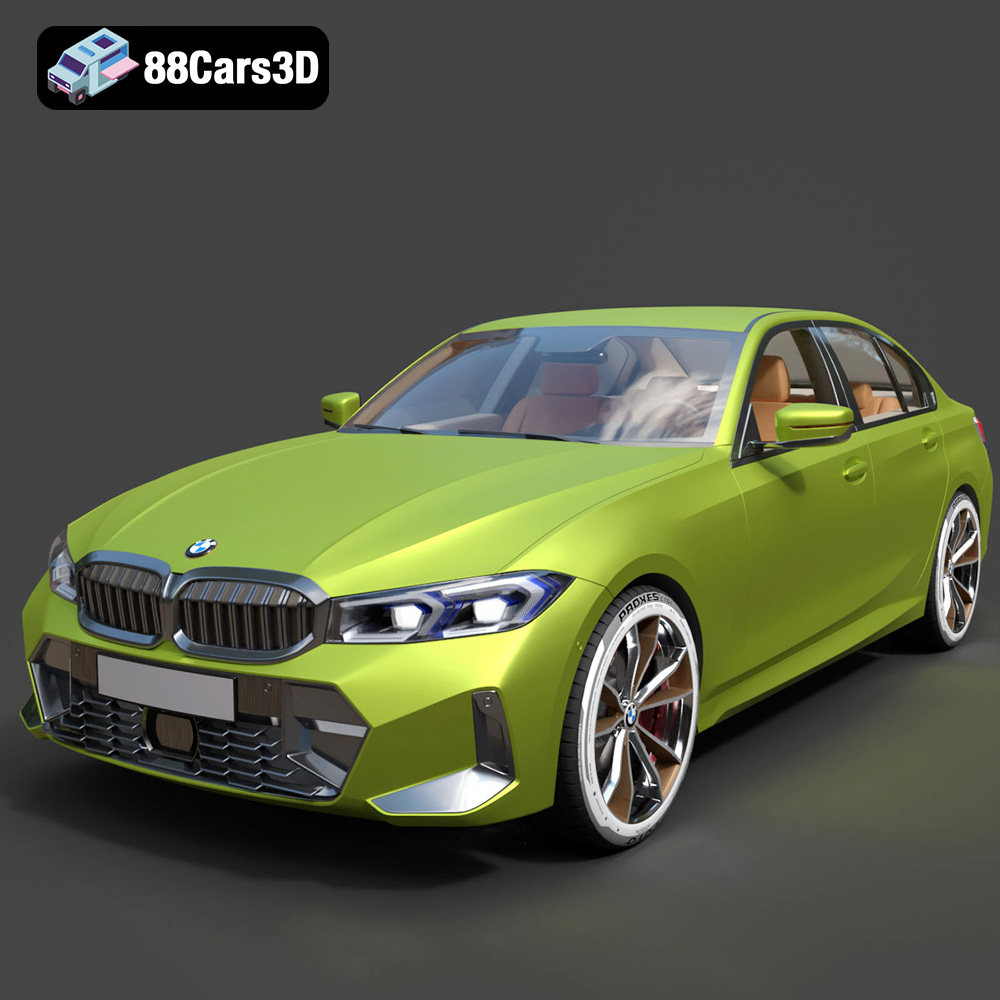
Texture: Yes | Material: Yes Download the ultra-high-detail BMW 3 Series Limousine (2022) 3D Model (4.16M Triangles). Features the modernized G20 LCI exterior, the all-new BMW Curved Display interior, and ultra-dense topology. Perfect for ArchViz, VFX, and cinematic rendering. Includes .blend, .fbx, .obj, .glb, .stl, and .max formats.
Price: $19.99
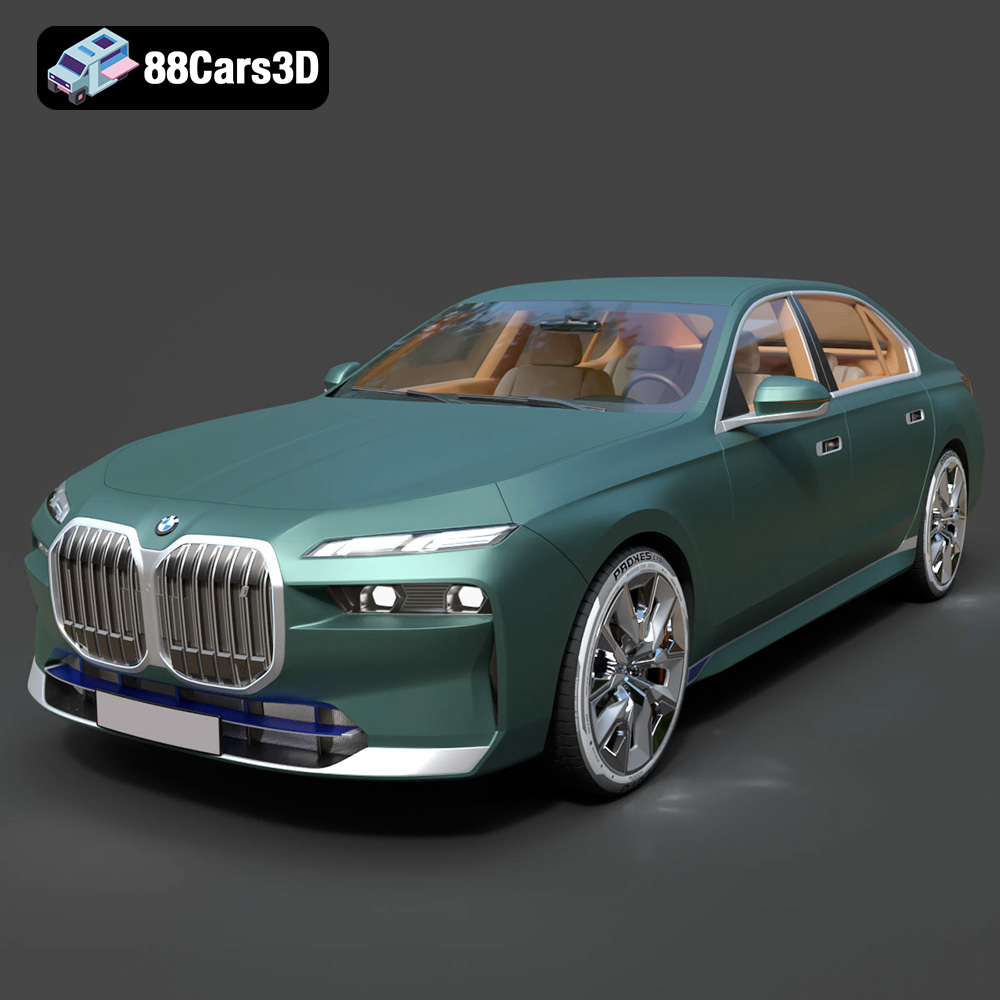
Texture: Yes | Material: Yes Download the ultra-high-detail BMW i7 (2023) 3D Model (4.14M Triangles). Features the illuminated kidney grille, split crystal headlights, fully modeled Theatre Screen interior, and monolithic luxury styling. Perfect for ArchViz, VFX, and cinematic rendering. Includes .blend, .fbx, .obj, .glb, .stl, and .max formats.
Price: $19.99
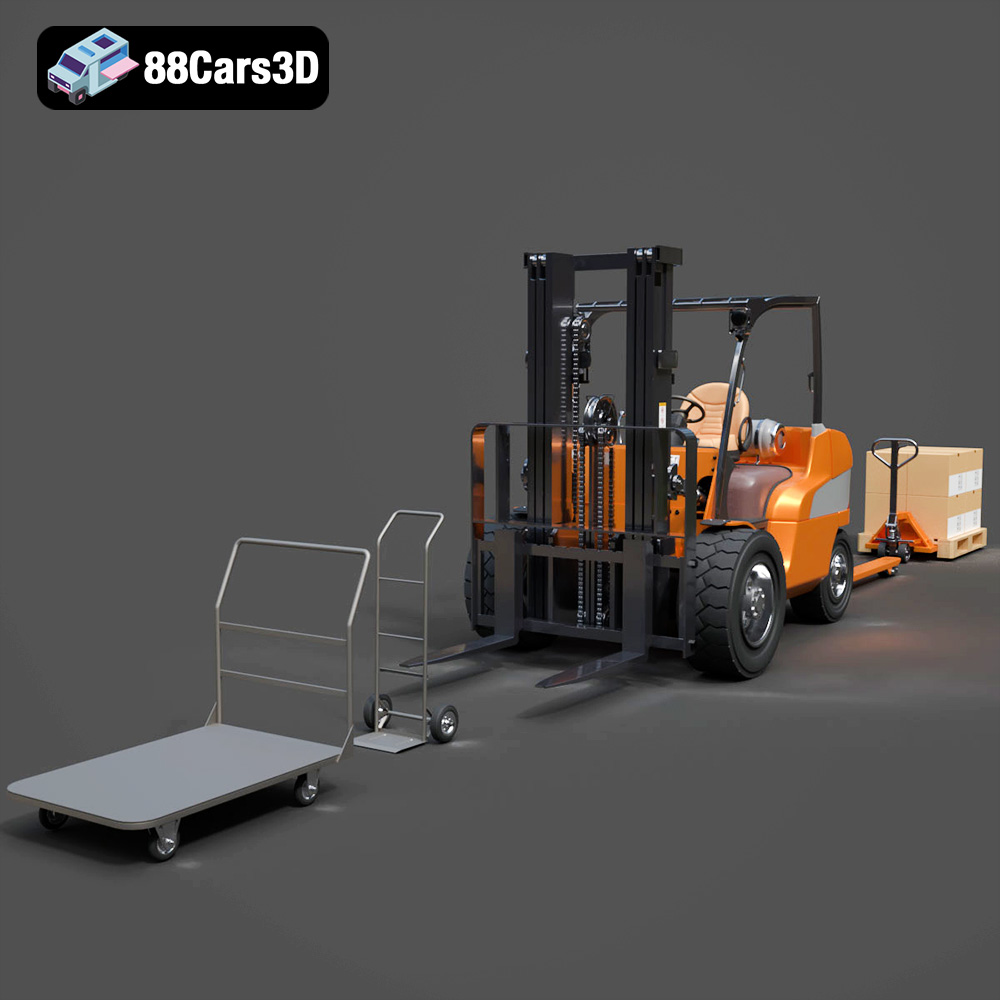
Texture: Yes | Material: Yes Download the highly detailed CAT Manual Loader & Warehouse Carts Kit 3D Model (2.4M Triangles). Features a macro-detailed hydraulic pallet jack, heavy-duty forks, and transport carts. Perfect for industrial ArchViz, factory rendering, and logistics simulations. Includes .blend, .fbx, .obj, .glb, .stl, and .max formats.
Price: $19.99

Texture: Yes | Material: Yes
Download the highly optimized Mazda CX-5 2014 3D Model (294k Triangles). Features the dynamic Kodo design language, signature grille, and a clean interior. Perfectly balanced for ArchViz, background traffic, and game development. Includes .blend, .fbx, .obj, .glb, .stl, and .max formats.
Price: $19.99
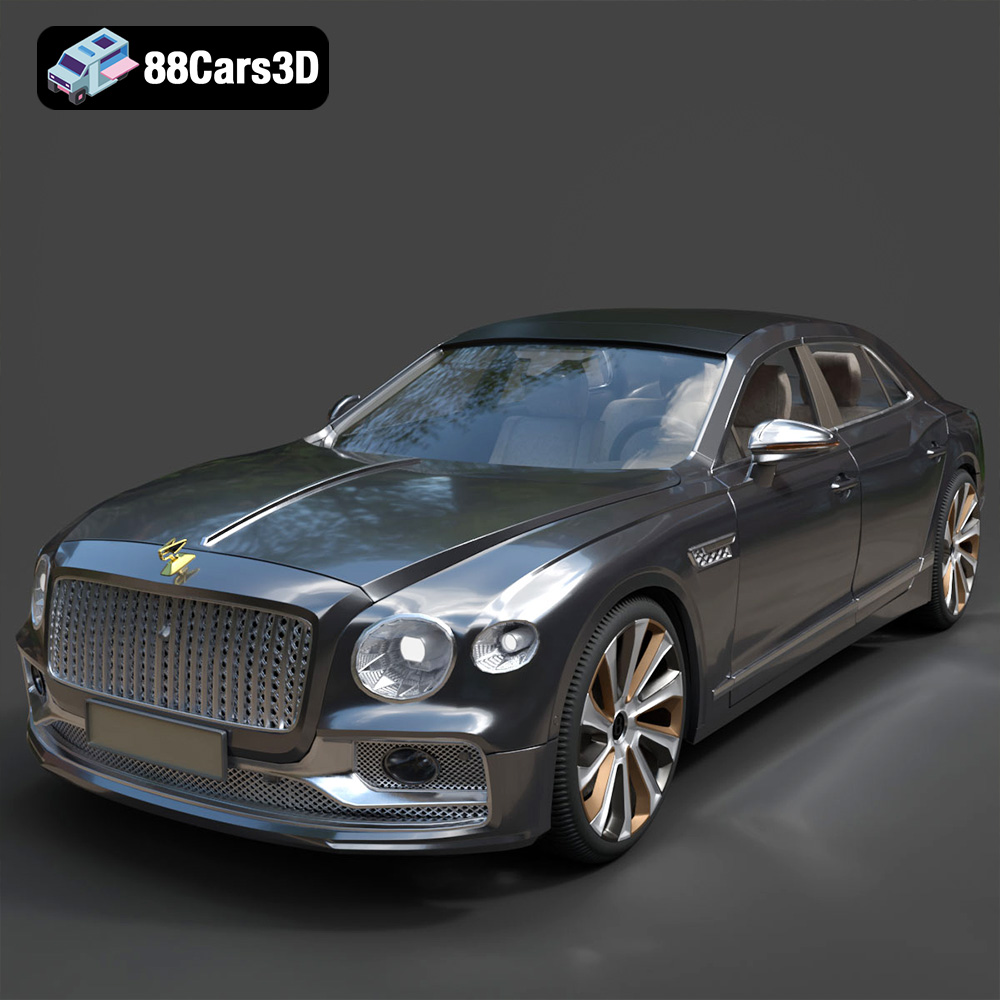
Texture: Yes | Material: Yes Download the ultra-high-detail Bentley Flying Spur Mulliner 2022 3D Model (2.94M Triangles). Features the bespoke Double Diamond grille, a fully modeled diamond-quilted interior, and exquisite luxury styling. Perfect for high-end ArchViz, VFX, and cinematic rendering. Includes .blend, .fbx, .obj, .glb, .stl, and .max formats.
Price: $19.90

Texture: Yes | Material: Yes | 3D Printable: Yes. Download the Ultimate Creators’ Showcase featuring 5 premium 3D models: Lamborghini Huracan, ZAV Concept Motorcycle, Sukhoi SU-26, Presidential Limousine, and Daewoo Damas. Optimized for 4K CGI rendering and 3D printing. Save massive with this exclusive multi-category bundle!
Price: $99.99

Texture: Yes | Material: Yes | 3D Printable: Yes. Download the Italian Thoroughbreds Bundle featuring 5 iconic 3D models: Lamborghini Huracán Performante, Ferrari 458 Italia, Lamborghini Urus, Diablo SV, and Maserati GT. Optimized for 4K rendering and 3D printing (STL included). Save 50% with this ultimate Italian vehicle collection.
Price: $199.99

Download the Elite Future Mobility Bundle featuring 4 highly optimized 3D models: Tesla Model S, Avatr 11, Li L9, and Zoox Robotaxi. Perfect for ArchViz, Smart City renders, and game dev. Optimized for Unreal Engine and Blender. Includes .fbx, .obj, and .max formats.
Price: $99

🚗 5 Iconic German Cars (BMW M4 G82, M5 CS, X3, 1 Series & Mercedes E-Class). ✅ Optimized for ArchViz: Ready for Corona & V-Ray. 💰 Save €71 with this limited-time collection! 🚀 Instant Download after purchase.
Price: $119

Download the Extreme Off-Road & Survival 3D Models Bundle! Includes the Brabus 800 Adventure, Dodge Ram Bigfoot, Spec Truck, and a Caravan. Save over €210 on this premium 4-in-1 off-grid vehicle pack for ArchViz and game development.
Price: $149.99

