Get 50% OFF All Premium 3D & STL Models!

The world of automotive design has always been a blend of art and engineering, nowhere more evident than in the classic luxury vehicles that define an era. From their stately silhouettes to their meticulously crafted interiors, these machines represent pinnacle achievements in style and performance. For 3D artists, game developers, architects, and product visualizers, accurately recreating such iconic vehicles is not just a technical task; it’s an act of digital preservation. The challenge lies in capturing every curve, every chrome accent, and the very essence of their historical significance. This pursuit of digital authenticity is where high-quality 3D car models become indispensable tools. Imagine the impact of integrating a legendary automobile, rendered with breathtaking realism, into your next project. It’s about bringing history to life, whether for cinematic sequences, immersive virtual reality experiences, or even detailed architectural visualizations.
This comprehensive guide delves into the intricate world of professional 3D car model utilization, exploring the technical nuances, diverse applications, and profound impact on various industries. We’ll specifically highlight how a meticulously crafted asset like the Rolls-Royce Phantom V 3D Model, available on 88cars3d.com, serves as a prime example of excellence in digital automotive heritage, ready to elevate your creative endeavors. From high-fidelity rendering to real-time game environments and even physical 3D prints, understanding the power of a well-engineered 3D model is key to unlocking new creative possibilities.
Choosing the correct file format is a critical first step for any 3D project, directly influencing compatibility, performance, and the scope of manipulation available to the artist or developer. High-quality 3D car models, such as the Rolls-Royce Phantom V 3D Model, often come with a suite of formats to ensure maximum versatility across different software and pipelines. Grasping the strengths and weaknesses of each is fundamental for a smooth workflow.
The `.blend` format is native to Blender, the powerful and widely adopted open-source 3D creation suite. When you acquire a model in `.blend` format, you’re getting a fully editable Blender scene, complete with materials, textures, lighting, camera setups, and often, even basic rigging or animation if present. This format is ideal for artists who primarily work within Blender, allowing for deep customization, modification of topology, material tweaks, or even re-rigging for complex animation sequences. It offers the most flexibility for artists who want to delve into the core structure of the model and adapt it precisely to their needs within the Blender ecosystem.
`.fbx` (Filmbox) is arguably the most widely used proprietary 3D file format for inter-application data exchange, developed by Autodesk. Its strength lies in its ability to store not just geometry, but also animation data, cameras, lights, and materials, making it a robust choice for moving assets between different 3D software packages like 3ds Max, Maya, Blender, and crucially, game engines such as Unreal Engine and Unity. For real-time pipelines, `.fbx` is often the go-to because it efficiently packages all necessary information for import, setting up assets for optimized performance and visual fidelity in interactive environments.
The `.obj` (Wavefront OBJ) format is a simple, universal geometry definition file that is supported by virtually every 3D application. It’s excellent for static models, storing vertex positions, UV coordinates, normals, and material group information. While it doesn’t typically store animation or complex scene data like `.fbx`, its ubiquity makes it an essential “lowest common denominator” for cross-software compatibility. If you need a clean, basic mesh to import into almost any program for further texturing and setup, `.obj` is a reliable choice.
`.glb` (GL Transmission Format Binary) is the binary version of glTF, a royalty-free specification for the efficient transmission and loading of 3D scenes and models by applications. Often referred to as the “JPEG of 3D,” `.glb` packages geometry, materials, textures, and animation into a single, self-contained file. This makes it incredibly efficient and ideal for web-based 3D viewers, augmented reality (AR), virtual reality (VR) applications, and anywhere a lightweight, performant 3D asset is needed for rapid deployment and display without external dependencies.
The `.stl` (stereolithography) format is the de facto standard for 3D printing. It describes only the surface geometry of a 3D object using a tessellated mesh of triangles. Crucially, `.stl` files do not contain color, texture, or material information, focusing solely on the shape. For successful 3D printing, the mesh must be “manifold,” meaning it has no holes, gaps, or overlapping faces, defining a completely enclosed volume. The Rolls-Royce Phantom V 3D Model, being convertible to `.stl`, opens doors for physical prototyping and collectible scale models.
`.ply` (Polygon File Format or Stanford Triangle Format) is a versatile format for storing 3D data, particularly useful for scanned data, CAD, and scientific applications where precision and detailed mesh information are paramount. It can store a wider range of properties than `.obj`, including color, transparency, and different types of data elements associated with vertices, faces, and edges. While less common for general rendering, it’s a powerful format for specific analytical or industrial design workflows.
The `.unreal` format denotes assets specifically prepared or optimized for direct use within Unreal Engine. This isn’t a single file extension in the traditional sense but rather indicates that the model has been exported, configured, and often includes Unreal-specific elements like material instances, static mesh settings, and potentially even basic blueprints, making it ready to drop into a project with minimal setup. It saves significant time in the import and setup phase, especially for complex assets like high-fidelity 3D car models designed for demanding real-time environments.
Similar to `.blend` for Blender, `.max` is the native file format for Autodesk 3ds Max, a leading software for 3D modeling, animation, rendering, and visual effects. A `.max` file contains the complete 3ds Max scene, including geometry, lights, cameras, materials, animation, and modifiers. It provides the highest level of editability and access to all proprietary features and renderers within 3ds Max, making it ideal for professionals deeply integrated into the Autodesk ecosystem for high-end rendering and complex animation projects.
Recreating a classic luxury vehicle like the Rolls-Royce Phantom V in 3D is a testament to meticulous observation and technical skill. It’s about translating the tangible elegance of a physical object into a digital representation that holds true to its historical essence. The Rolls-Royce Phantom V 3D Model from 88cars3d.com exemplifies this dedication, offering an asset that is both visually stunning and technically robust.
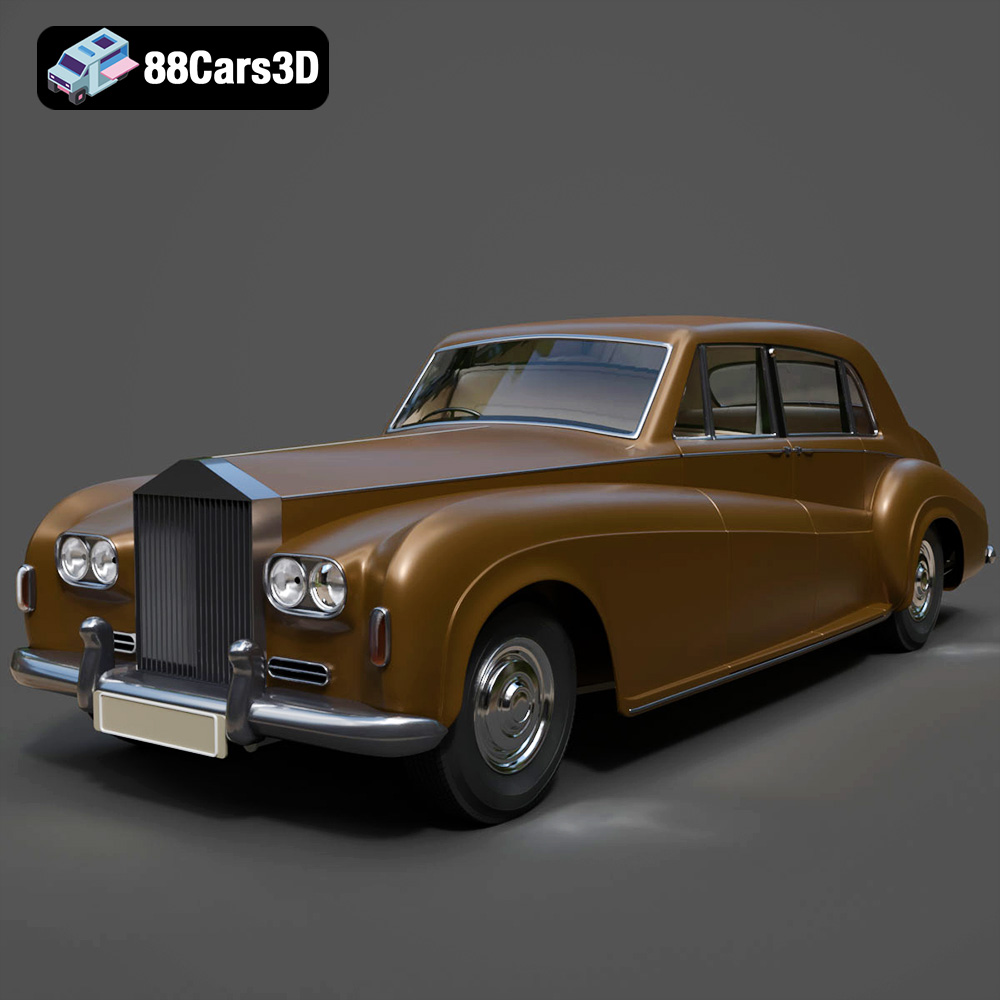
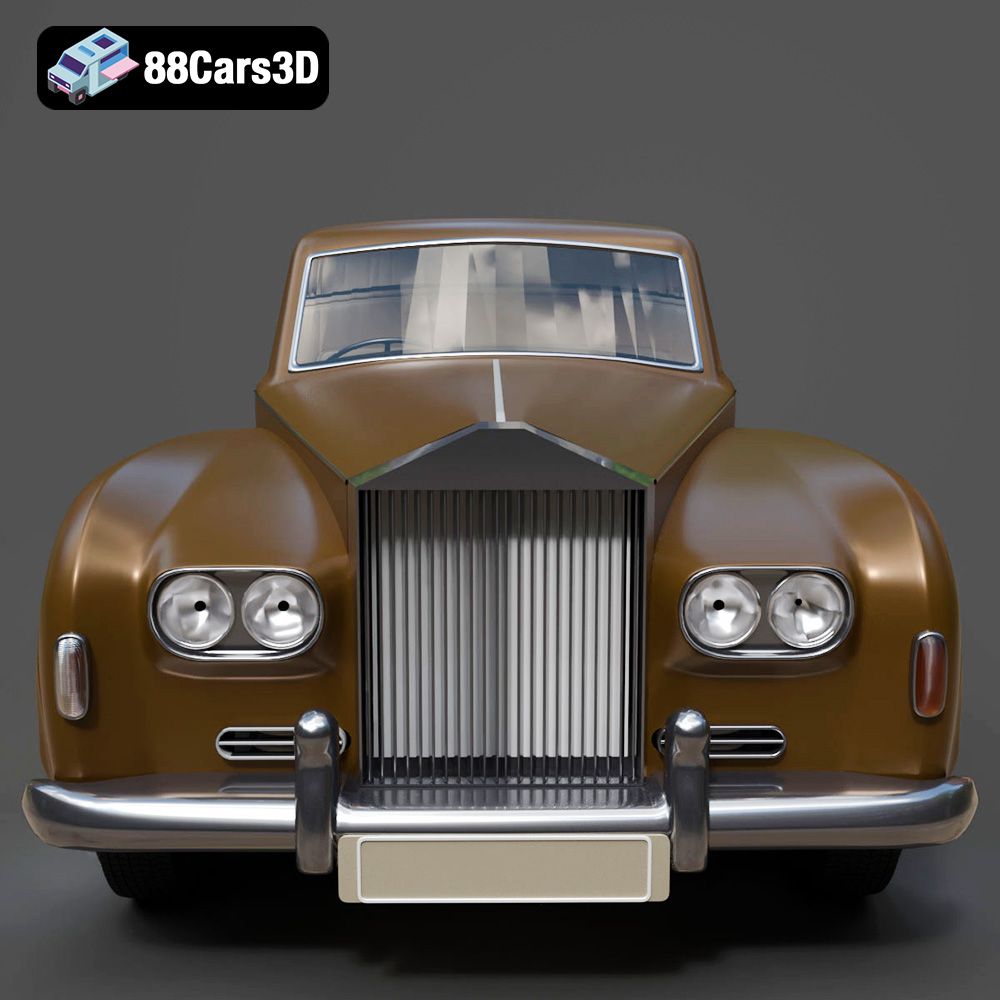
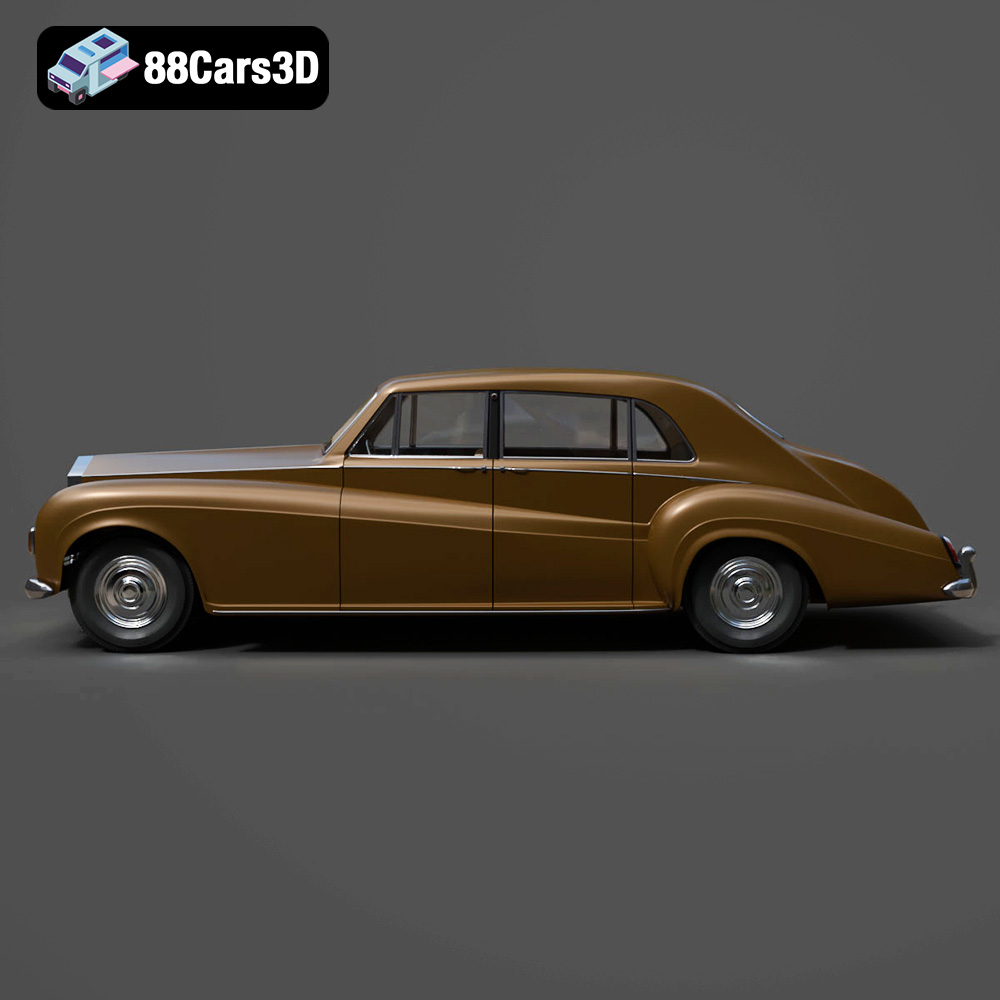
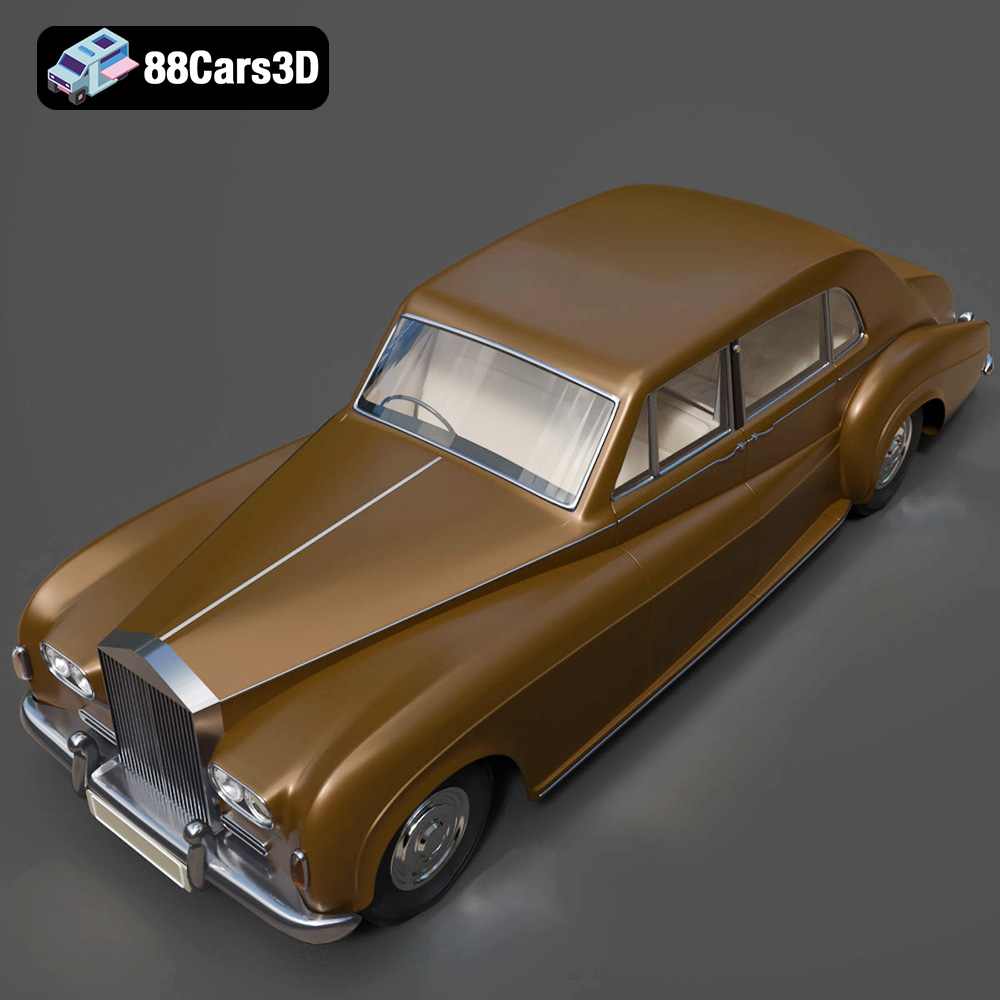
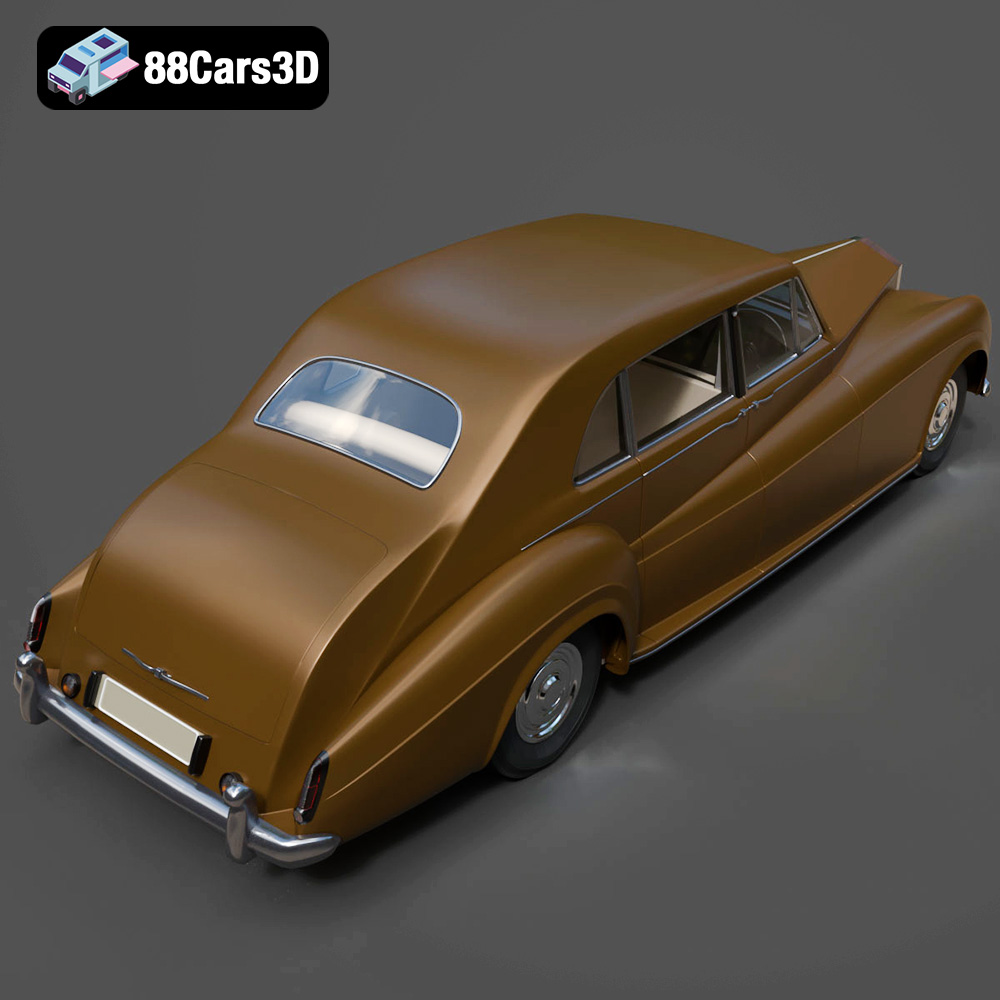
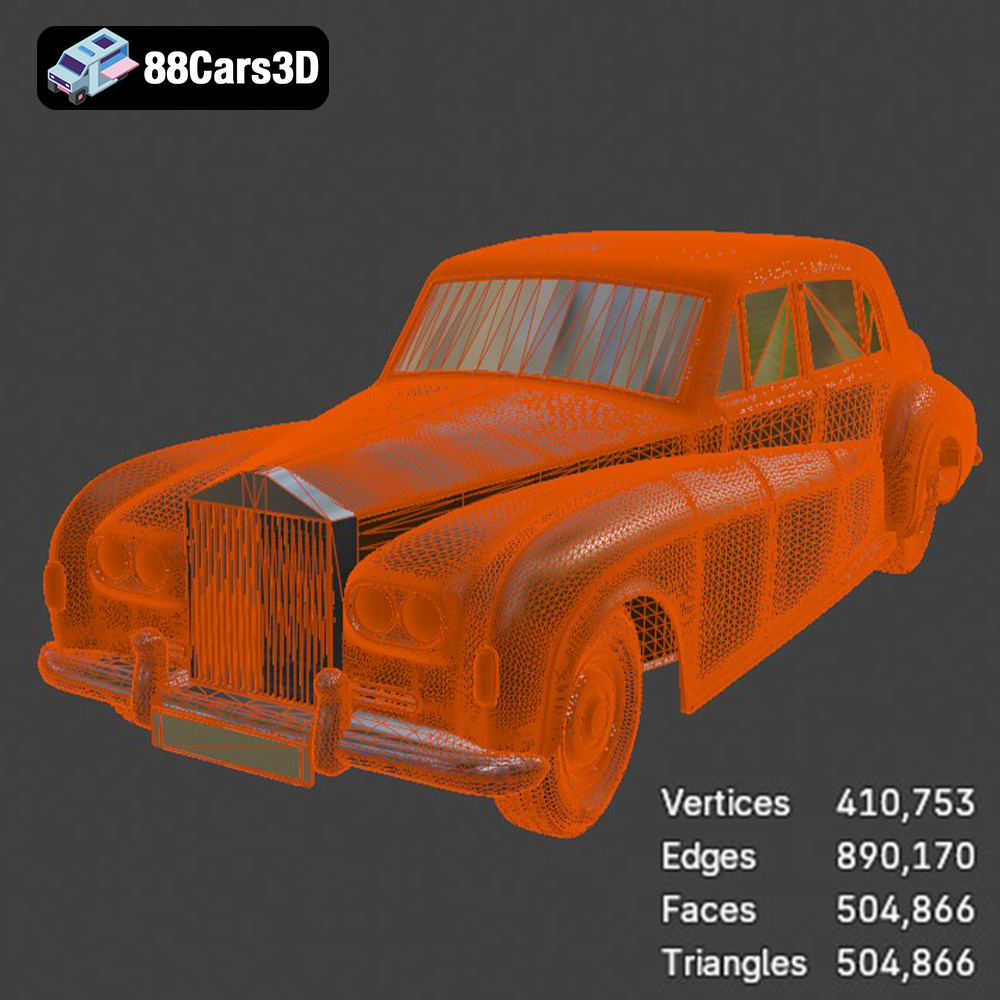
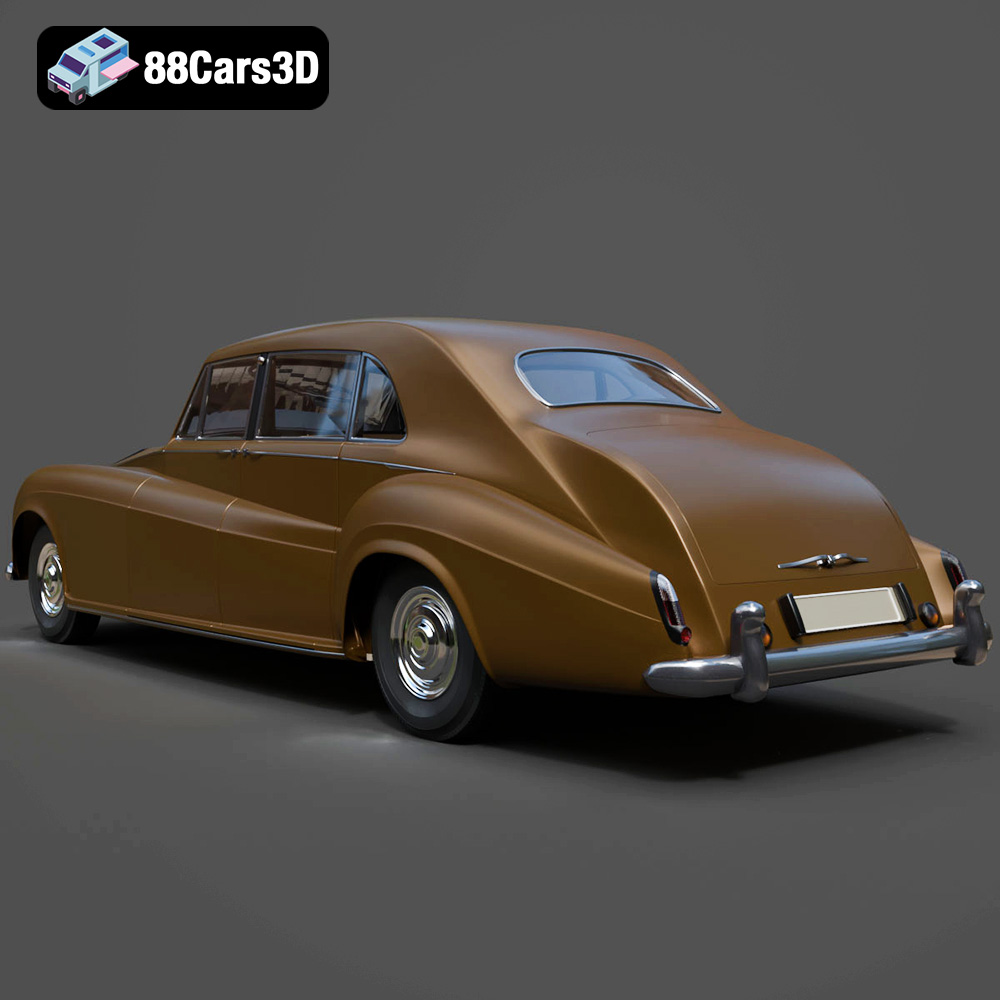
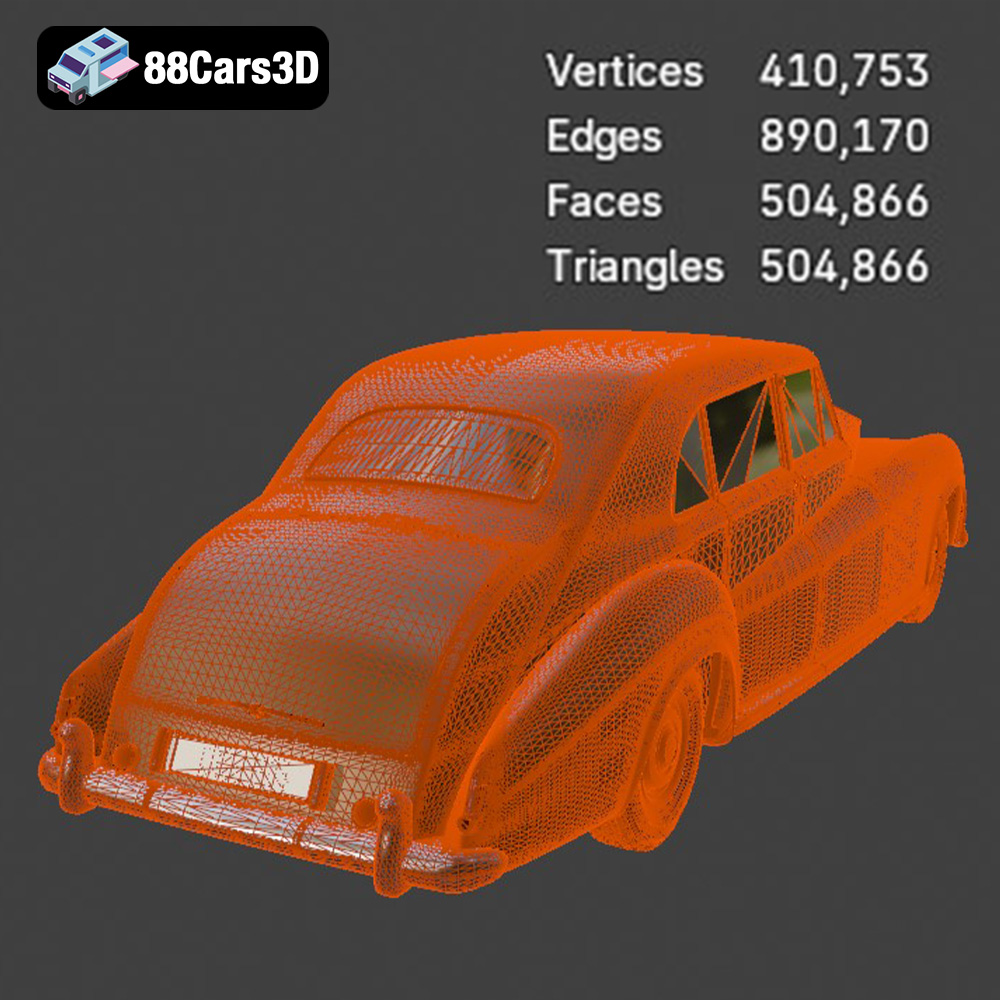
The Rolls-Royce Phantom V, produced between 1959 and 1968, is instantly recognizable by its stately proportions and dignified presence. The 3D model accurately captures its defining exterior features: the signature long-wheelbase limousine body, which commands attention with its extended silhouette, and the iconic upright chrome grille that proudly displays its lineage. Every detail, from the delicate Spirit of Ecstasy hood ornament to the dual round headlamp configuration, has been carefully modeled. The distinctive chrome bumper and trim accents reflect light realistically, adding to the visual richness, while the period-correct classic luxury wheels and rear-hinged (coach-style) doors speak to the vehicle’s unique design. Importantly, components like the wheels and steering are separate objects with proper pivot setups, making the model animation-ready for dynamic scenes in automotive rendering, cinematic productions, or interactive simulations. The clean topology ensures smooth deformations and subdivision without artifacts, a hallmark of a professionally crafted 3D asset.
The interior of a Phantom V was a sanctuary of luxury, and the 3D model respects this with a detailed recreation of its vintage cabin. Artists will find a faithful representation of the classic luxury dashboard layout, complete with the large steering wheel that guided countless dignitaries. The rear passenger limousine seating configuration, a signature of the Phantom V, is meticulously modeled, inviting viewers into its opulent space. Fine wood veneer trim detailing and door panels adorned with chrome and wood accents contribute to the authentic ambiance. Crucially, while offering this level of detail, the geometry is optimized for both high-quality renders, where every reflection matters, and for real-time engines, where performance is paramount. This balance means the model can perform efficiently in a game engine or AR/VR environment without sacrificing the visual fidelity required for cinematic close-ups, making it a versatile game asset for any project.
The utility of a high-quality 3D car model extends across a myriad of professional applications. The Rolls-Royce Phantom V 3D Model, with its detailed design and versatile file formats, is engineered to seamlessly integrate into demanding production pipelines, from pre-visualization to final render.
For automotive rendering and visualization specialists, the Rolls-Royce Phantom V 3D Model provides a robust foundation for creating stunning visuals. In software like 3ds Max or Blender, artists can leverage the model’s clean mesh and accurate proportions to produce photorealistic images and animations. The workflow typically begins with importing the `.max` or `.blend` file, which already contains a well-organized scene structure. The next steps involve:
This process culminates in highly persuasive and visually compelling outputs, perfect for heritage automotive showcases or luxury marketing.
The demand for realistic vehicles in interactive experiences—from open-world games to virtual showrooms—makes models like the Rolls-Royce Phantom V 3D Model invaluable game assets. For integration into real-time engines like Unreal Engine, the `.fbx` and `.unreal` formats are particularly advantageous.
The model’s optimized geometry ensures it can contribute to a rich visual experience without unduly burdening the engine, making it a prime example of a versatile game asset.
The versatility of a well-designed 3D model extends far beyond rendering on a screen. With formats catering to diverse technologies, the Rolls-Royce Phantom V 3D Model offers exciting possibilities in physical manufacturing and highly interactive digital realms.
The inclusion of the `.stl` format signifies that the Rolls-Royce Phantom V 3D Model is ready to transition from digital pixels to a tangible object. 3D printing allows enthusiasts, collectors, and designers to create physical scale models of this legendary limousine.
The ability to convert a detailed digital asset into a physical collectible miniature highlights the multifaceted value of sophisticated 3D car models.
The `.glb` format, optimized for web and mobile performance, makes the Rolls-Royce Phantom V 3D Model an excellent candidate for cutting-edge AR/VR experiences.
The model’s adaptability to these immersive technologies underscores its forward-thinking design, ensuring it remains relevant for evolving digital platforms and interactive content creation.
In the fast-paced world of 3D production, time is often the most precious commodity. While the allure of creating every asset from scratch is strong for purists, the practical realities of project deadlines and budget constraints often make sourcing high-quality, pre-made 3D car models a strategic necessity. This is where marketplaces like 88cars3d.com become invaluable resources.
Modeling a complex vehicle like the Rolls-Royce Phantom V from the ground up can take hundreds of hours for even an experienced artist. This includes meticulous blueprint research, precise polygon modeling, UV unwrapping, texturing, and material setup. By acquiring a professionally crafted 3D model, studios and individual artists can significantly cut down on production timelines. The Rolls-Royce Phantom V 3D Model, for instance, offers:
This “ready-to-use” nature translates directly into saved labor costs and accelerated project delivery, allowing teams to focus on lighting, animation, and scene composition rather than foundational asset creation.
Accessible, high-quality 3D assets democratize professional-grade visual production. Smaller studios, independent game developers, or individual artists who might not have the resources to model such complex assets internally can now leverage premium content to elevate the quality of their projects dramatically.
Ultimately, a well-curated marketplace like 88cars3d.com provides not just files, but the potential for unparalleled visual quality and creative freedom, demonstrating how premium 3D models empower the next generation of digital content.
The Rolls-Royce Phantom V stands as a testament to an era of unparalleled automotive luxury and design. Capturing its essence in the digital realm requires not only artistic skill but also a deep understanding of technical precision. The Rolls-Royce Phantom V 3D Model is a stellar example of how a well-crafted digital asset can bridge the gap between historical significance and modern digital applications. Its meticulous detailing, real-world scale accuracy, and robust construction make it an indispensable tool for professionals across diverse industries.
From producing stunning, high-fidelity automotive rendering in 3ds Max or Blender for marketing and cinematic productions, to optimizing it as a game asset for immersive real-time experiences in Unreal Engine, this model offers unmatched versatility. Furthermore, its adaptability for 3D printing into collectible scale models and its readiness for cutting-edge AR/VR applications demonstrate its comprehensive utility. By understanding the nuances of its various file formats, artists and developers can seamlessly integrate this iconic vehicle into their preferred workflows, saving invaluable time and elevating the quality of their projects.
Whether you’re crafting a luxury brand showcase, developing an open-world historical game, or creating an interactive museum exhibit, this Rolls-Royce Phantom V 3D Model from 88cars3d.com provides a foundational asset that empowers creativity and delivers exceptional visual impact. It embodies the precision and quality expected from top-tier 3D car models, ensuring your digital visions are brought to life with authenticity and flair.
The Rolls-Royce Phantom V 3D Model is a high-detail digital recreation of the ultra-luxury limousine produced between 1959 and 1968. Renowned for its stately proportions, hand-crafted refinement, and association with royalty and world leaders, the Phantom V represents one of the most prestigious classic luxury vehicles ever built. This 3D model accurately captures the long-wheelbase limousine body, upright chrome grille, Spirit of Ecstasy hood ornament, round headlamps, chrome bumpers, rear-hinged coach doors, and elegant body lines. Designed with clean topology and real-world scale accuracy, it is ideal for rendering, animation, automotive visualization, game development, and AR/VR experiences. Perfect for heritage automotive showcases, ceremonial scenes, luxury-themed projects, cinematic productions, and classic car simulations.
$9.99
.arvr
.automotive
.blend
.britishluxury
.car3dmodel
.classiclimousine
.fbx
.gameasset
.glb
.luxurycar
.max
.obj
.phantomv
.ply
.rendering
.rollsroyce
.simulation
.stl
.unreal
.vintagecar