Get 50% OFF All Premium 3D & STL Models!

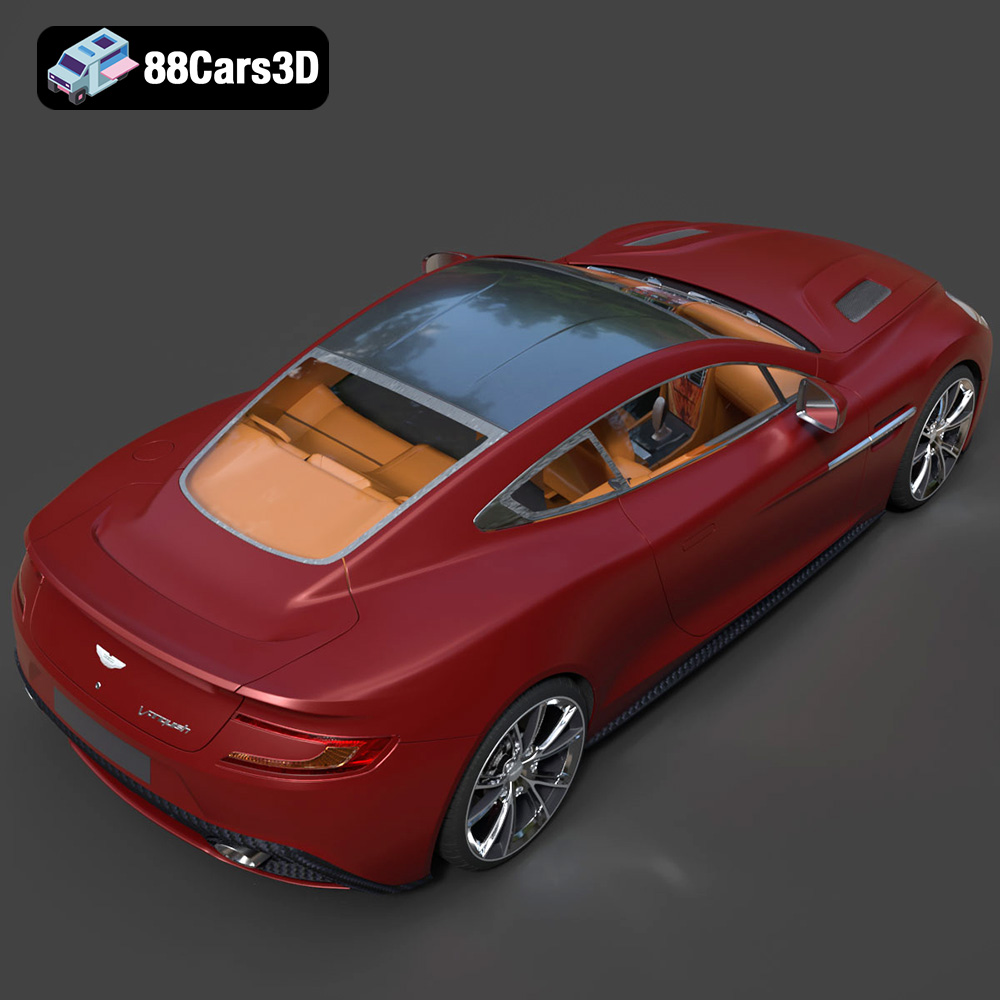
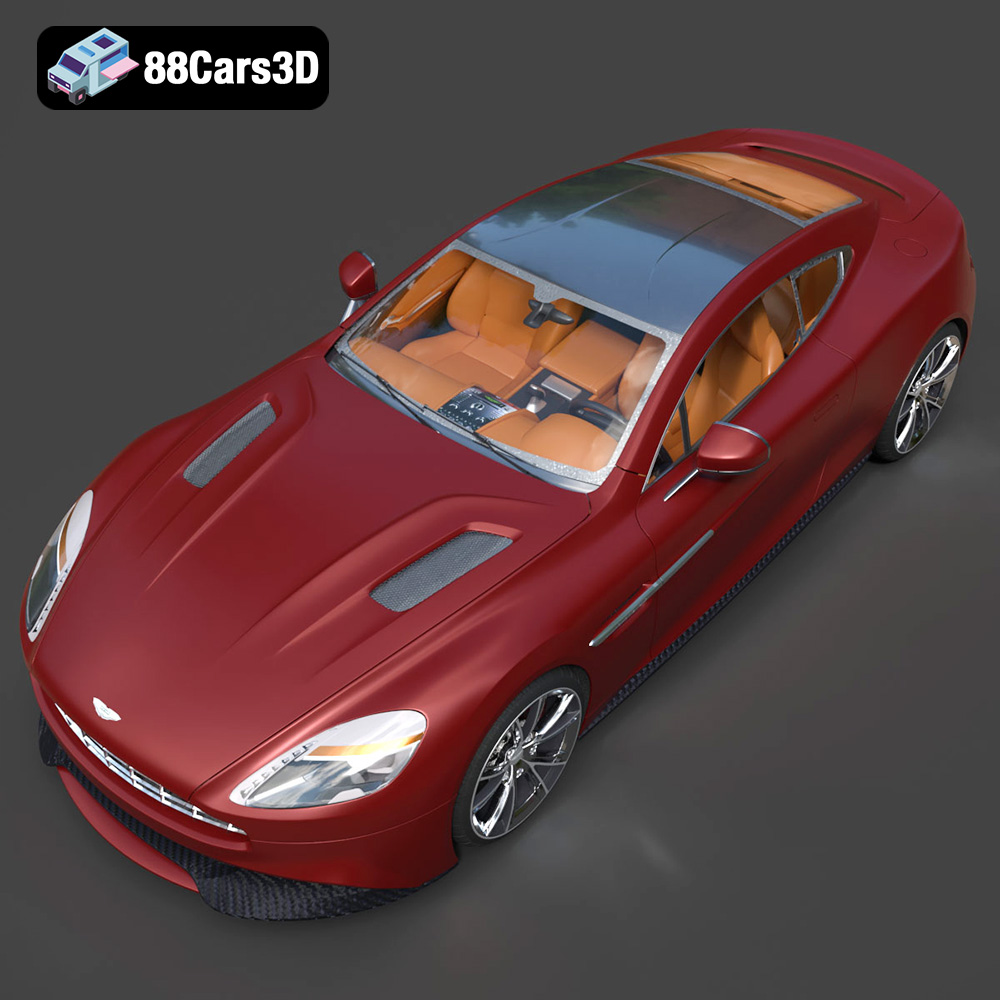
In the dynamic world of 3D visualization, the ability to accurately and beautifully recreate complex real-world objects is paramount. For automotive enthusiasts and industry professionals alike, nothing captures attention quite like a meticulously crafted car model. Whether destined for a hyper-realistic commercial render, a thrilling game environment, or a tangible 3D printed collectible, the foundation lies in the quality of the digital asset. Today, we delve into the intricate processes and profound impact of high-fidelity 3D car models, using the exquisite Aston Martin 2013 AM 310 Vanquish 3D Model as our prime example. This particular model, available on 88cars3d.com, encapsulates the essence of British luxury and performance, offering a versatile foundation for a myriad of professional applications.
The 2013 Aston Martin Vanquish, with its carbon-fiber body structure, aggressive stance, and refined V12 prowess, is an icon of grand touring. Translating such a masterpiece into a digital format requires not just artistic skill, but a deep understanding of technical precision. From its sculpted aerodynamic bodywork and signature front grille to its sharp LED lighting and premium interior, every detail must be faithfully reproduced. This blog post will explore how such a model becomes an indispensable tool for automotive rendering, game asset development, AR/VR experiences, and even physical manufacturing through 3D printing, highlighting the technical workflows and creative possibilities it unlocks.
Recreating a vehicle like the Aston Martin Vanquish in 3D is a highly specialized craft, demanding an eye for detail and a comprehensive understanding of both art and engineering. It’s more than just modeling shapes; it’s about capturing the soul of the vehicle, ensuring that its digital counterpart conveys the same power, elegance, and presence as the real thing.
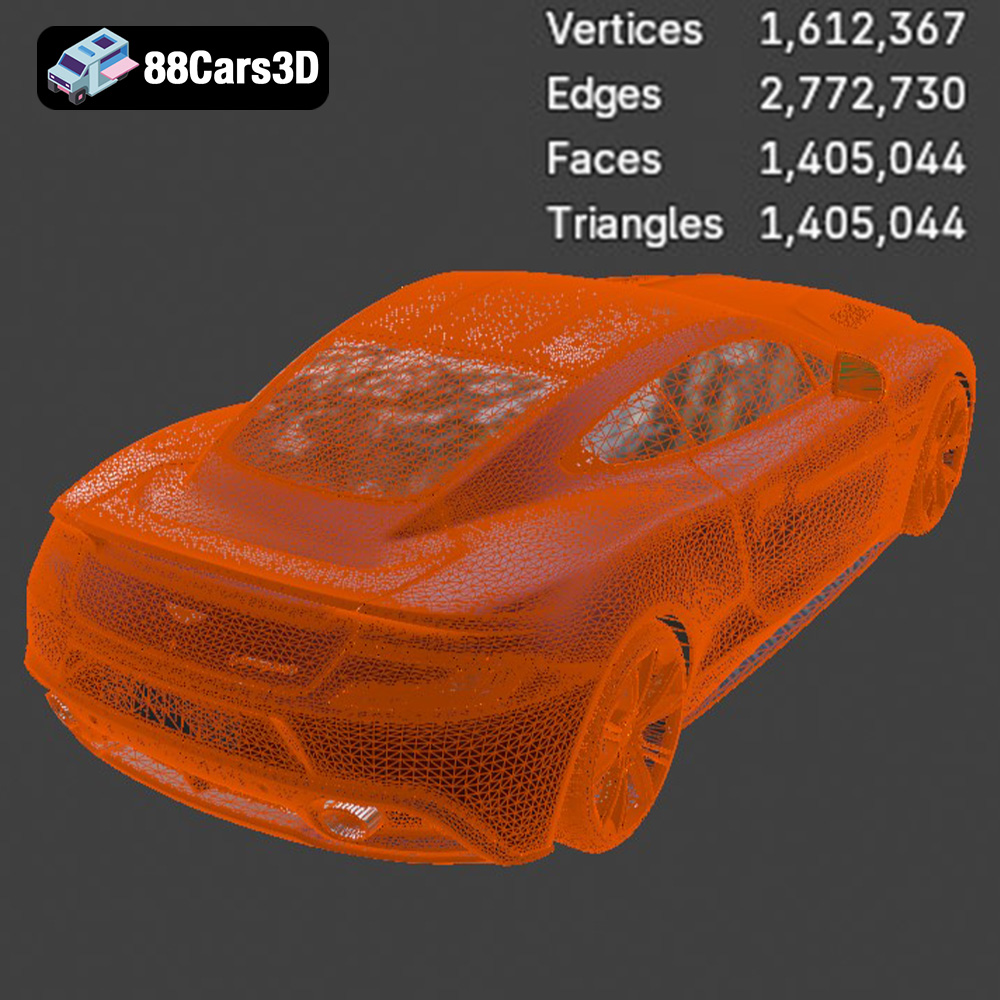
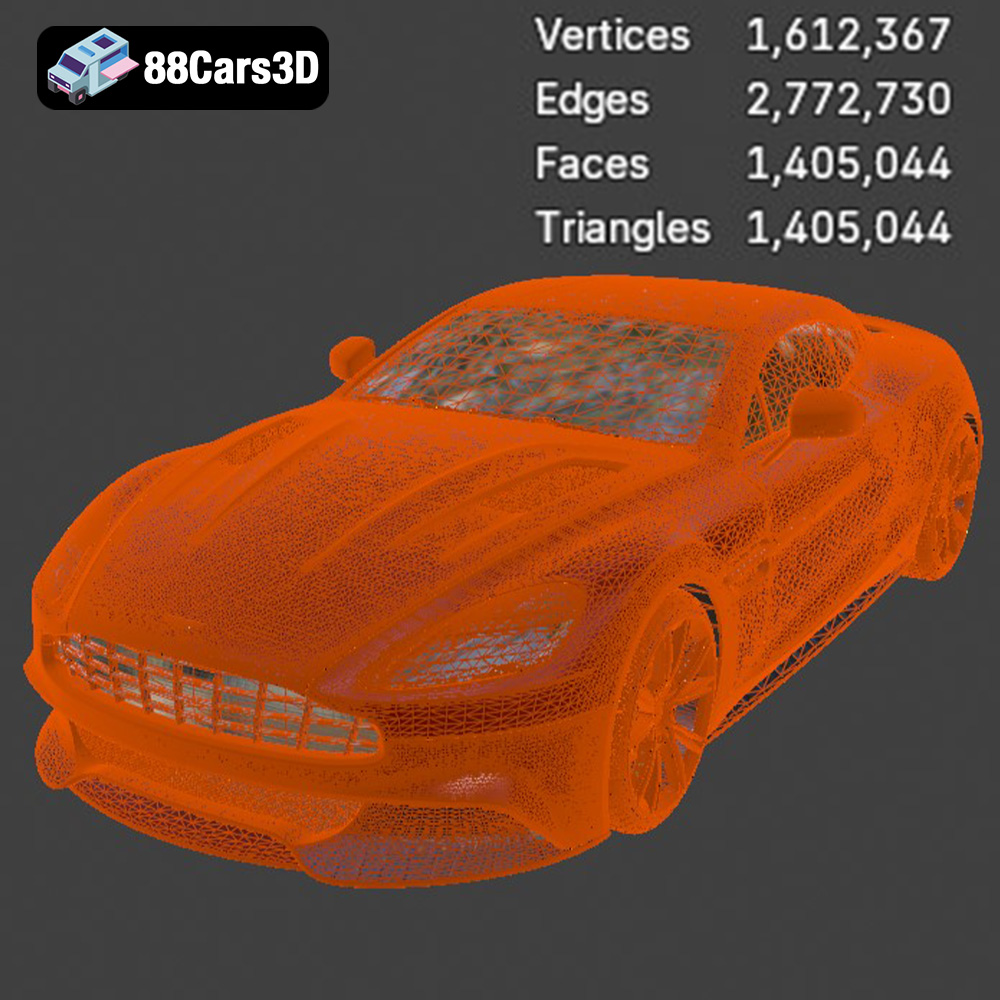
The journey of a 3D car model begins long before the first polygon is laid down. Extensive research, including blueprints, photographic references, and even physical measurements where possible, forms the bedrock. For a model like the Aston Martin 2013 AM 310 Vanquish, this means studying every curve, vent, and panel gap. The goal is “real-world scale accuracy” – a critical factor for any professional application, from architectural visualizations that include cars to precise engineering simulations. Clean topology is another fundamental principle; this refers to the organized and efficient arrangement of polygons, which is crucial for smooth deformations during animation and for clean subdivision surfaces in high-resolution renders. A well-constructed mesh minimizes rendering artifacts and makes the model easier to work with across different software packages.
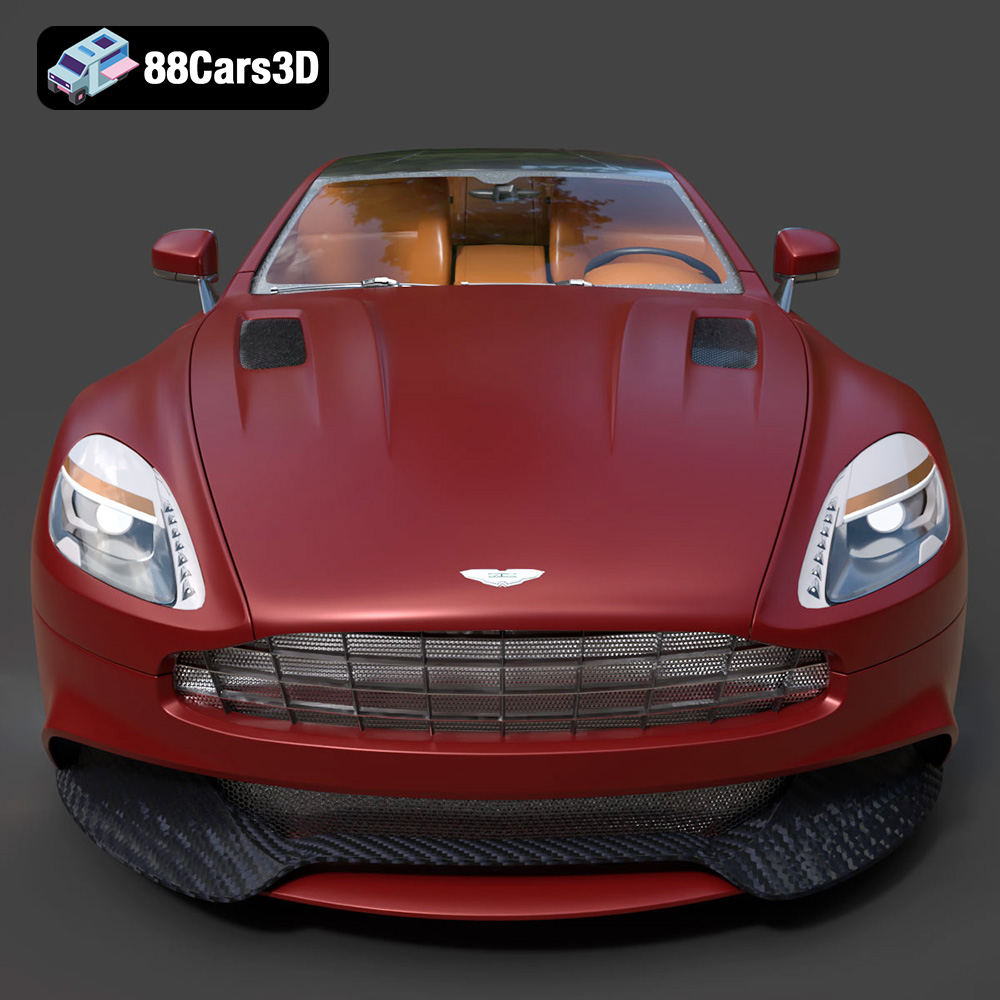
The Aston Martin 2013 AM 310 Vanquish 3D Model distinguishes itself with meticulous attention to both exterior and interior features. On the exterior, accurate body proportions, a detailed front grille, realistic LED lights, sculpted side vents, and a quad exhaust system are not just visual elements but also reflect the careful mesh construction. The high-detail alloy wheels with brake calipers and discs are often separate components, allowing for independent rotation and enhanced realism in animation. Transparent glass materials and mirror detailing complete the exterior, ensuring reflections behave realistically. Internally, the modeled dashboard, center console, sport steering wheel, detailed instrument cluster, and premium seat geometry with stitching detail demonstrate the commitment to comprehensive detail. These elements are not merely placeholders but are constructed with optimized geometry, making them suitable for both demanding high-quality renders and efficient real-time engine integration. Proper pivot setup for steering and wheel rotation further streamlines the animation process, saving countless hours for animators and game developers.
The versatility of a 3D model is heavily dependent on the file formats it supports. Each format is designed with specific use cases and software ecosystems in mind, making the choice of format critical for successful project integration. The Aston Martin 2013 AM 310 Vanquish 3D Model from 88cars3d.com offers a comprehensive suite of formats, ensuring broad compatibility across various professional workflows.
The `.blend` format is native to Blender, a powerful and increasingly popular open-source 3D creation suite. A `.blend` file provides a fully editable scene, including the mesh, materials, textures, lighting, cameras, and even animation data, all within a single package. This format is ideal for artists who primarily work in Blender, offering the most comprehensive and direct access to the model’s setup. It allows for effortless modifications, rigging, and rendering directly within Blender’s robust environment, making it perfect for custom animations or further detailing the Aston Martin Vanquish for specific project needs.
`.fbx` (Filmbox) is a proprietary file format owned by Autodesk, widely regarded as the industry standard for exchanging 3D data between different software applications, especially in game development. It efficiently stores not only mesh data but also materials, textures, animations, and skeletal information. This makes `.fbx` an ideal choice for pipelines involving Unreal Engine, Unity, and other real-time engines, where performance and data integrity are crucial. When importing the Aston Martin Vanquish as an `.fbx`, developers can expect a smooth transition of the model, ready for integration into interactive experiences.
The `.obj` (Wavefront OBJ) format is one of the oldest and most universally supported 3D file formats. It’s a simple, text-based format primarily used for transferring geometric data (vertices, normals, texture coordinates, and faces). While it doesn’t typically embed animations or complex material nodes, it’s excellent for ensuring cross-software compatibility. Almost every 3D software package can open an `.obj` file, making it a reliable choice for sharing base mesh data. For the Aston Martin Vanquish, the `.obj` ensures that the core model can be imported into virtually any 3D application for further refinement or rendering.
`.glb` (GL Transmission Format Binary) is the binary version of glTF, a royalty-free specification for the efficient transmission and loading of 3D scenes and models by applications. Optimized for AR, VR, and browser-based displays, `.glb` files are compact and fast-loading, making them perfect for webGL applications, interactive product viewers, and augmented/virtual reality experiences. Using the Aston Martin Vanquish in `.glb` format ensures that its luxurious design can be showcased interactively on websites or within AR apps without significant performance overhead.
`.stl` (STereoLithography) is the most common file format for 3D printing. It represents a 3D model as a series of connected triangles, describing only the surface geometry of an object without color, texture, or other CAD attributes. Its simplicity makes it universally compatible with 3D printers and slicing software. The Aston Martin 2013 AM 310 Vanquish 3D Model, when provided in `.stl` format, becomes a blueprint for a tangible replica, allowing enthusiasts to 3D print collectible scale supercar models or display miniatures, bringing the digital asset into the physical world.
The `.ply` (Polygon File Format) is often used for storing 3D data from 3D scanners, CAD applications, or scientific modeling. It can store a wider range of properties than `.stl`, including color, transparency, and even specific data for each vertex or face. While less common for general animation or game development, `.ply` is valuable for precision mesh data, often used in engineering analysis, historical preservation, or complex manufacturing processes. This format provides an alternative for specialized applications requiring a detailed point cloud or polygonal representation of the Vanquish.
While not a traditional open file format, “unreal” typically refers to an asset specifically pre-packaged or optimized for direct import into Unreal Engine. This could involve an `.fbx` file that has already been configured with proper materials, collision meshes, LODs (Levels of Detail), and pivot points suitable for Unreal’s internal asset pipeline. An “engine-ready asset” in this context signifies a streamlined workflow, drastically reducing setup time for game developers and real-time visualizers looking to implement the Aston Martin Vanquish directly into their Unreal environments, offering unparalleled efficiency.
The `.max` format is native to Autodesk 3ds Max, one of the most widely used 3D modeling, animation, and rendering software packages in the industry, particularly favored for architectural visualization and high-end cinematic production. A `.max` file contains the complete scene, including geometry, modifiers, materials, textures, lighting, cameras, and animation data. Providing the Aston Martin Vanquish in `.max` format gives 3ds Max users full flexibility to modify, animate, and render the model within their established professional workflows, leveraging the software’s powerful rendering capabilities for stunning photorealistic output.
High-quality automotive rendering is an art form that transforms digital models into photorealistic masterpieces. The Aston Martin 2013 AM 310 Vanquish 3D Model is an ideal candidate for such endeavors, providing a robust foundation for stunning visual narratives.
The included `.max` and `.blend` formats for the Vanquish model are crucial for professionals working in Autodesk 3ds Max and Blender. In 3ds Max, artists can leverage advanced renderers like V-Ray or Corona to achieve unparalleled realism. The workflow typically involves importing the `.max` file, verifying clean geometry, and then setting up complex PBR (Physically Based Rendering) materials for the car’s paint, glass, chrome, and interior fabrics. Adjusting reflections, refractions, and micro-surface details is critical. Similarly, Blender users can utilize Cycles or Eevee renderers, setting up detailed node-based materials. The model’s “clean and well-organized mesh structure” ensures that subdivision surfaces, essential for smooth curves, work flawlessly without pinching or artifacts, which is vital for the sleek lines of an Aston Martin.
Effective lighting is perhaps the most significant factor in photorealistic rendering. Using HDRI (High Dynamic Range Image) environments combined with targeted studio lights can mimic real-world lighting conditions, from a bright sunny day to a dramatic urban night scene. The Vanquish model’s transparent glass materials and mirror detailing are crucial here, interacting realistically with the light to produce convincing reflections and refractions. For the paint, creating a multi-layered shader with a base coat, metallic flakes, clear coat, and subtle imperfections can elevate realism. Post-production in tools like Photoshop or Nuke adds the final polish – color grading, depth of field, motion blur, and lens effects transform a good render into an exceptional one. Imagine the Aston Martin Vanquish bathed in the warm glow of a sunset boulevard or cutting through the neon of a metropolitan night, scenes perfectly facilitated by the customization options for lighting and finishes.
For luxury automotive marketing, 3D models like the Vanquish are invaluable. Companies can create visually stunning promotional campaigns without the exorbitant costs and logistical challenges of physical photoshoots. Imagine a virtual luxury showroom where prospective buyers can interact with the Aston Martin Vanquish, changing body colors (metallic silver, British racing green), carbon-fiber trim variations, and wheel designs on the fly. These renders can be used for brochures, online configurators, cinematic advertisements, and social media campaigns, providing a consistent and high-quality visual brand message. The model’s premium interior layout and detailed exterior features are specifically designed for such high-end product visualization, making it an ideal asset for agencies and manufacturers.
Beyond static renders, high-quality 3D car models are the backbone of interactive experiences, from blockbuster racing games to immersive AR/VR applications. The Aston Martin 2013 AM 310 Vanquish 3D Model is engineered to excel in these demanding real-time environments.
Game developers frequently rely on `.fbx` and optimized engine-specific formats like the provided “unreal” package for seamless integration. When bringing the Aston Martin Vanquish into Unreal Engine or Unity, the process typically involves importing the `.fbx` file, which should retain material slots and basic animation data. Developers then recreate or adapt the PBR materials within the engine’s shader graph, leveraging its real-time rendering capabilities. The model’s “optimized geometry for real-time engines” means a balanced poly count and efficient UV mapping, crucial for performance. Proper pivot setup for wheels and steering components is a massive time-saver, allowing animators to quickly set up vehicle physics and driving mechanics without extensive re-rigging.
For any game asset, especially high-detail vehicles, performance optimization is critical. This often involves creating Levels of Detail (LODs) – progressively simpler versions of the model that swap in as the car moves further from the camera, drastically reducing polygon count and improving frame rates. Collision meshes, which are simplified proxy geometries used for physics calculations, are also essential to ensure accurate interactions with the game world. A well-prepared model like the Aston Martin Vanquish would have a clean base mesh that facilitates the easy creation of these LODs and collision hulls, ensuring it runs smoothly even on lower-spec hardware or in complex open-world environments. Its “optimized polygon flow” supports this requirement by providing a clean base for decimation and simplification.
The `.glb` format is a game-changer for AR/VR applications, allowing the Aston Martin Vanquish to be viewed in augmented reality on a smartphone or integrated into a virtual reality showroom. Imagine walking around the Vanquish in a VR environment, opening its doors, examining the interior, or even taking it for a virtual test drive. These interactive experiences are powerful tools for sales, training, and entertainment. For driving simulation platforms, the Vanquish model’s accurate scale and animation-ready components make it perfect for realistic physics engines. Its detailed interior, including the instrument cluster and controls, further enhances immersion for professional simulation and training scenarios, allowing for a truly engaging digital driving experience.
One of the most exciting advancements in 3D technology is the ability to bridge the gap between digital models and physical objects. The Aston Martin 2013 AM 310 Vanquish 3D Model is not just for screens; it’s also designed to be 3D printable, opening up new avenues for collectibles and prototypes.
Converting a high-detail rendering model into a 3D printable `.stl` file requires careful consideration. The geometry must be “manifold,” meaning it has no holes, self-intersecting faces, or non-uniform normals – a perfectly sealed mesh. The Aston Martin Vanquish model’s “clean and well-organized mesh structure” is an excellent starting point for ensuring manifold geometry. Scaling is also critical; recommended scales like 1:32, 1:24, 1:18, or 1:14 dictate the overall size of the print and influence the level of detail that can be captured. Professional modelers ensure that even small details, such as the signature front grille or LED light design, are robust enough to print without breaking.
For optimal results, specific 3D print settings are crucial. A layer height of 0.10–0.16 mm on an FDM printer (or even finer on a resin printer for smaller scales) ensures smooth surfaces. Wall thickness, typically 1.5–2.5 mm, provides structural integrity. Infill settings (15–25%) balance strength and material usage. Supports are often required for overhangs like mirrors, diffuser edges, and spoiler sections, which need to be strategically placed to minimize surface damage. Printing the body angled for surface quality and separating wheels for independent printing are common techniques to enhance fidelity. Post-processing is where the magic happens: sanding to remove layer lines, applying primer for an even surface, and then finishing with gloss automotive paint, perhaps adding optional carbon-fiber detailing, can transform a raw print into a stunning miniature replica of the Aston Martin Vanquish.
The ability to 3D print the Aston Martin Vanquish model unlocks vast customization opportunities. Enthusiasts can print multiple versions, experimenting with different body colors, from metallic silver to British racing green or custom finishes. Modifications to wheel designs or brake caliper colors, as suggested in the product description, can be incorporated before printing. This allows for the creation of unique, personalized collectible scale models, perfect for display or as bespoke gifts. Beyond personal collections, this capability is valuable for product designers and automotive engineers who might use 3D prints for rapid prototyping of new car parts or aesthetic evaluations.
In today’s visually driven world, the quality of digital assets directly correlates with professional success. For industries ranging from automotive marketing to film VFX and game development, generic or low-quality 3D car models simply won’t suffice. The investment in premium assets like the Aston Martin 2013 AM 310 Vanquish 3D Model pays dividends in realism, efficiency, and creative freedom.
High-fidelity 3D models act as crucial bridges between conceptual designs and tangible realities. They allow designers to visualize, iterate, and refine ideas with incredible precision, long before physical prototypes are built. For the Aston Martin Vanquish, a model built with “clean topology,” “real-world scale accuracy,” and “proper pivot setup” means designers can experiment with lighting scenarios, environment backdrops, and material finishes with confidence that the digital representation is faithful to the real-world vehicle. This reduces development costs, accelerates decision-making, and ultimately leads to superior final products, whether digital or physical.
Platforms like 88cars3d.com specialize in providing these essential building blocks for digital creators. By offering models like the Aston Martin 2013 AM 310 Vanquish in a comprehensive array of formats (.blend, .fbx, .obj, .glb, .stl, .ply, .unreal, .max), they ensure maximum compatibility and flexibility. This multi-format approach caters to diverse professional workflows, from animators in 3ds Max, to game developers in Unreal, to product designers using CAD software, and hobbyists with 3D printers. The commitment to “high-detail digital recreation” and “optimized polygon flow” translates directly into tangible benefits for the end-user: faster rendering times, smoother animations, better in-game performance, and more accurate 3D prints. For anyone serious about automotive rendering, game development, AR/VR, or 3D printing, sourcing quality assets from a reputable marketplace like 88cars3d.com is a foundational step towards achieving professional-grade results.
The world of 3D modeling is constantly evolving, driven by the increasing demand for immersive, realistic, and interactive digital content. At its heart lies the meticulous creation of assets that can transcend various applications, from stunning photorealistic renders to dynamic real-time game experiences and even tangible 3D prints. The Aston Martin 2013 AM 310 Vanquish 3D Model exemplifies this versatility, offering professionals and enthusiasts an exceptionally detailed and technically robust asset. Its careful construction, comprehensive file format support, and suitability for diverse workflows make it an invaluable tool for anyone looking to achieve excellence in 3D car models. Whether you are an artist pushing the boundaries of automotive rendering, a developer crafting the next big racing game, or a creator bringing digital designs to life through 3D printing, this Vanquish model provides a solid foundation for your creative endeavors. Explore the possibilities and elevate your projects by acquiring premium 3D assets from trusted sources like 88cars3d.com, where quality and technical precision drive digital innovation.
The Aston Martin 2013 AM 310 Vanquish 3D Model is a high-detail digital recreation of the iconic British grand tourer known for its carbon-fiber body structure, aggressive stance, and refined luxury performance. The 2013 Vanquish (AM 310) represents a blend of handcrafted elegance and high-powered V12 engineering. This 3D model accurately represents the sculpted aerodynamic bodywork, signature front grille, sharp LED light design, carbon-fiber detailing, quad exhaust system, multi-spoke alloy wheels, and premium interior layout. Built with clean topology and real-world scale accuracy, it is ideal for rendering, animation, automotive visualization, game development, and AR/VR showroom applications.
$9.99