Get 50% OFF All Premium 3D & STL Models!

“`html
Unreal Engine has become the industry standard for creating stunning visuals, especially in automotive visualization and game development. However, achieving smooth real-time performance with high-fidelity 3D car models and complex scenes requires careful optimization. This guide provides a comprehensive overview of techniques to maximize performance in your Unreal Engine projects, ensuring a seamless and immersive experience for your audience. We’ll cover everything from project setup and asset optimization to advanced rendering techniques and Blueprint scripting considerations.
In this guide, you’ll learn:
The foundation of any well-optimized Unreal Engine project begins with the initial setup. Choosing the right project template and configuring the engine settings appropriately can significantly impact performance. This includes selecting the appropriate rendering pipeline and adjusting scalability settings.
Unreal Engine offers different rendering pipelines, each with its own performance characteristics. The default is the Deferred Rendering pipeline, which is suitable for most projects. However, for certain applications like VR or mobile, the Forward Rendering pipeline might offer better performance. The Forward Renderer avoids some of the performance costs of the Deferred Renderer, especially in scenes with numerous translucent materials. You can switch between rendering pipelines in the Project Settings under Rendering. Refer to the official Unreal Engine documentation at https://dev.epicgames.com/community/unreal-engine/learning for detailed information on rendering pipelines.
Unreal Engine provides built-in scalability settings that automatically adjust the quality of visuals based on the hardware capabilities of the target device. These settings control parameters like shadow quality, post-processing effects, and texture resolution. You can access these settings through the “Scalability” menu in the editor or configure them programmatically using console commands. Experiment with different scalability presets to find the optimal balance between visual fidelity and performance. Consider creating custom scalability presets tailored to specific hardware profiles. For example, a high-end PC might be able to handle Ultra settings, while a lower-end PC might require Medium or Low settings.
Before even starting your project, define your target hardware. Are you targeting high-end PCs, consoles, or mobile devices? This decision will heavily influence your optimization strategies. For example, mobile development requires significantly more aggressive optimization techniques compared to PC development. This includes using lower-resolution textures, simpler materials, and carefully managing polygon counts. Mobile devices have limited processing power and memory, so every resource must be used efficiently.
Importing high-quality 3D car models is a common starting point for automotive visualization projects in Unreal Engine. However, raw models often require significant optimization to perform well in real-time. This involves reducing polygon counts, optimizing UV layouts, and creating efficient LODs (Levels of Detail).
High-polygon models can quickly become a performance bottleneck. Before importing a 3D car model, consider reducing the polygon count in your 3D modeling software (e.g., Blender, Maya, 3ds Max). Tools like decimation modifiers and retopology can help reduce the number of polygons without significantly sacrificing visual quality. Focus on areas that are less visible or have less impact on the overall silhouette of the car. Aim for a polygon count that balances visual fidelity with performance requirements. For a detailed exterior model, consider a range of 500,000 to 1,500,000 polygons. Interior models often require fewer polygons.
Efficient UV mapping is crucial for optimal texture resolution and performance. Avoid overlapping UVs and ensure that textures are appropriately sized for the level of detail. Consider using texture atlases to combine multiple textures into a single texture map. This reduces the number of draw calls and improves performance. For example, you could combine all the textures for the car’s interior trim into a single atlas. Carefully plan your UV layout to minimize wasted space on the texture atlas. Aim for high UV density in areas that are frequently viewed and lower UV density in areas that are less visible.
LODs are simplified versions of a 3D model used when the object is further away from the camera. Unreal Engine automatically switches between LODs based on the distance between the camera and the object. Creating effective LODs is essential for maintaining performance in complex scenes. Generate several LODs for your 3D car model, each with a progressively lower polygon count. A good starting point is to have 3-5 LODs, with the lowest LOD having as little as 10% of the polygons of the highest LOD. Unreal Engine provides tools for automatically generating LODs, but manual adjustments are often necessary to ensure optimal results.
Physically Based Rendering (PBR) materials are essential for creating realistic visuals in Unreal Engine. However, complex PBR materials with numerous textures and calculations can be performance intensive. Optimizing your PBR materials involves simplifying material graphs, using efficient texture compression formats, and carefully managing shader complexity.
Complex material graphs with numerous nodes and calculations can significantly impact performance. Simplify your material graphs by removing unnecessary nodes, combining multiple operations into single nodes, and using pre-calculated values where possible. Avoid using overly complex mathematical functions in your materials. Consider baking complex calculations into textures to reduce the real-time processing required by the shader. For example, you could bake ambient occlusion into a texture instead of calculating it in the material.
Texture resolution and compression format have a direct impact on memory usage and performance. Use the appropriate texture compression format for each texture. For example, BC5 is a good choice for normal maps, while BC7 is suitable for color textures with alpha channels. Lowering texture resolution can significantly improve performance, but it can also reduce visual quality. Experiment with different texture resolutions to find the optimal balance between performance and visual fidelity. Consider using mipmaps for textures to improve performance when the object is far away from the camera.
The complexity of a shader is measured by its instruction count. A higher instruction count means that the shader requires more processing power to execute. Unreal Engine provides tools for visualizing shader complexity. Use the “Shader Complexity” view mode in the viewport to identify areas with high shader complexity. Simplify your materials to reduce the instruction count. For example, avoid using too many custom expressions or complex mathematical functions in your materials. Aim for a shader instruction count that is appropriate for your target hardware.
Nanite and Lumen are two groundbreaking technologies in Unreal Engine 5 that enable unprecedented levels of visual fidelity. Nanite allows you to import incredibly detailed models without the traditional limitations of polygon counts, while Lumen provides dynamic global illumination and reflections without the need for pre-baked lighting.
Nanite virtualized geometry allows you to import models with millions or even billions of polygons without significant performance impact. To enable Nanite for a static mesh, simply enable the “Enable Nanite Support” option in the mesh’s details panel. Be aware that Nanite is best suited for static geometry and may not be suitable for deforming meshes or skinned characters. Nanite requires significant memory, so it’s important to monitor memory usage when using it extensively. When sourcing automotive assets from marketplaces such as 88cars3d.com, ensure that the models are compatible with Nanite and have been properly optimized for virtualized geometry.
Lumen is Unreal Engine 5’s global illumination and reflections system. It provides dynamic lighting that reacts to changes in the scene in real-time. To enable Lumen, set the Global Illumination and Reflections methods to “Lumen” in the Project Settings under Rendering. Lumen is more computationally expensive than traditional static lighting, but it offers significantly more realistic and dynamic results. Experiment with different Lumen settings to find the optimal balance between performance and visual quality. Consider using Lumen’s software ray tracing mode for higher quality reflections, but be aware that it is more performance intensive than hardware ray tracing. You can find more information on configuring Lumen in the official Unreal Engine documentation.
While Nanite and Lumen offer incredible visual fidelity, they can also be performance intensive. It’s important to carefully balance their usage to achieve optimal performance. Use Nanite selectively for objects that benefit most from its high-detail capabilities, such as the car’s exterior. Use Lumen to create dynamic and realistic lighting, but optimize the settings to minimize performance impact. Monitor performance using Unreal Engine’s profiling tools to identify any bottlenecks caused by Nanite or Lumen. Platforms like 88cars3d.com offer optimized models that can help reduce the performance impact of Nanite.
Blueprint visual scripting is a powerful tool for creating interactive experiences in Unreal Engine. However, poorly optimized Blueprints can become a significant performance bottleneck. Optimizing Blueprints involves minimizing tick events, using efficient data structures, and avoiding unnecessary calculations.
The Tick event is called every frame, so any code executed in the Tick event will have a direct impact on performance. Minimize the amount of code executed in the Tick event and only perform necessary calculations. Consider using Timers instead of Tick events for tasks that don’t need to be executed every frame. For example, instead of checking for user input every frame, you could use a Timer to check for input every 0.1 seconds. This can significantly reduce the performance impact of your Blueprints.
Using efficient data structures can significantly improve performance, especially when dealing with large amounts of data. Use Arrays for storing ordered lists of data, and use Maps for storing key-value pairs. Avoid using nested loops or complex data structures that can lead to performance bottlenecks. When iterating through large arrays, consider using the “Parallel ForEach” node to distribute the workload across multiple cores. This can significantly improve performance on multi-core processors.
Avoid performing unnecessary calculations in your Blueprints. Cache frequently used values to avoid recalculating them every frame. Use branch nodes to avoid executing code that is not needed. Consider using the “Construction Script” to perform calculations that only need to be executed once when the object is created. The construction script is run when the actor is placed in the level, so it is a good place to perform initialization tasks that don’t need to be updated every frame.
Profiling is the process of measuring the performance of your Unreal Engine project. Unreal Engine provides a variety of profiling tools that can help you identify performance bottlenecks and optimize your project. These tools include the Stat commands, the Unreal Insights tool, and the Visual Studio Profiler.
Stat commands are console commands that provide real-time performance statistics. These commands can be used to monitor frame rate, memory usage, CPU usage, and GPU usage. Some useful stat commands include “stat fps” (displays frame rate), “stat unit” (displays CPU and GPU time), and “stat memory” (displays memory usage). Use these commands to get a general overview of your project’s performance. If you notice that your frame rate is low or that your CPU or GPU usage is high, you can use other profiling tools to identify the specific cause.
Unreal Insights is a powerful tool for analyzing the performance of your Unreal Engine project. It provides detailed information about CPU and GPU usage, memory allocation, and garbage collection. Use Unreal Insights to identify specific functions or systems that are causing performance bottlenecks. Unreal Insights can also be used to analyze the performance of your Blueprints. It can show you which Blueprint nodes are taking the most time to execute, which can help you identify areas for optimization.
The Visual Studio Profiler is a powerful tool for analyzing the performance of C++ code. It can be used to identify specific functions that are taking the most time to execute. The Visual Studio Profiler can also be used to analyze memory allocation and garbage collection. If you are using C++ code in your Unreal Engine project, the Visual Studio Profiler can be a valuable tool for identifying performance bottlenecks.
Optimizing performance in Unreal Engine is an ongoing process that requires careful planning, meticulous execution, and continuous monitoring. By following the techniques outlined in this guide, you can significantly improve the performance of your projects and create stunning visuals that run smoothly on a wide range of hardware. Remember to start with project setup, optimize assets meticulously, understand the trade-offs of Nanite and Lumen, refine your Blueprints, and leverage profiling tools to pinpoint bottlenecks. Consider using optimized assets sourced from platforms like 88cars3d.com to streamline your workflow.
Actionable next steps:
By embracing these practices, you’ll be well-equipped to create high-performance, visually stunning experiences in Unreal Engine, whether for automotive visualization, game development, or any other real-time rendering application.
“`
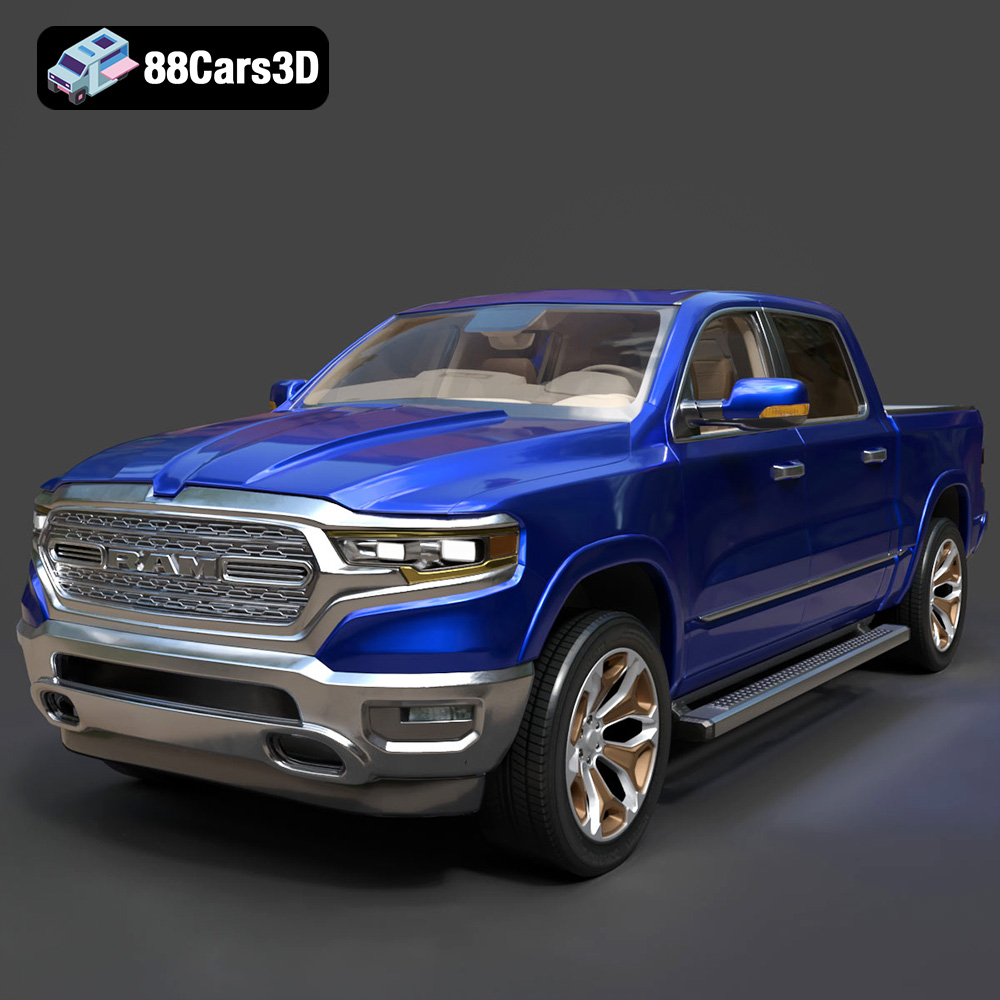
Texture: Yes
Material: Yes
Download the Dodge RAM 2019 3D Model featuring clean geometry, realistic detailing, and a fully modeled interior. Includes .blend, .fbx, .obj, .glb, .stl, .ply, .unreal, and .max formats for rendering, simulation, and game development.
Price: $19.99
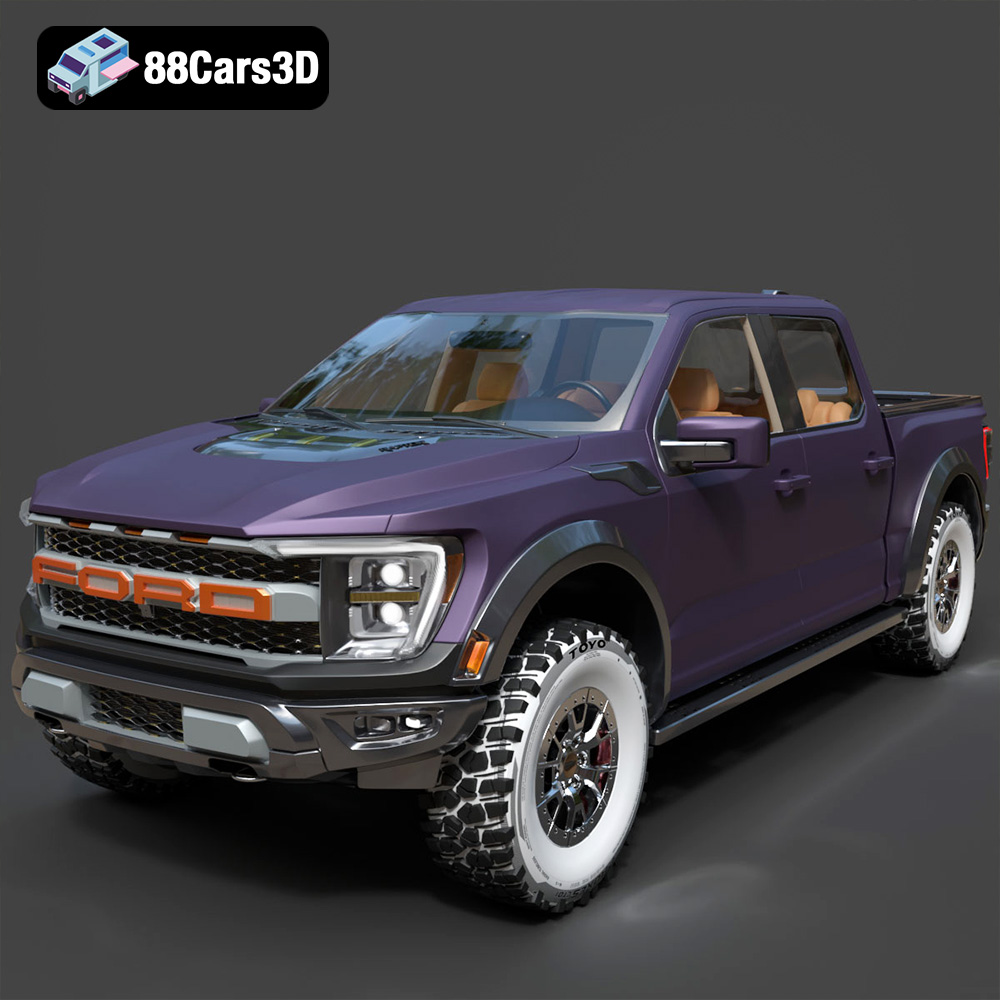
Texture: Yes | Material: Yes Download the ultra-high-detail Ford F-150 Raptor 2021 3D Model (8.73M Triangles). Features uncompromised widebody styling, fully modeled Fox Live Valve suspension, 37-inch tires, and interior. Perfect for premium VFX, cinematic rendering, and ArchViz. Includes .blend, .fbx, .obj, .glb, .stl, and .max formats.
Price: $29.99

Texture: Yes | Material: Yes Download the ultra-high-detail BMW 3 Series Limousine (2022) 3D Model (4.16M Triangles). Features the modernized G20 LCI exterior, the all-new BMW Curved Display interior, and ultra-dense topology. Perfect for ArchViz, VFX, and cinematic rendering. Includes .blend, .fbx, .obj, .glb, .stl, and .max formats.
Price: $19.99

Texture: Yes | Material: Yes Download the ultra-high-detail BMW i7 (2023) 3D Model (4.14M Triangles). Features the illuminated kidney grille, split crystal headlights, fully modeled Theatre Screen interior, and monolithic luxury styling. Perfect for ArchViz, VFX, and cinematic rendering. Includes .blend, .fbx, .obj, .glb, .stl, and .max formats.
Price: $19.99
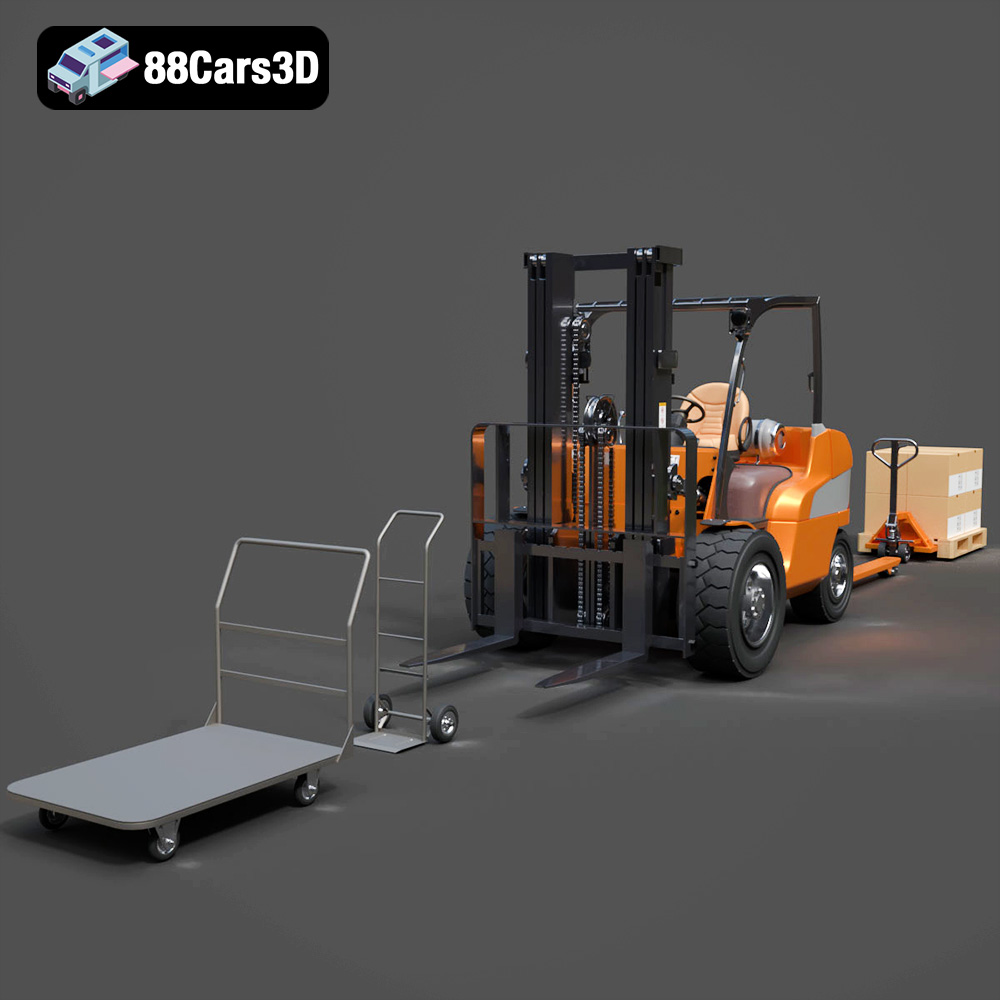
Texture: Yes | Material: Yes Download the highly detailed CAT Manual Loader & Warehouse Carts Kit 3D Model (2.4M Triangles). Features a macro-detailed hydraulic pallet jack, heavy-duty forks, and transport carts. Perfect for industrial ArchViz, factory rendering, and logistics simulations. Includes .blend, .fbx, .obj, .glb, .stl, and .max formats.
Price: $19.99

Texture: Yes | Material: Yes
Download the highly optimized Mazda CX-5 2014 3D Model (294k Triangles). Features the dynamic Kodo design language, signature grille, and a clean interior. Perfectly balanced for ArchViz, background traffic, and game development. Includes .blend, .fbx, .obj, .glb, .stl, and .max formats.
Price: $19.99
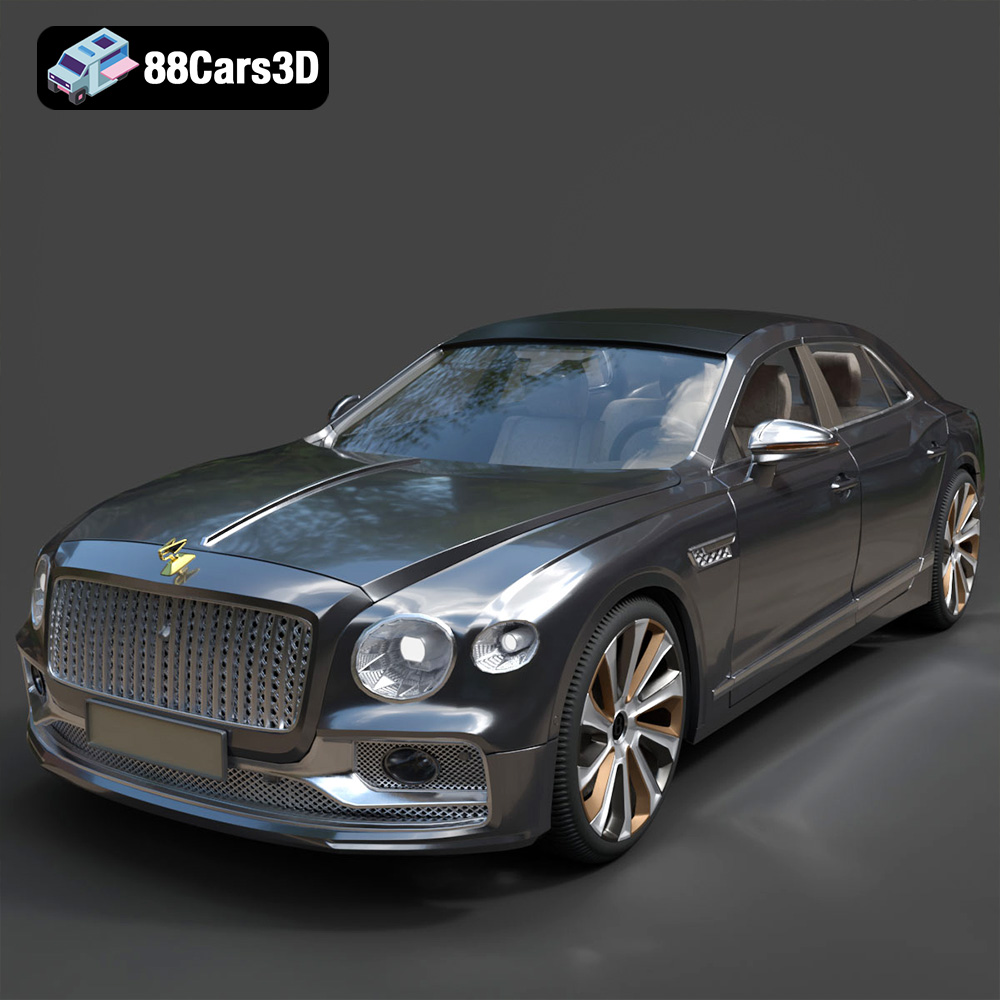
Texture: Yes | Material: Yes Download the ultra-high-detail Bentley Flying Spur Mulliner 2022 3D Model (2.94M Triangles). Features the bespoke Double Diamond grille, a fully modeled diamond-quilted interior, and exquisite luxury styling. Perfect for high-end ArchViz, VFX, and cinematic rendering. Includes .blend, .fbx, .obj, .glb, .stl, and .max formats.
Price: $19.90

Texture: Yes | Material: Yes | 3D Printable: Yes. Download the Ultimate Creators’ Showcase featuring 5 premium 3D models: Lamborghini Huracan, ZAV Concept Motorcycle, Sukhoi SU-26, Presidential Limousine, and Daewoo Damas. Optimized for 4K CGI rendering and 3D printing. Save massive with this exclusive multi-category bundle!
Price: $99.99

Texture: Yes | Material: Yes | 3D Printable: Yes. Download the Italian Thoroughbreds Bundle featuring 5 iconic 3D models: Lamborghini Huracán Performante, Ferrari 458 Italia, Lamborghini Urus, Diablo SV, and Maserati GT. Optimized for 4K rendering and 3D printing (STL included). Save 50% with this ultimate Italian vehicle collection.
Price: $199.99

Download the Elite Future Mobility Bundle featuring 4 highly optimized 3D models: Tesla Model S, Avatr 11, Li L9, and Zoox Robotaxi. Perfect for ArchViz, Smart City renders, and game dev. Optimized for Unreal Engine and Blender. Includes .fbx, .obj, and .max formats.
Price: $99

