Navigating the Digital Seas: The Essential Role of High-Quality 3D Boat Models
The vast expanse of the digital ocean, much like its real-world counterpart, demands realism, precision, and immersive detail. From captivating video game environments to lifelike architectural visualizations and intricate maritime training simulations, the need for exceptional 3D assets is paramount. Professionals across industries continually seek models that not only look authentic but also perform flawlessly within complex pipelines. This pursuit of digital fidelity is where expertly crafted assets become indispensable, laying the groundwork for truly convincing virtual experiences.
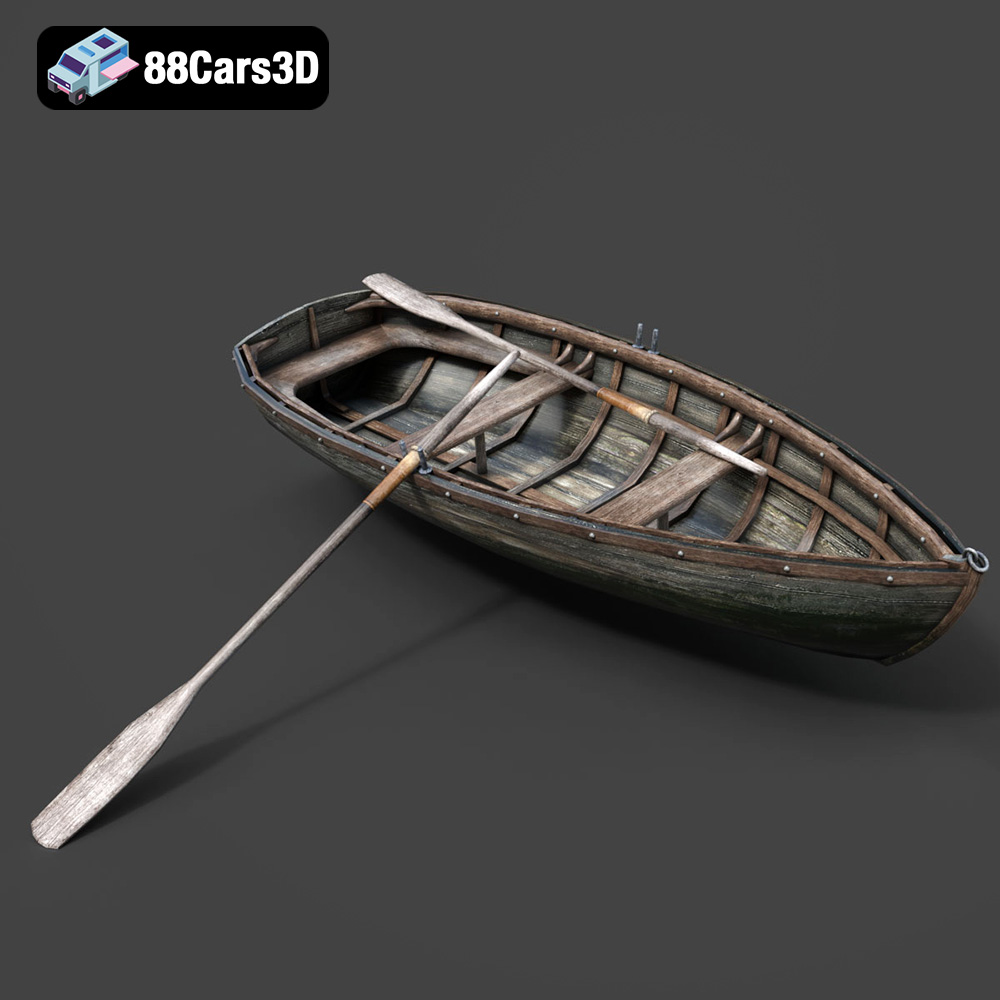
In this dynamic landscape, the Boat 3D Model stands out as a prime example of a versatile and technically robust asset. Designed with meticulous attention to detail, it embodies the structural elegance and functional aspects of a modern watercraft, making it suitable for a diverse range of applications. Whether you’re an environmental artist building a bustling marina, a game developer populating an open-world sea, or an animator creating a cinematic ocean sequence, this model provides the foundational quality necessary to elevate your projects. Its clean topology, real-world scale accuracy, and broad compatibility make it an invaluable tool for any digital creator aiming for excellence in marine visualization.
Understanding 3D Model File Formats: The Backbone of Digital Assets
The versatility of any 3D model, including the high-quality assets found on platforms like 88cars3d.com, hinges significantly on the file formats it supports. Each format is engineered for specific purposes, offering unique advantages in terms of compatibility, data integrity, and performance across different software and pipelines. Understanding these distinctions is crucial for selecting the right model for your project and ensuring a smooth workflow from acquisition to final render or integration.
Native and Interchange Formats for Production
- .blend (Blender): As Blender’s native file format, .blend provides a complete scene package. It’s ideal for users operating within the Blender ecosystem, preserving all aspects of the model including mesh data, materials, textures, lighting, camera setups, and even animation data. For the Boat 3D Model, having the .blend file means artists can dive directly into a fully editable scene, modify its components, adjust materials, or reconfigure its rigging without data loss, offering unparalleled flexibility for customization.
- .max (3ds Max): Similar to .blend for Blender, the .max format is the native file type for Autodesk 3ds Max. It encapsulates an entire 3ds Max project, making it the go-to format for professionals working within this industry-standard software. The .max file for the Boat 3D Model ensures that all original scene data, modifiers, material assignments, and potential animation rigs are preserved, allowing 3ds Max users to seamlessly integrate and manipulate the model for high-fidelity rendering, architectural visualization, or complex animation sequences.
- .fbx (Filmbox): Developed by Autodesk, FBX is a widely adopted interchange format, especially prevalent in game development and animation pipelines. It excels at preserving complex scene data, including geometry, materials, textures, bones, skinning, and animations, across different 3D applications like Maya, 3ds Max, Blender, Unity, and Unreal Engine. For assets like the Boat 3D Model, .fbx is often the preferred choice for exporting into real-time engines due to its robust support for animation and hierarchical structures, ensuring that separate components like the propeller and rudder maintain their pivot points for easy animation.
- .obj (Wavefront Object): The .obj format is one of the oldest and most universally supported 3D file formats. While it primarily stores geometric data (vertices, normals, texture coordinates) and references material files (.mtl), it doesn’t typically embed animations or rigging information. Its strength lies in its simplicity and widespread compatibility, making it an excellent choice for cross-software compatibility. When you need to import the Boat 3D Model into virtually any 3D application for static renders or basic scene assembly, .obj provides a reliable, clean mesh.
Specialized Formats for Real-time and Manufacturing
- .glb (GL Transmission Format Binary): GLB is the binary version of glTF, a royalty-free specification for the efficient transmission and loading of 3D scenes and models by applications. It is rapidly becoming the “JPEG of 3D” for its optimization for web-based, AR, and VR applications. A .glb version of the Boat 3D Model is highly efficient for displaying interactive 3D content directly in web browsers or integrating it into augmented reality experiences, offering a compact, single-file solution that includes geometry, materials, and textures.
- .unreal (Unreal Engine Asset): This isn’t a single file format in the traditional sense, but rather an indication that the model is provided as an Unreal Engine-ready asset. This implies the model has been specifically prepared, optimized, and potentially imported into an Unreal Engine project, complete with proper materials, collision meshes, and LODs (Levels of Detail) configured for real-time performance. For the Boat 3D Model, an .unreal asset significantly reduces setup time for game developers and real-time visualization artists, allowing immediate integration into their virtual environments.
- .stl (Stereolithography): STL is the standard file format for 3D printing. It represents a 3D object as a series of connected triangles (a triangular mesh) without color or texture information. For the Boat 3D Model, an .stl file means it has been rigorously prepared with manifold geometry, ensuring a watertight and printable mesh. This allows users to physically manifest the digital boat, creating scale models or prototypes using various 3D printing technologies.
- .ply (Polygon File Format): PLY is a polygon file format primarily used for storing 3D data from 3D scanners. It can store a variety of properties including color, transparency, surface normals, and range data. While not as common for general interchange as .fbx or .obj, its ability to store precise mesh and vertex properties makes it valuable in scientific visualization, CAD, and specific analytical applications where high precision of geometric data is required. For the Boat 3D Model, a .ply file could be useful for specific reverse engineering or inspection workflows.
Diving Deep into the Boat 3D Model: Design and Technical Excellence
The quality of a 3D asset is not merely about its aesthetic appeal but also its underlying technical construction. The Boat 3D Model offered at 88cars3d.com exemplifies this principle, meticulously engineered to serve a broad spectrum of professional needs from high-fidelity rendering to real-time interactive experiences and even physical 3D prints.
Anatomical Accuracy: Hull, Deck, and Propulsion
The foundation of any convincing marine visualization lies in the accuracy of its watercraft. This model boasts accurate hull geometry and waterline proportions, which are critical for realistic buoyancy and movement simulation in virtual environments. Every curve and line of the hull is carefully sculpted to reflect a modern recreational boat, ensuring that it looks convincing whether it’s gliding through calm waters or cutting through choppy waves.
- Detailed Deck and Railing System: Beyond the hull, the deck surface is rich with functional details. A robust railing system, realistic seating layouts, and a meticulously designed steering console with a windshield all contribute to the model’s authenticity. These elements are not just aesthetic; they are built with clean topology that facilitates easy modification and integration into diverse scenes.
- Propeller and Rudder Assembly for Dynamic Interaction: Crucially, the model includes a detailed propeller and rudder assembly. These components are often separated, allowing for independent animation. This technical foresight enables animators to simulate steering, thrust, and propulsion dynamics with precision, making the boat an active rather than static element in any scene. Navigation light placements further enhance realism, particularly for nighttime renders or simulations.
Optimized Geometry for Performance and Fidelity
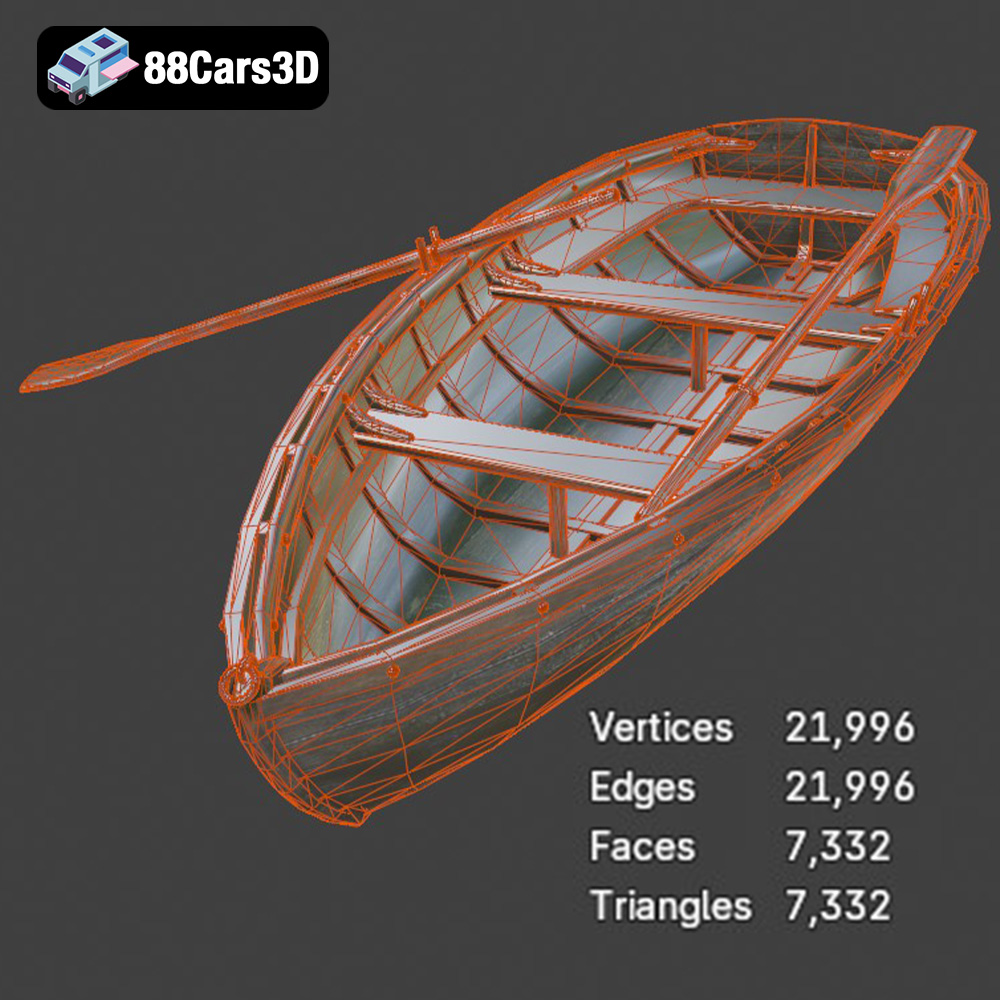
In the world of 3D, striking a balance between visual fidelity and performance is key. The Boat 3D Model is built with optimized geometry, ensuring a clean and well-organized mesh structure. This attention to polygon flow means the model is efficient enough for real-time engines without sacrificing detail in high-quality renders.
- Real-World Scale Accuracy: Every dimension of the model adheres to real-world scale, a vital aspect for architectural visualization, engineering simulations, and integrating the boat into existing environments without scaling discrepancies. This accuracy simplifies scene setup and ensures that the boat feels appropriately sized next to other assets or within a given landscape.
- Proper Pivot Setup: A seemingly small but critically important technical advantage is the proper pivot setup for components like the steering and propeller. Correct pivots ensure that rotation and animation are intuitive and realistic, saving artists significant time in post-import rigging and adjustment. This level of technical preparedness highlights the model’s professional-grade design.
Animation Readiness and Customization Potential
The versatility of a 3D asset extends to its capacity for modification and animation. The Boat 3D Model is designed with customization in mind, offering numerous avenues for artists to adapt it to their specific project requirements.
- Modifying Appearance and Features: Users can easily change hull colors, add stripe accents, incorporate marine branding or registration numbers, and even modify the seating layout. This allows for personalized vessels that fit the narrative or aesthetic of any project. Whether you need a sleek luxury yacht or a rugged utility boat, the core model provides a flexible canvas.
- Adding Scene-Specific Accessories: Further customization options include adding fishing equipment, luxury deck accessories, or configuring lighting setups. Imagine the boat illuminated for a sunset marina scene or equipped for open-sea exploration – these details contribute significantly to the overall realism and narrative depth of a visualization. This modularity is a testament to the model’s well-thought-out design, making it a truly adaptable marine asset for any creative endeavor.
Professional Workflows: Integrating the Boat 3D Model
The true value of a high-quality 3D asset, especially one as versatile as the Boat 3D Model, is realized through its seamless integration into various professional workflows. From high-end cinematic rendering to interactive game development, this model is designed to optimize production efficiency and enhance visual output across multiple platforms.
High-Fidelity Rendering in Blender and 3ds Max
For artists focused on producing stunning visuals for marketing, architectural visualization, or film, the Boat 3D Model is an exceptional starting point. Its clean geometry and real-world scale are perfectly suited for rendering engines like Cycles and Eevee in Blender, or V-Ray and Corona Renderer in 3ds Max.
- Material and Texture Application: In Blender, artists can leverage the robust node-based shader system to create hyper-realistic materials for the hull, deck, and interior components. PBR (Physically Based Rendering) workflows allow for accurate simulation of paint, polished chrome, and weathered textures, enhancing the visual realism. Similarly, 3ds Max users can assign sophisticated materials, fine-tune reflections, and optimize lighting setups to showcase the boat in its best light. The model’s optimized polygon flow ensures smooth subdivision for close-up shots without bogging down render times.
- Environmental Integration and Lighting: Integrating the boat into a coastal environment or a marina scene is straightforward due to its accurate scaling. Artists can easily position it within a water simulation, add environmental lighting that reflects a serene sunset or a bright midday, and populate the scene with other elements like docks, seagulls, or distant shorelines. The model’s separate animated parts (propeller, rudder) can be used to add subtle movements, bringing the scene to life.
Real-time Deployment in Unreal Engine
The demand for interactive, high-fidelity experiences in game development, AR/VR, and real-time visualization has never been higher. The Boat 3D Model‘s “unreal” format and optimized geometry make it an ideal game asset for these demanding environments.
- Game Development Integration: For game developers, importing the .fbx or .unreal version of the boat into Unreal Engine means an immediate jumpstart. The clean mesh and proper pivot points simplify the process of adding physics, collision detection, and player-controlled navigation. The model can be used to populate open-world water environments, serve as a customizable vehicle in a sailing simulation, or feature in adventure games, offering players a realistic and engaging interaction with the watercraft. The optimized polygon flow is critical for maintaining high frame rates in complex game scenes.
- AR/VR for Immersive Experiences: In AR/VR applications, immersion is key. The .glb format, specifically designed for web and AR/VR, allows for efficient deployment of the Boat 3D Model into interactive experiences. Imagine a virtual showroom where users can walk around, inspect, and customize the boat in augmented reality, or a virtual reality simulation for nautical training that provides an incredibly realistic sense of presence. The model’s detailed deck layout and steering console can become interactive elements, enhancing user engagement.
Architectural Visualization and Interactive Demonstrations
Beyond games and film, the Boat 3D Model finds significant utility in architectural visualization and interactive product demonstrations.
- Marina and Coastal Development Previews: Architects and urban planners can integrate this boat model into visualizations of new marina developments or coastal resorts. Populating these scenes with realistic watercraft helps clients envision the final aesthetic and functional aspects of a project, adding a layer of realism and context that static images often lack.
- Nautical Training and Simulation: For maritime training, the model provides a foundation for simulating various scenarios. From navigation exercises to safety drills, its accurate proportions and functional components can be used to create lifelike training modules, offering a safe and cost-effective way to prepare for real-world situations. This also extends to promotional marine projects, where interactive boat demonstrations can highlight specific features or configurations to potential buyers.
Expanding Horizons: From Digital to Tangible with 3D Printing
One of the most exciting capabilities of the Boat 3D Model is its suitability for 3D printing. This transforms the digital asset into a tangible, physical object, opening up new avenues for prototyping, display models, and miniature creation. The .stl format provided is specifically optimized for this purpose, ensuring a smooth transition from screen to physical form.
Preparing the Model for Physical Manifestation
Converting a digital 3D model into a physical print requires careful consideration of geometry and structural integrity. The Boat 3D Model, with its clean and well-organized mesh, is inherently suited for this process. The provided .stl file is a testament to its print-readiness, indicating that the mesh is manifold (watertight) and free from common printing issues like intersecting geometry or reversed normals.
- Design for Durability and Detail: The detailed exterior features, such as the accurate hull geometry, deck surface, railing system, and steering console, translate well into a physical model. Even smaller elements like navigation light placements and the propeller assembly can be accurately reproduced, given the right printing technology and scale. This level of detail ensures that the 3D-printed boat is not just a blocky representation but a true miniature replica of its digital counterpart.
- Considerations for Scale and Assembly: The product recommends various scales (1:72 / 1:48 / 1:32 / 1:24), which dictates the level of detail that can be achieved and the physical size of the print. For larger scales, printing the hull flat or splitting it vertically might be necessary to fit common FDM printer build volumes, while smaller scales might benefit from resin (SLA/DLP) printing for finer details on elements like the railings and propeller. The model’s separated components for animation (like the propeller and rudder) can also be printed separately for easier assembly or even articulation in a physical model.
Recommended Settings for Optimal Results
Achieving a high-quality 3D print relies heavily on using appropriate print settings. The detailed recommendations provided for the Boat 3D Model guide users through this process.
- Layer Height and Wall Thickness: A recommended layer height of 0.10–0.20 mm balances detail and print time, suitable for FDM printers. Wall thickness of 2–3 mm ensures the hull and deck have sufficient structural integrity to withstand handling and post-processing without being overly brittle or consuming excessive material.
- Infill and Supports: An infill of 20–35% provides a good balance between strength and material usage. Critically, supports are required for specific features such as railings, the windshield frame, and the propeller. These delicate overhangs would otherwise deform during printing. Proper support placement and removal techniques are essential for preserving the model’s fine details.
- Post-Processing for a Professional Finish: Once printed, the journey continues with post-processing. Sanding, applying primer, and finishing with a gloss marine paint can dramatically enhance the model’s appearance, mimicking the sleek finish of a real boat. Optional decals can add further personalization or branding, transforming a raw print into a display-worthy collectible. This comprehensive guidance ensures that even those new to 3D printing can achieve impressive results with the Boat 3D Model.
Case Studies and Applications: Where the Boat 3D Model Shines
The versatility of the Boat 3D Model extends across numerous professional applications, making it an indispensable asset for diverse creative and technical projects. Its robust design and multiple file formats allow it to seamlessly integrate into various pipelines, from entertainment to engineering.
Game Development: Populating Virtual Oceans
In the expansive worlds of modern video games, realistic environments are crucial for immersion. The Boat 3D Model serves as an excellent foundational asset for game developers. Imagine an open-world sailing game where players can pilot a beautifully rendered boat across vast, dynamic oceans. The model’s optimized geometry ensures it can be efficiently rendered in real-time engines like Unreal and Unity, maintaining high frame rates even when multiple boats are present. Its separate components for animation, such as the propeller and rudder, allow for realistic physics and interaction, making the player’s experience truly engaging. For instance, an adventure game set in a coastal region could feature this boat for player transport, dynamic AI patrol boats, or even as a destructible environment prop, all while upholding visual fidelity.
Cinematic Production and Advertising
For film, animation, and high-end advertising, visual perfection is non-negotiable. The Boat 3D Model’s high-detail digital recreation, with its realistic hull proportions and functional deck detailing, makes it perfect for cinematic ocean renders. Consider a luxury yacht advertisement needing a pristine vessel gliding through turquoise waters, or a movie scene requiring a detailed watercraft for a dramatic chase sequence. Its clean topology and real-world scale mean it holds up under extreme close-ups and dynamic camera movements. Artists can leverage its customization options to change hull colors, add specific marine branding, and configure intricate lighting setups to match any narrative requirement, creating breathtaking promotional visuals or compelling storytelling backdrops.
Immersive AR/VR and Training Simulations
Augmented Reality (AR) and Virtual Reality (VR) are transforming how we interact with digital content, offering immersive experiences for training, education, and product visualization. The Boat 3D Model, particularly in its .glb format, is ideally suited for these cutting-edge applications. For an AR experience, imagine a prospective boat buyer using their smartphone to place a full-scale 3D model of the boat in their driveway, examining its features in real-time, or modifying its configuration without leaving their home. In VR, the model can be the centerpiece of a comprehensive nautical training simulation, allowing aspiring captains to practice steering, docking, and navigation in a safe, virtual environment. Its accurate representation of the steering console and deck layout provides the necessary realism for effective skill development, making complex maritime scenarios accessible and interactive.
Conclusion: Charting a Course for Digital Excellence with 88cars3d.com
In the ever-evolving landscape of 3D visualization and content creation, the demand for high-quality, versatile, and technically sound assets remains constant. The Boat 3D Model exemplifies these crucial attributes, offering a meticulously crafted digital recreation of a modern watercraft that is ready for deployment across a spectrum of professional applications. Its detailed design, optimized geometry, and comprehensive file format support ensure seamless integration into diverse workflows, from high-fidelity rendering and cinematic sequences to interactive game development, immersive AR/VR experiences, and even tangible 3D prints.
Whether you are an artist seeking realism for marine advertising, a developer building an engaging open-world game, or an educator creating advanced training simulations, this model provides the foundational quality necessary to achieve your vision. Its technical advantages, including clean mesh, real-world scale, and animation-ready components, underscore its value as a professional-grade asset. By offering such a robust and adaptable model, 88cars3d.com continues to empower creators with the tools they need to push the boundaries of digital artistry and technical innovation. Explore the possibilities and elevate your next marine project with this exceptional 3D asset.
Featured 3D Model
Boat 3D Model 3D Printable STL
The Boat 3D Model is a high-detail digital recreation of a versatile watercraft designed for marine visualization, simulation, and entertainment applications. Featuring realistic hull proportions and functional deck detailing, this model captures the structural balance, buoyant form, and nautical design elements of a modern recreational boat. This 3D model accurately represents the streamlined hull structure, deck layout, railing system, seating configuration, steering console, and propeller assembly. Built with clean topology and real-world scale accuracy, it is ideal for rendering, animation, marine simulation, game development, and AR/VR visualization. Perfect for coastal environments, marina scenes, open-water simulations, cinematic ocean renders, and promotional marine projects.
$5
View This Model
Related Tags
.arvr
.blend
.boat
.boat3dmodel
.fbx
.gameasset
.glb
.marinesimulation
.marinevehicle
.max
.obj
.oceanrender
.ply
.rendering
.sailing
.simulation
.stl
.unreal
.watercraft
yacht