Get 50% OFF All Premium 3D & STL Models!

In the dynamic world of automotive design, visualization, and interactive experiences, the demand for exceptionally detailed and accurate 3D car models has never been higher. From the meticulous precision required for high-fidelity marketing renders to the optimized efficiency needed for real-time game engines, artists and developers rely on digital assets that encapsulate realism and performance. Today, we’re delving into a prime example of such an asset: the BMW M7 (G12) with HQ Interior 2017 3D Model. This particular model stands as a testament to the blend of luxury, performance, and intricate digital craftsmanship, offering a robust foundation for a myriad of professional applications.
Imagine being able to place a meticulously recreated luxury performance sedan into any digital environment, whether it’s for a cinematic advertisement, a cutting-edge virtual reality experience, or a detailed engineering visualization. The BMW M7 (G12) model provides precisely that capability. Its design flawlessly captures the essence of BMW’s G12 long-wheelbase platform, blending executive comfort with the aggressive M styling cues that define automotive excellence. With a high-quality interior that stands up to the closest scrutiny, this model isn’t just a shell; it’s a complete digital experience waiting to be integrated into your next project. Sourcing such high-caliber 3D car models from platforms like 88cars3d.com ensures you begin with assets built to professional standards.
Before diving into specific applications, it’s crucial to grasp the significance of various 3D model file formats. Each format is designed with particular strengths, making it suitable for different stages of a project or target platforms. The BMW M7 (G12) with HQ Interior 2017 3D Model, like many premium 3D car models available on 88cars3d.com, is offered in a comprehensive suite of formats, ensuring maximum compatibility and utility for professionals.
The .blend format is native to Blender, the powerful open-source 3D creation suite. When you receive a model in .blend format, you’re getting a fully editable scene, complete with materials, textures, lighting, cameras, and potentially even animation data. This is invaluable for artists who use Blender for rendering, animation, or further customization. It allows for direct manipulation of the mesh, modification of PBR material settings, adjustment of lighting setups, and integration into existing Blender projects without any loss of data fidelity. For the BMW M7, having the .blend file means you can tweak every detail of its luxurious interior and sleek exterior within the native Blender environment.
The .fbx (Filmbox) format is an industry-standard proprietary file format developed by Autodesk, widely adopted for its excellent interoperability between various 3D software applications and game engines. It supports geometry, materials, textures, animations, and rigs. For real-time applications like game development in Unreal Engine or Unity, .fbx is often the preferred choice due to its robust support for skeletal animation and efficient data transfer. Importing the BMW M7 as an .fbx into Unreal or Unity allows for straightforward setup of materials, physics, and animation, making it a cornerstone for creating high-performance game assets.
The .obj (Wavefront Object) format is one of the oldest and most universally supported 3D file formats. It’s a simple, text-based format that primarily stores geometry (vertices, normals, texture coordinates, and faces) and references external material (.mtl) files for basic material properties and textures. While it doesn’t support advanced features like animation or rigging, its widespread compatibility makes it a go-to for transferring static meshes between different 3D software packages where .fbx might encounter issues. The .obj format for the BMW M7 ensures that almost any 3D application can open and interpret the model’s core geometry.
The .glb (GL Transmission Format Binary) is a relatively newer format gaining rapid traction, especially for web-based 3D, augmented reality (AR), and virtual reality (VR) applications. It’s a binary container format that encapsulates 3D models, scenes, animations, and PBR materials into a single, compact file. This “all-in-one” nature makes it incredibly efficient for streaming and display on the web, significantly reducing load times and simplifying integration into AR/VR experiences. The BMW M7 in .glb format would be perfect for an interactive 3D car configurator on a website or an immersive virtual showroom experience.
The .stl (Stereolithography) format is the de facto standard for 3D printing. It represents a 3D model as a series of connected triangles, forming the surface geometry of the object. Crucially, .stl files do not contain color, texture, or material information, focusing solely on the object’s shape. For the BMW M7 model, converting to .stl is the essential step for physical production, allowing users to create scale models of this luxury sedan on their 3D printers. Ensuring the model has “manifold” geometry (no holes or self-intersecting faces) is vital for a successful .stl conversion.
The .ply (Polygon File Format, also known as Stanford Triangle Format) is another format used for representing 3D scanned data or models with complex topology. Like .obj, it can store geometric information, but it also supports additional properties like color per vertex, transparency, and often higher precision for vertices. While less common for general animation, it finds its niche in scientific visualization, CAD, and specific 3D scanning workflows. For highly detailed models like the BMW M7, .ply can offer a robust representation, particularly if further engineering analysis or reverse engineering is contemplated.
While not a standalone file format in the traditional sense, the inclusion of “.unreal” typically signifies an asset specifically optimized and prepared for direct import into Unreal Engine. This often implies proper scaling, collision setups, material instances, and possibly even Blueprints or animation sequences already configured. It streamlines the workflow for Unreal Engine users, bypassing many of the initial setup steps. For the BMW M7, an .unreal asset would mean immediate usability in virtual production, architectural visualization, or advanced driving simulations within the Unreal ecosystem.
Similar to .blend for Blender, the .max format is native to Autodesk 3ds Max, a leading software for 3D modeling, animation, rendering, and compositing. A .max file contains the complete scene data, including geometry, textures, materials (often V-Ray, Corona, or Arnold), lighting, cameras, and animation. For users deeply integrated into the 3ds Max workflow, this format offers the highest level of control and fidelity, allowing for complex modifications, advanced rendering setups, and seamless integration into existing 3ds Max projects. The BMW M7 .max file is ideal for professional studios utilizing 3ds Max for high-end automotive rendering and visualization.
Understanding these formats empowers you to choose the right tool for the job, ensuring your high-quality 3D car models, such as the BMW M7 (G12), integrate perfectly into your professional pipeline.
The value of a premium 3D car model, such as the BMW M7 (G12) from 88cars3d.com, lies not just in its visual appeal but in the underlying technical integrity. This model exemplifies a meticulous approach to digital asset creation, ensuring both aesthetic accuracy and functional versatility across various professional applications.
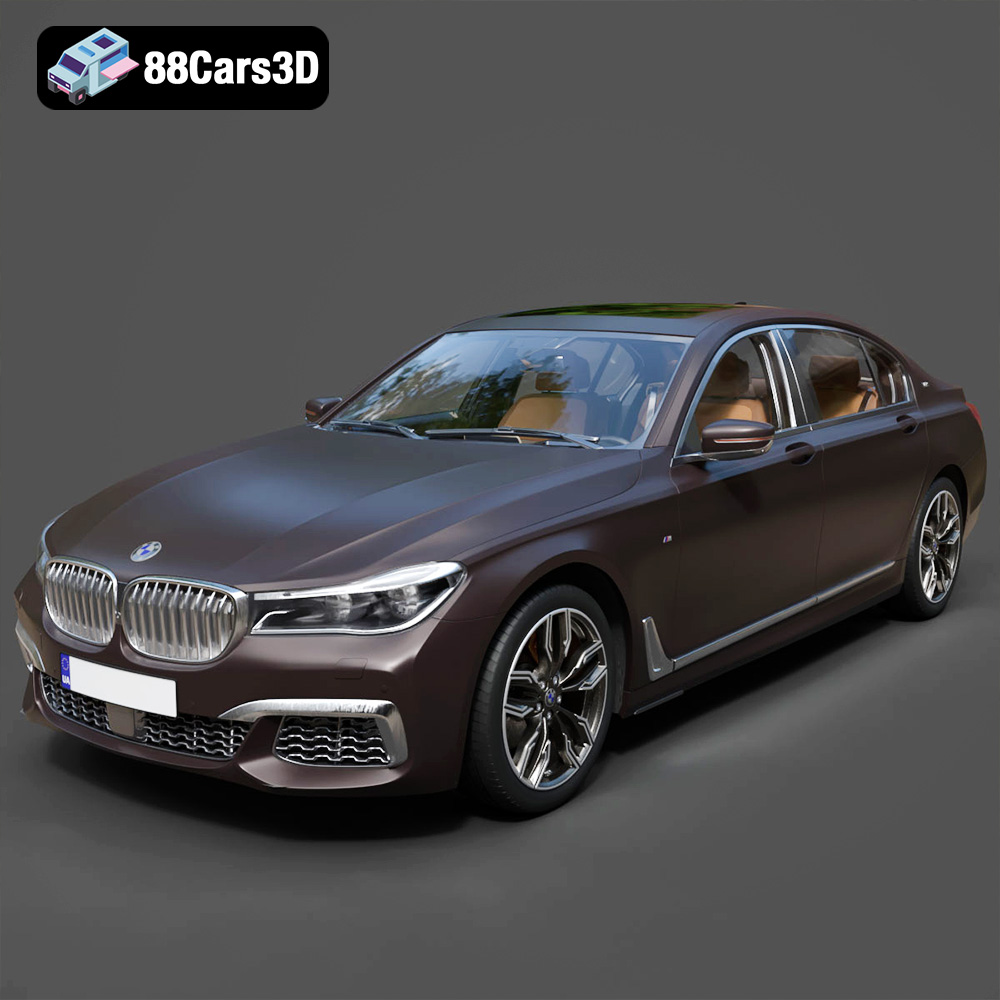
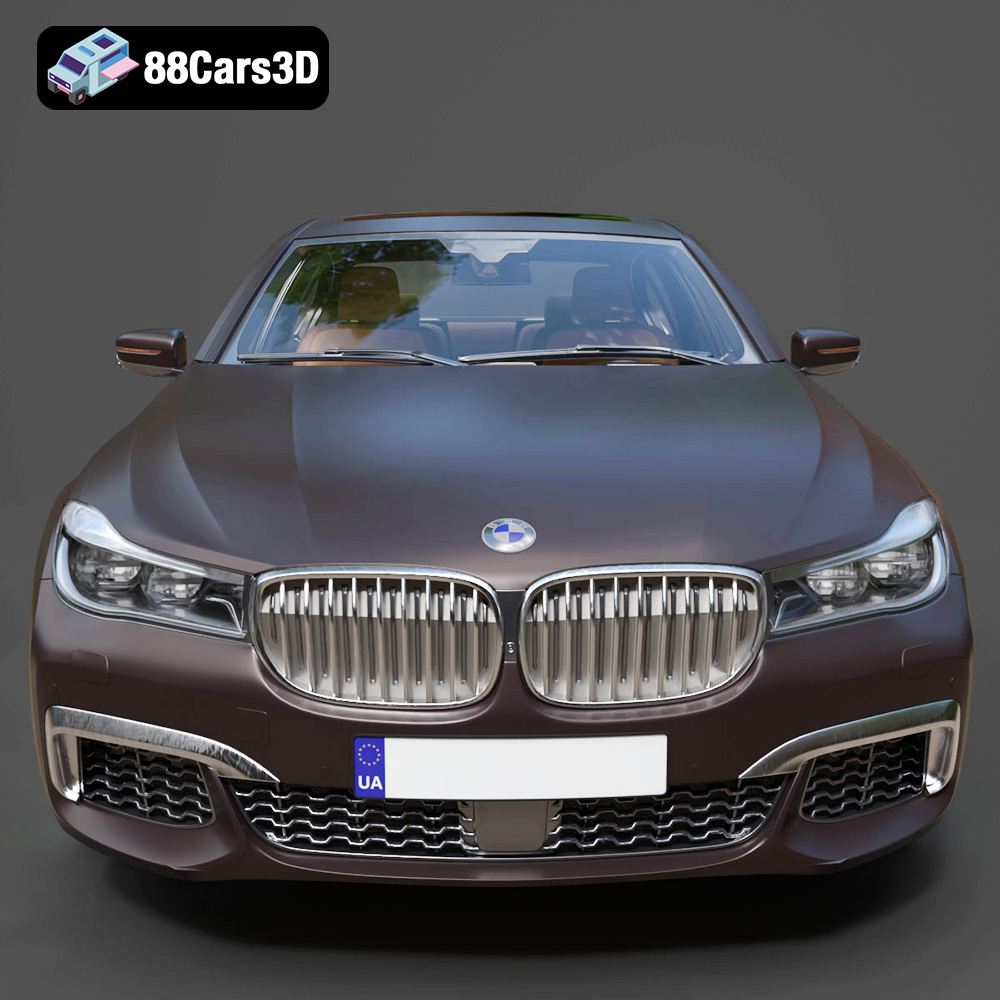
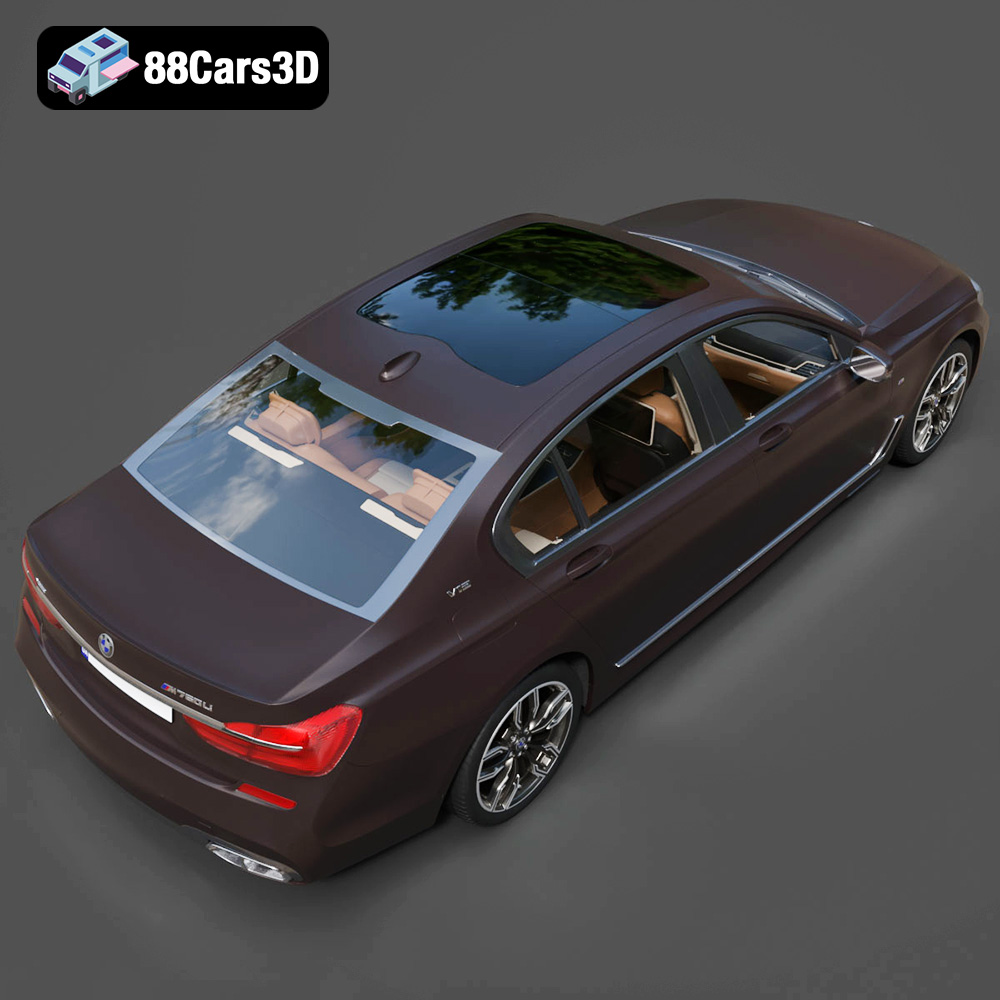
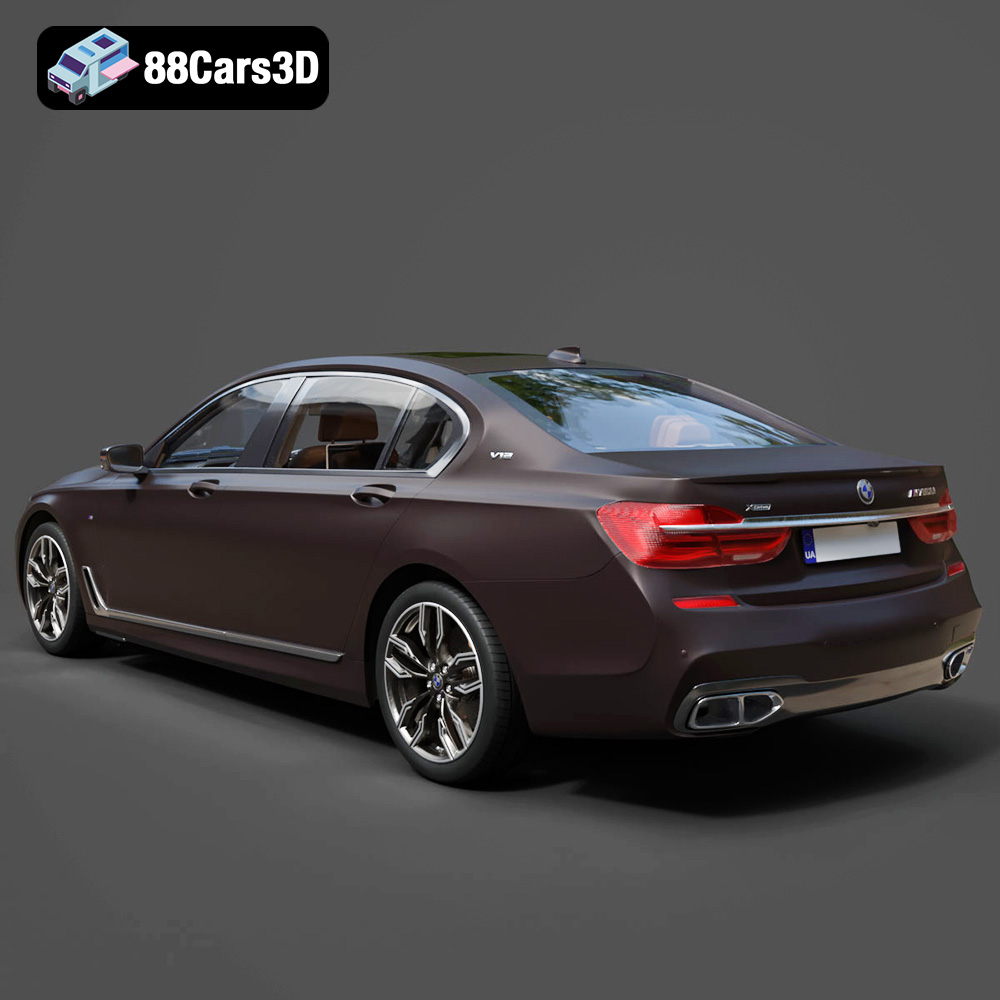
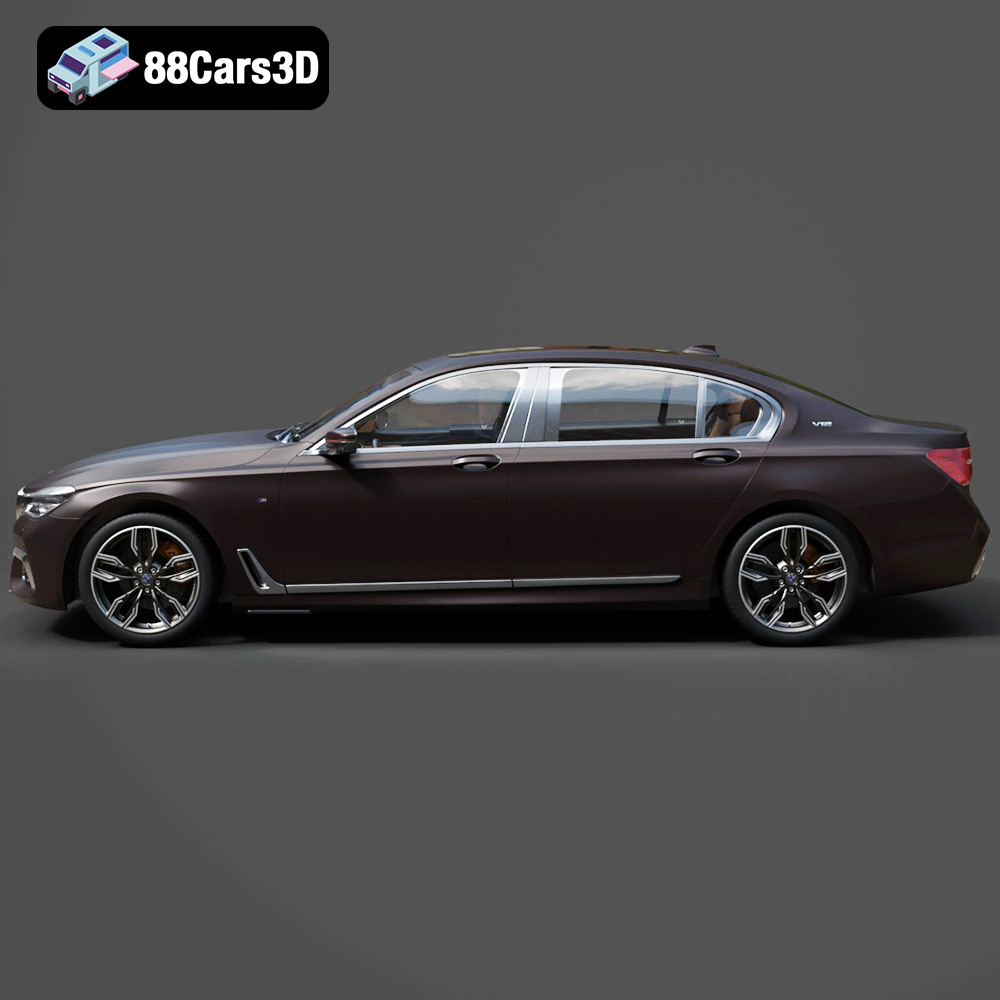
Capturing the aggressive elegance of the BMW M7’s exterior requires an unwavering commitment to detail. The model accurately portrays the G12 long-wheelbase body proportions, giving it that unmistakable commanding presence. Key M-style design elements, like the sculpted hood lines, aerodynamic front bumper, and prominent side air intakes, are meticulously recreated, defining its performance pedigree. The signature kidney grille and LED headlight assembly are rendered with precision, complete with subtle internal reflectors and light guides that would catch the light realistically in any render. Chrome trim, window surrounds, and the distinctive quad exhaust system with rear diffuser styling further enhance its authenticity, contributing to truly photorealistic automotive rendering.
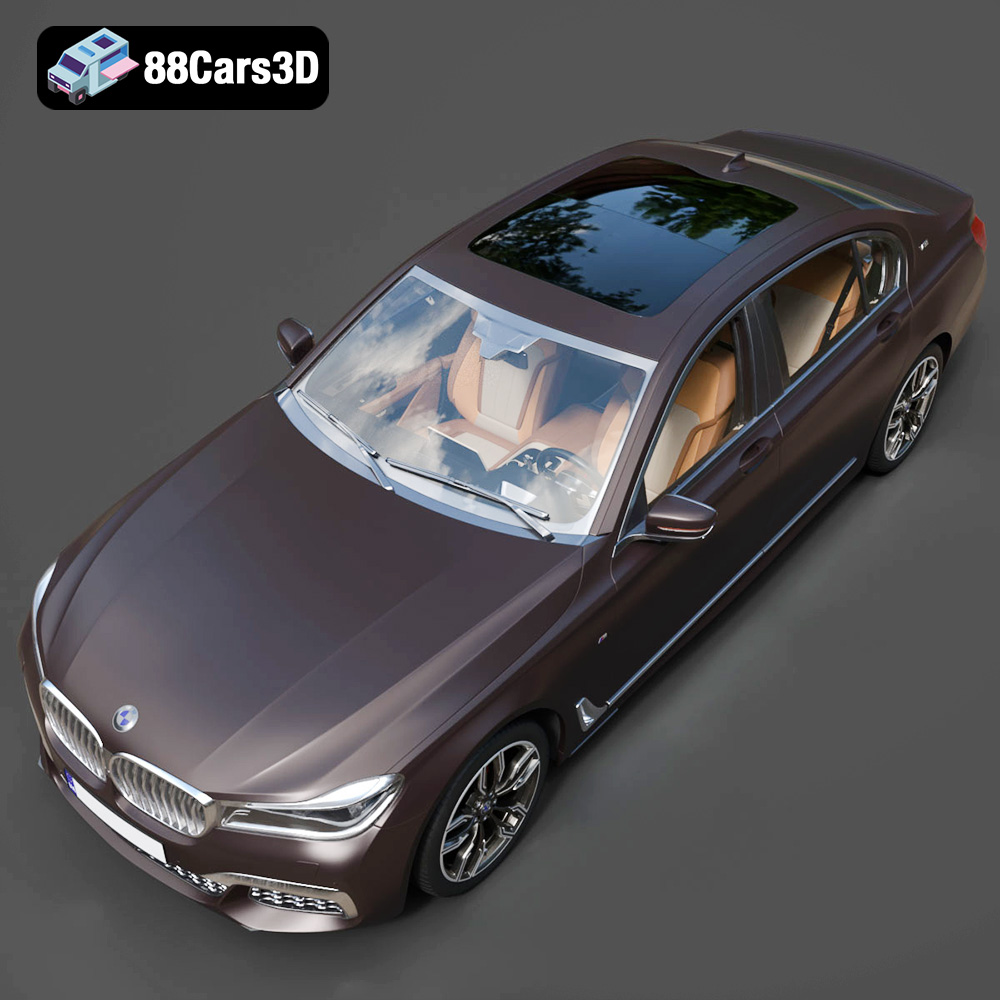
Where many 3D car models might skimp on interior detail, the BMW M7 (G12) excels, offering a truly high-quality interior. This is crucial for applications that require close-up views or immersive first-person experiences. The dashboard is replicated with high resolution, showcasing the digital instrument cluster and infotainment display. The center console, with its array of controls and trim elements, is faithfully modeled. Leather seat modeling includes intricate stitching details, while the rear executive seating layout confirms its luxury status. From premium steering wheel controls to door panels and even ambient lighting strips, every element is present, optimized yet detailed enough for cinematic close-ups and interactive exploration. This level of interior fidelity transforms the model into a versatile tool for visualization and simulation.
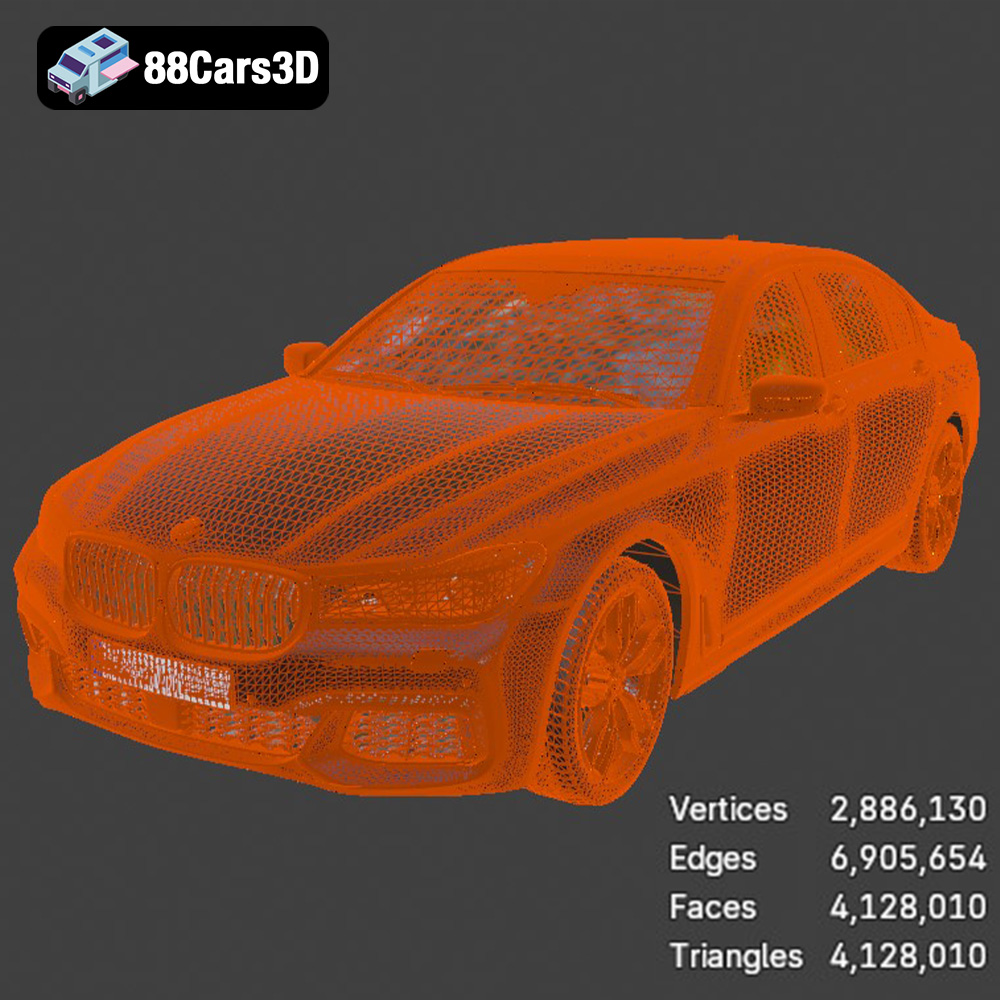
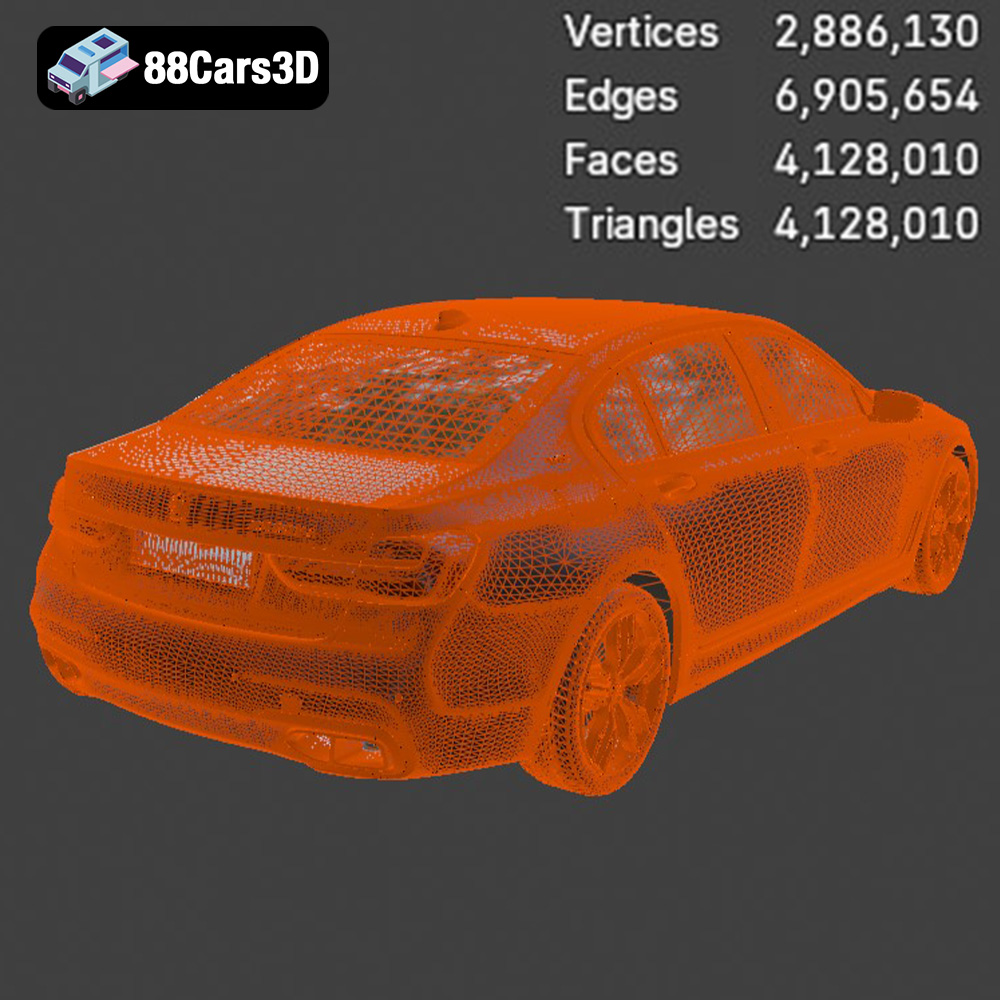
Beyond the visual, the model boasts significant technical advantages. Its clean and well-organized mesh structure ensures smooth deformations and efficient rendering. Built to real-world scale accuracy, it seamlessly integrates into architectural visualization scenes or accurate driving simulations without requiring tedious adjustments. A proper pivot setup for steering and wheel rotation simplifies animation workflows, allowing for dynamic camera movements and realistic vehicle motion. Furthermore, optimized polygon flow balances detail with performance, making the model suitable for both demanding offline rendering and the more constrained environments of game development or AR/VR. This thoughtful engineering makes the BMW M7 an incredibly robust and adaptable 3D asset.
The versatility of a high-quality asset like the BMW M7 (G12) with HQ Interior 2017 3D Model truly shines when integrated into various professional workflows. Its robust construction and detailed design make it an invaluable tool for multiple industries.
For advertising agencies, automotive manufacturers, and visualization studios, cinematic rendering is paramount. Using software like 3ds Max with V-Ray or Corona Renderer, or Blender with Cycles, artists can leverage the BMW M7 model to create stunning photorealistic imagery and animations. The clean topology and high-quality interior lend themselves perfectly to complex lighting scenarios, from polished showroom environments to dramatic urban nightscapes. Artists can easily customize materials, apply realistic car paint shaders, and set up intricate camera paths to highlight the vehicle’s luxurious lines and powerful stance. This model dramatically reduces the time spent on initial modeling, allowing more focus on artistic direction and final polish.
Case Study: Luxury Marketing Campaign A global automotive marketing firm is tasked with launching a new campaign for a luxury sedan, featuring dynamic visuals in various settings – an elegant city street, a modern showroom, and a high-speed track. By purchasing the BMW M7 (G12) with HQ Interior 2017 3D Model from 88cars3d.com, their 3D artists gain immediate access to a production-ready asset. They use the .max file in 3ds Max, quickly applying their studio’s proprietary metallic car paint shaders and adjusting interior material swatches to match specific brand guidelines. The pre-set pivot points for wheels and steering allow animators to instantly set up driving sequences, saving weeks of development time. The high-resolution interior is perfect for close-up shots demonstrating the car’s luxury features, eliminating the need for expensive physical photography or reshoots.
In the realm of interactive experiences, efficiency and optimization are key. Game developers and AR/VR creators utilize engines like Unreal Engine and Unity to build immersive worlds. The BMW M7 model, particularly in .fbx or .unreal formats, is an excellent candidate for these environments. Its optimized polygon flow ensures smooth performance without sacrificing visual fidelity. Developers can import the model, apply Physically Based Rendering (PBR) materials, and set up collision geometry and LODs (Levels of Detail) to ensure it performs well across different platforms. This makes it ideal for everything from high-stakes racing games and open-world urban adventures to interactive virtual showrooms where potential buyers can explore the car’s features in detail.
Case Study: Interactive Virtual Showroom An automotive brand wants to launch an immersive virtual showroom experience for their latest luxury performance line. They opt to develop it in Unreal Engine. Instead of modeling a car from scratch, they acquire the BMW M7 (G12) with HQ Interior 2017 3D Model. The provided .unreal asset significantly accelerates their development. The artists quickly integrate the model into their virtual environment, setting up interactive hotspots that allow users to open doors, explore the high-quality interior, change exterior paint colors, and even activate specific lighting features. The real-world scale and detailed interior ensure a highly believable and engaging user experience, allowing potential customers to connect with the vehicle digitally before a physical test drive.
The utility of the BMW M7 (G12) with HQ Interior 2017 3D Model extends far beyond digital screens. With the advent of accessible 3D printing technology, this digital asset can be transformed into a tangible, physical collectible, bringing the luxury sedan into the real world.
To transition from a digital rendering asset to a 3D printable object, the model needs careful preparation, usually involving conversion to the .stl format. The core requirement for 3D printing is “manifold” geometry, meaning the model must be a perfectly closed volume with no holes, inverted normals, or intersecting faces. A high-quality source model, like the BMW M7 from 88cars3d.com, typically possesses clean geometry that simplifies this conversion process. During this stage, interior details might be simplified or removed depending on the desired scale and resolution of the physical print, as extremely fine details might not resolve on smaller prints.
The success of a 3D print depends heavily on choosing the right settings. For a detailed automotive model like the BMW M7, recommended scales typically range from 1:32 to 1:18, allowing for a good balance of detail and manageable print time. A layer height of 0.10–0.18 mm is often suggested for FDM printers to capture finer curves and features, while resin (SLA/DLP) printers can achieve even finer detail with smaller layer heights. Wall thickness is critical for structural integrity, usually between 1.2–2.0 mm. Supports are almost always required for complex overhangs such as mirrors, bumper details, and side skirts. After printing, post-processing is key: sanding to smooth layer lines, applying primer, and then painting with metallic or gloss finishes, perhaps even adding chrome detailing, will elevate the printed model to a true display piece.
Case Study: Creating a Collector’s Desk Model A hobbyist automotive enthusiast wants a detailed scale model of the BMW M7 (G12) for their desk but can’t find a suitable commercial kit. They discover the 3D printable version of the BMW M7 (G12) with HQ Interior 2017 3D Model. They download the .stl file and prepare it for their resin 3D printer. Setting the scale to 1:24, they optimize the supports for the delicate rear diffuser and side mirrors. After a successful print, they meticulously sand, prime, and paint the model, using automotive-grade paints to achieve a factory-accurate finish. The resulting physical model is a unique, high-fidelity representation of their favorite luxury sedan, made possible by the versatile digital asset.
The inherent flexibility of a well-constructed 3D asset like the BMW M7 (G12) goes beyond its immediate use cases. It serves as a creative canvas, allowing artists and designers to adapt it to virtually any vision or requirement.
One of the most powerful advantages of a digital model is the ease of customization. Artists can effortlessly change the exterior color of the BMW M7, experimenting with everything from classic metallic finishes to dramatic matte or even bespoke custom paint jobs. Wheel designs can be swapped out or tweaked, and brake caliper colors adjusted to match different aesthetic preferences or brand variations. The high-quality interior also offers opportunities for personalization, allowing changes to leather color, trim accents, and dashboard materials to reflect different luxury packages or custom commissions. The ability to add custom license plates further personalizes the vehicle for specific scenes or characters.
A car model doesn’t exist in a vacuum; its impact is significantly influenced by its surroundings. The BMW M7 model’s realistic proportions and optimized geometry make it seamless to integrate into a diverse range of digital environments. Imagine it perfectly parked in a corporate scene, gleaming under the lights of a luxury showroom render, or powerfully cruising through urban night visuals. The model’s material setup is designed to react realistically to various lighting conditions, allowing artists to adjust lighting for daylight, golden hour, or dramatic night city scenes, bringing out different aspects of its design and evoking specific moods. This adaptability makes it an invaluable asset for creating compelling visual narratives.
In the complex landscape of 3D production, having access to premium, technically sound 3D car models is a game-changer. The BMW M7 (G12) with HQ Interior 2017 3D Model stands as a shining example of what such an asset can offer: unparalleled detail, broad format compatibility, and immense versatility for a wide array of applications. Whether your project demands breathtaking automotive rendering, efficient game asset development, immersive AR/VR experiences, or even a tangible 3D printed collectible, this model provides the robust foundation you need.
Its accurate G12 proportions, aggressive M-style features, and meticulously crafted high-quality interior ensure that your digital creations resonate with realism and luxury. By understanding the nuances of file formats and leveraging the detailed technical specifications, professionals can integrate this model seamlessly into their workflows, saving invaluable time and resources. For those seeking to elevate their digital automotive projects, exploring the high-quality 3D car models available at 88cars3d.com is an essential step. Invest in precision, invest in realism, and drive your digital vision forward with assets that truly deliver.
The BMW M7 (G12) with HQ Interior 2017 3D Model is a high-detail digital recreation of the luxury performance sedan based on the long-wheelbase G12 platform. Combining executive-class comfort with aggressive M styling cues, this model represents premium engineering, advanced technology, and dynamic road presence. This 3D model accurately captures the extended wheelbase proportions, signature kidney grille design, sculpted hood lines, aerodynamic front bumper, LED headlight detailing, side air intakes, quad exhaust outlets, and refined luxury cabin. The high-quality interior includes realistic materials, advanced dashboard layout, rear executive seating, and premium trim elements. Designed with clean topology and real-world scale accuracy, it is ideal for rendering, animation, automotive visualization, game development, and AR/VR luxury environments. Perfect for corporate scenes, luxury showroom renders, urban night visuals, and high-end driving simulations.
$9.99
.7series
.arvr
.automotive
.blend
.bmw
.car3dmodel
.executivecar
.fbx
.gameasset
.glb
.hqinterior
.luxurysedan
.m7g12
.max
.obj
.performancecar
.ply
.rendering
.simulation
.stl
.unreal