Get 50% OFF All Premium 3D & STL Models!

The world of 3D car models is a dynamic intersection of artistry, engineering, and technology. From stunning automotive renderings that grace magazine covers to realistic game assets that immerse players in virtual worlds, meticulously crafted 3D car models are essential. This article explores the key aspects of working with 3D car models, covering everything from file formats and workflows to real-world applications in automotive rendering and game development. Whether you’re a seasoned 3D artist or just starting out, understanding these principles will help you create stunning visual experiences.
Choosing the right file format is crucial for a seamless workflow when working with 3D car models. Different formats excel in different areas, influencing compatibility, data preservation, and performance. Here’s a detailed breakdown of common 3D model file formats:
.blend files are the native format for Blender, a powerful and open-source 3D creation suite. They offer the advantage of storing the entire scene, including meshes, materials, textures, lighting, animations, and modifiers. This makes .blend ideal for iterative design within Blender. However, their compatibility with other software can be limited. When to use: For projects entirely within Blender or when you need maximum editability within the Blender environment.
.fbx (Filmbox) is a widely supported format developed by Autodesk. Its strength lies in its ability to preserve complex scene data, including geometry, textures, animations, and even skeletal rigging. This makes it the go-to format for transferring 3D car models between different software packages, especially for game development. Both Unreal Engine and Unity natively support .fbx import. It’s excellent for retargeting animations and maintaining visual fidelity. When to use: For exporting 3D car models to Unreal Engine, Unity, or other real-time engines while preserving animation and material information.
.obj (Wavefront Object) is one of the oldest and most universally supported 3D file formats. It stores only the geometric data (vertices, faces, and UV coordinates) and basic material information, typically in an accompanying .mtl file. While it lacks the sophistication of .fbx (no animation support, limited material options), its simplicity makes it highly compatible across various 3D software packages. When to use: When you need maximum compatibility across different software programs and don’t need animation or complex material information.
.glb (GL Transmission Format Binary) is a relatively new format designed for efficient delivery and display of 3D models in web browsers, AR (Augmented Reality), and VR (Virtual Reality) applications. It’s a binary format that packages the 3D model, textures, and animations into a single file, reducing the number of HTTP requests and improving loading times. .glb is rapidly becoming the standard for web-based 3D experiences. When to use: For deploying 3D car models to websites, AR/VR applications, and other platforms where efficient loading and rendering are critical.
.stl (Stereolithography) is a format primarily used for 3D printing. It represents the surface geometry of a 3D model as a collection of triangles. It doesn’t store color, textures, or material information. The resolution of the triangulation directly affects the quality of the printed object. When to use: For preparing 3D car models for 3D printing.
.ply (Polygon File Format) is a format capable of storing a wide range of data, including color, normals, texture coordinates, transparency, and even custom properties. It’s often used in CAD (Computer-Aided Design) and scientific visualization applications where precise geometric data and additional attributes are required. When to use: For specialized applications such as CAD, reverse engineering, or scientific data analysis where high precision and data richness are required.
.unreal is a file type not typically directly exported to but represents an asset already imported and processed within the Unreal Engine. It’s less a standard export format and more the result of importing an FBX, OBJ, or similar file into the Unreal project. This is where you apply materials, create Blueprints, and optimize the asset for real-time use. The original source file (e.g., FBX) is required for transferring the model into a new Unreal project. When to use: To represent the complete and fully functional 3D car model inside the Unreal Engine, ready for use in your game or simulation. The workflow here is FBX -> Unreal Engine -> .uasset (Unreal Asset).
.max files are the native format for 3ds Max, another leading 3D modeling and animation software package. Similar to .blend, .max files store the entire scene, including geometry, materials, textures, lighting, animations, and modifiers specific to 3ds Max. This allows for complete editability within the 3ds Max environment. When to use: For projects entirely within 3ds Max or when needing full control over all aspects of the scene within 3ds Max.
Creating realistic and visually appealing 3D car models involves a series of meticulous steps. From initial concept to final rendering, each stage requires attention to detail and a strong understanding of 3D modeling principles.
The foundation of any good 3D car model is its topology – the arrangement of vertices, edges, and faces that define the shape. Clean and efficient topology is crucial for achieving smooth surfaces, proper deformation during animation, and efficient rendering. Polygon count should be carefully managed to balance visual fidelity and performance. Subdivision surface modeling is a common technique for creating smooth, organic shapes like car bodies. This involves starting with a low-polygon base mesh and then subdividing it to increase the level of detail. Attention to edge flow is key to avoiding pinching or distortion. Using proper quads (four-sided polygons) is almost always best practice and is far more predictable when subdividing. Triangles (three-sided polygons) can be used sparingly to resolve complex areas, but avoid them wherever possible.
UV unwrapping is the process of projecting the 3D model’s surface onto a 2D plane, allowing you to apply textures. A good UV unwrap is essential for minimizing distortion and maximizing texture resolution. Seams (where the UV map is cut) should be placed in inconspicuous locations, such as along panel lines or underneath the car. Once the UVs are unwrapped, you can create textures using software like Adobe Photoshop or Substance Painter. PBR (Physically Based Rendering) materials are now standard in most 3D applications and game engines. These materials simulate how light interacts with surfaces in the real world, resulting in more realistic and believable renderings. Key PBR textures include base color (albedo), metallic, roughness, normal map, and ambient occlusion.
Automotive rendering is the art of creating photorealistic images of cars using 3D models. These renderings are used for advertising, marketing, and design visualization.
Lighting is paramount in automotive rendering. Realistic lighting can make or break an image. HDRI (High Dynamic Range Image) lighting is often used to create realistic reflections and ambient illumination. An HDRI is a panoramic image that captures a wide range of light intensities, allowing you to accurately simulate real-world lighting conditions. Key lights, fill lights, and rim lights are also used to sculpt the shape of the car and highlight its key features. Understanding the inverse square law (light intensity decreases with the square of the distance) is important for creating realistic lighting setups.
Creating realistic car paint materials requires careful attention to detail. Car paint typically consists of multiple layers, including a base coat, clear coat, and metallic flakes. These layers can be simulated using shader networks in rendering software like V-Ray, Arnold, or Octane Render. Micro-scratches and imperfections can also be added to the surface to enhance realism. For metal parts, using accurate IOR (Index of Refraction) values is essential for achieving realistic reflections. Chrome, for example, has a very high IOR, resulting in highly reflective surfaces.
Creating 3D car models for games requires a different approach than creating them for rendering. The primary goal is to achieve a balance between visual fidelity and real-time performance.
Game engines have strict limitations on polygon count. High-poly models can significantly impact frame rates, resulting in a poor user experience. Therefore, it’s crucial to optimize 3D car models before importing them into a game engine. Polygon reduction techniques, such as decimation, can be used to reduce the number of polygons while preserving the overall shape of the model. Care should be taken to avoid creating artifacts or distortions. Baking high-poly details onto low-poly models using normal maps is a common technique for retaining visual fidelity while reducing polygon count.
LOD (Level of Detail) systems are used to dynamically adjust the complexity of 3D models based on their distance from the camera. When the car is far away, a low-poly version is displayed. As the car gets closer, a higher-poly version is displayed. This technique helps to maintain a smooth frame rate without sacrificing visual quality. Creating LODs manually can be time-consuming. Many 3D software packages and game engines offer tools for automatically generating LODs.
3D car models are used in a wide variety of applications, from advertising and marketing to game development and automotive design. Let’s look at a couple of real-world examples.
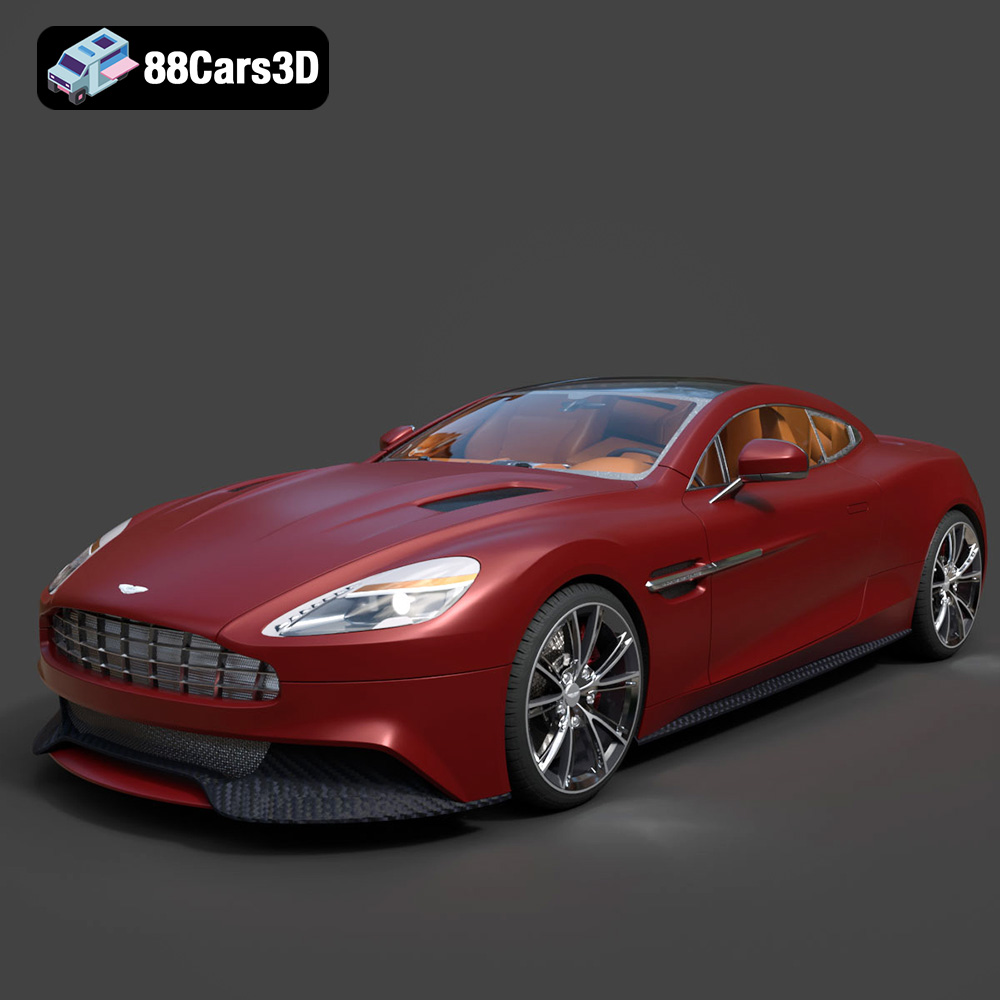
Automakers rely heavily on 3D car models for their advertising campaigns. These models are used to create photorealistic images and animations that showcase the latest car models. 3D car models allow automakers to create visually stunning content that captures the attention of potential buyers. They are especially useful for creating images of cars in environments that would be difficult or impossible to photograph in real life.
3D car models are essential for creating realistic and immersive racing games. The level of detail in the car models can significantly impact the player’s experience. Realistic car models help to create a sense of immersion and make the game more engaging. Games like Gran Turismo and Forza Motorsport are known for their highly detailed and realistic car models. To purchase top quality models, check out 88cars3d.com to find the perfect fit for your project.
Working with 3D car models is a complex and challenging but also rewarding field. By understanding the principles of modeling, texturing, lighting, and optimization, you can create stunning visual experiences that push the boundaries of realism and immersion. Whether you’re creating automotive renderings or game assets, the key is to pay attention to detail and continuously strive to improve your skills. Resources like 88cars3d.com can provide access to high-quality 3D car models, saving you time and effort. By staying up-to-date with the latest technologies and techniques, you can unlock your full potential and create truly exceptional 3D car models.

Price: $129.99

Price: $99.99

Price: $89.99