Get 50% OFF All Premium 3D & STL Models!

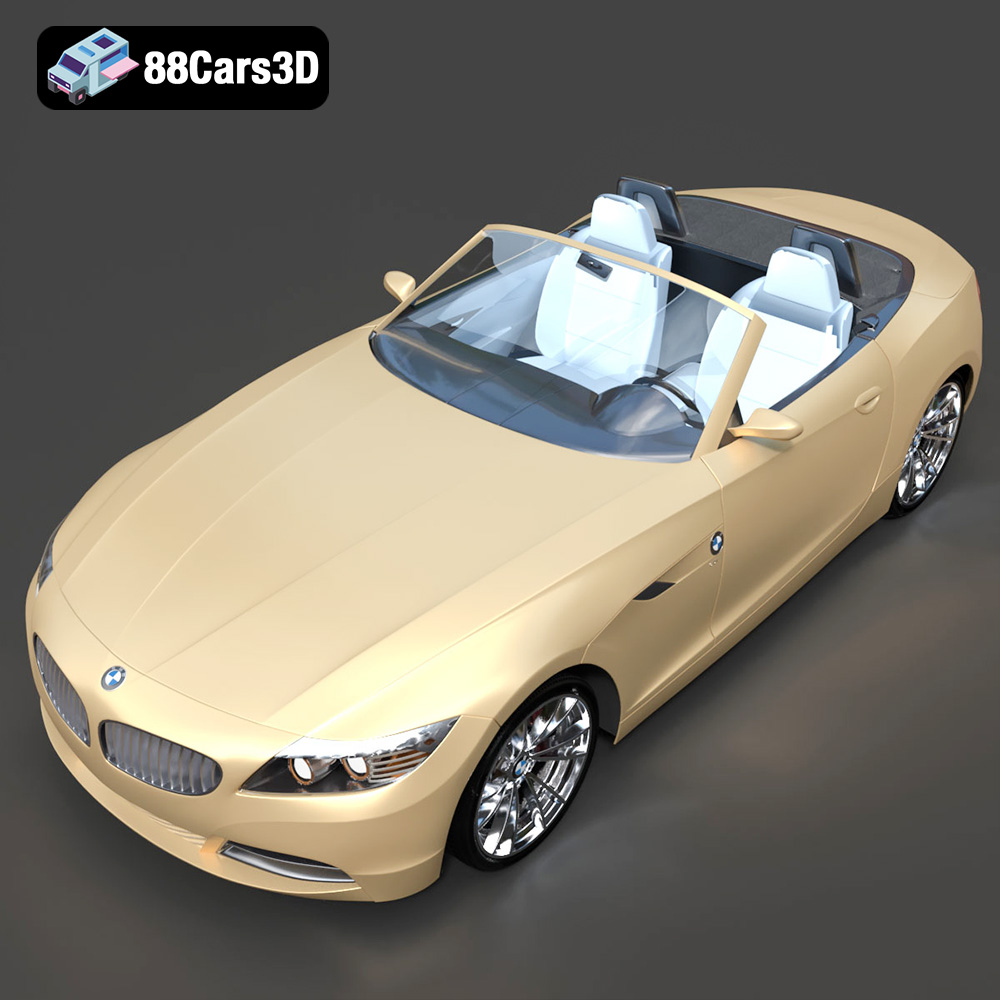
The BMW Z4, a symbol of sporty elegance and open-top driving pleasure, is now within reach for 3D printing enthusiasts. The BMW Z4 3D Model available at 88cars3d.com offers a detailed recreation of this iconic roadster, ready to be brought to life through additive manufacturing. This comprehensive guide will walk you through every step of the 3D printing process, from selecting the right materials and settings to post-processing techniques that will elevate your finished model to a showroom-worthy piece. Whether you’re a seasoned 3D printing expert or a newcomer to the world of additive manufacturing, this guide will provide the knowledge and insights needed to create a stunning 3D printed BMW Z4.
Before diving into the specifics of 3D printing the BMW Z4, it’s crucial to understand the different file formats available and their suitability for additive manufacturing. The digital world offers a variety of formats, each with its strengths and weaknesses. Choosing the right format ensures a smoother printing process and a higher-quality final product.
The .stl (Stereolithography) format is the undisputed king of 3D printing. It represents the surface geometry of a 3D object as a collection of triangles. This simplicity makes it universally compatible with slicing software and 3D printers. The BMW Z4 3D Model from 88cars3d.com includes an STL file specifically optimized for 3D printing. While STL files don’t store color or texture information, their widespread adoption and reliability make them the go-to choice for most 3D printing projects. It’s important to ensure the STL file has a high enough resolution (number of triangles) to capture the fine details of the Z4, such as the kidney grille and aerodynamic vents.
The .obj format is a more versatile option than STL, as it can store color and texture information along with the 3D geometry. This is particularly useful if you intend to create a multi-colored 3D printed BMW Z4, although this typically requires specialized multi-material 3D printers. While .obj files are compatible with many slicing programs, they might require some pre-processing to ensure optimal printing, such as converting textures to a format your printer understands.
The .ply (Polygon File Format) is another format that supports color and texture data. It’s known for its ability to represent high-detail models with greater precision compared to STL. If the BMW Z4 model comes with a .ply file and you require the highest possible detail in your print, especially for smaller scales, this format could be considered. However, compatibility with slicing software might be more limited compared to STL.
* **.blend:** This is the native file format for Blender, a popular open-source 3D creation suite. It’s incredibly versatile, allowing for extensive model editing and customization. However, you’ll need Blender to work with .blend files before exporting to a 3D printable format like STL.
* **.fbx:** Filmbox files are commonly used for animation and game development. They support complex data like animations, textures, and materials. It’s primary use is to export the model into other applications like slicing software.
* **.glb:** GL Transmission Format binary files are often used for transmitting 3D models that can be viewed in web browsers or Augmented Reality (AR) applications.
* **.max:** This is the native file format for 3ds Max, a professional 3D modeling and animation software. Similar to Blender, you’ll need 3ds Max to edit the model and export it to a printable format.
For 3D printing the BMW Z4 model, the .stl format is generally the best choice due to its universal compatibility and ease of use. If you intend to add color or texture, you might explore .obj or .ply, but be prepared for potential pre-processing steps. Regardless of the initial format, the ultimate goal is to have a clean, watertight STL file that your slicing software can interpret accurately.
The choice of 3D printing technology and material significantly impacts the final quality, strength, and appearance of your 3D printed BMW Z4. Two primary technologies dominate the market: Fused Deposition Modeling (FDM) and Resin printing (SLA/DLP/MSLA).
FDM printers build objects by extruding molten plastic filament layer by layer. This technology is known for its versatility, affordability, and wide range of compatible materials.
* Material Recommendations:
* PLA: Polylactic Acid is a biodegradable thermoplastic derived from renewable resources. It’s easy to print with, produces minimal odor, and offers good detail for larger-scale models. PLA is a great starting point for beginners.
* PETG: Polyethylene Terephthalate Glycol-modified is a more durable and heat-resistant alternative to PLA. It offers better layer adhesion and can withstand higher temperatures, making it suitable for parts that might be exposed to sunlight.
* ABS: Acrylonitrile Butadiene Styrene is a strong and impact-resistant plastic commonly used in automotive applications. However, ABS requires a heated bed and enclosure to prevent warping, making it more challenging to print with.
* Printer Settings for FDM:
* Layer Height: 0.1mm – 0.2mm. Lower layer heights produce smoother surfaces but increase print time.
* Infill Density: 15% – 25%. Adjust infill based on desired strength and weight.
* Print Speed: 40mm/s – 60mm/s. Slower speeds improve detail and reduce the risk of print failures.
* Support Structures: Enable supports for overhanging features like the side mirrors and rear spoiler.
Resin printers use light to cure liquid resin, creating incredibly detailed and smooth parts. This technology excels at producing intricate geometries and is ideal for smaller-scale models where fine details are crucial.
* Material Recommendations:
* Standard Resin: Offers a good balance of strength and detail, suitable for general-purpose printing.
* Tough Resin: Provides increased impact resistance and durability, making it ideal for parts that need to withstand stress.
* Flexible Resin: Allows for the creation of flexible or rubber-like parts, which could be used for tires or other components.
* Printer Settings for Resin:
* Layer Height: 0.025mm – 0.05mm. Resin printing allows for incredibly fine layer heights, resulting in exceptionally smooth surfaces.
* Exposure Time: Calibrate exposure time based on the specific resin used.
* Support Structures: Resin printing typically requires more support structures than FDM, especially for overhanging features.
For the BMW Z4 3D Model, resin printing is highly recommended for achieving the highest level of detail and a smooth, paintable surface, particularly for smaller scales. However, FDM printing with PLA or PETG can still produce excellent results for larger models where dimensional accuracy is less critical.
Once you’ve chosen your 3D printing technology and material, the next step is to prepare the BMW Z4 model for printing using slicing software. This software converts the 3D model into a series of instructions that the printer can understand.
Several excellent slicing software options are available, both free and paid:
* Cura: A popular open-source slicer with a user-friendly interface and extensive customization options.
* PrusaSlicer: Another excellent open-source slicer known for its advanced features and support for various printer types.
* Simplify3D: A commercial slicer with advanced control over printing parameters and support structures.
* Chitubox/Lychee Slicer: Common software for Resin printers.
The orientation of the BMW Z4 model on the build plate significantly impacts print quality, support requirements, and overall printing time.
* FDM Printing: For FDM printing, orienting the body of the Z4 with the roof facing down can minimize the need for supports on the visible surfaces. However, this will require more supports for the underside of the car. Consider angling the model slightly to further reduce support requirements and improve surface finish.
* Resin Printing: Resin printing typically requires angling the model to minimize the cross-sectional area of each layer, reducing the force required to peel the layer from the build plate. Orient the BMW Z4 at a 45-degree angle, ensuring that the most detailed features are facing upwards.
Support structures are essential for printing overhanging features like the side mirrors, rear spoiler, and wheel arches.
* FDM Printing: Use tree supports or linear supports with a low density to minimize material usage and make removal easier.
* Resin Printing: Manually add supports to critical areas, focusing on areas with small contact points. Use a combination of light, medium, and heavy supports to ensure stability.
The BMW Z4 3D Model can be scaled to your desired size. Common scales for model cars include 1:24, 1:18, and 1:12. Consider the limitations of your 3D printer and the level of detail required when choosing a scale.
Achieving a successful 3D print of the BMW Z4 requires careful attention to printer settings. These settings will vary depending on your chosen 3D printing technology, material, and slicing software. Here are some general guidelines to optimize your print:
* Temperature: Set the nozzle temperature according to the filament manufacturer’s recommendations.
* Bed Adhesion: Use a heated bed and apply a bed adhesion agent like glue stick or hairspray to ensure the model sticks to the build plate.
* Retraction: Adjust retraction settings to minimize stringing and oozing, especially around small details.
* Cooling: Use a part cooling fan to rapidly cool each layer, improving surface finish and preventing warping.
* Exposure Time: Calibrate exposure time using a resin calibration test print.
* Lift Speed: Adjust lift speed to minimize the force required to peel each layer from the build plate.
* Bottom Layer Exposure Time: Increase bottom layer exposure time to ensure strong adhesion to the build plate.
* Resin Temperature: Maintain a consistent resin temperature for optimal printing results.
Warping and delamination are common issues in 3D printing, especially with larger models.
* Warping: To prevent warping, use a heated bed, enclosure, and bed adhesion agents.
* Delamination: To prevent delamination, increase the printing temperature, reduce printing speed, and ensure good layer adhesion.
By carefully adjusting these settings, you can minimize the risk of print failures and achieve a high-quality 3D printed BMW Z4.
Once the 3D printing process is complete, the next step is post-processing. This involves removing support structures, sanding the surface, painting, and assembling the various components.
* Support Removal: Carefully remove support structures using pliers, cutters, or a sharp knife.
* Sanding: Sand the surface of the model with progressively finer grits of sandpaper to remove layer lines and create a smooth finish. Start with a coarse grit (e.g., 220) and gradually move to finer grits (e.g., 400, 600, 800, 1000).
* Priming: Apply a primer to the model to fill in any remaining imperfections and provide a smooth surface for painting.
* Painting: Use automotive-grade paints to achieve a realistic finish. Apply multiple thin coats, allowing each coat to dry completely before applying the next.
* Detailing: Add fine details like panel lines, badges, and lights using fine-tipped brushes and masking tape.
* Clear Coating: Apply a clear coat to protect the paint and add a glossy finish.
* Assembly: Assemble the various components of the BMW Z4 model, such as the wheels, mirrors, and interior parts, using glue or screws.
By carefully following these post-processing steps, you can transform your 3D printed BMW Z4 into a stunning replica of the iconic roadster.
Despite careful planning and execution, 3D printing can sometimes present challenges. Here are some common issues and their solutions:
* Solution: Level the bed, clean the build plate with isopropyl alcohol, apply a bed adhesion agent, increase the bed temperature, or adjust the nozzle height.
* Solution: Adjust retraction settings, decrease printing temperature, or increase travel speed.
* Solution: Use a heated bed, enclosure, and bed adhesion agents. Reduce printing speed and increase layer adhesion.
* Solution: Increase printing temperature, reduce printing speed, and ensure good layer adhesion.
* Solution: Check belt tension, tighten screws, and reduce printing speed.
By understanding these common issues and their solutions, you can quickly troubleshoot problems and get your 3D printing project back on track. The BMW Z4 3D Model from 88cars3d.com is designed to be 3D printing friendly, but understanding these issues helps in case you encounter any problems.
3D printing the BMW Z4 3D Model is a rewarding project that combines technical skills with creative expression. By carefully selecting the right 3D printing technology, materials, and settings, you can create a stunning replica of this iconic roadster. Remember to pay close attention to pre-print preparation, optimizing printer settings, and post-processing techniques to achieve the best possible results. And don’t be afraid to experiment and personalize your 3D printed BMW Z4 to make it truly unique. The detailed model available at 88cars3d.com is the perfect starting point for your next 3D printing adventure. Happy printing!
The BMW Z4 3D Model is a premium digital recreation of the iconic two-seat roadster developed by BMW. Known for its sporty proportions, long hood, short rear deck, and dynamic performance styling, the Z4 embodies precision engineering and modern roadster design.
$9.99
.arvr
.blend
.bmw
.car3dmodel
.convertible
.fbx
.gameasset
.glb
.max
.obj
.ply
.rendering
.roadster
.simulation
.sportsCar
.stl
.unreal
.vehicleasset
.z4
automotive3d