Get 50% OFF All Premium 3D & STL Models!

In the dynamic world of 3D visualization, automotive design, and game development, a static 3D car model, no matter how exquisitely detailed, only tells half the story. The true magic unfolds when that model springs to life, accelerating down a virtual highway, drifting around a corner, or simply opening a door with realistic precision. This animation capability is not a mere afterthought; it is the direct result of expert rigging – a highly technical process that breathes kinetic energy into inert polygons. For 3D artists, game developers, and automotive visualization professionals, mastering car rigging is paramount to delivering compelling and immersive experiences.
This comprehensive guide delves into the best practices for rigging 3D car models for animation. We will explore the foundational principles, dissect complex mechanics, and uncover advanced techniques across various software environments. From establishing a robust bone hierarchy and implementing intricate constraint systems to optimizing for real-time game engines and ensuring flawless export, you’ll gain the technical knowledge to transform your static car models into fully animatable assets. Whether you’re aiming for photorealistic cinematic sequences or high-performance game-ready vehicles, understanding these rigging methodologies will elevate your projects and unlock a new dimension of creative control.
Before any rigging can commence, a thorough understanding of the car’s mechanical anatomy and its corresponding 3D model preparation is essential. A well-prepared model is the bedrock of a successful rig, minimizing headaches down the line. Each functional component of a vehicle – from the main chassis to individual wheels, suspension arms, and steering linkages – must be considered as a potential moving part and appropriately structured within your 3D software.
The first step involves separating your 3D car model into logical, animatable components. Typically, this means having the main car body as a distinct object, with each wheel (and often its tire and rim separately), each brake caliper, suspension component, door, hood, and trunk lid also as individual meshes. For instance, a basic car model might be broken down into: Car_Body, Wheel_FL, Wheel_FR, Wheel_RL, Wheel_RR, Door_FL, Door_FR, Door_RL, Door_RR, Hood, Trunk. Each of these components will require its own pivot point (or origin) set precisely at its natural axis of rotation or movement. For wheels, this pivot should be at the center of the axle. For doors, it should be along the hinge line. Incorrect pivot points will lead to unrealistic rotations and difficult animation.
Furthermore, establishing a clear object hierarchy is crucial. For example, the four wheels might be parented to the Car_Body, or more intricately, each wheel could be parented to a suspension arm, which is then parented to the body. This hierarchy dictates how transformations propagate. A common base hierarchy involves a central “Master Control” null or bone, which all other car components are ultimately parented to. This allows for easy global scaling, positioning, and rotation of the entire vehicle. Always ensure that transformations (position, rotation, scale) are frozen or reset on all objects before rigging, as non-zero transforms can cause unpredictable behavior with constraints and skinning.
While often discussed in the context of modeling, clean topology and efficient edge flow are indirectly critical for rigging, especially if any parts of the car body itself need to deform (e.g., advanced suspension systems that subtly flex the wheel well, or damage simulation). For most automotive models on platforms like 88cars3d.com, the primary body is rigid. However, if you are rigging for deformation, ensure your mesh has evenly distributed quads, avoids n-gons, and has purposeful edge loops in areas of intended movement. For instance, if a component like a wiper blade arm needs to bend or compress, it must have sufficient geometry in those areas to support smooth deformation. The polygon count for a high-quality production-ready car model can range from 80,000 to 300,000+ triangles, depending on the level of detail. For game-ready assets, this might be significantly lower, relying on LODs (Levels of Detail) to manage performance.
The heart of any car rig lies in its ability to accurately simulate the movement of its wheels, the compression and rebound of its suspension, and the turning of its steering mechanism. This involves a strategic combination of bones (or joints), constraints, and often, drivers to automate complex relationships.
Each wheel typically requires a bone or a control object (often a null/empty) to govern its rotation and position. For simple forward movement, the wheel’s rotation around its local Z-axis (or whichever axis aligns with its axle) needs to be driven by the car’s overall forward motion. This is where drivers become invaluable. In Blender, for example, you can use a driver on the wheel’s rotation property, linked to the transformation of the main car body or a central control object. This allows the wheel to automatically spin when the car moves along a path. According to the Blender 4.4 documentation on animation and drivers, drivers can evaluate an expression or a script based on specific properties of other objects, offering immense flexibility for automating complex behaviors like wheel rotation linked to car movement.
Steering is often achieved using a “look-at” constraint or a similar system. A common approach is to create a target object (an empty or a bone) for each front wheel’s steering axis. When the steering control object rotates, these targets move, and the front wheel objects (or their controlling bones) use a “track to” or “look at” constraint to point towards them, effectively simulating steering. The rear wheels generally remain fixed in their rotation axis relative to the chassis, though advanced rigs might include rear-wheel steering. Suspension movement involves parenting the wheel control to a suspension bone chain, allowing for vertical travel. Limit rotation constraints are crucial here to prevent unrealistic wheel orientations.
Realistic suspension rigging varies based on complexity. For independent suspension, each wheel’s suspension can be rigged individually. A basic setup involves a vertical bone chain for each wheel, where the lowest bone controls the wheel’s vertical position and rotation. An Inverse Kinematics (IK) solver is often applied to this chain, allowing you to control the end of the chain (the wheel) while the intermediate bones (representing wishbones, shock absorbers) adjust automatically. Custom attributes or properties can be added to a main car controller, allowing animators to directly control the compression and extension of all four suspension systems simultaneously, or individually for more nuanced control over terrain.
For more advanced setups, you might use additional helper bones and “stretch to” constraints to simulate the compression and extension of actual shock absorbers. The challenge here is to ensure that the wheel maintains its correct orientation relative to the ground plane, even as the suspension compresses and the chassis tilts. This often requires carefully placed “aim” constraints or “up vectors” on the wheel controller to maintain proper alignment. When sourcing high-quality base models from marketplaces like 88cars3d.com, always check if the model’s geometry for the suspension components is distinct and pivot-ready, as this significantly simplifies the rigging process for intricate suspension systems.
Beyond the core locomotion, the finer details of a car’s interactivity – opening doors, lifting the hood, accessing the trunk, and operating interior elements – significantly enhance realism and storytelling potential. Rigging these components requires precision with pivot points and understanding rotational axes.
Rigging hinged elements like doors, the hood, and the trunk is conceptually straightforward but demands meticulous attention to detail. The key is to correctly identify and set the pivot point for each object along its hinge axis. For a car door, this will be a vertical line where the door meets the car body, allowing it to swing open and closed. Similarly, the hood’s pivot will typically be along its rear edge, allowing it to rotate upwards, and the trunk’s pivot along its front edge. Once the pivot point is set, the object can be parented to a control bone or directly animated with rotation transforms.
For added realism, you can implement limit rotation constraints on these control bones or objects to prevent them from rotating beyond their physically plausible range (e.g., a door can only open so far). Some advanced rigs might even include hydraulic arm simulations for the hood or trunk, using simple bone chains with “stretch to” constraints, making the opening and closing animation appear smoother and more mechanical. Always ensure the local rotation axes of your door, hood, and trunk objects are aligned correctly (e.g., Z-axis for the main swing) to simplify animation keyframing.
The interior of a car, while often less visible, contains crucial elements that enhance realism for close-up shots or interactive experiences. The steering wheel is a prime example. It should be rigged to rotate realistically with the front wheels’ steering input. This can be achieved through a driver or a direct constraint where the steering wheel’s rotation is linked to the rotation of the main steering control object. If the steering wheel is connected to a steering column, the column itself might need a simple parent constraint to follow the steering wheel’s vertical adjustments.
Wiper blades typically require a simple two-bone chain for each blade: one bone for the base pivot and another for the blade itself. These can then be animated with simple oscillating rotations, perhaps driven by a custom attribute on the main car control. For seating, while often static, some luxury or customizable cars might require rigged seats that can slide forward/backward or recline. This would involve a simple bone or null for the seat base (sliding) and another for the backrest (reclining), each with appropriate limit position or rotation constraints. For very high-fidelity projects, even pedals (accelerator, brake, clutch) can be rigged with simple pivot rotations, providing another layer of detail for animators.
The transition from a high-detail cinematic rig to a performance-optimized game engine asset is a critical phase. Rigging for real-time applications demands a strategic approach to ensure smooth performance without sacrificing visual fidelity.
In game engines like Unity or Unreal Engine, every bone and every vertex contributes to the processing load. Therefore, optimizing the rig is paramount. One of the most effective strategies is the implementation of Levels of Detail (LODs) for your rigged car models. This means having multiple versions of the car, each with decreasing polygon counts and simplified rigs, that swap out based on the camera’s distance. For the rigging aspect, lower LODs might have significantly fewer bones – perhaps only the main car body and the four wheels, omitting intricate suspension or interior rigging. The rigging structure itself can be simplified, removing unnecessary constraints or drivers that are not critical for distant views.
Furthermore, careful consideration of joint limits in your 3D software can prevent game engine issues. Limiting the range of motion for bones (e.g., a wheel can only rotate 360 degrees, a door only 90 degrees) not only adds realism but can also help game engines optimize collision detection and physics calculations. For game assets, polygon counts for a single car can range from 15,000 to 50,000 triangles for a medium-detail vehicle, with ultra-high detail potentially reaching 100,000, all while leveraging LODs to maintain frame rates. Texture atlasing is also critical; combining multiple textures into a single, larger texture map reduces draw calls, which is beneficial for both rendering and real-time performance.
The FBX (Filmbox) format is the industry standard for transferring 3D assets, including rigs and animations, between different software packages and game engines. When exporting a rigged car model, it is crucial to select the correct export settings. Always ensure that “Embed Media” is checked if you want textures to be included directly in the FBX file. Crucially, verify that “Bake Animation” is selected if you have complex drivers or constraints that might not translate directly into the target engine. Baking converts these procedural animations into traditional keyframes, ensuring consistent playback. Pay close attention to the “Units Scale” to avoid size discrepancies when importing into your game engine.
GLB (GL Transmission Format Binary) is gaining popularity, especially for web-based AR/VR applications due to its efficiency and inclusion of all necessary data (geometry, materials, textures, animations) in a single file. When exporting to GLB, ensuring that your materials are set up as PBR (Physically Based Rendering) materials (Base Color, Metallic, Roughness, Normal maps) is vital, as GLB natively supports this workflow. For both FBX and GLB, meticulously check your mesh normals and tangents, as incorrect settings can lead to lighting artifacts in the game engine. Always perform a test export and import into your target engine to identify and resolve any issues before proceeding with extensive animation work.
Even the most experienced riggers encounter challenges. Knowing how to identify and resolve common issues, alongside adopting best practices, will streamline your workflow and lead to more robust, animatable car models.
Gimbal lock is a notorious problem in 3D animation where two axes of rotation align, effectively losing one degree of freedom and making it impossible to rotate an object around that specific axis. This often manifests as unpredictable “flipping” behavior during animation, particularly with complex rotations like steering. To mitigate gimbal lock, consider using different rotation orders (e.g., XYZ, ZYX) for your control objects, or employ more advanced rigging techniques like quaternion rotations (though these can be less intuitive for animators). Using helper objects or “aim” constraints with an “up vector” can also help stabilize rotations and prevent unexpected flips, especially for wheels or cameras tracking moving objects. For critical rotational elements, sometimes a secondary, parented control object can provide an additional axis of rotation, effectively bypassing the gimbal lock issue.
A well-organized scene is a debugged scene. Establishing clear and consistent naming conventions for all bones, control objects, meshes, and materials is not merely a cosmetic choice – it’s a foundational best practice. Use prefixes (e.g., Ctrl_ for controls, Jnt_ for joints/bones, Mesh_ for meshes) and descriptive suffixes (_FL for front-left, _FR for front-right, _Master, _Suspension). For example: Ctrl_Car_Master, Jnt_Wheel_FL, Mesh_Door_FR. This systematic approach makes it infinitely easier to navigate complex rigs, identify specific components, and troubleshoot problems, particularly when working in a team or revisiting a project months later. Similarly, maintain a clean and logical hierarchy in your outliner or scene explorer. Parent objects correctly, and avoid unnecessary nesting that can complicate transformations.
Regularly auditing your rig is crucial. Before handing off a rigged model for animation, perform a series of tests:
Debugging involves isolating issues. If a wheel is misbehaving, temporarily disable constraints or drivers one by one to pinpoint the source of the problem. Use overlay displays for local axes, pivot points, and bone chains in your 3D software to visualize potential conflicts or misalignments. Never skip the debugging phase; a thoroughly tested rig saves countless hours in animation and production.
Rigging a 3D car model for animation is a meticulous blend of technical precision and creative problem-solving. It’s about translating the intricate mechanics of a real-world vehicle into a functional, animatable digital asset. From the initial stages of preparing a clean, well-structured model with accurate pivot points to establishing a robust hierarchy of bones and controls, every step builds towards a final product that can truly captivate an audience. We’ve explored the core mechanics of wheel and suspension rigging, delved into the nuanced movements of doors and interior elements, and highlighted the critical considerations for optimizing and exporting rigs for real-time game engines and AR/VR experiences.
By adhering to best practices in naming conventions, hierarchy management, and rigorous testing, you can create car rigs that are not only efficient and stable but also intuitive for animators to use. The journey from a static mesh to a dynamically animated vehicle is a rewarding one, unlocking immense creative potential in automotive visualization, game development, and cinematic production. Platforms like 88cars3d.com provide an excellent starting point with high-quality, clean 3D car models that are ideal for practicing and applying these rigging techniques. Embrace the challenge, hone your skills, and transform your 3D car models into animated masterpieces that tell compelling stories and deliver immersive experiences.
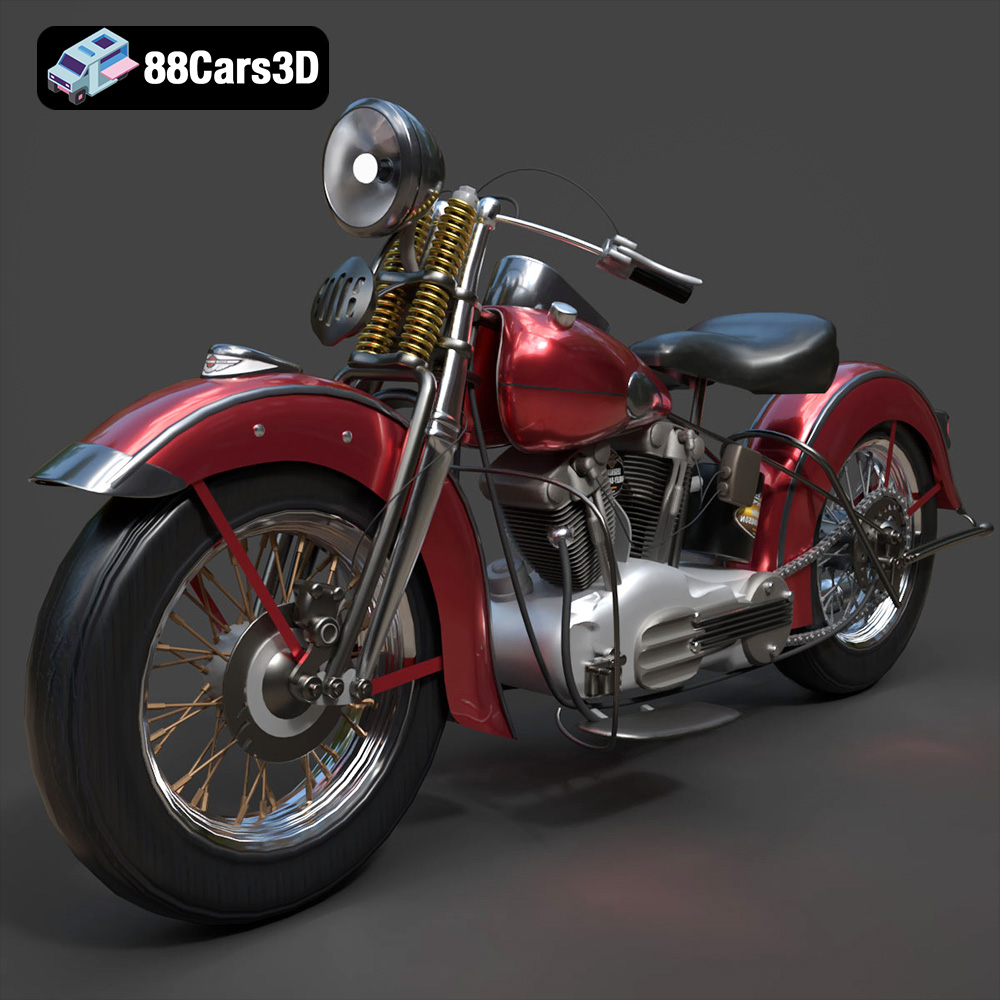
Texture: Yes
Material: Yes
Download the Harley Davidson F 1946 3D Model featuring clean geometry, realistic detailing, and a fully modeled interior. Includes .blend, .fbx, .obj, .glb, .stl, .ply, .unreal, and .max formats for rendering, simulation, and game development.
Price: $19.99
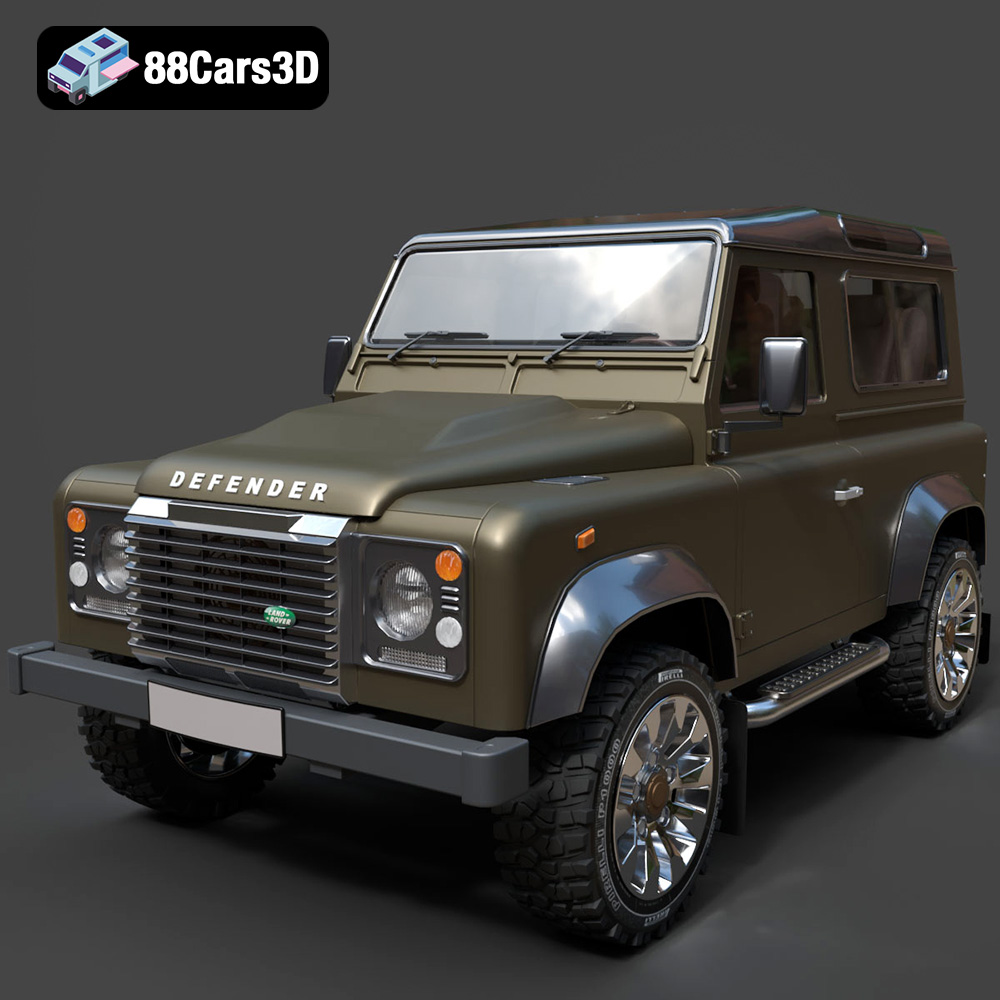
Texture: Yes
Material: Yes
Download the Land Rover Defender Works V8 3D Model featuring clean geometry, realistic detailing, and a fully modeled interior. Includes .blend, .fbx, .obj, .glb, .stl, .ply, .unreal, and .max formats for rendering, simulation, and game development.
Price: $19.99
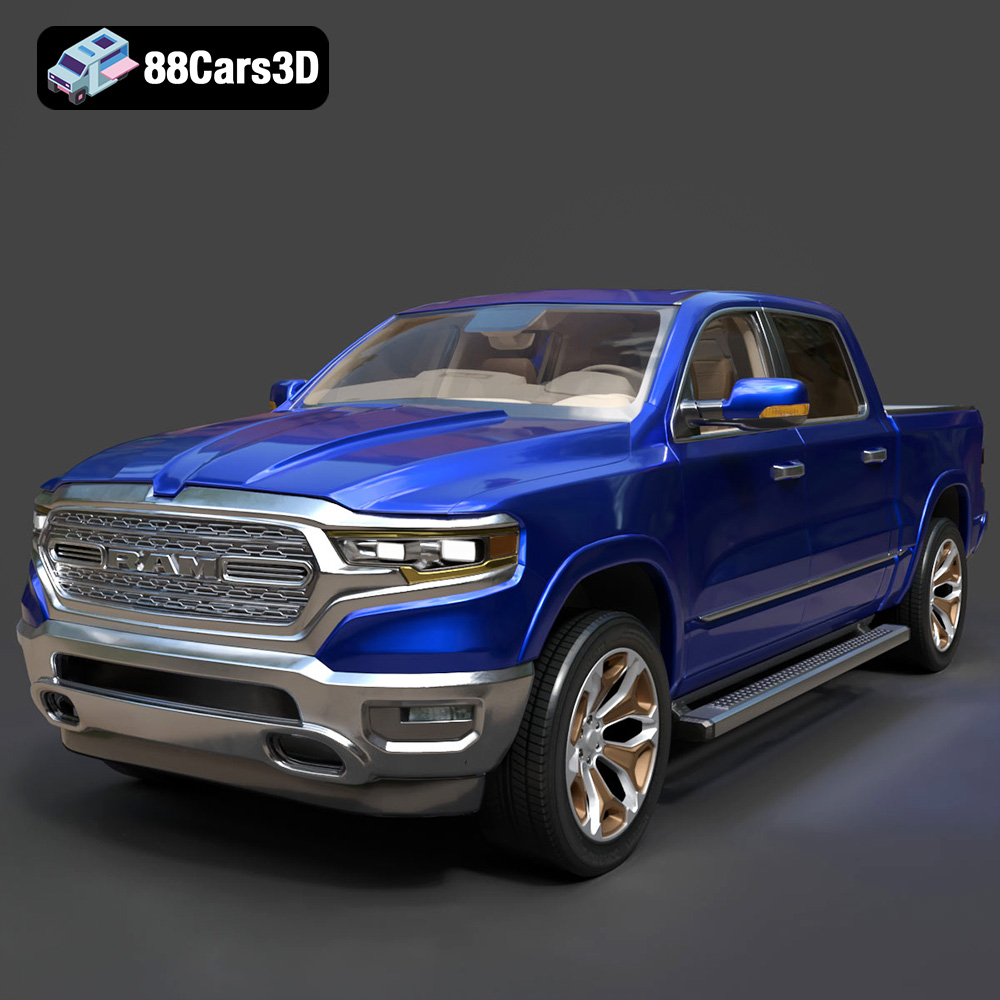
Texture: Yes
Material: Yes
Download the Dodge RAM 2019 3D Model featuring clean geometry, realistic detailing, and a fully modeled interior. Includes .blend, .fbx, .obj, .glb, .stl, .ply, .unreal, and .max formats for rendering, simulation, and game development.
Price: $19.99
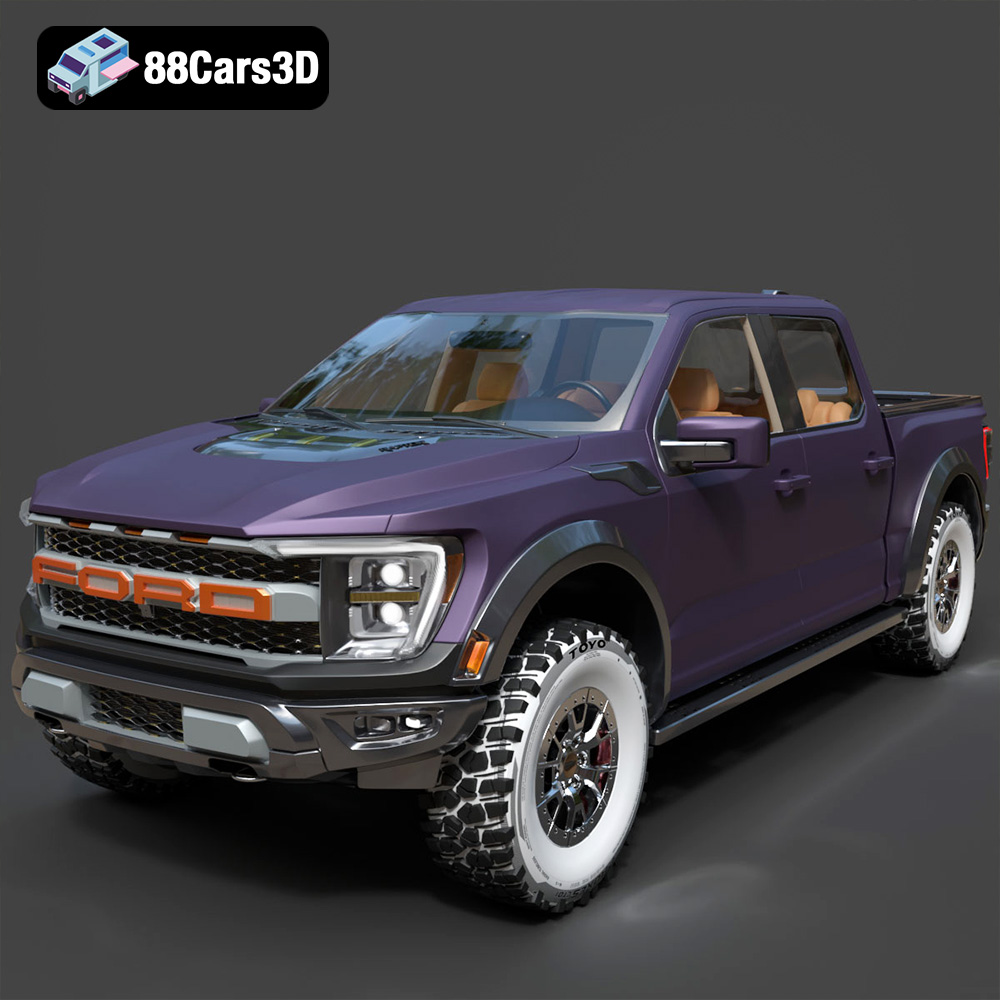
Texture: Yes | Material: Yes Download the ultra-high-detail Ford F-150 Raptor 2021 3D Model (8.73M Triangles). Features uncompromised widebody styling, fully modeled Fox Live Valve suspension, 37-inch tires, and interior. Perfect for premium VFX, cinematic rendering, and ArchViz. Includes .blend, .fbx, .obj, .glb, .stl, and .max formats.
Price: $29.99
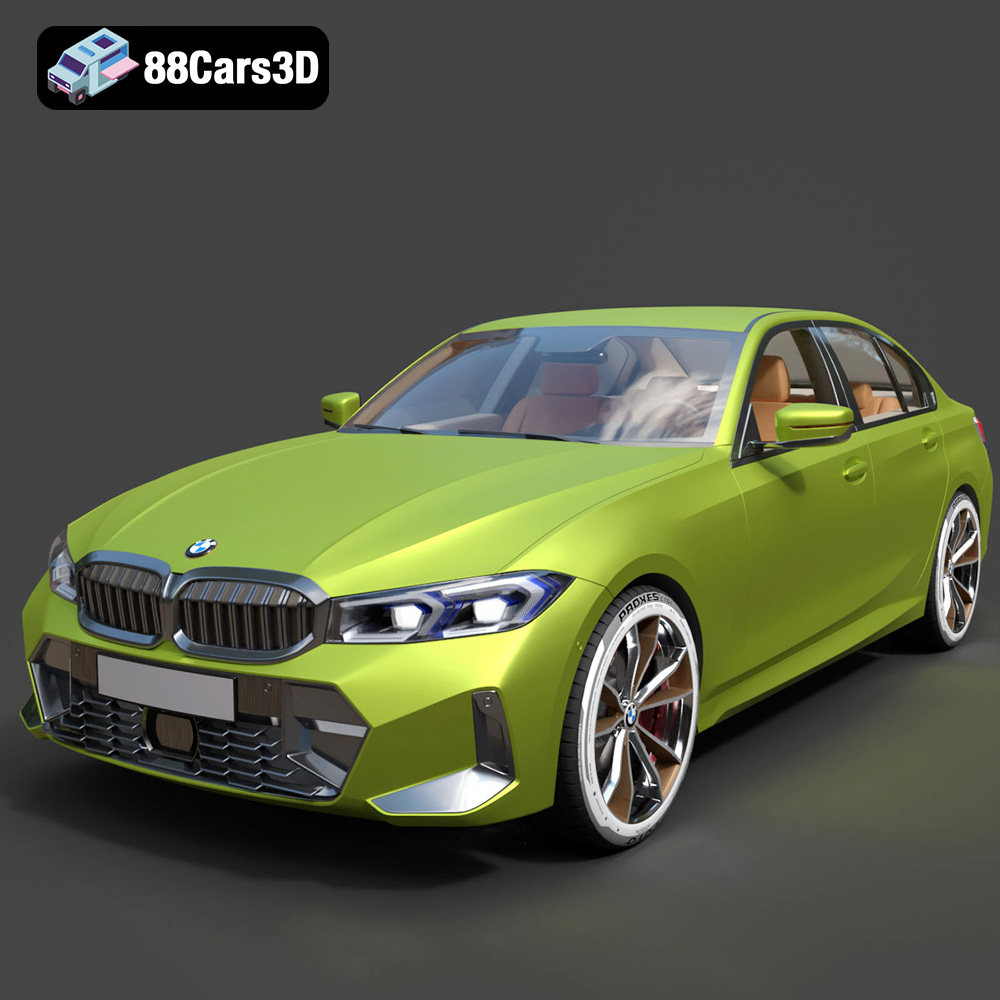
Texture: Yes | Material: Yes Download the ultra-high-detail BMW 3 Series Limousine (2022) 3D Model (4.16M Triangles). Features the modernized G20 LCI exterior, the all-new BMW Curved Display interior, and ultra-dense topology. Perfect for ArchViz, VFX, and cinematic rendering. Includes .blend, .fbx, .obj, .glb, .stl, and .max formats.
Price: $19.99
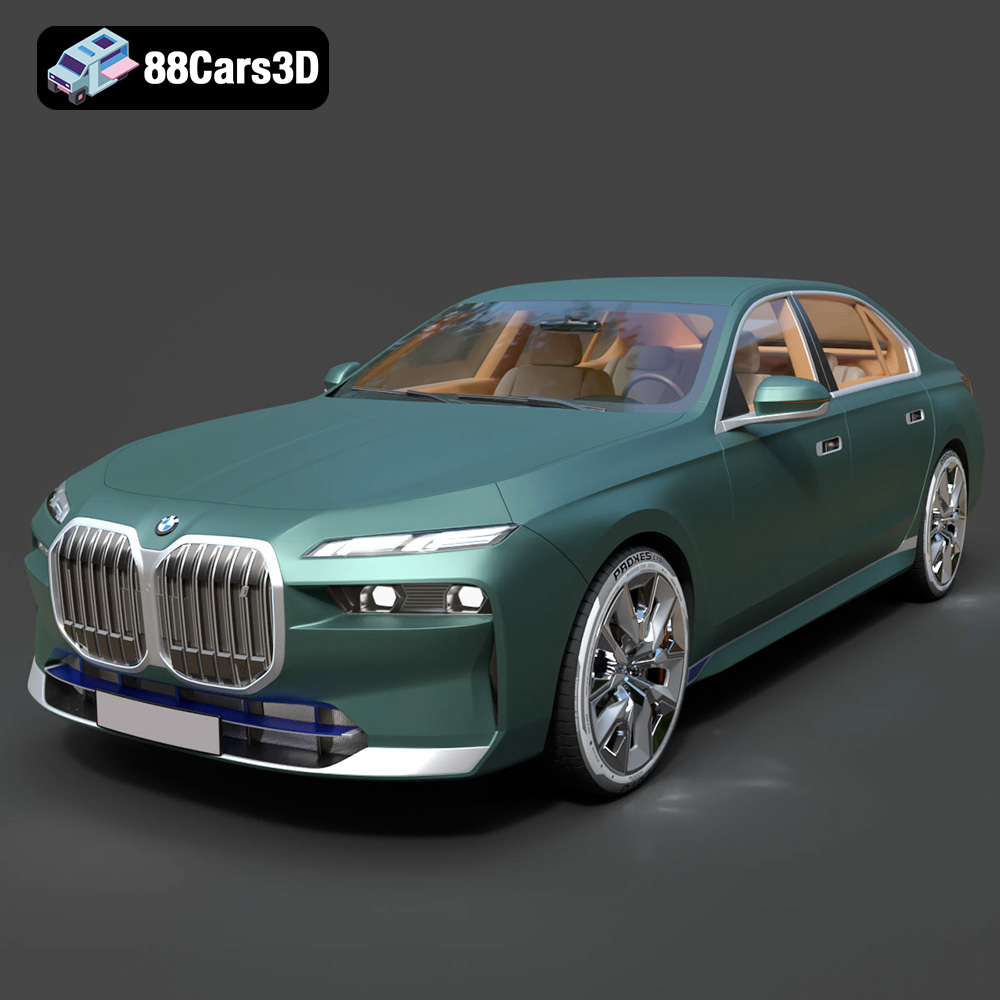
Texture: Yes | Material: Yes Download the ultra-high-detail BMW i7 (2023) 3D Model (4.14M Triangles). Features the illuminated kidney grille, split crystal headlights, fully modeled Theatre Screen interior, and monolithic luxury styling. Perfect for ArchViz, VFX, and cinematic rendering. Includes .blend, .fbx, .obj, .glb, .stl, and .max formats.
Price: $19.99
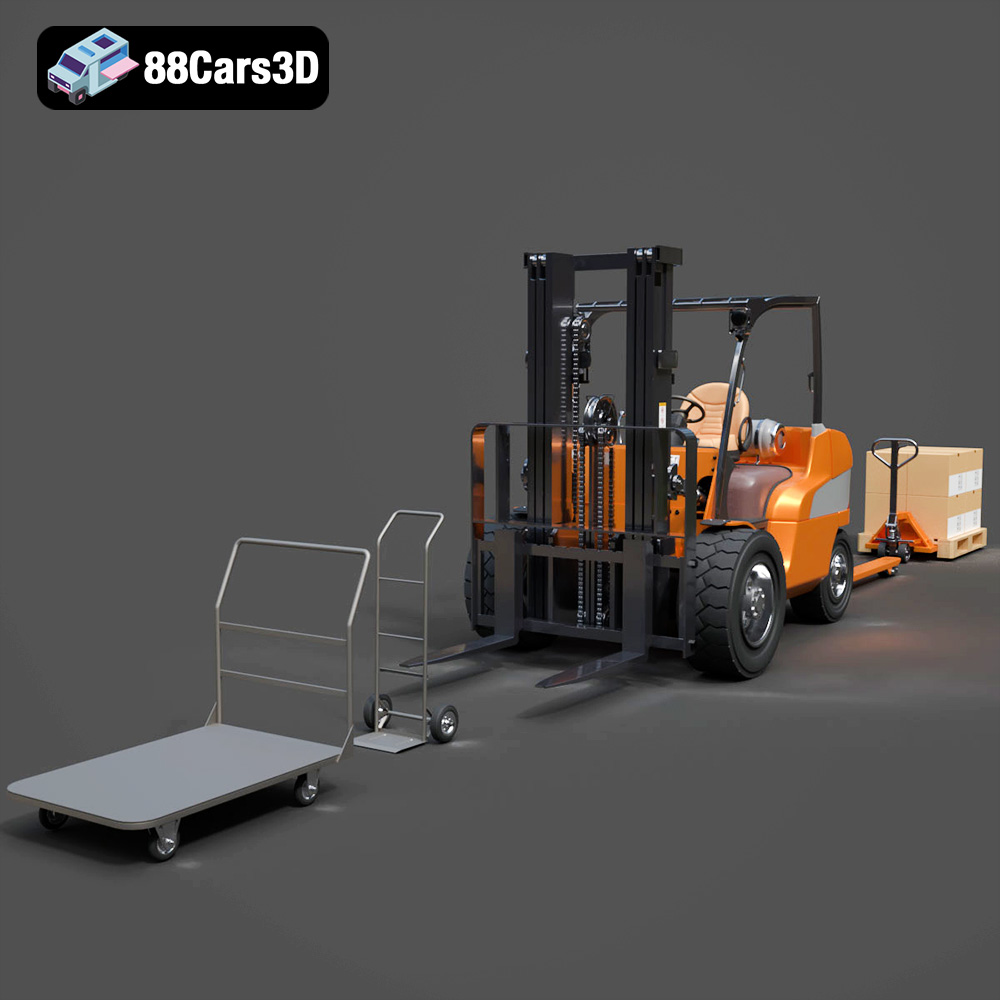
Texture: Yes | Material: Yes Download the highly detailed CAT Manual Loader & Warehouse Carts Kit 3D Model (2.4M Triangles). Features a macro-detailed hydraulic pallet jack, heavy-duty forks, and transport carts. Perfect for industrial ArchViz, factory rendering, and logistics simulations. Includes .blend, .fbx, .obj, .glb, .stl, and .max formats.
Price: $19.99
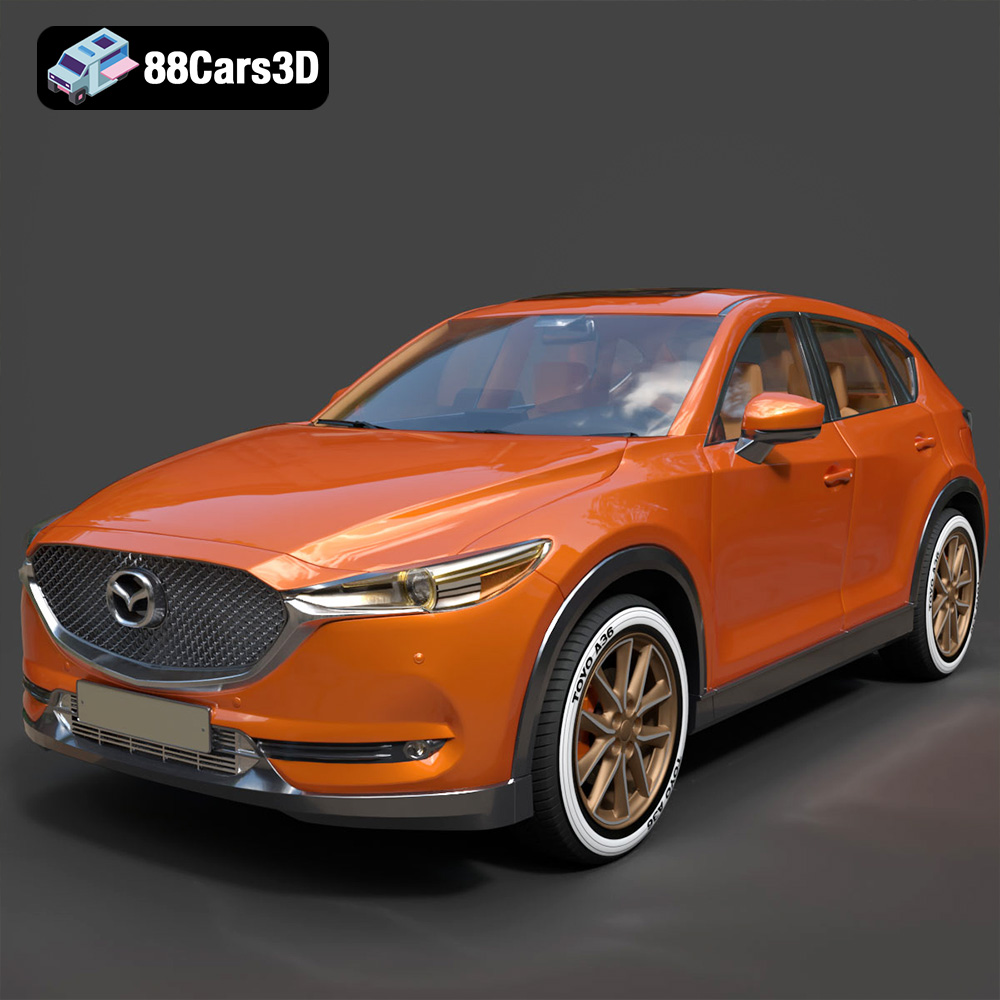
Texture: Yes | Material: Yes
Download the highly optimized Mazda CX-5 2014 3D Model (294k Triangles). Features the dynamic Kodo design language, signature grille, and a clean interior. Perfectly balanced for ArchViz, background traffic, and game development. Includes .blend, .fbx, .obj, .glb, .stl, and .max formats.
Price: $19.99
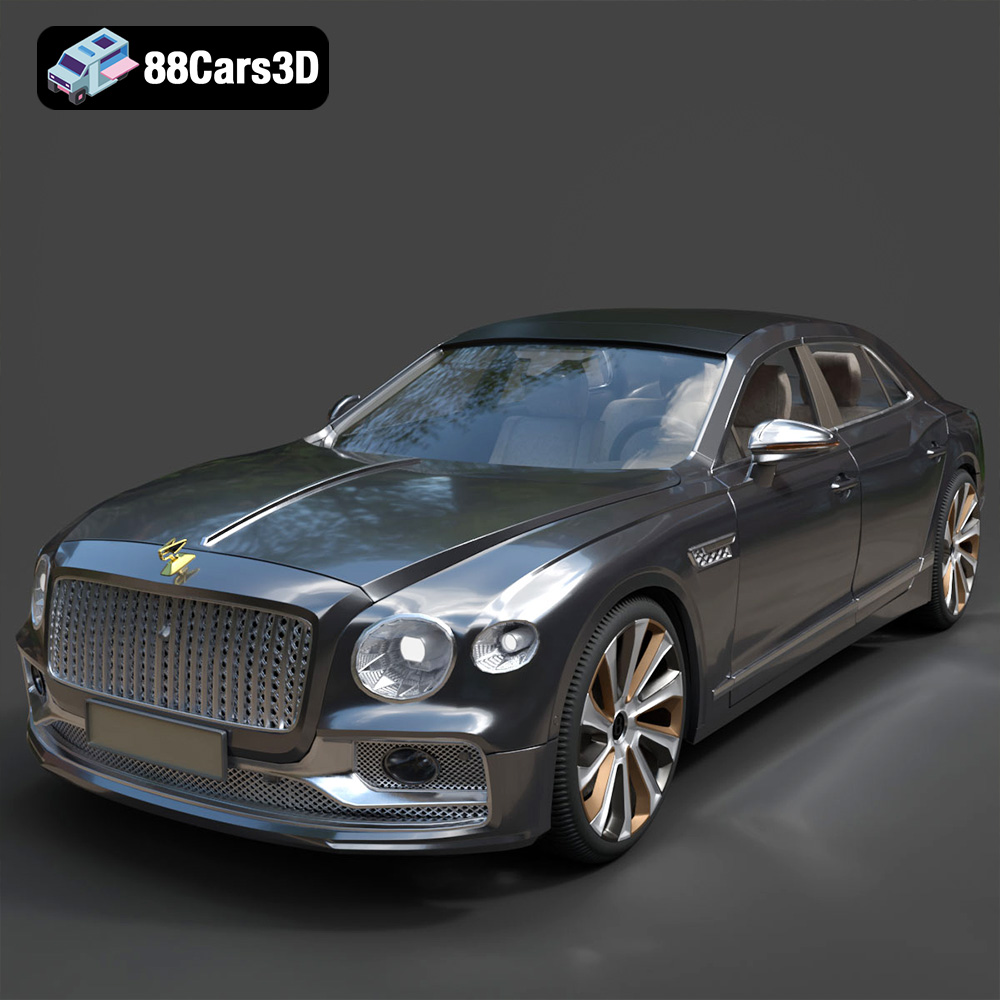
Texture: Yes | Material: Yes Download the ultra-high-detail Bentley Flying Spur Mulliner 2022 3D Model (2.94M Triangles). Features the bespoke Double Diamond grille, a fully modeled diamond-quilted interior, and exquisite luxury styling. Perfect for high-end ArchViz, VFX, and cinematic rendering. Includes .blend, .fbx, .obj, .glb, .stl, and .max formats.
Price: $19.90
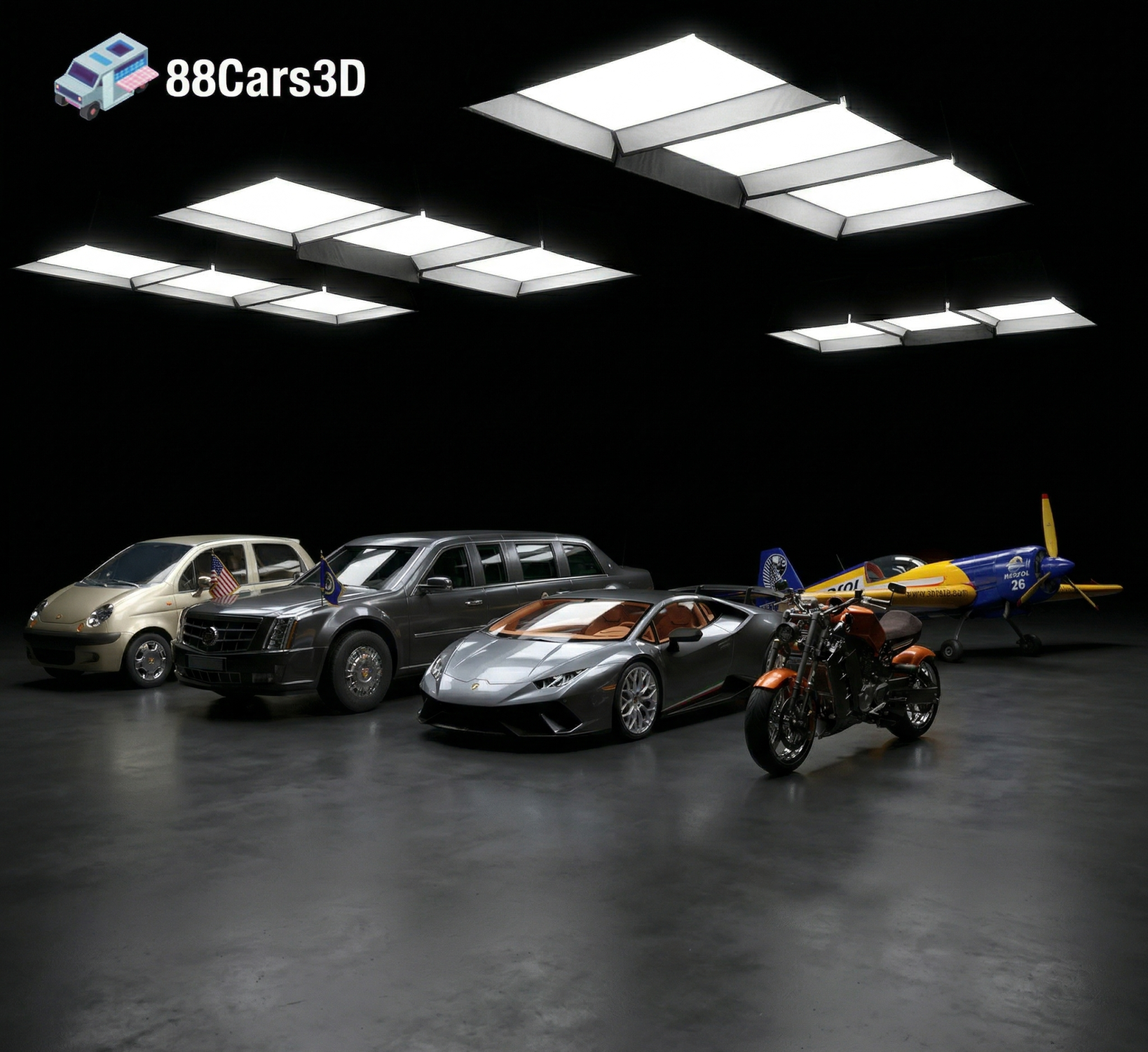
Texture: Yes | Material: Yes | 3D Printable: Yes. Download the Ultimate Creators’ Showcase featuring 5 premium 3D models: Lamborghini Huracan, ZAV Concept Motorcycle, Sukhoi SU-26, Presidential Limousine, and Daewoo Damas. Optimized for 4K CGI rendering and 3D printing. Save massive with this exclusive multi-category bundle!
Price: $99.99

