Get 50% OFF All Premium 3D & STL Models!

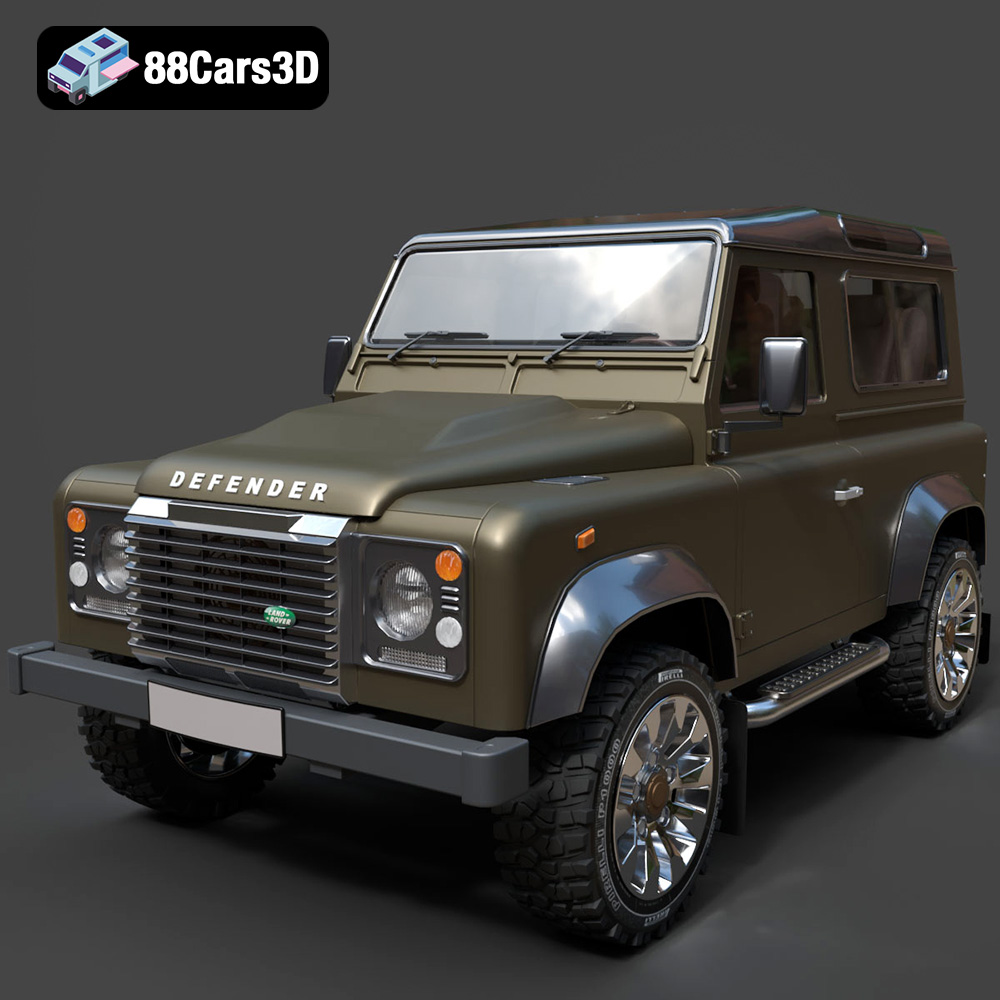
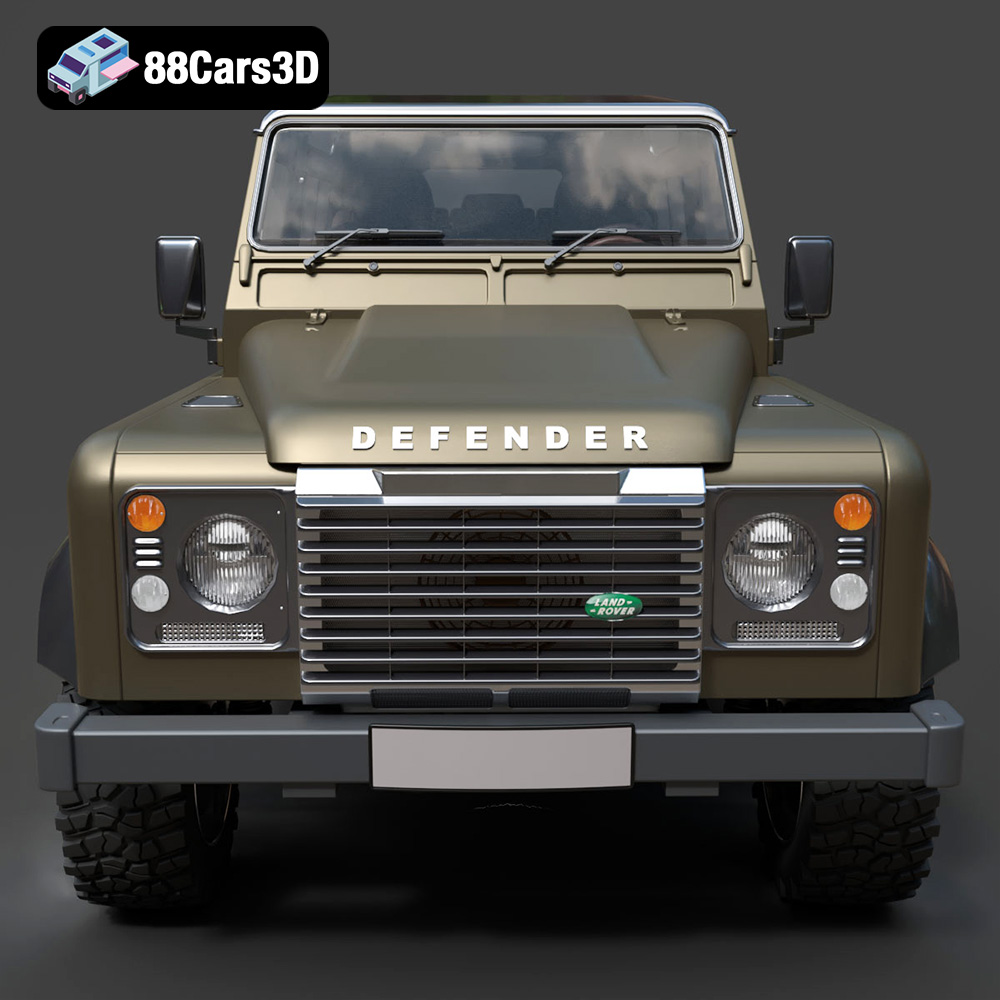
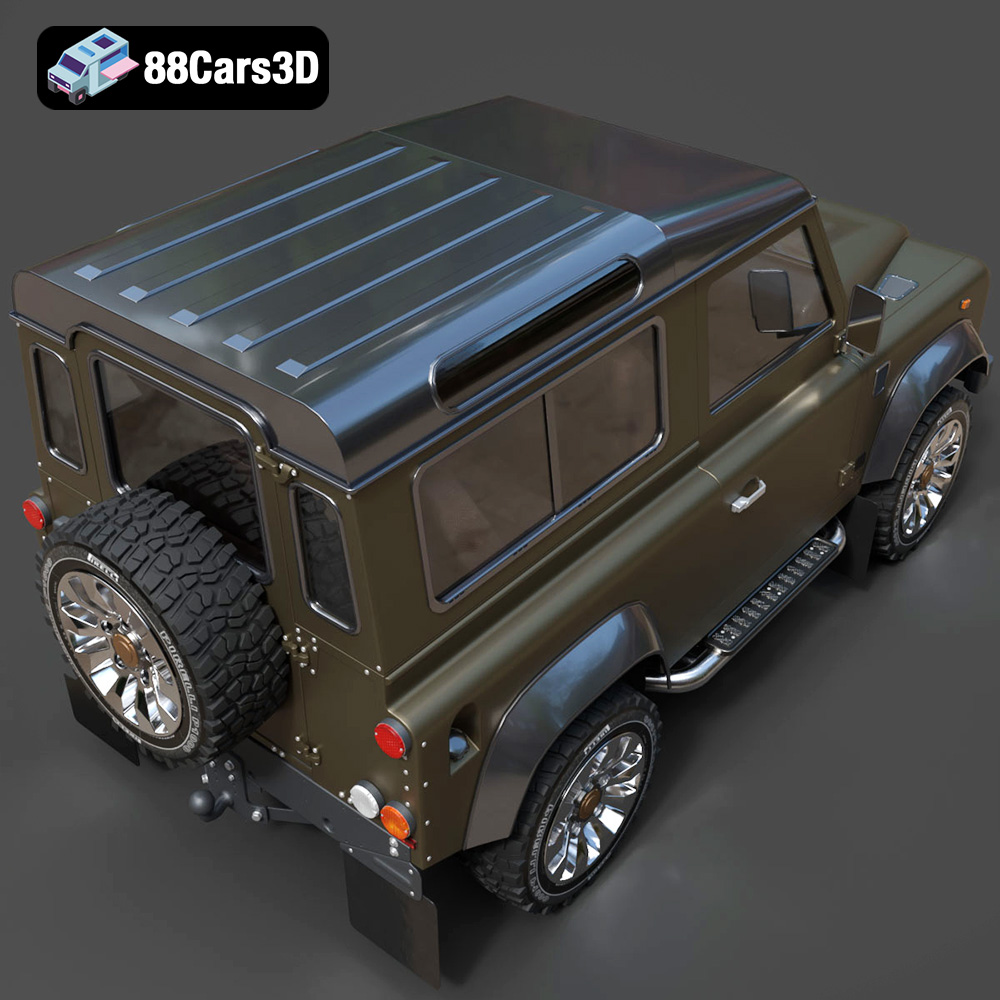
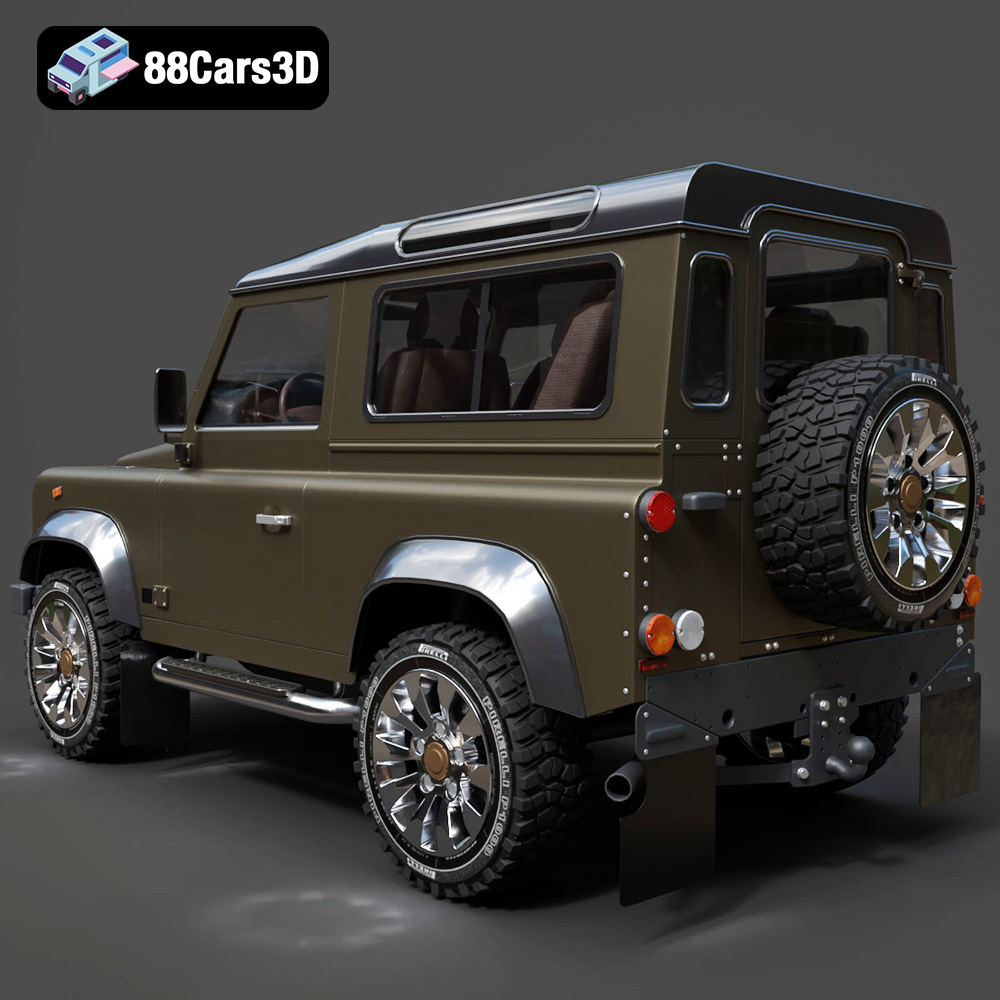
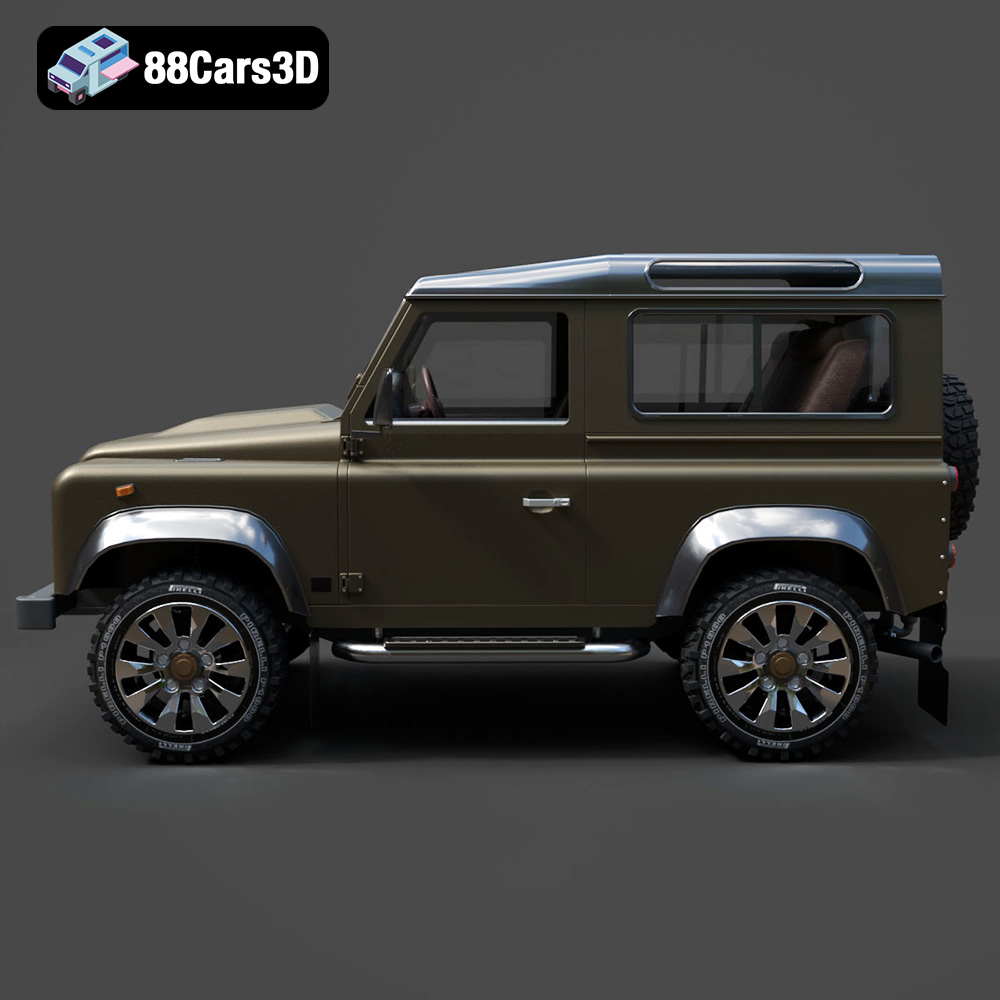
In the fast-paced world of digital creation, the demand for realistic and versatile 3D assets continues to skyrocket. From blockbuster game titles and cutting-edge architectural visualizations to immersive AR/VR experiences and cinematic automotive advertising, a high-quality 3D model is the bedrock of any successful project. Today, we’re going to explore what makes a truly exceptional 3D car model, delving into the technical intricacies, diverse applications, and streamlined workflows that professionals rely on. And to illustrate these principles, we’ll spotlight a particular masterpiece: the Land Rover Defender Works V8 3D Model, a faithful recreation of an automotive legend available at 88cars3d.com.
The Land Rover Defender Works V8 is more than just a vehicle; it’s an icon of rugged capability and timeless design. Translating such a revered machine into a digital asset requires meticulous attention to detail, robust technical execution, and an understanding of how it will be used across various digital ecosystems. This article will guide you through the journey of leveraging such a model to elevate your own projects, whether you’re an independent developer, a professional studio, or an enthusiast pushing the boundaries of digital artistry.
The flexibility and utility of a 3D model are often defined by the file formats it supports. Each format is designed with specific use cases and software environments in mind, offering distinct advantages for different stages of a production pipeline. The Land Rover Defender Works V8 3D Model, for instance, provides a comprehensive suite of formats, ensuring maximum compatibility and utility.
The .blend format is native to Blender, the popular open-source 3D creation suite. When you receive a .blend file, you’re getting a complete Blender scene, often including the model’s geometry, materials, textures, lighting setup, cameras, and even animation data. This format is ideal for artists who use Blender as their primary DCC (Digital Content Creation) tool, allowing for full editability, quick rendering directly within Blender’s Cycles or Eevee engines, and seamless integration into existing Blender projects. Its greatest strength lies in preserving the entire scene’s context, making it incredibly user-friendly for direct manipulation and customization.
FBX (Filmbox) is a proprietary file format developed by Autodesk, serving as a widely adopted interchange format for 3D data. It’s particularly prevalent in game development due to its excellent support for geometry, materials, textures, animations, and skeletal data. Game engines like Unreal Engine and Unity rely heavily on .fbx for importing complex assets. Its robust hierarchical structure ensures that model components, transformations, and animation clips are preserved correctly when moving between different software packages, making it a cornerstone for real-time asset pipelines. While it’s an interchange format, it’s highly optimized for performance, making it the go-to for game assets and real-time visualization.
OBJ (Object) is one of the oldest and most universally supported 3D file formats. It’s a simple, text-based format that primarily stores geometry (vertices, faces, normals, UV coordinates) and can reference an accompanying .mtl (material template library) file for basic material properties and texture maps. Its widespread compatibility across virtually all 3D software makes it an excellent choice for transferring models between different applications without data loss for core mesh information. While it lacks support for advanced features like animation or rigging, its simplicity ensures maximum interoperability, serving as a reliable backbone for asset exchange.
GLB (GL Transmission Format Binary) is the binary version of glTF, an API-neutral runtime asset delivery format for 3D scenes and models. Designed by the Khronos Group, glTF/GLB aims to be the “JPEG for 3D,” focusing on efficient transmission and loading of 3D models in web browsers, augmented reality (AR), and virtual reality (VR) applications. A .glb file encapsulates all model data – geometry, materials, textures, animations – into a single, compact binary file, making it incredibly efficient for web-based rendering and real-time interactive experiences where file size and load times are critical. It supports PBR materials, ensuring high visual fidelity in diverse environments.
STL (STereoLithography) is the standard file format for 3D printing. It represents 3D surfaces as a series of connected triangles, defining only the surface geometry of an object without color, texture, or other CAD attributes. While it’s not ideal for visualization or animation, its simplicity makes it universally compatible with 3D printers and slicing software. For models like the Land Rover Defender Works V8 3D Model that might be used for prototyping or creating physical replicas, the .stl format is essential, requiring a watertight mesh to ensure successful print outcomes.
PLY (Polygon File Format) is another format primarily used for storing 3D data from 3D scanners, CAD applications, or mesh generators. It can store a wide range of properties, including color, transparency, surface normals, and various confidence levels for each vertex and face, unlike the more minimalist .stl. This makes .ply particularly useful for scientific, engineering, and detailed analysis applications where precise geometry and additional per-vertex data are critical. It offers a more detailed representation of scanned data or complex geometric models for applications beyond simple visualization.
The “.unreal” format (often referring to a specific asset structure or export pipeline optimized for Unreal Engine) denotes a model that has been specifically configured and prepared for direct import and use within Unreal Engine. This typically means the model has appropriate LODs (Levels of Detail), collision meshes, correctly set up materials using Unreal’s PBR system, and potentially even blueprint integrations. While not a standalone file type in the traditional sense like .fbx, having an “Unreal-ready” asset saves significant time and effort for game developers and real-time artists by providing a pre-optimized and configured asset, ready to be dropped into a scene and rendered with minimal additional setup.
The .max format is the native file type for Autodesk 3ds Max, a leading software for 3D modeling, animation, rendering, and compositing. Similar to .blend, a .max file contains the complete scene data, including geometry, modifiers, materials, textures, lighting, cameras, animation keyframes, and render settings. This format is invaluable for professionals working within the 3ds Max ecosystem, offering full creative control over every aspect of the model. It’s particularly favored in architectural visualization, automotive rendering, and VFX for its robust rendering capabilities with engines like V-Ray and Corona, making it perfect for high-fidelity still images and animations.
The availability of such a diverse range of formats for the Land Rover Defender Works V8 3D Model highlights its versatility and the thoughtfulness behind its creation, ensuring it can seamlessly integrate into virtually any professional pipeline.
Achieving photorealism in 3D car models isn’t just about throwing textures onto a shape. It’s a intricate process involving precise geometry, intelligent material design, and an acute understanding of real-world physics. The Land Rover Defender Works V8 3D Model exemplifies these principles, showcasing what professional-grade assets bring to the table.
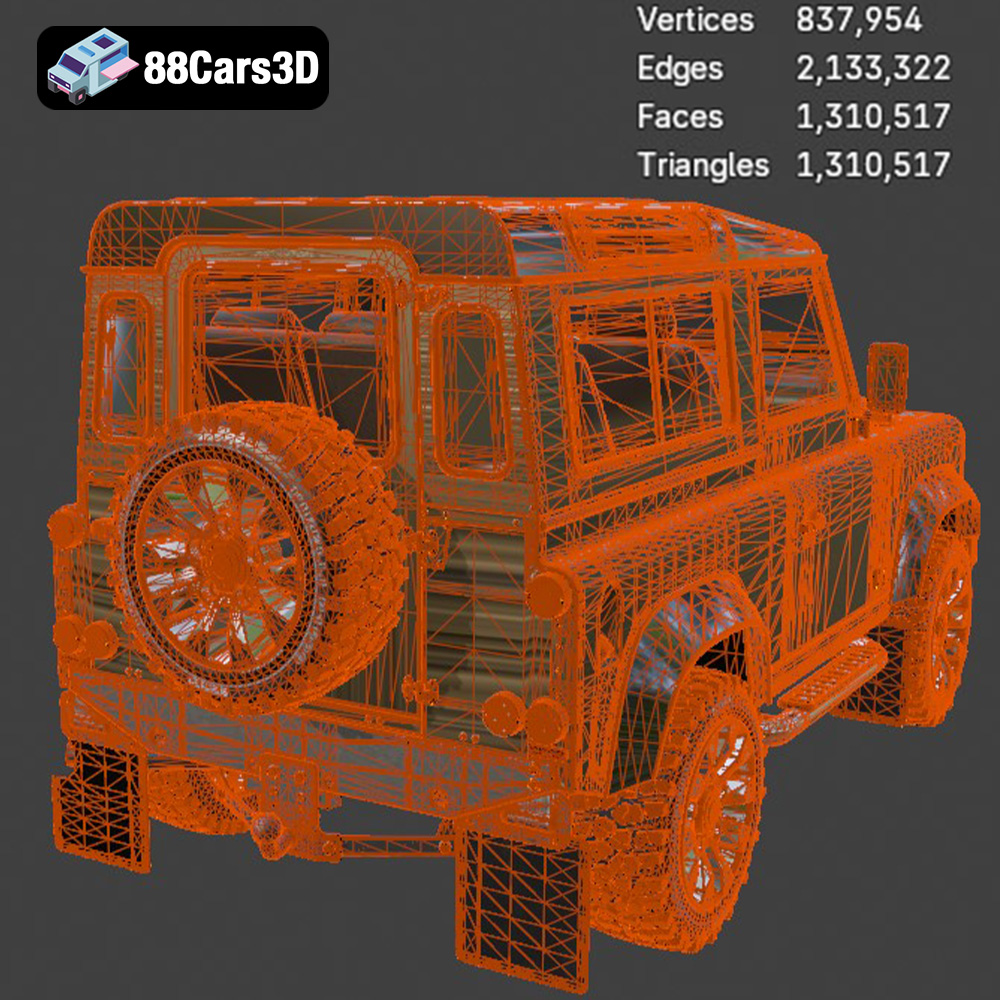
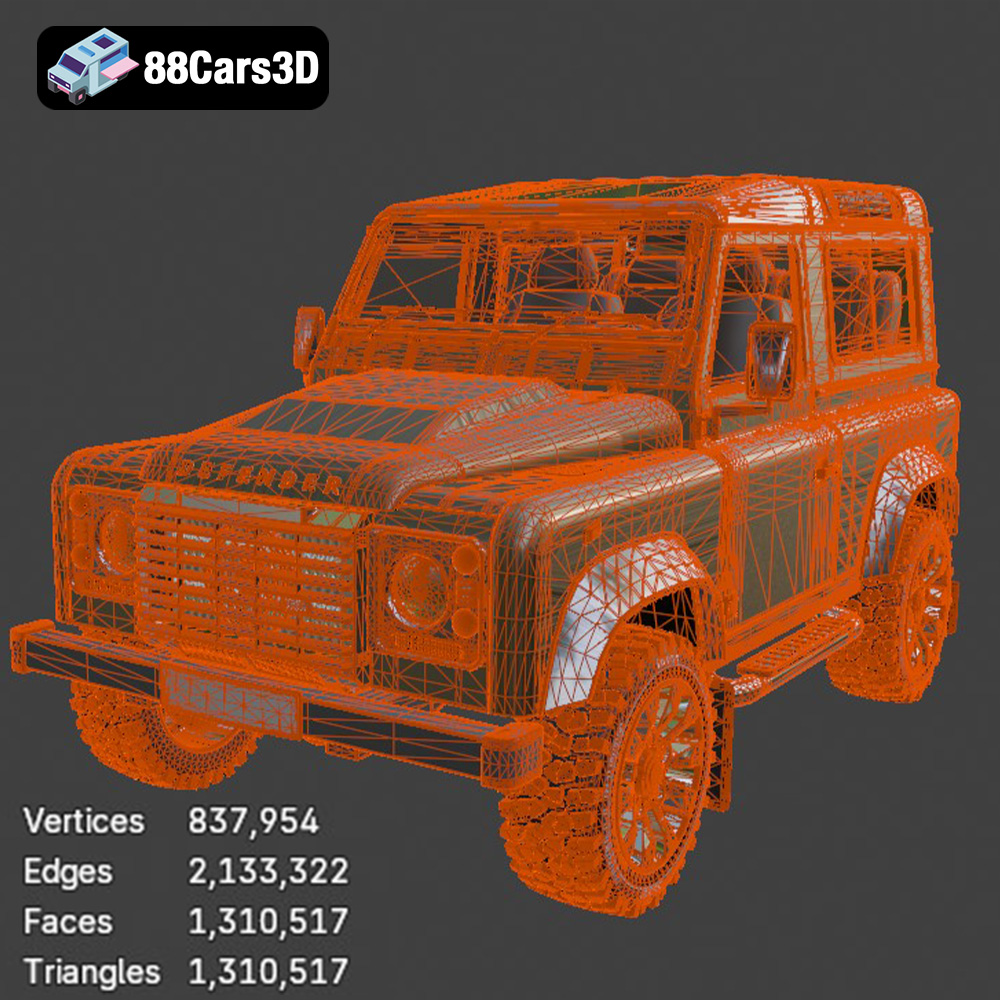
Clean geometry and optimal topology are paramount for any high-quality 3D model, especially for complex subjects like vehicles. This means the mesh should be composed predominantly of quads (four-sided polygons), avoiding triangles or N-gons where possible, which can lead to rendering artifacts and difficulties in editing. A well-constructed mesh ensures smooth subdivision, distortion-free deformation for animation, and efficient performance in real-time engines. For the Defender Works V8, this translates to accurately capturing its iconic lines and rugged details without unnecessary polygon density in flat areas, while providing sufficient detail in critical zones like grilles, wheels, and interior elements. An optimized poly count, for instance, might range from 100,000 to 500,000 polygons for a high-detail vehicle, balancing visual fidelity with performance requirements across different platforms.
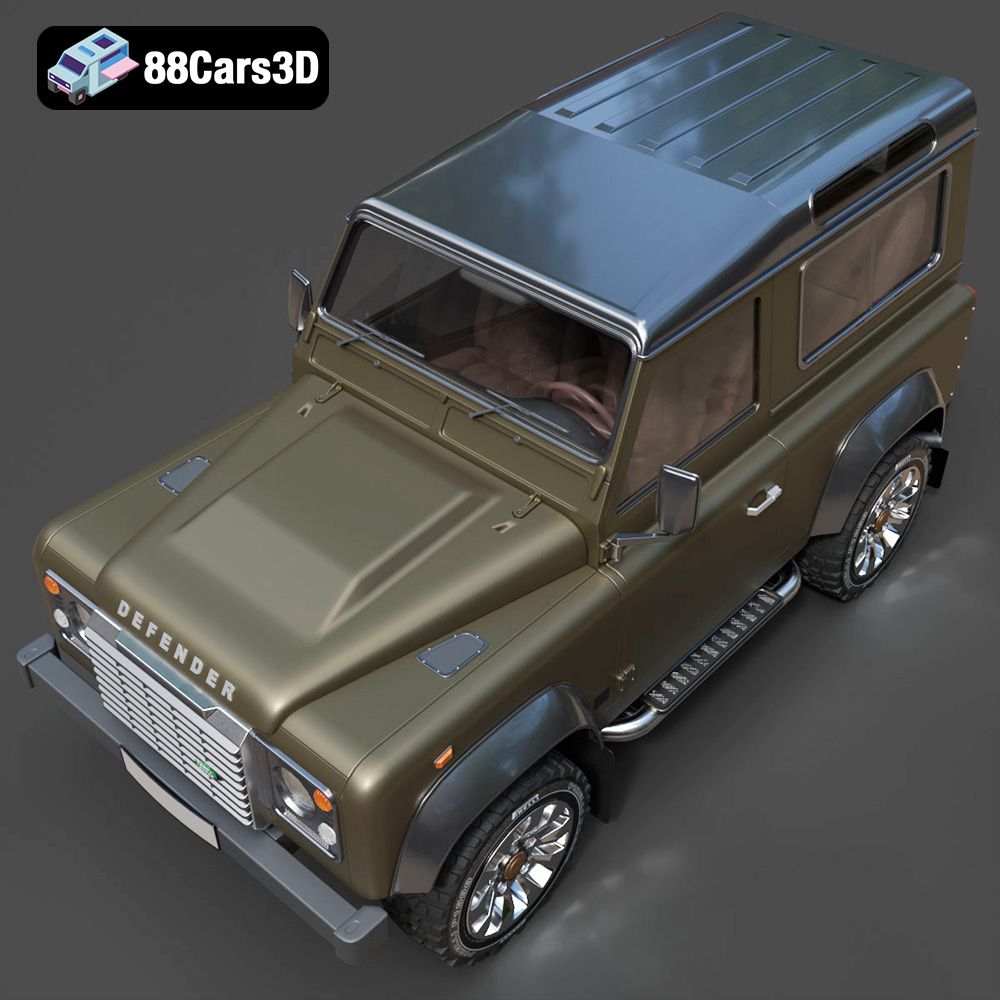
Realistic materials and textures are what breathe life into a 3D model. Modern workflows typically utilize Physically Based Rendering (PBR) materials, which simulate how light interacts with surfaces in the real world. This involves maps like Albedo (base color), Metallic, Roughness, Normal, and Ambient Occlusion. For an automotive model, this means accurately representing the subtle sheen of car paint, the granular texture of tires, the reflectivity of glass, and the worn appearance of interior fabrics. High-resolution textures (e.g., 4K or 8K) ensure crisp detail even on close-up shots. Furthermore, meticulous UV mapping – the process of flattening the 3D surface onto a 2D plane for texturing – is crucial to avoid stretching or distortion, guaranteeing that the textures align perfectly with the model’s geometry. The Land Rover Defender Works V8 3D Model boasts realistic materials and textures, meaning its digital surface will react to light convincingly, whether it’s under a studio light setup in 3ds Max or driving through a virtual landscape in Unreal Engine.
Beyond visual appeal, accuracy in scale and proportion is critical for professional applications. A 3D car model must be built to real-world dimensions to seamlessly integrate into architectural visualizations, engineering simulations, or AR experiences where real objects interact with digital ones. The Land Rover Defender Works V8 3D Model is a “faithful recreation,” implying that its dimensions and proportions are true to the actual vehicle. This precision is not only aesthetically pleasing but also functionally essential for tasks like collision detection in games, precise placement in an architectural scene, or accurate representation in product configurators. Such attention to detail ensures that the model functions as a reliable digital twin, ready for any professional challenge.
The versatility of a premium 3D asset like the Land Rover Defender Works V8 3D Model lies in its seamless integration into diverse professional workflows. From high-end cinematic rendering to interactive real-time experiences, this model is engineered to accelerate production and elevate visual quality.
For artists and designers utilizing traditional DCC applications, the .max and .blend files offer unparalleled control. In 3ds Max, professionals can leverage its robust modeling tools, advanced animation capabilities, and industry-standard rendering engines like V-Ray or Corona Renderer. The Land Rover Defender Works V8 3D Model, provided as an editable .max file, means users can fine-tune materials, set up complex lighting scenarios, create custom animations (e.g., door opening, wheel turning), and render photorealistic stills or sequences for automotive advertising, product showcases, or film VFX. The detailed geometry allows for extreme close-ups without loss of fidelity.
Similarly, the .blend file provides a complete scene within Blender. This allows users to immediately dive into rendering with Eevee for quick previews or Cycles for physically accurate results. The editable nature means that components can be easily modified, materials tweaked for specific visual styles, or the model integrated into a larger scene without compatibility hurdles. For independent artists or studios favoring open-source solutions, this offers a powerful starting point for any project, from personal concept art to commercial client work.
The gaming and interactive media industries demand optimized assets capable of performing efficiently in real-time environments. The Land Rover Defender Works V8 3D Model is provided in .fbx and .unreal formats, making it ideally suited for engines like Unreal Engine and Unity. The .fbx format ensures that the model, its materials (often converted to engine-specific PBR shaders), and any basic animation data transfer smoothly. For Unreal Engine specifically, the “Unreal-ready” asset significantly reduces setup time. This typically means the model includes pre-calculated LODs (Levels of Detail) to maintain performance at varying distances, optimized collision meshes for realistic physics interactions, and PBR materials designed to look stunning within Unreal’s advanced rendering pipeline. Game developers can drop this asset directly into their virtual worlds, whether for an open-world driving simulator, a detailed racing game, or a realistic combat scenario. Similarly, in Unity, the .fbx can be imported and configured for immediate use, offering a solid foundation for mobile games, desktop experiences, or interactive training simulations.
As augmented and virtual reality become mainstream, the need for performant, high-quality 3D assets optimized for these platforms grows. The .glb format for the Defender Works V8 is a game-changer here. Its compact, single-file structure and PBR material support make it perfect for rapid deployment in AR/VR applications and web-based viewers. Imagine placing the iconic Land Rover Defender Works V8 in your driveway using an AR app on your smartphone, or interacting with a detailed model directly within a web browser for a virtual showroom experience. Developers can integrate this .glb asset into WebGL applications, ARKit/ARCore projects, or VR experiences, offering immersive product visualization, interactive marketing campaigns, or even virtual tourism where users can explore environments with a realistic vehicle as a centerpiece. Its efficiency ensures smooth performance on a variety of devices, from high-end VR headsets to mobile phones.
The utility of 3D car models extends beyond purely digital realms. With the .stl and .ply formats, the Land Rover Defender Works V8 3D Model can bridge the gap to physical reality. The .stl file, being the industry standard for 3D printing, enables users to fabricate physical prototypes, scale models, or custom parts. This is invaluable for designers, engineers, or hobbyists looking to create tangible representations of the Defender, whether for design validation, educational purposes, or simply as a collectible. The model’s clean geometry ensures a “watertight” mesh, crucial for successful 3D prints. The .ply format offers an alternative for more precision-focused applications, allowing for detailed analysis or input into CAD software for further engineering or manufacturing processes. This versatility makes the model a valuable asset for both digital and physical production pipelines.
High-quality 3D car models are not just digital eye candy; they are powerful tools that drive success across numerous industries. The Land Rover Defender Works V8 3D Model, with its detailed craftsmanship and flexible format support, exemplifies its potential in various real-world scenarios.
In the automotive industry, 3D models are indispensable. Before a single physical prototype is built, vehicles are designed, visualized, and marketed using sophisticated 3D assets. A model like the Defender Works V8 can be used for creating stunning marketing materials – photorealistic images and animations that showcase the vehicle in various environments, with different paint finishes, and under dynamic lighting conditions. This eliminates the need for expensive physical photoshoots, offers infinite creative control, and allows for rapid iteration. Marketing agencies use these models for TV commercials, online campaigns, and interactive configurators where potential buyers can customize their dream car. The realism provided by this model ensures that the digital representation is indistinguishable from the real thing, conveying the luxury and rugged appeal of the Land Rover brand.
For game developers, 3D car models are fundamental game assets. They populate virtual worlds, serve as player vehicles, or act as environmental props. A high-quality model like the Defender Works V8 can be integrated into racing simulators for authentic driving experiences, open-world adventure games where players traverse vast landscapes, or even tactical shooters as destructible cover or transport. The optimized geometry and PBR materials ensure that the vehicle looks fantastic and performs smoothly, even in demanding real-time environments. Developers can add custom physics, damage systems, and interactive elements, creating truly immersive and engaging gameplay that hinges on the realism of the underlying 3D model. Imagine driving this iconic vehicle through a detailed virtual jungle or using it to navigate a post-apocalyptic city – the possibilities are endless.
Architectural visualization (ArchViz) benefits immensely from realistic contextual elements. Placing a high-quality 3D car model, such as the Land Rover Defender Works V8, into an architectural rendering can significantly enhance the sense of scale, realism, and lifestyle within a proposed design. Whether it’s parked elegantly in front of a modern home, navigating a rugged landscape around an eco-resort, or simply adding a touch of realism to a street scene, vehicles make renders more dynamic and relatable. For residential projects, showcasing a luxury SUV can evoke a desired lifestyle, while for commercial developments, a fleet of realistic vehicles adds vibrancy and functionality. The detailed nature of the Defender Works V8 3D Model ensures that even in secondary roles within an ArchViz scene, it contributes positively to the overall visual fidelity and narrative.
In a saturated market of digital assets, discerning professionals understand the critical difference that quality makes. This is precisely where platforms like 88cars3d.com stand out, offering a curated selection of premium 3D car models designed to meet the rigorous demands of various industries.
Sourcing assets from a reputable marketplace like 88cars3d.com provides a significant advantage. It guarantees a level of quality assurance that saves artists and studios invaluable time and resources. Rather than spending hours cleaning up messy geometry, fixing broken UVs, or re-creating materials, professionals can acquire models like the Land Rover Defender Works V8 3D Model that are “clean geometry,” “realistic materials and textures,” and “professional quality suitable for commercial use.” This means the assets are production-ready straight out of the box, allowing teams to focus on creative execution rather than technical remediation. The attention to detail, from accurate scaling to optimized mesh topology, reflects a commitment to supporting professional workflows and delivering reliable digital assets.
Time is a valuable commodity in any production. Having access to a diverse library of pre-made, high-quality 3D car models significantly streamlines the production pipeline. Instead of modeling a complex vehicle from scratch – a task that can take weeks or even months for a single artist – teams can quickly integrate a fully realized asset. The comprehensive file format support, as seen with the Land Rover Defender Works V8 3D Model, further enhances efficiency. Whether you need a .max file for high-end rendering, an .fbx for game development, or a .glb for AR/VR, having all options readily available ensures compatibility across different software and platforms without conversion headaches. This allows studios to deliver projects faster, respond to client demands more flexibly, and allocate their creative talent to more complex, unique aspects of their projects. 88cars3d.com serves as a reliable partner in this regard, providing the essential building blocks for digital worlds.
The world of 3D modeling is dynamic and ever-evolving, driven by the relentless pursuit of realism and efficiency. High-quality 3D car models are not just commodities; they are fundamental components that empower creators across game development, automotive rendering, AR/VR, and visualization. The deep dive into formats like .blend, .fbx, .obj, .glb, .stl, .ply, .unreal, and .max underscores the technical versatility required for modern digital assets.
The Land Rover Defender Works V8 3D Model stands as a prime example of a professional-grade asset, offering clean geometry, realistic materials, and comprehensive file format support to seamlessly integrate into any project. Its ability to serve as a cornerstone for everything from cinematic automotive rendering to real-time game assets truly demonstrates its value. By investing in such meticulously crafted assets from trusted sources like 88cars3d.com, creators can save invaluable time, elevate their visual quality, and push the boundaries of what’s possible in their digital endeavors. Embrace the power of expertly crafted 3D models and let them drive the success of your next masterpiece.
Experience the iconic Land Rover Defender Works V8 in stunning 3D detail. This model is a faithful recreation of the classic vehicle, designed to bring realism and accuracy to your projects. With its clean geometry and realistic materials, it stands as a testament to professional 3D artistry.
Key Features:
Provided File Formats:
$19.99
.arvr
.blend
.car3dmodel
.defender
.defenderworksv8
.fbx
.gameasset
.glb
.landrover
.max
.obj
.ply
.rendering
.simulation
.stl
.unreal
.worksv8
SUV