Get 50% OFF All Premium 3D & STL Models!

The roar of a classic engine, the gleam of chrome, and the timeless silhouette of a vintage motorcycle – these elements evoke a powerful sense of nostalgia and admiration. For digital artists, game developers, architects, and visualizers, recreating such iconic machines in 3D presents both a fascinating challenge and a profound opportunity. It’s about more than just modeling a vehicle; it’s about capturing a piece of history, an engineering marvel, and a cultural icon with digital precision.
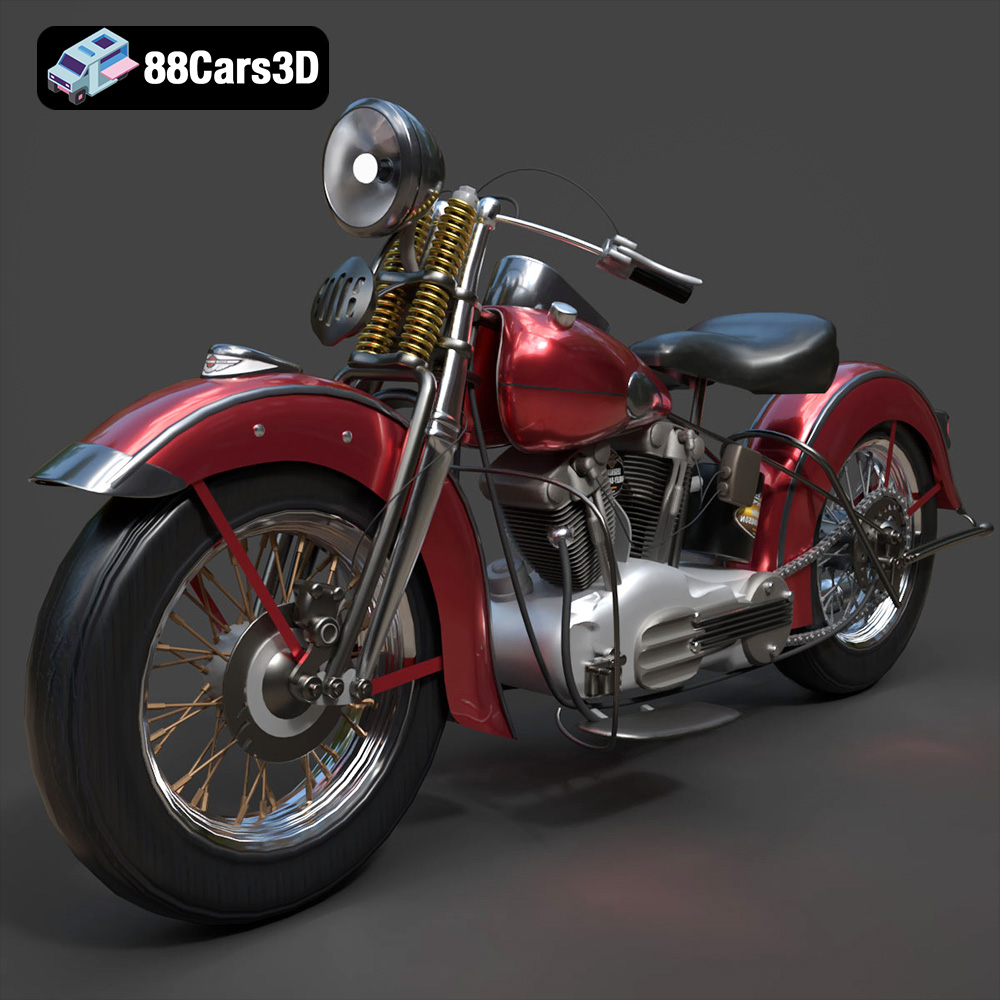
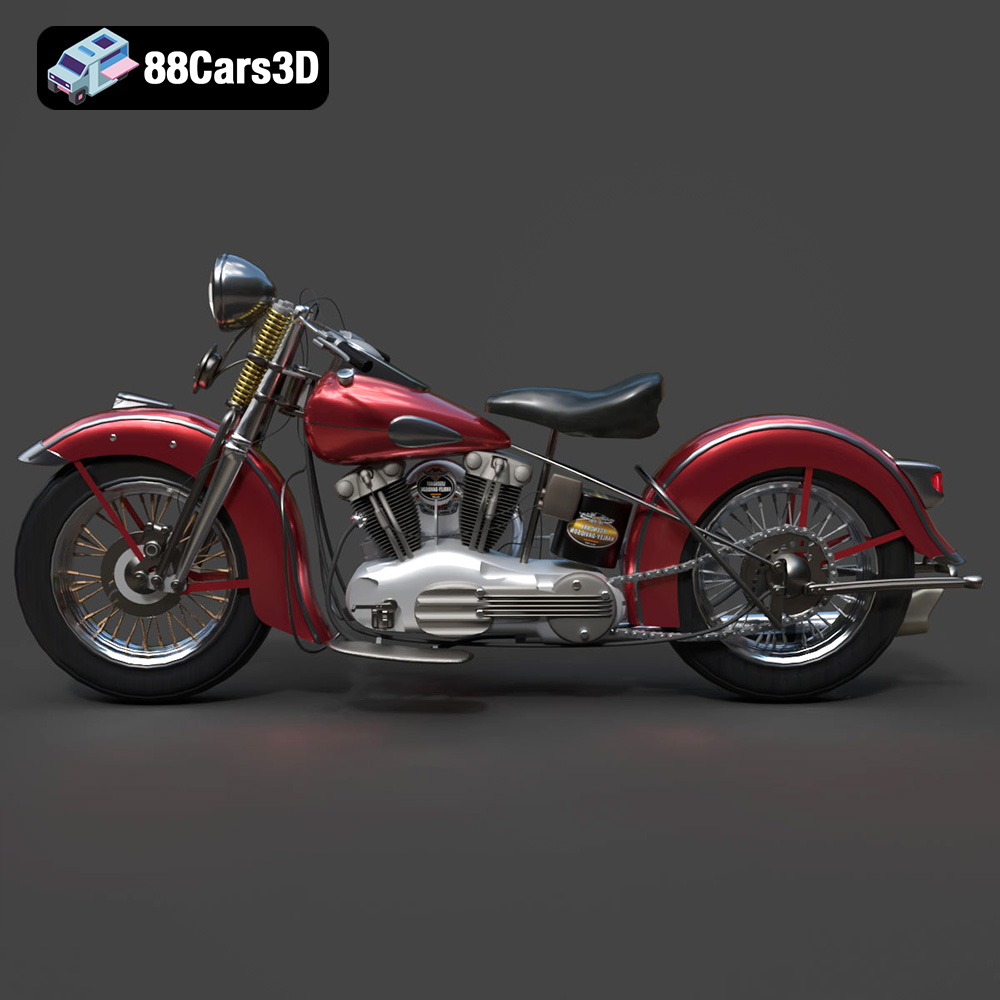
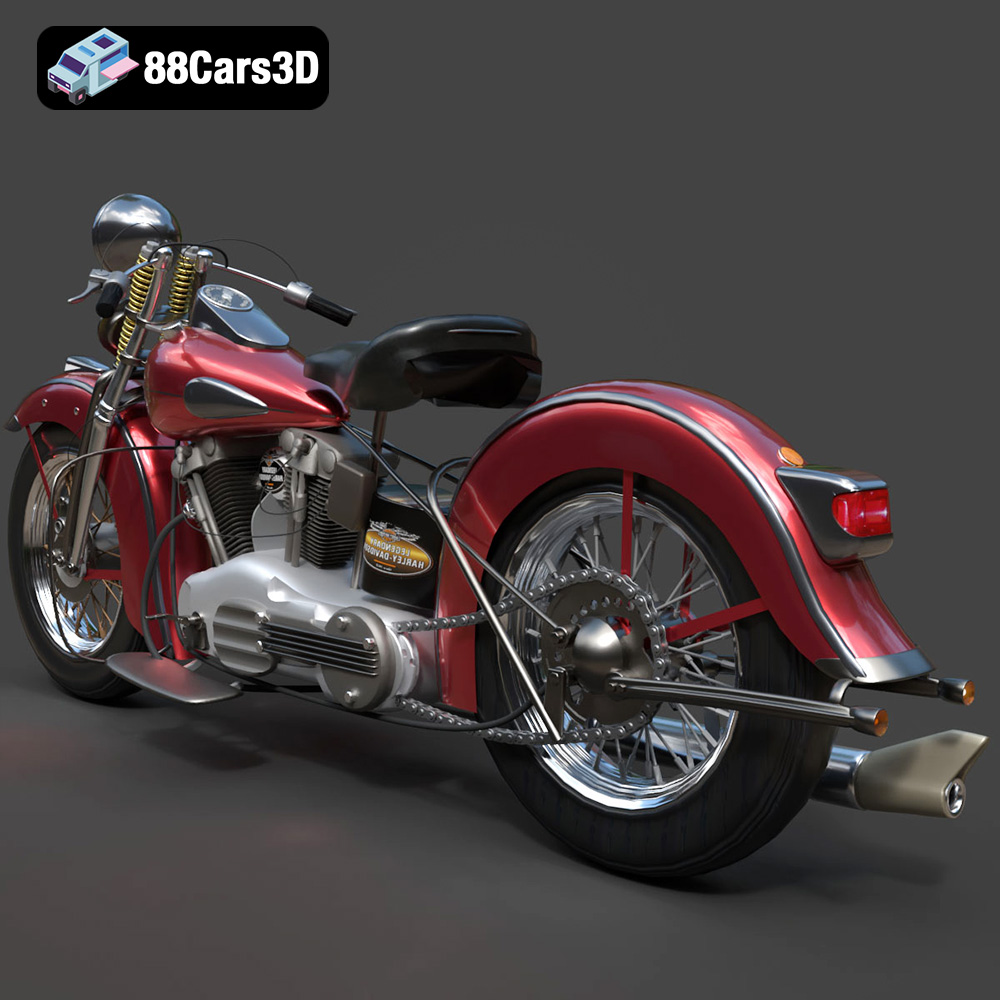
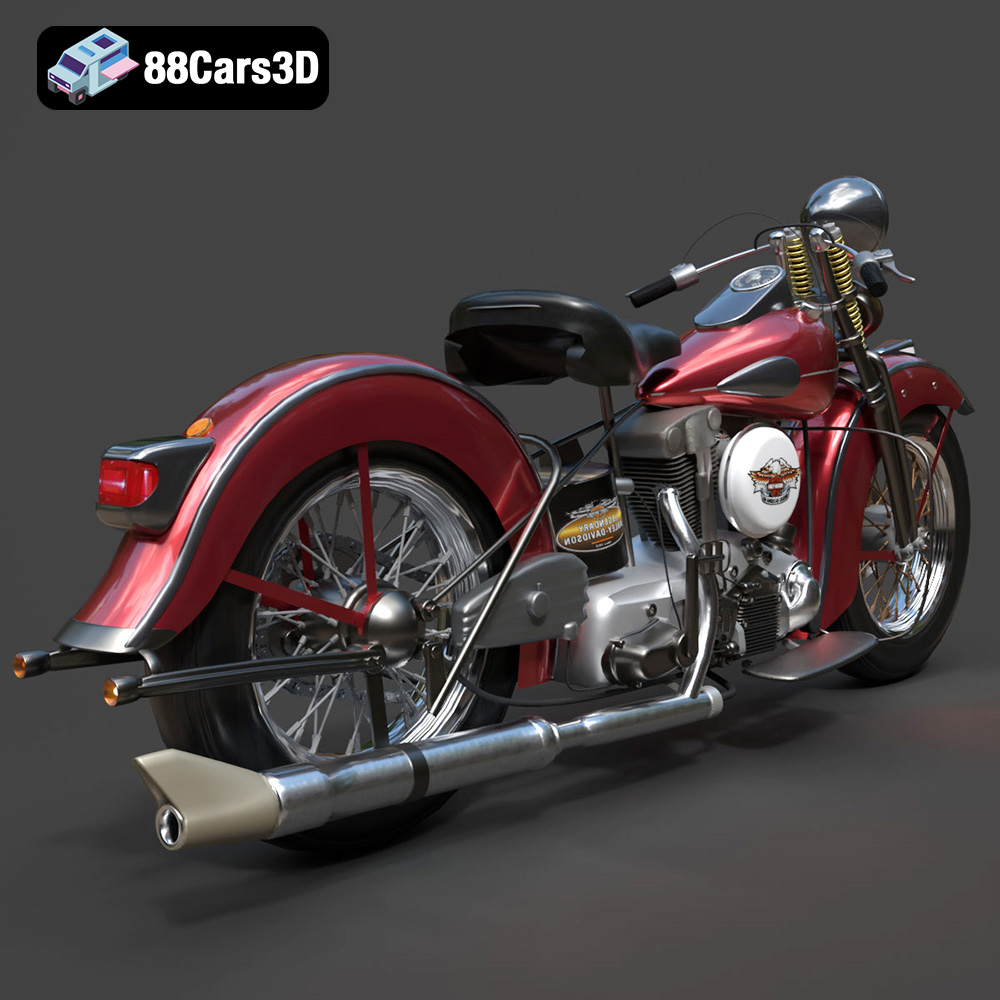
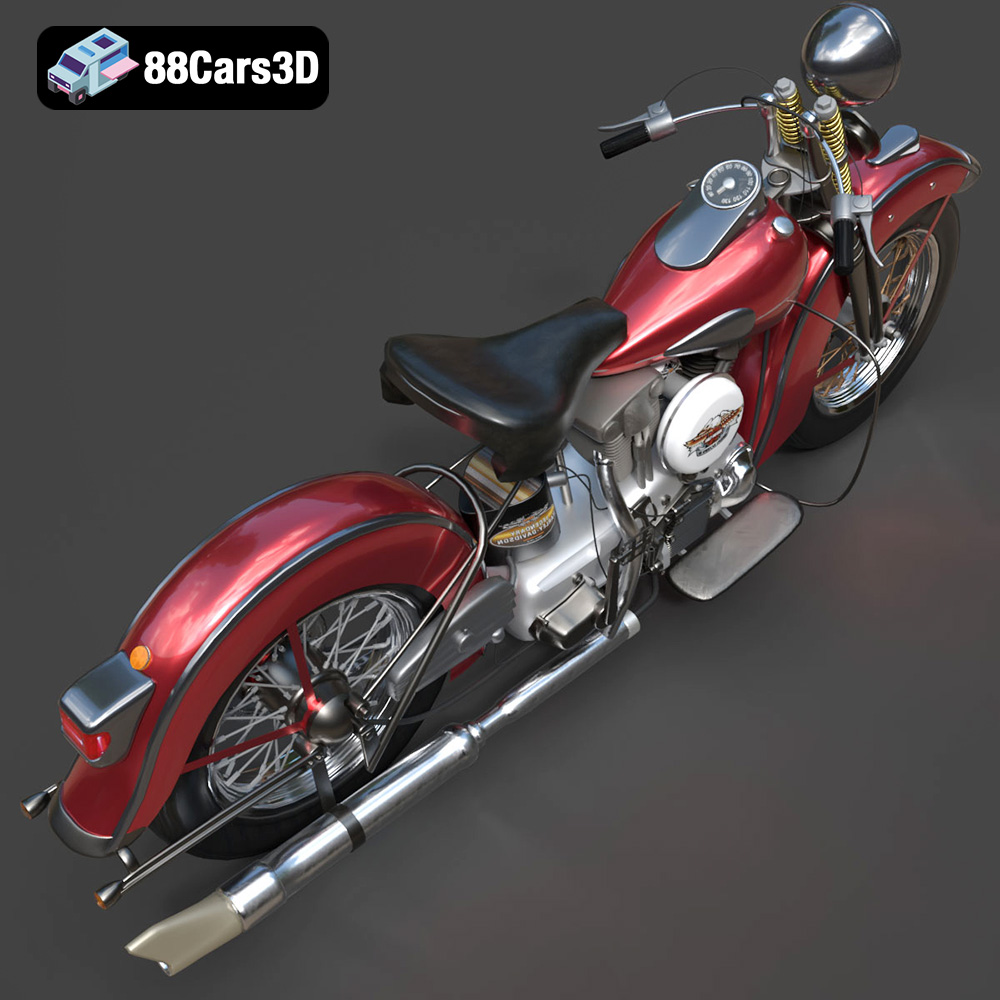
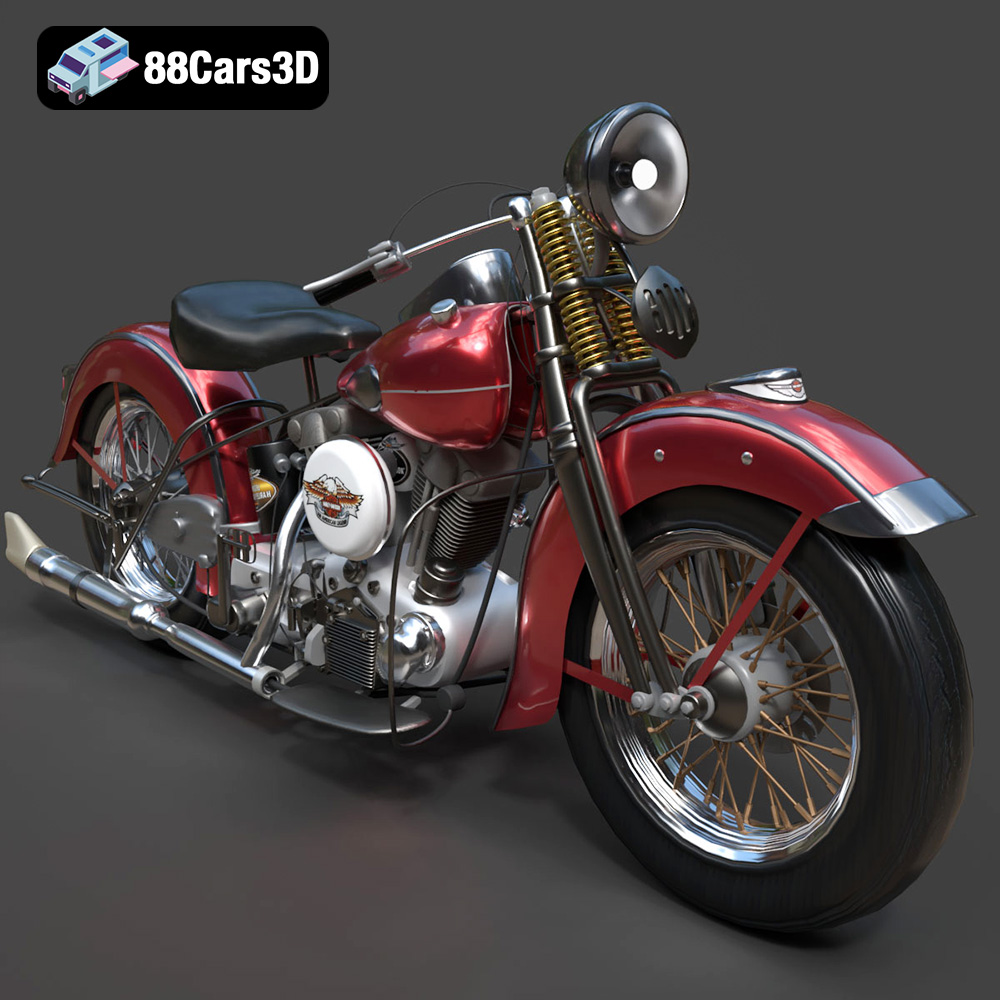
Among the pantheon of legendary motorcycles, the Harley Davidson F 1946 holds a special place. Its distinctive design, robust engineering, and wartime heritage make it a prime subject for meticulous digital recreation. Imagine integrating this piece of American motorcycling history into a stunning photorealistic render, an immersive open-world game, or an interactive AR experience. This is precisely where a high-quality, pre-made 3D asset becomes invaluable. The Harley Davidson F 1946 3D Model from 88cars3d.com offers artists and developers a ready-to-use solution, meticulously crafted to deliver stunning realism and seamless integration into diverse projects.
Classic vehicles, whether cars or motorcycles, possess an inherent charm that transcends generations. In the digital realm, they serve multiple purposes: historical documentation, period-accurate game assets, stunning visual centerpieces for architectural visualizations, or even educational tools for engineering students. The detailed contours, mechanical intricacies, and material finishes of a classic like the Harley Davidson F 1946 demand a high level of fidelity to be truly appreciated. Recreating these elements from scratch is an arduous, time-consuming task, often requiring extensive research and expert modeling skills. Accessing a pre-built, high-quality 3D car model, or in this case, a classic motorcycle, liberates creative professionals to focus on artistic direction, animation, and scene composition rather than the foundational modeling.
Modern 3D tools and rendering techniques allow us to present historical artifacts with unprecedented accuracy and beauty. The Harley Davidson F 1946 3D Model is not just a collection of polygons; it’s a digital artifact imbued with the spirit of its era. From its distinctive “Knucklehead” engine to its classic spring saddle and rigid frame, every element has been thoughtfully reproduced. This dedication to detail ensures that the model can stand up to close-up shots in cinematic sequences, function authentically within a game engine, or provide a realistic anchor for augmented reality applications. It bridges the gap between the physical past and the digital future, making it accessible for countless new forms of engagement.
One of the most critical aspects of working with 3D assets, especially professionally, is understanding the various file formats available. Each format serves a particular purpose, offering unique advantages for different stages of a production pipeline. The Harley Davidson F 1946 3D Model, recognizing the diverse needs of modern artists and developers, comes bundled with an impressive array of formats, ensuring maximum compatibility and utility across various software and applications. This comprehensive approach is a hallmark of quality assets found on platforms like 88cars3d.com.
The availability of such a diverse range of formats for the Harley Davidson F 1946 3D Model underscores its versatility and value, allowing users across different disciplines and software preferences to leverage this exceptional asset effectively.
Automotive rendering is an art form that demands both technical proficiency and an artistic eye. When working with a high-fidelity asset like the Harley Davidson F 1946 3D Model, the potential for photorealistic output is immense. The model’s clean geometry and realistic materials lay the groundwork for stunning visualizations, whether for marketing, design reviews, or personal projects.
For rendering, 3ds Max and Blender are industry powerhouses. In 3ds Max, artists can import the .max file directly, preserving all material setups and scene organization. Leveraging renderers like V-Ray or Corona, one can fine-tune lighting scenarios, material reflections, and camera angles to produce images indistinguishable from photographs. Blender users benefit from the native .blend file, enabling them to utilize Cycles or Eevee renderers. The clean topology of the Harley Davidson F 1946 3D Model ensures smooth subdivision and accurate light interaction, which is crucial for achieving high-quality renders without artifacts. Setting up a studio lighting environment with softboxes and key lights will dramatically enhance the perception of materials and form, bringing out the intricate details of the motorcycle’s engine and chrome components.
The “realistic materials and textures” mentioned in the product description indicate that the Harley Davidson F 1946 3D Model likely uses Physically Based Rendering (PBR) workflows. PBR materials (like metallic/roughness or specular/glossiness) simulate how light interacts with surfaces in the real world, leading to more believable results. When rendering, artists can further enhance these by adding subtle imperfections, dust, or wear using procedural textures or additional texture maps. Understanding how to adjust parameters like metallicness, roughness, and normal maps is key to making the model truly shine. For instance, carefully controlling the roughness of the chrome parts can make them appear either polished new or subtly aged, depending on the desired aesthetic.
Global Illumination (GI) is essential for realistic lighting, simulating how light bounces off surfaces and illuminates a scene indirectly. Most modern renderers implement sophisticated GI algorithms. Coupled with High Dynamic Range Imagery (HDRI), which captures real-world lighting environments, artists can quickly achieve compelling, natural-looking illumination. By placing the Harley Davidson F 1946 3D Model within an appropriate HDRI (e.g., a vintage garage, an open road, or a sunny outdoor scene), the motorcycle will automatically reflect and be illuminated by the environment, grounding it firmly within the scene and adding immense visual impact. This combination allows for rapid iteration of lighting setups while maintaining a high level of realism.
The world of game development constantly seeks compelling and optimized assets, and a classic motorcycle like the Harley Davidson F 1946 makes for an exceptional game asset. Its distinct character can enrich open-world games, racing simulations, or narrative-driven experiences. The provision of .fbx and .unreal formats specifically caters to real-time engine integration.
For Unreal Engine, the .unreal file or a well-prepared .fbx offers a streamlined import. Developers can simply drag and drop the asset into their content browser. The model will come with its PBR materials ready, often as material instances, allowing for easy tweaking of properties without recompiling shaders. In Unity, the .fbx file is the preferred route. After importing, Unity’s automatic material assignment and texture linking features typically handle the initial setup. Developers would then convert these to URP or HDRP compatible materials as needed, or utilize custom shaders for specific visual effects. Both engines provide powerful tools for setting up collisions, LODs, and physics, ensuring the Harley Davidson F 1946 3D Model performs optimally.
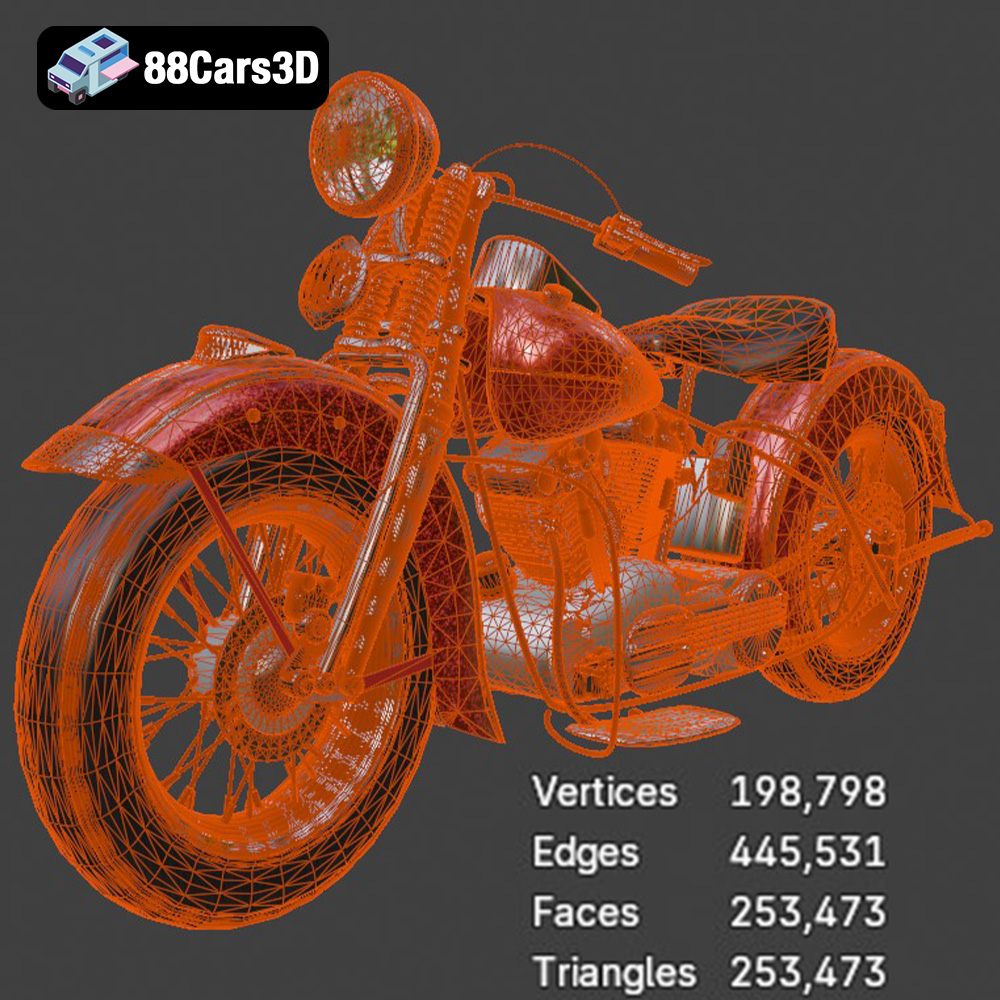
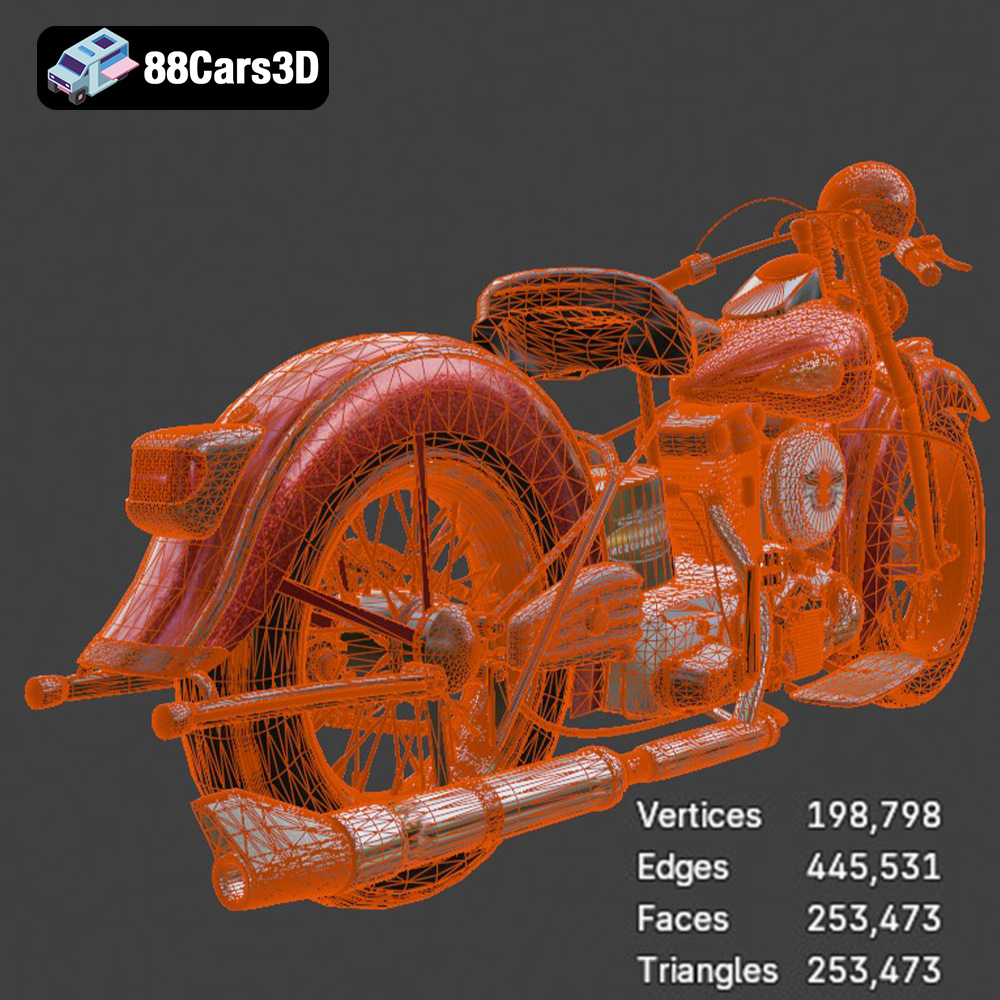
In game development, performance is paramount. While the Harley Davidson F 1946 3D Model boasts “clean geometry for efficient rendering,” further optimization is often necessary for real-time applications. This involves creating Levels of Detail (LODs) – progressively lower polygon versions of the model that swap out as the camera moves further away. This dramatically reduces the poly count and draw calls at a distance, maintaining high frame rates. Game developers will also examine the base poly count to ensure it aligns with target platform specifications and budget. Consolidating materials and textures into atlases can also reduce draw calls, further boosting performance without sacrificing visual quality.
Once imported, the Harley Davidson F 1946 3D Model can be brought to life through scripting and physics. In Unreal Engine, Blueprints can be used to set up basic vehicle physics, allowing players to ride the motorcycle, and adding functionality like engine start-up sounds, headlight toggles, and brake lights. Unity’s C# scripting and robust physics engine (PhysX) enable similar dynamic behaviors. Developers can attach wheel colliders, configure suspension, and fine-tune engine parameters to create a realistic and engaging riding experience. From enabling player character mounting animations to simulating damage effects, the foundation provided by a high-quality model allows for complex and immersive gameplay mechanics.
Augmented Reality (AR) and Virtual Reality (VR) are transforming how we interact with digital content, offering immersive and interactive experiences. High-quality 3D assets are the backbone of these applications. The Harley Davidson F 1946 3D Model, with its optimized .glb format, is perfectly suited for these cutting-edge platforms, allowing users to experience the classic motorcycle in new and exciting ways.
For AR/VR, lightweight and optimized models are crucial for smooth performance on mobile devices and VR headsets. The .glb format, with its single-file bundling of textures and materials, is ideal for web-based AR (like Google’s Scene Viewer or Apple’s AR Quick Look) and mobile VR applications. Its compact nature ensures quick loading times and reduces memory footprint, which is critical for maintaining high frame rates in immersive environments. The .fbx format can also be used, particularly for more complex VR applications built in game engines, where it offers greater flexibility for rigging and animation setup, allowing for interactive elements like opening the fuel cap or examining the engine components up close.
Imagine a virtual showroom where prospective buyers or enthusiasts can walk around the Harley Davidson F 1946, inspect its details from any angle, and even change its paint color or add accessories in real-time. This is the power of interactive visualization. Using the Harley Davidson F 1946 3D Model, developers can create web-based 3D configurators or dedicated AR/VR applications that provide a dynamic and engaging experience. Such applications are invaluable for museums showcasing historical vehicles, marketing campaigns for classic bike restorations, or educational platforms teaching about automotive history and mechanics.
A prime example of AR/VR application is in virtual showrooms, where customers can explore a vehicle without being physically present. For instance, a classic motorcycle dealership could allow customers to view the Harley Davidson F 1946 in their driveway using AR, or explore it in a fully immersive VR environment with interactive hotspots detailing its history and features. Beyond sales, these models are also potent tools for training simulators. Imagine mechanics learning about the intricate “Knucklehead” engine in VR, disassembling and reassembling it virtually without the risk or cost associated with physical models. The precision and detail of the Harley Davidson F 1946 3D Model make these applications not just possible, but highly effective.
While digital visualization is powerful, sometimes there’s no substitute for a tangible object. The ability to physically manifest a 3D model through 3D printing opens up new avenues for enthusiasts, collectors, and educators. The inclusion of the .stl format for the Harley Davidson F 1946 3D Model speaks directly to this exciting application.
The .stl file format is the gold standard for 3D printing because it describes the surface geometry of a 3D object using a mesh of interconnected triangles. This simple, robust representation is easily interpreted by “slicer” software, which prepares the model for the 3D printer by dividing it into thin layers. When preparing the Harley Davidson F 1946 3D Model for printing, users would import the .stl into their preferred slicer (e.g., Cura, PrusaSlicer). Here, parameters like print orientation, support structures (to prevent overhangs from collapsing), layer height, and infill density would be configured. While the .stl typically lacks color information, advanced FDM or resin printers can be used to create highly detailed physical replicas, perhaps even multi-part assemblies that can be painted and finished to match the original.
For designers and engineers, 3D printing isn’t just about creating static models; it’s about rapid prototyping and design validation. The .ply format, with its ability to store precision mesh data, could potentially be used in conjunction with CAD software for analysis or reverse engineering tasks if a more technical examination of the geometry is required prior to printing or modification. Ensuring the model’s geometry is “watertight” – meaning it has no holes or gaps in its surface – is critical for a successful 3D print. High-quality models like the Harley Davidson F 1946 from 88cars3d.com typically adhere to these standards, reducing the need for extensive repair work before printing, and ensuring a smooth transition from digital asset to physical object. This allows for the creation of museum-quality replicas, desktop display pieces, or even scale models for film and animation stop-motion projects.
In a saturated market of digital assets, the distinction between a generic model and a professionally crafted one is immense. The Harley Davidson F 1946 3D Model exemplifies the benefits of choosing high-quality resources, particularly from reputable marketplaces like 88cars3d.com.
The description highlights “clean geometry for efficient rendering and real-time performance.” This is not merely marketing jargon; it’s a fundamental aspect of a professional 3D asset. Clean geometry means well-structured topology, efficient polygon count, and no overlapping vertices or faces. Such models render faster, exhibit fewer visual artifacts, and are easier to optimize for game engines. For a classic motorcycle, capturing its complex curves and mechanical elements while maintaining clean topology is a testament to the modeler’s skill. This attention to detail saves artists and developers countless hours of cleanup and optimization, allowing them to focus on their creative vision.
Time is a valuable commodity in any production pipeline. Creating a detailed 3D car model, or a classic motorcycle like the Harley Davidson F 1946, from scratch can take weeks or even months for a single artist. By acquiring a professionally made asset, studios and individual creators can drastically reduce development time and costs. The provision of multiple industry-standard file formats (.blend, .fbx, .obj, .glb, .stl, .ply, .unreal, .max) further streamlines workflows, eliminating conversion headaches and ensuring compatibility across various software ecosystems. This means the model can be immediately integrated into rendering projects, game environments, AR/VR experiences, or prepared for 3D printing, making it a truly versatile and efficient solution for any creative endeavor.
The digital realm offers unparalleled opportunities to revisit, reimagine, and interact with history. The Harley Davidson F 1946 is more than just a motorcycle; it’s a symbol of its era, an icon of design and engineering. Bringing such a legendary vehicle into modern 3D workflows requires not only artistic skill but also access to high-quality, technically sound assets.
The Harley Davidson F 1946 3D Model from 88cars3d.com stands as a prime example of a meticulously crafted asset that meets the rigorous demands of professional production. With its clean geometry, realistic PBR materials, and comprehensive support for various file formats – from native editable scenes for 3ds Max and Blender to game-engine ready .fbx and .unreal, web-optimized .glb, and 3D print-ready .stl – it serves as a versatile foundation for any project. Whether your goal is to create stunning automotive rendering, develop immersive game assets, build interactive AR/VR experiences, or even produce a physical replica, this model provides the quality and flexibility needed to bring your vision to life. Invest in precision, save valuable time, and elevate your projects with exceptional 3D car models and assets available on 88cars3d.com.
Immerse yourself in the detailed world of the Harley Davidson F 1946 3D Model. This meticulously crafted model replicates the iconic motorcycle with stunning realism, capturing every curve and detail.
$19.99
.arvr
.blend
.car3dmodel
.classicmotorcycle
.f
.fbx
.gameasset
.glb
.harleydavidson
.harleydavidsonf
.max
.motorcycle
.obj
.ply
.rendering
.simulation
.stl
.unreal