Get 50% OFF All Premium 3D & STL Models!

In the dynamic world of 3D visualization, the quality of your assets dictates the fidelity of your final output. From cinematic automotive rendering to immersive game environments and precise architectural visualization, high-detail 3D car models are indispensable. They serve as the foundational elements that breathe life into digital scenes, offering both aesthetic appeal and crucial functional accuracy. For professionals who demand nothing less than perfection, sourcing meticulously crafted models is paramount. It’s about leveraging assets that are not just visually stunning, but also technically robust, ready for integration into complex production pipelines.
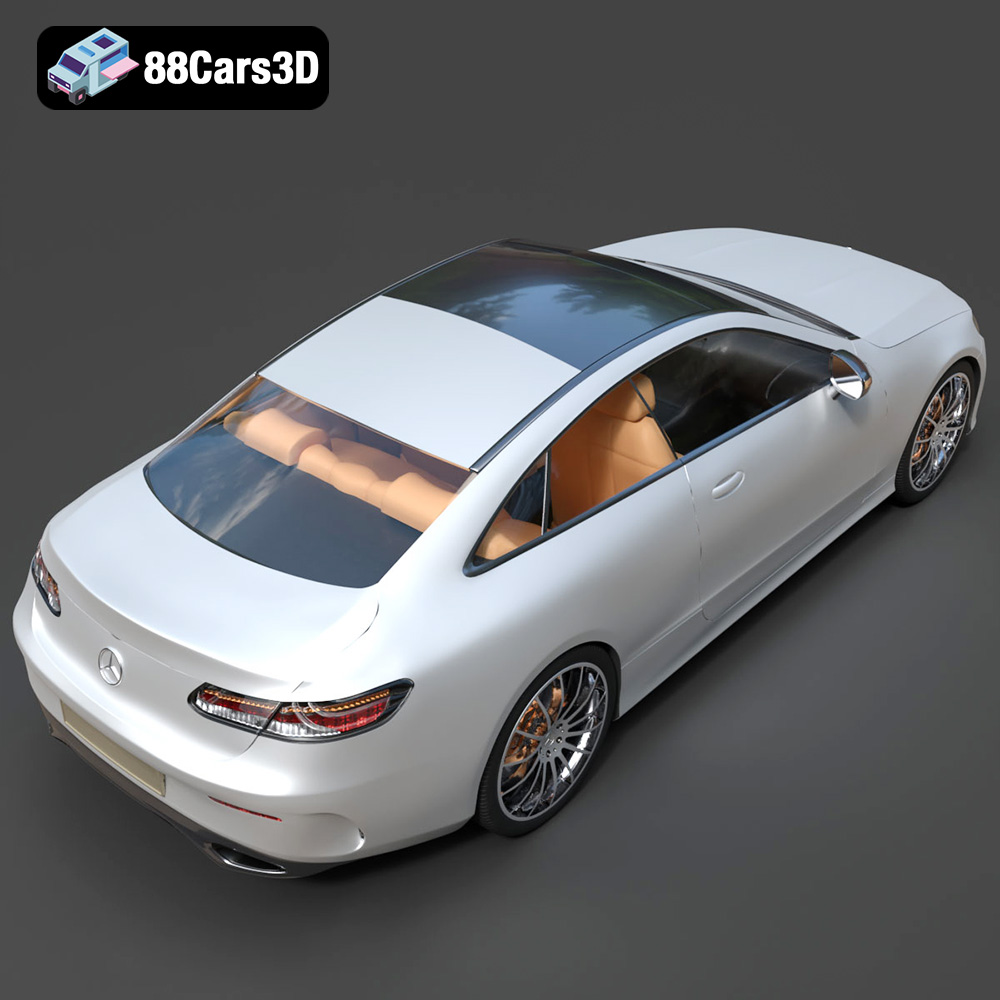
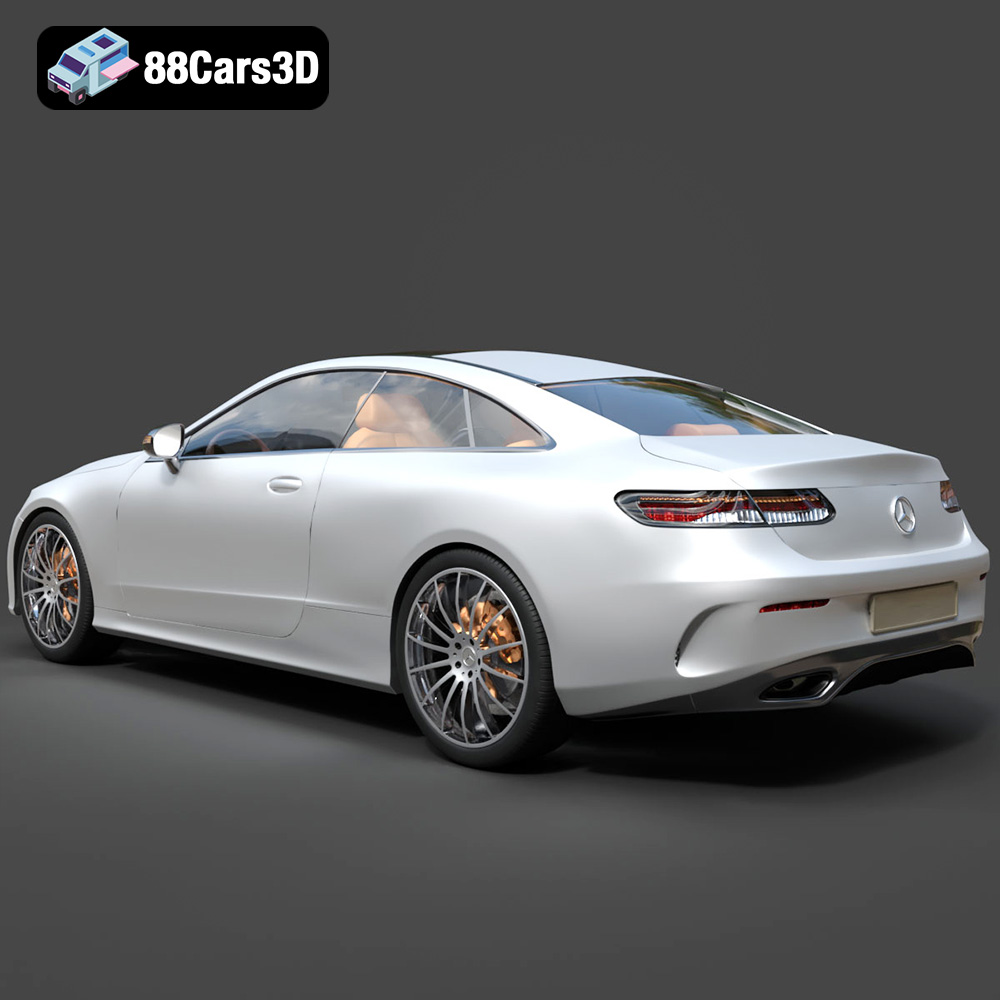
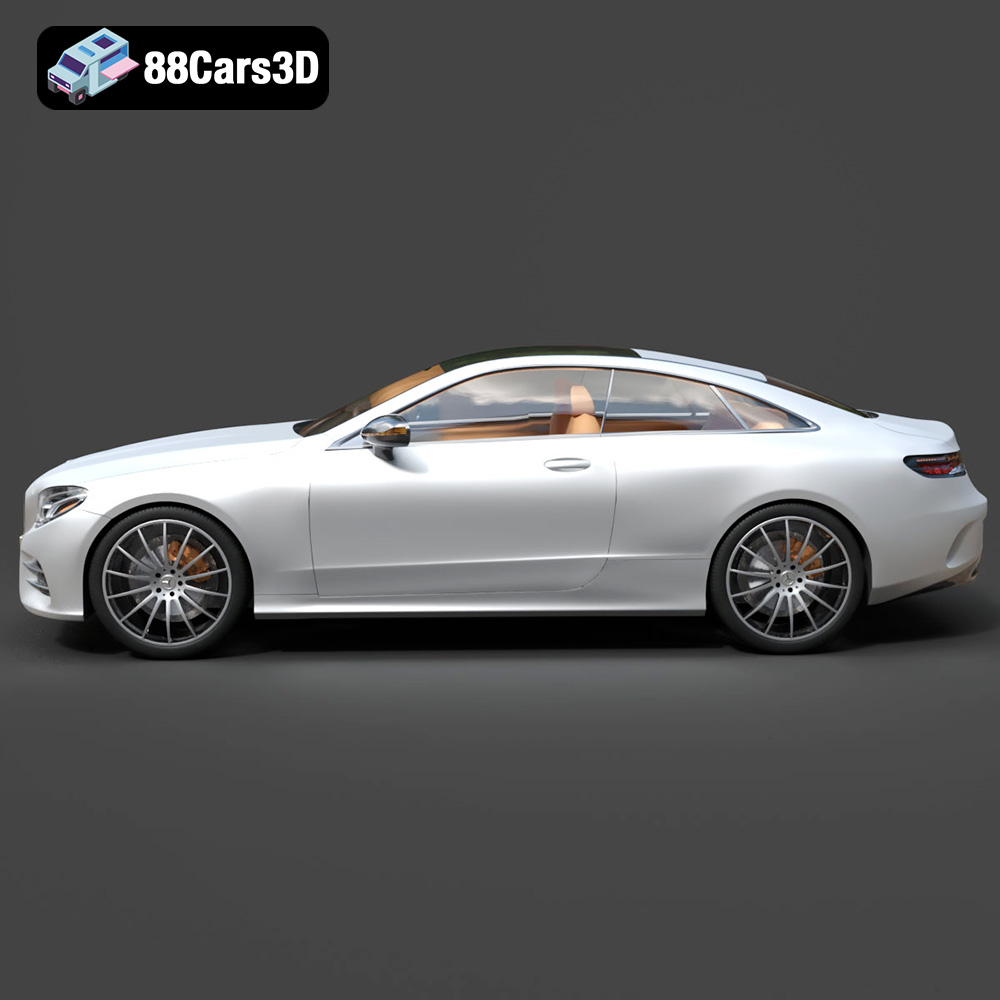
Today, we delve into the intricate details and vast applications of such an asset: the Mercedes-Benz E-Class C238 3D Model. This exquisite digital recreation of the elegant two-door coupe represents the pinnacle of digital craftsmanship, available for immediate deployment through platforms like 88cars3d.com. Whether your project demands photorealistic renders, real-time simulation, or even physical fabrication, this model is engineered to meet diverse professional needs, providing a flexible and high-quality solution for any artist or developer.
Navigating the diverse landscape of 3D production often requires a deep understanding of file formats. Each format serves a specific purpose, optimized for different software, workflows, and output types. The Mercedes-Benz E-Class C238 3D Model from 88cars3d.com is provided in a comprehensive suite of formats, ensuring maximum compatibility and utility across various professional applications.
The .blend format is native to Blender, a powerful open-source 3D creation suite. A .blend file typically contains the entire scene data, including mesh geometry, materials, textures, lighting, cameras, animations, and even physics simulations. For artists primarily working in Blender, this format offers the most flexibility for editing, customization, and scene development. It preserves all the intricate node-based material setups, modifier stacks, and rigging, allowing for deep manipulation of the Mercedes-Benz E-Class C238 3D Model without loss of data or quality.
Known as a ubiquitous exchange format, .fbx (Filmbox) is widely adopted across the industry for transferring 3D data between different software applications. Its strength lies in its ability to carry not just geometry, but also materials, textures, cameras, and animation data, making it ideal for game development pipelines like Unreal Engine and Unity. When integrating the C238 model into a game, an .fbx file ensures that the model’s hierarchy, pivot points, and potential animation setups (like wheel rotation) are preserved accurately, facilitating a smooth import process.
The .obj (Wavefront Object) format is one of the oldest and most widely supported 3D file formats. It’s a simple, text-based format primarily used for geometric data (vertices, normals, texture coordinates, and faces). While it’s excellent for mesh transfer, it typically stores material and texture information in a separate .mtl file. Its universal compatibility makes it a go-to for ensuring basic geometric transfer between almost any 3D software, making the Mercedes-Benz C238 accessible to virtually any artist, regardless of their preferred platform.
The .glb (GL Transmission Format Binary) format is increasingly vital for web-based 3D, augmented reality (AR), and virtual reality (VR) applications. It’s a self-contained format that bundles geometry, materials, textures, and animation into a single compact file, optimized for quick loading and efficient rendering in real-time environments. For interactive virtual showrooms or AR experiences featuring the E-Class C238, the .glb format provides an ideal balance of quality and performance.
When the goal is physical output, the .stl (Stereolithography) format takes center stage. This format represents a 3D model as a collection of unconnected triangular facets, making it the standard for 3D printing. The Mercedes-Benz E-Class C238 3D Model, when converted to .stl, becomes a tangible collectible, allowing enthusiasts to bring the elegant coupe into the physical world as a scale model or display miniature. The robust geometry of the original model ensures a clean conversion for FDM or resin printing, with clear instructions for optimal print settings.
The .ply (Polygon File Format) is another versatile format often used for storing 3D data from 3D scanners, CAD software, and other applications requiring high precision. It can store not just geometry, but also color, transparency, and normal information per vertex or face. While less common for general asset exchange than .fbx or .obj, its inclusion ensures that the Mercedes-Benz C238 3D Model is suitable for more specialized applications like engineering analysis or precise mesh manipulation.
The .unreal format signifies an asset specifically optimized for direct import and use within Unreal Engine. This often implies pre-configured materials, collision meshes, LODs (Levels of Detail), and sometimes even blueprint setups, streamlining the integration into complex game or visualization projects. For developers working on driving simulators or open-world environments, an Unreal-ready Mercedes-Benz E-Class C238 3D Model drastically reduces setup time.
Finally, the .max format is the native file type for Autodesk 3ds Max, a leading software in architectural visualization and automotive rendering. This format preserves all scene data, including modifiers, animation keys, complex material networks (e.g., V-Ray or Corona), and rigging. For studios with established 3ds Max pipelines, the .max file provides the most comprehensive access to the Mercedes-Benz C238 3D Model’s underlying structure, enabling advanced animation, rigging, and photorealistic rendering workflows.
Creating a truly exceptional 3D car model is an art form that blends technical precision with an eye for aesthetic detail. The Mercedes-Benz E-Class C238 3D Model exemplifies this mastery, reflecting hours of meticulous digital sculpting and optimization. Its value extends beyond mere visual appeal, rooted in its clean topology, real-world scale accuracy, and thoughtful engineering for various applications.
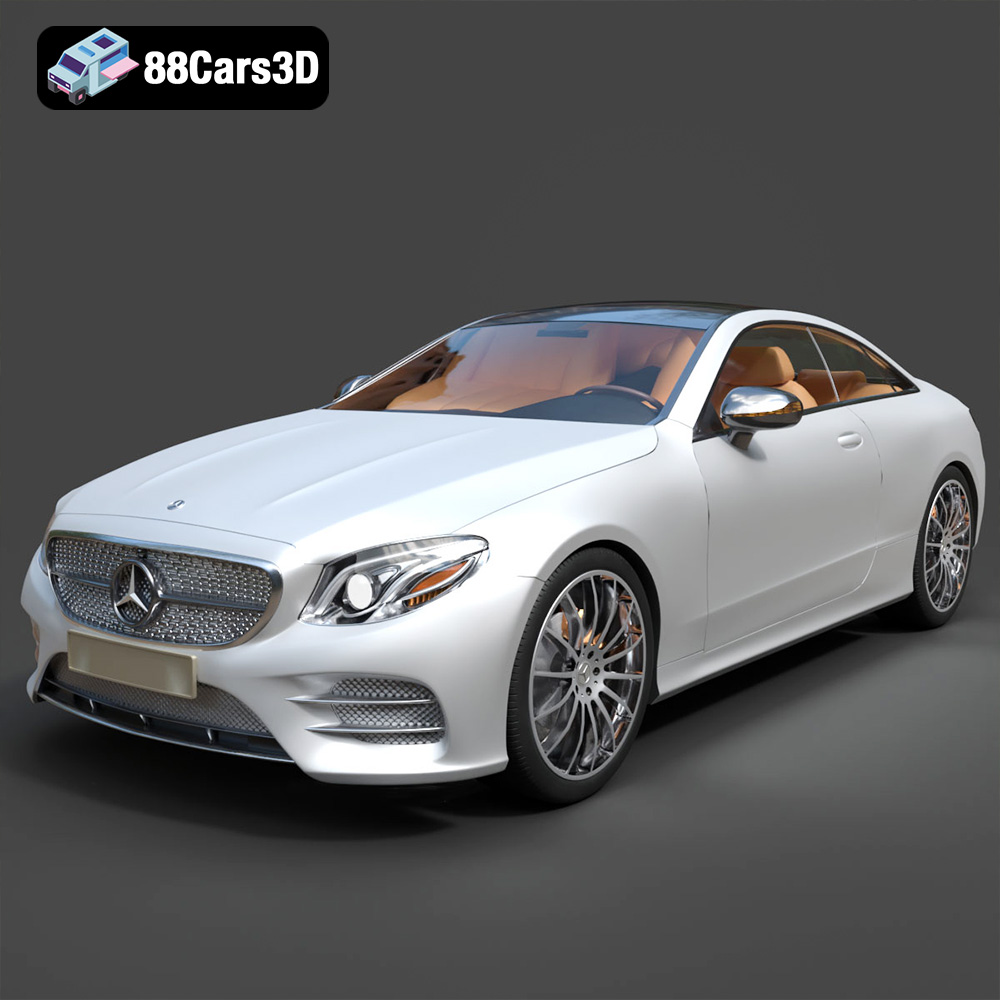
The Mercedes-Benz E-Class C238 is renowned for its elegant two-door coupe proportions, frameless doors, and refined LED lighting. The 3D model captures these characteristics with astonishing accuracy. Every curve of the sculpted body lines, the distinct signature front grille and emblem, and the aerodynamic front bumper are faithfully reproduced. Details like the multi-spoke alloy wheels, complete with brake discs and calipers, are rendered with high fidelity. Even subtle elements such as transparent glass materials, mirror detailing, and the dual exhaust system are present, ensuring that the model holds up under intense scrutiny from any angle. The separate wheels and steering components are a crucial technical advantage, pre-configured for animation, allowing artists to easily integrate the vehicle into dynamic scenes.
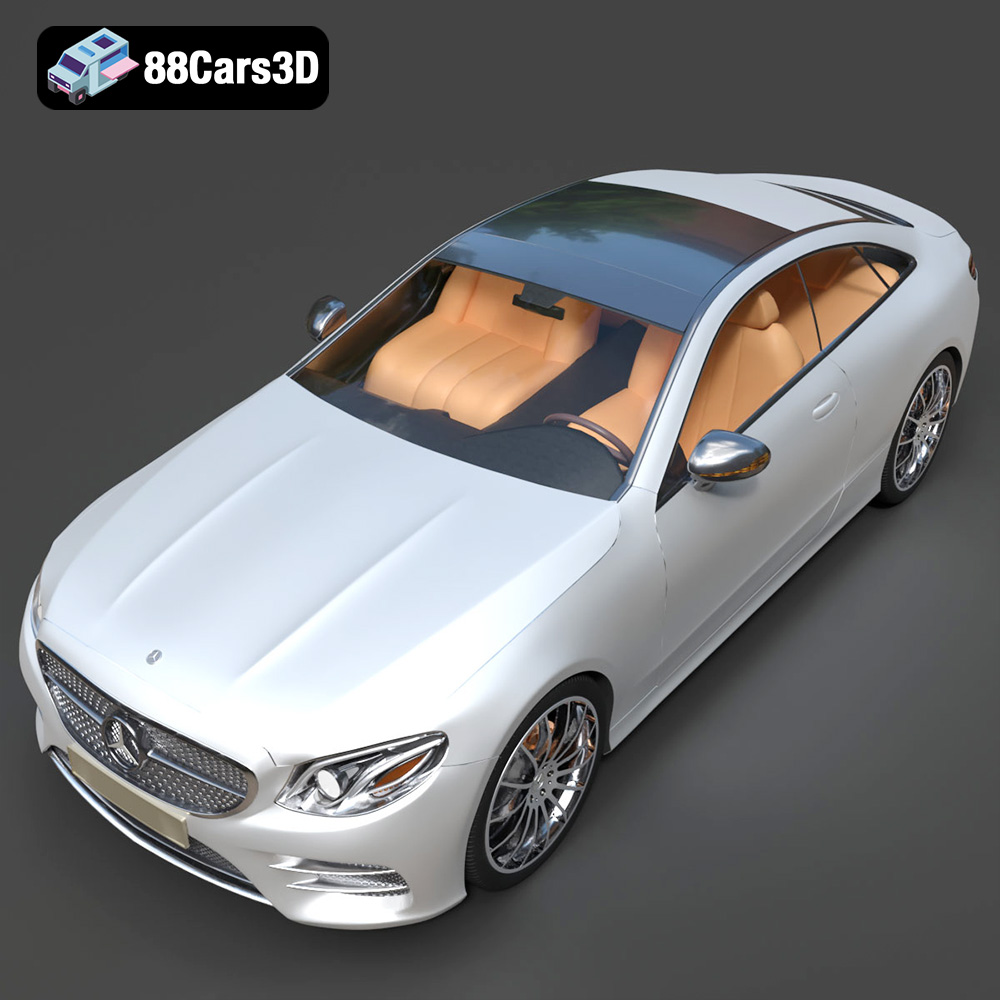
While often seen in exterior shots, a premium 3D car model must also boast an interior that stands up to close-up renders and virtual tours. The Mercedes-Benz E-Class C238 3D Model delivers on this front, featuring a carefully modeled cabin layout. The dashboard with its distinctive dual-screen display, the sport steering wheel with multifunction controls, and premium seat geometry complete with stitching detail are all accurately represented. Elements like the center console, infotainment system, and door panels with interior trim are included, providing a luxurious and convincing environment for any interior rendering or interactive application. This level of detail ensures the model is not just a shell but a fully realized digital vehicle.
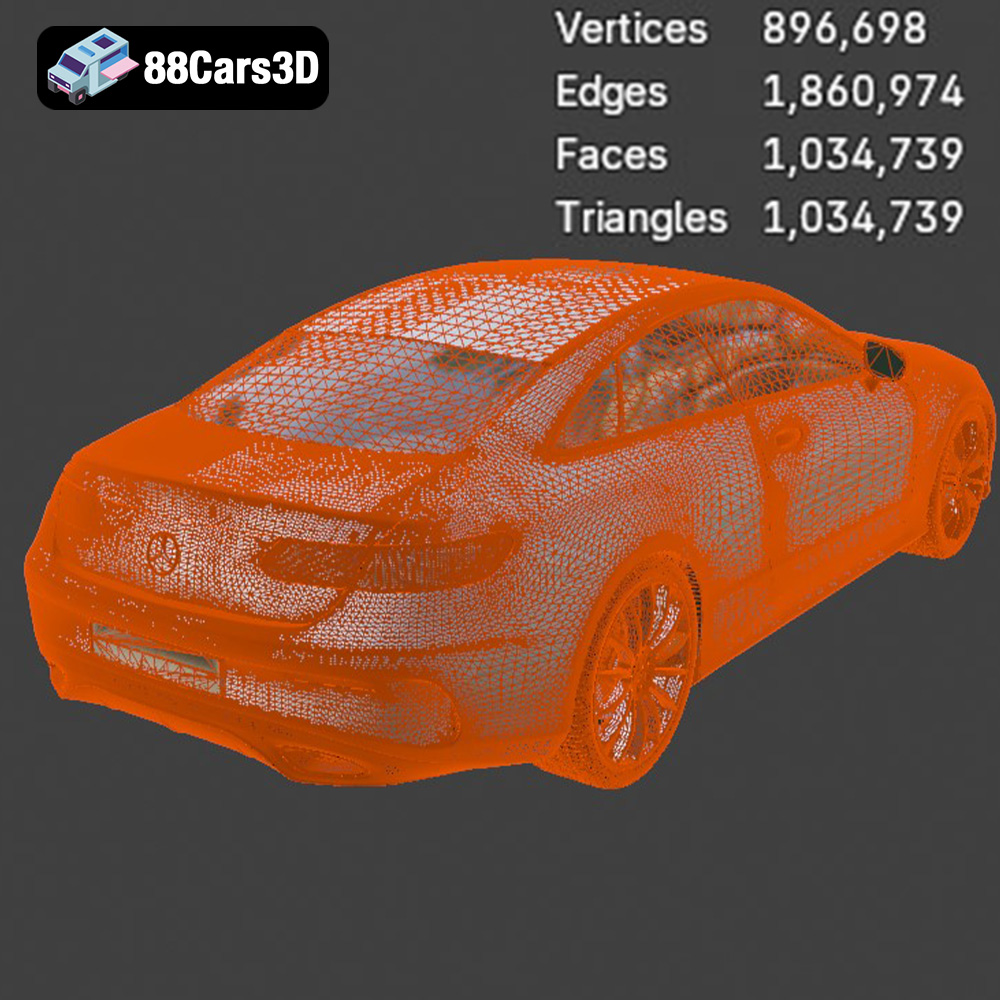
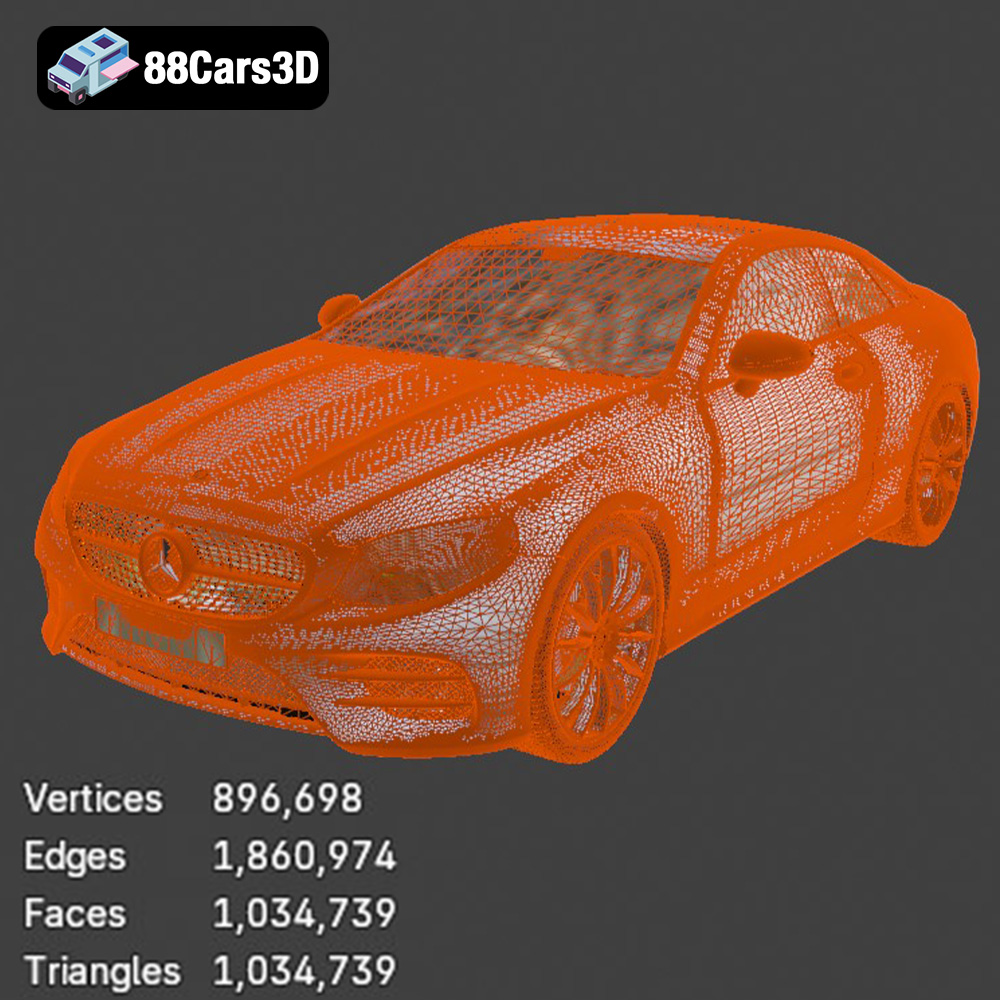
Beyond visual accuracy, the technical underpinnings of a 3D model are what truly define its quality. The Mercedes-Benz E-Class C238 3D Model boasts a “clean and well-organized mesh structure” with “optimized polygon flow.” This means the geometry is predominantly made of quads (four-sided polygons), which deform smoothly during animation and subdivide predictably for high-resolution renders. Efficient polygon flow minimizes artifacts and ensures optimal performance, whether for real-time engines or demanding ray-tracing renderers. Furthermore, proper UV mapping is critical for applying textures without distortion. The model would feature a logical and efficient UV layout, allowing for easy application of realistic materials, decals, and custom liveries, ensuring every pixel of a texture maps flawlessly onto the vehicle’s surface.
The versatility of the Mercedes-Benz E-Class C238 3D Model makes it an invaluable asset across a spectrum of professional production environments. Its comprehensive file format support ensures seamless integration, allowing artists and developers to focus on creative output rather than compatibility issues.
For cinematic visuals and advertising campaigns, photorealistic rendering is paramount. In industry-standard software like 3ds Max and Blender, the C238 model shines. Using render engines such as V-Ray, Corona Renderer (for 3ds Max), or Cycles and Eevee (for Blender), artists can achieve breathtaking results. The included .max and .blend files often come with pre-configured materials, making setup quick and efficient. Artists can load the model, adjust environmental lighting, place cameras, and hit render. The clean topology of the Mercedes-Benz E-Class C238 3D Model ensures that global illumination calculations are accurate, reflections are crisp, and shadows are realistic, critical for luxury automotive marketing. The separate components for wheels and steering allow for easy animation of turns and driving sequences, bringing static renders to life.
Game development and interactive experiences demand models optimized for real-time performance. The .fbx and .unreal formats of the Mercedes-Benz E-Class C238 3D Model are specifically tailored for engines like Unreal Engine and Unity. When imported, the model’s clean mesh and optimized polygon count contribute to high frame rates. Developers can implement advanced PBR (Physically Based Rendering) materials, utilizing the model’s well-laid-out UVs to apply high-resolution textures for paint, glass, and interior fabrics. Crucially, the model’s “proper pivot setup for steering and wheel rotation” means it’s ready for immediate rigging and integration into a vehicle physics system, transforming it into a driveable asset for racing games, open-world simulations, or virtual training platforms. The attention to detail ensures that even in a real-time environment, the luxury and performance of the E-Class C238 are palpable.
The utility of a high-quality 3D model extends far beyond traditional screen-based rendering. The Mercedes-Benz E-Class C238 3D Model is designed with diverse future-facing applications in mind, from tangible collectibles to immersive digital experiences.
One of the most exciting applications for a meticulously detailed 3D car model is 3D printing. The inclusion of the .stl format transforms the digital Mercedes-Benz E-Class C238 into a physical object. This opens up possibilities for creating highly accurate scale models for collectors, display miniatures for automotive enthusiasts, or even prototypes for custom body kits. The product description highlights recommended scales (1:32, 1:24, 1:18, 1:14) and crucial 3D print settings: layer height (0.10–0.16 mm), wall thickness (1.5–2.5 mm), and infill (15–25%). It also advises on support placement for intricate areas like mirrors and spoilers, and optimal print orientation for the body and wheels. Post-processing suggestions, such as sanding, priming, and applying gloss automotive paint, elevate the printed model to a premium collectible, showcasing the intricate detail preserved from its digital origin.
The advent of Augmented Reality (AR) and Virtual Reality (VR) has revolutionized how consumers interact with products, especially in the automotive sector. The Mercedes-Benz E-Class C238 3D Model is “perfect for virtual showrooms, interactive configurators, and immersive car presentations,” thanks in part to its optimized geometry and the inclusion of the .glb format. This lightweight, self-contained format is tailor-made for efficient streaming and display in AR/VR environments. Imagine a customer exploring the C238 in their driveway via an AR app, or walking around it in a VR showroom, changing colors and inspecting interior details in real-time. The model’s real-world scale accuracy ensures a convincing sense of presence, allowing for highly engaging and interactive experiences that transcend traditional viewing methods.
A truly professional 3D asset provides a robust foundation, but also offers ample opportunity for creative customization. The Mercedes-Benz E-Class C238 3D Model is engineered to give artists and designers extensive freedom to tailor the vehicle to specific project requirements, ensuring unique and compelling results.
The base model provides a detailed and accurate representation, but the included native formats like .blend and .max allow for deep aesthetic customization. Users can easily “change body colors and trim finishes” to match specific branding, client requests, or creative visions. Whether it’s a vibrant metallic paint, a matte wrap, or a classic solid color, the model’s clean UVs and material setup facilitate effortless texture changes. The option to “add AMG-style body kit elements” means the vehicle can be transformed from its standard luxurious form into a more aggressive, high-performance variant. Furthermore, “modify wheel designs and brake caliper colors” allows for fine-tuning the vehicle’s stance and personality, catering to various aesthetic preferences and marketing needs. This flexibility is crucial for designers looking to create a unique presentation without having to model every component from scratch.
Beyond static appearance, the Mercedes-Benz E-Class C238 3D Model is designed for dynamic scene integration. The “optimized geometry for real-time engines and high-quality renders” ensures it performs well under various lighting conditions. Artists can “configure lighting for studio, sunset, or night urban scenes,” creating different moods and showcasing the vehicle’s lines under diverse atmospheres. The separation of wheels and steering components is a significant advantage for animators, allowing for precise control over motion. This means the car can be integrated into complex animated sequences, from a subtle drive-by in a commercial to a full-blown chase scene in a cinematic project. The model’s technical preparedness empowers animators to create realistic vehicle dynamics with ease, enhancing the storytelling potential of any visual project.
In the competitive landscape of digital content creation, the difference between good and exceptional often comes down to the quality of your assets. The Mercedes-Benz E-Class C238 3D Model stands as a testament to this principle, offering a meticulously crafted, technically robust, and supremely versatile resource for professionals across industries. Its high-detail exterior and interior, coupled with clean topology and real-world scale accuracy, make it an ideal choice for high-fidelity automotive rendering, dynamic game development, immersive AR/VR experiences, and even precise 3D printing projects.
The comprehensive support for various file formats—from .blend and .max for native software power users to .fbx and .unreal for game developers, and .stl for tangible creations—ensures that this premium asset seamlessly integrates into any professional workflow. It empowers artists and designers with the freedom to customize, animate, and deploy a luxurious vehicle that captures the essence of Mercedes-Benz engineering. For anyone seeking to elevate their digital projects with truly outstanding 3D car models, the Mercedes-Benz E-Class C238 is an investment in unparalleled quality and creative potential. Explore this and many other top-tier assets at 88cars3d.com, where excellence in 3D visualization begins.
The Mercedes-Benz E-Class C238 3D Model is a high-detail digital recreation of the elegant two-door coupe variant of the E-Class lineup. Combining luxury, performance, and modern design language, the C238 generation features sleek coupe proportions, frameless doors, refined LED lighting, and premium interior craftsmanship. This 3D model accurately represents the sculpted body lines, signature front grille, aerodynamic front bumper, multi-spoke alloy wheels, LED headlamps and taillights, dual exhaust system, and detailed cabin layout. Designed with clean topology and real-world scale accuracy, it is ideal for rendering, animation, automotive visualization, game development, and AR/VR showroom applications.
$9.99
.arvr
.automotive
.blend
.c238
.car3dmodel
.eclass
.fbx
.gameasset
.glb
.luxurycoupe
.max
.mercedesbenz
.obj
.ply
.premiumcar
.rendering
.simulation
.stl
.unreal