Get 50% OFF All Premium 3D & STL Models!

The Land Rover Defender is more than just a vehicle; it’s a legend. Synonymous with adventure, rugged durability, and unparalleled off-road capability, it has traversed continents and conquered the toughest terrains imaginable. From remote expeditions to vital military service, the Defender 110 has etched itself into the annals of automotive history as an icon of utilitarian design and steadfast performance. But what happens when this real-world titan transitions into the digital realm?
For 3D artists, game developers, automotive designers, and visualization specialists, the demand for high-fidelity, accurate 3D car models of iconic vehicles like the Defender is constant. This is where a meticulously crafted asset truly shines. The Land Rover Defender 110 3D Model offered on 88cars3d.com is not just a digital representation; it’s a comprehensive tool designed to empower your creative projects, offering a level of detail and versatility that meets professional standards across a multitude of applications. Whether you’re aiming for breathtaking automotive rendering, integrating it as a robust vehicle in a game, or even bringing it to life as a physical collectible through 3D printing, this model serves as an exceptional foundation.
Recreating an automotive icon like the Land Rover Defender 110 in 3D requires a deep understanding of its engineering and aesthetic principles. This isn’t merely about modeling shapes; it’s about capturing the essence of its functional design and the spirit of adventure it embodies. The long-wheelbase Defender 110, with its distinctive silhouette, is a testament to form following function, making it a compelling subject for digital artists.
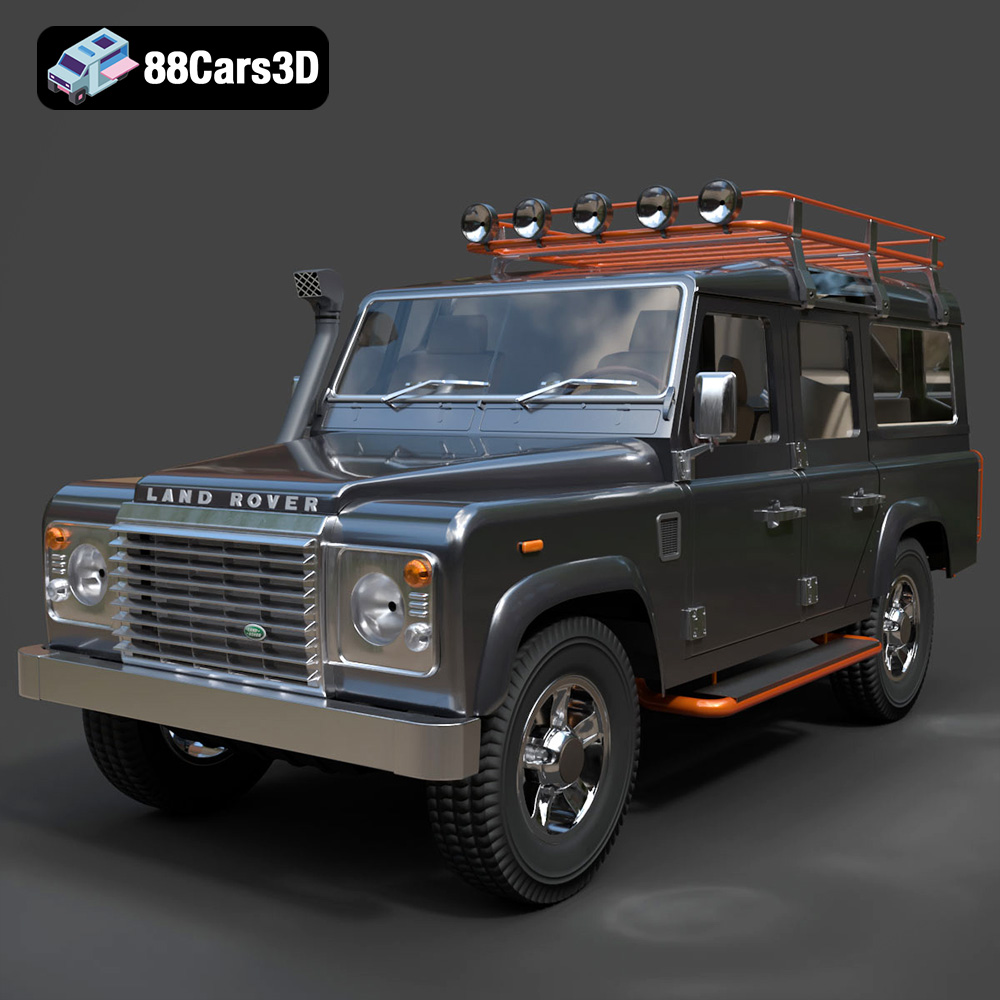
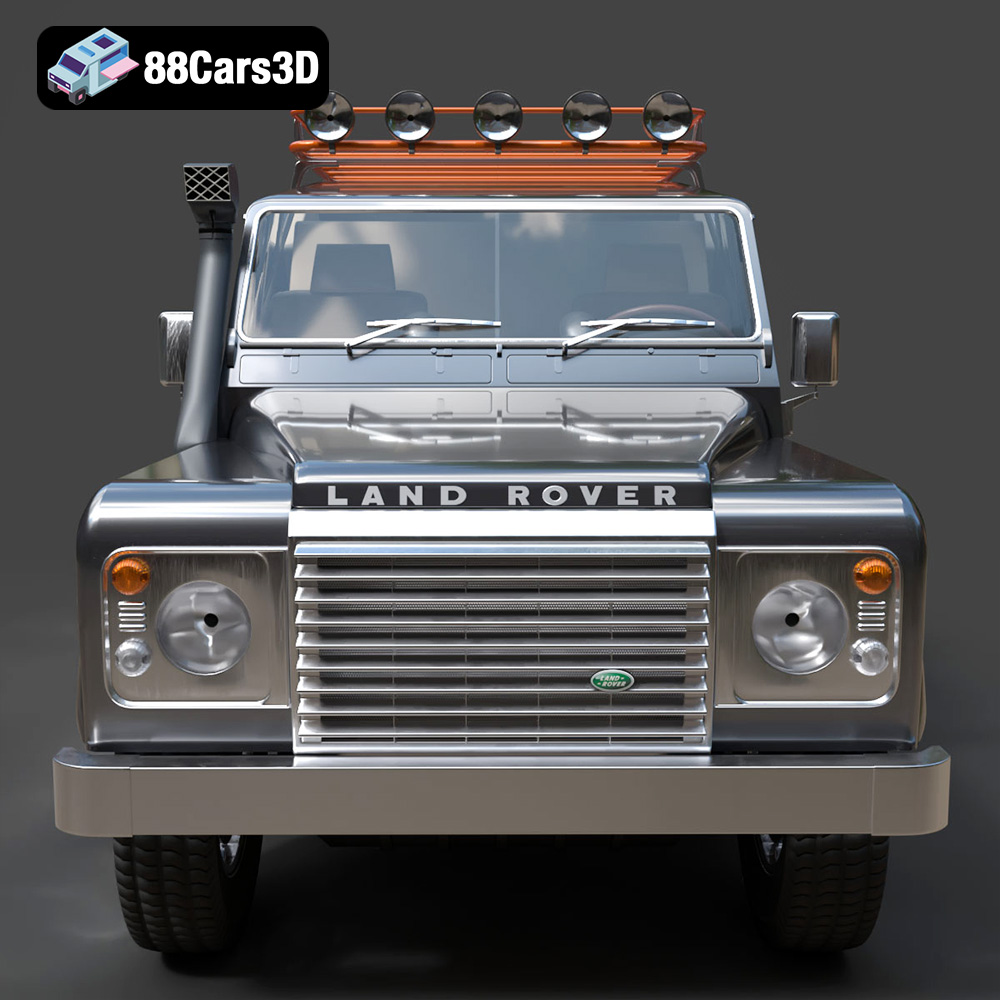
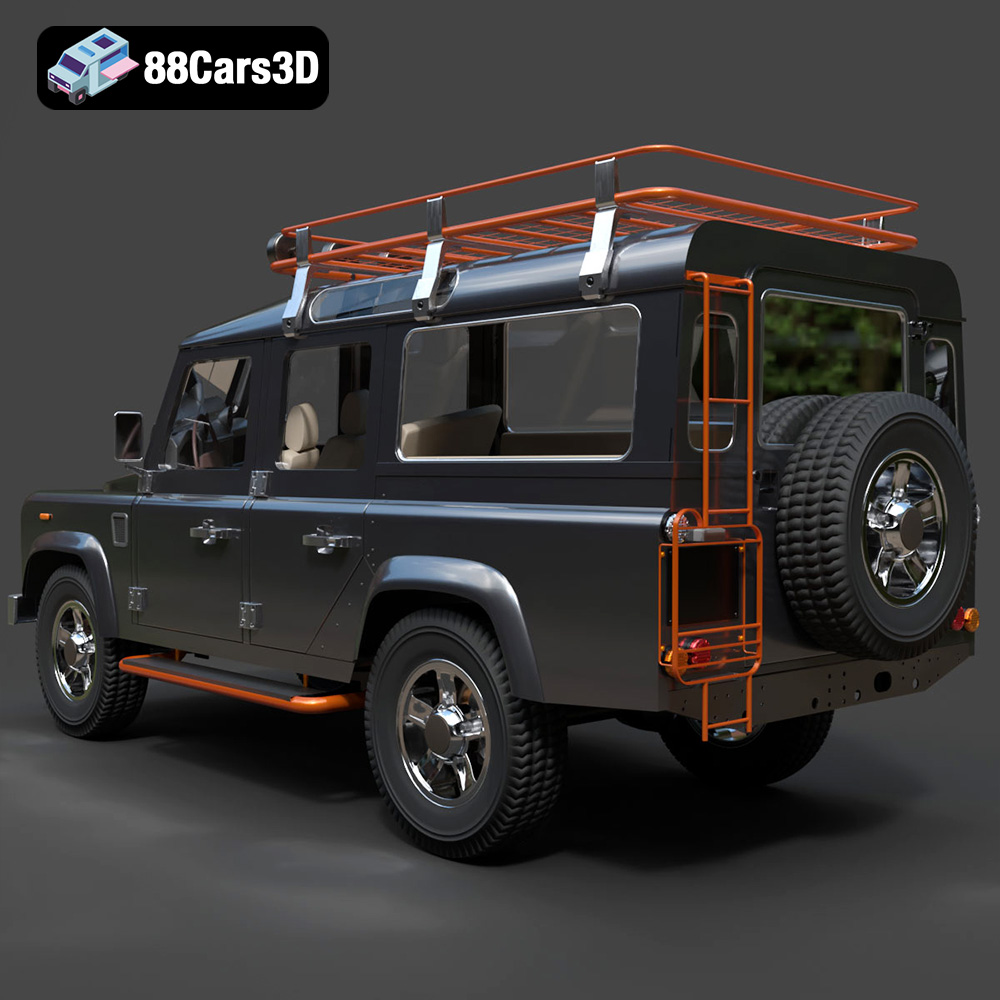
The journey from a physical vehicle to a high-quality 3D car model involves meticulous attention to detail. Every curve, panel line, and component must be accurately translated into polygons and textures. The Land Rover Defender 110 3D Model precisely mirrors the real-world proportions and rugged characteristics of its namesake. This includes its signature boxy body structure, the utilitarian flat hood design, the iconic front grille, and those instantly recognizable round headlamps. Furthermore, the reinforced bumpers, extended wheelbase proportions, and the classic rear-mounted spare wheel are all faithfully replicated, ensuring that the digital asset carries the authentic visual weight of the original.
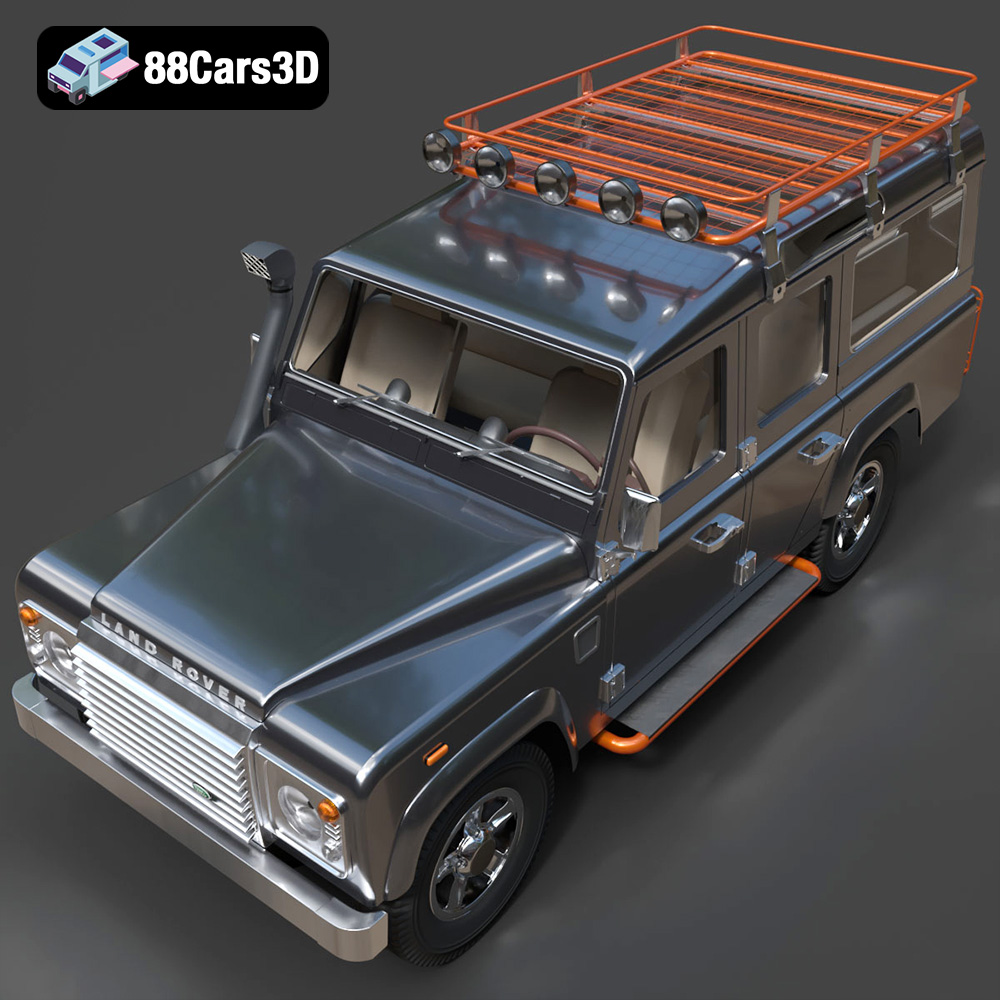
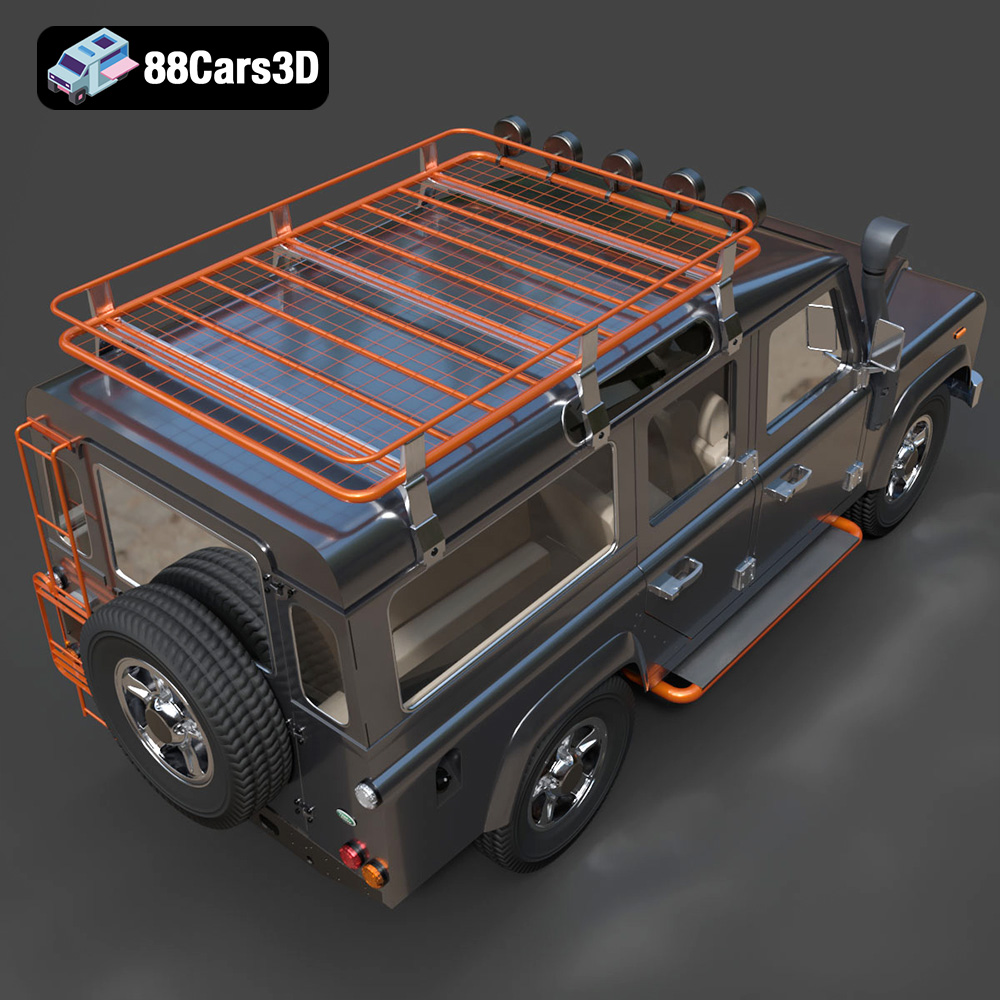
The authenticity extends beyond the broad strokes. Subtle yet crucial elements like hood-mounted air vents, exposed hinges, and the specific roof configuration (ready for a roof rack or presented as a solid roof) are integral to the Defender’s identity. On the interior, the model features a functional dashboard layout complete with an analog instrument cluster, a detailed steering wheel, and accurate seating arrangements. Even the center console and gear shifter detailing are present, providing a credible foundation for interior shots, immersive simulations, or character interaction within game environments. This level of detail ensures that whether the model is viewed up close in a cinematic render or as part of a vast open-world game, its authenticity remains undeniable.
In the diverse landscape of 3D production, choosing the right file format is crucial for workflow efficiency, compatibility, and achieving optimal results. The Land Rover Defender 110 3D Model from 88cars3d.com comes with a comprehensive suite of file formats, ensuring maximum flexibility for any professional application. Understanding each format’s strengths and typical use cases is key to leveraging your 3D car models effectively.
The .blend format is native to Blender, one of the most popular open-source 3D creation suites. It stores everything: geometry, materials, textures, lighting, cameras, animation data, and even the entire scene setup. This makes .blend files ideal for users who primarily work within Blender, offering full editability and seamless integration with Blender’s powerful toolset. If you plan to extensively modify the Defender model’s mesh, rig it for complex animation, or integrate it into a Blender-centric pipeline, starting with the .blend file provides the most comprehensive and flexible foundation.
.fbx (Filmbox) is arguably the most widely adopted proprietary 3D exchange format, especially prevalent in game development and film production. It supports geometry, materials, textures, animation, skeletal data, and blend shapes. Its strength lies in its ability to transfer data between different 3D software packages (like Maya, 3ds Max, Blender) and game engines (Unreal Engine, Unity) while maintaining much of the original scene information. For integrating the Land Rover Defender 110 into real-time pipelines or complex animation projects involving multiple software, .fbx is often the go-to choice due to its robust compatibility.
The .obj (Wavefront OBJ) format is a universal, open-standard file type primarily used for exchanging 3D geometry data. It stores vertex positions, UV coordinates, normals, and polygonal faces. While it doesn’t typically store animation or advanced material definitions directly within the file (textures are referenced separately), its simplicity and widespread support make it incredibly reliable for basic mesh transfer. If you need a clean mesh of the Defender 110 for retopology, sculpting, or simply importing into a software that might struggle with more complex formats, .obj is an excellent fallback.
.glb (GLB format for glTF) is a relatively newer format gaining significant traction, particularly for web-based 3D, AR/VR, and mobile applications. It’s a binary container for glTF (Graphics Language Transmission Format) assets, which means all data (geometry, textures, animations, materials) is packed into a single, optimized file. This makes .glb files incredibly efficient for rapid loading and display in browsers and immersive environments. The Defender 110 in .glb format is perfect for interactive product viewers, virtual showrooms, or light AR applications where performance and ease of deployment are critical.
The .stl (STereoLithography) format is the undisputed standard for 3D printing. It represents a 3D model as a collection of unconnected triangular facets, defining only the surface geometry without color, texture, or other attributes. For anyone looking to bring the Land Rover Defender 110 into the physical world as a scale model or collectible, the .stl file is essential. While it’s a simple format, ensuring manifold geometry and watertight meshes is crucial for successful 3D printing, which the supplied model is designed to provide.
The .ply (Polygon File Format) is often used for storing 3D data from 3D scanners, CAD software, and other sources where precision and raw point cloud or polygon data are paramount. It can store various properties beyond just geometry, such as color, transparency, and normal data per vertex or face. For more technical applications, such as reverse engineering, measurement, or scientific visualization of the Land Rover Defender 110, the .ply format offers a robust and accurate representation of the mesh data.
The .unreal file refers to an asset specifically prepared or packaged for direct use within Unreal Engine. While not a standalone file format in the same way as .fbx or .obj, it signifies that the asset has undergone the necessary optimizations, material setups, and sometimes even basic collision or LOD generation to be seamlessly imported and utilized within an Unreal project. Having the Defender 110 pre-configured for Unreal saves significant time for game developers and real-time visualization artists, allowing them to drop the vehicle directly into their scenes with minimal setup.
Finally, the .max format is the native file type for Autodesk 3ds Max, a powerful 3D modeling, animation, and rendering software widely used in architectural visualization, product design, and game development. Like .blend, it saves the entire scene, including geometry, lights, cameras, materials, modifiers, and animation. If your primary workflow is within 3ds Max for high-end automotive rendering or complex animation sequences, the .max file provides full access to all the original scene settings and allows for extensive modification within the familiar environment.
The availability of these diverse formats with the Land Rover Defender 110 3D Model ensures that regardless of your software preference or project requirements, you have a reliable, high-quality asset ready for integration.
Beyond simply looking good, a truly professional 3D car model is built with technical integrity. This means focusing on details that facilitate smooth workflows, realistic animations, and optimal performance across different platforms. The Land Rover Defender 110 3D Model exemplifies this approach, offering attributes critical for advanced production pipelines.
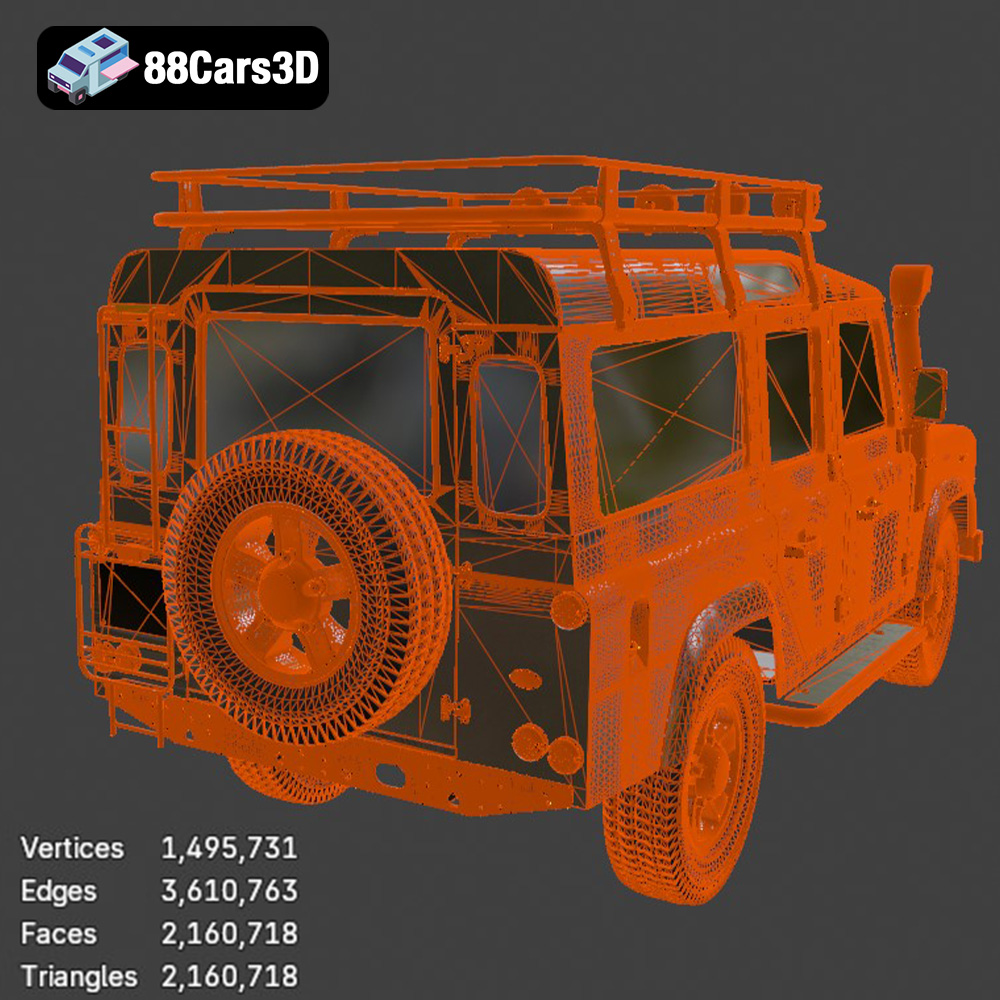
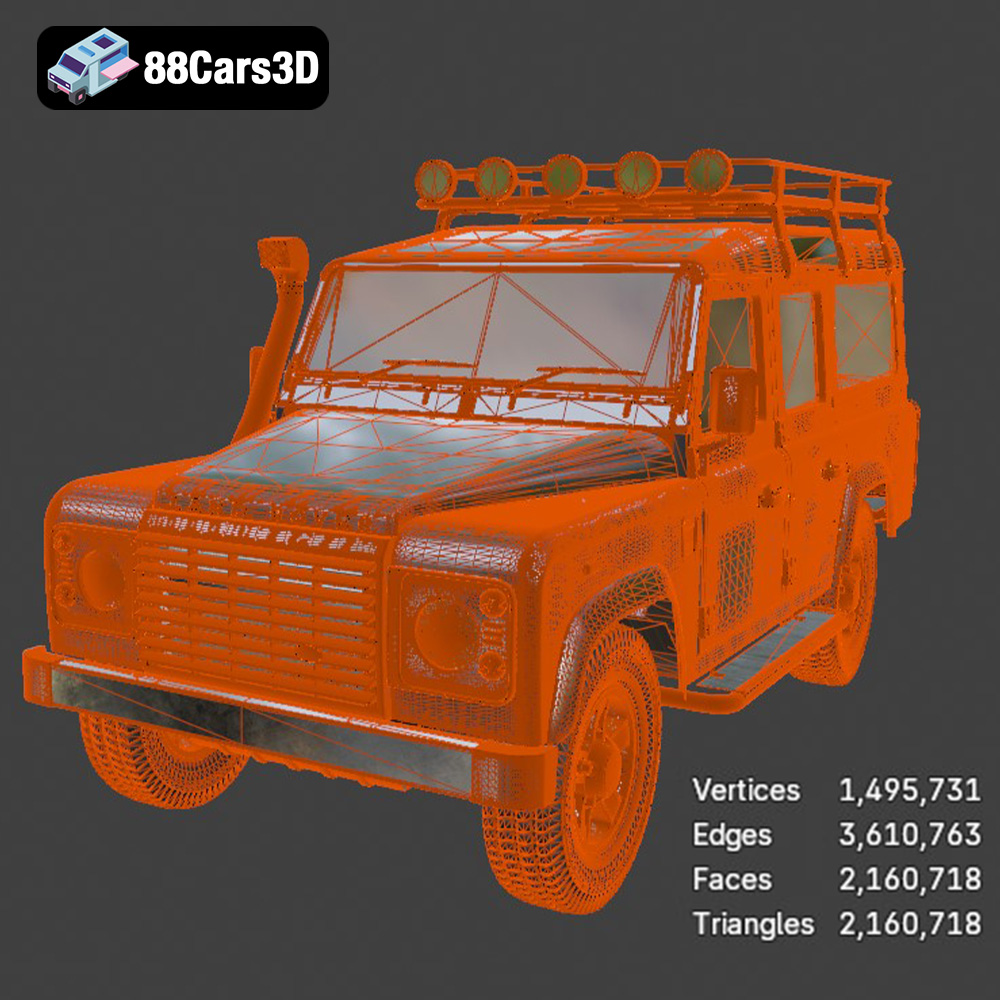
A “clean and well-organized mesh structure” is paramount. This refers to the efficient and logical arrangement of polygons, avoiding common issues like overlapping faces, unnecessary vertices, or non-manifold geometry. Such clean topology is essential for smooth deformations during animation, successful UV unwrapping for texturing, and predictable subdivision for higher detail levels. The Defender 110 model boasts “optimized polygon flow for performance and realism,” striking a balance between detail and efficiency. This makes it suitable for both high-fidelity offline rendering and real-time applications where poly count directly impacts frame rates.
“Real-world scale accuracy” is another non-negotiable feature for professional use. Whether you’re integrating the Defender into an architectural visualization, a vehicle simulator, or a comparative study, having a model that adheres to the actual dimensions of the real vehicle is vital for realism and consistency. Furthermore, the model comes with “proper pivot setup for steering and wheel rotation.” This might seem minor, but it’s crucial for animators and game developers. Correct pivot points ensure that wheels rotate naturally around their axles and that steering mechanisms articulate realistically, saving countless hours in rigging and animation setup.
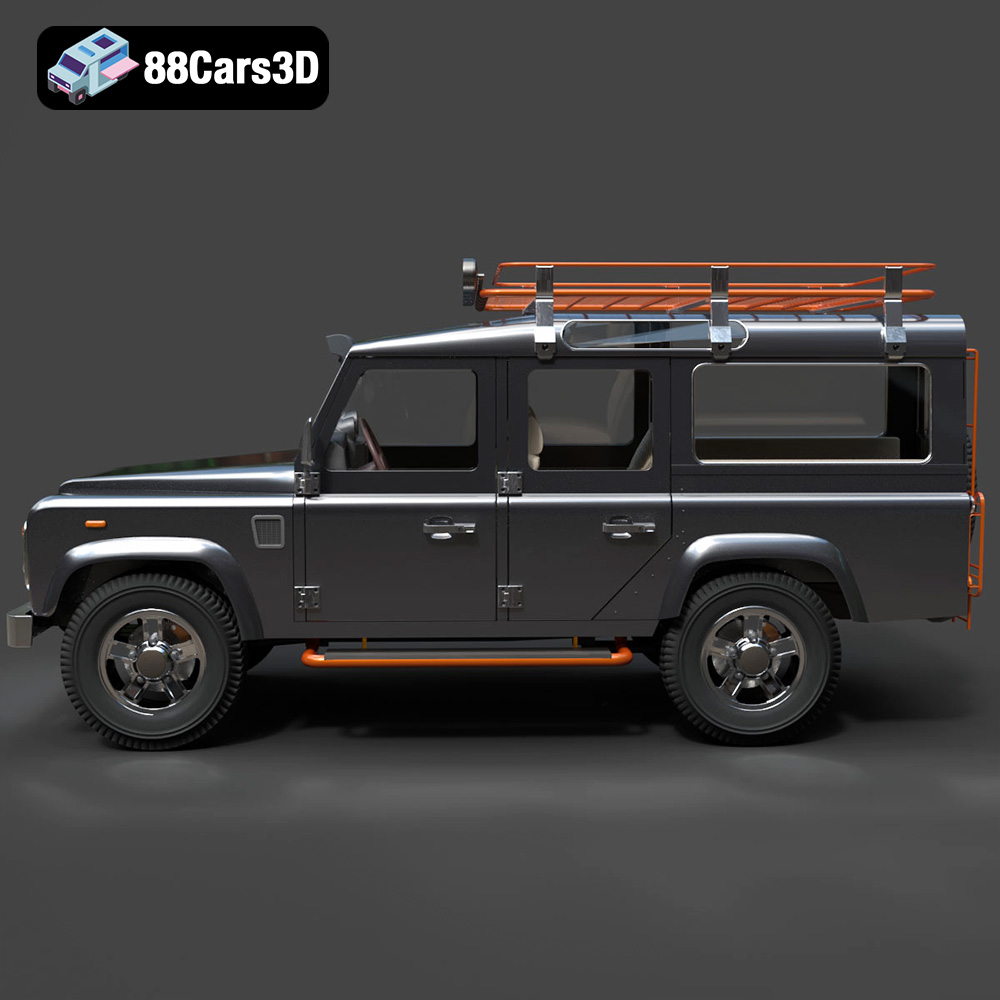
The extensive list of exterior and interior features speaks volumes about the model’s fidelity. From the accurate Defender 110 long-wheelbase body proportions to the detailed side steps and off-road tires, every element contributes to a convincing digital replica. The separation of wheels and steering components means these parts are ready for individual animation, allowing for dynamic driving sequences or interactive controls. Inside, the “functional dashboard layout with analog instrument cluster” and “interior panel structure optimized for real-time rendering” ensure that the model holds up even in first-person views or virtual reality experiences. This comprehensive detailing makes the Land Rover Defender 110 3D Model a versatile asset for creating genuinely immersive digital environments.
The true test of any 3D car model lies in its adaptability across various professional workflows. With its diverse file formats and optimized structure, the Land Rover Defender 110 3D Model seamlessly integrates into leading 3D software and game engines, empowering artists and developers to achieve their creative visions.
For high-end automotive rendering, software like Autodesk 3ds Max and Blender are industry staples. With the provided .max and .blend files, users have direct access to the model’s native scene setups, materials, and potentially pre-configured lighting rigs. In 3ds Max, artists can leverage V-Ray or Corona Renderer to create photorealistic images. Imagine the Defender parked against a dramatic desert backdrop, with dust kicking up from its detailed off-road tires, rendered with exquisite global illumination and physically accurate reflections on its boxy aluminum body panels. Blender users can achieve similar stunning results with Cycles or Eevee, utilizing its powerful node-based shader editor to craft nuanced paint finishes, rugged tire textures, and realistic glass refractions for the headlights. The clean mesh and proper UVs ensure that textures apply flawlessly, from the distinct grille pattern to the worn leather of the interior seats, allowing for an incredible degree of realism in static renders or dynamic animations.
The inclusion of an .unreal file, alongside .fbx and .glb, makes this Land Rover Defender 110 3D Model an invaluable asset for game developers working with Unreal Engine or Unity. In game development, performance is critical. The “optimized polygon flow” means the model can be integrated without heavily impacting frame rates, even in open-world environments. Developers can quickly set up advanced material instances, add physics-based collision meshes, and implement custom vehicle controls for driving simulators or adventure games. Picture the Defender navigating treacherous mountain passes in an off-road simulator, its suspension articulating over digital rocks, or serving as a reliable expedition vehicle in a survival game. The model’s “proper pivot setup for steering and wheel rotation” is a huge time-saver, allowing for immediate implementation of realistic vehicle dynamics.
The versatility of this model from 88cars3d.com lends itself to a wide array of professional applications:
The Land Rover Defender 110 3D Model empowers professionals across industries to create compelling, high-fidelity digital content, proving its value far beyond a simple aesthetic asset.
The digital realm offers endless possibilities, but sometimes, the desire to hold a physical manifestation of a beloved object is irresistible. This is where the Land Rover Defender 110 3D Model truly excels, offering a seamless transition from screen to tangible collectible through 3D printing. The inclusion of the .stl format, specifically designed for additive manufacturing, opens up a world of miniature creation.
Converting a complex 3D car model into a successful 3D print requires careful consideration. The Land Rover Defender 110 3D Model is built with a clean mesh structure that minimizes issues during the slicing process, which prepares the digital model for the 3D printer. The product explicitly mentions its suitability for “scale off-road display models and collectible miniatures,” indicating that its geometry is robust enough for physical production. Artists can choose from various recommended scales – 1:32, 1:24, 1:18, or 1:10 – to suit their display needs, whether for a tabletop diorama or a larger, more detailed model.
For optimal results, specific 3D print settings are recommended. A layer height of 0.12–0.20 mm is suggested, providing a good balance between print speed and detail for FDM (Fused Deposition Modeling) printers. For smaller, more intricate details or smoother finishes, resin (SLA/DLP) printing might be preferred, especially for the finer exterior elements. A wall thickness of 1.5–2.5 mm ensures structural integrity for the printed model, preventing fragility, while an infill of 20–35% provides a good balance of strength and material efficiency. Supports are crucial for certain areas, such as mirrors, roof rack elements, and any overhangs like the rear-mounted spare wheel, to prevent drooping during printing. The recommended print orientation involves printing the body angled or upright to preserve surface detail, with wheels printed separately for cleaner results and easier post-processing. After printing, post-processing steps like sanding to smooth layer lines, applying primer for an even base, and then painting with a matte or satin finish (perhaps even adding weathering effects) can transform the raw print into a stunning, realistic miniature replica of the iconic Defender 110.
One of the most powerful aspects of working with a professional-grade 3D car model is the inherent flexibility it offers for customization. The Land Rover Defender 110 3D Model is designed to be a versatile canvas, allowing artists and developers to tailor it precisely to their project’s unique vision.
The ability to customize is key to making a digital asset truly yours. With this model, you can “change body color” to classic Defender hues like traditional green, desert sand, or stark black, or even experiment with custom tones to fit a particular brand or aesthetic. Beyond color, the model allows for the addition of classic Defender accessories. Imagine equipping your digital Defender with a “roof rack” for an expedition setup, a snorkel for deep-water fording scenes, or various “off-road accessories” like winches and recovery gear to enhance its rugged appearance. Modifying “wheel and tire configurations” can dramatically alter the vehicle’s character, from street-ready alloys to aggressive mud-terrain tires for extreme off-roading. For military-themed projects or historical renditions, the option to “apply expedition decals or military markings” adds an authentic layer of detail and storytelling to the model.
The customization options aren’t just aesthetic; they extend to the functional context of the model. “Adjusting lighting for desert, forest, or mountain scenes” allows for dynamic visual storytelling and mood-setting in renderings and animations. In a simulation, these customizations can represent different vehicle loadouts or environmental adaptations. For AR/VR, a customized Defender 110 could be part of an interactive experience where users explore different configurations or see it placed realistically in their own environment. This extensive range of customization ensures that the Land Rover Defender 110 3D Model remains a relevant and valuable asset across a multitude of creative and technical applications, pushing the boundaries of what’s possible in automotive rendering and game asset creation.
The Land Rover Defender 110 is a vehicle that embodies resilience, capability, and adventure. Translating such an icon into a high-fidelity 3D car model demands precision, technical excellence, and versatility. The Land Rover Defender 110 3D Model available at 88cars3d.com delivers on all these fronts. From its meticulously recreated exterior and interior details to its clean topology and animation-ready components, this asset is engineered for professional workflows.
Whether your project demands stunning automotive rendering for advertising, robust game assets for an immersive open-world experience, or a physically manifested scale model through 3D printing, this Defender model provides an exceptional foundation. Its comprehensive suite of file formats – including .blend, .fbx, .obj, .glb, .stl, .ply, .unreal, and .max – ensures unparalleled compatibility across the industry’s leading software and engines. The attention to technical detail, from real-world scale to proper pivot setups, streamlines complex production pipelines, empowering artists and developers to focus on creativity.
The Land Rover Defender 110 3D Model is more than just a digital file; it’s an investment in quality, efficiency, and creative potential. Elevate your next project with this legendary vehicle, meticulously crafted and ready for your digital wilderness explorations. Visit 88cars3d.com today to bring this icon into your creative toolkit.
The Land Rover Defender 110 3D Model is a high-detail digital recreation of the legendary long-wheelbase off-road SUV known for its rugged durability, utilitarian design, and global expedition heritage. Built to conquer extreme terrains, the Defender 110 has become an icon of adventure, military service, agriculture, and exploration worldwide. This 3D model accurately captures the boxy body structure, flat hood design, signature front grille, round headlamps, reinforced bumpers, extended wheelbase proportions, roof configuration, exposed hinges, and rear-mounted spare wheel. Designed with clean topology and real-world scale accuracy, it is ideal for rendering, animation, simulation, game development, and AR/VR environments. Perfect for off-road trails, safari landscapes, military scenes, rural environments, expedition visuals, and cinematic productions.
$9.99
.4×4
.arvr
.automotive
.blend
.car3dmodel
.defender110
.expeditionvehicle
.fbx
.gameasset
.glb
.landrover
.max
.obj
.offroadvehicle
.ply
.rendering
.simulation
.stl
.unreal
.utilityvehicle
SUV