Get 50% OFF All Premium 3D & STL Models!

In the expansive and ever-evolving world of 3D visualization, the demand for authentic, high-quality 3D car models is constant. Whether for automotive rendering, intricate architectural visualizations, immersive game development, or cutting-edge AR/VR experiences, the right vehicle can define the realism and mood of an entire scene. While supercars and futuristic concepts often steal the spotlight, there’s a unique and often overlooked charm in replicating the ubiquitous workhorses of everyday life – cars that populated streets and became symbols of an era. One such vehicle, with its distinctive 90s aesthetic and storied legacy across vast regions, is the Daewoo Nexia N100. Its presence in a digital scene instantly anchors it to a specific time and place.
Today, we’re diving deep into a meticulously crafted digital recreation: the Daewoo Nexia N100 (Classic) 3D Model, available at 88cars3d.com. This model isn’t just a collection of polygons; it’s a digital artifact that embodies the spirit of an automotive legend. Built on the robust foundation of the Opel Kadett E, the original N100 Nexia (also known as the Cielo or Heaven in some markets) earned a formidable reputation for its rugged reliability and widespread utility. It remains a true icon of everyday commuting and the backbone of taxi fleets across Eastern Europe, Russia, and Central Asia. This comprehensive article will explore the technical nuances, artistic applications, and strategic advantages of incorporating such a specialized 3D car model into diverse professional pipelines.
Navigating the landscape of 3D model formats can be daunting, but understanding their purpose and strengths is crucial for efficient workflow and optimal results. Each format is designed with specific applications in mind, from comprehensive scene preservation to real-time engine optimization. The Daewoo Nexia N100 (Classic) 3D Model, recognizing the varied needs of professionals, comes packed with a wide array of formats, ensuring maximum compatibility and utility across different software and platforms.
The .blend file format is Blender’s native format, preserving an entire scene with all its elements. This includes not just the mesh data of the Daewoo Nexia N100, but also materials, textures, lighting, cameras, animation data, modifiers, and even scene settings. For artists primarily working in Blender, this format offers the highest degree of editability and flexibility. You can easily tweak the model, re-rig it, adjust its materials, or integrate it into existing Blender projects without losing any scene information. It’s the ideal choice for artists who need to delve deep into the model’s construction and make extensive modifications.
.fbx (Filmbox) is arguably the most widely supported 3D file format in the industry. Developed by Autodesk, it excels at transferring 3D data, including geometry, materials, animations, and rigs, between various 3D applications like Maya, 3ds Max, Blender, and real-time engines such as Unreal Engine and Unity. For the Daewoo Nexia N100, the .fbx version is perfectly suited for game development, offering a robust solution for importing the vehicle with its separate wheels and steering components ready for rigging. Its widespread compatibility makes it a go-to choice for collaborative projects and pipeline integration.
The .obj (Wavefront OBJ) format is a universal standard for storing 3D geometry data. It’s a simpler format compared to .fbx, typically storing mesh vertices, normals, UVs, and references to external material files (.mtl). While it doesn’t support animation or rigging directly, its simplicity and widespread support make it incredibly reliable for basic mesh transfer across almost any 3D software. If you need to import the Daewoo Nexia N100 into a legacy application or one with limited format support, .obj is a dependable choice for ensuring the core geometry and UVs are preserved.
.glb (GL Transmission Format Binary) is an increasingly popular format, particularly optimized for web-based 3D, augmented reality (AR), and virtual reality (VR) applications. It’s a self-contained, single-file format that embeds all necessary data (geometry, materials, textures, animations) into one binary file, making it efficient for transmission and quick loading. For interactive digital city-planning VR experiences or historical neighborhood reconstructions featuring the Nexia, the .glb format provides an excellent balance of quality and performance for browser-based display and mobile AR/VR devices.
.stl (Stereolithography) is the de facto standard format for 3D printing. It represents 3D surfaces as a collection of unconnected triangular facets, making it ideal for defining the geometry of physical objects. When utilizing the Daewoo Nexia N100 model for 3D printing, the .stl version ensures that the mesh is watertight and ready for slicing software. It’s the essential format for hobbyists and professionals looking to bring the digital classic into the physical world as a display-scale model.
The .ply (Polygon File Format, or Stanford Triangle Format) is often used for storing 3D data from 3D scanners, CAD systems, or for scientific and engineering applications requiring high precision. It can store a wider range of properties, including color, transparency, surface normals, and texture coordinates, beyond what .stl offers. For detailed analysis or specialized manufacturing processes beyond typical 3D printing, the .ply format for the Daewoo Nexia N100 provides a robust, precise mesh representation.
The .unreal designation implies an asset specifically prepared and optimized for Unreal Engine. While often derived from an .fbx import, this format might include pre-configured material instances, collision meshes, LODs (Levels of Detail), and blueprint setups, making it a plug-and-play solution for developers. For integrating the Daewoo Nexia N100 directly into an Unreal project, this format significantly streamlines the workflow, offering an engine-ready asset for real-time environments, whether for drivable vehicles or dense background traffic.
Finally, the .max format is the native project file for Autodesk 3ds Max. Similar to .blend for Blender, it saves the entire scene, including all models, materials, textures, lighting, cameras, and animation data specific to 3ds Max. For professionals working within the Autodesk ecosystem, the .max file provides full editability and control over the Daewoo Nexia N100, allowing for complex rigging, advanced material setups, and integration into existing 3ds Max scenes for animation and high-end rendering projects.
The inclusion of such a comprehensive suite of file formats for the Daewoo Nexia N100 (Classic) 3D Model underscores its versatility and the commitment of 88cars3d.com to provide valuable assets for any 3D professional’s toolkit.
The Daewoo Nexia N100 isn’t just another car; it’s a cultural icon in many parts of the world. Originating from the robust architecture of the Opel Kadett E, this budget-friendly sedan, known by various names like Cielo or Heaven, became synonymous with reliability and accessibility throughout the 1990s and well into the 21st century. Its simple, unpretentious design and sturdy construction made it a staple for families, businesses, and, most notably, taxi fleets across Eastern Europe, Russia, and Central Asia.
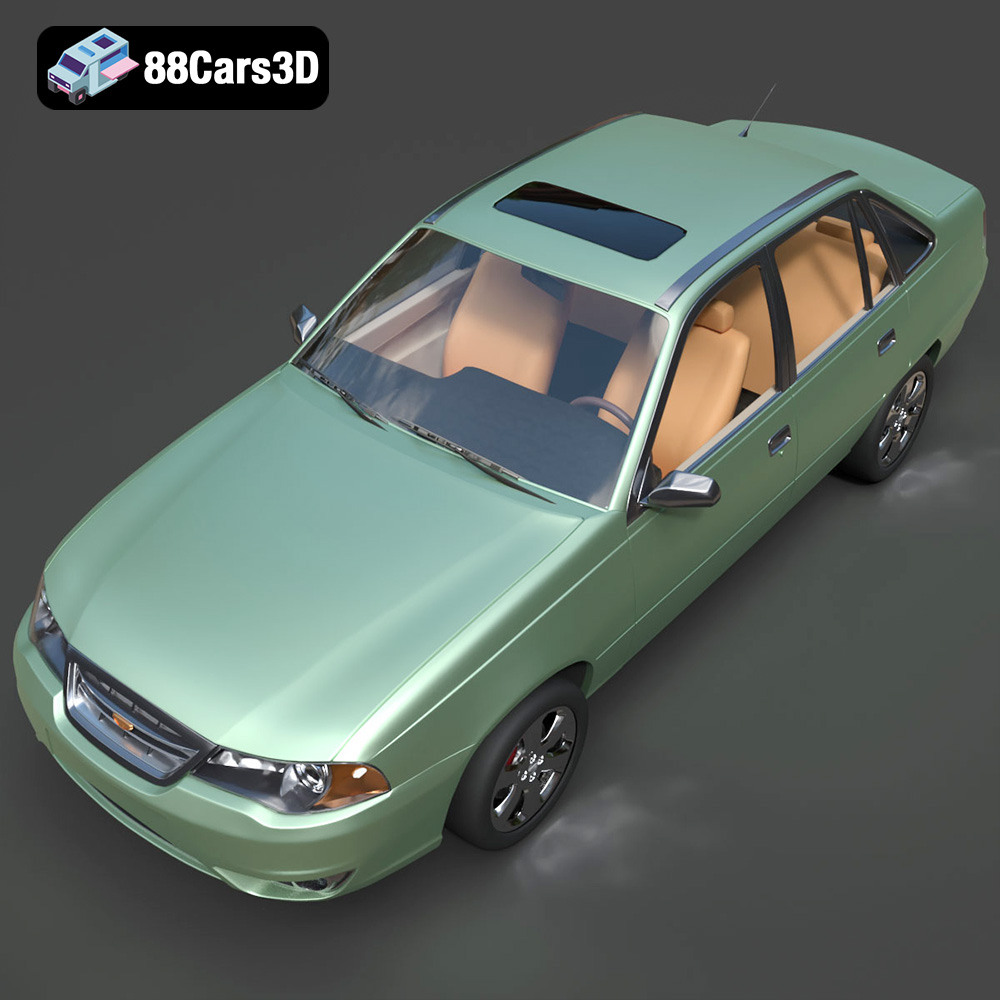
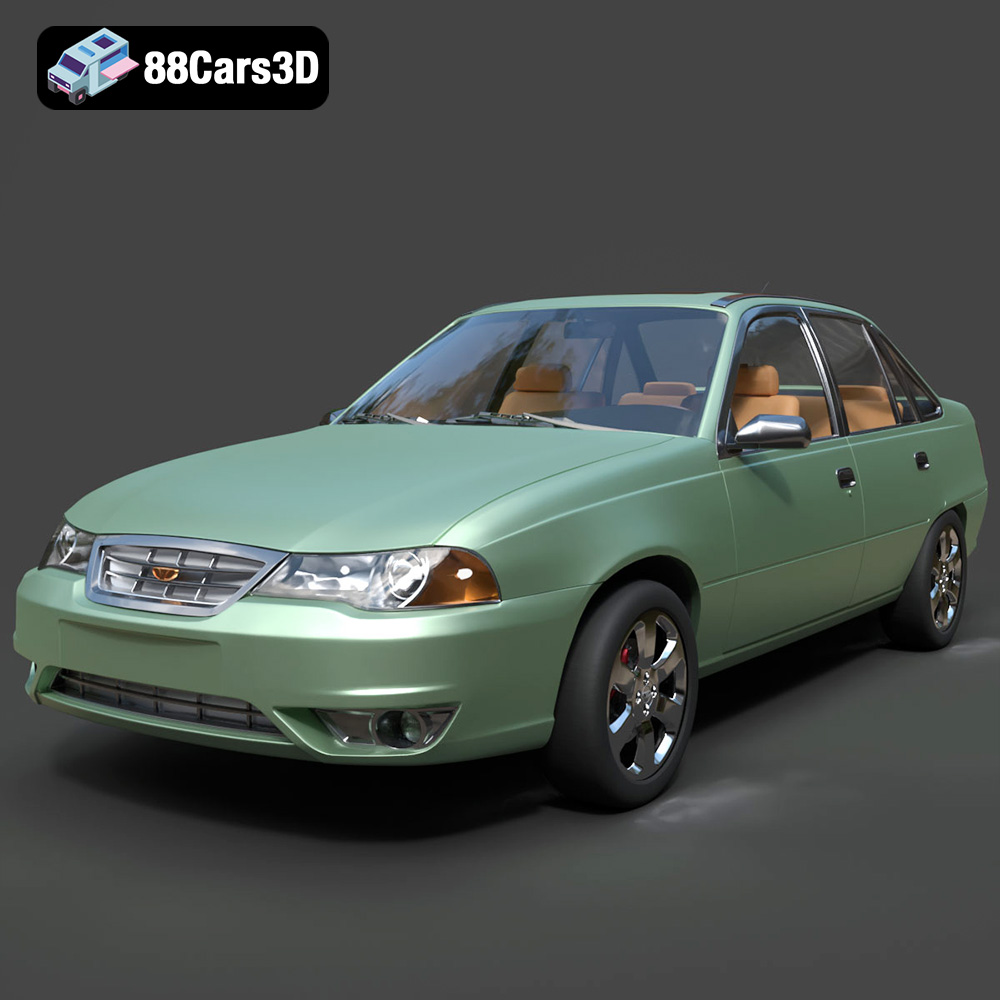
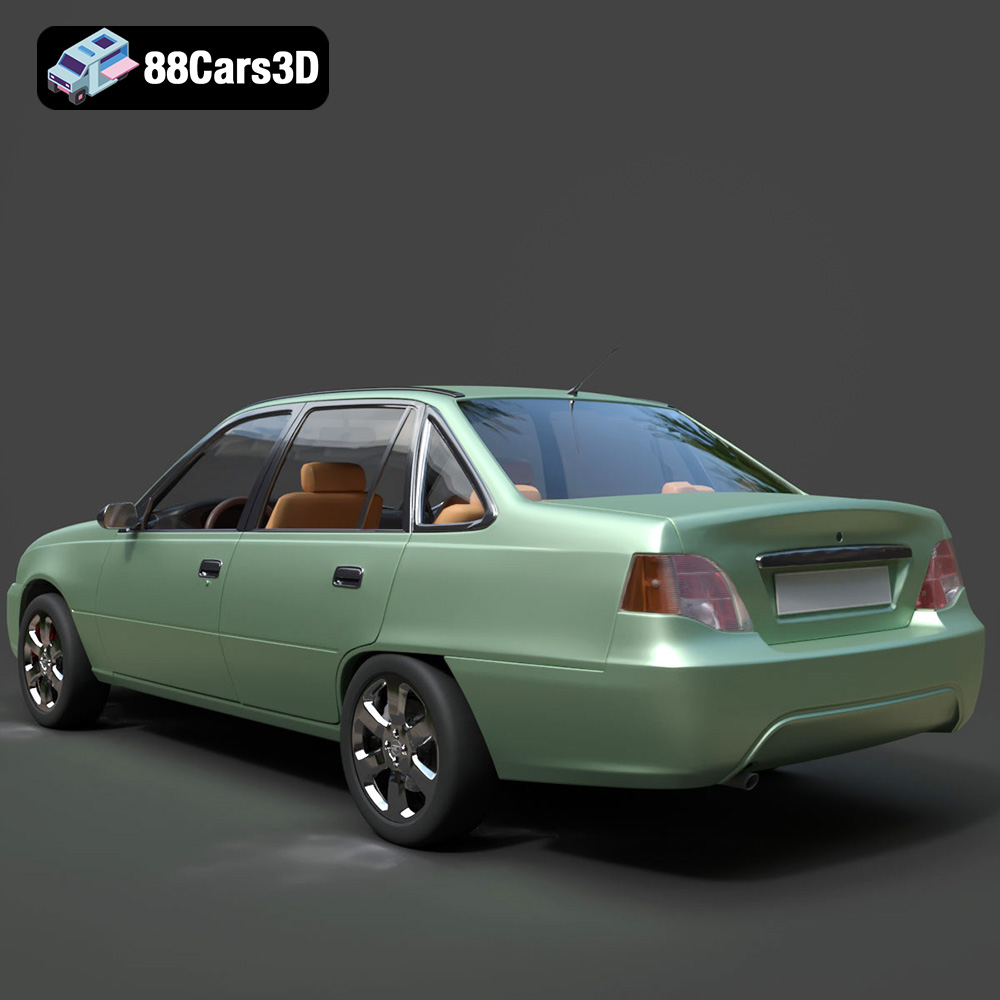
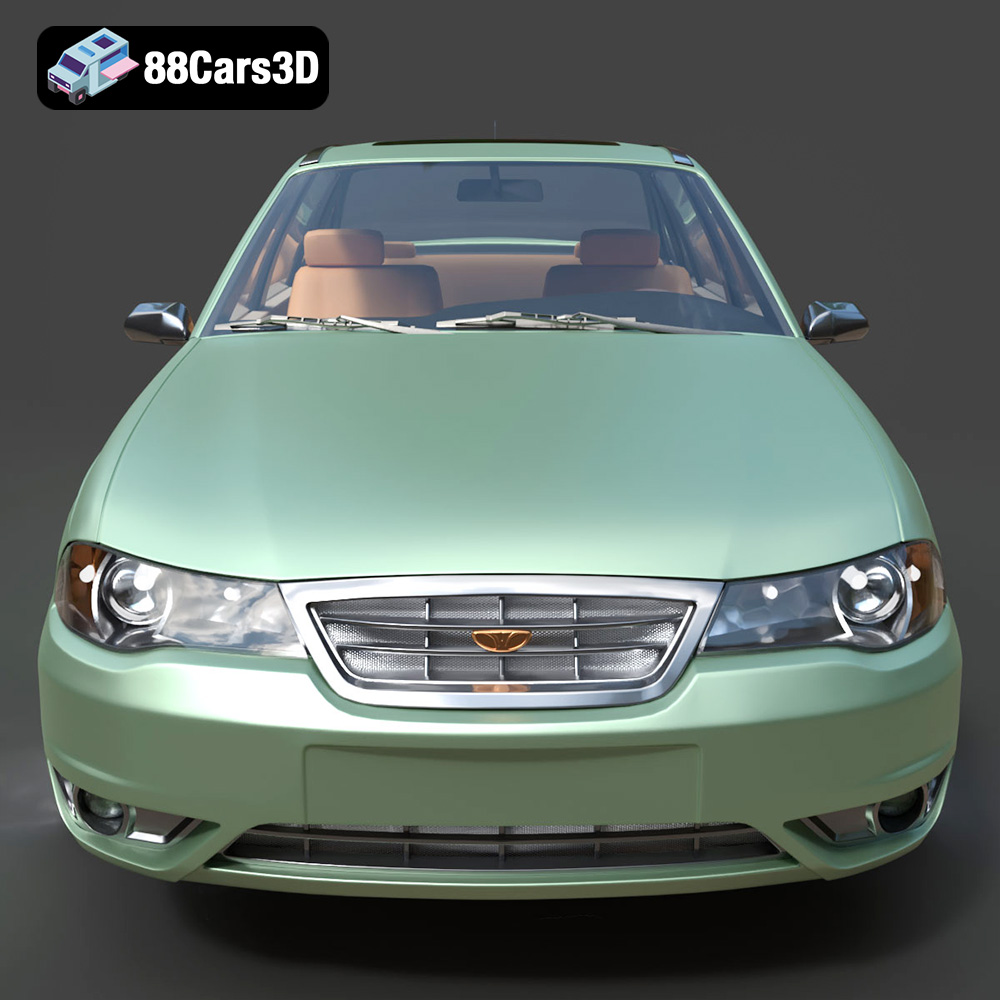
Bringing such a recognizable vehicle into the digital realm requires more than just modeling its shape. It demands capturing its essence – the quintessential 90s aesthetic of the pre-facelift N100, with its classic rectangular headlight housings, the iconic split front grille, and the simple yet functional body molding. This 3D car model faithfully recreates these details, offering a digital mirror to the physical car that traversed millions of kilometers. It’s this authenticity that makes the Daewoo Nexia N100 (Classic) 3D Model an invaluable asset for projects aiming for historical accuracy or regional specificity.
In storytelling through visuals, familiarity can be a powerful tool. For artists creating architectural visualizations (ArchViz) of urban landscapes in regions where the Nexia thrived, its inclusion instantly grounds the scene in reality. Imagine a bustling street in a recreated 90s Tashkent or a modern-day Moscow suburb; a Daewoo Nexia N100 driving by or parked on the curb immediately communicates context and authenticity. It’s more than just a prop; it’s a narrative device that connects viewers to a shared cultural memory, making the digital environment feel lived-in and believable.
Achieving visual fidelity in 3D car models is a meticulous process, balancing aesthetic accuracy with technical performance. The Daewoo Nexia N100 (Classic) 3D Model from 88cars3d.com exemplifies this balance, providing a highly detailed yet optimized asset suitable for a multitude of applications. Understanding its technical specifications reveals why it stands out.
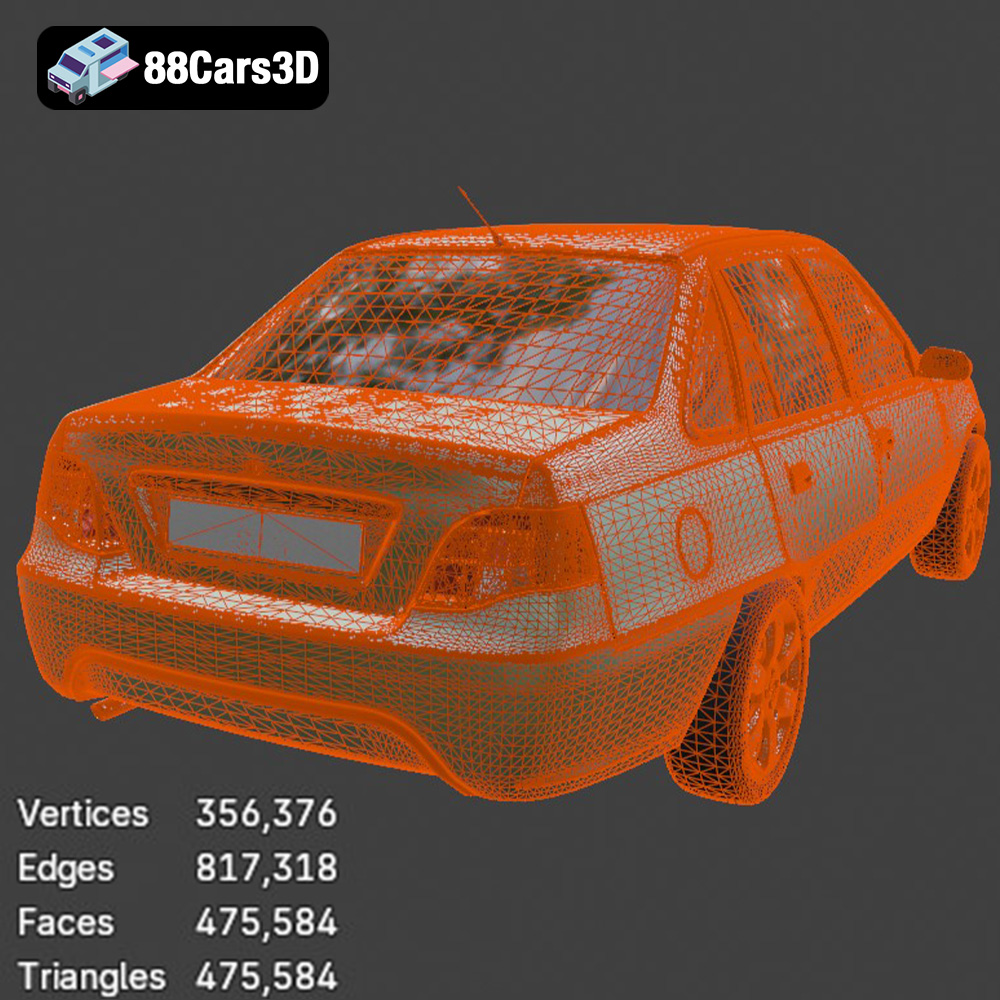
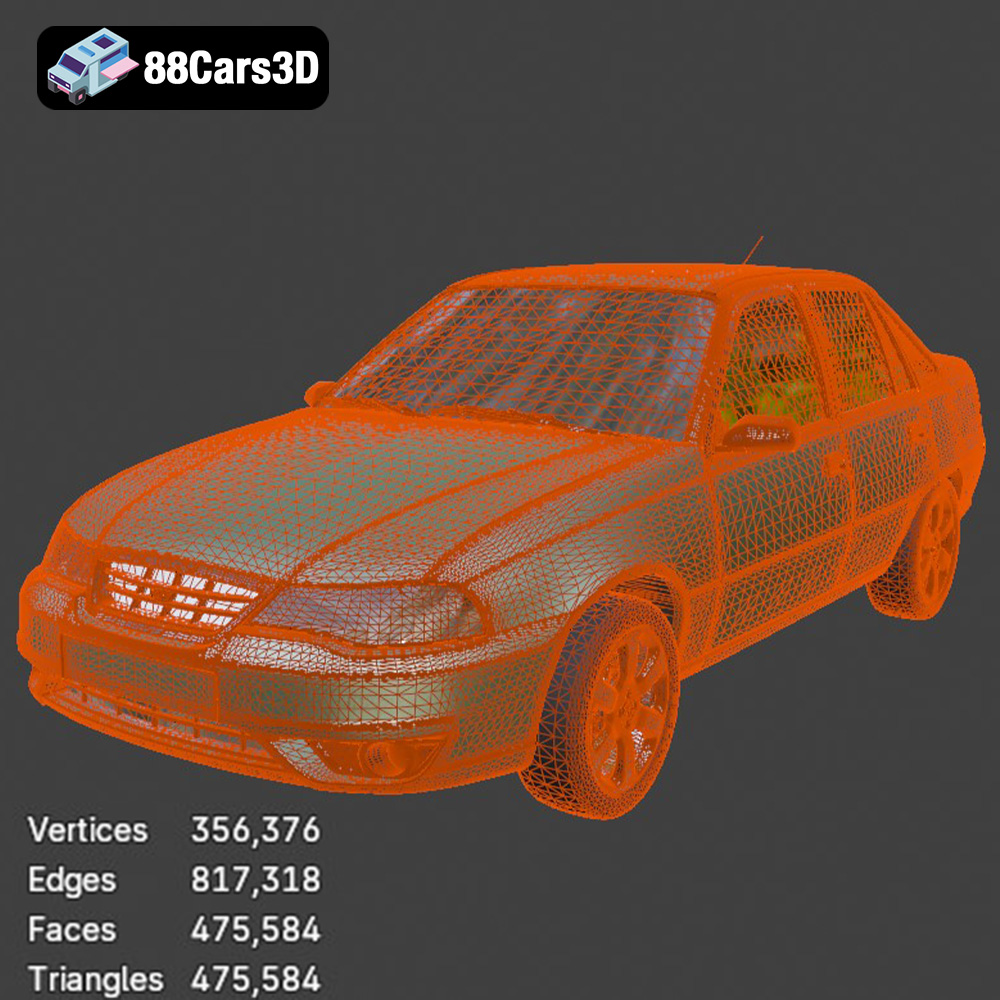
The model boasts a meticulously engineered topology, with approximately 475,584 triangles, 356,376 vertices, and 817,318 edges. This “mid-to-high polygon” count places it firmly in what’s often referred to as the “Goldilocks zone.” It is detailed enough to hold up under close-up scrutiny for high-quality automotive rendering and ArchViz foreground shots, where intricate panel gaps, distinct headlight assemblies, and subtle body contours are crucial. Simultaneously, it remains optimized enough to be used efficiently in real-time game engines as a drivable hero car or for populating dense background traffic without incurring significant performance overhead. This careful balance ensures versatility, saving artists valuable time on optimization.
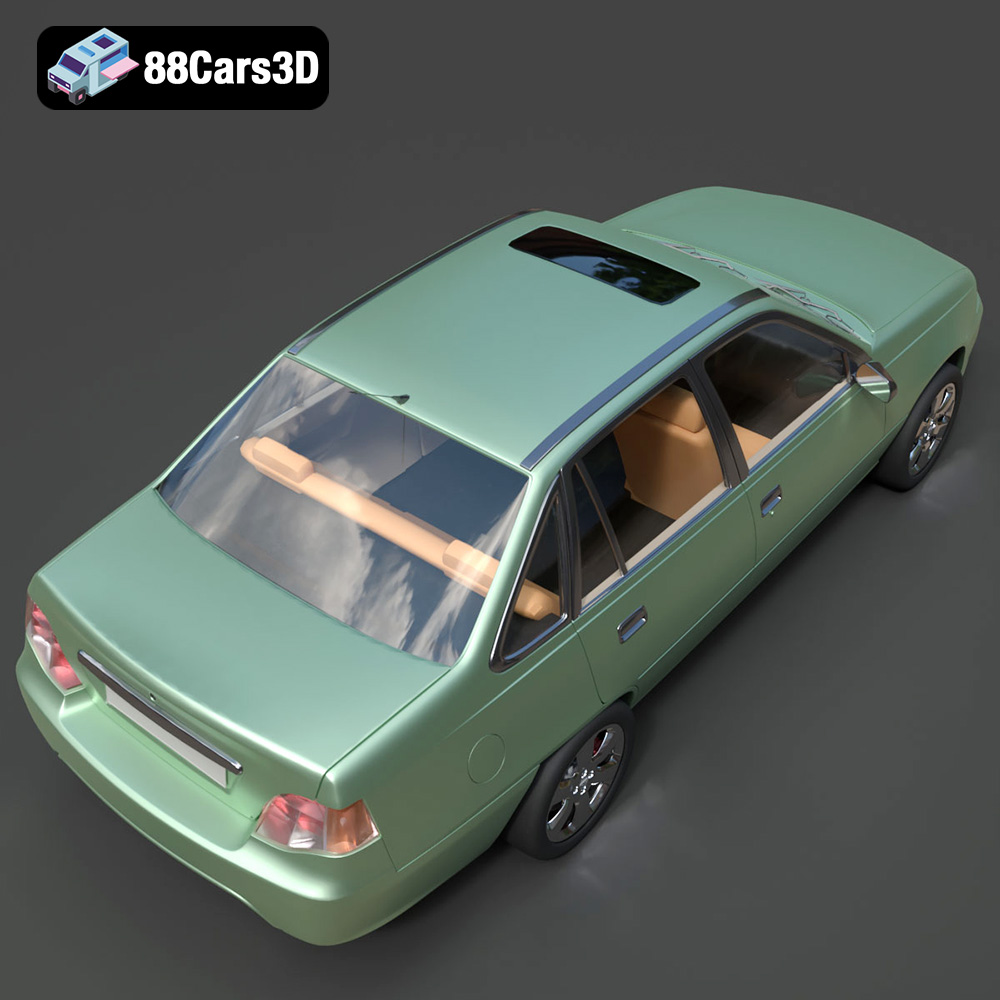
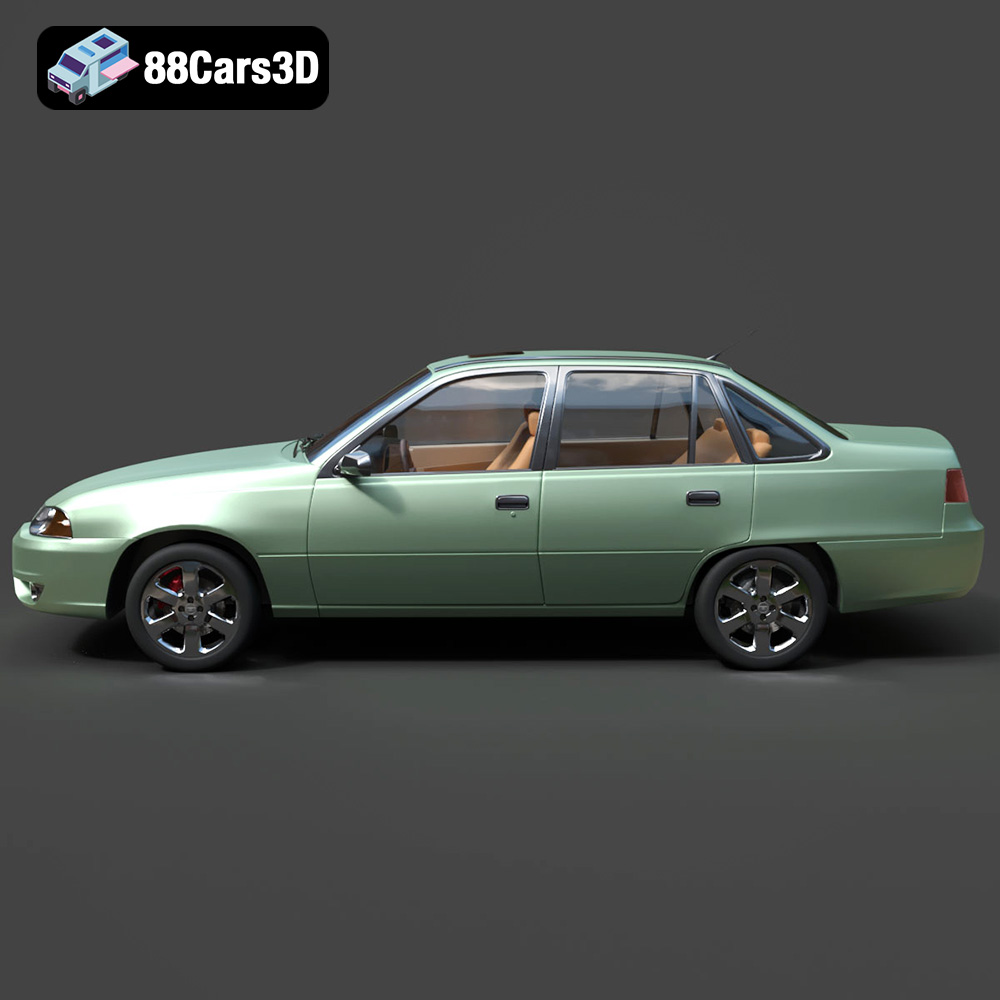
The model’s accuracy extends to every visible facet. The exterior features precise Daewoo Nexia N100 proportions, the distinctive split front grille, and original rectangular halogen headlight assemblies, capturing the true 90s aerodynamic styling. Functional black plastic side moldings and bumpers, realistic panel gaps, classic door handles, and functional side mirrors contribute to its authenticity. Crucially, components like the wheels, steering parts, and doors are modeled separately, enabling seamless rigging and animation for dynamic scenes.
The interior, while optimized, doesn’t compromise on its essential character. It features an authentic, practical driver-centric cabin layout typical of 90s budget sedans. A detailed dashboard with a classic center console, an analog instrument cluster, realistic seating geometry for a five-passenger layout with retro cloth/vinyl texture mapping, and a classic two- or three-spoke steering wheel are all faithfully represented. This optimized interior ensures the model looks great not only from exterior views but also in VR applications or when viewed through windows, adding another layer of realism.
The true value of a high-quality 3D car model lies in its seamless integration into diverse professional pipelines. The Daewoo Nexia N100 (Classic) 3D Model, with its multiple file formats and balanced optimization, is designed to be a versatile workhorse for artists and developers.
For rendering and visualization specialists, the Nexia N100 offers an unparalleled asset for creating period-accurate or regionally specific scenes. In 3ds Max or Blender, importing the respective .max or .blend files provides immediate access to the model’s full material setup and geometry. Artists can easily customize paint colors – perhaps a classic Metallic Silver, Cherry Red, or Navy Blue – or apply weathering effects like dust, mud, or snow to reflect different seasons or urban conditions. By adjusting lighting to simulate bright urban commutes or moody, rainy nights, the model can dramatically enhance the atmosphere of architectural visualizations set in Eastern Europe or Central Asia, providing highly recognizable and era-appropriate traffic that breathes life into static environments.
Game developers will find the Nexia N100 particularly appealing due to its balanced topology. As a drivable hero vehicle in an open-world game, its separated components (wheels, steering) make rigging straightforward. For instance, in a retro 90s delivery simulator or a taxi driving game, this model provides an authentic driving experience. When populating urban environments with background traffic, its mid-poly count ensures that even a high density of cars won’t severely impact frame rates. The .fbx and .unreal formats streamline integration into Unreal Engine or Unity, often with pre-configured material slots and proper pivot setups for animation, accelerating development cycles. Imagine a “Moscow Taxi Simulator” where dozens of these iconic yellow Nexias navigate the city streets – the visual impact is immediate and authentic.
Beyond traditional rendering and gaming, the Nexia N100 model extends its utility to emerging technologies. For AR/VR experiences, particularly in interactive digital city-planning or historical neighborhood reconstructions, the optimized interior geometry ensures a great look from any perspective. The .glb format is ideal for web-based AR/VR viewers, enabling quick loading and smooth interaction. Furthermore, the model is perfectly suited for 3D printing. Converting to .stl format allows hobbyists to produce display-scale classic diecast models (recommended scales: 1:24, 1:32, 1:43). The detailed product description even provides specific 3D print settings, including recommended layer height, wall thickness, infill, and necessary supports for intricate details like side mirrors and the exhaust pipe, making it accessible for digital manufacturing enthusiasts. Resin printing is recommended for smaller scales to capture fine details of the grille and wipers.
The versatility of the Daewoo Nexia N100 (Classic) 3D Model extends into the tangible world through 3D printing, offering an exciting avenue for automotive enthusiasts, model makers, and designers. Transforming a digital asset into a physical object requires specific considerations, and this model is well-prepared for the transition.
The model’s robust and clean topology makes it an excellent candidate for 3D printing. Its manifold geometry ensures that it can be converted to the .stl format without issues, creating a watertight mesh suitable for any slicing software. This capability allows users to create custom display-scale replicas, perfect for urban dioramas, automotive collections, or even as unique desk ornaments.
To achieve the best results, specific print settings are recommended. For scale, 1:24, 1:32, or 1:43 are ideal for capturing details while maintaining a manageable size for urban dioramas. A layer height of 0.04–0.12 mm is suggested, with resin printing particularly recommended for intricate smaller details like the grille and wipers, which can be challenging for FDM printers at smaller scales. Wall thickness should be between 1.2–2.0 mm, and an infill of 15–25% generally provides a good balance of strength and material efficiency.
Supports are crucial for overhangs such as side mirrors, wheel arches, and the exhaust pipe to prevent sagging during printing. The print orientation is also key: printing the body angled can result in a smoother surface finish, while wheels are best printed separately to ensure their intricate spoke designs are crisp. After printing, post-processing involving sanding, priming, and applying classic 90s factory colors like Metallic Silver, Cherry Red, or Navy Blue can bring the model to life, mirroring its real-world counterparts and allowing for a truly personalized creation.
One of the most powerful aspects of a well-designed 3D car model is its inherent customizability. The Daewoo Nexia N100 (Classic) 3D Model provides a solid foundation for endless creative adaptations, allowing artists to tailor it precisely to their project’s needs and narrative.
The model’s clean UV mapping and material setup make customization straightforward. Artists can easily change exterior paint colors, moving beyond factory defaults to create striking, vibrant city-car palettes or weathered, worn finishes that tell a story of years on the road. Imagine a rusty, forgotten Nexia in an abandoned lot, or a freshly polished one cruising down a sunny boulevard. These visual transformations are achieved by simply swapping out or layering material presets.
Beyond basic colors, the model is perfect for adding bespoke details. For instance, classic yellow “Taxi” roof signs and checker decals can be applied, instantly replicating a classic Moscow or Tashkent taxi, complete with regional flair. This level of detail elevates a generic car model to a specific, identifiable character within a scene, crucial for historical accuracy or immersive world-building in games.
The ability to adapt the Nexia N100 extends to its environmental context. Applying weathering materials such as dust, mud, or snow can dramatically change the car’s perceived environment, making it suitable for gritty, realistic winter scenes or dusty rural roads. This kind of material customization helps integrate the vehicle seamlessly into its surroundings, enhancing realism. Furthermore, adapting the lighting setup – whether for sunny urban commutes, moody, rainy night-time city streets, or dramatic cinematic close-ups – can profoundly impact the model’s visual impact, allowing it to convey a specific emotional tone or time of day.
The Daewoo Nexia N100 is not just a static object; it’s a dynamic canvas waiting for an artist’s touch, enabling a vast range of storytelling possibilities through subtle or dramatic customization.
In the competitive landscape of 3D asset marketplaces, choosing the right source for your 3D car models is paramount. 88cars3d.com distinguishes itself by offering assets like the Daewoo Nexia N100 (Classic) 3D Model that embody a commitment to quality, versatility, and technical precision.
The detailed specifications of the Nexia N100 model – its balanced topology, accurate real-world scale, and meticulous exterior and interior replication – are hallmarks of the quality you can expect from 88cars3d.com. These are not generic placeholders but carefully crafted digital replicas designed to meet the demanding standards of professional rendering, game development, and visualization projects. Every polygon and texture is optimized to deliver visual fidelity without compromising performance.
The inclusion of a wide array of industry-standard file formats (.blend, .fbx, .obj, .glb, .stl, .ply, .unreal, .max) for each model is a significant advantage. This ensures maximum compatibility across major 3D software platforms and real-time engines, minimizing conversion issues and accelerating your workflow. Whether you’re a Blender artist, a 3ds Max enthusiast, or a Unity/Unreal developer, you’ll find a ready-to-use asset that fits seamlessly into your pipeline.
While many marketplaces focus on popular, high-end vehicles, 88cars3d.com understands the unique value of models like the Daewoo Nexia N100. These iconic, everyday cars are crucial for creating realistic, regionally specific scenes and for historical accuracy in diverse projects. This focus on providing both widely recognized and niche, culturally significant 3D car models makes 88cars3d.com a go-to resource for a broader range of creative needs, setting your projects apart with authentic and impactful vehicles.
The demand for high-quality 3D car models continues to grow across industries, driving innovation in automotive rendering, game asset development, and immersive visualization. The Daewoo Nexia N100 (Classic) 3D Model stands as a prime example of an invaluable asset that bridges the gap between historical accuracy and modern technical requirements. Its meticulously balanced topology, detailed features, and broad file format support make it an exceptionally versatile choice for architectural visualization artists seeking to ground scenes in regional authenticity, game developers crafting immersive open-world environments or unique simulators, and even enthusiasts venturing into 3D printing.
From its iconic 90s aesthetic to its robust performance in real-time engines, this model offers a powerful blend of nostalgia and utility. Whether you’re animating a bustling street scene in Eastern Europe, designing a retro taxi game, or simply appreciating a piece of automotive history in physical miniature, the Nexia N100 delivers. By choosing high-quality assets like this from trusted sources such as 88cars3d.com, professionals can significantly enhance the realism, narrative depth, and technical efficiency of their projects, ensuring their digital creations truly stand out.
The Daewoo Nexia N100 3D Model is a highly accurate digital recreation of the classic 1990s budget sedan that became a global phenomenon. Built on the proven architecture of the Opel Kadett E, the original N100 Nexia (also known in various markets as the Cielo or Heaven) earned a legendary reputation for rugged reliability. It remains an absolute icon of everyday commuting and taxi fleets across Eastern Europe, Russia, and Central Asia to this day. This 3D model beautifully captures the quintessential 90s aesthetic of the pre-facelift N100. It features the classic rectangular headlight housings, the iconic split front grille, the simple yet functional body molding, and the timeless three-box sedan silhouette. Built with an incredibly clean and well-balanced mid-to-high polygon topology (approx. 475k triangles), it provides excellent visual fidelity for close-up automotive rendering while remaining highly optimized for background traffic in modern game engines and simulations. Perfect for populating realistic 90s or modern CIS (Commonwealth of Independent States) street scenes, architectural visualizations, urban taxi simulators, and mobile game development.
$9.99