Get 50% OFF All Premium 3D & STL Models!

Few vehicles command the respect and admiration of automotive enthusiasts quite like the Chevrolet Chevelle SS 1969. A true titan of the muscle car era, its iconic lines, potent performance, and undeniable street presence have cemented its place in history. From the roar of its V8 engine to its aggressive, sculpted silhouette, the ’69 Chevelle SS embodies a period of unparalleled automotive passion and design. Today, this legend isn’t confined to classic car shows or vintage films; it’s being meticulously recreated and brought to life in the digital realm, offering unparalleled opportunities for artists, designers, and developers.
The ability to harness the power of such a classic in a virtual environment opens doors to breathtaking visualizations, immersive game experiences, interactive AR/VR showcases, and even tangible 3D-printed collectibles. Imagine featuring this beast in a photorealistic automotive rendering, letting players tear down a virtual drag strip, or showcasing its timeless design in an interactive 3D showroom. These possibilities become reality with high-quality 3D car models like the Chevrolet Chevelle SS 1969 3D Model, available at marketplaces like 88cars3d.com.
This comprehensive article will delve into the technical intricacies and creative potential of incorporating premium 3D vehicle assets, using the legendary 1969 Chevelle SS as our prime example. We’ll explore critical file formats, advanced workflows in industry-standard software, real-world applications, and the sheer impact a meticulously crafted model can have on your projects.
In the world of 3D content creation, understanding file formats is paramount to seamless workflow and successful project execution. A versatile 3D asset like the Chevrolet Chevelle SS 1969 3D Model comes packaged with a variety of formats, each serving specific purposes and catering to different software environments and end-use applications. Selecting the right format can dramatically streamline your process, ensuring optimal performance and fidelity.
The .blend format is Blender’s native file type, offering a complete, fully editable scene. When you download a .blend file, you’re not just getting the mesh; you’re receiving the entire setup: the model, its materials (often PBR shaders), textures, lighting, camera settings, and even animations if included. For Blender users, this means instant plug-and-play capability, allowing for immediate modification, rendering with Cycles or Eevee, and integration into existing Blender projects. It preserves all native Blender features, making it ideal for those who prefer to work entirely within the Blender ecosystem for their automotive rendering or game asset preparation.
Autodesk’s .fbx (Filmbox) format is arguably the most widely adopted interchange format in 3D production. Its strength lies in its ability to carry a vast array of data, including geometry, materials, textures, animations, and even rigging information, across different 3D applications and game engines. For projects involving Unreal Engine, Unity, or other real-time pipelines, .fbx is often the go-to. The Chevrolet Chevelle SS 1969 as an .fbx is optimized for smooth import into these engines, making it ideal for game development or AR/VR experiences where real-time performance is crucial. Its robust nature ensures that most of the original model’s properties are retained upon export and import, minimizing conversion issues.
The .obj (Wavefront OBJ) format is a classic and highly universal option, primarily known for storing geometry (vertices, normals, UVs) and basic material references. While it doesn’t typically carry complex material graphs or animation data, its simplicity makes it incredibly compatible across virtually all 3D software platforms. If you need to import the Chevelle SS into a niche application or simply require the raw mesh data for custom material setup, .obj is a reliable choice. It’s often accompanied by an .mtl file for basic material definitions and separate texture files.
The .glb (GLB format, a binary form of glTF) is a relatively newer format gaining significant traction, especially in web-based 3D, AR (Augmented Reality), and VR (Virtual Reality) applications. It’s designed to be a compact, single-file container that efficiently delivers 3D models with PBR (Physically Based Rendering) materials, textures, and even animations. For showcasing the Chevrolet Chevelle SS 1969 in a browser-based configurator or integrating it into an AR app on a mobile device, the .glb format offers optimal performance and visual quality with minimal loading times.
The .stl (Stereolithography) format is the undisputed king of 3D printing. It represents a 3D model as a collection of unconnected triangular facets, making it perfectly suited for manufacturing processes. While it doesn’t store color or texture information, its focus on manifold geometry (watertight meshes) is critical for successful print outcomes. The inclusion of the Chevelle SS in .stl format means it’s ready to be sliced and printed, allowing enthusiasts to create tangible scale models and collectibles of this muscle car legend. For accurate physical reproduction, the mesh must be clean and error-free, a hallmark of quality assets like those found on 88cars3d.com.
The .ply (Polygon File Format) is similar to .obj but often preferred in scientific, CAD, and 3D scanning applications due to its flexibility in storing additional mesh properties beyond simple geometry, such as color per vertex, normal information, and even material properties. While less common for general rendering, its inclusion offers options for highly detailed analysis or specific workflows where precise mesh data is crucial, potentially for automotive engineering visualization or detailed surface inspection.
The .unreal format signifies an asset specifically prepared and optimized for direct import into Unreal Engine. This often implies that the model has already undergone crucial steps like proper scaling, pivot setup, potential LOD (Level of Detail) generation, and material assignment compatible with Unreal’s PBR workflow. For game developers leveraging Unreal Engine, this format represents a significant time-saver, reducing the effort required to get the Chevelle SS up and running in a real-time environment.
As the native file format for Autodesk 3ds Max, .max provides the full editable project scene for users of this powerful software. Like .blend, it contains all aspects of the 3D model: geometry, modifiers, materials, textures, lights, cameras, and animation data. For 3ds Max artists, having the .max file for the Chevrolet Chevelle SS 1969 offers maximum flexibility for customization, advanced rendering with V-Ray or Corona, and seamless integration into complex animation pipelines for automotive visualization projects.
By offering this comprehensive suite of formats, the Chevrolet Chevelle SS 1969 3D Model ensures unparalleled versatility, allowing users to choose the optimal file type for their specific software, workflow, and ultimate project goals. This foresight in asset packaging is a hallmark of high-quality 3D car models.
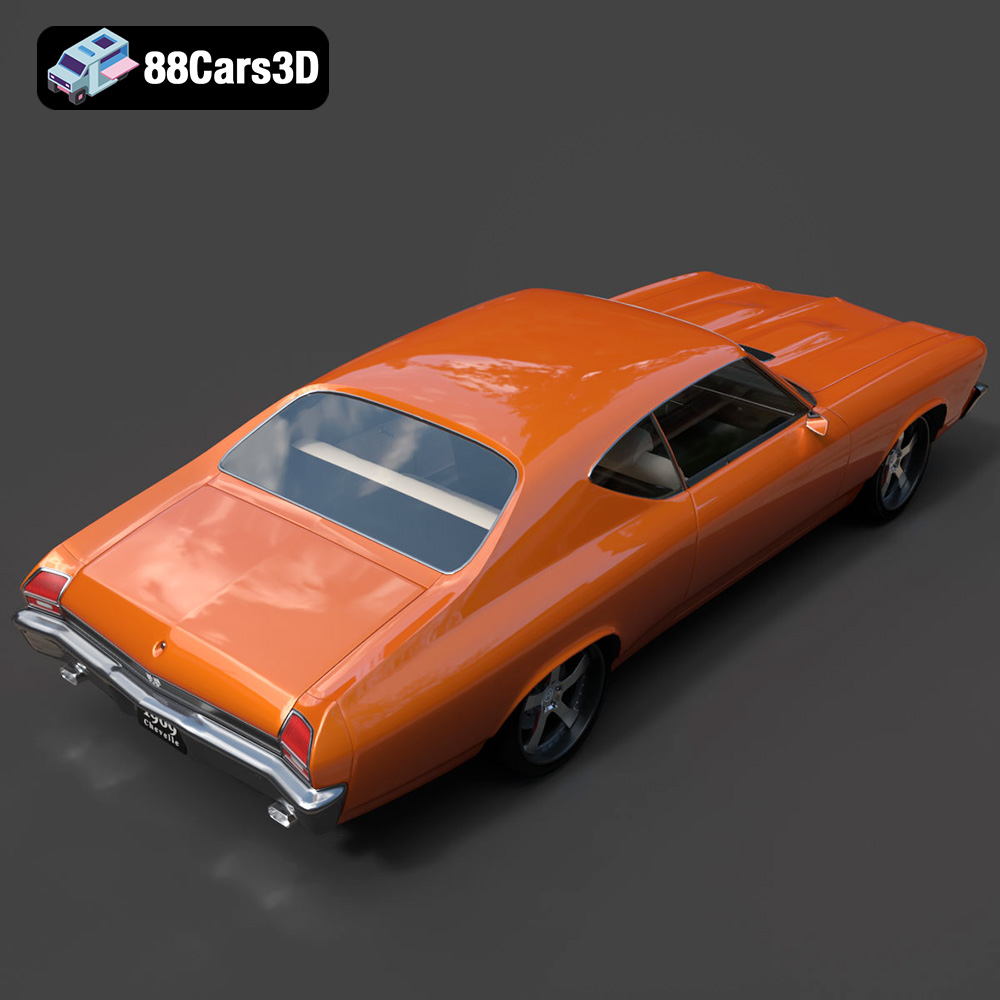
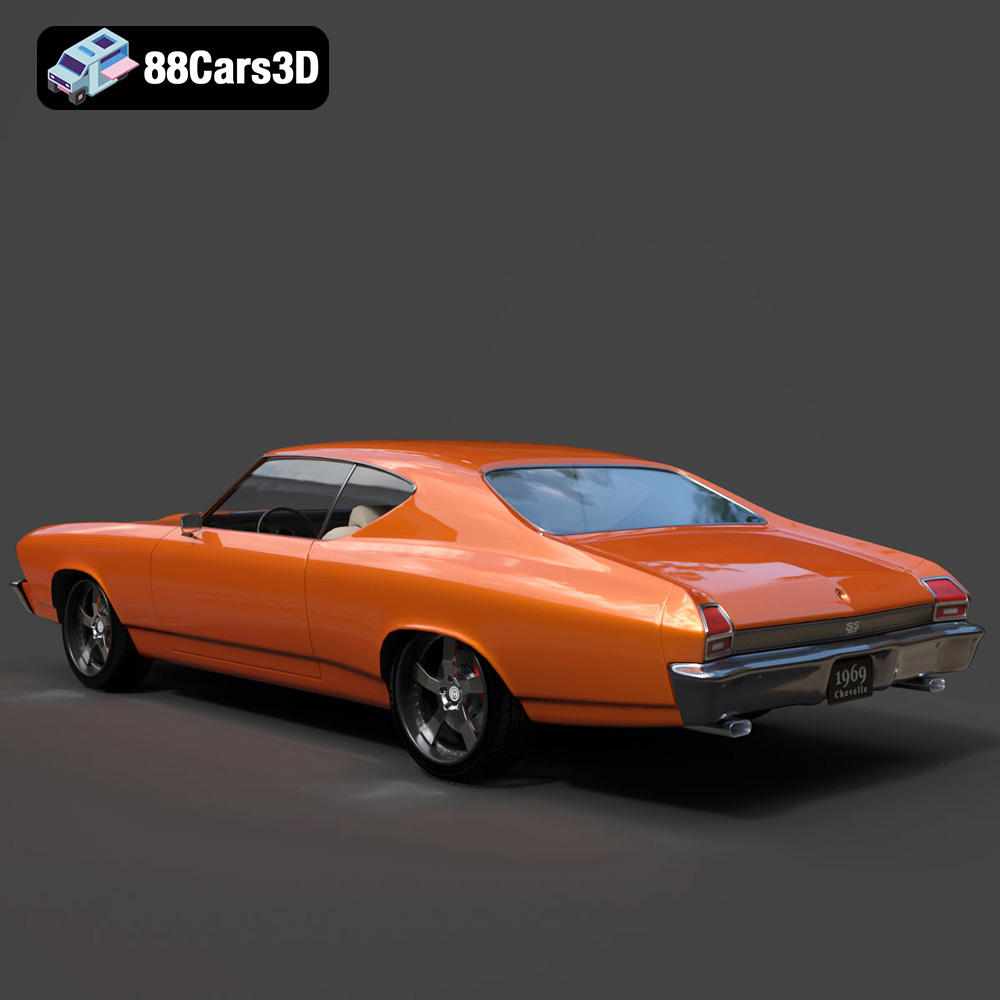
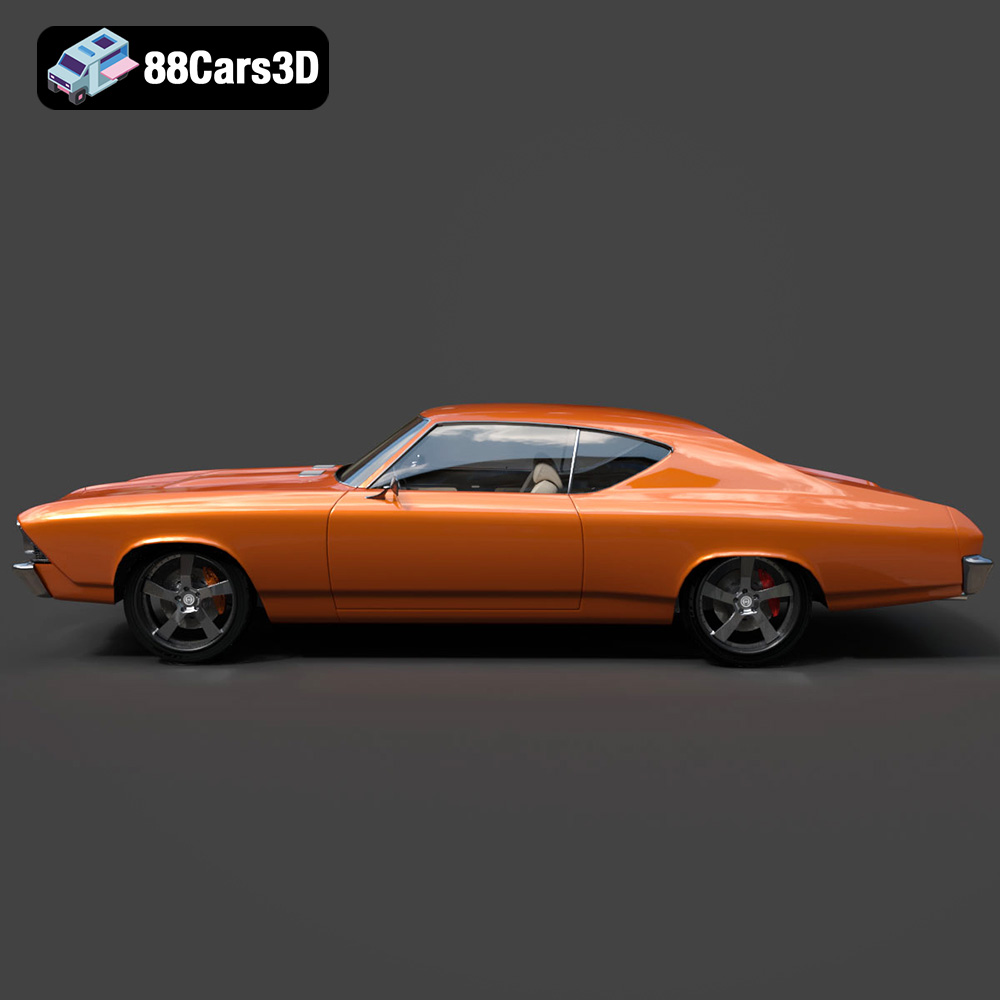
The true measure of a premium 3D model lies in its ability to faithfully reproduce the nuances of its real-world counterpart. The Chevrolet Chevelle SS 1969 3D Model excels in this regard, offering a digital twin that captures the very essence of this classic American icon. Every curve, every chrome glint, and every badge has been meticulously re-engineered for the digital canvas.
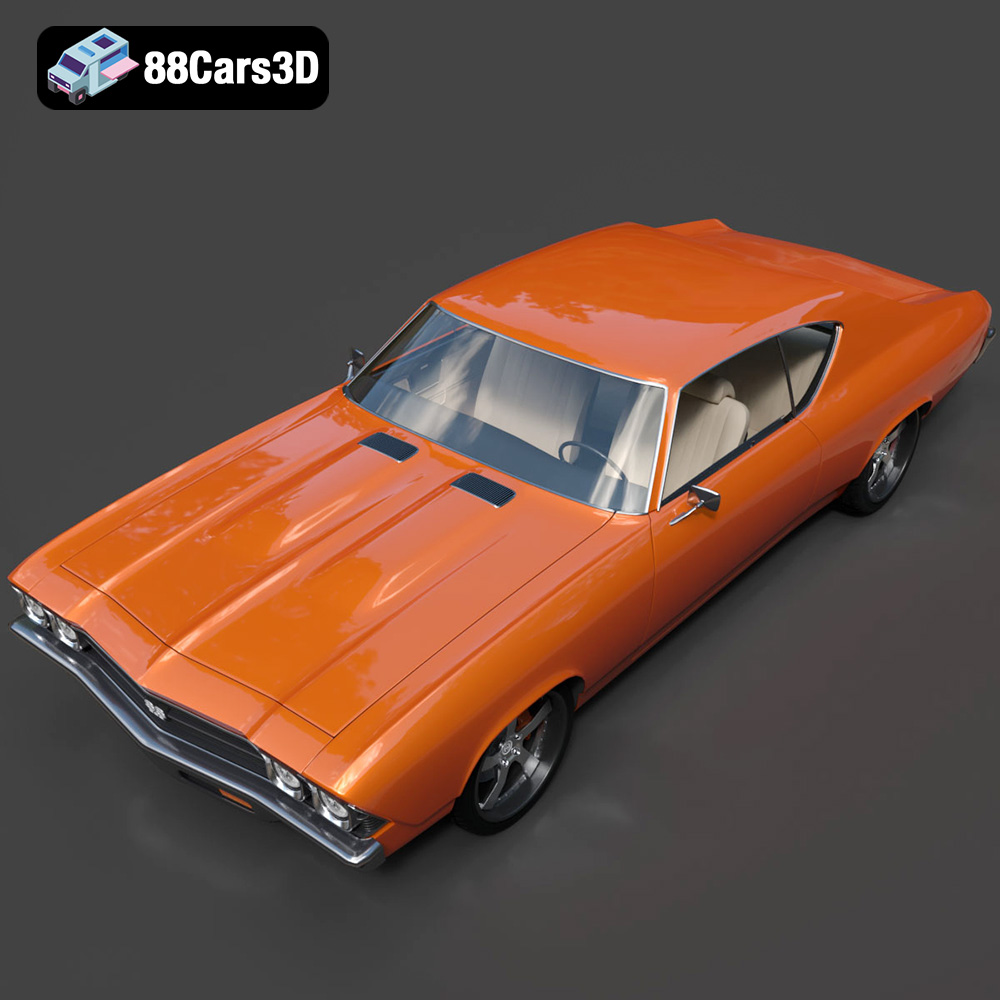
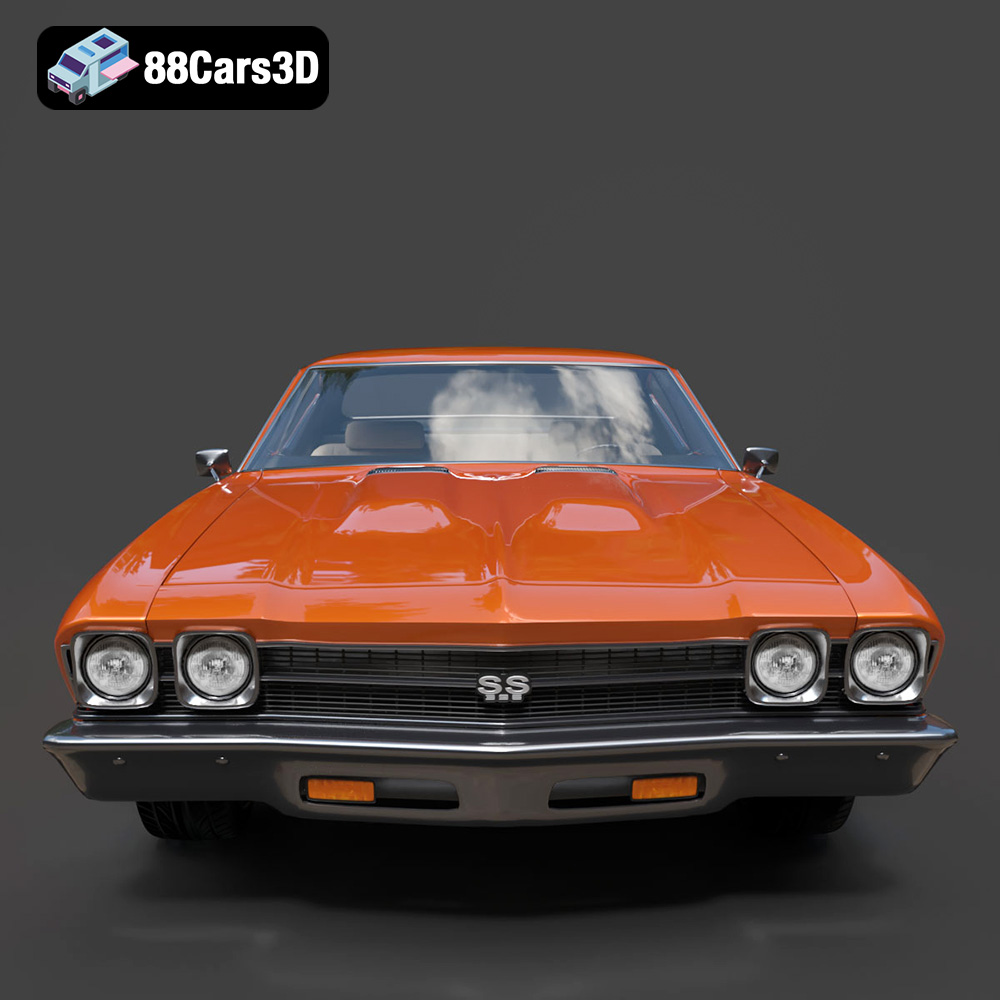
The exterior of this 3D Chevelle SS is a masterclass in accurate digital sculpting. It perfectly replicates the aggressive styling that defined the 1969 model year: the signature long hood and short deck proportions, the commanding dual headlight front fascia, and the unmistakable muscular body lines that flow from front to rear. Details such as the authentic SS badging, finely crafted chrome bumpers, and the intricate grille design are not merely suggestions but precise representations. Even the sculpted hood with its optional cowl induction styling, a hallmark of performance, is present. The classic muscle car wheels feature detailed tire treads, and transparent glass materials combined with accurate mirror detailing ensure a comprehensive and believable exterior that stands up to close-up scrutiny in high-resolution automotive rendering.
Beyond the gleaming exterior, the interior of the Chevrolet Chevelle SS 1969 3D Model provides an equally immersive experience. Artists and developers will find a vintage dashboard complete with analog gauges, an authentic classic steering wheel design, and accurately modeled bucket seats featuring subtle stitching detail. The center console and gear shifter are faithfully recreated, as are the door panels and interior trim representation. This level of internal detail is crucial for projects requiring driver’s-eye views, interior shots for cinematic projects, or even interactive VR experiences where users might “sit” inside the vehicle. The attention to both exterior and interior ensures that the model is versatile enough for any camera angle or narrative requirement, whether for game assets or visualization.
A beautiful 3D model is only truly valuable if it’s built on a solid technical foundation that allows for easy integration and optimal performance. The Chevrolet Chevelle SS 1969 3D Model is engineered with production readiness in mind, ensuring it’s not just visually appealing but also a joy to work with across various professional pipelines.
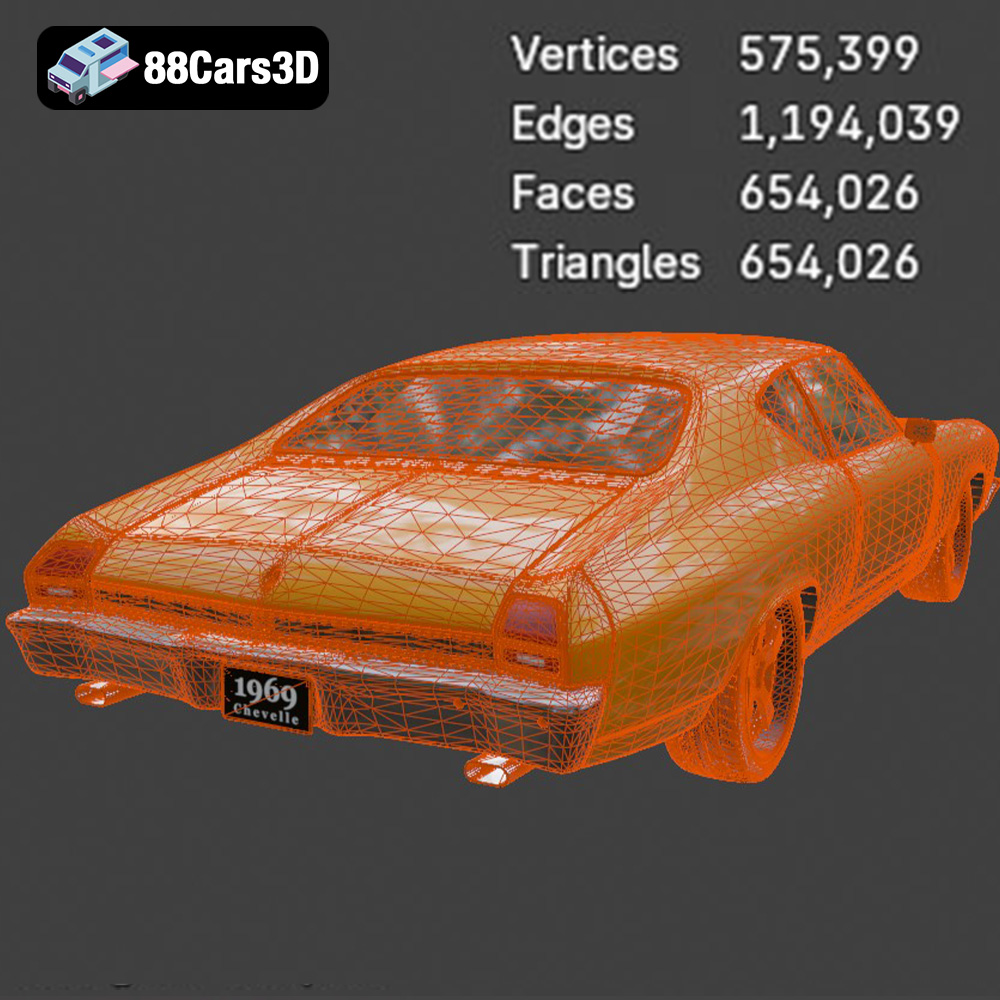
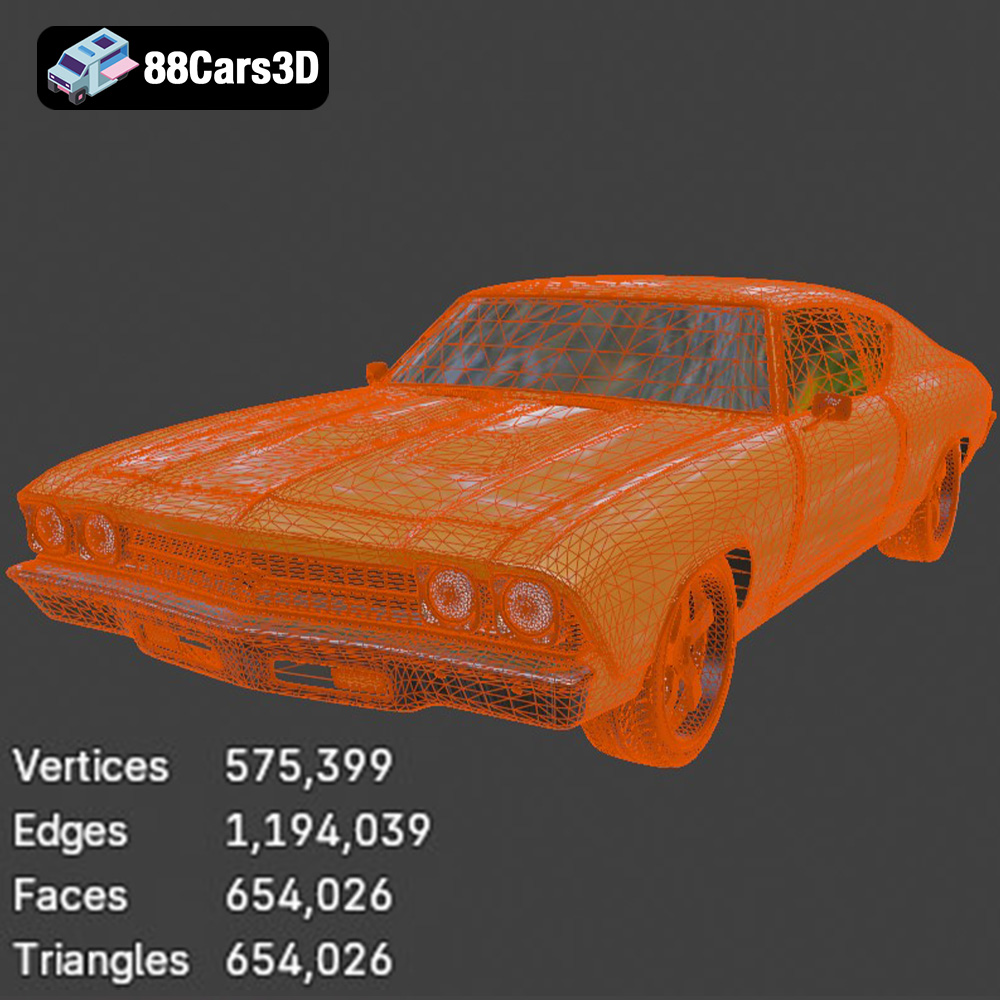
One of the core technical advantages of this model is its clean and well-organized mesh structure. This means the polygon flow is optimized for both performance and realism, ensuring that the model renders efficiently while still holding intricate details. A clean mesh is paramount for smooth deformations during animation and for generating clean UV maps. The model boasts real-world scale accuracy, eliminating the need for tedious resizing and ensuring correct proportions when dropped into any scene. Crucially, it features proper pivot setup for steering and wheel rotation, which is invaluable for animation in any 3D software (like 3ds Max or Blender) or game engine. This attention to underlying structure makes it a robust foundation for any project.
While specific texture maps were not detailed in the product description, a “high-detail digital recreation” implies robust UV mapping and material setup. Good UVs are essential for applying high-resolution textures without distortion, whether they are diffuse, normal, roughness, metallic, or ambient occlusion maps. For automotive rendering, realistic textures for paint, chrome, glass, rubber, and interior fabrics are critical for achieving photorealism. The materials, often included in native formats like .blend or .max, are typically PBR-ready, meaning they react accurately to light, making integration into modern render engines and game pipelines straightforward. The quality of UVs and material setup significantly impacts the final visual output, offering stunning results in any professional environment.
The versatility of a high-quality 3D car model like the Chevrolet Chevelle SS 1969 allows it to bridge numerous creative industries. From breathtaking still images to interactive real-time experiences, this asset provides a powerful starting point for countless projects.
For automotive artists and marketing professionals, this 3D model is a dream. It’s ideal for creating stunning automotive rendering images and animations for classic car showcases, promotional materials, or retro-themed advertising visuals. Imagine the Chevelle SS bathed in golden hour light, parked on a moody street, or revving its engine in a studio setup. With its detailed body proportions, chrome, and intricate interior, artists can leverage renderers like V-Ray, Corona, Arnold, Cycles, or Octane to produce cinematic-quality results. The ability to manipulate lighting, camera angles, and environments entirely within a 3D software (like 3ds Max or Blender) offers limitless creative control without the expense of a physical photoshoot.
The demand for realistic vehicle assets in the gaming world is ever-growing, and the Chevrolet Chevelle SS 1969 3D Model is perfectly suited to meet this need. Its optimized geometry and proper pivot setups make it an excellent game asset for open-world driving games, drag racing simulators, or vintage car environments. Developers can import the .fbx or .unreal formats directly into engines like Unreal Engine or Unity, set up physics, and allow players to experience the thrill of this muscle car digitally. Furthermore, for AR/VR applications, this model is perfect for creating immersive classic car showrooms or interactive automotive exhibitions, letting users explore every detail up close in a truly engaging way.
Perhaps one of the most unique applications for the Chevelle SS 3D model is its suitability for 3D printing. The inclusion of the .stl format means it can be converted into a physical collectible scale model or display miniature. This process requires careful consideration of print settings to achieve the best results. For recommended scales like 1:32, 1:24, 1:18, or 1:12, a layer height of 0.10–0.16 mm and a wall thickness of 1.5–2.5 mm are ideal for FDM printers, ensuring sufficient detail and structural integrity. An infill of 15–25% provides strength without excessive material use. Supports are often required for delicate areas like mirrors, bumper edges, and undercarriage details. Printing the body angled can provide a smoother surface finish, while wheels are typically printed separately for better detail. Post-processing involving sanding, primer, and a gloss muscle-car paint finish, with optional chrome detailing, can transform a digital file into a stunning physical replica. This bridges the gap between digital artistry and tangible craftsmanship.
Integrating a complex 3D car model into a professional workflow requires an understanding of how these assets behave within industry-standard software. The Chevrolet Chevelle SS 1969 3D Model is designed for maximum compatibility and ease of use, ensuring artists and developers can hit the ground running.
For artists primarily working in Autodesk 3ds Max or Blender, the inclusion of native .max and .blend files, alongside universal .fbx, provides unparalleled flexibility. In 3ds Max, importing the .max file will load the entire scene, including existing materials, lights, and potentially basic animation setups. Artists can then customize materials using advanced render engines like V-Ray or Corona, apply studio lighting rigs, and set up dynamic camera paths to create breathtaking cinematic renders. Similarly, Blender users can open the .blend file directly, immediately accessing a production-ready model for Cycles or Eevee rendering. Both software platforms allow for easy manipulation of the separate wheels and steering components for animation, enabling realistic vehicle motion. The clean topology of the Chevelle SS model ensures smooth subdivision and deformation, crucial for achieving photorealistic results in close-up shots.
Game developers and AR/VR creators will find the Chevrolet Chevelle SS 1969 3D Model exceptionally well-suited for real-time applications. The .fbx and .unreal formats are specifically tailored for efficient import into Unreal Engine and Unity. When importing an .fbx, the engines typically handle mesh, materials, and basic textures, allowing developers to quickly assign PBR shaders and adjust parameters for real-time performance. The .unreal format goes a step further, potentially providing an already optimized and configured asset package for Unreal Engine, saving valuable setup time. Once in the engine, developers can set up accurate collision meshes, implement vehicle physics, and program interactive elements. The model’s “optimized geometry for real-time engines” ensures it performs well even in demanding game environments, while its “proper pivot setup for steering and wheel rotation” is a huge advantage for implementing realistic driving mechanics without needing extensive re-rigging.
A truly valuable 3D asset provides not just a static representation, but a foundation for boundless creativity. The Chevrolet Chevelle SS 1969 3D Model offers extensive customization options, allowing you to tailor this classic to your precise artistic vision and ensure its relevance across future projects.
The detailed construction of the model allows for a wide array of personalization. You can easily change the body color, experimenting with classic muscle car hues like a fiery red, deep black, electric blue, or various metallic finishes to suit your scene’s mood. Adding iconic racing stripes or authentic SS decals can further enhance its visual appeal and historical accuracy. The modular design often permits modifying wheel styles and tire types, swapping out stock rims for period-correct mag wheels or modern performance tires for a custom look. For specific scenarios, you can adjust the ride height, transforming it from a sleek street cruiser to an intimidating drag racing setup. Beyond direct physical modifications, configuring the lighting for different moods—from a dramatic sunset boulevard cruise to a dimly lit garage scene—allows for dynamic storytelling and visual impact. This level of customization ensures the model remains fresh and adaptable for numerous visual narratives.
Investing in a high-quality 3D asset like the Chevrolet Chevelle SS 1969 from 88cars3d.com is a smart move for any professional or enthusiast. Its inclusion of multiple industry-standard file formats (.blend, .fbx, .obj, .glb, .stl, .ply, .unreal, .max) guarantees its compatibility with virtually any current and future 3D software or engine. This future-proof approach means you can reuse the model across various projects, from high-end marketing renders this year to immersive VR experiences next year, or even a collectible 3D print down the line. The asset’s clean topology, real-world scale, and optimized polygon flow further enhance its long-term value, ensuring it integrates smoothly without requiring constant re-optimization. It’s not just a model; it’s a versatile foundation for innovation and a tribute to automotive heritage in the digital age.
The Chevrolet Chevelle SS 1969 is more than just a car; it’s a symbol of American power and timeless design. In the digital realm, a meticulously crafted 3D model of this legend becomes an indispensable tool for professionals across various industries. From creating stunning photorealistic automotive rendering to developing engaging game assets and interactive AR/VR experiences, the quality and versatility of an asset are paramount. The Chevrolet Chevelle SS 1969 3D Model, with its accurate detailing, optimized mesh, and comprehensive file format support, stands out as a premium choice.
Whether you are an automotive visualization artist, a game developer, an architect seeking realistic context, or a hobbyist dreaming of a 3D-printed masterpiece, this model offers a robust and adaptable solution. Its technical advantages, combined with its aesthetic fidelity, streamline workflows and elevate the quality of any project it becomes a part of. Explore the potential and bring your digital visions to life by acquiring this exceptional 3D car model from 88cars3d.com today.
The Chevrolet Chevelle SS 1969 3D Model is a high-detail digital recreation of one of the most iconic American muscle cars of the late 1960s. Known for its aggressive styling, powerful V8 performance, and bold street presence, the 1969 Chevelle SS remains a symbol of classic muscle car heritage. This 3D model accurately represents the long hood and short deck proportions, signature dual headlight front fascia, SS badging, muscular body lines, chrome bumpers, detailed grille, performance wheels, and period-correct interior layout. Built with clean topology and real-world scale accuracy, it is ideal for rendering, animation, automotive visualization, game development, and AR/VR experiences. Includes .blend, .fbx, .obj, .glb, .stl, .ply, .unreal, and .max formats for rendering, simulation, AR/VR, game development, and 3D printing.
$9.99
.1969chevelle
.arvr
.automotive
.blend
.car3dmodel
.chevelle
.chevelless
.chevrolet
.classiccar
.fbx
.gameasset
.glb
.max
.musclecar
.obj
.ply
.rendering
.simulation
.stl
.unreal
.vintagecar