Get 50% OFF All Premium 3D & STL Models!

In the expansive realm of digital design, the ability to recreate history with meticulous accuracy offers unparalleled creative possibilities. From sprawling urban landscapes to intricate mechanical marvels, 3D artists constantly push the boundaries of realism and immersion. There’s a particular charm in bringing vintage items back to life, whether for nostalgic game environments, historically accurate visualizations, or stunning automotive rendering projects. These assets not only serve as digital props but also as gateways to a bygone era, allowing viewers and users to connect with the past in a tangible way.
Retro-themed 3D models hold a unique position in the digital asset market. They evoke a sense of nostalgia, comfort, and often a simpler time, making them invaluable for storytelling across various media. For game developers, a carefully crafted vintage prop can define the atmosphere of an entire level. For architectural visualization, period-correct elements lend authenticity to historical reconstructions. And for marketing and advertising, the evocative power of a classic design can capture audience attention like few other visual cues. The demand for high-quality, historically accurate assets that seamlessly blend into diverse projects is always present.
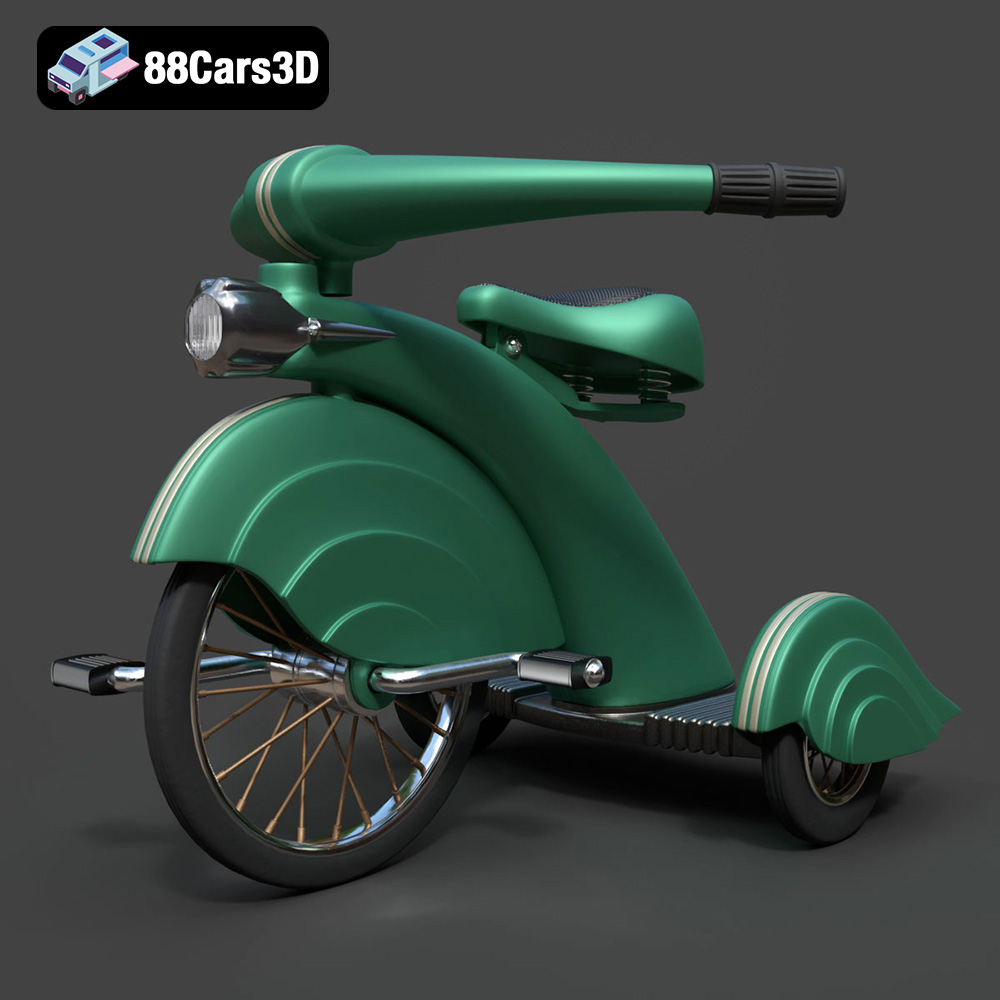
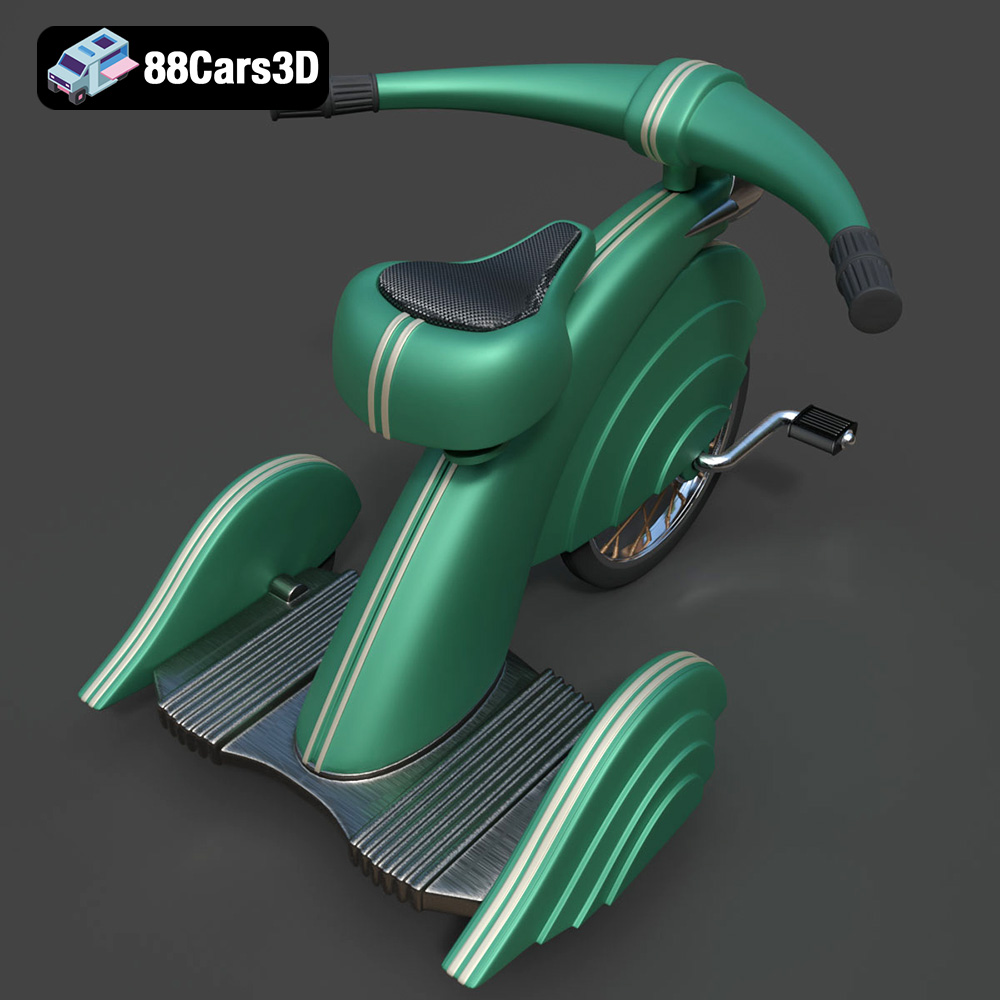
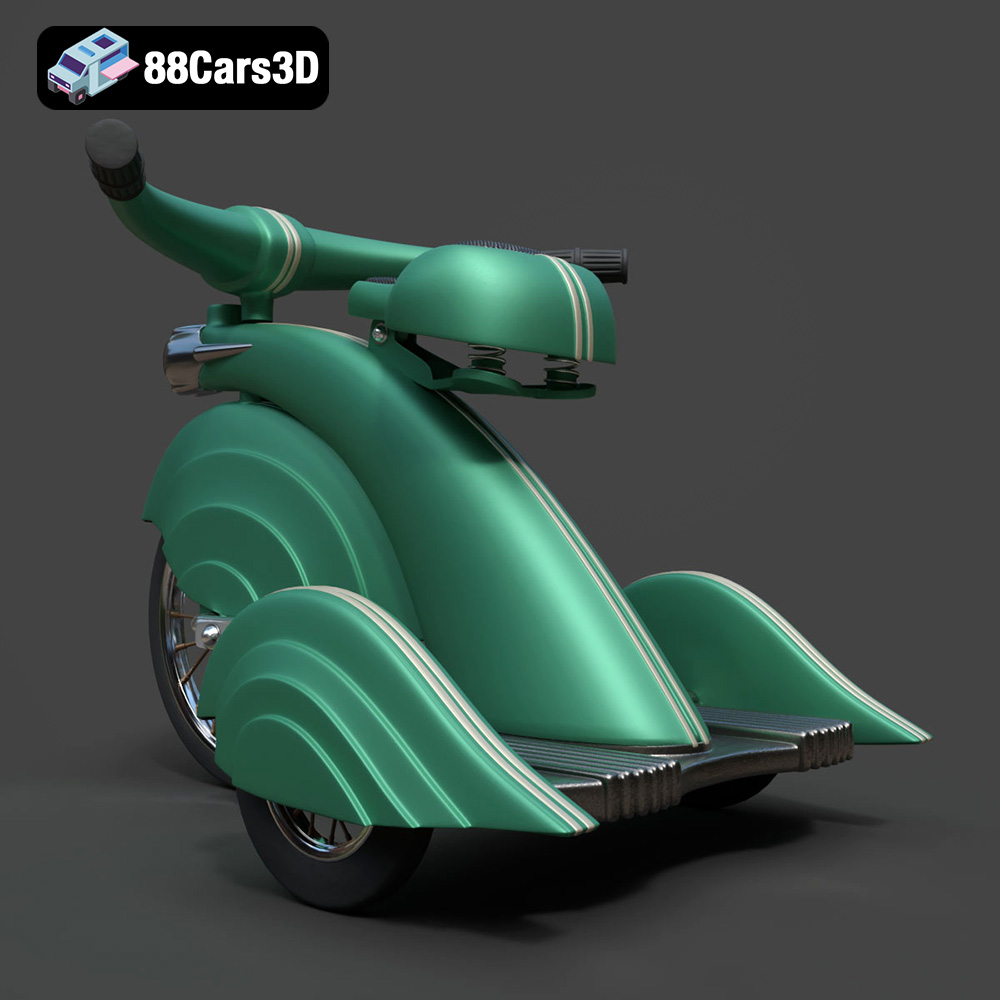
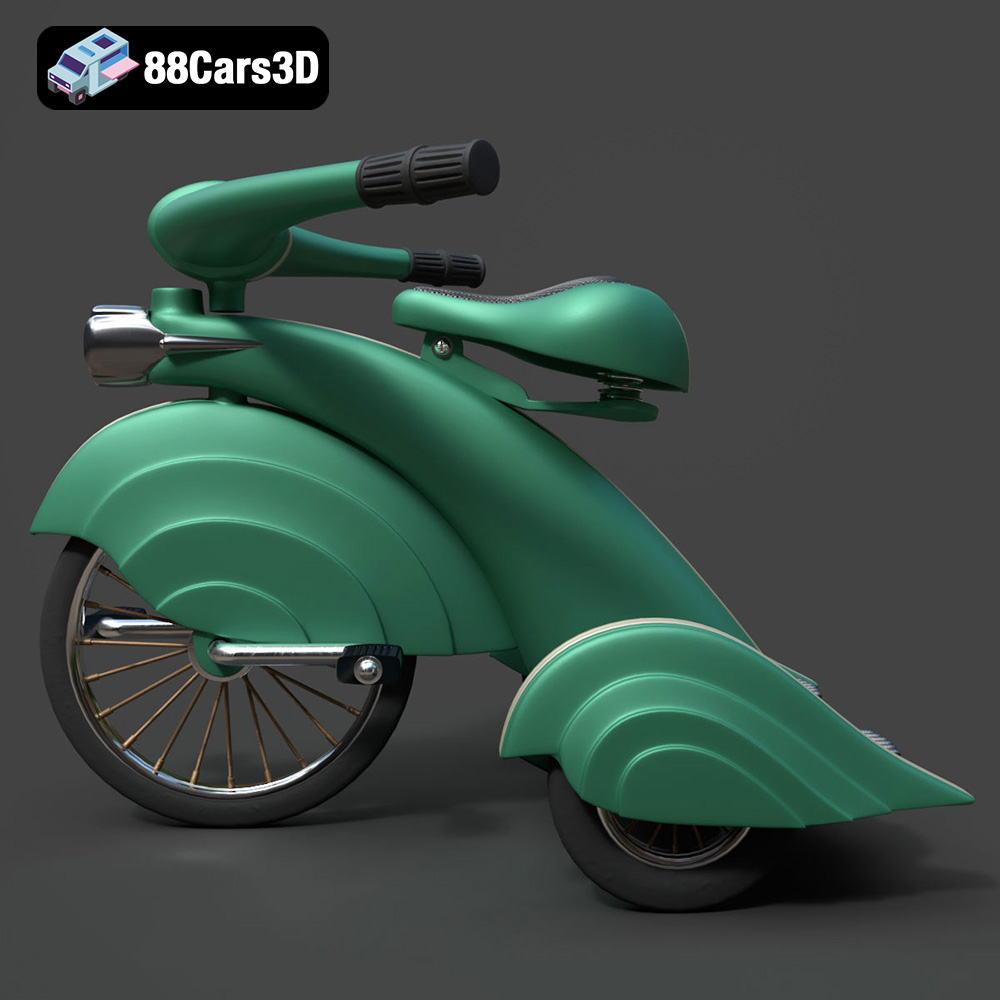
Among the treasures that bridge the gap between historical accuracy and digital versatility is the Vintage Tricycle 1930 3D Model. This exceptional digital recreation from 88cars3d.com exemplifies the meticulous craftsmanship and technical prowess required to produce a truly outstanding vintage asset. Inspired by the classic early 20th-century three-wheeled bicycle, this model captures the nostalgic charm of its era, from the robust steel construction to its iconic oversized front wheel and simple saddle seat. It’s not merely a prop; it’s a piece of digital history, ready to be deployed in rendering, animation, historical visualization, game development, and AR/VR experiences, offering a versatile foundation for a myriad of creative endeavors.
When working with 3D models, especially those as detailed and versatile as the Vintage Tricycle 1930 3D Model, understanding the various file formats is paramount. Each format serves a specific purpose, catering to different software, workflows, and output needs. The availability of multiple formats ensures maximum compatibility and efficiency for designers, animators, and developers. Let’s delve into the formats provided with the Vintage Tricycle model and their optimal use cases.
The .blend format is the native file type for Blender, the popular open-source 3D creation suite. When you receive a .blend file, you’re getting the complete scene, including the model’s geometry, materials, textures, lighting, camera setups, and even animation data. This makes it ideal for artists who primarily work in Blender and require full editability. You can dissect the model, adjust its topology, modify materials, or create custom animations directly within the Blender environment. For the Vintage Tricycle, the .blend file allows for deep customization, from changing the frame color to adding intricate weathering effects, leveraging Blender’s powerful cycles or Eevee render engines.
.fbx is a proprietary file format owned by Autodesk and is widely considered the industry standard for exchanging 3D data between various software applications. It’s excellent for transferring geometry, materials, textures, bones/skinning, and animation data reliably. This format is particularly suitable for game development workflows, acting as a bridge between modeling software like 3ds Max or Blender and game engines like Unreal Engine or Unity. For the Vintage Tricycle, an .fbx file ensures that the separated wheels and pedals, along with their pivot points, are correctly imported, making it ready for animation or integration into a real-time environment with minimal fuss.
The .obj format is one of the oldest and most universally supported 3D file formats. It’s a simple, text-based format that primarily stores geometric data (vertices, normals, texture coordinates, and faces) and can reference external material (.mtl) files for basic shading information. While it doesn’t support animation or rigging, its widespread compatibility makes it a safe bet for cross-software transfers. If you need to import the Vintage Tricycle into virtually any 3D application for static renders or further modeling, .obj is a dependable choice. It’s a clean mesh, ensuring a good foundation for any project.
.glb is the binary version of glTF (GL Transmission Format), designed for efficient transmission and loading of 3D scenes and models by applications. It’s quickly becoming the standard for 3D content on the web, AR (Augmented Reality), and VR (Virtual Reality) platforms due to its compact size and comprehensive data encapsulation (geometry, materials, textures, animation). For presenting the Vintage Tricycle in an interactive web viewer, integrating it into an AR app, or populating a VR experience, the .glb format offers optimized performance and visual quality.
The .stl format is the de facto standard for 3D printing. It represents a 3D model as a series of connected triangles (a triangular mesh) without any color, texture, or material information. Its simplicity makes it universally compatible with 3D printers and slicing software. The Vintage Tricycle 1930 3D Model is described as “3D Printable,” making the .stl format crucial for users wishing to create physical scale replicas or collectible display miniatures. The model’s clean mesh and optimized geometry translate directly into a high-quality physical print, adhering to the specified print settings.
The .ply format, or Polygon File Format, is commonly used for storing 3D data from 3D scanners, CAD software, and other applications that require precise geometric representation. It can store not only XYZ coordinates but also color, transparency, normals, and other properties. While less common for general asset exchange than .fbx or .obj, it is valuable for scientific visualization, engineering, and applications where maintaining intricate mesh details is paramount. For the Vintage Tricycle, the .ply format ensures that all the fine tubular frame details and mechanical connections are preserved, which can be useful for detailed analysis or specific rendering pipelines.
The .unreal format signifies an asset specifically packaged and optimized for direct import into Unreal Engine. This often means the model has been pre-configured with materials, collision meshes, LODs (Levels of Detail), and pivot points appropriate for the engine’s real-time rendering pipeline. For game developers leveraging the Vintage Tricycle, this format significantly streamlines the workflow, reducing the need for manual setup within Unreal Engine and ensuring that the model performs optimally in a game environment.
Like .blend for Blender, .max is the native file format for Autodesk 3ds Max, a leading software for 3D modeling, animation, rendering, and visualization. A .max file contains the entire scene data, including geometry, materials, textures, lighting, cameras, modifiers, and animation. For professionals working within the Autodesk ecosystem, the .max file for the Vintage Tricycle provides complete creative control, allowing for advanced rendering setups using V-Ray or Corona, complex animation rigging, or detailed scene integration within a 3ds Max project.
The creation of compelling 3D car models or any detailed asset, particularly one with historical significance, demands a blend of artistic vision and technical precision. The Vintage Tricycle 1930 3D Model stands as a testament to this philosophy, meticulously designed to encapsulate the essence of a bygone era while meeting the rigorous demands of modern digital production.
The core of this model’s appeal lies in its commitment to historical accuracy. Every curve of the handlebars, the proportion of the oversized front wheel, and the simplicity of the saddle seat has been carefully considered to reflect 1930s craftsmanship. The digital artists at 88cars3d.com have gone beyond mere replication, infusing the model with the character of vintage steel construction, the sturdy tubular frame, and period-correct fender detailing. This attention to detail is crucial for projects requiring historical visualization or cinematic realism, where subtle inaccuracies can break immersion.
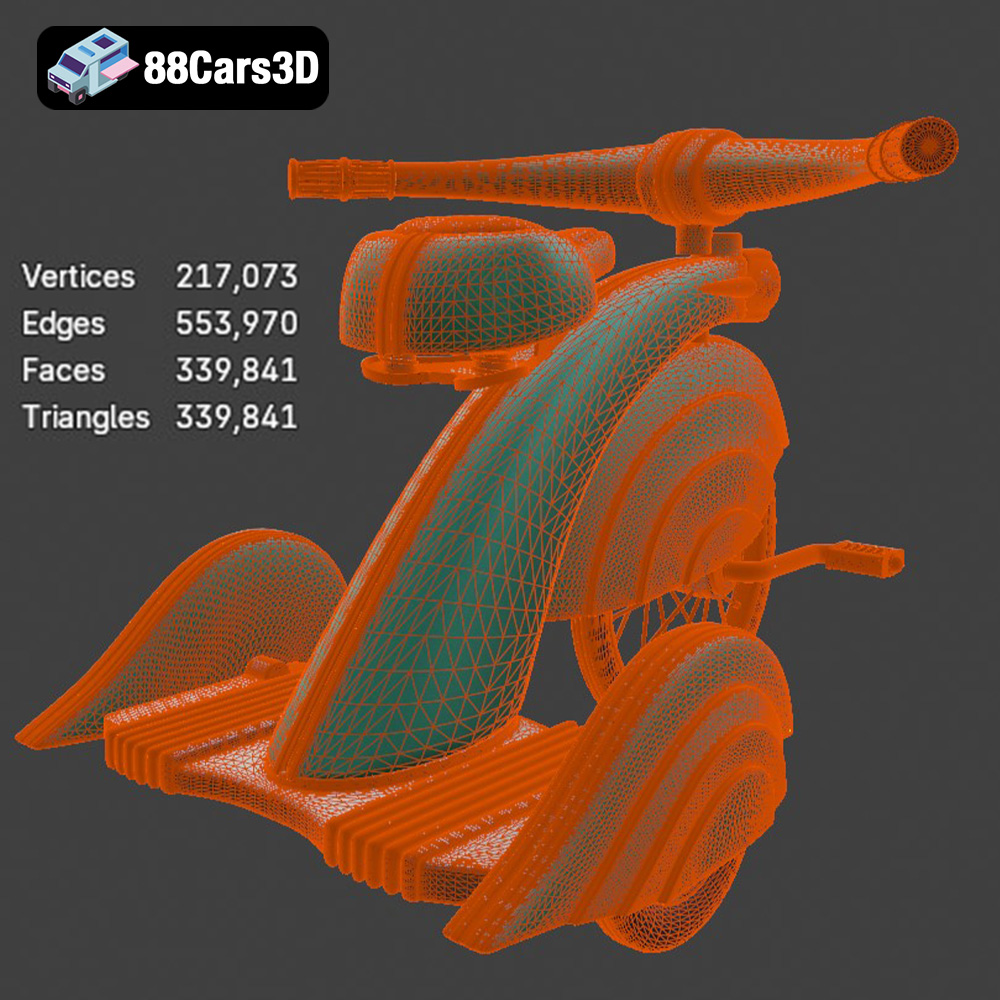
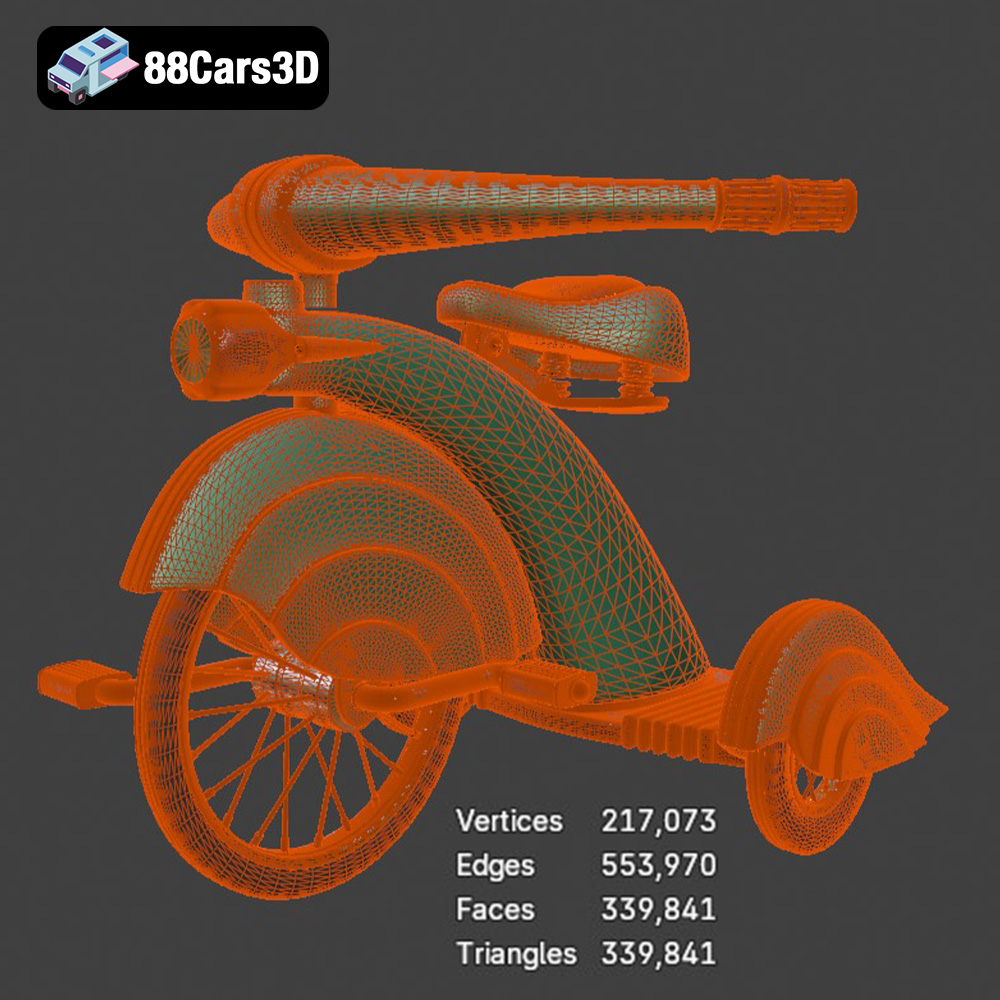
A high-quality 3D model isn’t just about surface aesthetics; its underlying technical structure is equally vital. The Vintage Tricycle boasts clean topology and real-world scale accuracy, making it exceptionally versatile. Clean topology ensures that the mesh is optimized for various uses – whether it’s subdividing for ultra-smooth renders, deforming for animation, or maintaining performance in real-time engines. Real-world scale is critical for easy integration into existing scenes, ensuring proper size relationships with other assets and architectural elements. This technical foundation prevents common issues like stretching textures or problematic physics interactions in game environments.
One of the model’s significant technical advantages is its separate wheels and pedals. This seemingly minor detail is a game-changer for animators. Instead of a static object, the tricycle can be easily animated to roll, turn, and have its pedals rotate, bringing dynamic life to any scene. Proper pivot setups for wheel rotation and steering are crucial for realistic animation, eliminating the need for artists to spend valuable time rigging the model themselves. This feature makes the Vintage Tricycle 1930 3D Model a powerful asset for creating animated shorts, interactive experiences, or dynamic sequences within game development.
The versatility of a well-crafted 3D asset lies in its ability to integrate seamlessly into diverse professional pipelines. The Vintage Tricycle 1930 3D Model, with its robust construction and multiple file formats, is engineered for exactly this purpose.
For studios specializing in automotive rendering and visualization, the tricycle offers a charming accent piece or a central nostalgic element. In 3ds Max, artists can leverage the .max file to refine materials using V-Ray or Corona Renderer, apply advanced lighting techniques, and create photorealistic images. Imagine a vintage car parked in a garage with this tricycle sitting nearby, adding a layer of story and detail. Similarly, Blender users can utilize the .blend file, benefiting from its fully editable scene to experiment with Cycles or Eevee, adding intricate dust and scratches to the frame, or customizing the seat texture for a specific look. The model’s optimized polygon flow ensures smooth subdivision for close-up shots without bogging down render times, delivering stunning visual fidelity.
Game developers constantly seek assets that are both visually appealing and performance-efficient. The Vintage Tricycle’s optimized mesh and real-world scale make it an excellent game asset. Using the .fbx or .unreal formats, developers can easily import the tricycle into Unreal Engine. Its clean topology and proper pivot setup facilitate quick integration for environmental props, interactive elements in retro-themed games, or even as a rideable asset with basic physics. The model’s structure allows for easy implementation of LODs (Levels of Detail) to maintain frame rates across various distances, ensuring a smooth player experience without sacrificing visual quality in close proximity.
The burgeoning fields of Augmented Reality (AR) and Virtual Reality (VR) demand highly optimized yet detailed 3D models. The .glb format, specifically, makes the Vintage Tricycle an ideal candidate for these immersive platforms. Imagine visitors in a virtual museum interacting with a historical exhibit featuring this tricycle, or a marketing campaign using AR to place the vintage toy in a user’s real-world environment. For historical visualization projects, the model offers an authentic period detail that grounds the experience, providing viewers with a believable glimpse into 1930s childhoods. Its clean geometry ensures that it renders efficiently, preventing motion sickness or performance hiccups often associated with complex AR/VR assets.
Beyond digital rendering and interactive experiences, the Vintage Tricycle 1930 3D Model offers a unique opportunity for physical manifestation through 3D printing. The inclusion of the .stl format means designers and hobbyists can transform this digital asset into a tangible collectible.
3D printing requires specific considerations to ensure a successful output. The Vintage Tricycle 1930 3D Model, designed with 3D printing in mind, comes with inherent advantages like its clean, manifold geometry, which is crucial for printability. Before printing, the model can be scaled to various sizes, with recommended ratios like 1:12, 1:10, 1:8, or 1:6, allowing for diverse collectible scales. Artists using software like Meshmixer or Netfabb can perform final checks for any non-manifold geometry or wall thickness issues, though the inherent quality of the model from 88cars3d.com minimizes these concerns.
The success of a 3D print hinges on appropriate settings. For the Vintage Tricycle, a layer height of 0.08–0.16 mm is recommended, striking a balance between detail and print time for FDM printers. Wall thickness of 1.2–2 mm provides structural integrity, while an infill of 15–25% offers a good balance of strength and material efficiency. Supports will be necessary, particularly for the handlebars and the gentle curves of the frame, to prevent sagging during printing. A recommended print orientation suggests printing the frame angled and the wheels separately, which optimizes surface finish and minimizes the need for excessive supports, particularly important for achieving smooth surfaces on automotive-style models.
Once printed, the physical tricycle can be brought to life with post-processing. This includes sanding to remove layer lines and support marks, applying a primer for an even surface, and then painting. Users can opt for a glossy enamel finish to replicate the pristine look of a new 1930s toy or apply a vintage matte paint finish with weathering effects to simulate an aged, well-loved heirloom. This hands-on process allows for an even deeper connection with the model, transforming a digital file into a unique, custom-finished collectible that complements other 3D car models or standalone displays.
The true power of a high-quality 3D asset lies not just in its ready-to-use form but also in the potential for customization. The Vintage Tricycle 1930 3D Model provides a robust foundation for boundless creative expression.
The model offers extensive opportunities for aesthetic customization. Artists can easily change the frame color to classic red, cream, blue, or a spectrum of pastel tones, fitting it into any desired visual theme. Adding vintage decals or subtle logo markings can further personalize the tricycle, making it unique to a specific brand or narrative. For a more authentic look, applying a weathered or restored finish using texture painting techniques can tell a story of age and use, perfect for historical scenes or post-apocalyptic settings. Even the simple molded saddle seat can be enhanced by modifying its material texture, from worn leather to freshly painted wood, adding to the overall realism and character.
Beyond the model itself, customizing its environment is key to achieving a compelling visual. The Vintage Tricycle can be placed in a variety of settings – from a sun-drenched backyard in a nostalgic scene to a dimly lit attic corner among other antique toy collections. Configuring lighting is paramount to convey mood and atmosphere. Warm, soft lighting can enhance its nostalgic charm, while sharp, high-contrast lighting can bring out its robust steel construction details. Artists can experiment with studio lighting for pristine product showcases or dramatic outdoor lighting to integrate it into complex environmental renders, making it a versatile element in any automotive rendering or visualization project.
The Vintage Tricycle 1930 3D Model is far more than just a digital object; it’s a meticulously crafted piece of history, engineered for peak performance across a multitude of modern digital applications. Its authentic design, clean topology, and multi-format compatibility make it an invaluable asset for anyone involved in 3D modeling, animation, game development, AR/VR, or 3D printing.
Whether you are creating captivating automotive rendering scenes, populating a historically accurate game world with engaging game assets, or simply seeking a unique collectible to 3D print, this model provides the foundation for exceptional results. Its technical advantages, from optimized polygon flow to separate components for animation, ensure a smooth and efficient workflow, allowing artists to focus on creative execution rather than technical hurdles. Discover this versatile addition to your asset library and unlock new creative possibilities. Visit 88cars3d.com today to explore the Vintage Tricycle 1930 3D Model and other high-quality 3D car models that can elevate your projects.
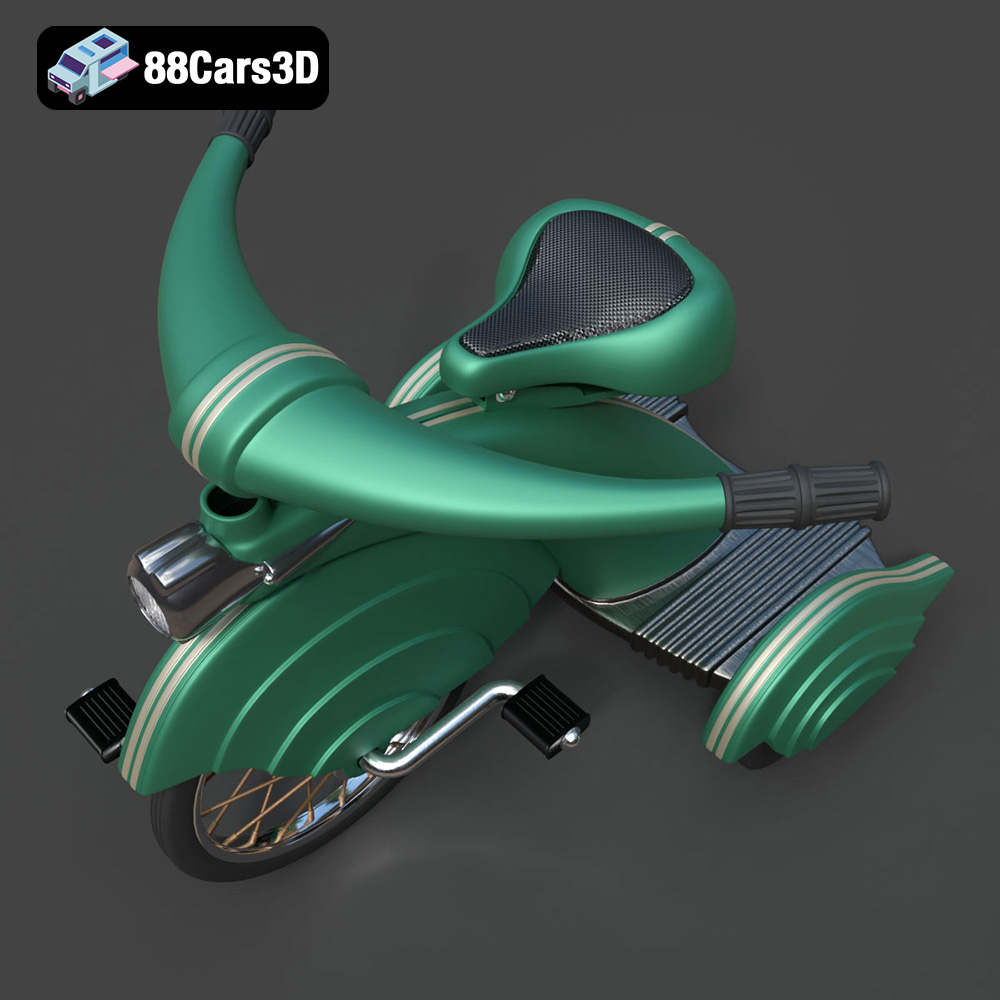
The Vintage Tricycle 1930 3D Model is a high-detail digital recreation of a classic early 20th-century three-wheeled bicycle designed for children. Inspired by 1930s craftsmanship, this model captures the nostalgic charm of vintage steel construction, oversized front wheel, curved handlebars, simple saddle seat, and solid rubber tires. This 3D model accurately represents the sturdy tubular frame, large front drive wheel with pedals, dual rear wheels, rear axle structure, classic fender detailing, and period-correct handlebar design. Built with clean topology and real-world scale accuracy, it is ideal for rendering, animation, historical visualization, game development, and AR/VR experiences. Perfect for retro-themed scenes, antique toy collections, museum displays, cinematic projects, and nostalgic advertising visuals.
$9.99
.1930s
.antiquetoy
.arvr
.blend
.classictricycle
.fbx
.gameasset
.glb
.max
.nostalgicdesign
.obj
.ply
.rendering
.retrobike
.simulation
.stl
.toy3dmodel
.unreal
.vintagetricycle